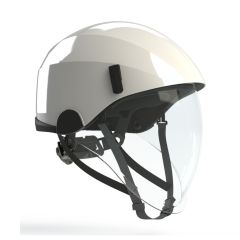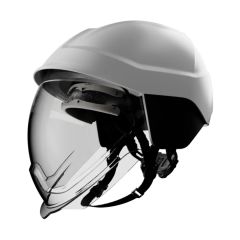
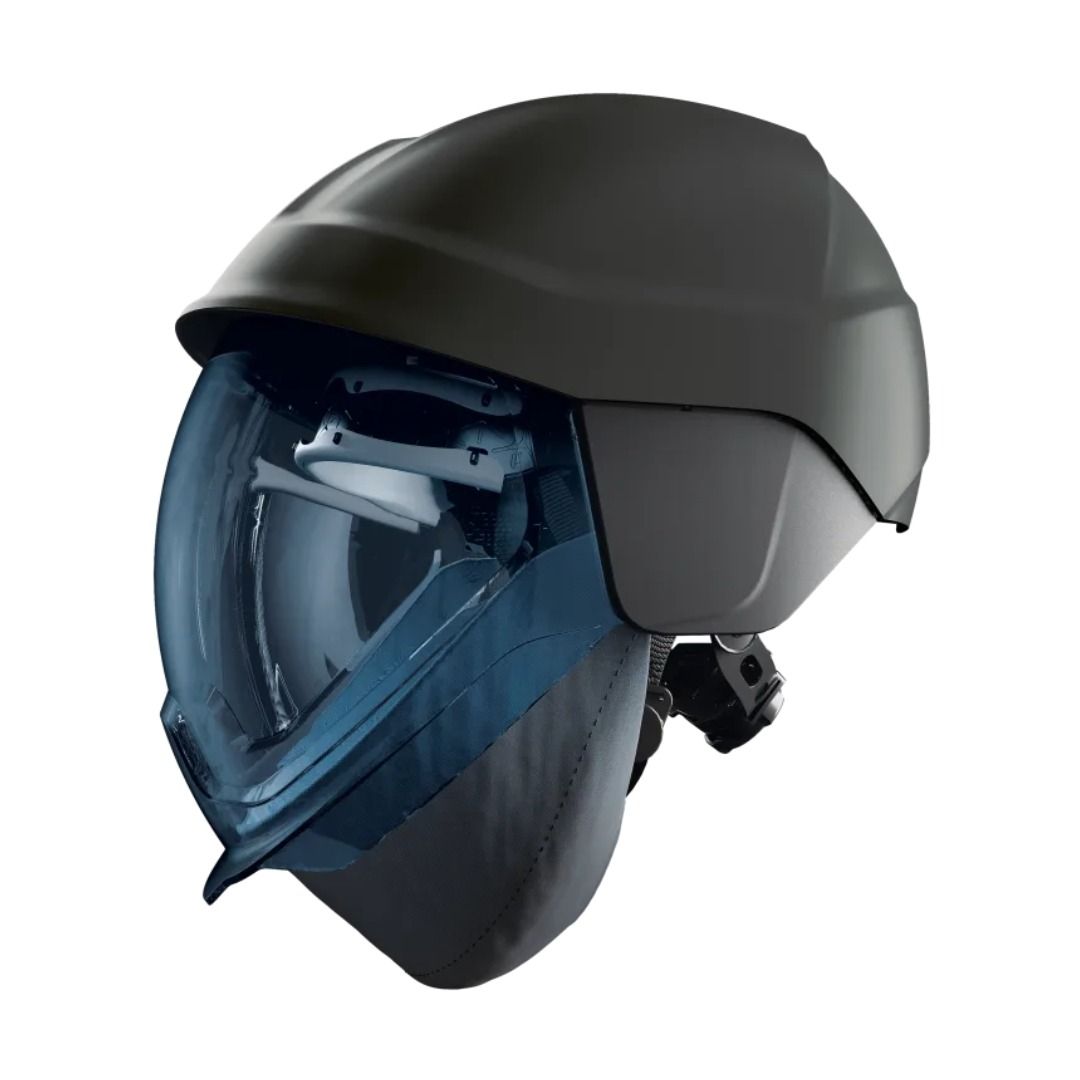
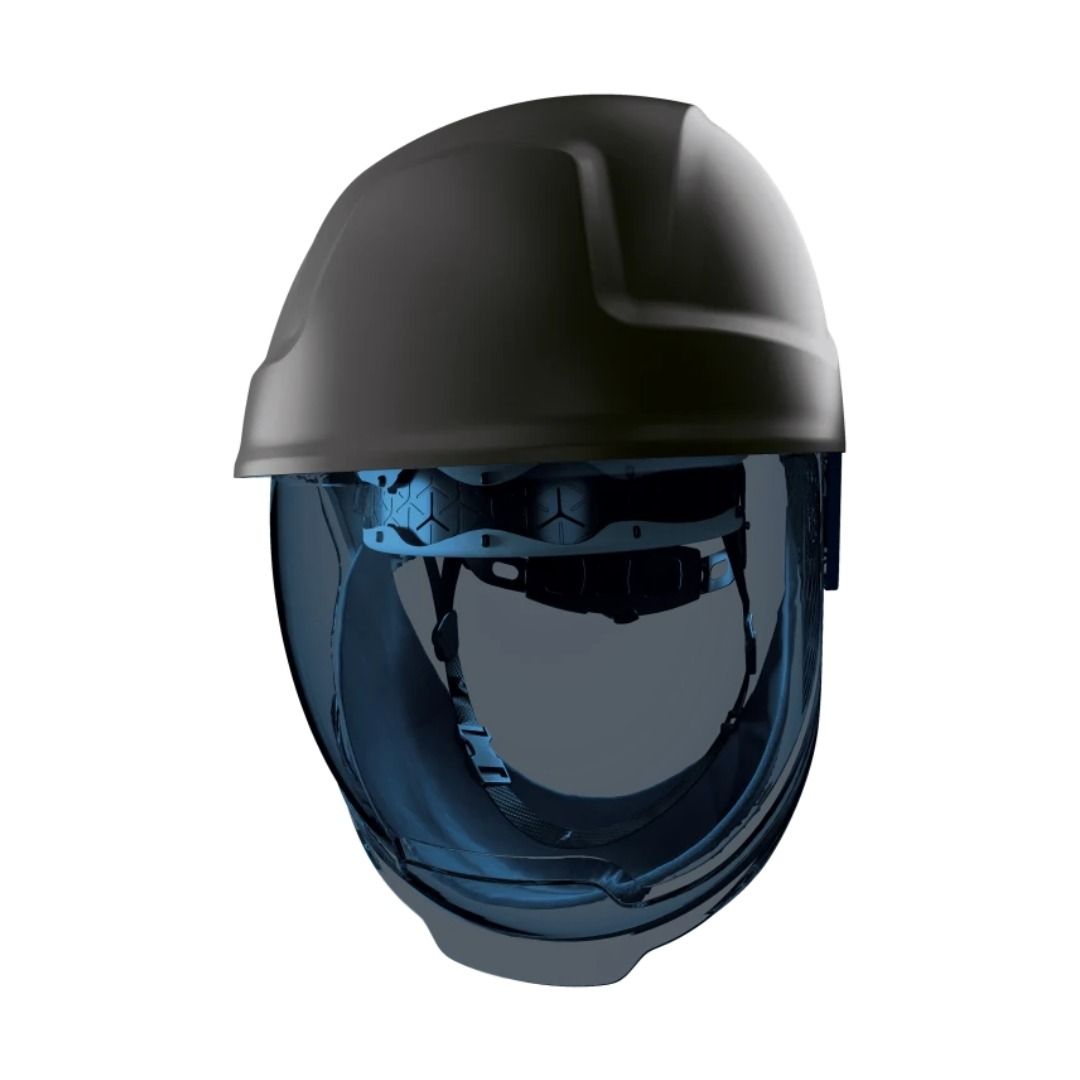
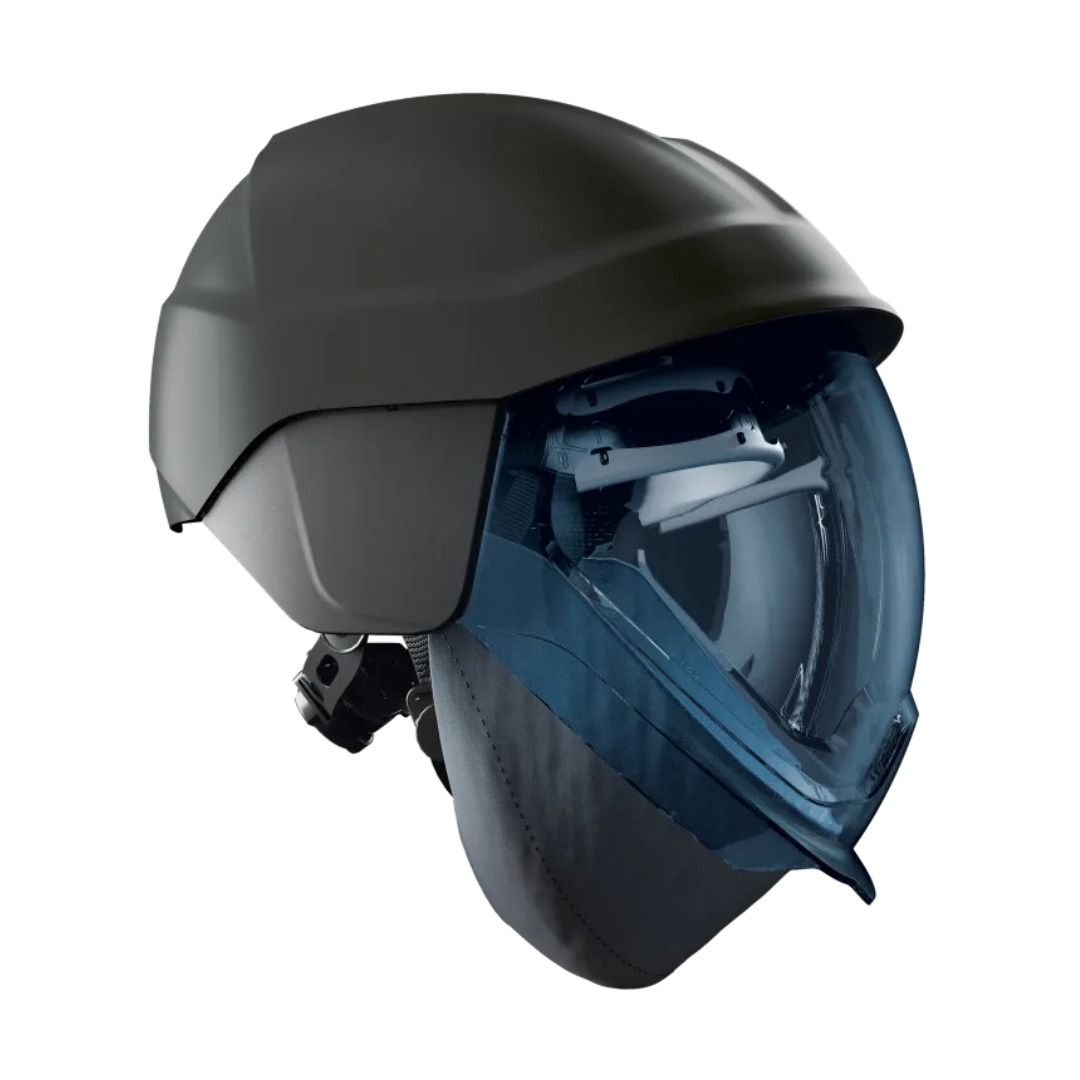
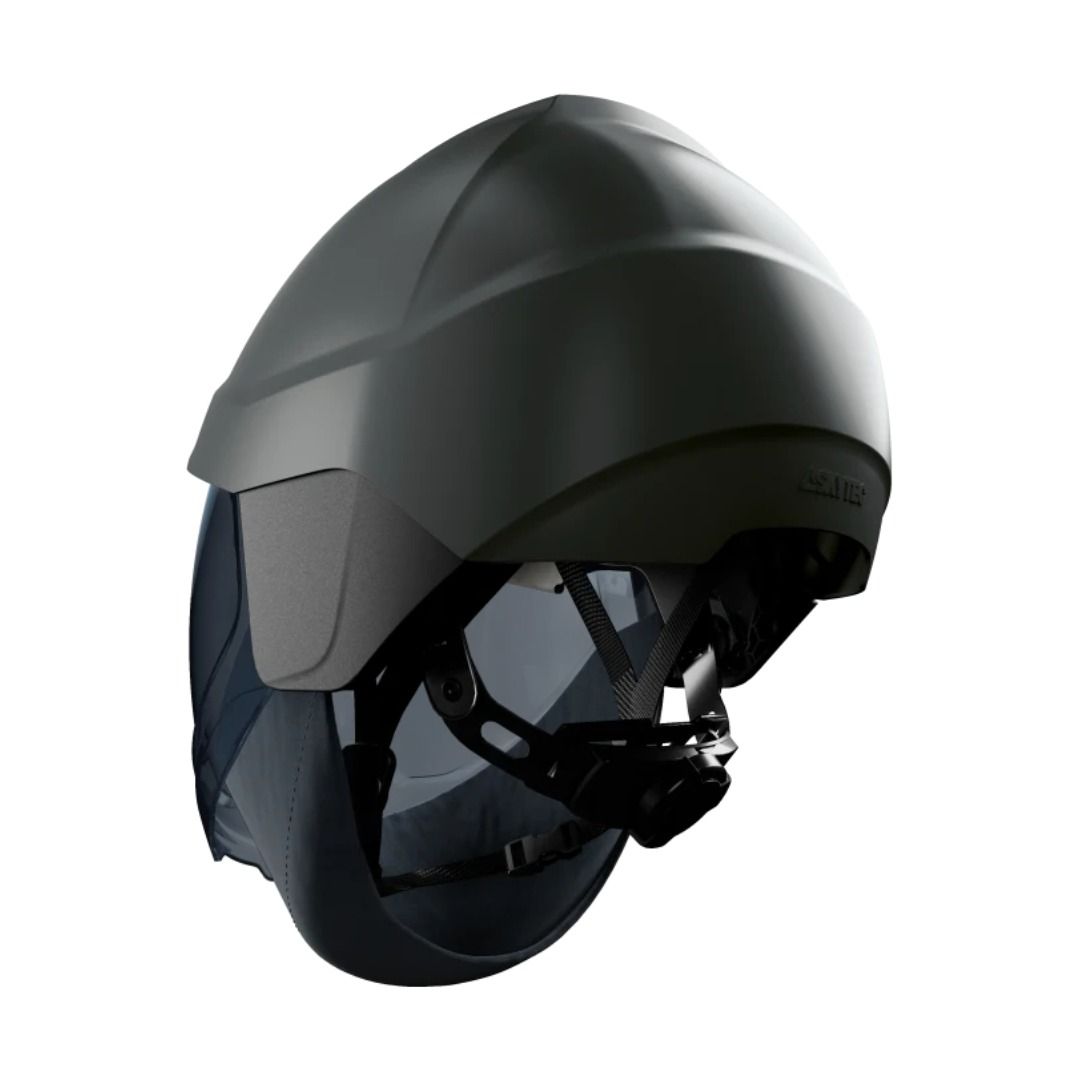
Electrically insulating arc flash safety helmet with an integrated retractable visor, designed for electrical engineers and utilities operatives working in arc flash risk environments.
- EN 50365:2023 Clause 4.3 Class 2
- 17,000V proof withstand tested
- EN 397:2025 Type 1, CE CAT III
- IEC 62819 APC 2, GS-ET-29 Class 2
- 28 Cal/cm² arc flash rated, ASTM F2178:2023a
- Integrated retractable visor, dual position locking, Impact Level B
- Anti-fog and anti-scratch visor, EN 166:2001
- PC/ABS shell, EPS foam liner, detachable textile chinguard
- Rated to -30°C
Skytec E Pro 3 Electrically Insulating Arc Flash Helmet - Integrated Visor
Electrically insulating arc flash safety helmet with an integrated retractable visor, designed for electrical engineers and utilities operatives working in arc flash risk environments.
- EN 50365:2023 Clause 4.3 Class 2
- 17,000V proof withstand tested
- EN 397:2025 Type 1, CE CAT III
- IEC 62819 APC 2, GS-ET-29 Class 2
- 28 Cal/cm² arc flash rated, ASTM F2178:2023a
- Integrated retractable visor, dual position locking, Impact Level B
- Anti-fog and anti-scratch visor, EN 166:2001
- PC/ABS shell, EPS foam liner, detachable textile chinguard
- Rated to -30°C
Order 1x to earn 219 FASTPoints
Order to earn 219 FASTPoints
Log in to access trade discountsSkytec E Pro 3 Electrically Insulating Arc Flash Helmet - 28 Cal/cm² Integrated Visor
Electrically insulating arc flash safety helmet with an integrated retractable visor, built for electrical engineers, utilities operatives, and industrial maintenance teams working on or near live low-voltage installations in arc flash risk environments.
The E Pro 3 carries dual certification to EN 50365:2023 Clause 4.3 Class 2 and EN 397:2025, two of the most recently revised standards in UK electrical head protection, and delivers 28 Cal/cm² head and face protection without the certification and compliance complexities of combining separate helmet and visor products.
Certified to CE CAT III, the highest PPE category, confirming independent notified body assessment of the complete system against hazards that may cause serious or irreversible injury.
How integrated certification closes the compliance gap in arc flash head protection
A standard safety helmet paired with a separately sourced arc flash visor presents a compliance risk that is rarely discussed at point of purchase: two independently certified products, tested under potentially different standard versions, have no guarantee of combined performance as a system. The helmet may be assessed to one version of EN 397 and the visor to a different edition of GS-ET-29, the attachment mechanism forms no part of either certificate, and correct deployment depends entirely on the operative fitting the visor before every task. The E Pro 3 addresses this by certifying the complete head and face system as a single assessed unit under EN 50365:2023 Clause 4.3 and IEC 62819 APC 2, removing the system-level compliance gap and ensuring the visor is always present within the shell.
Key Features
-
EN 50365:2023 Clause 4.3 Class 2: The 2023 revision of the electrically insulating helmet standard introduced the Clause 4.3 proof withstand test, subjecting the complete assembled helmet to 17,000 volts. The E Pro 3 meets this requirement, providing electrical verification that helmets certified only to the superseded 2002 standard were never tested against.
-
EN 397:2025 Type 1, rated to -30°C, CE CAT III: Certified to the latest revision of the industrial safety helmet standard. The peakless Type 1 design maintains unobstructed sightlines in confined switching environments. The very low temperature rating extends the operational range to outdoor electrical infrastructure maintenance in severe conditions.
-
28 Cal/cm² arc flash incident energy rating (ASTM F2178:2023a): Tested under the most current edition of the arc flash face protection standard. The 28 Cal/cm² figure directly corresponds to the incident energy output from arc flash risk assessments and ATPV calculations, enabling straightforward comparison against the values in hazard analysis documents.
-
IEC 62819 APC 2 and GS-ET-29 Class 2: Verified across both the international IEC test method and the European GS standard for arc flash protection. APC 2 and GS-ET-29 Class 2 both correspond to arc flash environments with short-circuit currents up to 7kA.
-
Integrated retractable visor with dual position locking: The visor retracts fully into the outer shell when not in use and locks into the deployed position via a defined locking mechanism. There is no separate visor to store, attach, or forget, and the locking action prevents accidental retraction during live work.
-
Impact Level B visor with anti-fog and anti-scratch treatment: Meets EN 166:2001 for medium-energy impact protection. The anti-fog inner surface prevents condensation build-up during temperature transitions between cold outdoor and warm indoor environments. The anti-scratch outer coating maintains optical clarity through repeated deployment cycles.
-
PC/ABS shell with foam liner and 4-point adjustable chinstrap: Polycarbonate outer shell provides rigidity under arc flash thermal loading. ABS inner structure absorbs impact force. The 4-point chinstrap keeps the complete system securely positioned during the pressure event that accompanies an arc flash incident.
Who is this for
Trades and roles:
-
Electrical engineers
-
Utilities network operatives
-
Substation maintenance technicians
-
Switchgear operatives
-
Cable jointing teams
-
Industrial maintenance electricians
Industries:
-
Utilities (electricity distribution and generation)
-
Oil and gas
-
Steel and metals
-
Manufacturing and processing
-
Chemicals and petrochemicals
-
Facilities management (industrial)
Specifications
| Specification | Detail |
| Product Name | Skytec E Pro 3 Electrically Insulating Arc Flash Helmet - 28 Cal/cm² Integrated Visor |
| SKU | SKH00028B |
| Helmet Category | Electrically Insulating Arc Flash Safety Helmet |
| Electrically Insulating Standard | EN 50365:2023 Clause 4.3 Class 2 |
| Proof Withstand Test Voltage | 17,000V (Clause 4.3) |
| Industrial Helmet Standard | EN 397:2025 Type 1 |
| Very Low Temperature Rating | -30°C |
| Arc Flash Protection Class | IEC 62819 APC 2 |
| Arc Flash Test (GS-ET-29) | Class 2 |
| Arc Flash Incident Energy Rating | 28 Cal/cm² (ASTM F2178:2023a) |
| Eye/Face Protection Standard | EN 166:2001 |
| CE Category | CAT III (highest PPE category) |
| International Standards | ANSI/ISEA Z89.1-2014 Type 1 Class E, ANSI/ISEA Z87.1 |
| Shell Material | ABS and Polycarbonate (PC/ABS) |
| Liner | Foam |
| Peak | No peak (Type 1) |
| Visor | Integrated retractable, dual position locking |
| Visor Impact Rating | Level B (EN 166:2001) |
| Visor Treatment | Anti-fog (inner surface), anti-scratch (outer surface) |
| Adjustment System | Wheel ratchet |
| Chinstrap | 4-point adjustable |
| Colour | Black |
| Weight | 1,090g |
| Dimensions | 305mm (L) x 240mm (W) x 225mm (H) |
Compatibility
| Application or condition | Status |
| Live low-voltage electrical work (up to 1,000V AC / 1,500V DC) | ✓ Compatible |
| Arc flash environments up to 28 Cal/cm² incident energy | ✓ Compatible |
| Arc flash environments at APC 2 / up to 7kA short-circuit current | ✓ Compatible |
| Outdoor electrical infrastructure work at -30°C and above | ✓ Compatible |
| Substation, switchgear, and transformer maintenance | ✓ Compatible |
| Oil, gas, and petrochemical electrical maintenance | ✓ Compatible |
| Industrial electrical maintenance (manufacturing, chemicals) | ✓ Compatible |
| Electrical installations above 1,000V AC / 1,500V DC | ✗ Not rated |
| Arc flash environments above 28 Cal/cm² incident energy | ✗ Not rated |
| Welding operations | ✗ Not suitable |
| Applications requiring respiratory protection | ✗ Not suitable |
| Abrasive blasting or grinding environments | ✗ Not suitable |
Who is this for
This helmet is designed for electrical engineers, maintenance electricians, and utilities operatives who carry out live low-voltage electrical work in environments where arc flash risk has been formally assessed under current UK guidance. Its primary users are substation maintenance teams, switchgear operatives, cable jointers, and electrical maintenance technicians working in utilities, oil and gas, chemicals, manufacturing, and industrial facilities management. The integrated arc flash visor and Class 2 electrically insulating certification make it particularly suited to organisations where site safety rules require combined head and face protection in a single independently assessed system, and where PPE procurement documents specify compliance with the latest standard revisions.
Typical applications
-
Carrying out switching operations on live low-voltage switchgear in electrical substations and utility distribution networks.
-
Performing fault diagnosis and live testing on low-voltage electrical panels in industrial manufacturing facilities where de-energisation is not reasonably practicable.
-
Cable termination and jointing work on live or recently de-energised low-voltage distribution systems in utilities and construction environments.
-
Inspection, testing, and maintenance of transformer equipment and associated low-voltage switchgear within the EN 50365 voltage scope.
-
Planned maintenance and inspection routines on live electrical equipment in oil and gas processing plants where arc flash risk has been assessed and documented.
-
Working on live low-voltage electrical systems in chemical processing facilities where arc flash risk assessments require CE CAT III head and face protection.
-
Electrical commissioning work requiring head and face protection during energisation sequences on new or re-commissioned low-voltage installations.
-
Emergency fault rectification on live low-voltage electrical infrastructure in utilities networks and industrial facilities at temperatures down to -30°C.
How to use
Step 1: Inspect the shell for cracks, impact marks, and discolouration before each use. Inspect the visor for surface scratches penetrating the coating, crazing, or any discolouration indicating thermal exposure from a previous arc flash event. Remove the helmet from service if any damage is found.
Step 2: Adjust the wheel ratchet until the headband sits firmly without pressure points. Do not force the ratchet; it should lock at the correct size without excessive tightening.
Step 3: Secure all four points of the chinstrap. Adjust so the strap sits flat under the chin with no slack. This step is not optional for live electrical work; the chinstrap prevents the helmet being displaced by the pressure wave accompanying an arc flash incident.
Step 4: Before beginning live electrical work, pull the visor fully down until it clicks into the deployed locking position. Confirm the visor forms a consistent seal with no gaps at the sides or chin. Do not begin work until the locking click is felt and the seal confirmed.
Step 5: After use, wipe the shell and visor with a damp cloth and a mild non-solvent cleaning agent. Air dry before storage. Store away from direct sunlight, chemical vapours, and extreme temperatures.
Step 6: Record the date of each use in any arc flash incident. Replace the helmet immediately following any arc flash event, regardless of apparent visual condition. Internal structural degradation is not detectable by visual inspection.
Common mistakes
-
Not deploying the visor before beginning live work: the visor must be locked in the deployed position before any live electrical task begins. A retracted visor provides no face or eye protection against arc flash.
-
Continuing to use a helmet after an arc flash incident: thermal and mechanical loading from an arc flash event causes internal degradation that cannot be assessed visually. Any helmet involved in an arc flash event must be replaced immediately.
-
Using this helmet on installations above 1,000V AC or 1,500V DC: EN 50365:2023 covers low-voltage only. Work on higher-voltage systems requires voltage-class-specific insulating PPE that falls entirely outside the scope of this product.
-
Cleaning with solvent-based products: acetone, paint thinners, and petroleum-based cleaners degrade the polycarbonate visor and ABS shell. Use only mild non-solvent cleaning agents.
-
Treating EN 50365:2002-certified helmets as equivalent: the 2002 standard did not include the Clause 4.3 proof withstand test. A helmet certified to EN 50365:2002 has not been tested to the 17,000V withstand requirement and is not equivalent to an EN 50365:2023-certified product.
Safety
This helmet is certified to EN 50365:2023 Clause 4.3 Class 2 for electrically insulating protection on low-voltage installations up to 1,000V AC and 1,500V DC. It is not rated for work on installations above these voltage limits. Under the Electricity at Work Regulations 1989, suitable PPE must be selected and used for all live electrical work where de-energisation is not reasonably practicable. The product must be assessed against the incident energy values produced by a formal arc flash risk assessment: if the assessed incident energy at the working location exceeds 28 Cal/cm², this helmet is not sufficient. The 4-point chinstrap must be secured and the visor locked in the deployed position before commencing any live electrical work. CE CAT III marking confirms independent notified body assessment against hazards that may cause serious or irreversible injury.
Maintenance
Wipe the shell and visor after each use with a damp cloth and a mild non-solvent cleaner. Do not use acetone, paint thinners, or petroleum-based products. Air dry before storage. Store away from UV exposure, chemical vapours, and extreme temperatures. Inspect the visor locking mechanism before every use and confirm it engages correctly in both positions. Replace the sweatband when it shows visible wear or loss of shape. The manufacture date is marked inside the shell. Replace the helmet in accordance with your site PPE inspection schedule, after any arc flash incident regardless of visible condition, or if any structural damage is identified during inspection.
Frequently Asked Questions
Q: What does 28 Cal/cm² mean and how do I check it is sufficient for my arc flash risk assessment?
A: The 28 Cal/cm² figure is the arc flash incident energy rating of the integrated visor system, established under ASTM F2178:2023a testing. It represents the thermal energy the visor can absorb at the point of exposure before the protective barrier is compromised. To verify it is sufficient, compare this figure directly against the incident energy values produced by your arc flash hazard analysis at the specific work location and working distance. If your calculation shows a maximum incident energy below 28 Cal/cm² at that point, the visor system meets that requirement. Incident energy for face and head protection is assessed against the total incident energy at the working distance; it does not add across other PPE layers.
Q: What is EN 50365:2023 Clause 4.3 Class 2, and how does it differ from EN 50365:2002?
A: EN 50365 is the standard for electrically insulating helmets used on or near live low-voltage installations, covering systems up to 1,000V AC and 1,500V DC. The 2002 version tested for electrical leakage by checking whether current passed through the helmet shell under an applied test voltage. The 2023 revision introduced Clause 4.3, a proof withstand test that subjects the complete assembled helmet to 17,000 volts and requires it to withstand that exposure without failure, a substantially more demanding requirement than the leakage check it supersedes. Class 2 is the performance designation achieved under this withstand test. Helmets certified only to EN 50365:2002 have not been subjected to the Clause 4.3 withstand requirement and are not equivalent, even if they carry the same arc flash class designation on their labels.
Q: What is this helmet NOT suitable for?
A: The E Pro 3 is designed for live electrical work on low-voltage installations up to 1,000V AC and 1,500V DC under EN 50365:2023. It is not rated for medium-voltage or high-voltage installations above these limits; those environments require voltage-class-specific insulating PPE selected under separate standards appropriate to the system voltage. The 28 Cal/cm² visor rating is a ceiling: it must not be used where a formal arc flash risk assessment identifies incident energy above this figure at the working location. It provides no respiratory protection, is not rated for welding, and is not suitable for abrasive blasting or grinding environments.
Q: Why does an integrated visor system provide better compliance assurance than a clip-on arc flash visor fitted to a standard helmet?
A: A clip-on arc flash visor is certified as a standalone product, independently of the helmet it is attached to. The two items may carry different certification dates, reference different standard versions, and the attachment mechanism forms no part of either certificate. No test verifies combined system performance. The E Pro 3 is certified as a complete head and face protection system under a single conformity assessment, meaning the performance of the entire unit is validated rather than inferred from two separate certificates. The visor is also permanently integrated within the shell, removing the risk of it being left behind, fitted incorrectly, or absent when live work begins.
Q: Is this helmet suitable for work on medium or high-voltage electrical installations above 1,000V AC?
A: No. EN 50365:2023 defines its scope as low-voltage installations only, covering systems up to 1,000V AC or 1,500V DC. This helmet does not carry electrical insulation certification for voltages above these limits. Work on medium-voltage or high-voltage systems requires insulating PPE specifically rated and tested for the voltage category involved under standards entirely separate from EN 50365. Any use of this helmet on systems above the stated voltage limits falls outside its certified scope.
Q: How do I correctly deploy and inspect the visor before beginning live electrical work?
A: Pull the visor fully downwards until you feel it seat into the deployed locking position. If the visor reaches the lower travel limit without engaging the lock, inspect the mechanism before using the helmet. Once deployed, check that the visor forms a consistent seal around the face with no gap at the sides or chin. Before each use, inspect the visor surface for cracks, deep scratches, surface crazing, or any discolouration suggesting thermal exposure from a previous arc flash event. Any visible surface damage compromises both optical and protective integrity and requires immediate removal from service.
Q: How should I maintain and inspect this helmet between uses?
A: Wipe the shell and visor after each use with a damp cloth and a mild non-solvent cleaning agent. Solvent-based products including acetone and petroleum-based cleaners degrade the polycarbonate visor and ABS shell and must not be used. Check that the visor locking mechanism engages cleanly in both positions and that all four chinstrap attachment points are intact. Replace the helmet immediately after any arc flash incident, regardless of visible condition, as internal structural damage is not detectable visually. The manufacture date marked inside the shell provides the reference point for your site PPE inspection and replacement schedule.