How to specify certified PPE for UK construction sites, EN standards explained for cut-resistant gloves, safety glasses, safety goggles, ear defenders, and helmets, with product comparisons and selection guides.
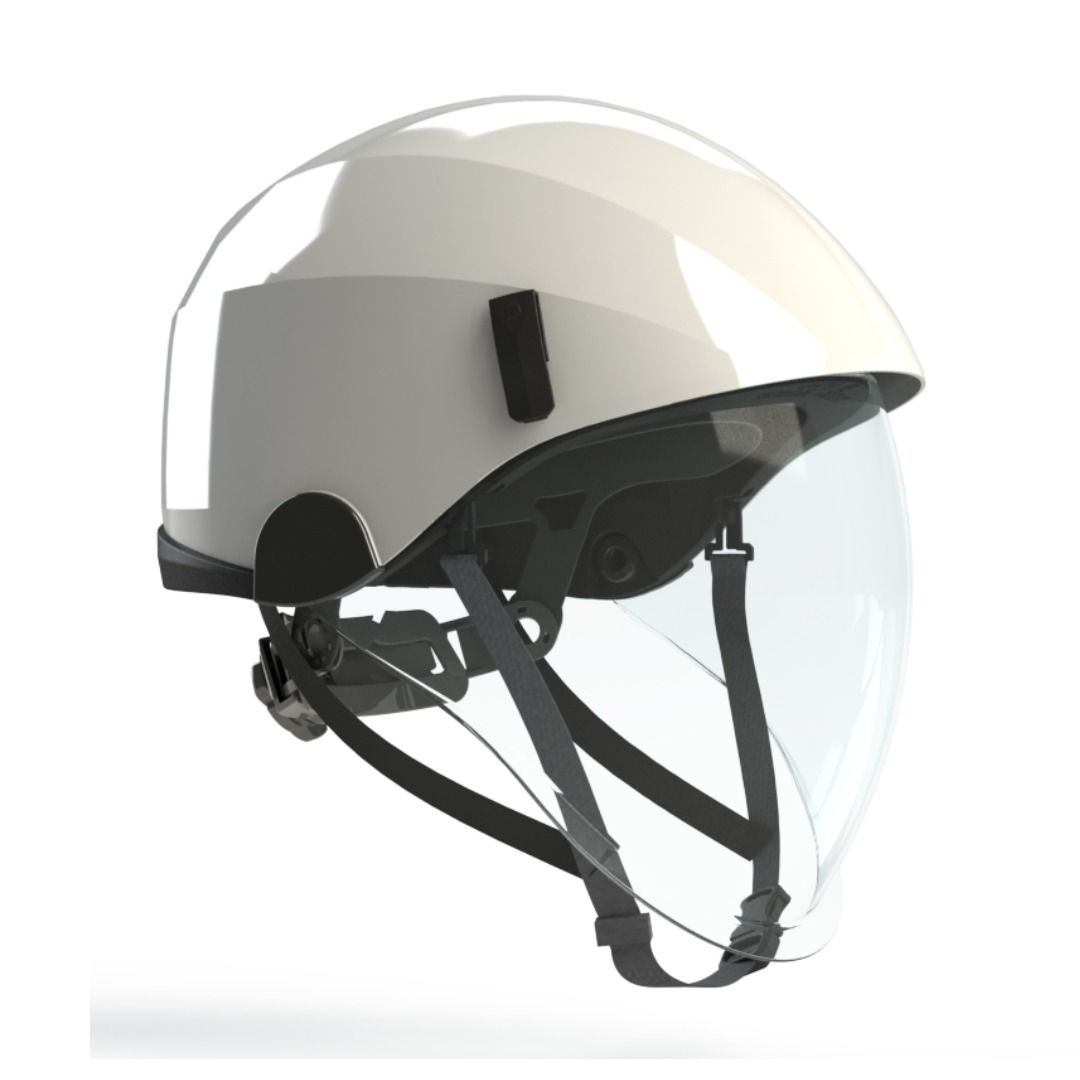
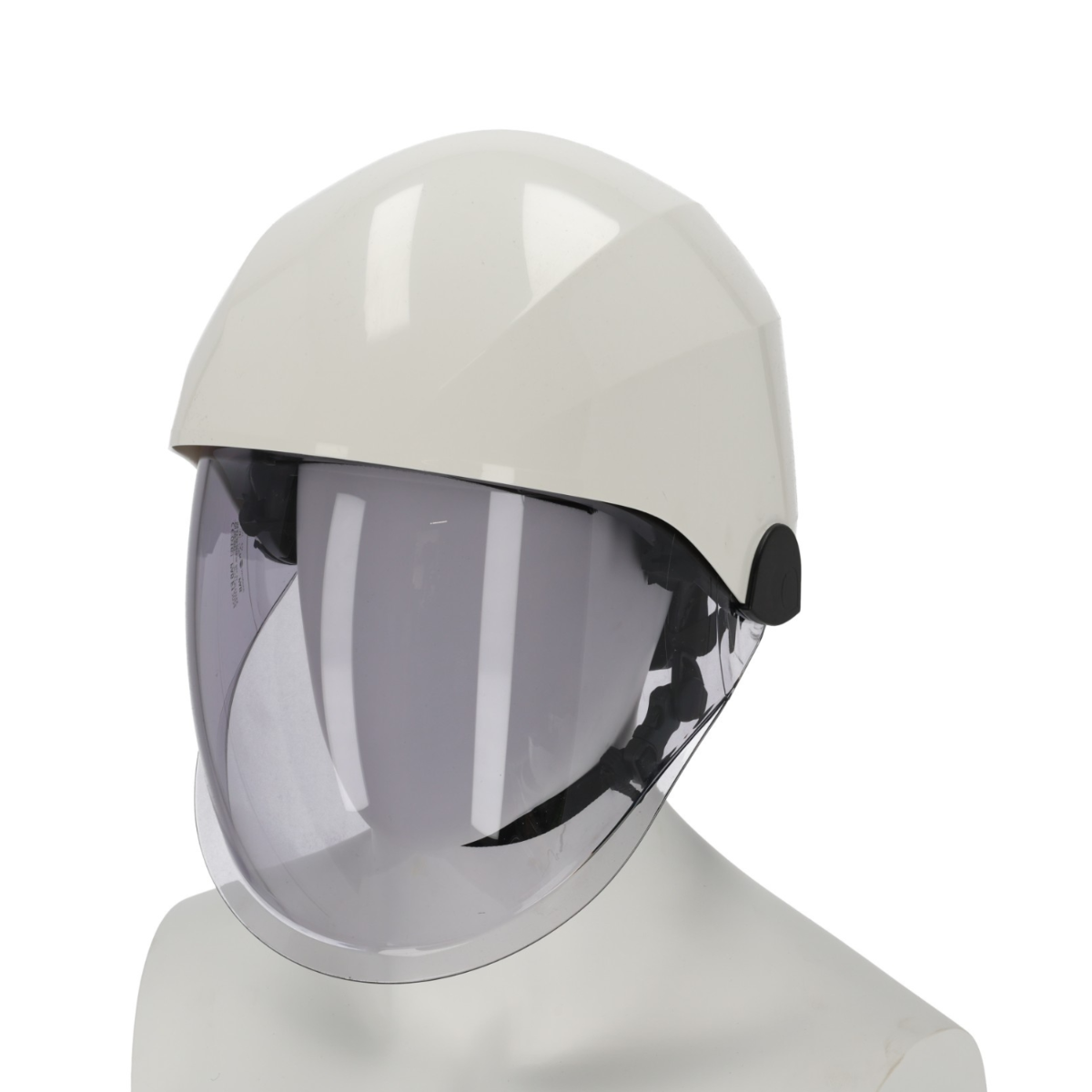
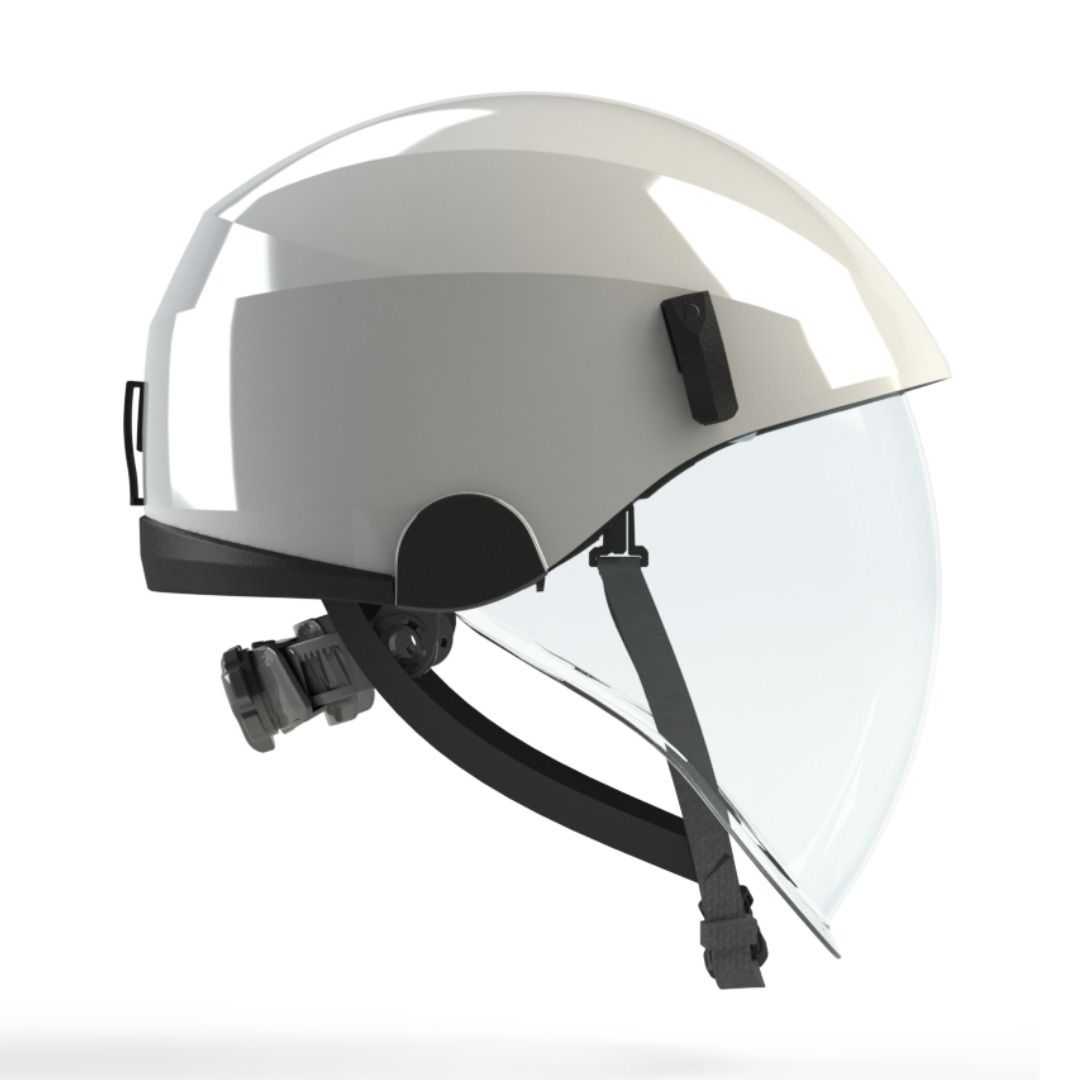
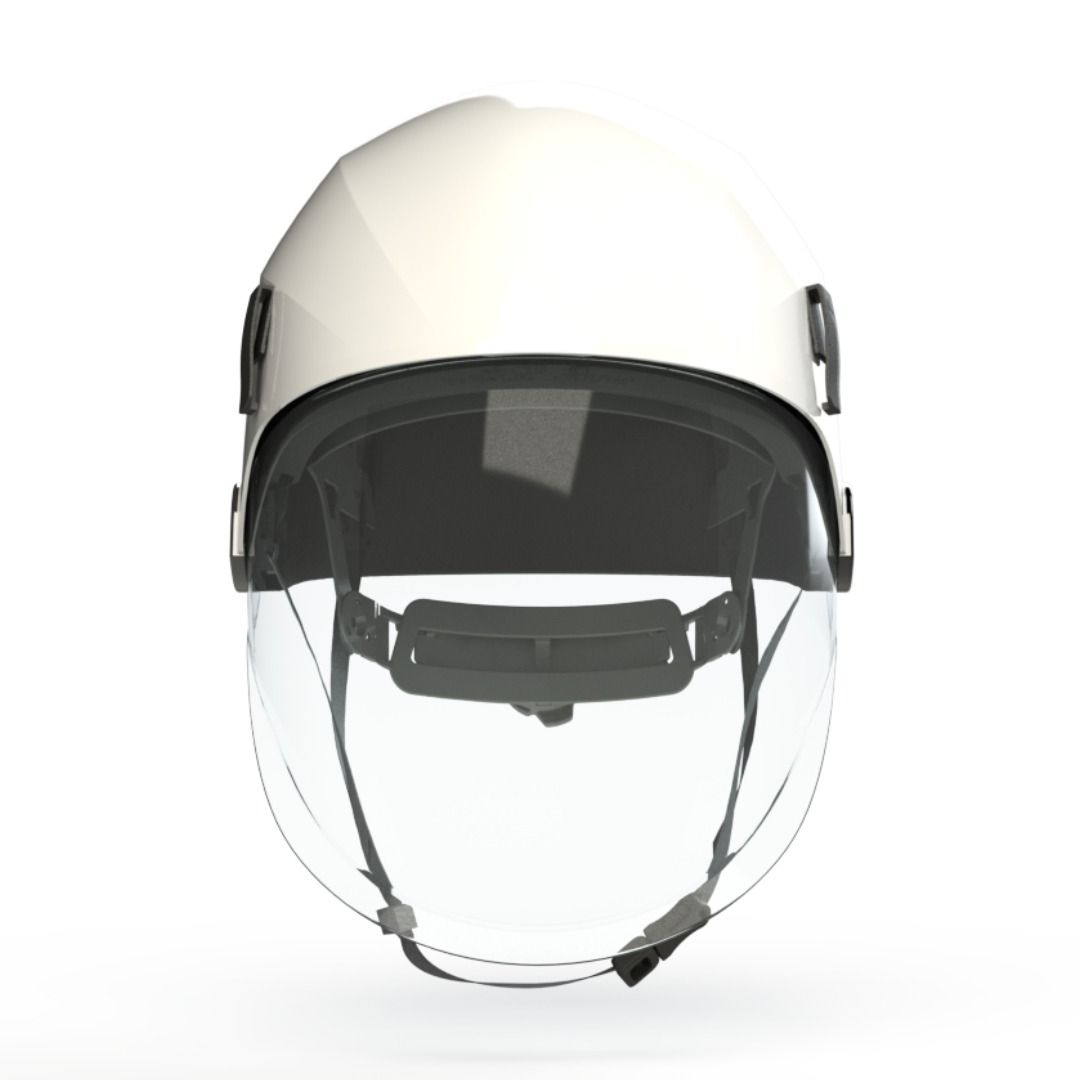
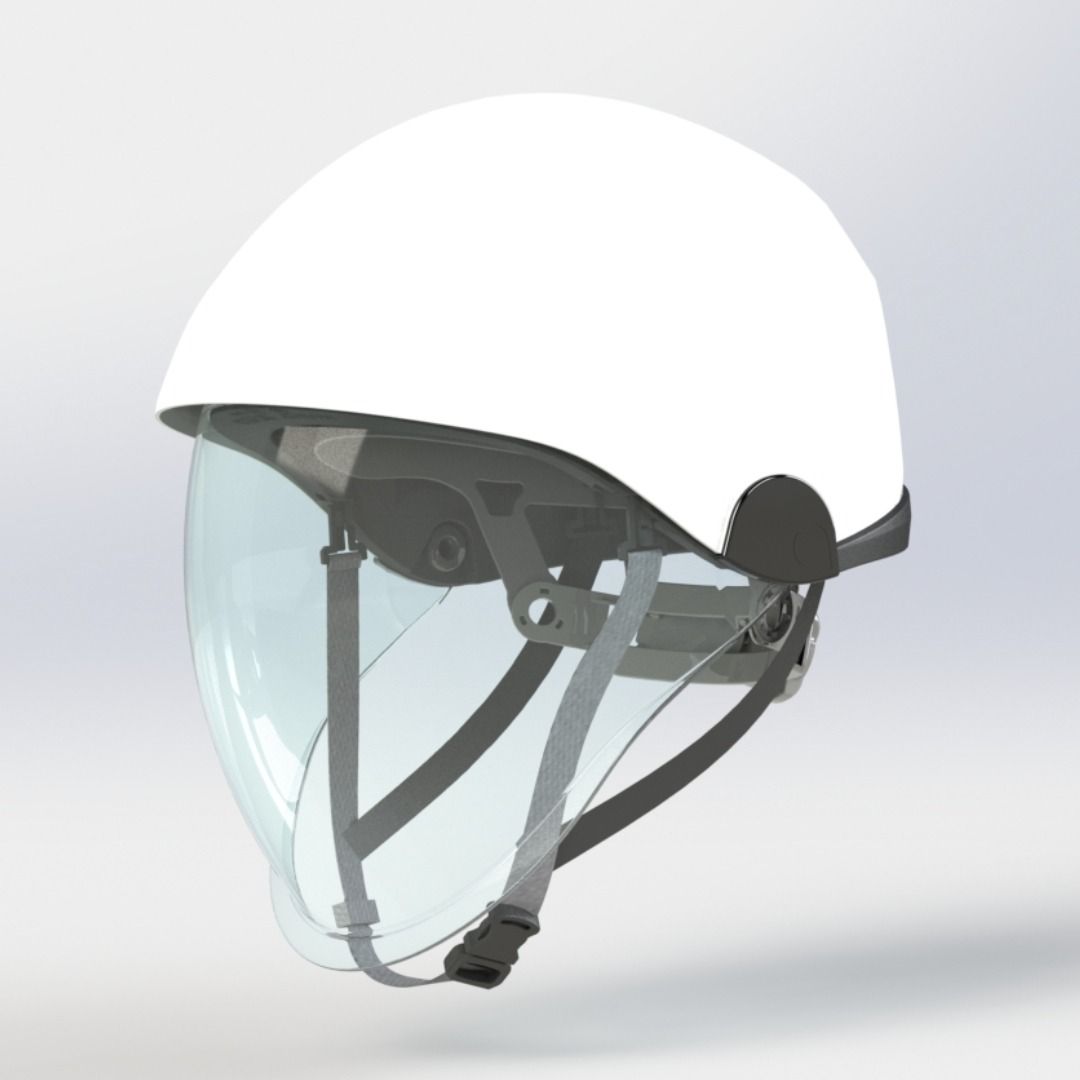
An electrically insulating safety helmet with an integrated arc flash face shield, designed for electrical operatives working in the energy sector and environments with arc flash and low-voltage electrical hazards.
- Retractable arc flash full face shield, GS-ET-29:2019-06 Class 1, rated to 4 kA
- EN 397:2012+A1:2012, EN 50365:2002 Class 0, and GS-ET-29:2019-06 certified
- Dual-shell construction: ABS outer shell with polycarbonate inner shell
- -30°C low-temperature classification, lateral deformation resistance
- molten metal splash resistance (MM)
- Visor EN 166:2001 marking 1 AT 3 8 9 K N, EN 170:2002 UV filter class 2C-1,4
- 4-point chinstrap included as standard
- Integrated wheel ratchet adjustment, 52 to 63 cm
- soft breathable washable inner lining
- White
An electrically insulating safety helmet with an integrated arc flash face shield, designed for electrical operatives working in the energy sector and environments with arc flash and low-voltage electrical hazards.
- Retractable arc flash full face shield, GS-ET-29:2019-06 Class 1, rated to 4 kA
- EN 397:2012+A1:2012, EN 50365:2002 Class 0, and GS-ET-29:2019-06 certified
- Dual-shell construction: ABS outer shell with polycarbonate inner shell
- -30°C low-temperature classification, lateral deformation resistance
- molten metal splash resistance (MM)
- Visor EN 166:2001 marking 1 AT 3 8 9 K N, EN 170:2002 UV filter class 2C-1,4
- 4-point chinstrap included as standard
- Integrated wheel ratchet adjustment, 52 to 63 cm
- soft breathable washable inner lining
- White
- Buy 10 for £130.36 £108.63 each and save 8%
- Buy 20 for £119.50 £99.58 each and save 15%
| BULK DISCOUNT | 10 | 20 |
|---|---|---|
| Price | £108.63 £130.36 | £99.58 £119.50 |
Order 1x to earn 117 FASTPoints
Order to earn 117 FASTPoints
Log in to access trade discountsarmourU Fuji Safety Helmet with Integrated Arc Flash Visor - White
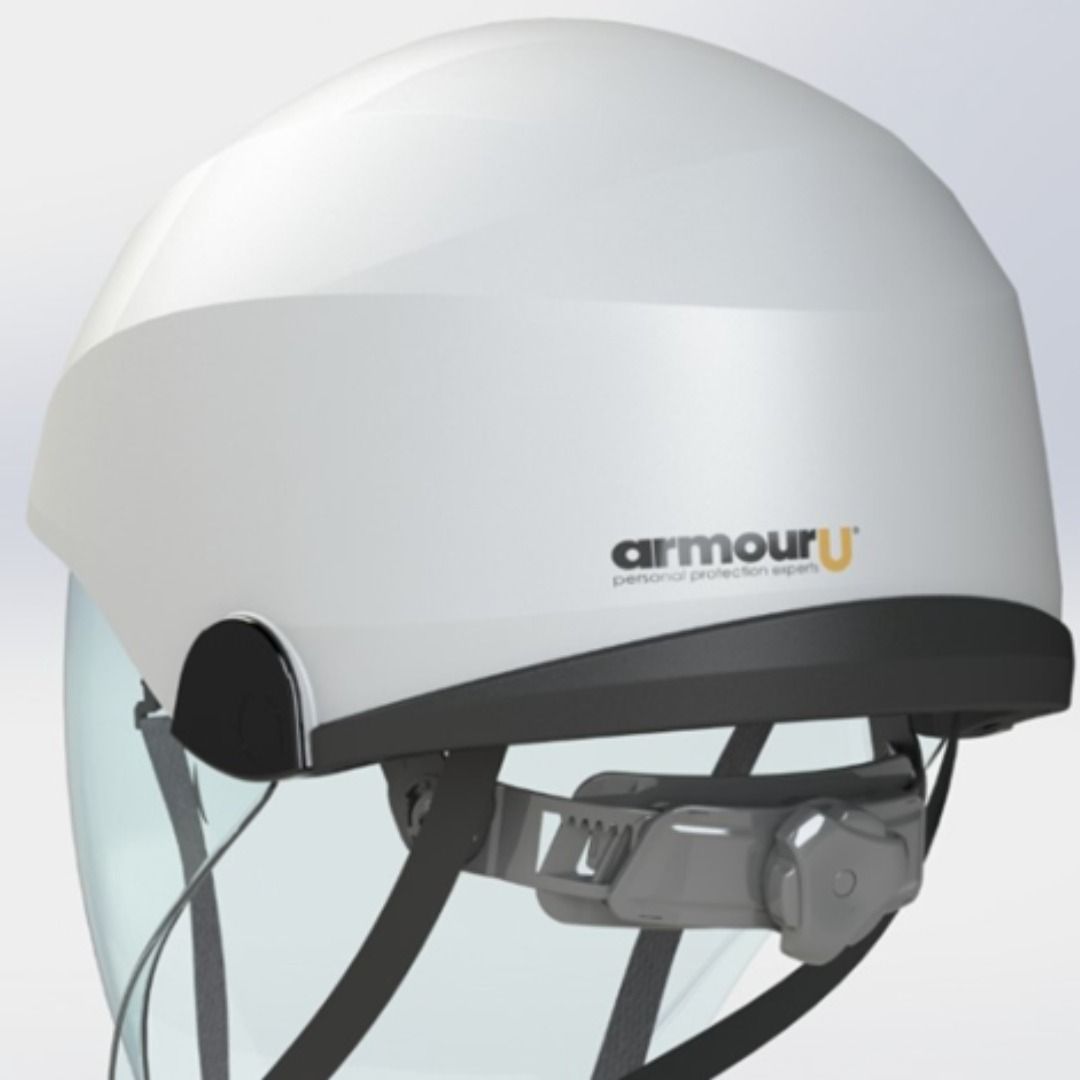
An electrically insulating safety helmet with an integrated retractable arc flash face shield, built for electrical operatives working in the energy sector, oil and gas, nuclear power, transformer substations, and electric vehicle production facilities. The Fuji carries certification to EN 397:2012+A1:2012, EN 50365:2002 Class 0, and GS-ET-29:2019-06 Class 1 at 4 kA, providing simultaneous head, face, and arc flash protection in a single unit. Dual-shell construction combining an ABS outer shell with a polycarbonate inner shell delivers high impact resistance and heat resistance across the demanding environments this helmet is built for.
How the integrated arc flash visor closes the face protection gap in electrical environments
In electrical environments where arc flash is a foreseeable hazard, separate head protection and face protection create a compliance gap: the face shield is removed between tasks, stored separately, and frequently not in place at the moment an arc event occurs. The arc flash hazard does not announce itself. An integrated flip-down face shield addresses that gap by keeping certified arc flash protection immediately available at all times, deploying and retracting in a single motion without removing the helmet. Combined with a Class 0 electrically insulating shell and GS-ET-29 Class 1 arc flash rating at 4 kA, the Fuji provides a single, certified system for both head and face protection in environments where separate equipment creates compliance risk.
Key Features
-
Integrated retractable arc flash face shield: Full face polycarbonate visor, 3mm thick, with arc flash protection properties rated to GS-ET-29:2019-06 Class 1 at 4 kA. Anti-fog and anti-scratch coated. EN 166:2001 full marking 1 AT 3 8 9 K N. EN 170:2002 UV filter class 2C-1,4 for correct colour recognition. Flips down from stowed position in a single motion without removing the helmet.
-
Dual-shell construction: ABS outer shell combined with a polycarbonate inner shell provides exceptional impact resistance and high heat resistance beyond that of a single-material ABS shell. The combination is specifically engineered for electrical and energy sector environments.
-
EN 50365:2002 Class 0 electrical insulation: Confirms insulation against accidental contact with live conductors up to 1000V AC or 1500V DC on low-voltage installations. Class 0 is the specific rating for use on low-voltage electrical installations.
-
GS-ET-29:2019-06 Class I arc flash rating at 4 kA: Covers arc flash events up to 4 kA prospective short circuit current. Relevant to transformer substations, switchgear, and electrical distribution environments where arc flash risk is identified in the risk assessment.
-
Full EN 397 optional specification: -30°C low-temperature classification, resistance to lateral deformation, and resistance to molten metal splashes (MM), the complete set of optional protective properties for demanding industrial environments.
-
4-point chinstrap included as standard: A 4-point chinstrap is included with the helmet, providing secure retention in environments where helmet movement or loss during an incident would compromise protection. Releases cleanly at the buckle.
-
Wheel ratchet adjustment with soft inner lining: Wheel ratchet system provides rapid, repeatable fit adjustment across head circumferences from 52 to 63 cm. Inner lining is soft, breathable, and washable for hygiene and comfort across extended shifts.
-
BrandIT compatible: Available with in-house logo printing via CMT's BrandIT service.
Who Is This For
Trades and roles:
-
Electrical engineers and electricians
-
High voltage and low voltage operatives
-
Energy sector technicians
-
Utilities and infrastructure workers
-
Nuclear power plant operatives
-
Oil and gas facility workers
-
Electrical contractors and maintenance engineers
-
Safety officers specifying electrical PPE
Industries:
-
Energy generation and distribution
-
Oil and gas
-
Nuclear power
-
Electric vehicle manufacturing
-
Transformer and substation maintenance
-
Utilities and infrastructure
-
Industrial electrical maintenance
Specifications
| Specification | Detail |
|---|---|
| Product name | armourU Fuji Safety Helmet with Integrated Arc Flash Visor - White |
| SKU | AHFUJI-WHT |
| Helmet category | Arc flash electrically insulating safety helmet |
| Head protection standard | EN 397:2012+A1:2012 |
| Low temperature classification | -30°C |
| Lateral deformation resistance | Yes (LD) |
| Molten metal splash resistance | Yes (MM) |
| Electrical insulation standard | EN 50365:2002, Class 0 — accidental contact with live conductors up to 1000V AC or 1500V DC |
| Arc flash protection standard | GS-ET-29:2019-06, Class I — rated to 4 kA prospective short circuit current |
| Shell construction | Dual-shell — ABS outer shell with polycarbonate inner shell |
| Shell type | Unvented |
| Size adjustment | Integrated wheel ratchet, 52 to 63 cm |
| Inner lining | Soft, breathable, washable |
| Chinstrap | 4-point — included as standard |
| Visor type | Retractable full arc flash face shield |
| Visor material | Impact-resistant polycarbonate, 3mm thickness |
| Visor arc flash rating | GS-ET-29:2019-06, Class 1, 4 kA |
| Visor EN 166:2001 marking | 1 AT 3 8 9 K N |
| Visor UV filter class | EN 170:2002 — 2C-1,4, visible light transmittance class 1 |
| Visor coating | Anti-fog and anti-scratch |
| BrandIT compatible | Yes — in-house logo printing available via CMT BrandIT service |
| Weight | 915g ± 30g (basic configuration without accessories) |
| Colour | White — other RAL scale colours available with minimum order quantity |
Compatibility
| Application or condition | Status |
| Arc flash environments up to 4 kA (GS-ET-29:2019-06 Class I) | ✓ Compatible |
| Low-voltage electrical installations up to 1000V AC or 1500V DC (EN 50365, Class 0) | ✓ Compatible |
| Molten metal splash environments (MM rated) | ✓ Compatible |
| Cold weather outdoor work to -30°C | ✓ Compatible |
| Falling object hazard on construction and industrial sites (EN 397) | ✓ Compatible |
| Energy sector: oil and gas, nuclear, transformer substations, EV manufacturing | ✓ Compatible |
| In-house branded PPE via BrandIT | ✓ Compatible |
| Arc flash events above 4 kA | ✗ Not suitable — exceeds GS-ET-29 Class I rating |
| Medium or high voltage deliberate live working | ✗ Not suitable — Class 0 covers accidental contact on low-voltage only |
| Working at height requiring EN 12492 certification | ✗ Not suitable — EN 12492 not certified |
| Chemical immersion or heavy chemical splash | ✗ Not suitable — visor not rated for chemical immersion |
Who Is This For
This helmet is used primarily by electrical engineers, high-voltage and low-voltage operatives, and technical specialists working in the energy sector where arc flash and electrical insulation requirements are defined by site risk assessments and PPE specifications. It is relevant to operatives at transformer substations, nuclear facilities, oil and gas installations, and electric vehicle manufacturing plants, where the combination of head, face, and arc flash protection in a single certified system is a procurement and compliance requirement. Safety officers and PPE managers specifying electrical head protection for energy sector contractors and in-house maintenance teams will find the full certification suite. EN 397, EN 50365 Class 0, and GS-ET-29 Class 1 at 4 kA, directly relevant to their risk assessment documentation.
Typical Applications
-
Maintenance and inspection work at transformer substations and electrical distribution switchgear where arc flash up to 4 kA is identified in the site risk assessment.
-
Low-voltage electrical installation and commissioning work where EN 50365 Class 0 insulation is required by the safe system of work, covering accidental contact with live conductors up to 1000V AC or 1500V DC.
-
Operational and maintenance tasks at nuclear power generation facilities requiring both impact protection and arc flash face shield coverage during proximity to electrical equipment.
-
Technical inspection and maintenance work on oil and gas installations where electrical hazards, molten metal splash risk, and impact hazard are simultaneously present.
-
Electric vehicle production facility maintenance involving high-density battery systems and associated electrical distribution equipment with arc flash risk.
-
Cold weather outdoor electrical infrastructure maintenance at -30°C where low-temperature impact protection is required alongside electrical insulation.
-
Environments where voltage detectors or headlamps are required alongside head protection, using the helmet's headband clip attachment points.
How to Use
Step 1: Inspect the shell, visor, inner lining, and chinstrap before every shift. Check the visor for scratches, crazing, or damage to the arc flash coating. A damaged visor must be replaced before use, arc flash protection cannot be assumed on a compromised lens.
Step 2: Fit the helmet by placing it squarely on the head. Rotate the wheel ratchet clockwise to tighten until the harness seats firmly without rocking. The inner lining should contact the head evenly.
Step 3: Connect the 4-point chinstrap. Attach to the helmet slots on both sides of the shell, position under the chin, and adjust the length until the strap fits firmly but does not restrict jaw movement. The chinstrap is mandatory during arc flash risk tasks, it prevents helmet displacement during an arc event.
Step 4: Before entering a zone with arc flash risk, flip the visor down from its stowed position to the deployed position, ensuring it seats fully with no gaps around the face perimeter. Do not rely on the visor for protection unless it is fully deployed and locked in position.
Step 5: When moving clear of the arc flash zone, return the visor to the stowed position. Do not leave the visor in a partially deployed position.
Step 6: After each shift, clean the shell and visor with soapy water and a soft cloth. Do not use detergents, solvent-based products, or abrasive materials. The inner lining can be removed and hand-washed in cold water with mild detergent.
Common Mistakes
-
Using this helmet for arc flash events above 4 kA: GS-ET-29 Class I covers prospective short circuit currents up to 4 kA. Environments with higher incident energy require a higher arc flash protection class. Check the site arc flash risk assessment before specifying.
-
Deploying the visor partially during arc flash work: the visor must be fully deployed and seated correctly to provide the protection tested under GS-ET-29. A partially deployed visor leaves the face exposed and does not meet the standard.
-
Treating Class 0 electrical insulation as clearance for deliberate live working: EN 50365 Class 0 covers short-term accidental contact on low-voltage installations. It is not authorisation for deliberate contact with live conductors, which requires a full electrical safe system of work and appropriate PPE beyond this helmet.
-
Cleaning the visor with solvents or abrasive materials: these degrade the arc flash coating, anti-fog coating, and polycarbonate material. The visor's arc flash protection properties cannot be assumed on a chemically degraded lens. Use soapy water and a soft cloth only.
-
Failing to replace the helmet after any significant impact: the dual-shell construction absorbs impact energy and may be structurally compromised without visible surface damage. Any helmet that has sustained a significant blow must be replaced and removed from service immediately.
Safety
This helmet is certified to EN 397:2012+A1:2012 including low-temperature classification to -30°C, lateral deformation resistance, and molten metal splash resistance (MM). EN 50365:2002 Class 0 confirms electrical insulation for short-term accidental contact with live conductors up to 1000V AC or 1500V DC. GS-ET-29:2019-06 Class I confirms arc flash protection to 4 kA prospective short circuit current for both the helmet shell and the integrated visor. This helmet is not certified to EN 12492 and must not be used for working at height where that standard is required. It does not provide protection against arc flash events exceeding 4 kA, check the site arc flash risk assessment before specifying. The 4-point chinstrap must be worn during all arc flash risk tasks. Replace the helmet and visor immediately following any significant impact or arc flash event, regardless of visible damage.
Maintenance
Clean the shell and visor after each shift with soapy water and a soft cloth. Do not use detergents, solvent-based products, or abrasive materials on any surface. The inner lining is removable and hand-washable in cold water with mild detergent, allow to dry fully before re-fitting. Inspect the visor lens at every pre-use check for scratches, crazing, discolouration, or coating degradation, a degraded lens must be replaced before use. Inspect the chinstrap for wear, fraying, or buckle damage. Do not apply paint, adhesives, solvents, or self-adhesive labels to the shell, as these reduce the structural integrity of the dual-shell construction and may compromise electrical insulation. Store away from direct sunlight, heat sources, and chemical exposure.

Frequently Asked Questions
Q: What arc flash protection does the integrated visor provide, and what does GS-ET-29 Class 1 at 4 kA mean?
A: GS-ET-29:2019-06 is the German technical specification for arc flash protection on safety helmets and face shields, widely adopted across European energy sector PPE specifications. Class I covers prospective short circuit currents up to 4 kA, the rating most commonly required for low-voltage switchgear, transformer substations, and distribution environments where arc flash risk is identified. The visor is a full face polycarbonate shield, 3mm thick, with arc flash protection properties, anti-fog coating, and anti-scratch coating. It carries EN 166:2001 marking 1 AT 3 8 9 K N and EN 170:2002 UV filter class 2C-1,4 for correct colour recognition during use.
Q: What does EN 50365:2002 Class 0 mean for the helmet shell?
A: EN 50365:2002 is the European standard for electrically insulating helmets used on low-voltage installations. Class 0 confirms the helmet shell provides insulation against short-term accidental contact with live conductors up to 1000V AC or 1500V DC. This is the classification required for operatives working on or near low-voltage electrical installations where incidental contact with live parts is a foreseeable risk. It does not cover deliberate live working and is not a substitute for a full electrical safe system of work where intended contact with live conductors is involved.
Q: What is this helmet NOT suitable for?
A: This helmet is not suitable for arc flash environments with incident energy levels exceeding the GS-ET-29 Class I rating of 4 kA, higher prospective short circuit currents require a higher arc flash protection class. Class 0 electrical insulation covers accidental contact on low-voltage installations only and does not authorise deliberate live working or use on medium or high voltage systems. The helmet is not certified to EN 12492 and must not be used for working at height where that standard applies. The visor does not provide protection against chemical immersion or heavy chemical splash.
Q: How does dual-shell construction differ from a standard single ABS shell?
A: A standard safety helmet uses a single ABS shell, which provides good impact resistance and heat resistance for general construction and industrial environments. The Fuji combines an ABS outer shell with a polycarbonate inner shell. The polycarbonate inner layer adds impact resistance beyond that achievable with ABS alone, provides higher heat resistance relevant to arc flash and molten metal environments, and contributes to the electrical insulation properties required for EN 50365 Class 0 certification. The dual-shell construction is specifically engineered for the demanding requirements of the energy sector.
Q: Must the chinstrap be worn during arc flash work?
A: Yes. The 4-point chinstrap is included as standard with this helmet and must be worn during all tasks where arc flash risk is present. An arc flash event can generate significant pressure and thermal forces, a helmet without a secured chinstrap may be displaced at the moment it is needed most. The chinstrap should be adjusted to fit firmly below the chin without restricting jaw movement and must be in good condition before every shift.
Q: Can this helmet be used in oil and gas environments with ATEX requirements?
A: The helmet itself carries the relevant head and arc flash protection certifications for use in oil and gas environments. Optional ATEX-certified LED torches and torch holder accessories are available from the manufacturer for attachment to the helmet, enabling use in potentially explosive atmospheres where lighting is required. Confirm specific site ATEX zone requirements and accessory compatibility with your safety officer before specifying for ATEX-classified zones.
Q: How long should this helmet last before it needs replacing?
A: The helmet must be replaced immediately following any significant impact or arc flash event, regardless of whether visible damage is present, both the dual-shell construction and the visor's arc flash properties may be compromised without external indication. Under normal inspection and maintenance, follow the manufacturer's stated service life, typically three to five years from first use, accounting for UV exposure, temperature cycling, and chemical contact. The visor lens must be inspected at every pre-use check and replaced when any degradation of the arc flash coating, anti-fog coating, or polycarbonate material is observed.