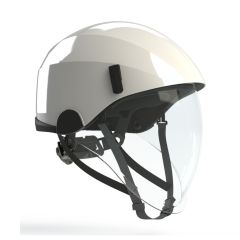
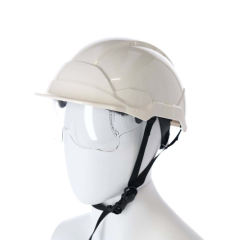
armourU Vented Denali Safety Helmet White| CMT Group UK
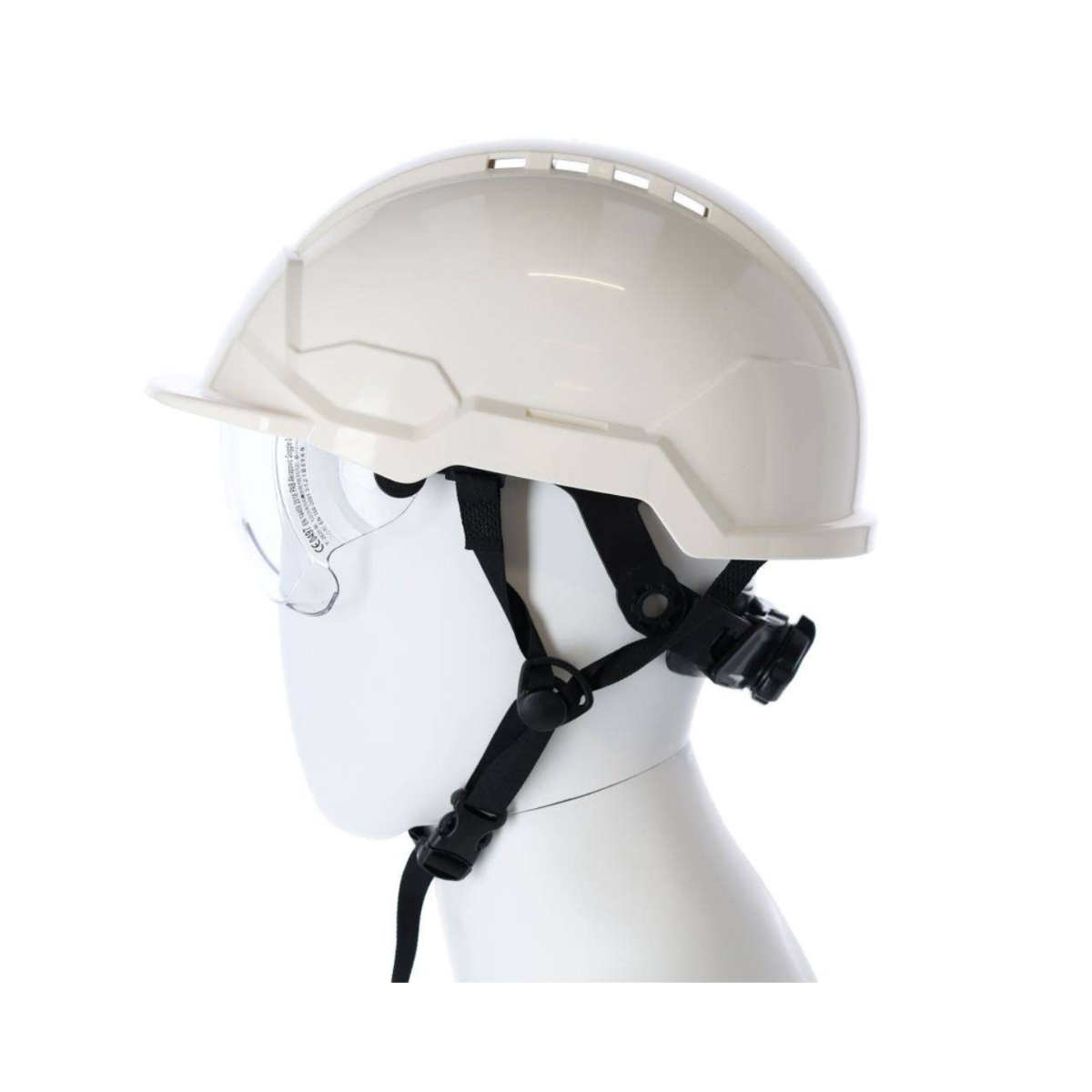
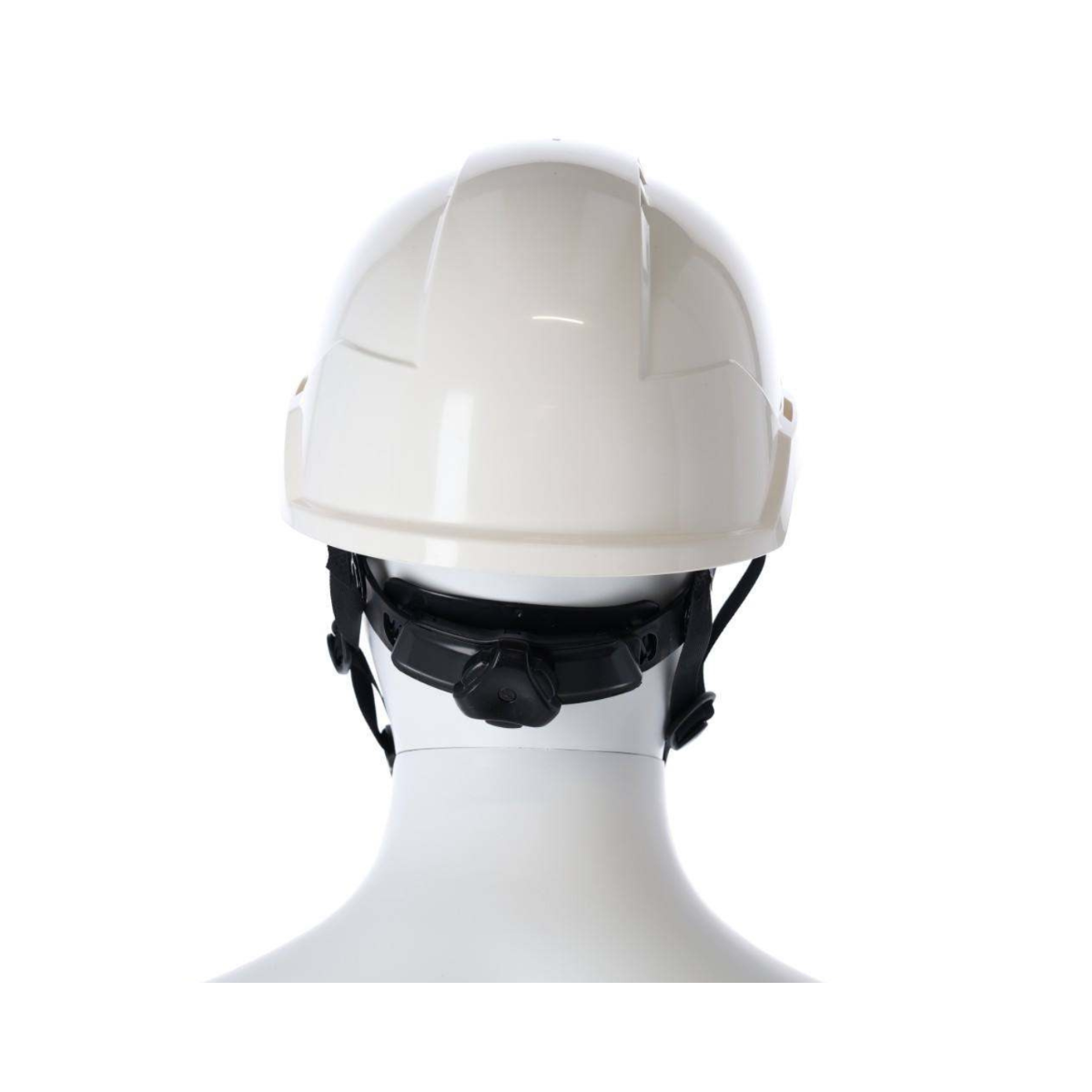
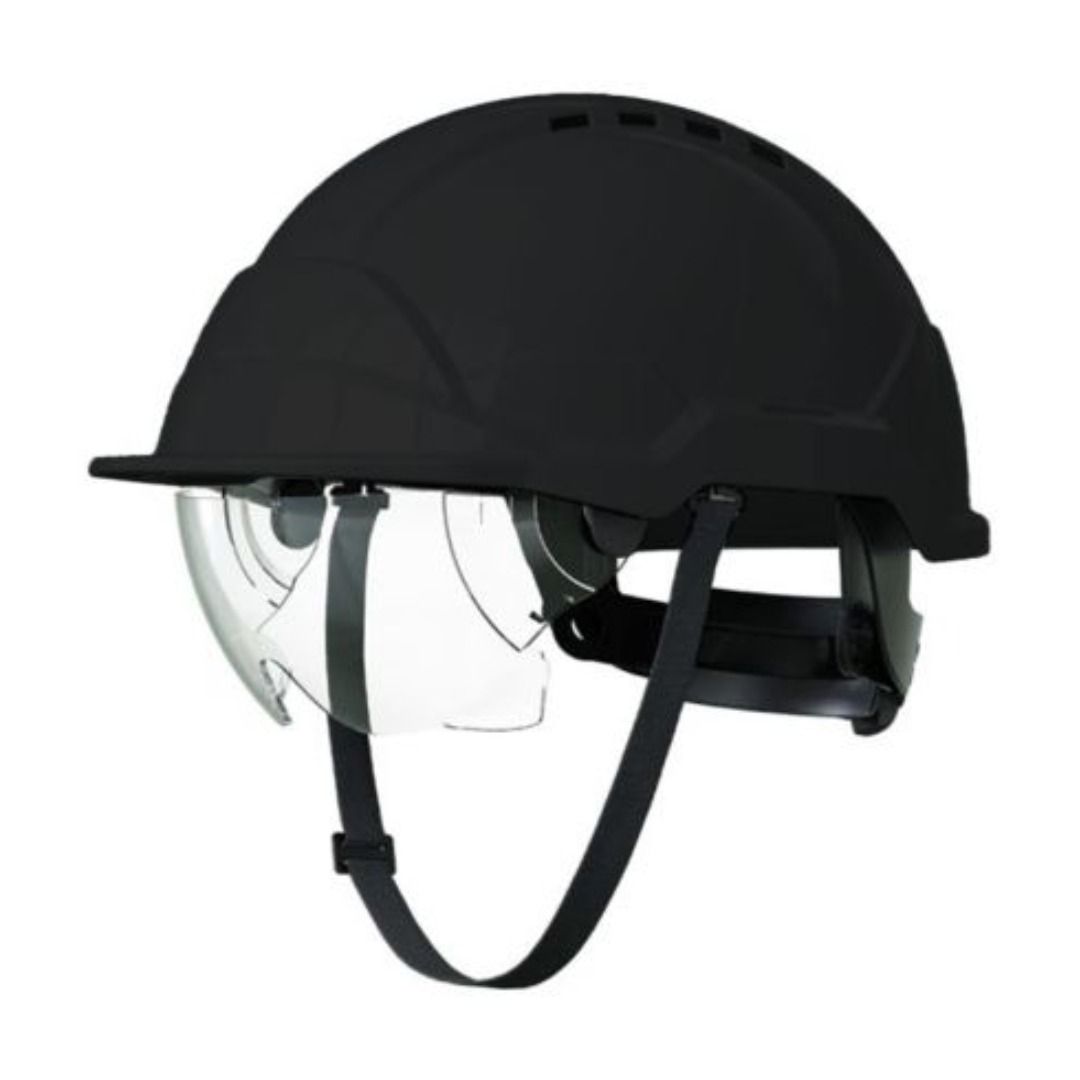
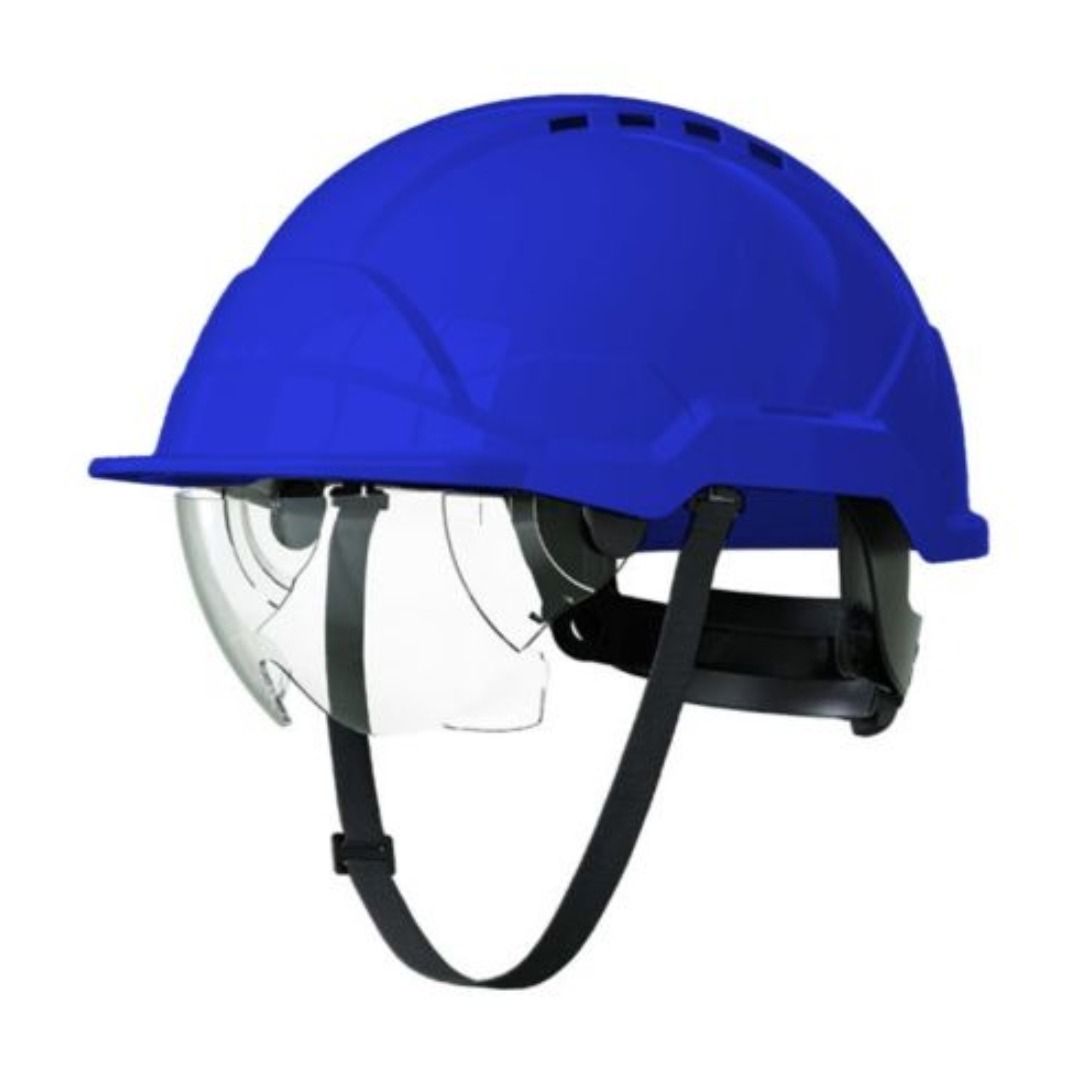
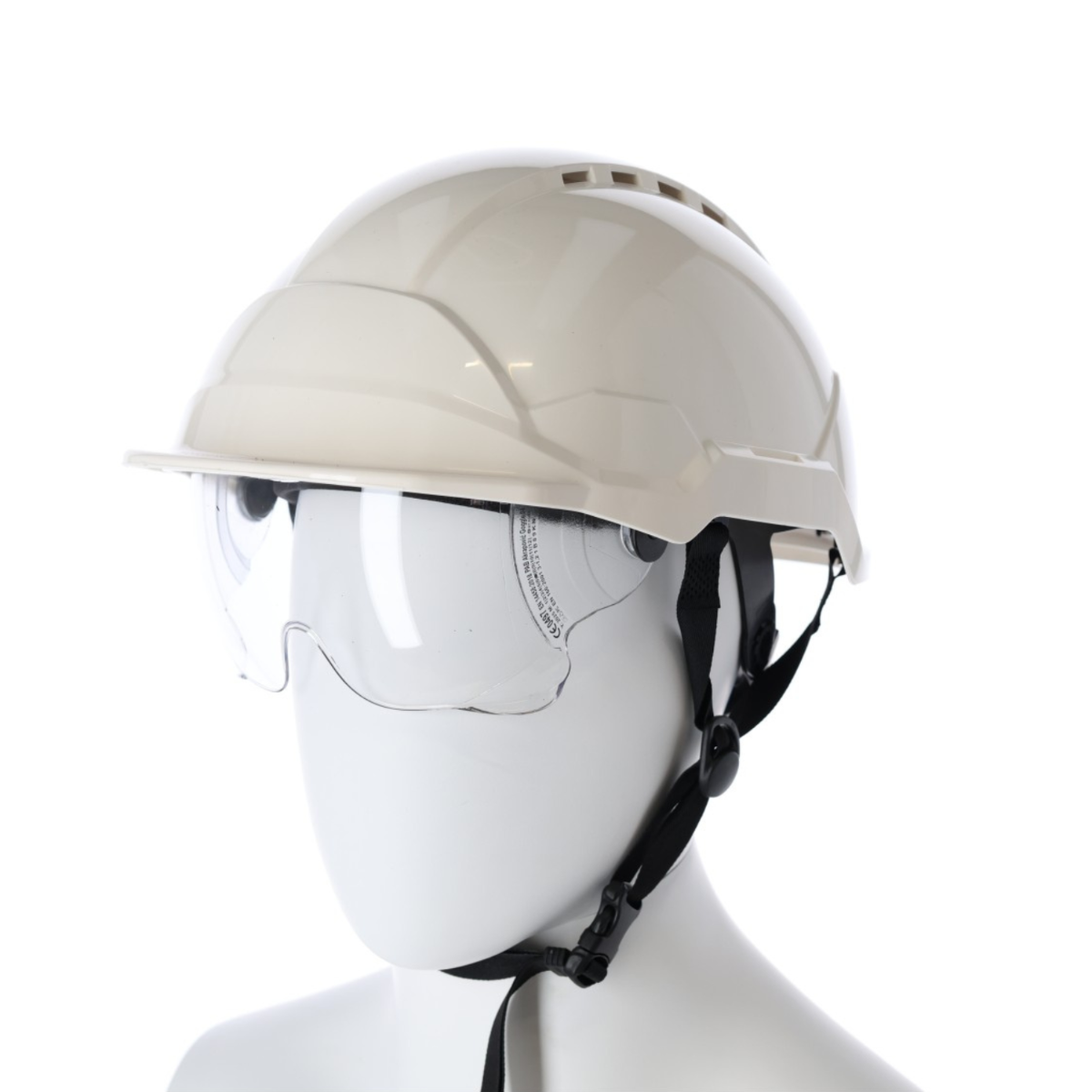
armourU Vented Denali Safety Helmet White| CMT Group UK armourU Vented Denali Safety Helmet Black | CMT Group UK armourU Vented Denali Safety Helmet Blue| CMT Group UK armourU Vented Denali Safety Helmet | CMT Group UK armourU Vented Denali Safety Helmet Front View| CMT Group UK armourU Vented Denali Safety Helmet Back View| CMT Group UK

A vented ABS industrial safety helmet with an integrated anti-fog goggle, for construction and industrial environments where thermal comfort and eye protection are required simultaneously.

  • Integrated anti-scratch and anti-fog goggle, EN 166:2001 and EN 14458:2004 certified, full marking 3-1.2 1 B 8 9 K N
  • EN 397:2012+A1:2012, EN 50365:2002, and MM certified, -30°C low-temperature classification, lateral deformation resistance
  • Vented ABS shell for airflow and reduced heat buildup during physically demanding tasks
  • 6-point suspension harness with integrated ratchet adjustment, 52 to 63 cm
  • Side euro slot adapters for helmet-mounted hearing protection
  • Available in white, black, and blue
  • BrandIT compatible, in-house logo printing available

armourU Denali Safety Helmet with Integrated Anti-Fog Goggle - Vented

Code
AHDEN02
In stock

A vented ABS industrial safety helmet with an integrated anti-fog goggle, for construction and industrial environments where thermal comfort and eye protection are required simultaneously.

  • Integrated anti-scratch and anti-fog goggle, EN 166:2001 and EN 14458:2004 certified, full marking 3-1.2 1 B 8 9 K N
  • EN 397:2012+A1:2012, EN 50365:2002, and MM certified, -30°C low-temperature classification, lateral deformation resistance
  • Vented ABS shell for airflow and reduced heat buildup during physically demanding tasks
  • 6-point suspension harness with integrated ratchet adjustment, 52 to 63 cm
  • Side euro slot adapters for helmet-mounted hearing protection
  • Available in white, black, and blue
  • BrandIT compatible, in-house logo printing available
Grouped product items
White Code AHDEN02-WHT
£38.57 £32.14
Bulk Discounts
Black Code AHDEN02-BLK
£38.57 £32.14
Bulk Discounts
Out of stock
Blue Code AHDEN02-BLU
£38.57 £32.14
Bulk Discounts

armourU Denali Vented Safety Helmet with Integrated Anti-Fog Goggle

A vented ABS industrial safety helmet with an integrated anti-scratch and anti-fog goggle, built for construction operatives and site workers carrying out physically demanding tasks in environments where head and eye protection must be maintained simultaneously. The Denali vented carries certification to EN 397:2012+A1:2012 for head protection, with the integrated goggle independently certified to EN 166:2001 and EN 14458:2004. Available in white, black, and blue, and compatible with CMT's BrandIT in-house logo printing service.

How a vented shell reduces heat stress across a full site shift

A standard unvented helmet traps heat against the head during physically demanding tasks, raising core temperature and increasing fatigue over the course of a shift. In groundwork, drainage, block laying, and other high-exertion site tasks, particularly during summer months or in enclosed spaces with limited airflow, heat buildup reduces concentration and increases the risk of errors. The vented ABS shell on the Denali creates airflow channels through the helmet, drawing warm air away from the head and reducing heat accumulation. Operatives maintain comfort and focus across longer periods without compromising the protection level required by EN 397.

Key Features

  • Integrated anti-scratch and anti-fog goggle: Polycarbonate goggle rated to EN 166:2001 and EN 14458:2004 stows inside the helmet brim and deploys in a single motion. Full EN 166 marking: 3-1.2 1 B 8 9 K N — optical class 1, medium energy impact resistance, short circuit electric arc resistance, molten metal and hot solids resistance, anti-scratch, and anti-fog coatings. Goggle tested to -20°C.
  • Vented ABS shell: Ventilation apertures in the Acrylonitrile Butadiene Styrene shell allow airflow through the helmet during physically demanding or warm weather site work, reducing heat accumulation and improving comfort across extended shifts.
  • EN 397:2012+A1:2012, EN 50365:2002, and MM certified: Meets the UK industrial safety helmet standard including optional low-temperature classification to -30°C, lateral deformation resistance, and molten metal splash resistance. EN 50365:2002 confirms electrical insulation for short-term accidental contact with live conductors up to 440V AC.
  • 6-point suspension harness with integrated adjustment: Six-point harness distributes load across the head for comfort across extended shifts. Integrated ratchet adjustment covers head circumferences from 52 to 63 cm without separate insert pads.
  • Side euro slot adapters: Standard euro slot mounting points on both sides of the shell accept compatible helmet-mounted hearing protection, enabling combined head, eye, and hearing protection without a separate head harness.
  • BrandIT compatible: Available with in-house logo printing via CMT's BrandIT service, suitable for principal contractor programmes and branded PPE requirements.

Who Is This For

Trades and roles:

  • Construction operatives

  • Groundworkers

  • Bricklayers and blocklayers

  • Civil engineers

  • Plant operators

  • Site managers and supervisors

  • Utilities and infrastructure workers

Industries:

  • Construction and groundworks

  • Civil engineering

  • Highways and infrastructure

  • Utilities

  • Industrial manufacturing

  • Facilities management

 Specifications

Specification Detail
Product name armourU Denali Safety Helmet with Integrated Anti-Fog Goggle - Vented
SKU AHDEN02
Helmet category Industrial safety helmet
Head protection standard EN 397:2012+A1:2012
Low temperature classification -30°C
Lateral deformation resistance Yes — meets EN 397 optional lateral deformation requirement
Electrical insulation standard EN 50365:2002 — protection against short-term accidental contact with live conductors up to 440V AC
Molten metal splash resistance Yes (MM)
Shell material ABS — Acrylonitrile Butadiene Styrene
Shell type Vented — ventilation apertures in shell for airflow
Suspension system 6-point harness
Size adjustment Integrated ratchet system, 52 to 63 cm
Side slot adapters Euro slot, both sides — compatible with helmet-mounted hearing protection
Integrated goggle (optional) Anti-scratch and anti-fog coated polycarbonate goggle — stows inside helmet brim
Goggle certification EN 166:2001 and EN 14458:2004 — full marking: 3-1.2 1 B 8 9 K N
Goggle temperature rating -20°C
Chinstrap (optional) Available — tested to EN 397 chinstrap anchorage requirements
BrandIT compatible Yes — in-house logo printing available via CMT BrandIT service
Weight 445g ± 30g (basic configuration)
Colours available White, Black, Blue

Compatibility

Application or condition Status
Falling object hazard on construction and industrial sites (EN 397) ✓ Compatible
Dusty environments requiring integrated eye protection ✓ Compatible
Cold weather outdoor work to -30°C ✓ Compatible
Physically demanding and warm weather tasks requiring airflow ✓ Compatible
Short-term accidental contact with live conductors up to 440V AC (EN 50365) ✓ Compatible
Molten metal splash environments (MM rated) ✓ Compatible
Splash risk requiring eye protection (goggle fitted) ✓ Compatible
Helmet-mounted hearing protection via euro slot adapters ✓ Compatible
In-house branded PPE via BrandIT ✓ Compatible
Working at height requiring EN 12492 certification ✗ Not suitable — EN 12492 not certified
Deliberate live working on live installations ✗ Not suitable — EN 50365 covers accidental contact only
Chemical splash requiring full face shield coverage ✗ Not suitable — goggle is partial coverage only


Who Is This For

These helmets are used primarily by groundworkers, concreters, bricklayers, and construction operatives carrying out physically demanding site tasks where heat buildup inside the helmet reduces comfort and concentration across a full shift. They are equally suited to civil engineering and highways operatives working in open outdoor environments during warm weather, where airflow through the shell makes a practical difference to wearing compliance over extended periods. Safety officers and procurement managers specifying PPE across summer site programmes, high-exertion trades, or principal contractor packages requiring consistent branded headgear will find the full certification suite, integrated goggle, and BrandIT capability relevant to their requirements.

Typical Applications

  • Ground-level construction tasks including block laying, bricklaying, and general building work where physical exertion and warm conditions make helmet ventilation a meaningful comfort factor across a full shift.

  • Civil engineering and drainage installation in open outdoor environments during warm weather, where airflow through the shell reduces fatigue and improves wearing compliance over long periods.

  • Highways maintenance involving breaking, saw-cutting, and reinstatement work in exposed outdoor environments where overhead hazard, eye protection, and thermal comfort are all simultaneous requirements.

  • General site movement and induction for operatives requiring head and eye protection across mixed task environments, without the need to carry or manage separate eye protection.

  • Industrial production and warehouse environments where falling object risk is present, molten metal splash is a foreseeable hazard, and thermal comfort during physical work is a daily requirement.

  • Environments where incidental proximity to low-voltage electrical installations is foreseeable, and a helmet carrying EN 50365:2002 insulation is required by the site risk assessment.

  • Principal contractor programmes requiring consistent, branded helmet specification across multiple trades and packages working in warm or physically demanding outdoor conditions.

How to Use

Step 1: Check the shell, ventilation apertures, harness, and goggle lens for damage or blockage before every shift. Do not use a helmet that has sustained a significant impact, even if no visible surface damage is present — the ABS shell absorbs impact energy and its structural integrity cannot be confirmed by visual inspection alone after a strike.

Step 2: Fit the helmet with the peak facing forward. Operate the ratchet adjustment at the rear until the harness seats firmly against the head without movement or rocking. The 6-point harness should contact the head evenly at all points without localised pressure.

Step 3: Where the optional chinstrap is fitted, connect it to one of the side attachment slots on the shell, place the helmet on the head, then connect the other end. Adjust the loose part of the strap until it seats below the chin without restricting jaw movement. Press the tab on the buckle to release.

Step 4: Where the integrated goggle is fitted, slide it downward from its stowed position inside the brim before entering a zone requiring eye protection. Confirm it seats correctly across the face with no gaps at the sides before beginning work.

Step 5: Return the goggle to the stowed position inside the brim when moving clear of the eye hazard zone. Pull the spectacle sliders upward on both sides of the helmet first, then slide the goggle back under the shell.

Step 6: At the end of each shift, wipe the shell and goggle lens with a damp cloth and mild detergent. Check that ventilation apertures are clear. Store in a cool, dry location away from direct sunlight, solvents, and heat sources.

Common Mistakes

  • Continuing to use a helmet after a significant impact: the ABS shell absorbs energy during an impact and may be structurally compromised without visible surface cracking. Replace immediately after any significant blow, regardless of appearance.

  • Wearing the peak to the rear: the helmet must be worn with the peak facing forward for the suspension system to provide the protection tested under EN 397. Wearing it backwards does not meet the standard.

  • Treating EN 50365 as clearance for deliberate live working: the electrical insulation rating covers short-term accidental contact with live conductors up to 440V AC only. It does not authorise deliberate contact with live installations, which requires a full electrical PPE system and trained operatives working under a safe system of work.

  • Cleaning the goggle lens with solvents or abrasive cloths: both destroy the anti-fog and anti-scratch coatings, reducing optical clarity and shortening goggle service life. Use a damp soft cloth and mild detergent only.

  • Blocking the ventilation apertures with adhesive labels, paint, or tape: this defeats the purpose of the vented construction and may also affect the structural integrity of the ABS shell. Manufacturers specifically advise against applying any adhesive, paint, or solvent to the shell.

Safety

This helmet is certified to EN 397:2012+A1:2012, including the optional low-temperature classification to -30°C, lateral deformation resistance, and molten metal splash resistance (MM). EN 50365:2002 confirms electrical insulation for short-term accidental contact with live conductors up to 440V AC. This covers incidental proximity to low-voltage installations, it does not cover deliberate live working, and is not a substitute for a full electrical PPE system where intended contact with live conductors is involved. The integrated goggle, where fitted, is certified to EN 166:2001 and EN 14458:2004, with full marking 3-1.2 1 B 8 9 K N. This helmet is not certified to EN 12492 and must not be used for working at height applications where that standard is required. Replace immediately after any significant impact and at the end of the manufacturer's stated service life.

Maintenance

Wipe the shell and goggle lens after each shift with a damp cloth and mild detergent. Do not use solvents, thinners, or abrasive materials on any part of the helmet or goggle. Check that ventilation apertures are clear of debris and blockage at each pre-use inspection. Inspect the harness webbing for wear, fraying, or deformation. Replace the sweatband when it shows saturation or deterioration, the sweatband padding can be removed and hand-washed in cold water with a mild detergent. Replace the goggle lens when anti-fog or anti-scratch coating degradation affects optical clarity. Store in a cool, dry location away from direct sunlight, heat sources, and solvents. Do not store under loads that could deform the shell.

Frequently Asked Questions

Q: What does EN 397:2012+A1:2012 mean for this helmet, and what protection does it provide?
A: EN 397:2012+A1:2012 is the UK and European standard for industrial safety helmets. It requires the helmet to absorb the force of a 5kg striker dropped from one metre to below 5kN, and to resist penetration from a 3kg pointed object dropped from the same height. It also requires resistance to flame for at least five seconds. This helmet meets four optional additional requirements within EN 397: low-temperature classification to -30°C, resistance to lateral deformation, molten metal splash resistance (MM), and electrical insulation under EN 50365:2002 for short-term accidental contact with live conductors up to 440V AC.

Q: What is the integrated goggle certified to, and what does the full marking mean?
A: The goggle carries dual certification to EN 166:2001 and EN 14458:2004, with a full lens marking of 3-1.2 1 B 8 9 K N. Each element is a confirmed test result: 3-1.2 identifies this as a helmet-mounted face guard at optical class 1, the highest level of optical clarity. B confirms medium energy impact resistance. 8 confirms resistance to short circuit electric arc. 9 confirms resistance to molten metals and penetration of hot solids. K confirms anti-scratch coating. N confirms anti-fog coating. The goggle has been tested to -20°C. This level of eye protection significantly exceeds standard safety spectacles and covers most hazards present on UK construction and industrial sites.

Q: What is this helmet NOT suitable for?
A: This helmet is not certified to EN 12492 and must not be used for working at height applications where that standard is required, such as rope access, scaffolding, or arboriculture. Whilst the helmet carries EN 50365:2002 electrical insulation for short-term accidental contact up to 440V AC, it does not cover deliberate live working and is not a substitute for a full electrical PPE system where intended contact with live conductors is involved. The integrated goggle provides broad coverage but is not a substitute for a full face shield in chemical immersion or heavy chemical splash environments.

Q: What is the practical difference between this vented version and the unvented Denali?
A: Both versions carry the same certification suite: EN 397:2012+A1:2012, EN 50365:2002, MM, and the same integrated goggle rated to EN 166:2001 and EN 14458:2004. The only difference is the shell construction. The vented AHDEN02 has apertures in the shell that allow airflow, reducing heat buildup during physically demanding or warm weather site work. The unvented AHDEN01 has a fully sealed shell with no ventilation apertures. Choose the vented version for high-exertion trades and warm conditions where thermal comfort across a shift is a priority.

Q: Can I attach ear defenders directly to this helmet?
A: Yes. The Denali vented carries standard euro slot adapters on both sides of the shell, which accept compatible helmet-mounted ear defenders. This enables combined head, eye, and hearing protection without a separate head harness. Confirm compatibility with your ear defender manufacturer before fitting — only accessories confirmed as compatible with the euro slot system should be attached to avoid compromising the helmet's certified performance.

Q: Is this helmet suitable for use near live electrical installations?
A: The helmet carries EN 50365:2002 certification, confirming electrical insulation for short-term accidental contact with live conductors up to 440V AC. This makes it appropriate for environments where incidental proximity to low-voltage installations is a foreseeable risk. It does not cover deliberate live working and is not a substitute for a full electrical PPE system where intended contact with live conductors is involved. For arc-rated and higher-voltage environments, the armourU Fuji Safety Helmet carries additional arc protection and electrical insulation certification.

Q: How long should this helmet last before it needs replacing?
A: ABS safety helmets are typically replaced every three to five years from the date of first use, following manufacturer guidance and site PPE policy. UV exposure, temperature cycling, chemical contact, and physical wear all degrade the shell. The helmet must be replaced immediately after any significant impact regardless of visible damage. The goggle lens should be inspected separately and replaced when anti-fog or anti-scratch coating degradation affects optical clarity. Do not apply paints, solvents, or adhesive labels to the shell, as these can reduce the structural integrity of the ABS material.

Q: Is this helmet available with a company logo?
A: Yes. CMT Group's BrandIT service provides in-house logo printing on armourU helmets, including the Denali vented. Printing is carried out in-house for fast turnaround, suitable for principal contractor programmes, site-specific PPE requirements, and procurement teams managing branded PPE across multiple trade packages. Contact sales@cmt.co.uk or call 020 8311 1144 for BrandIT enquiries.

File Icon User Manual (5.31 MB)
CMT Equipment Ltd