How to specify certified PPE for UK construction sites, EN standards explained for cut-resistant gloves, safety glasses, safety goggles, ear defenders, and helmets, with product comparisons and selection guides.
Smoke lens anti-glare safety glasses for outdoor construction, engineering, and industrial operatives requiring EN166 certified eye protection in bright conditions and strong sunlight.
- EN166 FTKN certified, EN170 2C-1.2 UV protection
- CE and UKCA marked
- Optical class 1 smoke tinted polycarbonate lens, anti-glare for outdoor use
- Permanent anti-fog and scratch-resistant coatings
- Polycarbonate frameless and screwless design, fully metal-free construction
- Non-slip arms, clear TPE nose rest for extended comfort
- Lightweight, approximately 25g
- Recycled polyester pouch and recycled paper box
- Clear lens variant available separately (AEYK2C)
Smoke lens anti-glare safety glasses for outdoor construction, engineering, and industrial operatives requiring EN166 certified eye protection in bright conditions and strong sunlight.
- EN166 FTKN certified, EN170 2C-1.2 UV protection
- CE and UKCA marked
- Optical class 1 smoke tinted polycarbonate lens, anti-glare for outdoor use
- Permanent anti-fog and scratch-resistant coatings
- Polycarbonate frameless and screwless design, fully metal-free construction
- Non-slip arms, clear TPE nose rest for extended comfort
- Lightweight, approximately 25g
- Recycled polyester pouch and recycled paper box
- Clear lens variant available separately (AEYK2C)
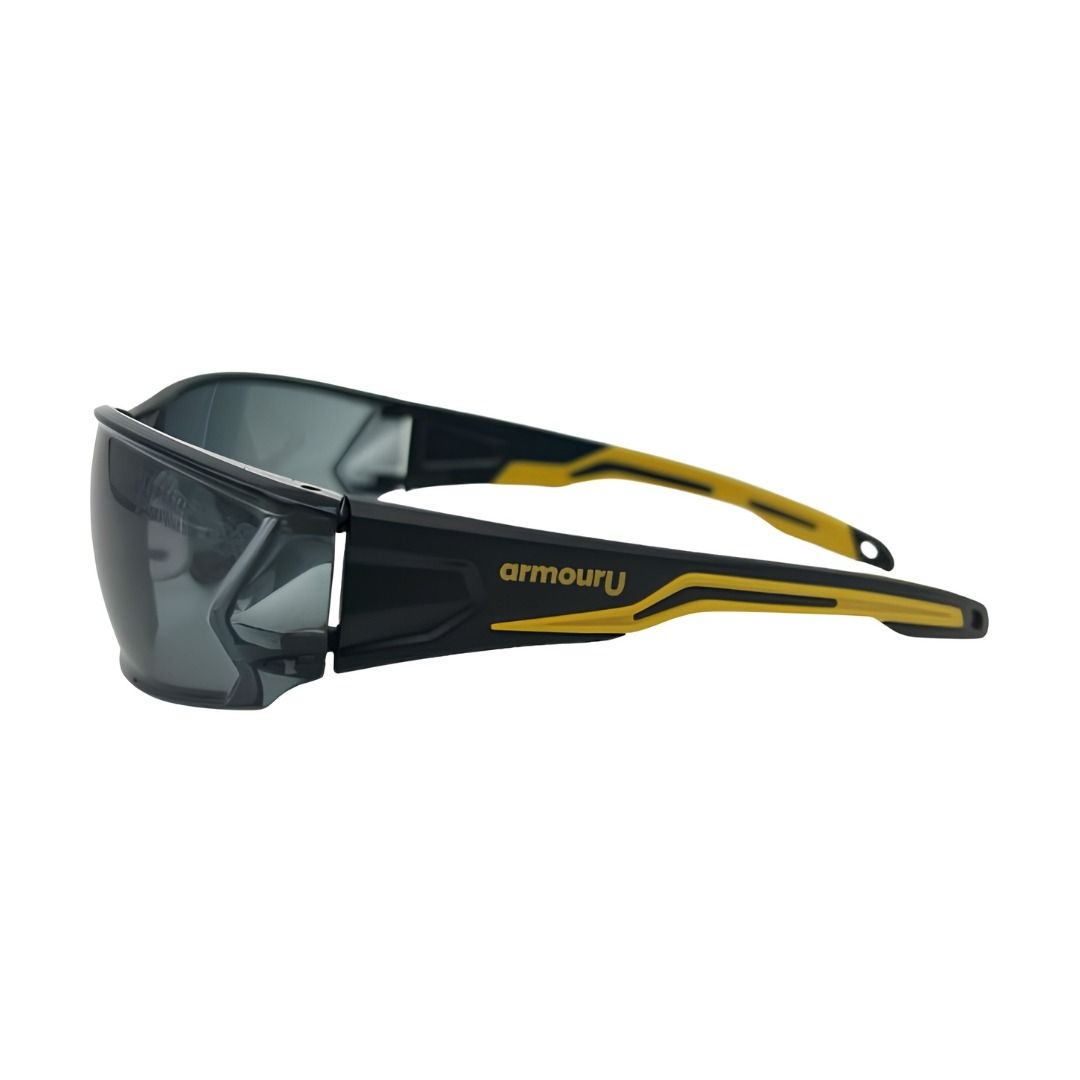
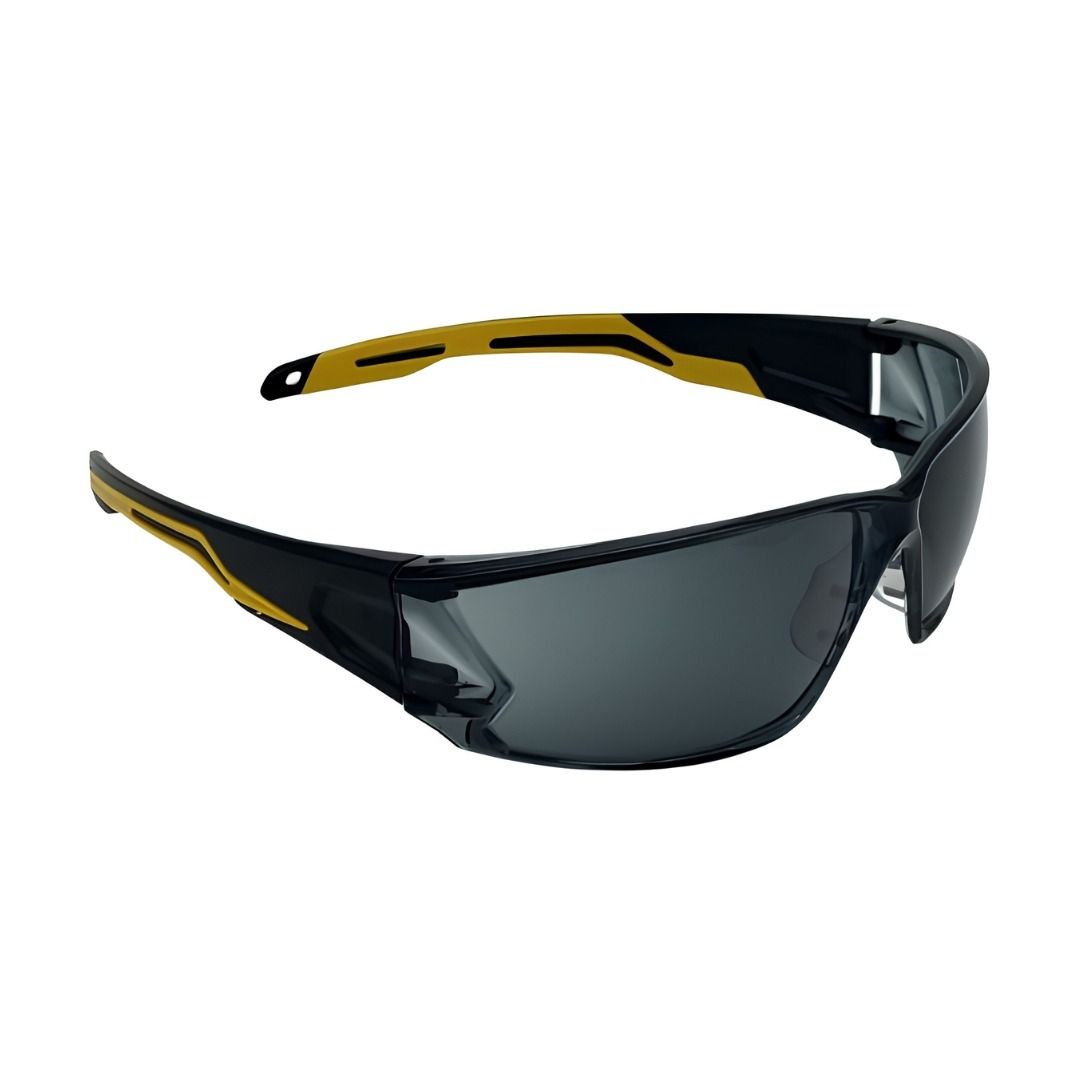
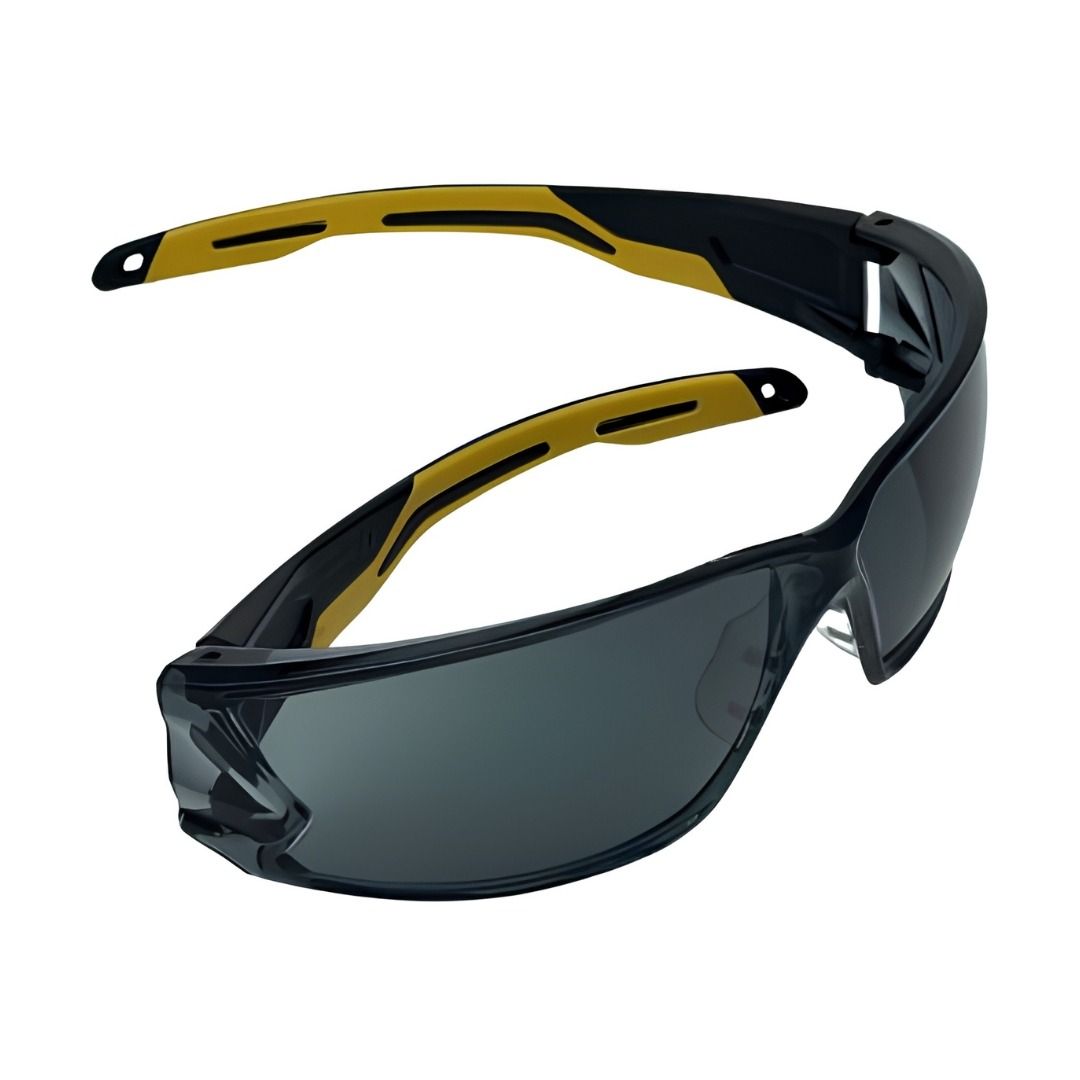
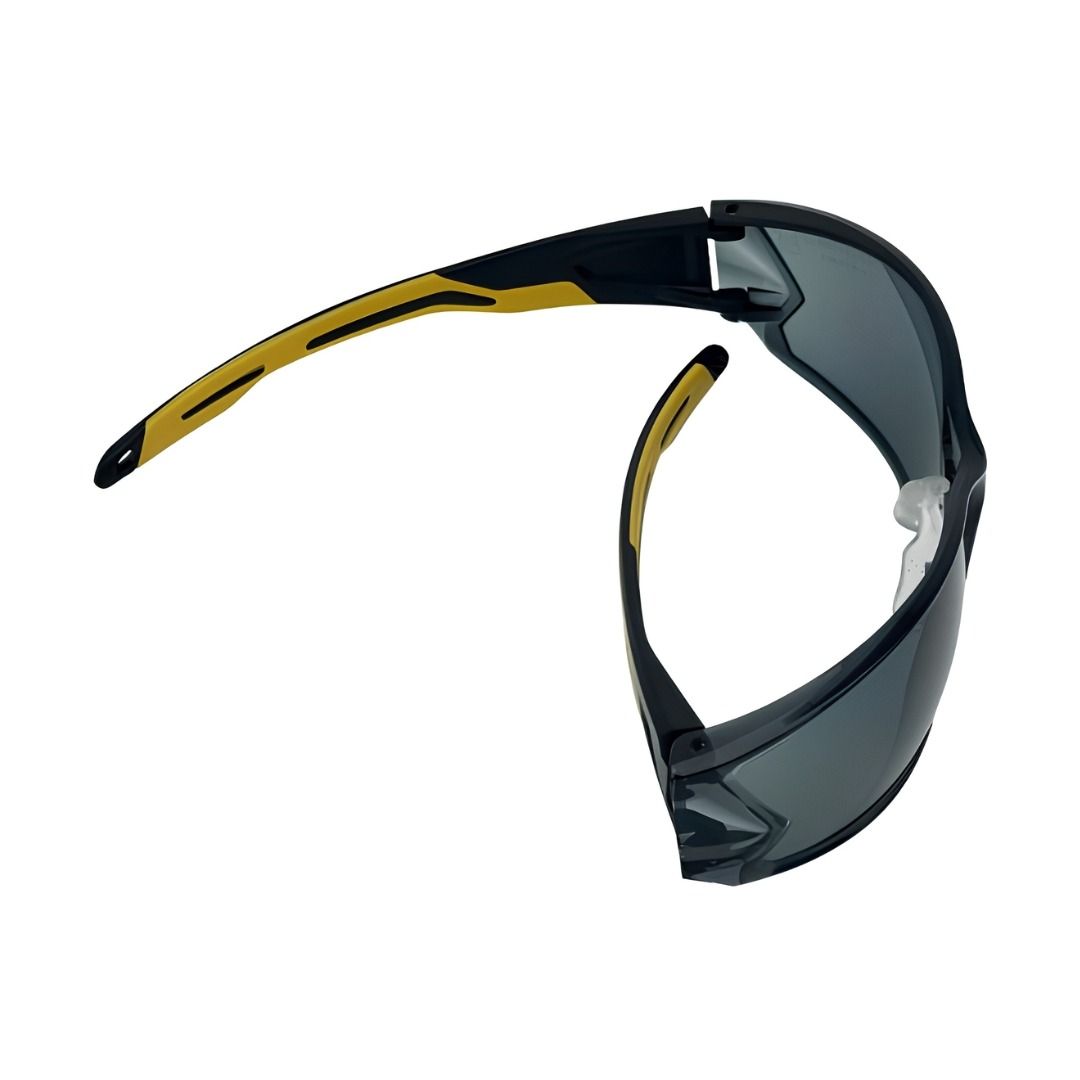
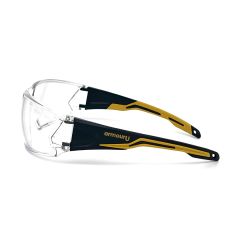
armourU K2 Safety Glasses - Smoke Lens
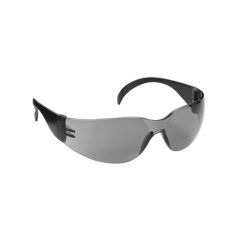
Smoke lens anti-glare safety glasses for outdoor construction, civils, and industrial operatives who require EN166 certified eye protection with glare reduction in bright conditions, direct sunlight, and reflective outdoor environments. The smoke tinted polycarbonate lens reduces visible light transmittance, managing eye fatigue from prolonged outdoor exposure, whilst the permanent anti-fog and scratch-resistant coatings on both sides of the lens maintain optical class 1 clarity through temperature changes and physical activity. Certified to EN166 FTKN and EN170 2C-1.2, CE and UKCA marked, fully metal-free, and supplied in recycled packaging.
How a smoke tinted lens reduces glare fatigue during extended outdoor site work
Operatives working outdoors on exposed construction sites, open yards, and civils projects in bright conditions face persistent visual fatigue from unfiltered sunlight and glare from reflective surfaces, wet ground, standing water, light-coloured aggregate, and new concrete all intensify glare throughout a morning shift. Standard clear lens safety glasses, whilst EN166 certified for impact and UV protection, make no reduction to visible light transmittance and provide no relief from glare-driven eye strain. The smoke tinted lens reduces the quantity of visible light reaching the eye, managing glare from direct sunlight and reflective surfaces and reducing the cumulative fatigue that affects visual attention and task precision across the second half of an outdoor working day.
Key Features
-
Smoke tinted lens, anti-glare for outdoor use: The smoke tint reduces visible light transmittance, managing glare from direct sunlight, reflective ground surfaces, standing water, and light-coloured building materials in outdoor site environments. Not a UV filter substitution, EN170 UV protection applies independently of the tint.
-
Fully metal-free, frameless, and screwless: No metal components anywhere in the construction. Polycarbonate throughout, lens, arms, and fixings. Satisfies metal-free PPE requirements for food production, pharmaceutical, and sterile environments as well as general outdoor site use.
-
Frameless polycarbonate lens: No surrounding frame, unobstructed field of vision with no peripheral visual interruption, which is particularly relevant outdoors where peripheral awareness of vehicles, plant, and moving loads is a site safety factor.
-
Permanent anti-fog and scratch-resistant coatings, both sides: Applied permanently to both lens surfaces. Relevant outdoors for temperature transitions between cool air and warmer working environments, and for operatives wearing face-fitted respirators where exhaled breath drives inner lens fogging alongside the anti-glare requirement.
-
EN166 FTKN and EN170 2C-1.2 certified, CE and UKCA marked: Low energy impact resistance (F), hot particle resistance (T), anti-scratch (K), and anti-fog (N) under EN166. EN170 2C-1.2 confirms UV protection at optical class 1. CE and UKCA markings confirm independent assessment under UK PPE Regulations.
-
Non-slip arms with clear TPE nose rest: The TPE nose rest distributes weight without pressure points. Non-slip arm material is particularly relevant outdoors where sweat and physical activity affect fit stability across a full shift.
-
Recycled packaging: Recycled polyester pouch made from two reclaimed 1-litre plastic water bottles, supplied in a recycled paper box.
Who is this for
Trades and roles:
-
Outdoor construction and civils operatives
-
Groundworkers and drainage workers
-
Site managers and supervisors working outdoors
-
Outdoor utilities and infrastructure operatives
-
Food production operatives on metal-free specified sites
Industries:
-
Outdoor construction and civil engineering
-
Utilities and infrastructure
-
Groundworks and drainage
-
Food production (metal-free environments)
-
Facilities management, outdoor maintenance
Specifications
| Specification | Detail |
|---|---|
| Product Name | armourU K2 Safety Glasses - Smoke Lens Anti-Glare Metal-Free EN166 |
| SKU | AEYK2S |
| Product Type | Safety glasses (safety spectacles) |
| EN Standard | EN166:2001 and EN170:2002 |
| EN166 Marking | FTKN |
| EN166 F | Low energy impact resistance — 45 m/s steel ball |
| EN166 T | Resistance to hot particles and extreme temperatures |
| EN166 K | Resistance to surface damage by fine particles (anti-scratch) |
| EN166 N | Not susceptible to fogging (anti-fog) |
| EN170 Marking | 2C-1.2 |
| UV Protection | Filter code 2C — full UV-A and UV-B protection |
| Optical Class | Class 1 — highest optical quality, minimum distortion |
| Lens Material | Smoke tinted polycarbonate (PC) |
| Lens Colour | Smoke tinted |
| Lens Function | Anti-glare — reduces visible light transmittance for outdoor use |
| Frame Design | Frameless and screwless |
| Metal-Free | Yes — no metal components anywhere in the construction |
| Lens Treatment | Permanent anti-fog and scratch-resistant coatings — both sides |
| Arms | Non-slip polycarbonate |
| Nose Rest | Clear TPE (thermoplastic elastomer) |
| Weight | Approximately 25g |
| Compliance Markings | CE and UKCA |
| Clear Lens Variant | AEYK2C — available separately |
| Pouch | Recycled polyester (made from two reclaimed 1-litre plastic water bottles) |
| Packaging | Recycled paper box |
Compatibility
| Application or Condition | Detail |
|---|---|
| Low energy impact — flying debris, chips, particles | ✓ Compatible |
| Bright outdoor conditions and direct sunlight | ✓ Compatible |
| Glare from reflective surfaces — wet ground, water, aggregate | ✓ Compatible |
| UV protection — outdoor construction and site work | ✓ Compatible |
| Metal detection environments — food and pharmaceutical | ✓ Compatible |
| Humid and mask-wearing environments (anti-fog) | ✓ Compatible |
| All-day outdoor wear — optical class 1 | ✓ Compatible |
| Low-light, dim, or dark environments | ✗ Not recommended — smoke tint reduces light transmittance |
| Chemical or liquid splash protection | ✗ Not recommended — open frame cannot seal |
| Large dust or fine particle ingress protection | ✗ Not recommended — sealed goggles required |
| High energy impact tasks (B or A rated) | ✗ Not recommended — rated F (low energy) only |
| Laser or welding arc protection | ✗ Not recommended — no laser or welding filter rating |
Who is this for
Smoke lens anti-glare safety glasses used by outdoor construction operatives, groundworkers, civils engineers, and utilities workers who spend full shifts in bright outdoor conditions where unfiltered sunlight and glare from reflective surfaces cause progressive visual fatigue. They are equally suited to food production and pharmaceutical operatives working outdoors or in bright environments where metal-free PPE is a site specification requirement, and to site managers and supervisors conducting outdoor inspections across exposed sites in varying light conditions throughout the day.
Typical applications
-
Outdoor groundwork, excavation, and civils operations in direct sunlight where glare from wet ground, standing water, and exposed aggregate compounds visual fatigue across the afternoon.
-
Roofing, cladding, and external envelope work at height where reflected sunlight from surrounding buildings and surfaces is persistent throughout the shift.
-
Outdoor utilities and infrastructure installation on open sites with minimal shade and prolonged UV and visible light exposure.
-
Road and highway maintenance in exposed outdoor environments where bright conditions and glare from road surfaces, vehicles, and signage are continuous.
-
External site management and safety inspection visits across open construction sites in bright or variable outdoor light conditions.
-
Food production outdoor areas or loading environments where metal-free PPE is a site requirement and outdoor light conditions require glare reduction.
-
General outdoor construction tasks including bricklaying, concreting, and drainage work in exposed, sunlit environments.
How to use
Step 1: Hold the glasses by the arms and position the smoke tinted frameless lens in front of the eyes, then extend the arms over the ears until they seat securely.
Step 2: Check the clear TPE nose rest sits flat across the bridge of the nose without pressure points. Adjust arm position if the frame sits unevenly.
Step 3: Confirm the non-slip arm material is in contact with the head behind the ears before beginning work.
Step 4: Remove the glasses when moving into low-light environments, internal plant rooms, or dark spaces, the smoke tint reduces visible light transmittance and is not suitable for use in dim or dark conditions.
Step 5: Store in the supplied recycled polyester pouch after every use to protect the lens surface.
Common mistakes
-
Wearing smoke lens glasses in low-light or internal environments: the smoke tint reduces visible light transmittance, adequate for bright outdoor conditions but potentially a visual hazard in dim internal spaces, undercover plant rooms, or poorly lit site areas. Switch to the clear K2C variant (AEYK2C) for indoor use.
-
Wiping the lens with clothing, paper tissue, or a rough cloth: abrasive materials scratch polycarbonate and permanently damage the anti-scratch coating. Use dedicated lens wipes or a clean soft cloth only.
-
Using solvent-based cleaners: acetone, alcohol sprays, and solvent products degrade polycarbonate and permanently impair both coatings. Use water or a water-based lens cleaning solution.
-
Storing without the pouch: a frameless smoke lens stored loose in a pocket or tool bag picks up scratches from contact with hard objects. The pouch protects the lens between uses.
-
Assuming the smoke tint replaces EN170 UV protection: the anti-glare benefit of the smoke tint (reducing visible light) is separate from the EN170 2C-1.2 UV certification. Both apply simultaneously, the glasses protect against UV and reduce visible glare, but neither function substitutes for the other.
Safety
These glasses are certified to EN166 FTKN (low energy impact, hot particles, anti-scratch, anti-fog) and EN170 2C-1.2 (UV filter, optical class 1). The smoke tint reduces visible light transmittance for anti-glare performance in outdoor conditions and must not be used in low-light, dim, or dark environments where reduced transmittance creates a visual hazard. These glasses do not protect against chemical splash, large dust ingress, high energy impacts, or laser or welding arc exposure. Specify in accordance with the Personal Protective Equipment at Work Regulations 1992 (as amended) and the findings of a suitable workplace risk assessment.
Maintenance
Clean with dedicated lens wipes or a clean soft cloth moistened with water or a water-based cleaning solution. Pat dry to reduce scratch risk. Never use solvent-based cleaners, paper tissue, or rough fabric. Inspect the smoke tinted lens before each use and replace if cracking, impact damage, or deep scratching is visible. Store in the supplied recycled polyester pouch between uses.
Frequently Asked Questions
Q: How does the smoke tint reduce glare and why does it matter for outdoor work?
A: The smoke tint reduces the quantity of visible light passing through the lens, which manages glare from direct sunlight and reflective outdoor surfaces such as wet ground, standing water, new concrete, and light-coloured aggregate. Unlike a clear lens, which transmits the full spectrum of visible light regardless of conditions, the smoke tint filters a portion of it, reducing the squinting and eye strain that accumulates across a full outdoor shift. EN170 2C-1.2 UV protection applies independently — the smoke tint manages visible light glare; the EN170 certification manages UV radiation. Both operate simultaneously.
Q: What does EN166 FTKN mean?
A: EN166 is the UK and European standard for personal eye protection. FTKN covers four independently tested performance characteristics: F confirms the lens and frame withstand a steel ball at 45 m/s — low energy impact protection. T confirms resistance to hot particles and extreme temperatures. K confirms the anti-scratch coating meets EN166's abrasion resistance requirement. N confirms the anti-fog coating passes EN166's fogging resistance test. CE and UKCA markings confirm independent assessment under UK PPE Regulations.
Q: What are these glasses not suitable for?
A: The smoke tint reduces visible light transmittance, these glasses must not be used in low-light, dim, or dark environments where that reduction creates a visual hazard. The open frame cannot seal against the face, so they must not be used for liquid splash, fine dust ingress, or gas exposure. They are rated F (low energy, 45 m/s) and must not be used for high-velocity impact tasks requiring B or A rated protection. They carry no laser or welding filter rating.
Q: What is the difference between the K2 smoke lens and the K2 clear lens?
A: Both share identical construction, metal-free, frameless, screwless polycarbonate with EN166 FTKN and EN170 2C-1.2 certification, permanent dual-side anti-fog and anti-scratch coatings, and the same 25g weight. The difference is the lens tint. The clear lens (AEYK2C) transmits full visible light, suited to indoor, humid, and mask-wearing environments where anti-fog is the primary requirement. The smoke lens (AEYK2S) reduces visible light transmittance, suited to outdoor, bright conditions where glare from sunlight and reflective surfaces is the primary concern. Choose by environment: indoor and anti-fog needs go to the clear; outdoor and anti-glare needs go to the smoke.
Q: Can I use these in metal detection environments like food production sites?
A: Yes. The fully metal-free polycarbonate construction, no screws, no metal hinges, no metal fixings, passes metal detection requirements for food production, pharmaceutical, and sterile environments. The smoke tint does not change the metal-free status of the construction. For outdoor food production areas or loading environments where both metal-free compliance and outdoor light conditions are factors, these are a direct match.
Q: How do I maintain the coatings on a smoke tinted lens?
A: Exactly as with the clear lens variant. Clean with dedicated lens wipes or a clean soft cloth and water only, no solvent-based cleaners, alcohol sprays, or paper tissue. The smoke tint is part of the polycarbonate itself, not a surface coating, so the cleaning method does not affect the tint. The anti-fog and anti-scratch coatings on both sides require the same care as any polycarbonate lens. Store in the supplied recycled polyester pouch after every use.
Q: Should I carry both the clear and smoke lens K2 for mixed indoor and outdoor shifts?
A: For operatives who move between outdoor and indoor environments across the same shift, carrying both variants is practical. The clear K2C handles indoor, humid, and anti-fog situations; the smoke K2S handles outdoor bright conditions. Both are the same weight, same fit, and same metal-free frameless construction, switching between them adds no adjustment time. Both supplied with a recycled polyester pouch for independent storage.