
Green Rhino
EnviroPad 5.0
Complete Guide
How the UK's only oil-solidifying spill mat works, which size fits your plant, and why it outperforms every absorbent tray on site.
What is the EnviroPad?
The Green Rhino EnviroPad is a spill control mat designed specifically for construction, civil engineering, utilities, and infrastructure sites. It sits beneath motor-driven plant and equipment to capture incidental hydrocarbon drips and refuelling spills: the kind that happen every day on every active site, and that carry a direct legal liability under the Environmental Protection Act 1990 and the Water Resources Act 1991.
The EnviroPad is not an absorbent mat. That distinction matters more than any other specification. Every other spill pad, nappy, and tray on the market uses polypropylene or recycled fibre to soak up oil. Soaking is temporary. Apply pressure, move the product, or let it rain, and the absorbed oil comes straight back out.
The EnviroPad uses Neutroilize Smart Fabric Technology, a patented blend of smart polymers that chemically converts hydrocarbons into a non-leaching solid. Not absorbed. Not stored. Converted. Once the oil becomes solid, it cannot drain, squeeze, or wash back out under any normal site condition.
Generation 5.0 is the current version of the EnviroPad. The key advancement over previous generations is full compatibility with HVO (hydrotreated vegetable oil) and bio hydraulic fluids, covering the fuels now increasingly specified on low-carbon construction projects across the UK.
How the Neutroilize technology works
Oil or fuel drips onto the surface. The top mesh wicks the hydrocarbon inward across areas of unused polymer beneath.
The smart polymers react with the hydrocarbon on contact, beginning the conversion from liquid to solid. The polymer swells as it reacts.
The hydrocarbon is fully converted into a non-leaching solid rubber, permanently locked inside the pad and unrecoverable by any mechanical means.
Rainwater passes through the mesh and sheds freely from the surface. The solid hydrocarbons inside are unaffected. The pad never fills with water.
As the polymer reacts and solidifies hydrocarbons, it swells to approximately twice its original thickness. This is how you check remaining capacity: press the pad surface. When it has thickened uniformly across its full area, it is approaching the end of its working life and needs replacing.
EnviroPad vs absorbent products
The case for the EnviroPad is not a marginal improvement on absorbent spill products. It is a fundamentally different outcome. Here is what happens in practice with each approach on a UK construction site.
Your legal duty of care
Operating motor-driven plant on a UK construction site without effective spill control is not a grey area. Two pieces of primary legislation create a direct obligation on site operators.
Where the EnviroPad is used
The EnviroPad is designed for any site scenario where motor-driven plant is operating near permeable ground, drainage, or watercourses. The five sizes cover the full range of equipment types found on UK construction and civils sites.
Petrol or diesel disc cutters drip engine oil and fuel during operation. The S6 covers the footprint precisely.
From small site generators to 100kVA units. Match the M15, L31, or XXL80 to your generator's base dimensions.
Diesel-driven compressors and pneumatic plant. The L31 covers most medium to large compressor bases.
Tracked plant at static positions. The XL50's square format matches excavator track width and depth.
The XXL80's elongated format covers transformer bases. Compatible with mineral and bio hydraulic oils.
The XXL80 covers the full length of a towed bowser or generator trailer without needing two mats end to end.
The five sizes explained
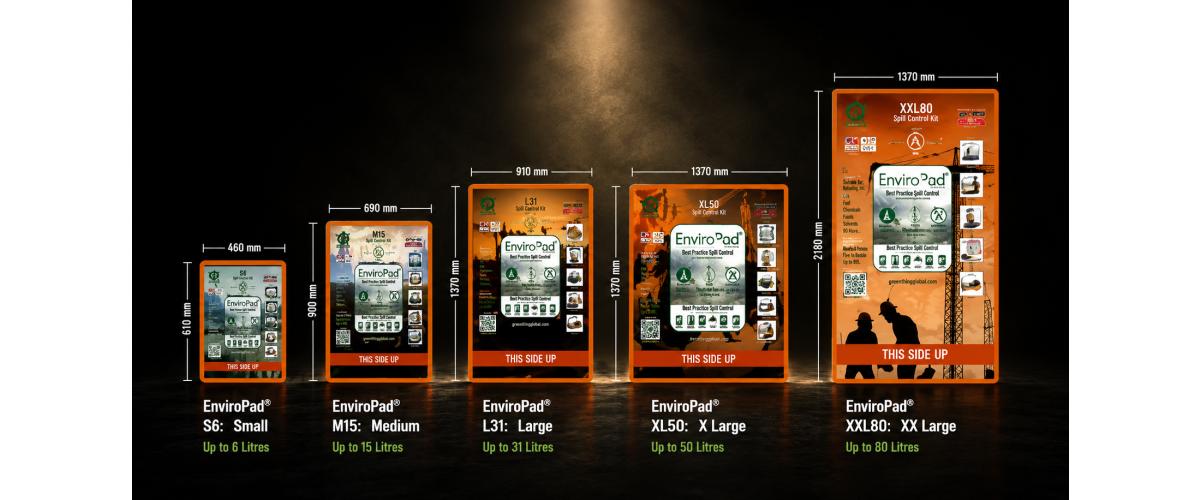
All five EnviroPad sizes use identical Gen 5.0 Neutroilize Smart Fabric Technology and carry the same King's Award for Enterprise Innovation 2025. The only variables are dimensions, oil capacity, and the plant types they are sized for. Choose by matching the mat to the footprint of your equipment and the anticipated spill volume over a working shift.
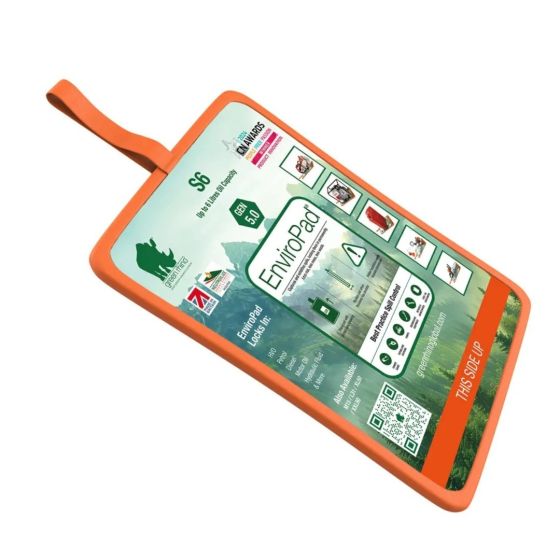
The entry-level format in the range. Sized precisely for compact power tools and small plant: disc cutters, small generators, water pumps, and similar equipment where a larger mat would be impractical.

The mid-range format for medium plant. At 900 mm x 690 mm, it covers portable generators up to 20kVA, diesel compressors, and larger water pumps where the S6 footprint would leave drip zones exposed.
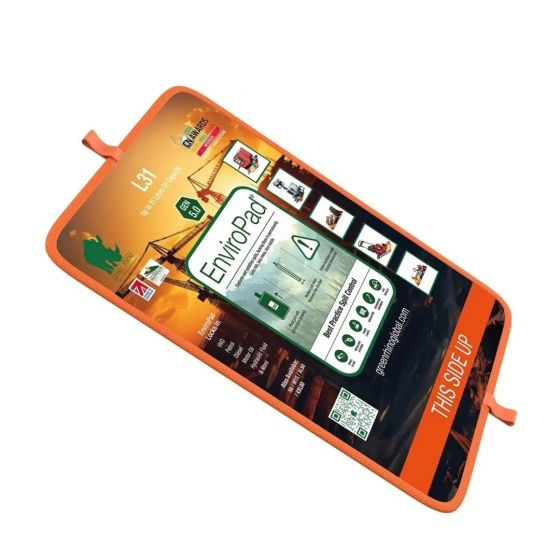
The large format for high-utilisation rectangular plant. Large generators running continuous shifts, diesel compressors serving multiple tool points, and telehandlers at fixed service positions.
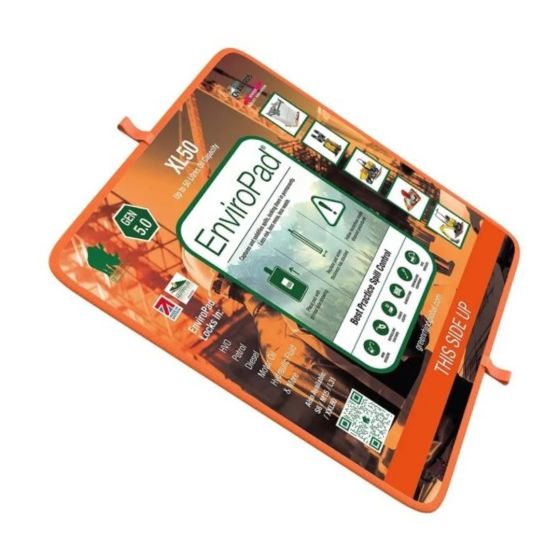
The extra-large square-format mat. The equal-sided footprint covers excavators, tracked plant, and plant compounds where width and depth are comparable, eliminating the corner gaps that a rectangular mat leaves.
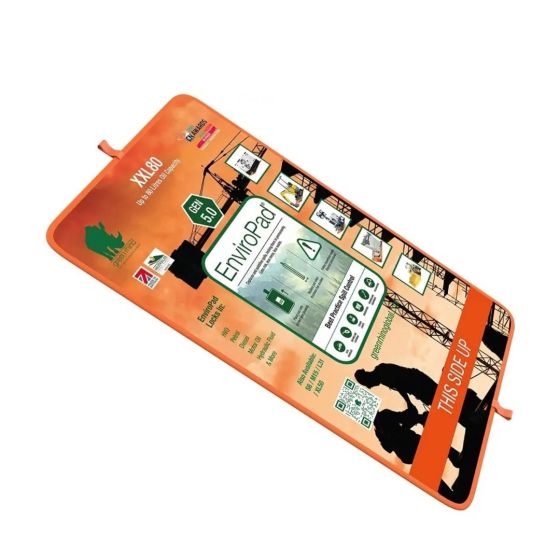
The largest and highest-capacity EnviroPad. The elongated format covers transformer bases, fuel bowsers, and generator trailers without needing two mats end to end, eliminating the seam gap between them.
Interactive size finder
Enter the length and width of your equipment's base footprint in millimetres. The tool will recommend the smallest EnviroPad that covers it fully.
Size comparison
Use the table below to select the correct EnviroPad for your plant. Match the mat dimensions to the base footprint of the equipment, and check that the oil capacity exceeds your anticipated daily drip volume with headroom for extended or overnight use. Hover any row to highlight it.
| Size | Dimensions | Oil capacity | Capacity visual | Typical plant | Format |
|---|---|---|---|---|---|
| S6 Small | 610 x 460 mm | Up to 6L | Disc cutters, small generators, pumps | Rectangular | |
| M15 Medium | 900 x 690 mm | Up to 15L | Generators to 20kVA, compressors | Rectangular | |
| L31 Large | 1370 x 910 mm | Up to 31L | Large generators, telehandlers | Rectangular | |
| XL50 X Large | 1370 x 1370 mm | Up to 50L | Excavators, plant compounds | Square | |
| XXL80 XX Large | 2180 x 1370 mm | Up to 80L | Transformers, bowsers, trailers | Elongated |
Oil capacity figures refer to diesel and HVO. Capacity for other fluids varies. All sizes are HVO-compatible in Gen 5.0.
Disposal and end of life
One of the practical advantages of the EnviroPad over liquid-retaining spill trays is the simplicity of disposal. Because the hydrocarbons are solidified and non-leaching, the used pad carries no special COSHH requirements.
Check capacity by pressing the full surface. Replace when polymer has thickened uniformly across the pad.
Wear nitrile gloves when handling a used pad. Use both carry handles on XL and XXL sizes.
Fold the pad if required to reduce volume for the bin. Solidified oil will not leak during folding.
Place in your normal on-site hazardous waste bin. No specialist collection required.
This contrasts sharply with the disposal process for a saturated spill tray or plant nappy, which must be managed as hazardous liquid waste by a licensed contractor. On a busy site with multiple items of plant, that difference represents a meaningful cost and compliance overhead over the course of a project.
Complete your spill control provision
The EnviroPad handles incidental drips and refuelling spills at individual plant positions. For a complete, documented spill control system on site, a number of complementary products address the scenarios the EnviroPad is not designed for.
For drainage channels and gullies at refuelling points and plant compounds. Intercepts runoff before it reaches controlled waters.
View filters →Required where a catastrophic spill is foreseeable. Must provide at least 110% of the largest container volume at risk.
For sites using AdBlue alongside diesel. The EnviroPad is not rated for AdBlue. The SpillTector covers this fluid specifically.
For reactive response to an unplanned spill. Complements the EnviroPad's preventive provision at the plant position.
Next working day delivery to UK mainland. FORS Silver accredited fleet. Bulk pricing from 5 units. EDGE procurement portal for framework buyers.
