The Problem: Most Construction Sites Get Pedestrian Access Wrong
On any active UK construction site, pedestrian access is a legal obligation, not an optional extra. CDM 2015 requires principal contractors to plan and maintain safe pedestrian routes throughout the construction phase. The Equality Act 2010 adds a further duty on public-facing sites to keep accessible routes available for wheelchair users and people with reduced mobility.
In practice, most sites address the perimeter - hoarding, barriers, signage - but leave the walking surface itself unaddressed. Operatives walk across exposed rebar, gravel compounds, and excavated ground every day. Pedestrians are diverted onto surfaces that are genuinely hazardous. Wheelchair users are excluded entirely.
The result is a combination of enforcement risk, civil liability exposure, and a preventable injury waiting to happen.
HSE position: Slips, trips, and falls on the same level account for approximately one third of all reported injuries in the construction sector. The majority are preventable through basic access route management. A clearly defined, non-slip pedestrian surface eliminates most of that risk at a fraction of the cost of a RIDDOR investigation.
What CDM 2015 Actually Requires From You
Regulation 15 of CDM 2015 places a duty on principal contractors to organise the construction site so that, so far as is reasonably practicable, pedestrian and vehicle routes are separated, clearly signed, and safe to use throughout the construction phase.
This is not a one-time requirement at site setup. It is a continuous duty that applies as site conditions change - as excavations open, as ground is disturbed, as access routes shift with the programme. A safe pedestrian route at week one is not necessarily safe at week eight.
For public-facing sites - roadworks, public realm, highway maintenance - the Equality Act 2010 adds a further requirement. Where a pedestrian route is closed or diverted, the alternative route must be accessible to wheelchair users and people with reduced mobility.
What Makes a Compliant Temporary Pedestrian Surface
A compliant temporary pedestrian access surface must do four things simultaneously. It must be non-slip in wet and dry conditions. It must be stable under foot traffic without displacement or deformation. It must be accessible to wheelchair users. And it must be clearly defined so that operatives and the public follow it rather than walking around it.
- Non-slip surface performance, independently certified to a recognised standard - not just a marketing claim
- Stable under continuous pedestrian traffic without shifting, lifting, or creating edge trip hazards
- Wheelchair compliant - gradient, surface texture, and width sufficient for manual and motorised wheelchair access
- Visually defined - a clear walking surface that pedestrians and operatives will use rather than bypass
How the Mobi-Mat Meets All Four Requirements
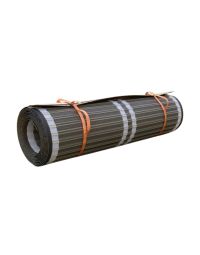
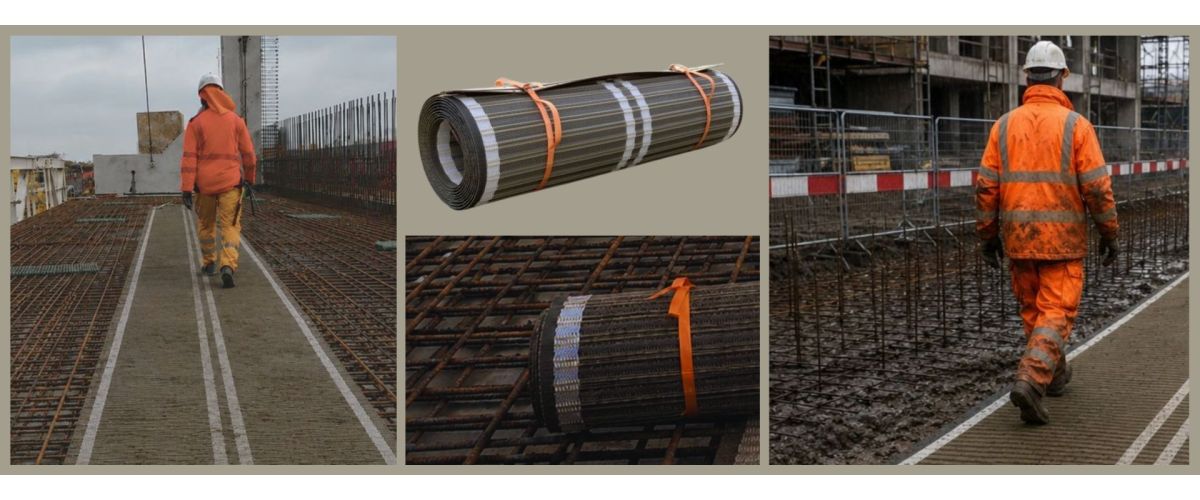
CMT Group now supplies the Mobi-Mat Heavy Duty Walkway Mat - a rollable construction site access mat manufactured from recycled polyester PET, specifically designed to create compliant pedestrian access routes on construction sites, roadworks, and civil engineering projects.
Key point for site managers: The Mobi-Mat is not general-purpose matting repurposed for site use. It is a purpose-designed construction site access product with independent certifications that support your CDM 2015 compliance documentation and your Equality Act accessibility obligations.
Non-slip performance
The mat's 3D textured surface is certified to EN 16165 - the UK and European standard for slip resistance on pedestrian surfaces. It covers wet and dry conditions and applies to the mat surface as installed, including over rebar, gravel, and unstable ground.
Structural stability
With a tensile strength greater than 120kN/m, the mat resists deformation under continuous pedestrian and light vehicle traffic. The reinforced and coated edges prevent lifting and peeling at the mat perimeter.
Wheelchair accessibility
The mat is compliant with manual and motorised wheelchair access standards. The surface profile does not create a barrier to wheelchair wheels and the mat width of 1 metre provides sufficient clearance for standard wheelchair access.
Visual definition
Longitudinal white stripes run the full length of the mat, separating two-way pedestrian traffic flows and providing visual guidance for operatives and visitors with visual impairments.
Installation in Three Steps
The Mobi-Mat installs without groundworks, without specialist tools, and without a dedicated installation team. A single operative can deploy the 1m x 5m roll. Two people are sufficient for the 1m x 25m roll at 34kg.
No surface preparation required. The mat conforms to rebar, gravel, mud, and uneven ground as it unrolls. Position at the start of the access route and unroll along the intended path.
Drive the supplied galvanised steel anchors through the mat eyelets into the ground. Anchor both long edges and both ends as a minimum. For hard standing or timber decks, use the optional concrete and wood anchoring kit.
Check that all edges are flat and secure before opening the route. The mat is ready for immediate use. No curing time, no drying time, no reinspection delay.
At the end of the deployment, remove anchors, re-roll using the carrying straps supplied, and clean with a broom or high-pressure water jet before storage. The mat can be redeployed across multiple projects with a stated service life of up to 10 years.
Technical Specifications at a Glance
| Specification | Detail |
|---|---|
| Tensile strength | Greater than 120kN/m |
| Non-slip certification | EN 16165 |
| Material | Recycled polyester PET - 100% recyclable |
| Width | 1 metre |
| Weight per m² | 1.3kg/m² |
| Temperature range | -40°C to +80°C |
| Fire resistance | BFL-s1 (EN 13501-1) |
| Combustion behaviour | UL94 HB |
| Recyclable | 100% recycled polyester |
| Wheelchair compliant | Manual and motorised |
| Service life | Up to 10 years |
| Warranty | 2 years |
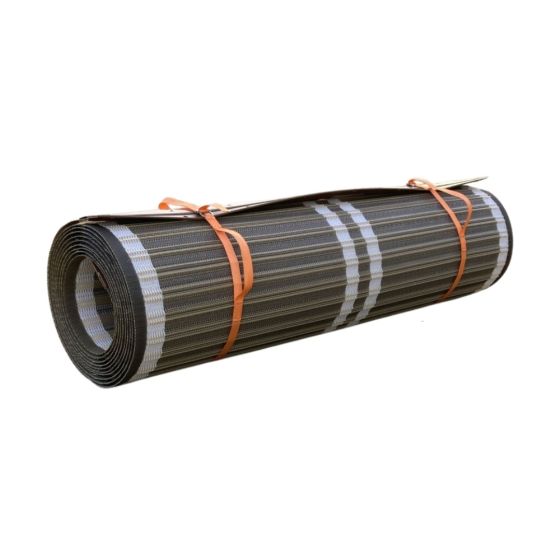
Mobi-Mat Heavy Duty Walkway Mat
Available in three lengths at 1 metre width. Supplied complete with galvanised steel anchors, connectors, and carrying and storage straps. Next-day delivery available on stocked lines.
Frequently Asked Questions
While the Mobi-Mat is primarily used as a construction site safety access path, its rollable, non-slip, and weatherproof construction makes it equally suited to a range of other access and mobility applications.
The Mobi-Mat is compliant with manual and motorised wheelchair and electric wheelchair access standards, providing a stable, non-slip surface for people with reduced mobility across temporary construction surfaces, public realm works, and outdoor areas where the ground would otherwise be inaccessible.
The Mobi-Mat can be unrolled on dirt paths or grass permanently or temporarily for pedestrians and people with reduced mobility in otherwise impassable areas. Near tourist and recreational areas where ground may be covered with pebbles or stones, it facilitates accessibility and mobility for all visitors.
The mat can be installed on sand or pebble beaches to create walkways and access paths for everyone. For boat ramps, it can be anchored in the sand, underwater, or fixed directly to concrete or wooden surfaces. All installations and configurations are possible.