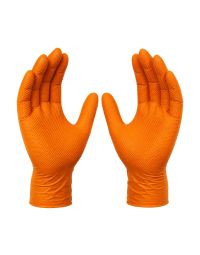
Which Disposable Gloves Do You Actually Need?
Nitrile, latex, or vinyl? Powdered or powder-free? AQL 1.5 or 4.0? The complete UK guide to choosing the right single-use glove for construction sites, food environments, automotive workshops, and industrial applications.
Material Choice
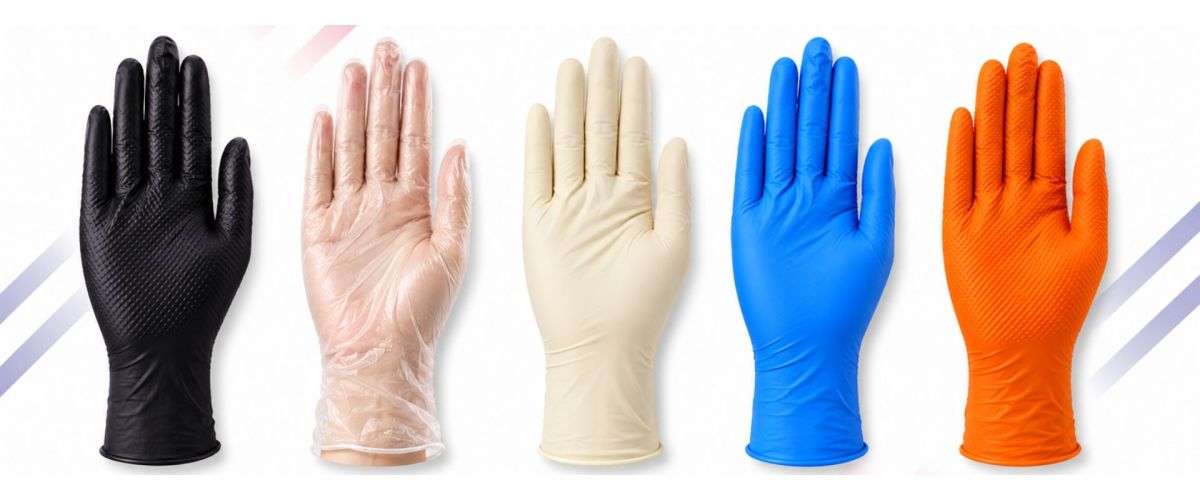
Nitrile, Latex, or Vinyl? How to Choose the Right Material
The three materials used in disposable gloves serve different purposes. Choosing the wrong material creates either a safety risk from inadequate protection, or a compliance problem from over-specification.
Nitrile
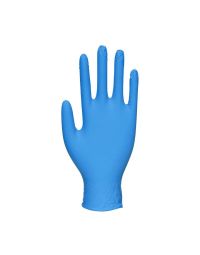
Nitrile is the most versatile disposable glove material for UK construction and industrial sites. Synthetic rubber, latex-free, with excellent resistance to punctures, tears, oils, greases, and a broad range of chemicals. At standard thickness (4-5mil) it covers medical examination, food handling, and general hygiene. At heavier thickness (6mil and above) it becomes the correct specification for automotive servicing, mechanical assembly, and industrial tasks where sustained tool use is involved.
Latex
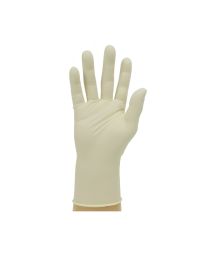
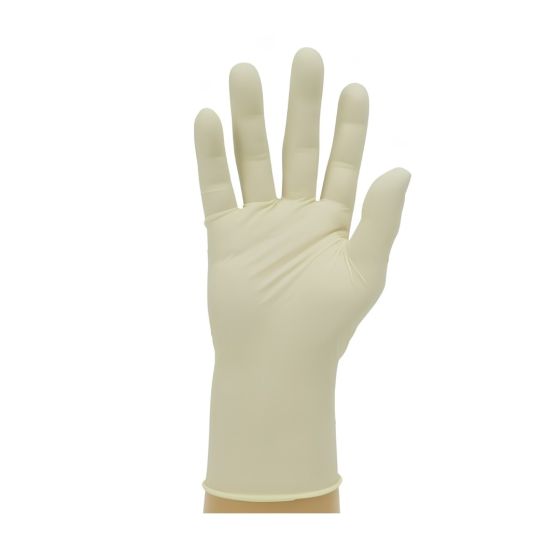
Natural rubber latex provides the closest fit and highest tactile sensitivity of any disposable glove material. It conforms more closely to the hand than nitrile or vinyl, making it the preferred choice for precision handling and tasks where tactile feedback matters. The trade-off is allergy risk: natural rubber latex can cause Type I allergic reactions in sensitised individuals. Before issuing latex gloves on any site, confirm the allergy status of every operative who will use them.
Vinyl
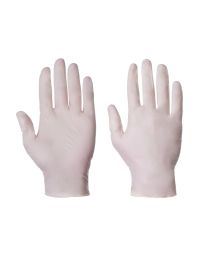
Vinyl (PVC) is the lowest-cost disposable glove material. It provides a reliable barrier against contamination, mild chemicals, and food contact substances at a lower unit cost than nitrile or latex. Vinyl is latex-free and, in better specifications, accelerator-free, making it suitable for operatives with both Type I latex sensitisation and Type IV hypersensitivity. For food processing, cleaning, and care work where gloves are changed frequently and the primary requirement is contamination control, vinyl is the practical cost-effective choice.
| Property | Nitrile | Latex | Vinyl |
|---|---|---|---|
| Latex-free | Yes | No | Yes |
| Chemical resistance | Excellent | Good | Moderate |
| Puncture resistance | Excellent | Good | Moderate |
| Tactile sensitivity | Good | Excellent | Moderate |
| Food safe options | Yes | Yes | Yes |
| Cost per unit | Mid | Mid | Low |
| Heavy duty 6mil+ options | Yes | No | No |
Powder Status
Powdered or Powder-Free? What the Difference Actually Means on Site
Powdered gloves use USP grade corn starch on the interior to ease donning when hands are warm or perspiring. Powder-free gloves go through an additional process to allow the glove to slide on without sticking.
When to choose powdered
Powdered gloves are practical for high-turnover environments where operatives change gloves repeatedly throughout a shift and donning speed matters. Care work, cleaning rounds, and food preparation tasks where gloves change between tasks are the typical applications. The powder absorbs perspiration during wear, reducing discomfort during extended use. On a busy site catering operation where a team changes gloves dozens of times per day, faster donning across the team adds up to a measurable operational benefit.
When to choose powder-free
Powder-free gloves are required in any environment where powder residue on surfaces, products, or components is a contamination risk. In food processing operations where corn starch powder on food products is a hygiene failure, powder-free is the mandatory specification. In precision assembly tasks where powder on components affects product quality, powder-free is the correct choice.
If your site has a HACCP plan, a powder-free specification, or any operative with a powder sensitivity or respiratory condition, specify powder-free throughout. Managing a mixed powdered and powder-free supply on a single site creates procurement complexity without a meaningful cost saving.
Quality Standards
AQL Ratings Explained: What 1.5 and 4.0 Mean for Your Site
AQL stands for Acceptance Quality Limit. It is the maximum acceptable percentage of defective gloves in a production batch before the batch is rejected. The lower the number, the tighter the standard.
AQL 4.0 permits up to 4 gloves per 100 to have defects before a batch fails. This is the standard industrial grade across most vinyl, latex, and general-purpose nitrile disposable gloves. Appropriate for low-risk contamination, food handling, cleaning, and general site tasks.
AQL 1.5 permits only 1.5 gloves per 100 to have defects before a batch fails. This is the medical grade standard used in examination and healthcare environments. For construction buyers, AQL 1.5 is relevant for first aid tasks, welfare facility food preparation, and laboratory support work on site.
General site tasks, food processing, cleaning, and painting: AQL 4.0 is appropriate. First aid, healthcare support, or laboratory tasks where a tighter integrity standard is required by the risk assessment: specify AQL 1.5.
Heavy Duty Applications
When Standard Disposables Are Not Enough: Heavy Duty Nitrile for Mechanics and Industrial Use
Standard disposable nitrile at 4-5mil is designed for examination, hygiene, and light handling. In automotive workshops and industrial environments where hands are in sustained contact with tools, oily components, and aggressive fluids, standard disposables tear prematurely.
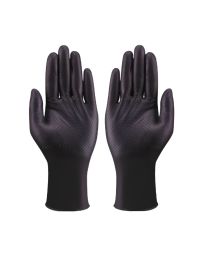
Heavy duty nitrile at 6mil and above absorbs that mechanical stress. The raised diamond grip texture creates contact points that break through the oil and grease film on components where smooth nitrile loses traction. For mechanics and industrial assembly operatives, a 6mil or 8.6mil diamond grip disposable is the practical specification for tasks where standard disposables consistently fail before the job is done.
CMT Group Heavy Duty Diamond Grip Nitrile Range
Two thickness options for mechanics, automotive technicians, and industrial operatives. Choose by task intensity.
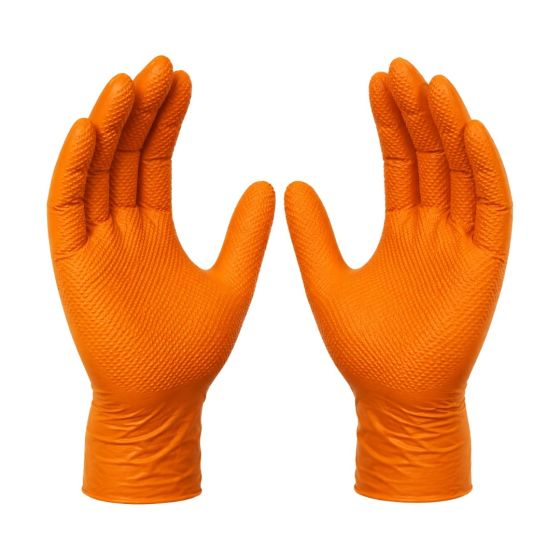
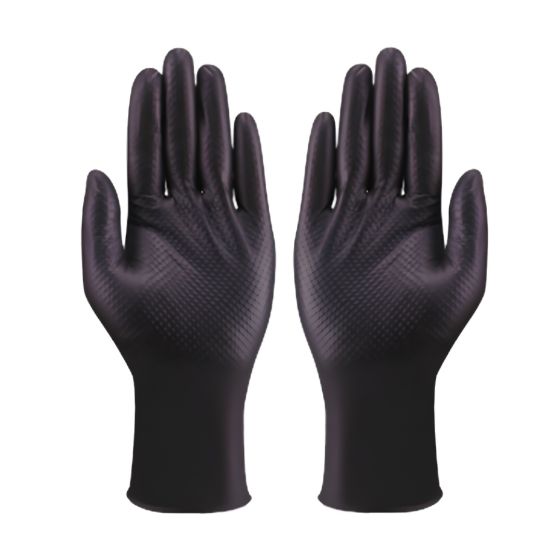
The orange PP040005 at 6.0mil is the standard heavy duty specification for automotive servicing and mechanical assembly, with confirmed food approval to EC1935/2004. The black PP040006 at 8.6mil is the maximum thickness option for the most demanding tasks where sustained abrasive contact or heavy tool use causes the 6.0mil to fail prematurely. If operatives are going through the 6.0mil faster than expected, step up to the 8.6mil.
Food Environments
Disposable Gloves for Food Environments: What UK Sites Need to Know
Food contact approval for disposable gloves in the UK is governed by food safety legislation derived from EU Regulation (EC) 1935/2004. Any material in contact with food must not transfer substances to food in quantities that could endanger human health or change the food's composition.
Non-fatty foods vs fatty foods
Most food-approved disposable gloves are approved for contact with non-fatty food types only. Fatty foods including butter, oils, and animal fats can cause vinyl and some latex materials to degrade at the contact surface. If your application involves contact with fatty foods, confirm the specific food approval on the TDS before specifying.
HACCP and glove specification on food sites
For food businesses with a formal HACCP plan, the glove specification must be consistent with the plan requirements. Common HACCP glove requirements include powder-free status, confirmed food approval documentation, and a defined change frequency. Request food approval documentation from CMT Group before ordering to confirm the specification matches your plan requirements.
Food-safe disposable gloves from CMT Group
Food approved EC1935/2004. 6.0mil diamond grip. UKCA marked.

Food safe, non-fatty. Latex and accelerator-free. Box of 100.

Food safe, non-fatty. Powder-free. Latex and accelerator-free. Box of 100.
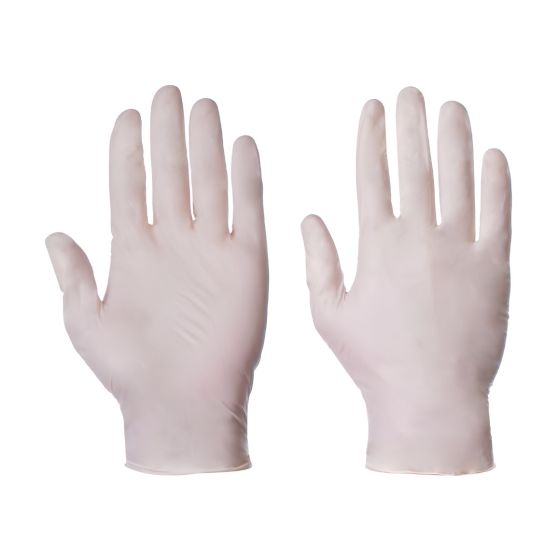
Food approved EU Reg 10/2011. EN ISO 374-1 Type B. Contains latex. Box of 100.
Allergy Awareness
Latex Allergy on Site: What Procurement Teams Must Know
Natural rubber latex allergy affects a proportion of the UK workforce, with higher prevalence in healthcare and food service sectors. There are two distinct types of reaction that procurement teams need to understand.
Type I sensitisation: immediate allergic reaction
Type I sensitisation is an immediate IgE-mediated allergic response to latex proteins. Reactions range from localised urticaria and contact dermatitis to systemic anaphylaxis in severely sensitised individuals. Any operative with a confirmed or suspected Type I latex sensitivity must not use natural rubber latex gloves under any circumstances. Specify nitrile or vinyl alternatives only.
Type IV hypersensitivity: delayed contact dermatitis
Type IV hypersensitivity is a delayed reaction to the chemical accelerators used in the vulcanisation of latex and some nitrile gloves. Symptoms typically appear 12 to 48 hours after exposure as contact dermatitis. For these operatives, specify accelerator-free gloves. Both vinyl ranges in the CMT Group catalogue are accelerator-free and suitable for both Type I and Type IV reactions.
If any operative on site has a confirmed or suspected latex allergy, specify latex-free gloves for the entire team rather than managing individual exceptions. A latex-contaminated environment where latex gloves are used by some operatives can trigger reactions in latex-sensitive colleagues even if they are not personally wearing latex gloves.
Quick Reference
Which Disposable Glove Do You Need? A Quick Decision Guide
Answer these five questions to find your specification
Each question narrows your specification. Answer in order.
Yes: specify nitrile or vinyl only, exclude latex from the site entirely. No: latex, nitrile, and vinyl are all available to you.
Heavy mechanical, automotive, or industrial: choose heavy duty nitrile 6mil+ with diamond grip. Food, cleaning, or care: choose vinyl or standard nitrile. Examination or hygiene: choose AQL 1.5 nitrile.
Yes: confirm food approval on the TDS before ordering and check whether the task involves fatty foods. No: food approval is not required.
Food production with HACCP plan or powder-sensitive environment: powder-free only. High-turnover care or cleaning with no powder restriction: powdered or powder-free are both acceptable.
General construction, food, cleaning, and industrial tasks: AQL 4.0. First aid, healthcare support, or laboratory tasks: AQL 1.5 for tighter barrier integrity.
CMT Group Range
The Complete CMT Group Disposable Glove Range
CMT Group stocks the full range of disposable gloves for UK construction sites, food environments, automotive workshops, and industrial applications. Next-day delivery on all stocked lines when ordered by 7pm.
Heavy Duty Nitrile
Extra strong 6.0mil. Diamond grip. Food approved. UKCA. Box of 50.
Maximum thickness 8.6mil. Diamond grip. CE marked. Box of 50.
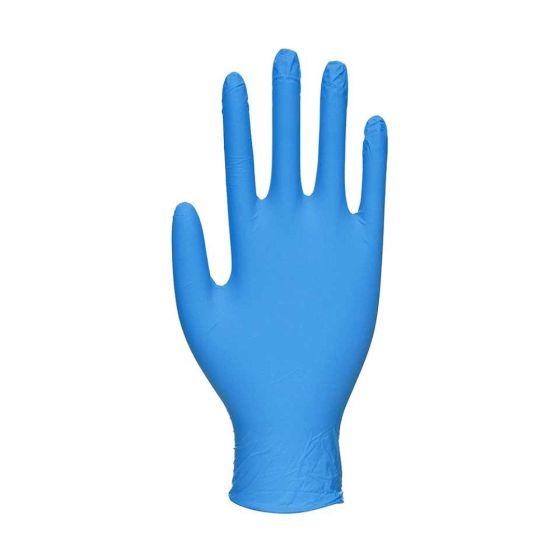
Medical grade AQL 1.5. Latex-free. CE marked. Box of 100.
Natural Rubber Latex
Common Questions
Frequently Asked Questions
Find the Right Disposable Glove for Your Site
CMT Group stocks the complete range of disposable nitrile, latex, and vinyl gloves for UK construction sites, food environments, automotive workshops, and industrial applications. Next-day delivery on all stocked lines when ordered by 7pm.