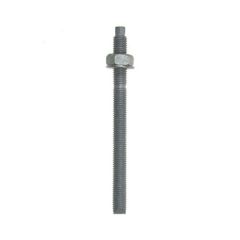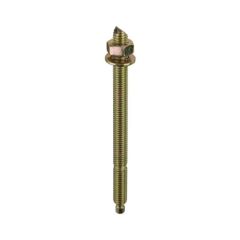
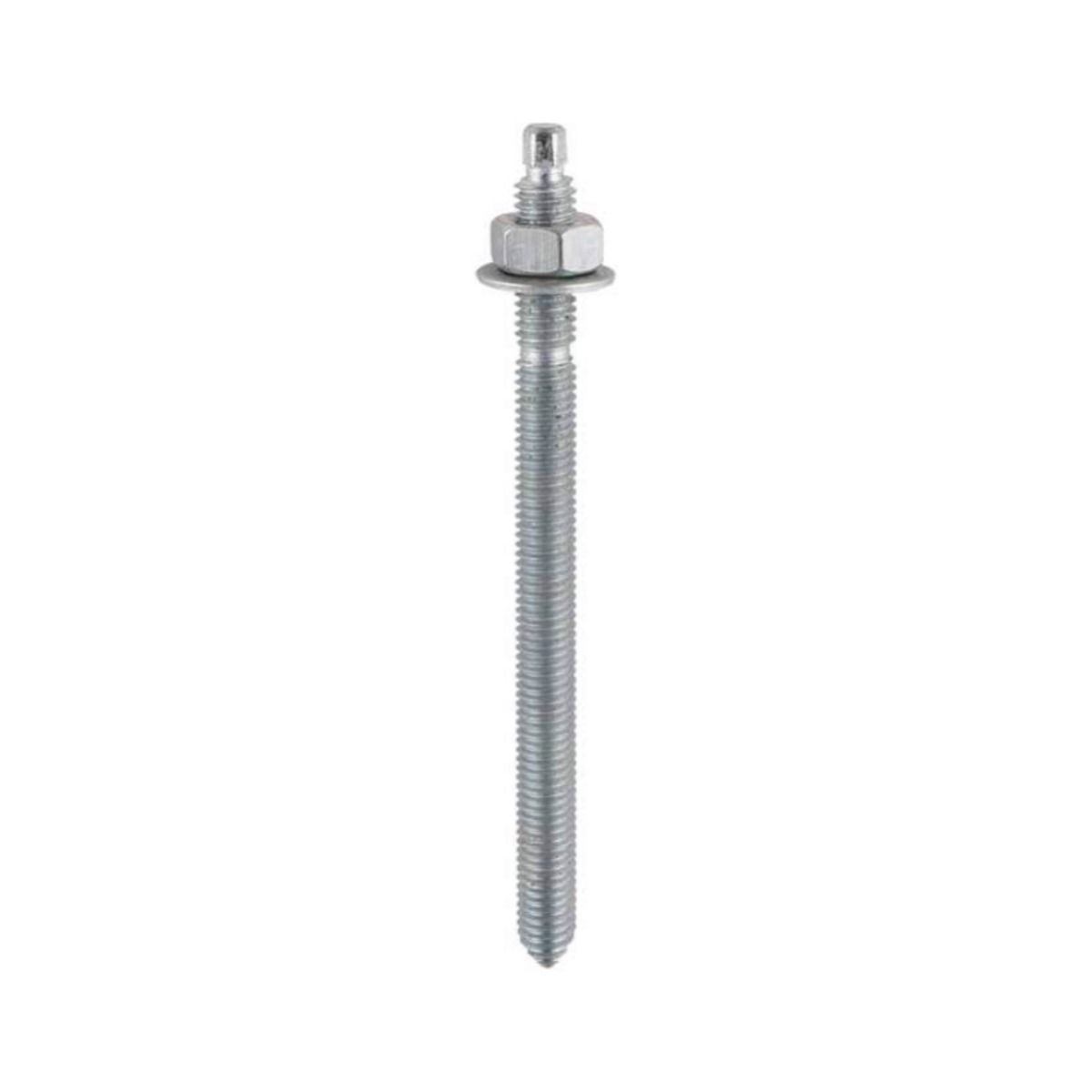

Zinc plated chemical anchor studs for resin fixing into concrete and masonry, used by contractors, groundworkers and fixing installers on UK sites.
- Embedment depth mark
- Grade 5.8 property class
- Bright zinc plated finish
- Chisel point
- Supplied with nut and washer
- Available in multiple sizes
Products with the “To Order” icon may not always be available from stock for same-day or next-day delivery. Please contact our team, who will be happy to confirm exact delivery dates.
Zinc Plated Chemical Anchor Studs - Grade 5.8
Zinc plated chemical anchor studs for resin fixing into concrete and masonry, used by contractors, groundworkers and fixing installers on UK sites.
- Embedment depth mark
- Grade 5.8 property class
- Bright zinc plated finish
- Chisel point
- Supplied with nut and washer
- Available in multiple sizes
Products with the “To Order” icon may not always be available from stock for same-day or next-day delivery. Please contact our team, who will be happy to confirm exact delivery dates.
Zinc Plated Chemical Anchor Studs
Zinc plated chemical anchor studs are threaded steel studs that are set in resin to make a fixing point in concrete or masonry. Each stud has a marked embedment depth and a nut and washer, so you can drill, inject, set and fix without cutting studding to length. The range runs from M8 to M24 for brackets, baseplates, posts and supports.
How a Depth Mark Gets Every Stud to the Right Embedment
Cut lengths of studding carry no depth reference, so each installer has to measure, or guess, how far to push the rod into the resin. A stud set too shallow won't reach the embedment the resin data is based on. A stud set too deep leaves too little thread for the fixture, washer and nut. These studs carry a depth mark at standard embedment, and each size has a stated maximum fixture thickness, so every fixing in a run is set the same way.
Key Features
-
Embedment depth mark: Shows the standard embedment depth on the stud, so it can be set correctly without measuring each hole.
-
Grade 5.8 steel: A defined property class with a nominal tensile strength of 500 N/mm². This lets you match the stud to the grade your fixing specification calls for.
-
Stated fixture thickness for each size: Each size has a maximum fixture thickness, from 18mm to 55mm, so you can choose the stud by the item being fixed.
-
Minimum hole depth listed: Each size has a stated minimum hole depth, so drill depths can be set before work starts.
-
Nut and washer supplied: Each stud comes ready to fix, with no separate fixings to order or match.
-
Bright zinc plated finish: Gives corrosion protection for internal and dry installations.
Who is this for
Trades and roles:
-
Groundworkers
-
General builders
-
Fixing installers
-
Steel erectors
-
M&E installers
-
Maintenance engineers
Industries:
-
Construction
-
Civil engineering
-
Building services
-
Infrastructure
-
Facilities management
Specifications
| Specification | Detail |
| Product Name | Zinc Plated Chemical Anchor Studs - Grade 5.8 |
| SKU / Product Code | CASM |
| Product type | Chemical anchor stud |
| Steel grade | Grade 5.8 |
| Finish | Bright zinc plated (BZP) |
| Depth mark | Indicates embedment depth at standard embedment |
| Point | Chisel point |
| Supplied with | Nut and washer |
| Application | Resin fixing into concrete and masonry |
Size Selection
| Product code | Size | Max fixture thickness | Min hole depth | Box quantity |
|---|---|---|---|---|
| CASM8110 | M8 x 110mm | 18mm | 80mm | 10 |
| CASM10130 | M10 x 130mm | 25mm | 90mm | 10 |
| CASM12160 | M12 x 160mm | 34mm | 110mm | 10 |
| CASM16190 | M16 x 190mm | 45mm | 125mm | 10 |
| CASM20260 | M20 x 260mm | 55mm | 170mm | 10 |
| CASM24300 | M24 x 300mm | 55mm | 210mm | 5 |
Compatibility
| Application or condition | Status |
| Solid concrete | ✓ Suitable with a compatible chemical anchor resin |
| Solid brick and blockwork | ✓ Suitable with a compatible chemical anchor resin |
| Internal and dry conditions | ✓ Suitable, bright zinc plated finish |
| Hollow brick and block | ✗ Not recommended without a mesh sleeve approved by the resin manufacturer |
| External or long-term damp exposure | ✗ Not recommended, use hot dipped galvanised or stainless steel studs |
| Coastal and marine environments | ✗ Not recommended, use stainless steel studs |
| Designs specifying an ETA-assessed anchor | ✗ Not recommended, no ETA approval stated |
Typical Users and Projects
These studs are used by groundworkers, builders and specialist fixing installers who set post-installed anchors in concrete slabs, walls, soffits and solid masonry. They are typical on new-build, refurbishment and maintenance projects where a bracket, baseplate or post has to be fixed after the structure is complete. They suit trades working to a resin manufacturer's installation data or an engineer's fixing specification.
Typical applications
-
Fixing steel brackets and baseplates to concrete slabs and walls, where the plate thickness is within the stud's maximum fixture thickness.
-
Anchoring handrail and balustrade post baseplates into concrete stairs, landings and ramps.
-
Fixing timber wall plates and ledgers to solid brick or blockwork walls.
-
Securing pipe, duct and cable tray supports to concrete soffits, using a resin approved for overhead installation.
-
Fixing gate posts, bollard baseplates and barrier bases to concrete hardstandings in internal or covered areas.
-
Setting a run of identical fixings, where the depth mark gives the same embedment at every hole.
How to use
Step 1: Choose the stud size whose maximum fixture thickness covers the item being fixed.
Step 2: Drill the hole to at least the minimum hole depth for that size. Use the drill diameter given in the resin manufacturer's data.
Step 3: Clean the hole thoroughly with a hole cleaning brush and blow-out pump, repeating as the resin manufacturer instructs.
Step 4: Inject resin from the base of the hole, filling to the level the resin manufacturer specifies.
Step 5: Insert the stud with a slight twisting action until the depth mark reaches the surface of the substrate.
Step 6: Leave the stud undisturbed for the full cure time stated for the resin and site temperature.
Step 7: Fit the fixture, washer and nut, then tighten to the torque in the resin manufacturer's data.
Common mistakes
-
Drilling the hole to the stud diameter instead of the diameter the resin manufacturer specifies.
-
Skipping or rushing hole cleaning, which leaves dust between the resin and the substrate.
-
Tightening or loading the fixture before the resin has fully cured.
-
Choosing a stud by overall length instead of by maximum fixture thickness.
-
Using bright zinc plated studs outdoors or in coastal areas, where corrosion protection runs out sooner.
Safety
Drilling concrete and masonry produces respirable crystalline silica dust. Control it with on-tool extraction or suitable respiratory protective equipment, in line with HSE guidance and COSHH. Follow the resin's safety data sheet for skin and eye protection. Where a fixing carries a structural or safety-critical load, use only the stud and resin combination specified by the engineer.
Maintenance
-
Store unused studs in their box in a dry place to protect the zinc plating.
-
Check threads are clean and undamaged before installation.
-
Check nut tightness during periodic inspection of fixed items.
-
Replace any stud showing corrosion or thread damage.
Frequently Asked Questions
Q: Which stud size do I need for my fixture?
A: Choose the stud by the thickness of the item you are fixing, not by stud length alone. Each size has a maximum fixture thickness, from 18mm on the M8 x 110mm stud to 55mm on the M20 and M24 studs. The hole must also be drilled to at least the minimum hole depth listed for that size. Take the drill diameter from the resin manufacturer's data, since it depends on the stud diameter and the resin used.
Q: What does grade 5.8 mean?
A: Grade 5.8 is a steel property class defined in BS EN ISO 898-1. The first number multiplied by 100 gives the nominal tensile strength, so 5 means 500 N/mm². The second number gives the yield point as a percentage of tensile strength, so 8 means a nominal yield strength of 400 N/mm². Grade 8.8 studs, by comparison, have a nominal tensile strength of 800 N/mm² and a nominal yield strength of 640 N/mm². Use the grade your engineer or fixing specification calls for.
Q: What are these studs not suitable for?
A: The bright zinc plated finish is best suited to internal and dry conditions, so these studs are not suitable for coastal, marine or long-term damp exposure. They are not suitable for hollow brick or block unless a mesh sleeve approved by the resin manufacturer is used. No ETA approval is stated for these studs, so do not use them where an engineer has specified an ETA-assessed anchor system.
Q: Why use chemical anchor studs instead of cut studding?
A: A cut length of studding has no depth reference, so embedment depth relies on the installer measuring each hole. These studs carry a depth mark at standard embedment, and each size has a stated maximum fixture thickness and minimum hole depth. They also come with a nut and washer, so there is nothing extra to cut or order on site.
Q: What does the depth mark on the stud show?
A: The depth mark shows the embedment depth at standard embedment. Insert the stud into the resin-filled hole until the mark reaches the surface of the substrate. That leaves the thread length above the surface intended for the fixture, washer and nut.
Q: Can I use these studs with any chemical anchor resin?
A: The studs are designed to be set in chemical anchor resin, but the resin largely determines how the fixing performs. Check the resin manufacturer's data for the drill diameter, hole cleaning method, cure time and tightening torque for each stud size. Where loads are specified, use the resin and stud combination your engineer has approved.
Q: How long will the zinc plating protect the studs?
A: Bright zinc plating gives corrosion protection suited to internal and dry conditions, and that protection wears away faster with exposure to moisture. Store unused studs dry in their box. Where the fixing will be exposed outdoors, use hot dipped galvanised or stainless steel studs instead.
Q: Are nuts and washers included?
A: Yes, each stud is supplied with a nut and washer. The fixture can be secured as soon as the resin has fully cured.