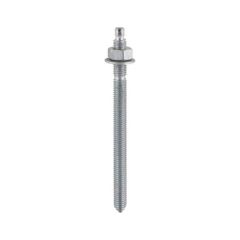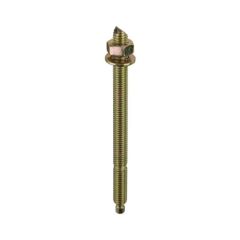
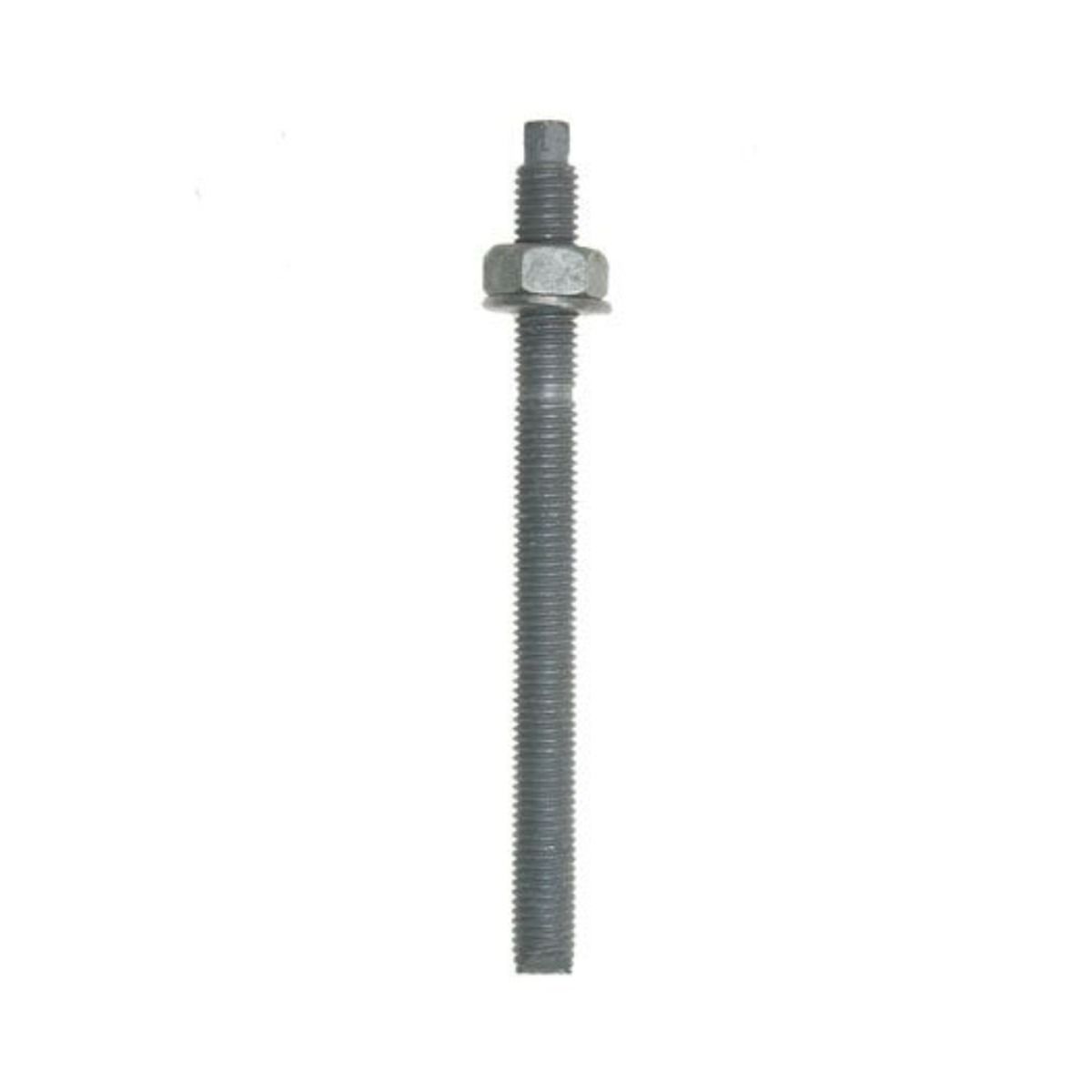

Hot dip galvanised chemical anchor studs in grade 8.8 steel, for contractors fixing into concrete and solid masonry with resin on external and exposed sites.
- Grade 8.8 high tensile steel
- Hot dip galvanised to BS EN ISO 1461
- Chisel point for capsules and injection resin
- Depth mark for standard embedment
- Nut, washer and setting tool included
- Available in multiple sizes
Hot Dip Galvanised Chemical Anchor Stud - Grade 8.8 High Tensile
Hot dip galvanised chemical anchor studs in grade 8.8 steel, for contractors fixing into concrete and solid masonry with resin on external and exposed sites.
- Grade 8.8 high tensile steel
- Hot dip galvanised to BS EN ISO 1461
- Chisel point for capsules and injection resin
- Depth mark for standard embedment
- Nut, washer and setting tool included
- Available in multiple sizes
Hot Dip Galvanised Chemical Anchor Stud - Grade 8.8
Hot dip galvanised chemical anchor studs give a high tensile resin fixing that stands up to rain, frost and site exposure. They are made for contractors fixing steelwork, balustrades, posts and plant frames outdoors. One stud works with both glass spin-in capsules and injection resin.
How Hot Dip Galvanising Protects External Resin Fixings
Electroplated zinc studs carry a thin coating that soon breaks down when exposed to the weather. On site, that means rust staining down finished concrete, loss of thread section and fixings that need replacing early. Hot dip galvanising bonds a much thicker zinc layer to the steel, and pairing it with grade 8.8 steel keeps the fixing strong as well as protected.
Key Features
-
Grade 8.8 high tensile steel: 800 N/mm2 nominal tensile strength gives more steel capacity per diameter than grade 5.8, for fixings where the engineer specifies a higher grade.
-
Hot dip galvanised finish: a thick zinc coating bonded to the steel, suited to external and exposed fixings where plated studs corrode.
-
Chisel point: breaks the glass capsule and mixes the resin as the stud is driven, and also seats cleanly in injection resin.
-
Embedment depth mark: shows at a glance when the stud has reached standard embedment, so installers don't have to measure every hole.
-
Setting tool in each pack: connects the stud to a rotary hammer drill for capsule installation, with no separate purchase needed.
-
Nut and washer supplied: each stud arrives ready to take the fixture, so there's no separate hardware order.
Who is this for
Trades and roles
-
Groundworkers
-
Steel erectors and fabricators
-
Balustrade and handrail installers
-
Fencing and barrier installers
-
M&E contractors
-
Maintenance and facilities teams
Industries
-
Construction
-
Civil engineering
-
Highways and infrastructure
-
Utilities
-
Facilities management
Specifications
| Specification | Detail |
| Product name | Hot Dip Galvanised Chemical Anchor Stud - Grade 8.8 High Tensile |
| Product code | CASGHT |
| Product type | Chemical anchor stud |
| Steel grade | Grade 8.8 high tensile (800 N/mm2 nominal tensile strength, 640 N/mm2 nominal yield strength) |
| Finish | Hot dip galvanised to BS EN ISO 1461 |
| Point | Chisel point |
| Depth mark | Indicates embedment depth at standard embedment |
| Installation method | Glass spin-in capsules or injection resin |
| Supplied with | Nut and washer |
| Setting tool | Included in each pack, for spin-in capsule installation |
| Thread diameters | M8, M10, M12, M16, M20, M24 |
Size Selection
| Product code | Size | Max fixture thickness | Min hole depth | Steel tensile resistance, recommended | Steel shear resistance, recommended |
|---|---|---|---|---|---|
| CASGHT08110 | M8 x 110mm | 18mm | 80mm | 13.8 kN | 8.5 kN |
| CASGHT10130 | M10 x 130mm | 25mm | 90mm | 21.9 kN | 13.1 kN |
| CASGHT12160 | M12 x 160mm | 34mm | 110mm | 31.9 kN | 19.4 kN |
| CASGHT16190 | M16 x 190mm | 45mm | 125mm | 60.0 kN | 36.0 kN |
| CASGHT20260 | M20 x 260mm | 55mm | 170mm | 93.3 kN | 56.0 kN |
| CASGHT24300 | M24 x 300mm | 55mm* | 210mm | 134.2 kN | 80.5 kN |
Compatibility
| Application or condition | Status |
| Glass spin-in capsules | Suitable, setting tool included |
| Injection resin systems | Suitable |
| Solid concrete | Suitable with a compatible capsule or injection resin |
| Solid masonry or brick | Suitable with a compatible capsule or injection resin |
| External and exposed fixings | Suitable, hot dip galvanised finish |
| Internal and dry conditions | Suitable, zinc yellow plated studs are a lower-cost option |
| Coastal and marine environments | Not recommended, use A4 stainless steel studs |
| Hollow or cored brick and block with glass capsules | Not recommended, capsules need a solid base material |
| Designs specifying an ETA-assessed anchor | Not recommended |
Typical Users and Projects
These studs are used by groundworkers, steel erectors and specialist installers on new build, refurbishment and infrastructure projects where fixings stay exposed to the weather. Typical jobs include external steelwork, edge protection, access structures and rooftop plant. Installers will normally work from an engineer's fixing specification and the resin manufacturer's installation data.
Typical applications
-
Fixing steel balustrade and handrail baseplates to external concrete stairs, ramps and walkways.
-
Anchoring steel column and canopy post baseplates to exposed concrete pads and plinths.
-
Securing gate, barrier and fence post baseplates to concrete in car parks, yards and depots.
-
Fixing rooftop plant frames, cable tray brackets and pipe supports where fixings sit outdoors all year.
-
Fixing close to slab edges in solid concrete or brick, where an expansion anchor could crack the base material.
-
Replacing rusted zinc plated studs on external fixings during refurbishment or remedial work.
How to use
Step 1: Drill to at least the minimum hole depth for the stud size, at the hole diameter given in the capsule or resin manufacturer's data.
Step 2: Clean the hole with a hole cleaning brush and blow out pump, repeating until no dust comes out.
Step 3: For capsules, insert the capsule, fit the setting tool to the stud and drive it in with a rotary hammer drill until the depth mark reaches the surface.
Step 4: For injection resin, fill the hole from the bottom, then push the stud in with a slow twisting motion to the depth mark.
Step 5: Leave the stud undisturbed for the full cure time stated for the resin and the temperature.
Step 6: Fit the fixture, washer and nut, and tighten to the torque in the resin manufacturer's data.
Common mistakes
- Skipping hole cleaning, which leaves dust that weakens the resin bond.
- Drilling the hole at the stud diameter instead of the hole diameter in the resin data.
- Loading the fixing before full cure, especially in cold weather when cure times are longer.
- Fitting zinc plated or bright nuts on external fixings, which corrode before the galvanised stud.
- Treating the steel resistance figures as the capacity of the whole fixing.
Safety
Drilling concrete and masonry releases respirable crystalline silica dust. Use on-tool extraction and suitable RPE in line with HSE guidance. Wear eye protection when driving glass capsules, and follow the resin safety data sheet. Steel resistance figures don't account for resin or base material, so design loads must come from the resin manufacturer's data.
Maintenance
Store packs dry and keep each stud with its nut and washer. Inspect exposed fixings periodically for rust staining or a loose nut. Treat scratches and cut ends with zinc-rich repair paint.
Frequently Asked Questions
Q: Which stud size do I need for my fixing?
A: Start with the thread diameter given in the fixing specification. Check the item being fixed is no thicker than that size's maximum fixture thickness, which runs from 18mm on the M8 to 55mm on the M20 and M24. Drill to at least the minimum hole depth, at the hole diameter given in the capsule or resin data. A fixture thicker than the limit needs a longer stud, not a deeper hole.
Q: What do grade 8.8 and BS EN ISO 1461 mean on these studs?
A: Grade 8.8 is a steel property class for bolts and studs. The first 8 means a nominal tensile strength of 800 N/mm2, and the second 8 means the yield strength is 80 per cent of that, 640 N/mm2. BS EN ISO 1461 covers hot dip galvanised coatings, made by dipping the steel in molten zinc so the zinc bonds to the surface. That coating is far thicker than the electroplated zinc on standard studs. Together they give a stronger stud than grade 5.8, with a finish made for external use.
Q: What are these studs not suitable for?
A: They aren't the right choice for coastal, marine or chemically aggressive environments, where A4 stainless steel studs last longer. Glass capsules need solid concrete or masonry, so don't use capsules in hollow or cored brick and block.
Q: Why choose grade 8.8 galvanised studs over grade 5.8 galvanised?
A: Grade 8.8 steel has a nominal tensile strength of 800 N/mm2, against 500 N/mm2 for grade 5.8. That gives more steel capacity from the same thread diameter. The galvanised finish and installation method stay the same, so crews don't change tools or resin. Grade 5.8 remains a sound option where the specification allows it.
Q: Can the same stud be used with glass capsules and injection resin?
A: Yes, the chisel point is designed for both methods. It breaks the capsule and mixes the resin when driven with the setting tool, and it seats in injection resin with a slow twisting push.
Q: What do the load figures in the Size Selection table mean?
A: They're the recommended tensile and shear resistance of the steel stud itself. A complete fixing can fail through the resin bond or the base material first, so the actual fixing capacity is often lower. Design to the resin manufacturer's data for the substrate, embedment depth, edge distance and spacing.
Q: Can I cut the studs to length on site?
A: Cutting the threaded end exposes bare steel, which needs zinc-rich repair paint to keep the protection intact. It also reduces the maximum fixture thickness, so check there's still enough thread for the fixture, washer and nut.
Q: How long does a hot dip galvanised stud last outdoors?
A: Service life depends on the environment, with coatings lasting longer inland and in rural areas than in industrial or coastal ones. Regular inspection and prompt repair of coating damage help exposed fixings last longer.