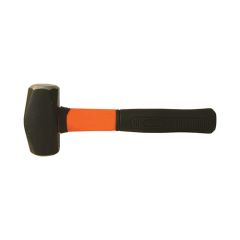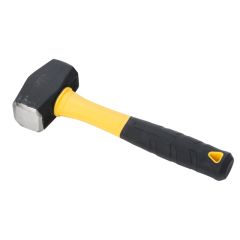
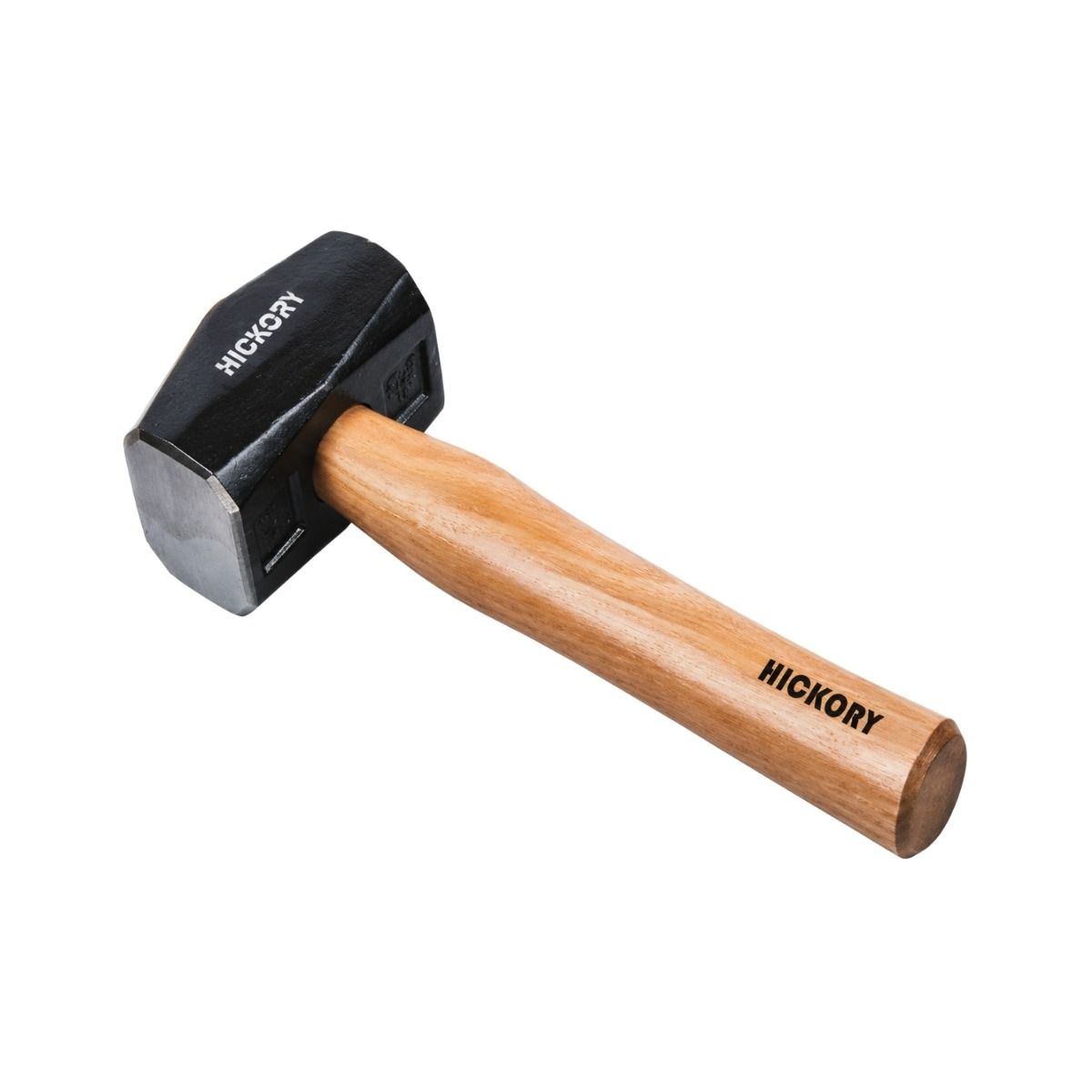
A club hammer with hickory handle for striking cold chisels and bolsters, breaking masonry, and demolition work. Available in 2.5lb (1kg) for general use and 4lb (2kg) for heavier tasks.
- Hickory handle for natural shock absorption and durability under repeated impact
- Steel head with flat striking face
- 2.5lb (1kg) for general chiselling, light masonry, and cold working
- 4lb (2kg) for heavy demolition, breaking concrete and brickwork, and heavier chiselling
- Available as CHH25 (2.5lb) and CHH4 (4lb)
Club Hammer - Hickory Handle
A club hammer with hickory handle for striking cold chisels and bolsters, breaking masonry, and demolition work. Available in 2.5lb (1kg) for general use and 4lb (2kg) for heavier tasks.
- Hickory handle for natural shock absorption and durability under repeated impact
- Steel head with flat striking face
- 2.5lb (1kg) for general chiselling, light masonry, and cold working
- 4lb (2kg) for heavy demolition, breaking concrete and brickwork, and heavier chiselling
- Available as CHH25 (2.5lb) and CHH4 (4lb)
Club Hammer with Hickory Handle
A club hammer with hickory handle for striking cold chisels, bolsters, and masonry tools, and for breaking brickwork, concrete, and block in demolition and groundwork tasks. Also known as a lump hammer in the UK trade, this is the tool for tasks where a claw hammer lacks the mass and face size to strike a chisel cleanly or break masonry effectively. Available in 2.5lb (1kg) for general site chiselling and light breaking work, and 4lb (2kg) for heavier demolition, breaking, and driving stakes.
Why a Hickory Handle Matters for a Striking Tool
Fibreglass and generic wood handles are common in budget club hammers. Hickory is the traditional choice for hammer handles because it has natural shock-absorbing properties that reduce the vibration transmitted to the hand and wrist under repeated impact. It is also harder and more resistant to splitting than most alternative woods. A hickory handle that is properly maintained will outlast a generic wooden alternative under the same working conditions and reduce fatigue across a heavy striking session.
Key Features
-
Hickory handle: Natural shock absorption reduces vibration to the hand under repeated impact. Harder than most alternative woods and resistant to splitting under sustained striking loads.
-
Steel head with flat striking face: The large flat face provides a stable striking contact surface for cold chisels, bolsters, and masonry tools. The cylindrical mass delivers concentrated force directly through the chisel or tool head.
-
2.5lb (1kg) head: The standard general-purpose weight for chiselling, light masonry work, and cold working tasks where control and accuracy matter as much as raw force.
-
4lb (2kg) head: The heavier option for breaking concrete and brickwork, heavy demolition, driving large stakes, and applications where the 2.5lb cannot generate sufficient force in fewer blows.
Who Is This For
Trades and roles:
-
Bricklayers and masons
-
Carpenters and joiners
-
Groundworkers and civils operatives
-
General builders
-
Demolition contractors
Industries:
-
Construction
-
Civil engineering
-
Groundworks
-
Demolition and refurbishment
-
Maintenance
Specifications
| Specification | Detail |
| Product Name | Club Hammer - Hickory Handle |
| Parent SKU | CHH |
| Hammer Type | Club hammer (lump hammer) |
| Handle Material | Hickory |
| Head Material | Steel |
| Face Type | Flat |
| Head Weights Available | 2.5lb (1kg) — CHH25, 4lb (2kg) — CHH4 |
Variant comparison
| Specification | CHH25 | CHH4 |
| SKU | CHH25 | CHH4 |
| Head Weight | 2.5lb (1kg) | 4lb (2kg) |
| Best For | General chiselling, light masonry, cold working | Heavy demolition, breaking concrete and brickwork, heavy chiselling |
| Striking Force | Standard | High |
Compatibility
| Application or condition | Status |
| Striking cold chisels and bolsters | ✓ Compatible |
| Breaking brickwork, block, and masonry | ✓ Compatible |
| Demolition and strip-out work | ✓ Compatible |
| Driving stakes and pegs | ✓ Compatible |
| Breaking concrete (light to medium) | ✓ Compatible |
| Driving nails or tacks | ✗ Not suitable (use a claw hammer) |
| Striking hardened chisels without eye protection | ✗ Not suitable (fragments hazard) |
| Use with a damaged or loose head | ✗ Remove from service immediately |
| Striking other hardened hammer faces | ✗ Not suitable (fragment risk) |
Who Is This For
The club hammer, also known in the UK trade as a lump hammer, is the standard striking tool for masonry chiselling, bolster work, breaking brickwork and concrete, and demolition tasks on construction sites. It suits bricklayers, groundworkers, general builders, and demolition operatives who need a heavier and more accurate striking tool than a claw hammer for chisel-based work. The 2.5lb (1kg) variant is the standard choice for general chiselling and light masonry. The 4lb (2kg) is the working tool for heavier breaking and demolition.
Typical Applications
-
Striking cold chisels to cut masonry, blocks, and brickwork to line during bricklaying and blockwork.
-
Driving bolsters through concrete, brickwork, and block during strip-out and channel cutting.
-
Breaking concrete kerbs, slabs, and block paving during groundwork and reinstatement.
-
Demolishing internal brickwork and blockwork partitions during refurbishment and fit-out.
-
Driving steel stakes, ground anchors, and temporary fence posts on construction sites.
-
Chasing walls for pipework and electrical conduit using a cold chisel and club hammer.
-
Breaking out mortar joints during repointing and brick replacement.
-
General heavy striking tasks on site where a claw hammer lacks the mass and face area to work effectively.
How to Use
Step 1: Select the correct weight for the task. Use the 2.5lb (1kg) for chiselling, light masonry breaking, and accuracy-focused striking. Use the 4lb (2kg) for heavy breaking, demolition, and driving stakes where maximum force per blow is the priority.
Step 2: Put on appropriate PPE before starting. Eye protection is mandatory when striking cold chisels, bolsters, or masonry. Face shield or safety glasses rated to EN166 minimum.
Step 3: Hold the chisel or bolster firmly in one hand and position it correctly on the work surface. Keep fingers clear of the striking zone.
Step 4: Grip the hammer handle near the base for maximum leverage and controlled force. Do not choke up to the head — this reduces power and increases hand fatigue.
Step 5: Strike squarely on the chisel or bolster head with the flat face of the hammer. Off-axis strikes are inefficient and can cause glancing blows that send fragments in unpredictable directions.
Step 6: Inspect the head-to-handle joint before each use. Any movement in the head means the hammer must be taken out of service immediately.
Common Mistakes
-
Not wearing eye protection: fragments from masonry, chisels, and hammers can travel at speed when struck. Eye protection is not optional for this class of work.
-
Gripping the handle too high: holding near the head reduces the lever arm and striking force significantly. Hold at the base of the handle.
-
Striking another hammer face: never strike one hammer directly against another hammer face. Two hardened steel faces in contact can cause dangerous fragment ejection.
-
Using with a loose head: a club hammer with any movement in the head is a projectile hazard. Remove from service and do not attempt to re-fix on site without proper tools and knowledge.
-
Using the 2.5lb for heavy breaking: the lighter variant requires more blows for the same result on heavy concrete or block. For sustained breaking work, the 4lb reduces total blow count and cumulative fatigue.
Safety
Always wear eye protection rated to EN166 or higher before striking any chisel, bolster, or masonry. A face shield is recommended when breaking. Inspect the head-to-handle joint before each shift. Any movement in the head takes the hammer out of service immediately. Do not strike another hammer head directly. Do not use as a driving tool for hardened fasteners beyond the tool's design purpose. Store safely away from other tools that could damage the handle or face.
Maintenance
Inspect the head-to-handle joint before each use. A loose head is a projectile hazard and must be addressed before the tool is used again. Check the hickory handle regularly for cracks, splits, or significant wear at the head junction. A cracked handle must be replaced, do not continue using a hammer with a cracked handle. Apply a light application of linseed oil to the hickory handle periodically to prevent drying and splitting, particularly if stored in dry conditions for extended periods. Wipe the steel head after use in damp conditions to prevent rust.
Frequently Asked Questions
Q: What is the difference between the 2.5lb and 4lb variants?
A: Head weight is the only difference. The 2.5lb (1kg) is the standard weight for chiselling, repointing, wall chasing, and general masonry work where controlled striking matters as much as raw force. The 4lb (2kg) delivers significantly more force per blow, which reduces the number of strikes needed for heavy concrete and block breaking, stake driving, and demolition. Over a long working session, the heavier hammer reduces total effort for heavy work but becomes tiring faster for light precision tasks.
Q: What is the difference between a club hammer and a claw hammer?
A: A club hammer (also called a lump hammer) has a heavy cylindrical steel head with flat faces on both ends and no claw. It is designed purely for striking, chisels, bolsters, masonry tools, and breaking materials. A claw hammer has a lighter head and a curved claw for nail pulling. It is designed for driving and removing nails in timber. Using a claw hammer to strike a cold chisel is incorrect: the head is not designed for that load and the lighter weight makes it inefficient.
Q: Why is a hickory handle better than fibreglass or generic wood?
A: Hickory has natural shock-absorbing grain properties that reduce the vibration transmitted to the hand and wrist under repeated impact. It is harder and more resistant to splitting under sustained striking loads than most alternative wood species. Fibreglass handles are strong and rot-resistant but transmit more vibration than hickory. Generic wood handles vary significantly in quality and grain direction, which affects both durability and vibration transfer. Hickory is the traditional standard for striking tool handles for these reasons.
Q: Can I use this hammer to strike a cold chisel on concrete?
A: Yes. Striking a cold chisel or bolster to cut or break concrete is one of the primary applications for a club hammer. Use the 4lb (2kg) for breaking concrete, more force per blow means fewer strikes and faster progress. Always wear appropriate eye protection before starting. Position the chisel correctly and strike squarely on the chisel head.
Q: What is this hammer NOT suitable for?
A: Do not use to drive nails, use a claw hammer for that. Do not strike another hammer face directly. Do not use if the head shows any movement on the handle, remove from service immediately. Do not use with a cracked or damaged handle.
Q: How do I maintain the hickory handle?
A: Inspect the handle before each use for cracks, splits, or wear at the head junction. Periodically apply a light coat of linseed oil to prevent the wood from drying and cracking, particularly in prolonged dry storage conditions. A cracked handle must be replaced. The handle can be replaced with a suitable replacement hickory handle rather than discarding the entire tool.