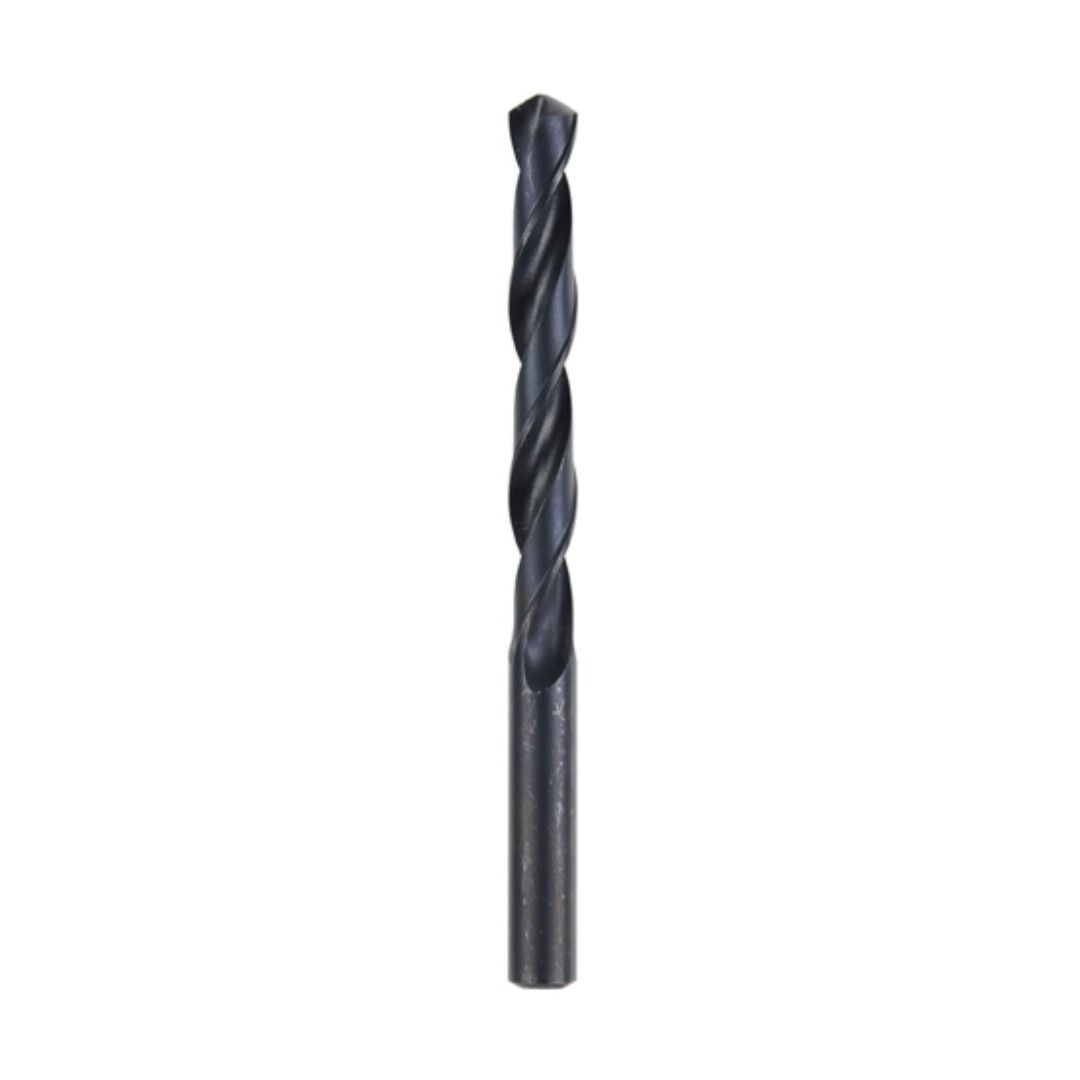
MAXTEC HSS twist drill bits with a 135° split point for drilling alloyed carbon and plain steel, available from 2mm to 12mm diameter for handheld drill operations.
- 135° split point tip: prevents bit from walking on entry, no pilot hole required
- Hardwearing HSS construction: withstands heat and wear on repeated steel drilling tasks
- Twist drill geometry: efficient chip evacuation keeps the cutting zone clear
- Diameter range: 2mm to 12mm across 11 individual sizes
- Application: alloyed carbon steel, plain steel, and general metal drilling
- For use with: corded and cordless drills in handheld operations
MAXTEC HSS Twist Drill Bit - 135° Split Point for Steel - 2mm to 12mm Range

MAXTEC HSS twist drill bits with a 135° split point for drilling alloyed carbon and plain steel, available from 2mm to 12mm diameter for handheld drill operations.
- 135° split point tip: prevents bit from walking on entry, no pilot hole required
- Hardwearing HSS construction: withstands heat and wear on repeated steel drilling tasks
- Twist drill geometry: efficient chip evacuation keeps the cutting zone clear
- Diameter range: 2mm to 12mm across 11 individual sizes
- Application: alloyed carbon steel, plain steel, and general metal drilling
- For use with: corded and cordless drills in handheld operations
MAXTEC HSS twist drill bit
The MAXTEC HSS twist drill bit range covers the 2mm to 12mm diameters that account for the majority of metal drilling tasks in construction, engineering, and maintenance. Designed specifically for alloyed carbon and plain steel, each bit features a 135° split point that starts cutting on contact without walking across the surface, eliminating the need for a centre punch or pilot hole on most applications. The hardwearing HSS construction handles the heat generated during steel drilling without the rapid blunting that affects lower-grade bits, making this range the practical choice for operatives who drill metal regularly rather than occasionally.
Why choose the MAXTEC HSS twist drill bit
-
135° split point tip: The split point geometry creates two active cutting edges that engage the material immediately on contact. At 135°, the tip is more acute than a standard 118° point, which reduces the thrust force needed to start the hole and prevents the bit from skating across smooth steel surfaces. No centre punch is needed for most applications.
-
Hardwearing HSS construction: High speed steel retains its hardness at elevated temperatures, which is the critical property for metal drilling. As the bit cuts steel, friction generates heat at the tip: a bit that loses hardness at this temperature blunts quickly and produces oversize, rough holes. HSS maintains cutting edge integrity through the heat cycles that steel drilling generates.
-
Twist drill geometry: The helical flute design efficiently clears metal swarf from the hole as drilling progresses. Blocked flutes trap heat, increase friction, and accelerate tip wear. The twist geometry keeps the cutting zone clear on through-hole drilling in steel plate and section.
-
2mm to 12mm diameter range: Eleven sizes cover the pilot hole, clearance hole, and fixing hole diameters used in the majority of steel fabrication, structural metalwork, and maintenance drilling tasks on UK construction sites and in workshops.
-
Suited to handheld operations: The bit dimensions and geometry are optimised for handheld corded and cordless drills, not just bench drills. This matters on site where a pillar drill is not available and the operative needs accurate, clean holes from a handheld tool.
What's included
-
1 x MAXTEC HSS twist drill bit with 135° split point in your selected diameter
-
Available in 11 sizes from 2mm to 12mm
Specifications
| Specification | Detail |
|---|---|
| Product Name | MAXTEC HSS Twist Drill Bit - 135° Split Point for Steel - 2mm to 12mm Range |
| Product Code | DBH |
| Brand | MAXTEC |
| Bit Type | HSS Twist Drill Bit |
| Tip Angle | 135° Split Point |
| Material | High Speed Steel (HSS) |
| Diameter Range | 2mm to 12mm |
| Application | Alloyed Carbon Steel, Plain Steel, General Metal Drilling |
| Operation | Handheld Corded and Cordless Drills |
| Shank Type | Straight Round Shank |
Compatibility
| Compatible with | Status |
|---|---|
| Corded drills with standard keyed or keyless chuck | ✓ Compatible |
| Cordless drills with standard chuck | ✓ Compatible |
| Pillar drills and bench drills | ✓ Compatible |
| Alloyed carbon steel and plain steel | ✓ Compatible |
| Mild steel, structural steel, grey iron castings | ✓ Compatible |
| Aluminium, copper, and non-ferrous metals | ✓ Compatible |
| Plastic and general materials | ✓ Compatible |
| Hardened or stainless steel | ✗ Not recommended |
| Masonry, concrete, or tile | ✗ Not recommended |
| SDS Plus or SDS Max machines (direct fit) | ✗ Not recommended |
Available sizes
| Product Code | Diameter (mm) | Total Length (mm) | Flute Length (mm) |
|---|---|---|---|
| DBH2 | 2 | 49 | 24 |
| DBH3 | 3 | 61 | 33 |
| DBH4 | 4 | 75 | 43 |
| DBH5 | 5 | 86 | 52 |
| DBH6 | 6 | 93 | 57 |
| DBH7 | 7 | 101 | 69 |
| DBH8 | 8 | 117 | 75 |
| DBH9 | 9 | 125 | 81 |
| DBH10 | 10 | 133 | 87 |
| DBH11 | 11 | 142 | 94 |
| DBH12 | 12 | 151 | 101 |
Who is this for?
Steel fixers, fabricators, maintenance engineers, electricians, and site operatives who regularly drill into mild steel, structural steel sections, and metal fittings. Suited to any trade professional who needs accurate metal holes from a handheld drill on site or in a workshop.
Typical applications
-
Pilot and clearance holes in mild steel plate, angle, and RHS sections
-
Fixing holes in steel brackets, cleats, and connections on structural metalwork
-
Drilling through steel conduit, cable management systems, and back boxes
-
Maintenance drilling in steel plant, equipment frames, and fabricated assemblies
-
Pilot holes ahead of tapping operations in carbon steel components
-
General metal drilling in aluminium, copper, and non-ferrous fittings
How to use
-
Select the correct diameter for your fixing or clearance requirement.
-
Insert the straight round shank into your drill chuck and tighten fully.
-
Mark the drilling position. The 135° split point locates on contact so a centre punch is not required on most steel surfaces.
-
Set the drill to a moderate speed. Lower speeds suit larger diameters and harder steel. High speeds on large diameters generate excessive heat and blunt the tip rapidly.
-
Apply steady forward pressure. Keep the bit perpendicular to the surface throughout.
-
Use cutting fluid or oil on harder steels to reduce heat and extend tip life.
-
Clear swarf regularly on deep holes to prevent flute blockage and overheating.
Safety
Wear safety glasses at all times: metal swarf is ejected at speed and causes serious eye injuries. Secure the workpiece with a clamp before drilling: steel plate can spin suddenly under drill torque and cause cuts. Do not use on hardened steel or stainless steel: HSS bits will overheat and fail rapidly on these materials.
Maintenance
Inspect the split point tip after heavy use. A blunt HSS bit produces excess heat, squeals under load, and produces rough oversize holes. HSS bits can be resharpened on a bench grinder if the geometry is maintained correctly. Replace any bit with a chipped or significantly worn tip. Store bits in a case or holder with tip protection to prevent edge damage between uses.
Frequently Asked Questions
Q: What does HSS mean and why does it matter for drilling steel?
A: HSS stands for High Speed Steel. It is an alloy that retains its hardness at the elevated temperatures generated during metal drilling. Standard carbon steel bits soften and blunt rapidly when drilling steel. HSS maintains its cutting edge through these heat cycles, which is why it is the minimum specification for any metal drilling application.
Q: What is the advantage of a 135° split point over a standard 118° point?
A: A 135° split point is more acute and creates two active cutting edges that engage the material on contact. It requires less thrust force to start, does not walk across smooth steel surfaces, and eliminates the need for a centre punch on most applications. A standard 118° point has a wider chisel edge that tends to skate before it bites, which is why a centre punch is usually needed with conventional bits.
Q: Can I use these bits on stainless steel or hardened steel?
A: No. Standard HSS is not suitable for stainless or hardened steel. Stainless steel work-hardens rapidly during drilling, generating heat that exceeds the HSS heat resistance threshold. For stainless steel, cobalt HSS (M35 or M42 grade) is the correct specification. For hardened steel, carbide-tipped bits are required.
Q: What drill speed should I use for steel?
A: Lower speeds suit larger diameters and harder steels. As a general guide: 2mm to 4mm bits can run at 2000 to 3000rpm, 5mm to 8mm at 1000 to 2000rpm, and 9mm to 12mm at 500 to 1000rpm in mild steel. Running too fast generates heat that blunts the tip quickly. If the bit squeals or the swarf is discoloured blue or black, the speed is too high.
Q: Should I use cutting fluid when drilling steel?
A: Cutting fluid reduces heat and extends bit life on harder steels and on repeated drilling operations. For occasional light drilling in mild steel, it is not essential. For production drilling, drilling in harder carbon steels, or when the bit is generating noticeable heat, apply a small amount of cutting oil to the drill point before each hole.
Q: Can these bits be used on wood or plastic as well as steel?
A: HSS twist bits will drill wood and plastic, but they are not optimised for these materials. In wood, a brad point bit produces a cleaner, more accurate hole. In plastic, the HSS bit works but can cause melting at higher speeds. For mixed-material drilling where occasional wood and plastic work is unavoidable, HSS twist bits are a practical compromise.
Q: Can HSS drill bits be resharpened?
A: Yes. HSS bits can be resharpened on a bench grinder or with a dedicated drill bit sharpener, provided the original tip angle and geometry are maintained. For the 135° split point, resharpening requires care to preserve the split point geometry. At the price point of this range, replacement is often more practical than resharpening for smaller diameters.
Q: Where can I order MAXTEC HSS drill bits and what are the delivery options?
A: The full MAXTEC HSS twist drill bit range is available at cmt.co.uk across all 11 sizes from 2mm to 12mm. CMT Group operates a fleet of over 100 vehicles covering 90% of the UK mainland with next working day delivery on orders placed by 7pm online. Trade accounts and EDGE portal ordering are available for procurement teams requiring agreed pricing and full order visibility.