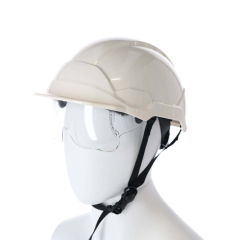
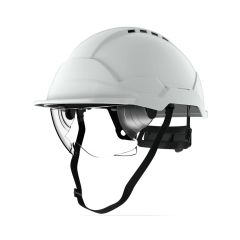
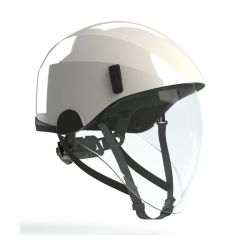
As we move into the hotter months, the idea of cutting down on your PPE equipment can become increasingly tempting, especially when the head makes the simpliest task feel more strenuous. While comfort is crucial, it is essential to understand the role that safety gear plays. One peice of PPE that often faces scrutiny, yet remains one of the most important is hard hats.
In this blog, we will explore the history of hard hats, the reason they were introduced, and why they continue to be a cornerstone of workplace safety today. As we breakdown their evolution we will also discuss modern advancements that make them lighter, more comfortable and more effective in protection from risks.
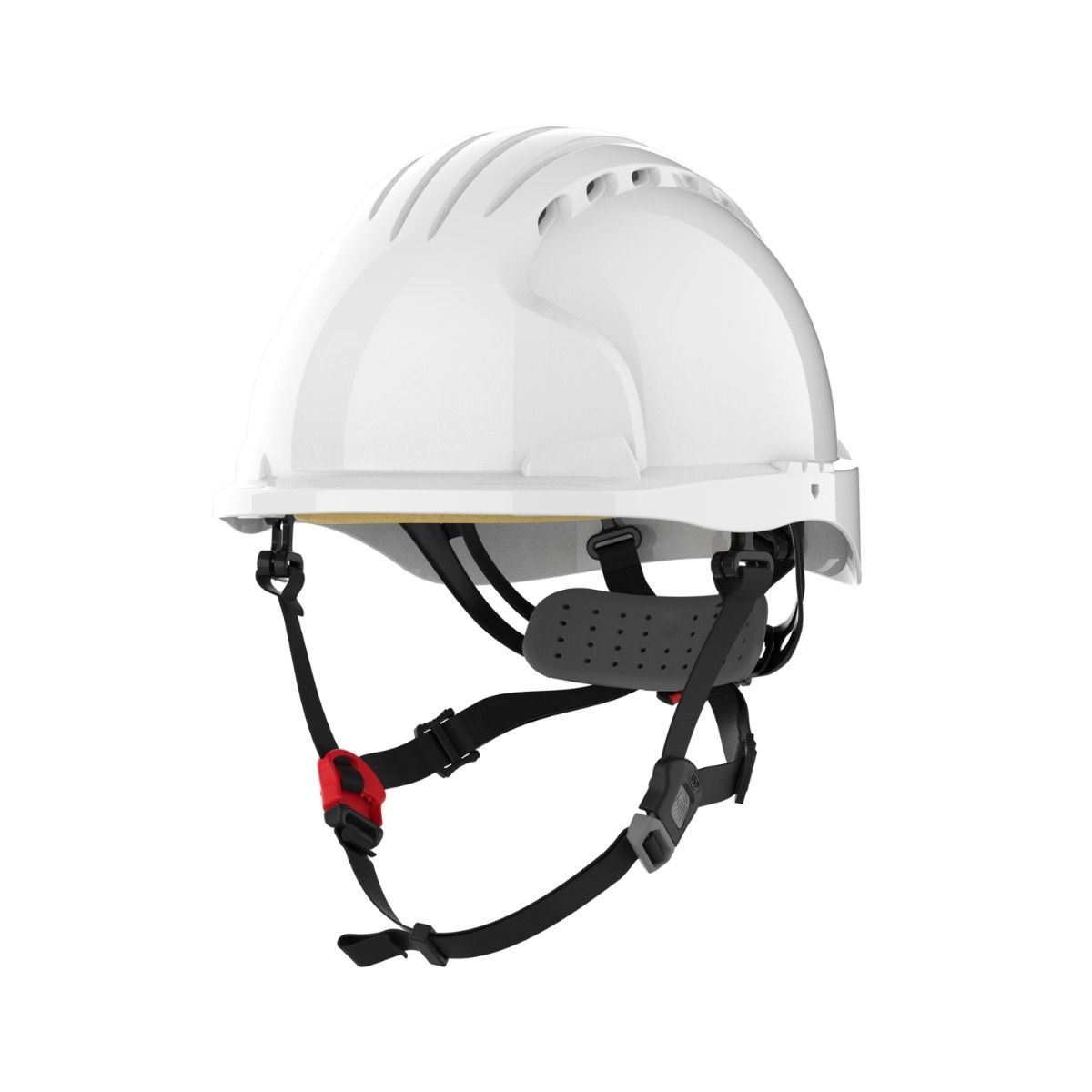
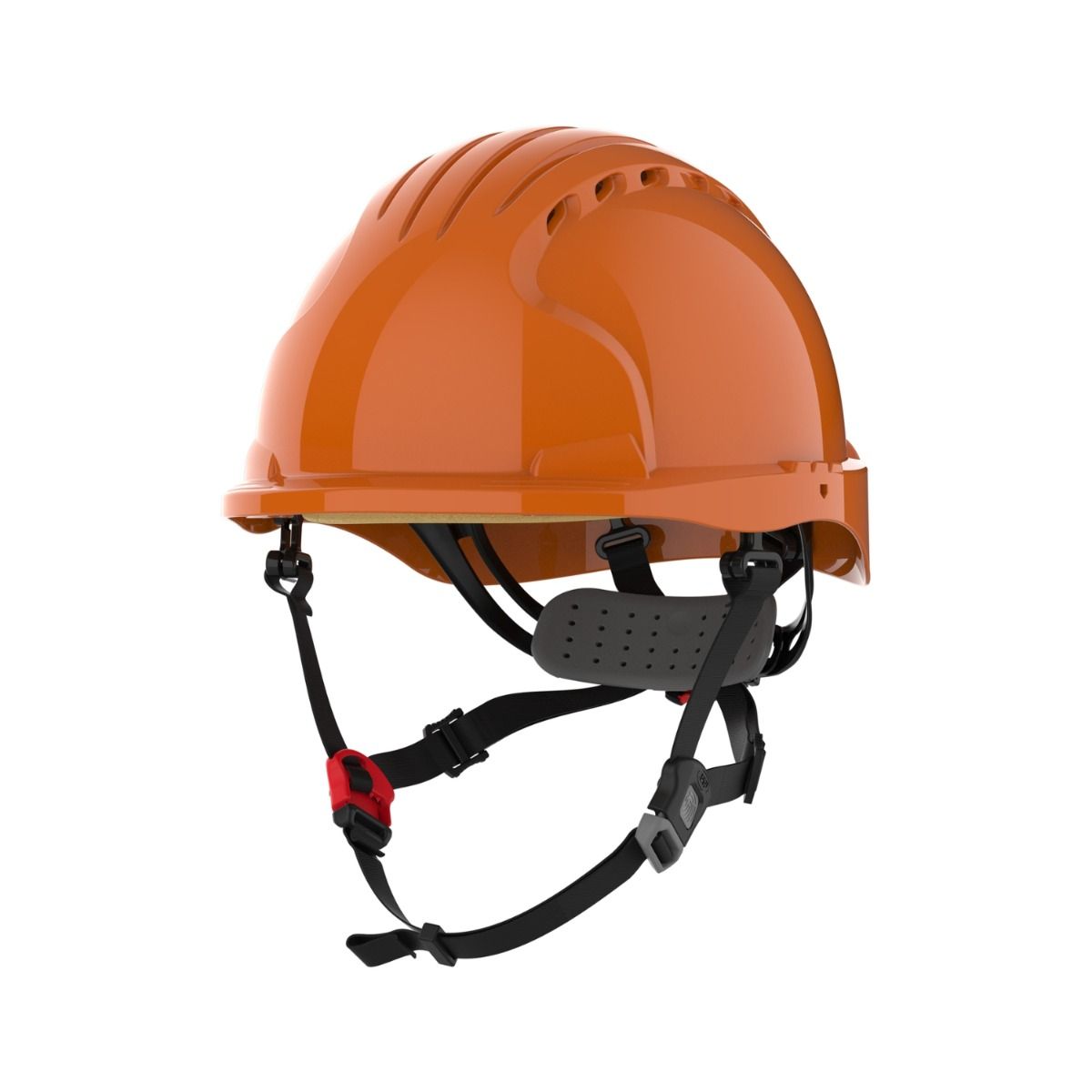
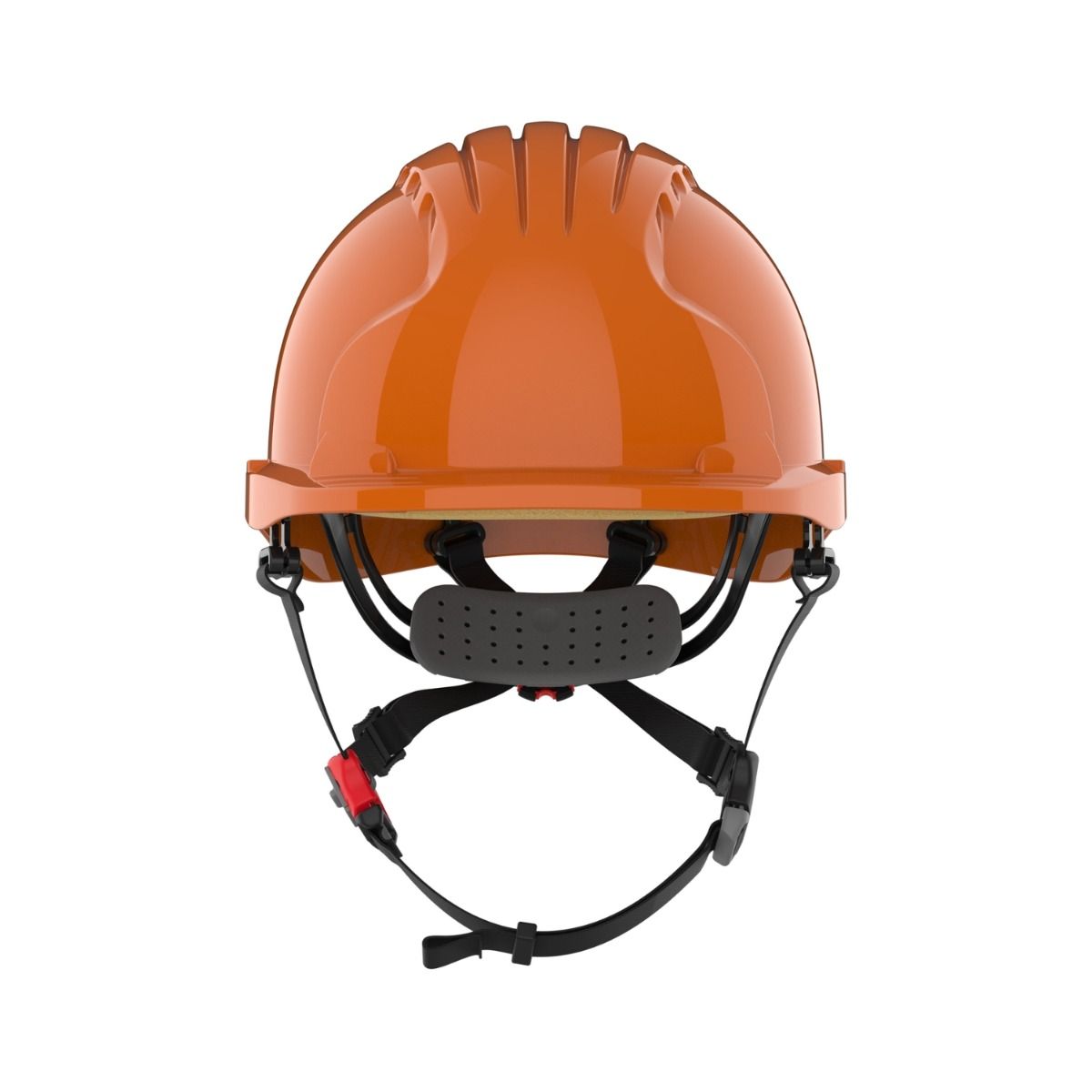
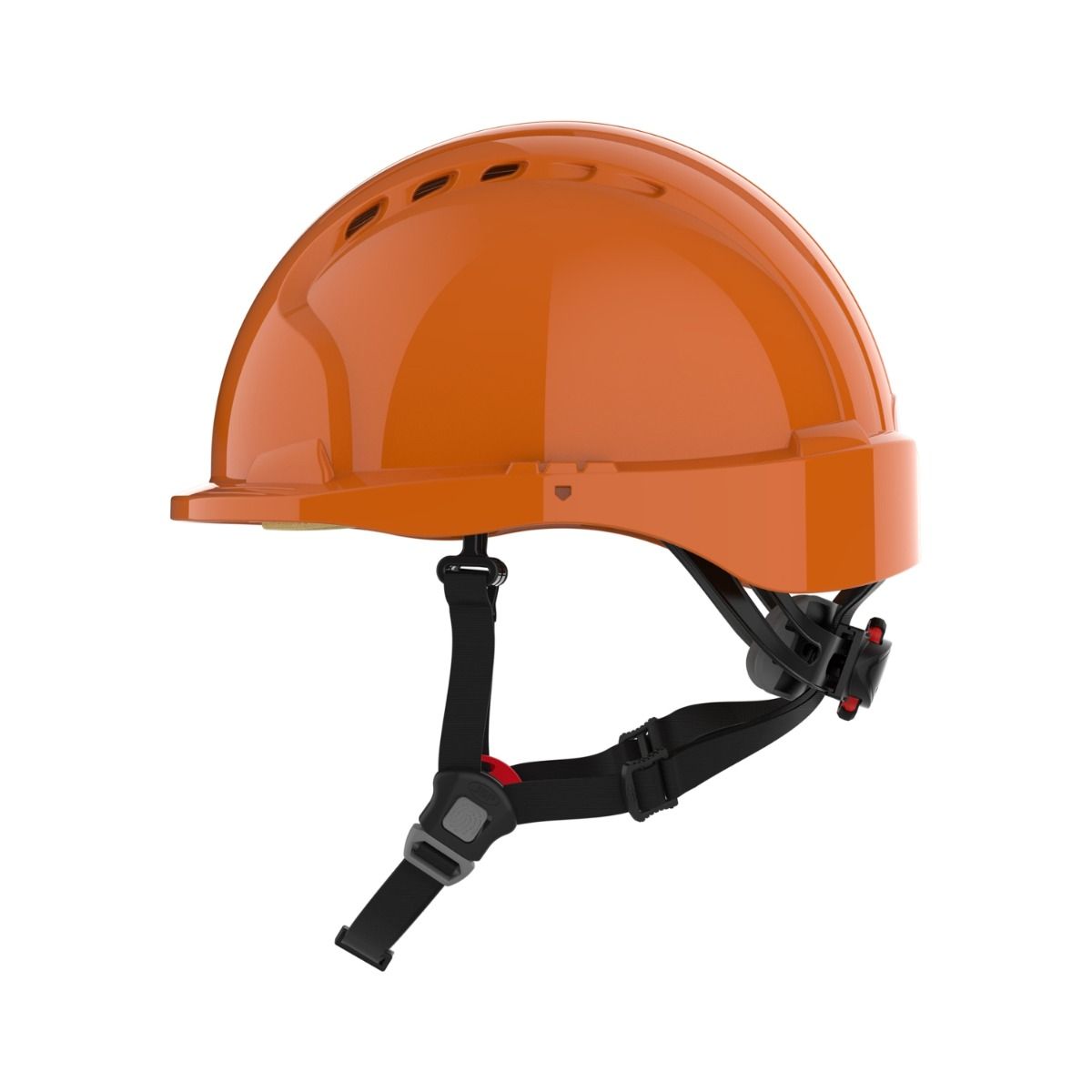
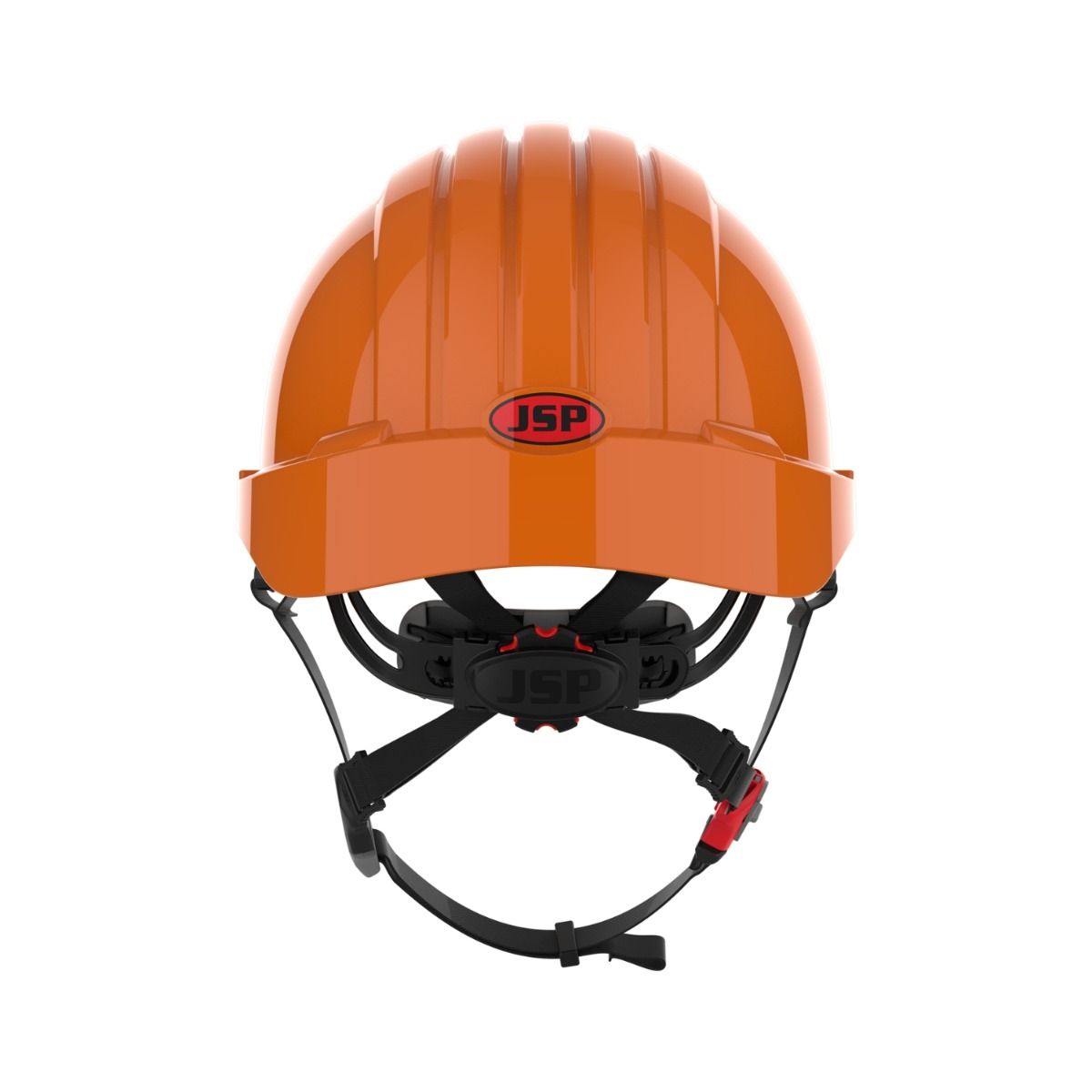
Industrial safety helmet certified to both EN397 and EN12492, switching between ground level and height work standards.
- Switches between EN397 and EN12492 certification
- Tough ABS shell with EPP impact liner
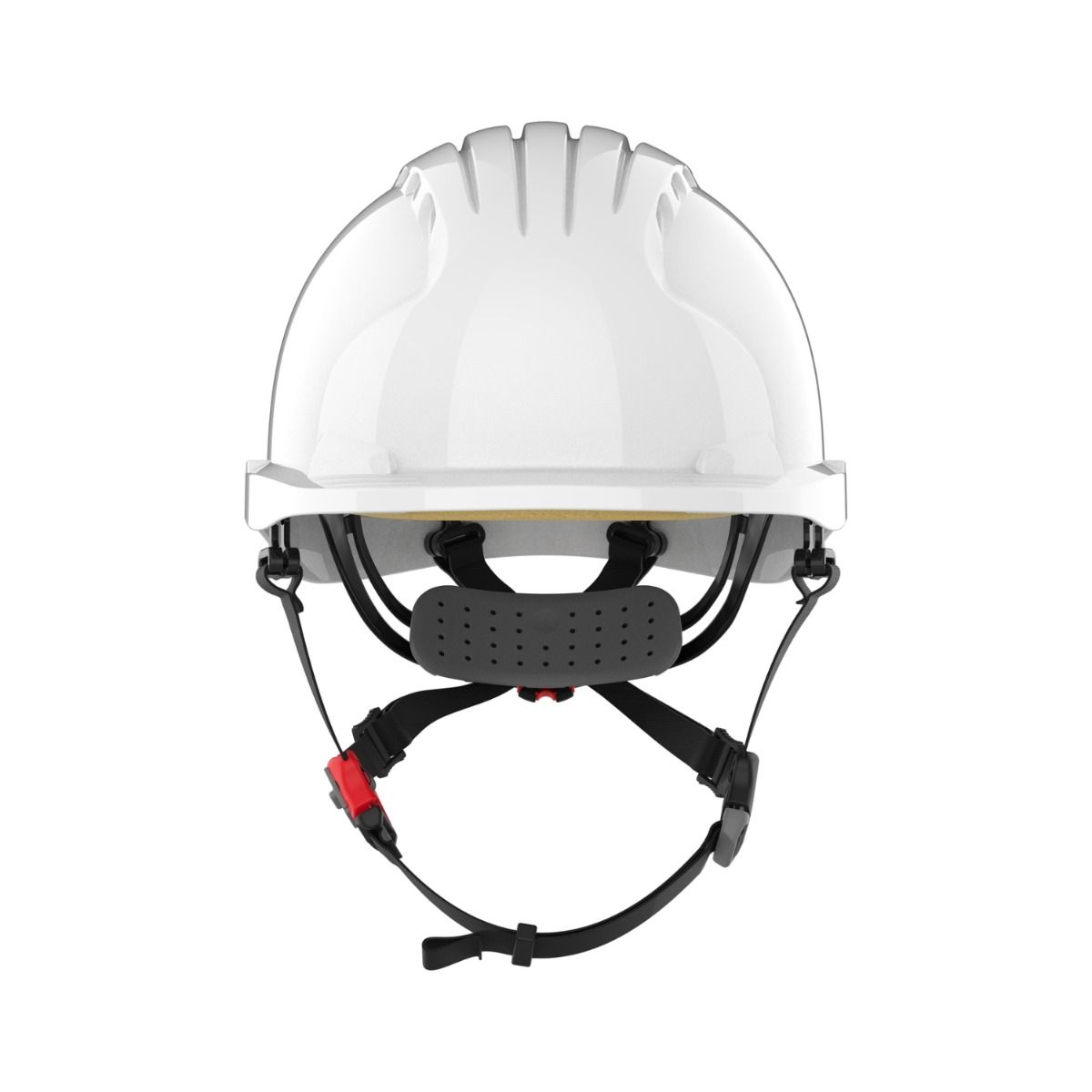
- 4-point DualSwitch adjustable chinstrap
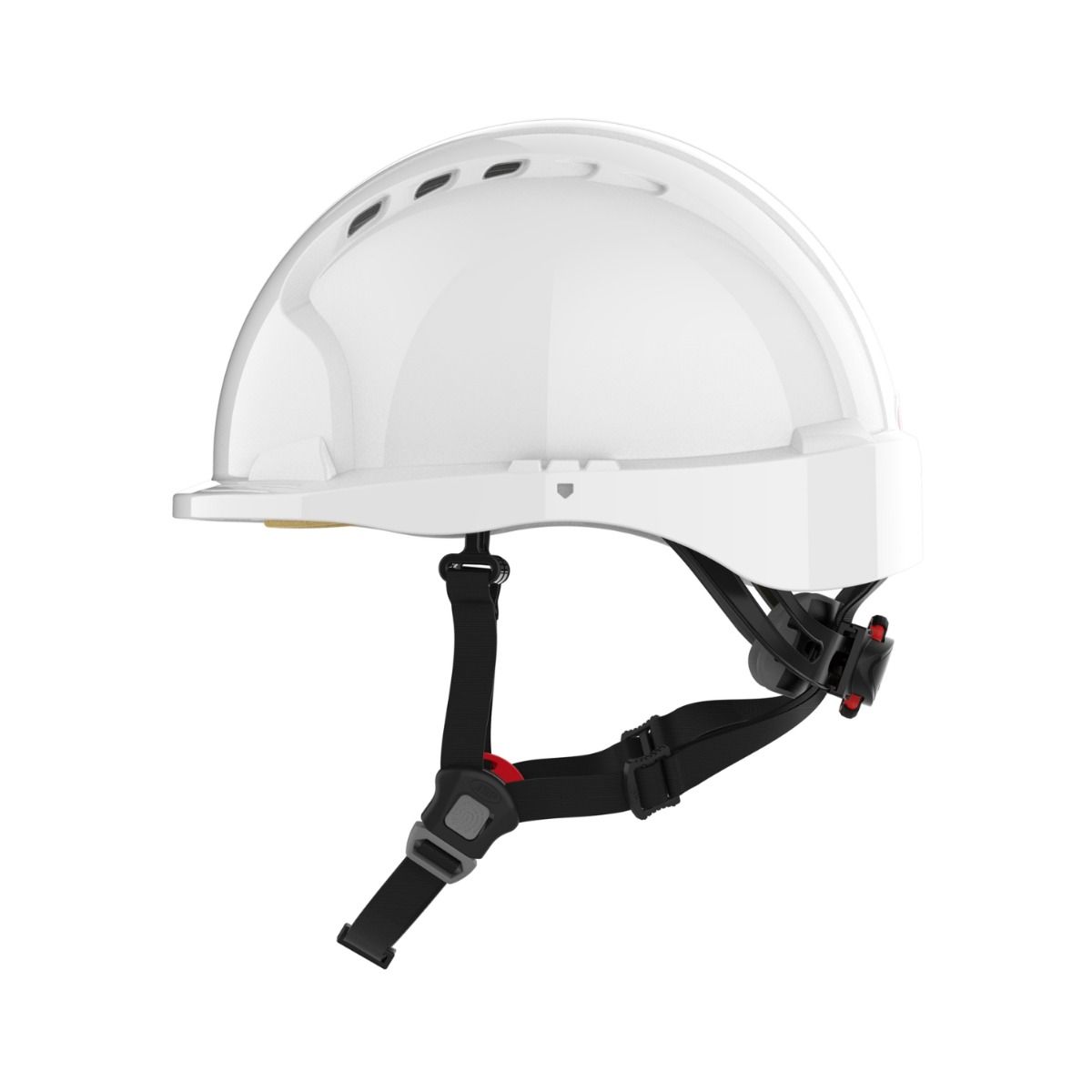
- Vented shell reduces internal temperature by 2-3 degrees
- Weight approximately 450g
- Size range 53-64cm
- available in white and orange
- Dual standard industrial helmet
- EPP liner offers side, front, and rear impact protection
- Tough ABS shell
- Micro peak
JSP EVO5 DualSwitch Industrial Safety Helmet - Vented Climbing Helmet
Industrial safety helmet built to switch between two certified standards at the flick of a switch, EN397 for general ground level site work and EN12492 for climbing and work at height. The tough ABS shell and EPP impact liner provide class leading protection, while the vented design keeps internal temperature down through a full shift. A 4-point chinstrap adjusts its release force to match whichever standard is selected.
How the DualSwitch mechanism changes chinstrap release force
A standard industrial helmet's chinstrap is designed to release under moderate force, so it comes off if the helmet snags on machinery, reducing choking risk. A climbing helmet needs the opposite: a chinstrap that holds firm under high force, so the helmet stays on during a fall. A single helmet normally can't do both safely. The DualSwitch mechanism changes the chinstrap's release force between 150 and 250 Newtons for EN397 ground work, and above 500 Newtons for EN12492 height work, so one helmet correctly serves both situations depending on the task.
Key Features
-
DualSwitch chinstrap mechanism: Changes release force between EN397 (150-250N) and EN12492 (above 500N) settings, adapting the helmet to ground level or height work.
-
Tough ABS shell: Extremely robust outer shell built for superior impact protection, rated to 100 Joules of top impact resistance.
-
EPP impact liner: Expanded polypropylene liner absorbs impact energy on the sides, front and rear, as required under EN12492.
-
EN50365 electrical insulation: Rated to 1000V for use around low voltage electrical installations.
-
Vented shell and liner: Reduces helmet internal temperature by an average of 2 to 3 degrees compared with an unvented design.
-
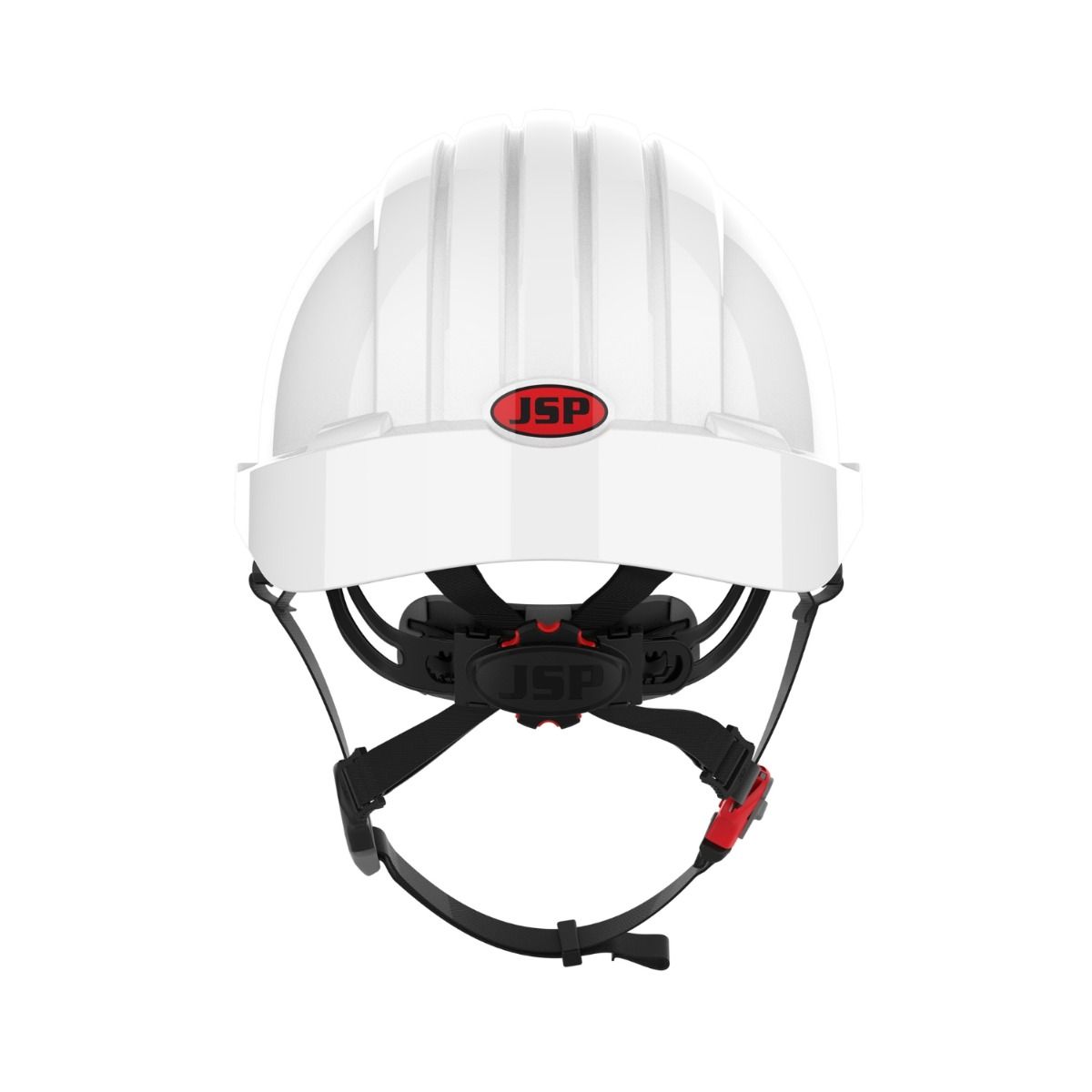
Revolution wheel ratchet harness with 3D-Adjustment: Gives a precise, tailored fit with depth settings for different head shapes.
Who is this for
Trades and roles:
-
Groundworkers and general site operatives
-
Steel erectors and structural workers
-
Riggers and height access technicians
-
Electrical installation engineers
-
Health and safety officers
Industries:
-
Construction
-
Civil engineering
-
Telecoms and utilities
-
Working at height and access industries
Specifications
| Specification | Detail |
| Product Name | JSP EVO5 DualSwitch Industrial Safety Helmet - Vented Hard Hat for Ground and Height Work |
| Parent Code | AKS270 |
| Brand | JSP |
| Standards | EN397, EN50365, EN12492, ANSI/ISEA Z89.1 Type I |
| Shell Material | ABS |
| Liner | Expanded Polypropylene (EPP) |
| Peak Type | Micro peak |
| Impact Resistance | 100 Joules (top), 25 Joules (lateral) |
| Electrical Insulation (EN50365) | 1000V |
| Chinstrap | 4-point, DualSwitch adjustable release force |
| Chinstrap Release Force, EN397 mode | 150-250 Newtons |
| Chinstrap Release Force, EN12492 mode | Greater than 500 Newtons |
| Harness | Revolution wheel ratchet, 3D-Adjustment depth settings |
| Ventilation | Vented shell and liner |
| Operating Temperature | -40°C to +50°C |
| Molten Metal Splash Protection | Yes |
| Integrated Eye Protection | No |
| Accessory Compatibility | Universal slots for visors, ear defenders, lamp bracket |
| Reflective CR2 | Optional |
| Weight | Approx. 450g |
| Size Range | 53-64cm head circumference |
| Certification | BSI Kitemark |
Compatibility
| Application or condition | Status |
| General site and industrial ground level work (EN397) | ✓ Compatible |
| Working at height and climbing tasks (EN12492) | ✓ Compatible |
| Low voltage electrical work up to 1000V (EN50365) | ✓ Compatible |
| JSP EVOGuard visors and Sonis ear defenders | ✓ Compatible |
| Use as an electrical helmet above 1000V | ✗ Not recommended |
| Continued use after a significant impact | ✗ Not recommended |
Who is this for
This helmet is used by groundworkers and site operatives needing standard EN397 head protection for general site tasks, and by riggers, steel erectors and access technicians who also work at height on the same site and need EN12492 protection for climbing and fall scenarios. Electrical installation engineers benefit from the EN50365 rating when working near low voltage installations. It suits any role that moves between ground level and height work without needing two separate helmets.
Typical applications
-
General site work and groundworks requiring standard EN397 head protection.
-
Climbing, rigging and work at height requiring EN12492 protection.
-
Low voltage electrical installation work rated up to 1000V.
-
Structural steel erection and access work at varying heights.
-
Sites where operatives move between ground level and height tasks in the same shift.
How to use
Step 1: Select the correct standard for the task by setting the DualSwitch to EN397 for ground work or EN12492 for height work.
Step 2: Adjust the harness using the Revolution wheel ratchet for a secure, snug fit around the head.
Step 3: Set the 3D-Adjustment depth setting to suit the shape of the head.
Step 4: Secure the 4-point chinstrap, checking it sits comfortably under the chin.
Step 5: Before height work, confirm the switch is set to EN12492 mode so the chinstrap release force is correctly set for fall protection.
Common mistakes
-
Leaving the switch on EN397 mode while working at height, where a lower chinstrap release force increases the risk of losing the helmet in a fall.
-
Continuing to use the helmet after a significant impact, even without visible damage.
-
Failing to readjust the harness and chinstrap for different wearers sharing the same helmet.
-
Using the helmet for electrical work above its 1000V EN50365 rating.
Safety
This helmet absorbs impact energy through partial destruction of the shell or liner, so any helmet subjected to a severe impact should be replaced even if damage isn't visible. The switch position must be checked and set correctly before each use, since it changes how the chinstrap behaves in an emergency. Under normal circumstances the helmet has a useful life of 5 years from first use or 10 years from the date of manufacture, whichever comes first.
Maintenance
Clean the helmet with soap and warm water and dry with a soft cloth. Do not clean with abrasive substances or solvents, and don't store the helmet in direct sunlight. Inspect daily for cracking, brittleness or damage to the shell or harness. Never fit components other than genuine JSP parts to this helmet.
Frequently Asked Questions
Q: What does the DualSwitch mechanism actually do?
A: It changes the chinstrap's release force between two settings. In EN397 mode, the chinstrap releases under 150 to 250 Newtons, reducing choking risk if the helmet gets caught in machinery on the ground. In EN12492 mode, the chinstrap requires over 500 Newtons to release, keeping the helmet securely in place during a fall at height. Switching between the two lets one helmet correctly serve both situations.
Q: What do EN397, EN12492 and EN50365 mean?
A: EN397 is the European standard for industrial safety helmets, covering general site protection. EN12492 is the standard for mountaineering and height safety helmets, with stricter chinstrap retention requirements for fall protection. EN50365 covers electrical insulation, in this case rated to 1000V for use around low voltage installations. This helmet is certified to all three, plus ANSI/ISEA Z89.1 Type I.
Q: What is this helmet NOT suitable for?
A: This helmet isn't rated for electrical work above 1000V, so a higher-rated insulating helmet is needed for higher voltage installations. Any helmet that has taken a significant impact should be replaced immediately, even without visible damage, since internal damage isn't always apparent. It also shouldn't be modified with non-JSP components.
Q: Why choose a dual-standard helmet over separate helmets for ground and height work?
A: Carrying two separate helmets for ground and height tasks is impractical for operatives who move between both in the same shift. This helmet switches its chinstrap behaviour to match whichever standard the task requires, so one helmet correctly covers both scenarios without compromising on either standard's safety requirements.
Q: How long can this helmet be used before it needs replacing?
A: Under normal circumstances, the helmet has a useful life of 5 years from first use or 10 years from the date of manufacture, whichever comes first. It should be replaced immediately after any significant impact, regardless of visible damage, since impact absorption can occur without obvious external signs.
Q: How do I clean and maintain the helmet?
A: Clean with soap and warm water, then dry with a soft cloth. Avoid abrasive cleaners or solvents, and don't store the helmet in direct sunlight. Inspect it daily for cracking, brittleness or damage to the shell or harness before use.