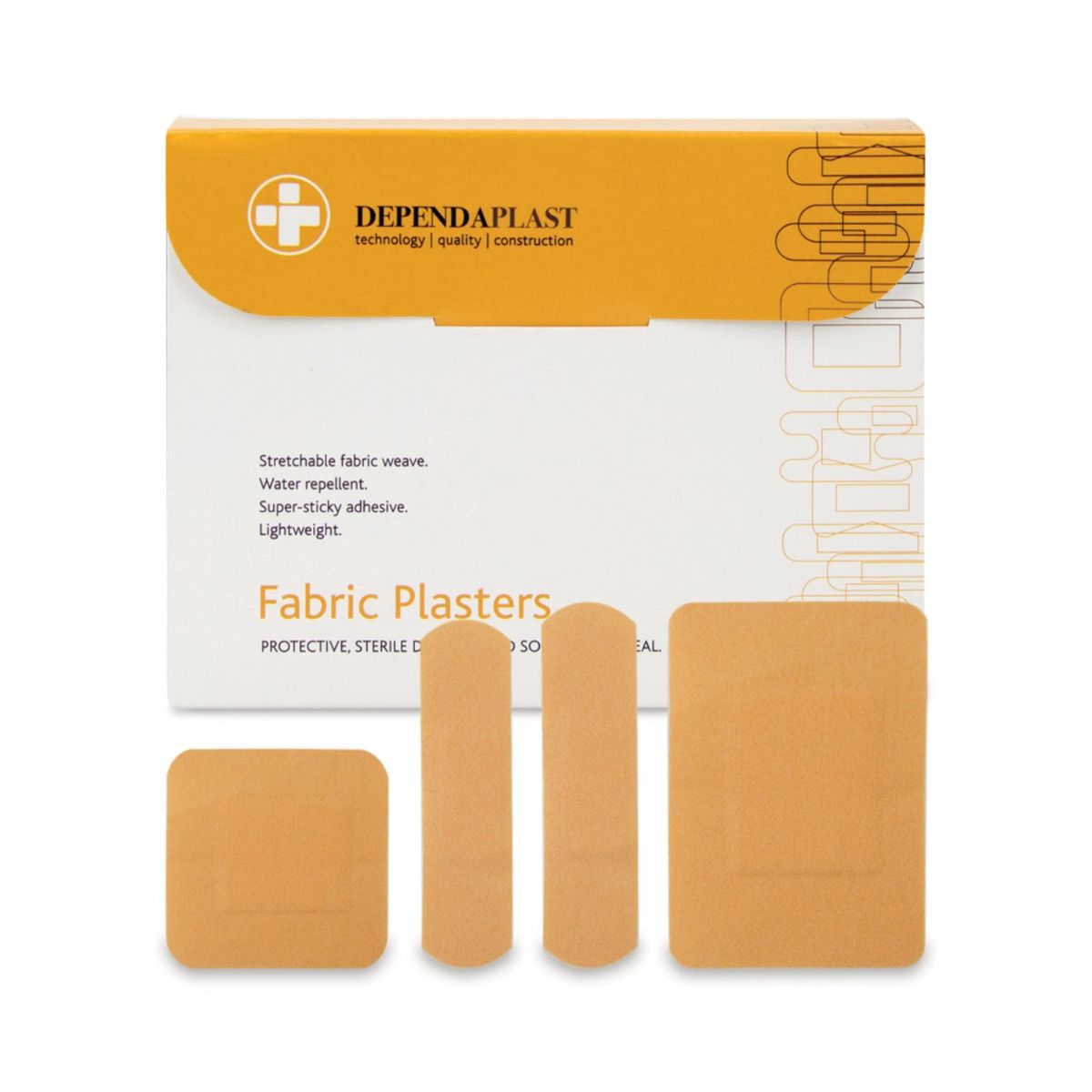
Fabric plasters in four assorted sizes, made from a lightweight stretch fabric weave that moves with the skin. Each sterile plaster has a water repellent finish and a strong zinc oxide adhesive. They cover cuts and grazes on knuckles, fingers and joints, where stiffer plasters peel away.
How Stretch Fabric Keeps Plasters On Over Moving Joints
A plaster on a knuckle or finger bends constantly through the working day. Stiff plasters crease, lift at the edges and fall off within hours. This fabric stretches in all directions, so it flexes with the joint and the adhesive stays in contact with the skin.
Key Features
Stretch fabric weave: stretches in all directions to cover knuckles, fingers and other joints.
Water repellent finish: resists splashes and light hand washing.
Zinc oxide adhesive: holds firmly through work and is designed to come away cleanly.
Lightweight and thin: comfortable to wear through the working day.
Four sizes: square, two strip widths and a larger patch cover most minor cuts.
Sterile and latex-free: each plaster is sterilised and contains no latex.
Who is this for
Trades and roles
First aiders and appointed persons
Site managers
Facilities managers
Workshop supervisors
Procurement teams
Industries
Construction
Manufacturing and engineering
Warehousing and logistics
Facilities management
Education and public sector
Specifications
Specification
Detail
Product name
Fabric Plasters - Assorted Sizes
Product code
HSFP100
Product type
Sterile fabric plaster
Fabric
Stretch fabric weave, cotton PE
Finish
Water repellent
Adhesive
Zinc oxide
Latex
Latex-free
Sterilisation
Ethylene oxide (EO)
Shelf life
5 years from manufacture
Sizes
4cm x 4cm, 7cm x 2cm, 7.5cm x 2.5cm, 7.5cm x 5cm
Colour
Pale
Compatibility
Use or condition
Suitability
Knuckles, fingers, elbows and other joints
Suitable, the fabric stretches in all directions
Restocking BS 8599-1 and HSE workplace first aid kits
Suitable, as assorted plasters
Small cuts and grazes on site and in workshops
Suitable
Splashes and light hand washing
Suitable, the fabric is water repellent
Staff with a known sensitivity to zinc oxide adhesive
Not recommended, use clear low allergy plasters
Food preparation and kitchens
Not recommended, use blue detectable plasters
Deep wounds or heavy bleeding
Not recommended, use a sterile dressing and seek medical help
Typical Users and Projects
First aiders and site teams use fabric plasters for cuts on hands and joints during manual work. They suit construction sites, workshops, warehouses and maintenance teams, where hands bend and grip all day. They are also a common restock for workplace first aid kits.
Typical applications
Covering cuts on knuckles and fingers during manual handling and tool work.
Restocking BS 8599-1 and HSE workplace first aid kits.
Covering grazes on elbows and knees after slips and trips.
Keeping a supply in site offices, welfare units and workshop first aid points.
Topping up vehicle and travel first aid kits.
How to use
Step 1: Wash and dry your hands, or put on gloves. Step 2: Clean the cut with a sterile wipe and let the skin dry. Step 3: Choose a size with a pad that covers the whole cut. Step 4: Peel off the backing without touching the pad. On a joint, bend it slightly before applying so the plaster has room to move. Step 5: Press the edges down firmly, and change the plaster if it gets dirty or wet through.
Common mistakes
Applying the plaster with the joint straight, so it pulls when the joint bends.
Putting it on damp, oily or dirty skin, so it does not stick.
Using fabric plasters in food areas, where blue detectable plasters are needed.
Covering a deep or heavily bleeding wound with a plaster instead of a dressing.
Leaving a plaster on after it has been soaked through.
Safety
Plasters are for minor cuts and grazes only. Use a sterile dressing and seek medical help for deep wounds, heavy bleeding or signs of infection. Stop use if the skin reacts to the adhesive.
Maintenance
Store the pack in a cool, dry place. The plasters have a shelf life of 5 years from manufacture. Discard any with damaged wrappers.
Frequently Asked Questions
Q: What are fabric plasters best for? A: They suit cuts and grazes on knuckles, fingers and joints that bend. The stretch fabric moves with the skin, so the plaster stays on through manual work. They are also a common restock for workplace first aid kits.
Q: What sizes are in the pack? A: The pack holds four sizes: 4cm x 4cm, 7cm x 2cm, 7.5cm x 2.5cm and 7.5cm x 5cm. The first number is the length and the second is the width. The square suits fingertips and small cuts, and the larger patch suits grazes.
Q: Are fabric plasters waterproof? A: The fabric has a water repellent finish, so it resists splashes and light hand washing. It is not designed for swimming or long periods under water. Change the plaster if it gets wet through.
Q: What are these plasters not suitable for? A: They are not for food preparation areas, where blue detectable plasters are used. They are not for deep wounds or heavy bleeding. People sensitive to zinc oxide adhesive should use low allergy plasters instead.
Q: Should I choose fabric or clear plasters? A: Fabric plasters stretch in all directions, so they suit knuckles and joints. Clear plasters use a thin washproof film with a low allergy adhesive, and suit hands that are washed often. Many workplaces keep both.
Q: Do these plasters contain latex? A: The manufacturer’s technical data sheet states they are latex-free. Each plaster is also sterilised.
Q: How long do the plasters last in storage? A: The manufacturer gives a shelf life of 5 years from the date of manufacture. Store them in a cool, dry place and check the expiry date on the pack.
Not sure which first aid kit your workplace needs? This guide compares HSE and BS 8599-1 kits, explains kit sizes by headcount and hazard level, and covers travel kits for drivers and lone workers. Use our kit finder to match your team to the right kit in seconds.