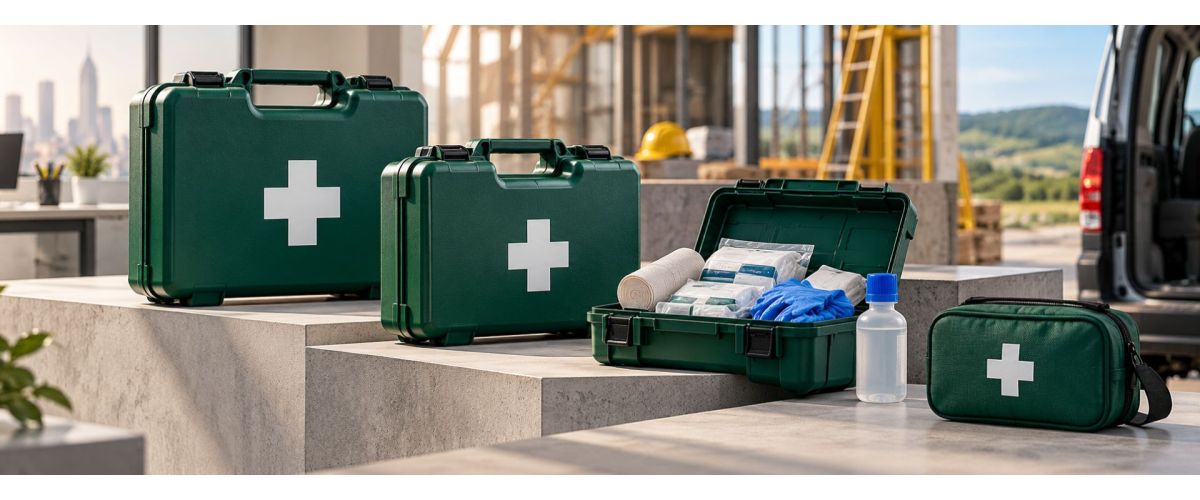
The Quick Answer
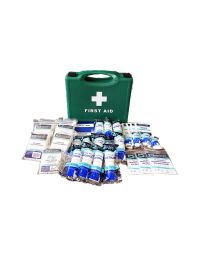
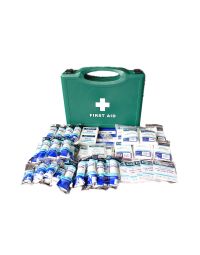
For a fixed workplace, choose by hazard level and headcount. BS 8599-1:2019 suggests a small kit for fewer than 25 people in low hazard work, or fewer than 5 in high hazard work. A medium kit covers 25 to 100 people (low hazard) or 5 to 25 (high hazard). Above that, add one large kit per 100 people (low hazard) or per 25 people (high hazard).
For drivers and lone workers, issue a travel kit to each person, or fix a vehicle kit in each HGV or van cab.
For extra risks, such as burns, serious bleeding, eye injuries or cardiac arrest, add the specialist equipment in section 9.
In every case, your first aid needs assessment makes the final decision. You can see every option in our first aid kits range.
What the Law Requires
The Health and Safety (First Aid) Regulations 1981 require every employer to provide adequate and appropriate first aid equipment, facilities and people. That applies to every workplace, however small.
The law does not set a fixed list of kit contents. Instead, employers carry out a first aid needs assessment. It looks at the work you do, the hazards involved, the number of people, how spread out they are and how far away medical help is.
HSE's guidance, known as L74, explains how to carry out the assessment and gives a suggested minimum list of items for a basic kit. HSE does not approve or certify first aid kits. Its guidance points to British Standard BS 8599-1 as one way to judge what a kit should contain.
For full guidance, see HSE's first aid at work pages.
HSE Kit or BS 8599-1 Kit?
CMT sells two families of workplace kit. They often come in the same green case, so the contents list is the only way to tell them apart.
| Question | HSE workplace kit | BS 8599-1 workplace kit |
|---|---|---|
| Based on | HSE's suggested minimum item list | British Standard BS 8599-1:2019 |
| How it is sized | By number of people (10, 20 or 50) | By number of people and hazard level (small, medium, large) |
| Burn dressing | Not included | Included |
| Foil blanket | Not included | Included |
| Scissors | Not included | Included |
| Resuscitation aid | Not included | Included |
| Finger dressings and conforming bandage | Not included | Included |
| Gloves | Vinyl | Nitrile |
| Best suited to | Lower hazard offices, shops and workshops | Construction, warehousing, manufacturing and any contract that asks for BS 8599-1 |
Working for a principal contractor? Many site rules and client contracts ask for BS 8599-1 kits. Check before you order, because an HSE kit will not meet that requirement.
Is Your Workplace Low or High Hazard?
BS 8599-1 sizes kits by hazard level as well as headcount. Your risk assessment decides which applies, but these examples help.
Lower hazard
- Offices and contact centres
- Shops and trade counters
- Libraries and reception areas
- Site offices away from active work
Higher hazard
- Construction and groundworks
- Warehousing and distribution
- Manufacturing and engineering
- Work with dangerous machinery, sharp tools or chemicals
Kit Size by Headcount
BS 8599-1 workplace kits
| Kit size | Lower hazard workplace | Higher hazard workplace |
|---|---|---|
| Small | Fewer than 25 people | Fewer than 5 people |
| Medium | 25 to 100 people | 5 to 25 people |
| Large | One kit per 100 people, above 100 | One kit per 25 people, above 25 |
Source: BS 8599-1:2019 guidance on kit sizes. Your needs assessment may call for more kits, for example where people work on several floors or across a large site.
HSE workplace kits
| Number of people | Kit |
|---|---|
| Up to 10 | 10 Person First Aid Kit |
| 11 to 20 | 20 Person First Aid Kit |
| 21 to 50 | 50 Person First Aid Kit |
| More than 50 | More than one kit, placed so each group has one close by |
HSE kit sizes are set by the supplier. HSE itself does not size kits by headcount.
Kit Finder
Find the right kit in four steps
A starting point to check against your needs assessment
Drivers, Vehicles and Lone Workers
A workplace kit stays at the depot, office or welfare cabin. Drivers, mobile engineers and lone workers need first aid that travels with them. The usual approach is a kit carried by each person, or a kit fixed in each vehicle.
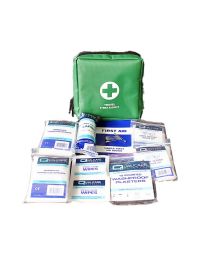
- Basic cover for cuts and minor injuries: the Travel First Aid Kit - 1 Person Pouch fits a glovebox or work bag.
- Dust, grit, burns or roadside risks: the Travel First Aid Kit With Eyewash adds a 250ml eyewash, burn dressing, foil blanket, resuscitation aid and scissors.
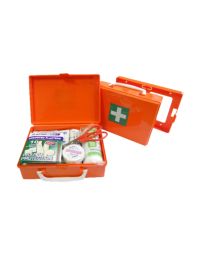
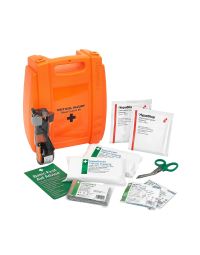
- HGV, van and car cabs: the Vehicle First Aid Kit comes in a hard case with a wall bracket, so it stays fixed in the cab instead of sliding under a seat. It has no eye wash, so add saline eye wash pods where drivers face dust or grit.
Do HGVs and vans have to carry a first aid kit? UK law does not require HGVs, vans or cars to carry one. Buses and coaches are different, because PSV regulations set what they must carry. Employers must still cover staff who drive for work in their first aid needs assessment.
Compare Our First Aid Kits
These are the main workplace, travel and vehicle kits. For burns, serious bleeding, eye injuries and cardiac arrest, see Extra Risks below.
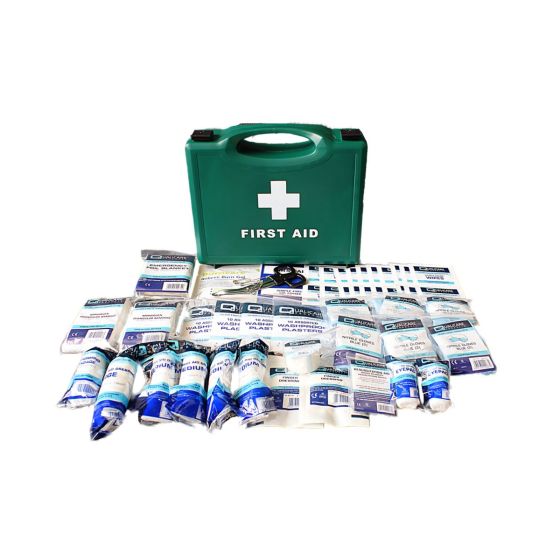
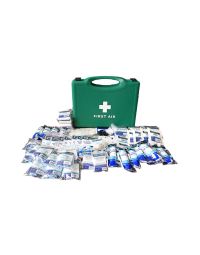
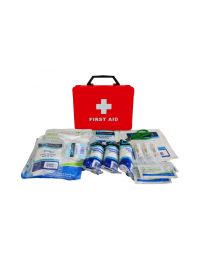
Small Workplace First Aid Kit
Lower hazard: fewer than 25 people. Higher hazard: fewer than 5 people.
View kit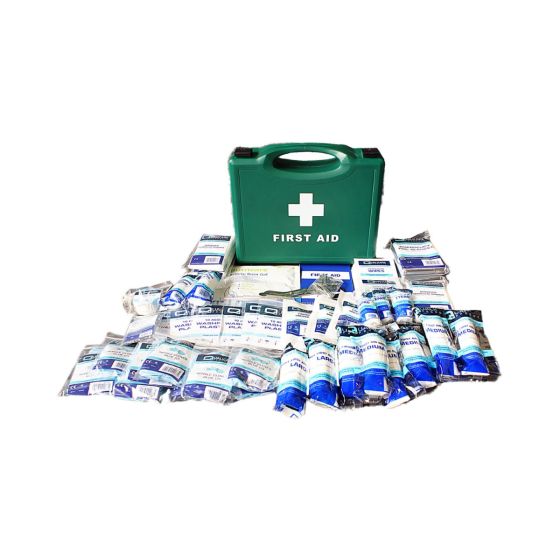
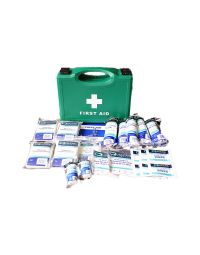
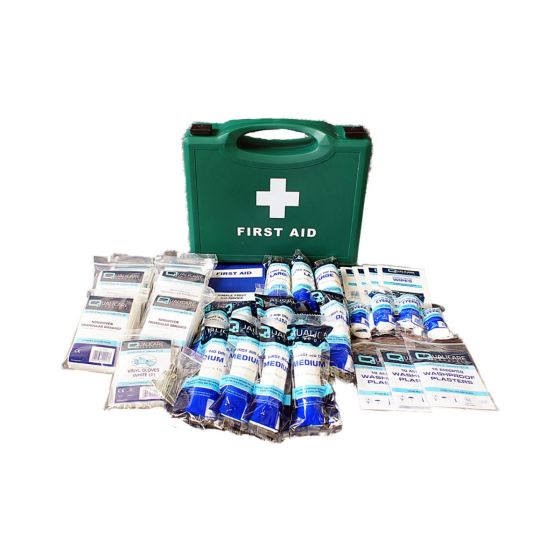
Medium Workplace First Aid Kit
Lower hazard: 25 to 100 people. Higher hazard: 5 to 25 people.
View kit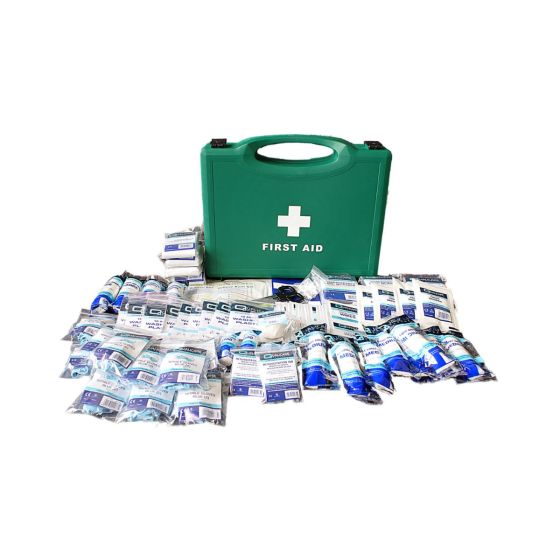
Large Workplace First Aid Kit
One kit per 100 people (lower hazard) or per 25 people (higher hazard).
View kit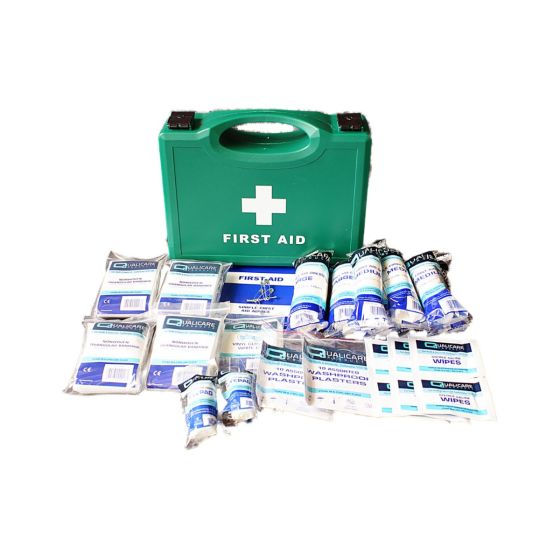

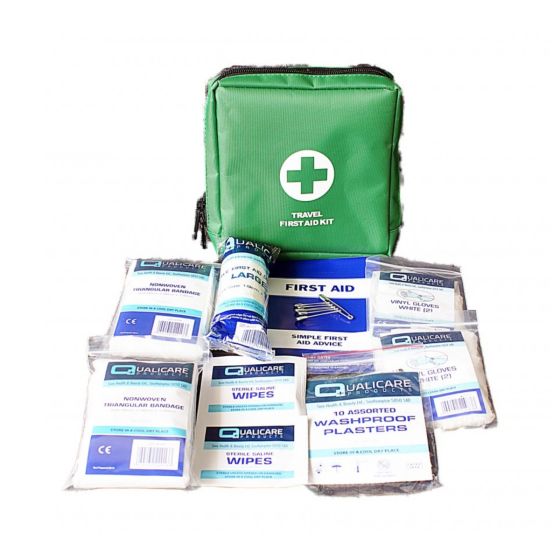
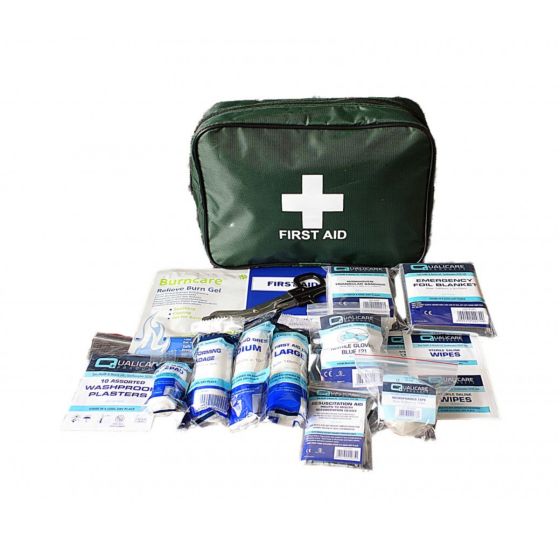
Travel First Aid Kit With Eyewash
One person, with 250ml eyewash, burn dressing and foil blanket.
View kit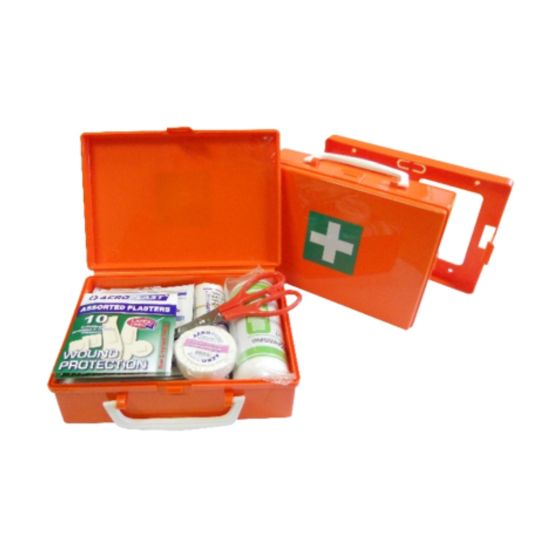
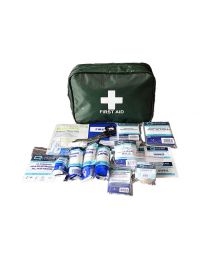
Vehicle First Aid Kit
Hard case with wall bracket, fixed in an HGV, van or car cab.
View kitExtra Risks: Burns, Bleeding, Eyes and Cardiac Arrest
A standard kit covers everyday cuts, sprains and minor injuries. Your needs assessment may show risks it cannot deal with on its own. Keep the right extra equipment next to the main kit, where first aiders will look for it.
Burns
Kitchens, workshops, hot works and welding areas.
- A dedicated burns kit, with eye wash pods for splashes
- Kept beside the main kit near the heat source
Serious bleeding
Machinery, sharp tools, glass and crush risks.
- A BS 8599-1 critical injury pack, for trained first aiders
- Kept where a serious injury is most likely
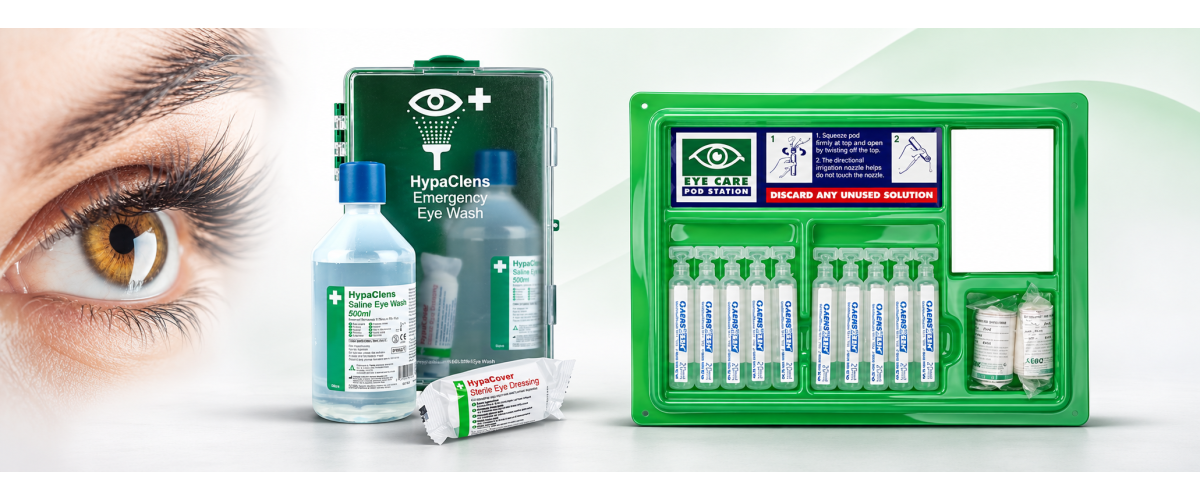
Eye injuries
Dust, grit and splashes from cutting, grinding or chemicals.
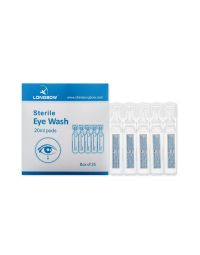
- Pods for a quick rinse where tap water is close by
- At least 1 litre of sterile saline where it is not, as HSE guidance suggests
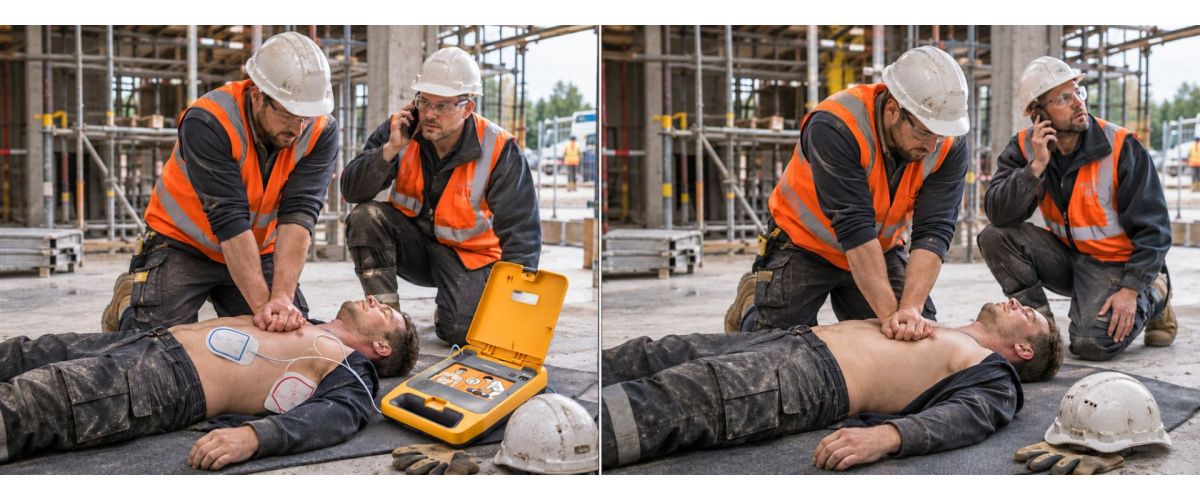
Cardiac arrest
Large sites, offices, schools and public buildings.
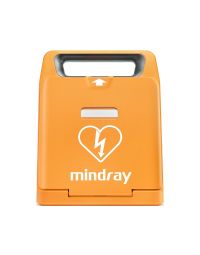
- A fully automatic AED that anyone can use
- Pads and battery kept in date, plus a CPR face shield
| If your assessment finds | Add this next to your kit | Why a standard kit is not enough |
|---|---|---|
| Hot liquids, hot surfaces or flames | Burns First Aid Kit Small - With Eye Wash Pods | Workplace kits hold one or two burn dressings at most. HSE kits hold none. |
| Machinery, sharp tools or crush risks | Critical Injury Bleed Control Kit - BS 8599-1 Compliant | Standard dressings are not designed for life-threatening bleeding. |
| Minor dust or grit, with tap water nearby | Eye Wash Pod Station or Saline Eye Wash Pods | Most workplace kits have eye pads but no eye wash. |
| Dust, debris or splashes, with no tap water nearby | Emergency Eye Wash Station or Eye Wash Kit - Wall Cabinet | HSE guidance suggests at least 1 litre of sterile saline where mains tap water is not readily available. |
| A large site, many people or public access | AED Defibrillator - Fully Automatic | CPR keeps blood flowing, but a shockable heart rhythm needs a defibrillator to restore it. |
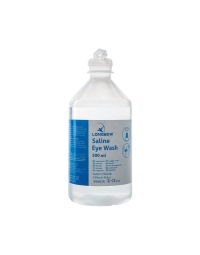
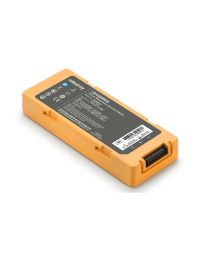
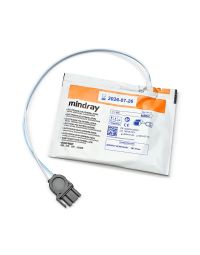
Already have an AED? Keep it ready with replacement defibrillator pads and a replacement defibrillator battery. Restock eye wash stations with 500ml saline eye wash bottles.
Products for Extra Risks
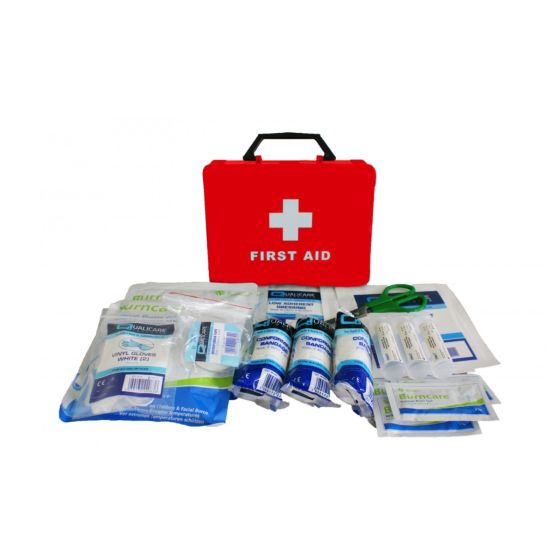
Burns First Aid Kit Small - With Eye Wash Pods
Burn dressings with eye wash pods for kitchens, workshops and hot work.
View product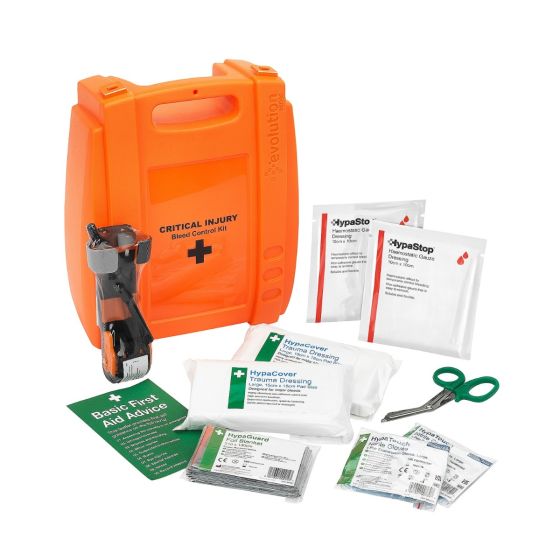
Critical Injury Bleed Control Kit - BS 8599-1 Compliant
BS 8599-1 critical injury pack for life-threatening bleeding, for trained first aiders.
View product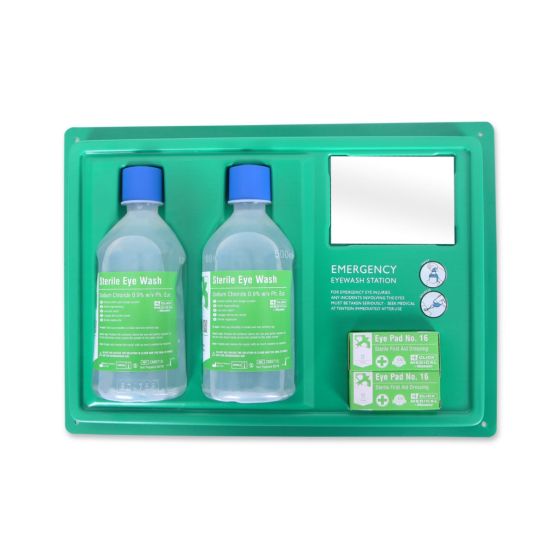
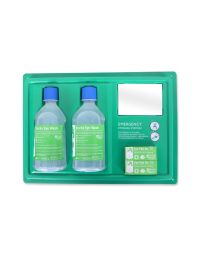
Emergency Eye Wash Station - 2 x 500ml Sterile Saline
Open wall panel with 1 litre of saline, eye pads and a mirror.
View product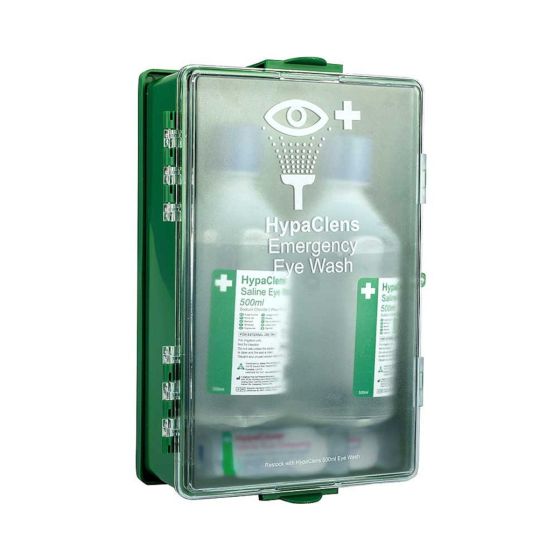
Eye Wash Kit - Wall Cabinet With 2 x 500ml Sterile Saline
Covered cabinet with 1 litre of saline, for dusty sites and yards.
View product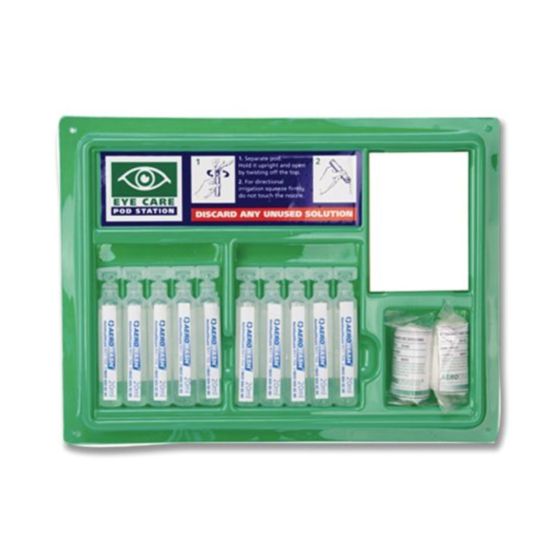
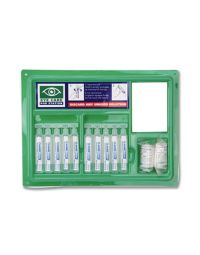
Eye Wash Pod Station - 10 x 20ml Sterile Saline Pods
Slim wall panel with single-use pods, for minor dust and grit.
View product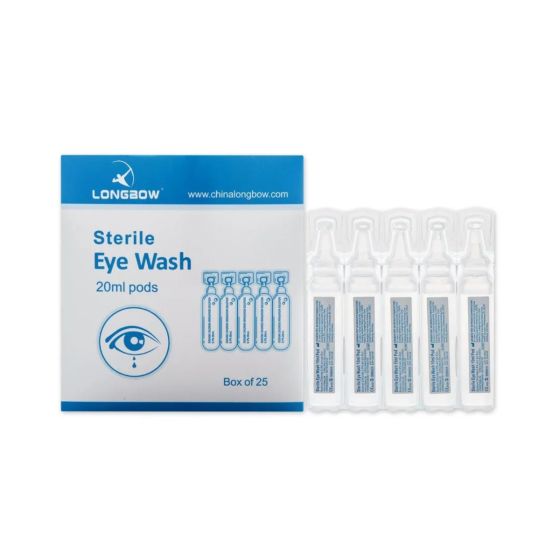
Saline Eye Wash Pods - Sterile 20ml
Single-use pods for first aid kits, vehicles and pod stations.
View product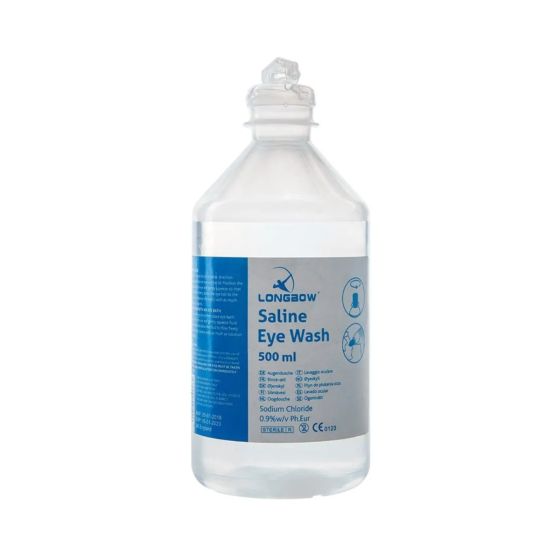
Saline Eye Wash Solution - Sterile 500ml Bottle
Spare 500ml bottles for longer rinsing and restocking.
View product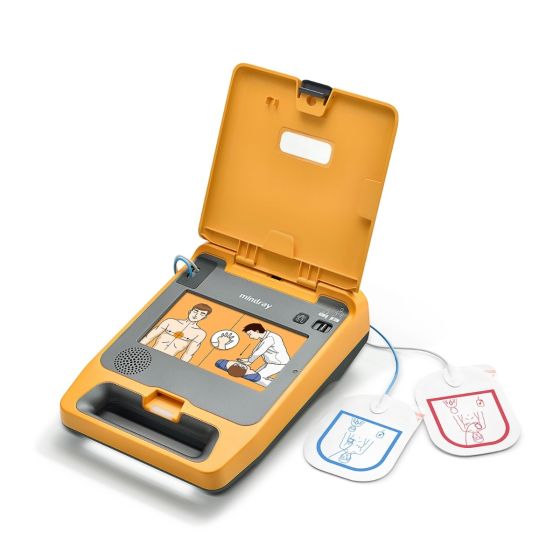
AED Defibrillator - Fully Automatic
Delivers the shock itself, with voice prompts and a CPR metronome.
View product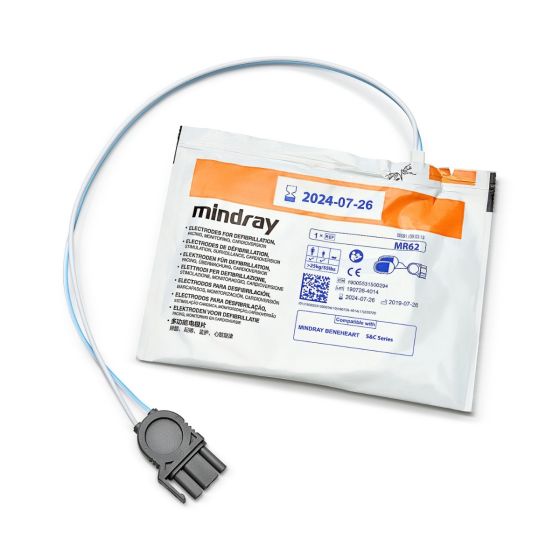
Replacement Defibrillator Pads - Adult and Paediatric
One universal pair for the AED, replaced after use or at expiry.
View product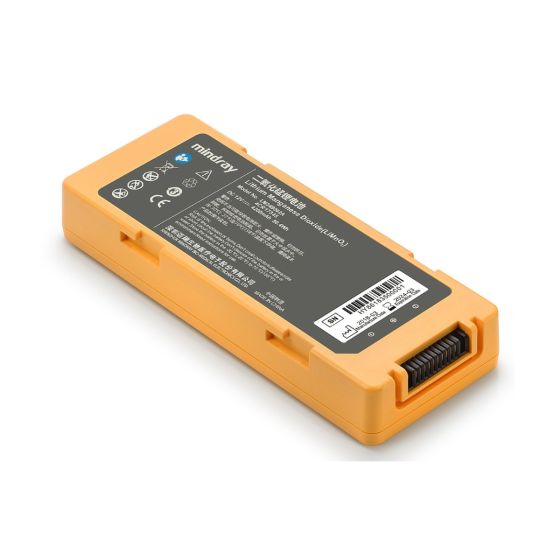
Replacement Defibrillator Battery - 12V 4200mAh
Up to 400 shocks and up to 6-year standby.
View product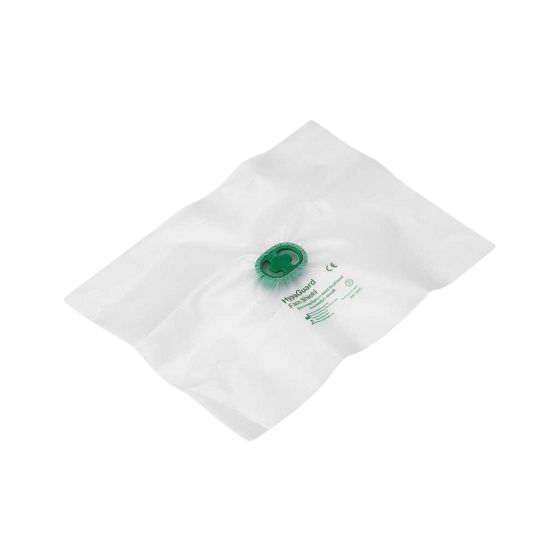
CPR Face Shield - With One-Way Valve
A barrier for rescue breaths, kept with the AED.
View productWhat Is in Each Kit
Select a kit family to compare quantities.
| Item | Small | Medium | Large |
|---|---|---|---|
| Burn Dressing 10cm x 10cm | 1 | 2 | 2 |
| Cleansing wipes | 20 | 30 | 40 |
| Conforming bandage | 1 | 2 | 2 |
| Finger dressing | 2 | 3 | 4 |
| Foil blanket | 1 | 2 | 3 |
| Gloves nitrile (pair) | 6 | 9 | 12 |
| Guidance note | 1 | 1 | 1 |
| HSE eyepad dressing | 2 | 3 | 4 |
| HSE large dressing | 1 | 2 | 2 |
| HSE medium dressing | 4 | 6 | 8 |
| Microporous tape | 1 | 1 | 1 |
| Plasters assorted | 40 | 60 | 100 |
| Resuscitation Aid | 1 | 1 | 2 |
| Scissors tuffcut | 1 | 1 | 1 |
| Triangular bandage | 2 | 3 | 4 |
| Item | 10 Person | 20 Person | 50 Person |
|---|---|---|---|
| Cleansing wipes | 6 | 10 | 20 |
| Gloves vinyl (pair) | 1 | 2 | 3 |
| Guidance note | 1 | 1 | 1 |
| HSE eyepad dressing | 2 | 4 | 6 |
| HSE large dressing | 2 | 3 | 4 |
| HSE medium dressing | 6 | 9 | 12 |
| Plasters assorted | 20 | 40 | 60 |
| Safety pins | 6 | 12 | 12 |
| Triangular bandage | 4 | 6 | 8 |
| Item | 1 Person Pouch | With Eyewash |
|---|---|---|
| Burn Dressing 10cm x 10cm | 0 | 1 |
| Cleansing wipes | 2 | 4 |
| Conforming bandage | 0 | 1 |
| Eyewash 250ml | 0 | 1 |
| Foil blanket | 0 | 1 |
| Gloves (pair) | 1 vinyl | 1 nitrile |
| Guidance note | 1 | 1 |
| HSE eyepad dressing | 0 | 1 |
| HSE large dressing | 1 | 1 |
| HSE medium dressing | 0 | 1 |
| Microporous tape | 0 | 1 |
| Plasters assorted | 10 | 10 |
| Resuscitation Aid | 0 | 1 |
| Safety pins | 6 | 6 |
| Scissors tuffcut | 0 | 1 |
| Triangular bandage | 2 | 1 |
| Contents | Vehicle First Aid Kit |
|---|---|
| First aid leaflet | 1 |
| Assorted washproof plasters env10 | 2 |
| Calico triangular bandage | 1 |
| Safety pins pack 6 | 1 |
| HSE dressings 18x18 with bandage | 1 |
| Alcohol free cleansing wipes | 6 |
| Micropore tape 1.25cm x 9.1m | 1 |
| Conforming bandages 5cm x 4.5m | 2 |
| Low adherent pad 75x75mm | 2 |
| Fingerstalls | 2 |
| Scissors poly prop handle | 1 |
Keeping Kits Stocked
A kit only helps if it is complete when someone opens it. A short routine keeps it ready.
Name an owner
One person checks and restocks each kit, so nothing falls between first aiders.
Check monthly
Check against the contents list monthly and after every use.
Replace straight away
Replace used items, anything past its expiry date and any damaged packaging.
Keep a record
A simple check log shows the kit is maintained during audits and site inspections.
Check extra equipment too
Include eye wash bottles, pods and AED pad and battery dates in the same check.
Record every injury
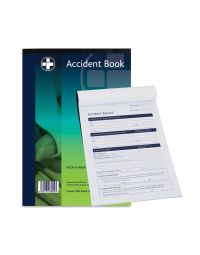
Employers with 10 or more people at the same premises must keep an accident book.
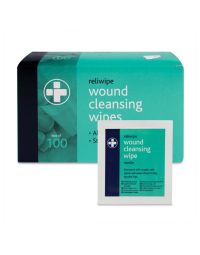
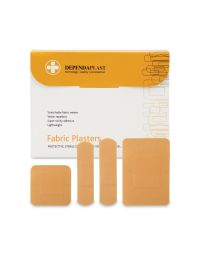
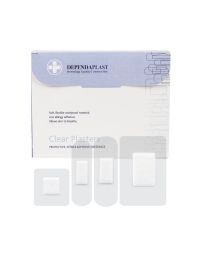
BS 8599-1 refills are available in small, medium and large sizes from the first aid kits range. Everyday items can be topped up with clear washproof plasters, fabric plasters, saline wound cleansing wipes and disposable gloves. Fix hard case kits to the wall with a first aid kit wall bracket, and log incidents in an A4 accident book.
Frequently Asked Questions
Is a first aid kit a legal requirement at work?
Every employer has a legal duty here. The Health and Safety (First Aid) Regulations 1981 require every employer to provide adequate and appropriate first aid equipment. The contents and number of kits depend on your first aid needs assessment.
Does HSE approve first aid kits?
HSE does not approve or certify kits. Its guidance L74 gives a suggested minimum list of items, and it points to BS 8599-1 as one way to judge kit contents.
What is the difference between an HSE kit and a BS 8599-1 kit?
An HSE kit covers HSE's suggested minimum items. A BS 8599-1 kit adds a burn dressing, foil blanket, scissors, resuscitation aid, finger dressings and a conforming bandage. BS 8599-1 kits are also sized by hazard level as well as headcount.
How many first aid kits do I need?
Under BS 8599-1:2019 guidance, a lower hazard workplace needs one large kit per 100 people, and a higher hazard workplace needs one per 25. Add more kits where people work on different floors, buildings or parts of a large site.
What first aid kit do I need for a construction site?
Construction is usually assessed as higher hazard, so BS 8599-1 suggests a small kit for fewer than 5 people, a medium kit for 5 to 25, and one large kit per 25 above that. Many principal contractors ask for BS 8599-1 kits, so check site rules first.
Do drivers need their own first aid kit?
Employers must cover staff who travel or work alone in their needs assessment. The usual approach is a travel kit for each driver or vehicle, kept where it can be reached quickly.
What first aid kit do I need for an HGV or van?
A vehicle kit in a hard case with a wall bracket keeps first aid fixed in the cab. UK law does not require HGVs or vans to carry a kit, but employers must cover drivers in their first aid needs assessment. Add eye wash pods if drivers face dust or grit.
Does a first aid kit include eye wash?
Most workplace kits include eye pad dressings but no eye wash. Where dust, grit or splashes are a risk, add eye wash pods or an eye wash station. HSE guidance suggests at least 1 litre of sterile saline where mains tap water is not readily available.
Do I need a defibrillator as well as a first aid kit?
UK law does not require most workplaces to have a defibrillator. Many employers add one after their first aid needs assessment, especially on large sites and in public buildings. A fully automatic AED can be used by anyone, guided by voice prompts.
How often should a first aid kit be checked?
Check it monthly and after every use. Replace used items, anything past its expiry date and any damaged packaging straight away.
This guide gives general information on choosing first aid kits. It is not a substitute for your own first aid needs assessment.