Not sure whether your workplace needs a defibrillator? This guide explains what an AED does, compares fully and semi-automatic models, and covers placement, maintenance and The Circuit.
Loading...
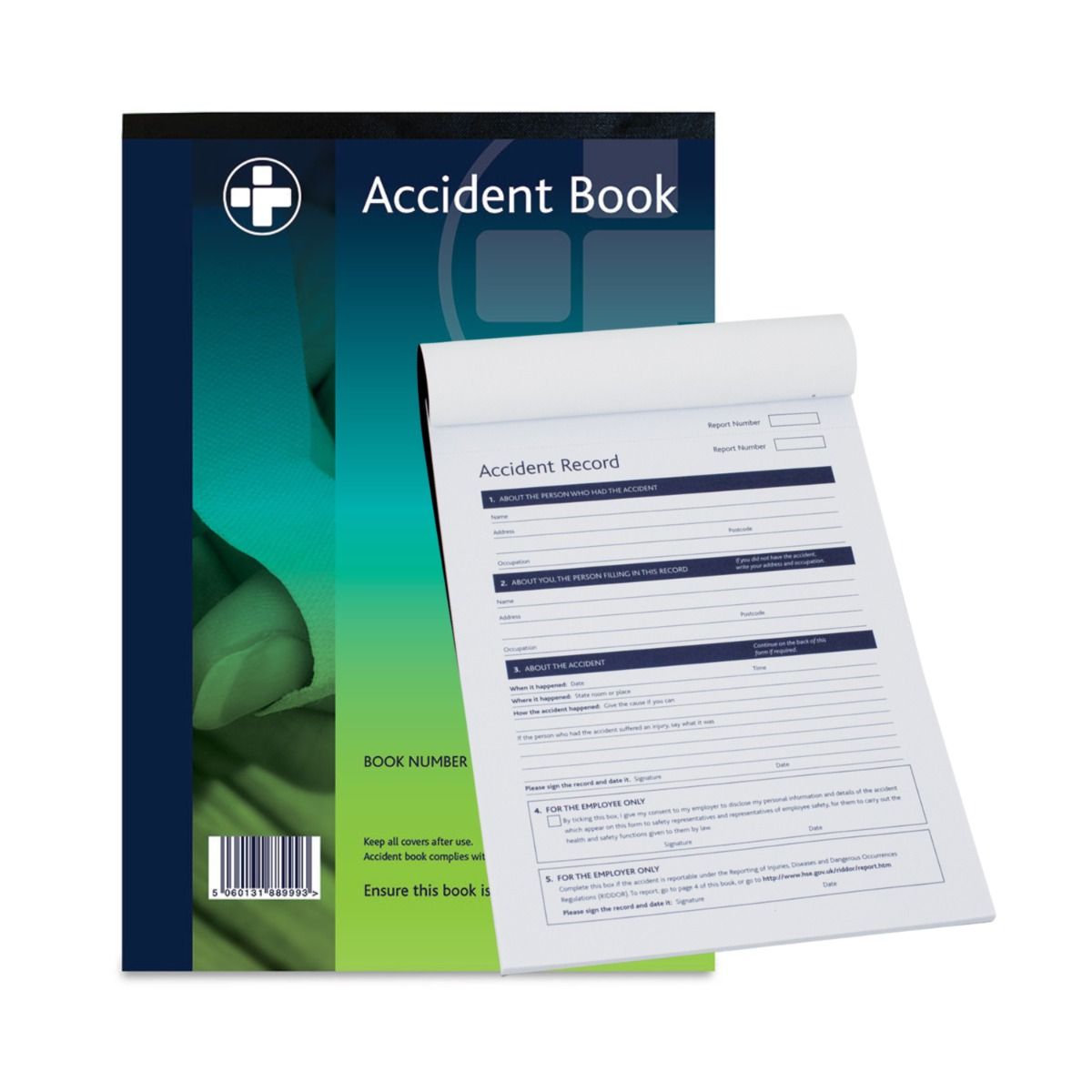
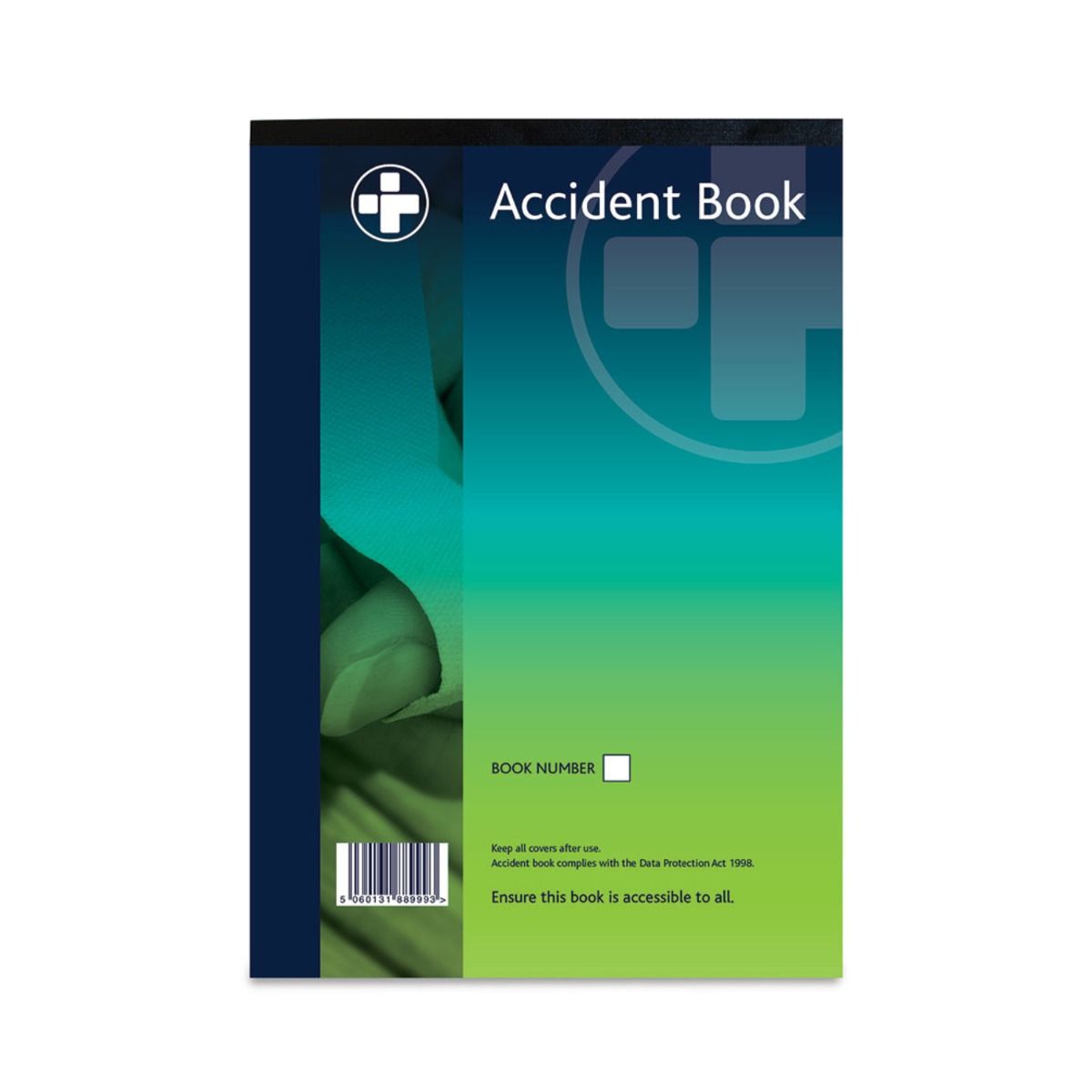
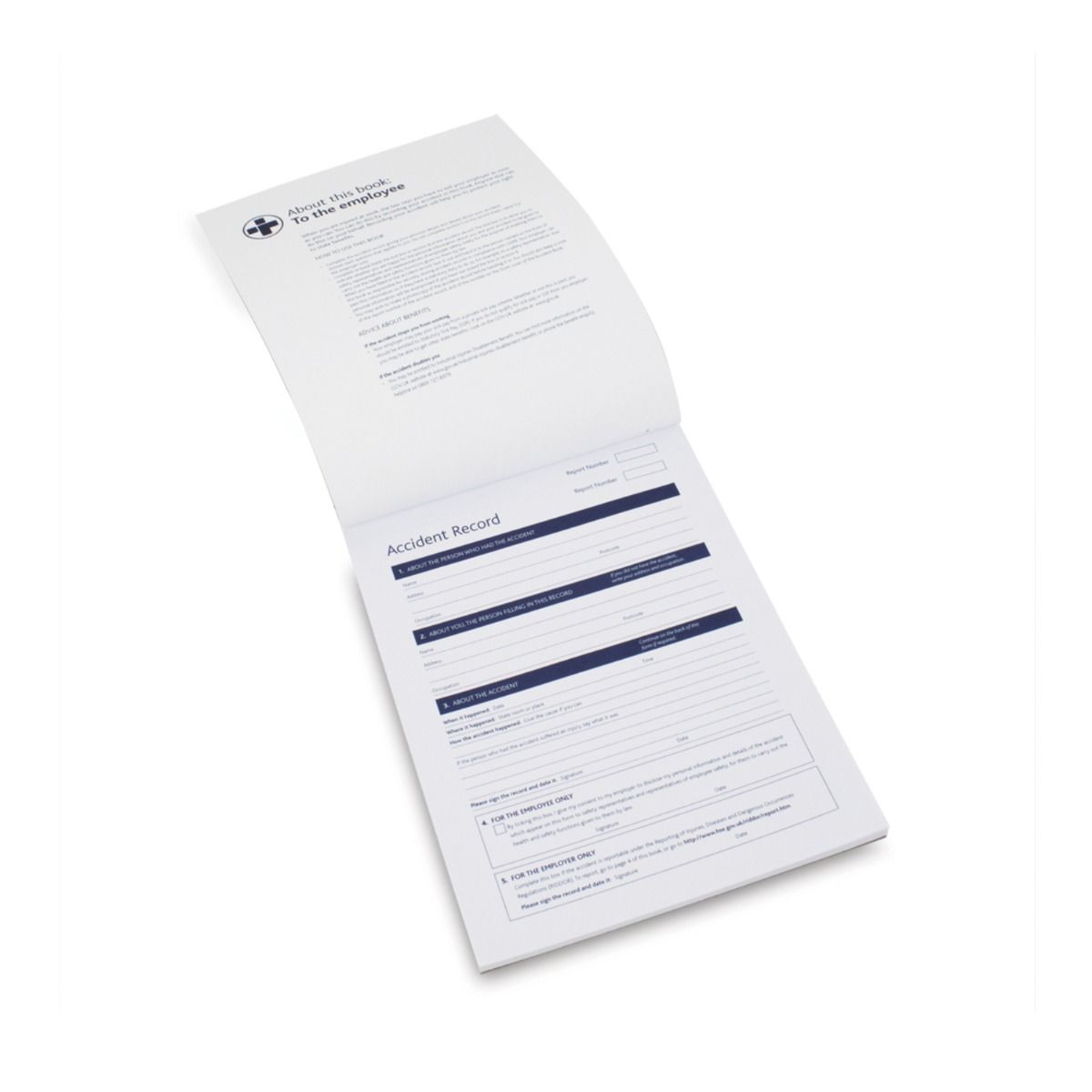
A4 accident book with tear-off record forms for logging workplace injuries, so each record can be filed securely away from the book.
A4 accident book with tear-off record forms for logging workplace injuries, so each record can be filed securely away from the book.
| BULK DISCOUNT | 5 | 25 |
|---|---|---|
| Price | £8.00 £9.60 | £6.20 £7.44 |
Order 1x to earn 9 FASTPoints
Order to earn 9 FASTPoints
Log in to access trade discountsAn A4 accident book for recording injuries that happen at work. Each record is a tear-off form, so it can be removed once completed and filed securely away from the book. The book includes guidance on how to use it and an introduction to RIDDOR reporting.
In an old-style accident book, every entry sits on view for the next person who writes in it. Names, addresses and injury details are then open to anyone who picks the book up. Tear-off forms let the completed record be removed and stored securely, so the next person sees a blank page.
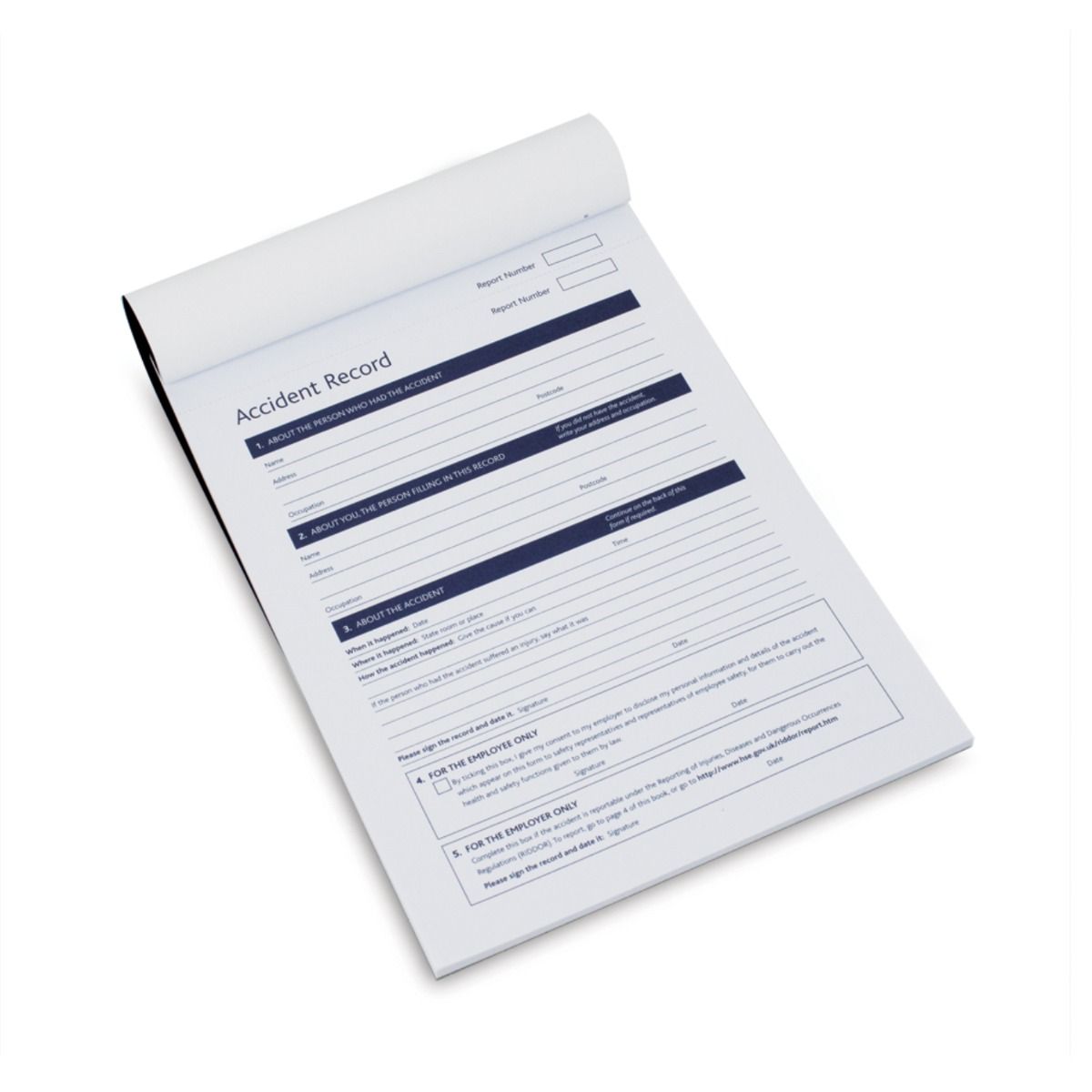
Tear-off record forms: each completed record can be removed and filed away from the book.
Structured five-part form: covers the injured person, the person recording, the accident, employee consent and the employer’s RIDDOR check.
RIDDOR prompt on every form: a section for the employer to note whether the accident must be reported to HSE.
Guidance pages: explain how to use the book, with advice for employees.
Book number box: numbers each book, so records can be traced when more than one is used.
A4 format, 40 pages: room to write full details clearly.
Trades and roles
Employers and business owners
Health and safety managers
Site managers
First aiders and appointed persons
Office and facilities managers
HR teams
Industries
Construction
Manufacturing and warehousing
Offices and retail
Education
Hospitality and leisure
| Specification | Detail |
|---|---|
| Product name | Accident Book - A4 With Tear-Off Record Forms |
| Product code | AN1012 |
| Product type | Workplace accident book |
| Size | A4 |
| Pages | 40 |
| Record forms | Tear-off, so each record can be filed separately |
| Record sections | Person who had the accident, person filling in the record, details of the accident, employee consent, employer RIDDOR section |
| Guidance | Instructions on using the book and an introduction to RIDDOR reporting |
| Cover | Book number box for record keeping |
| Workplace or use | Suitability |
|---|---|
| Employers with 10 or more people at the same premises | Suitable, these employers must keep an accident book |
| Smaller workplaces recording accidents as good practice | Suitable |
| Recording over-3-day injuries under RIDDOR 2013 | Suitable, as the employer’s record |
| Keeping one book at each site or first aid point | Suitable |
| Reporting RIDDOR incidents to HSE | Not recommended on its own, reportable incidents must also be reported to HSE |
| Storing completed forms in the open book | Not recommended, tear off and file each form securely |
Employers keep an accident book at each workplace, usually beside the first aid kit. On construction projects, each site or welfare unit often has its own book. The injured person, a first aider or a manager fills in the record, and the employer reviews it.
Recording injuries to employees at an office, shop, factory or warehouse.
Keeping an accident record in each site welfare unit on a construction project.
Recording over-3-day injuries, as RIDDOR 2013 requires employers to keep a record of these.
Giving employees a record of an accident in case they need to claim benefits later.
Starting a new numbered book once the previous one is full.
Step 1: Keep the book at the first aid point, and tell staff where it is.
Step 2: After an accident, complete sections 1 to 3 with the details of the person, the accident and any injury.
Step 3: The injured employee ticks the consent box in section 4 if they agree to their details being shared with safety representatives.
Step 4: The employer completes section 5 and decides whether the accident must be reported under RIDDOR.
Step 5: Tear off the completed form and file it securely, with access limited to those who need it.
Step 6: Report RIDDOR incidents to HSE, and keep records for at least three years.
Leaving completed forms in the book where others can read them.
Recording minor injuries but not over-3-day injuries.
Treating the accident book as the RIDDOR report, when reportable incidents must also be reported to HSE.
Keeping one book for several sites, so records are hard to trace.
Throwing away records before the three-year minimum.
Accident records contain personal data. Store completed forms securely, in line with UK GDPR and the Data Protection Act 2018. Check HSE guidance on RIDDOR 2013 for what must be reported and how.
Keep the book clean, dry and easy to find. Order a replacement before the last forms are used, and number each new book.
Q: Is an accident book a legal requirement?
A: Under the Social Security (Claims and Payments) Regulations 1979, employers with 10 or more people normally employed at the same premises must keep an accident book. Smaller workplaces are not required to, but many keep one as good practice. RIDDOR 2013 also requires employers to keep records of certain injuries.
Q: What does RIDDOR mean?
A: RIDDOR stands for the Reporting of Injuries, Diseases and Dangerous Occurrences Regulations 2013. They require employers to report certain serious incidents to HSE and to keep records of them. Section 5 of each form prompts the employer to check whether the accident is reportable.
Q: How do the tear-off forms help with data protection?
A: Each completed form can be removed from the book and filed securely, so personal details are not left on view. That supports the confidentiality expected under UK GDPR and the Data Protection Act 2018. Store forms in a locked place with access limited to those who need it.
Q: What is this accident book not suitable for?
A: It does not replace reporting RIDDOR incidents to HSE, which must be done separately. It is not a place to store completed records, which should be torn off and filed.
Q: How long should accident records be kept?
A: Keep accident records for at least three years from the date of the entry. Some employers keep them longer for insurance purposes.
Q: Who should fill in the accident book?
A: The injured person can fill it in, or someone can do it for them, such as a first aider or manager. The employer then completes the employer section and decides whether to report the accident under RIDDOR.
Q: Do I need one book for each site?
A: Keeping one book at each site or workplace makes it easier for staff to record accidents straight away. Use the book number box to keep track of books across sites.