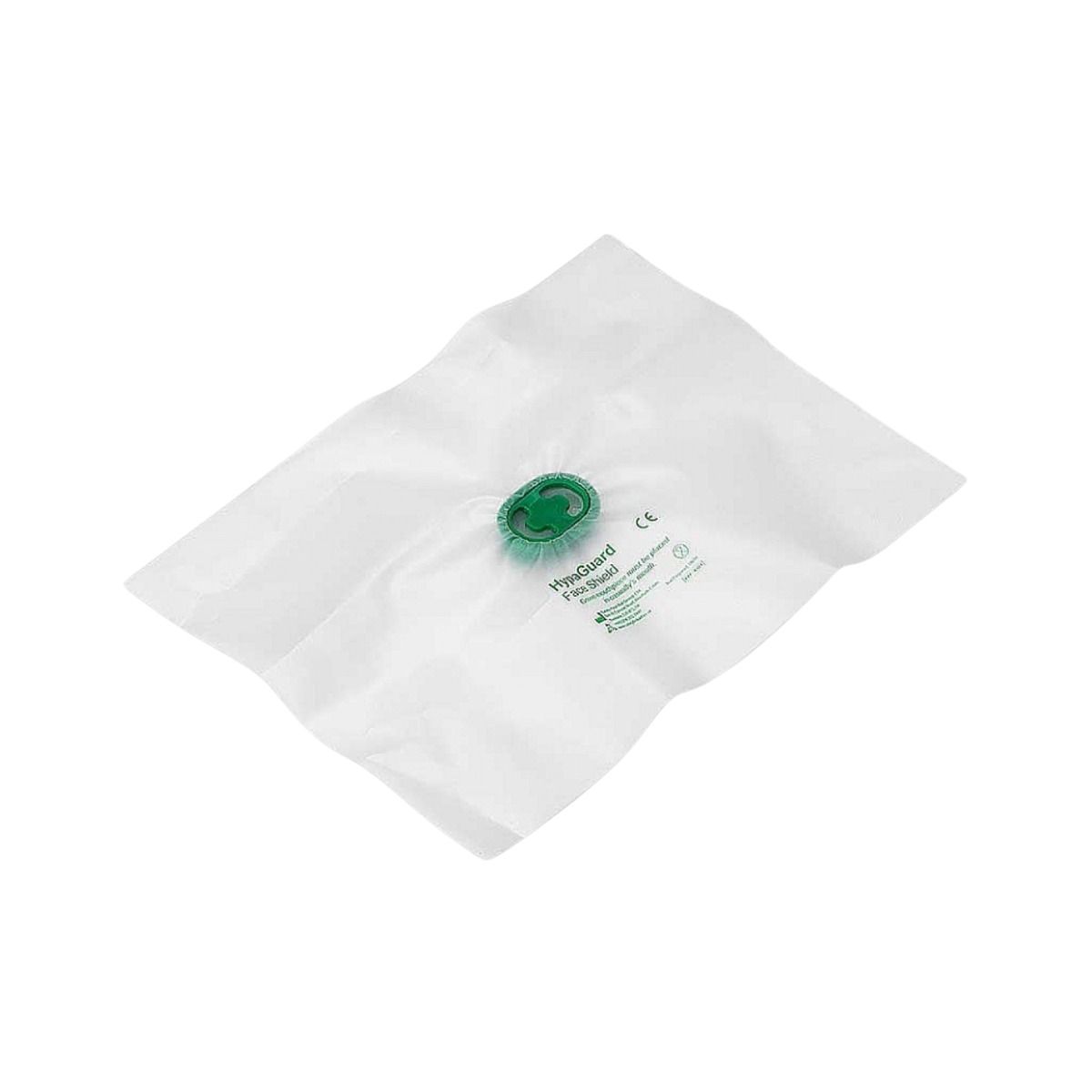
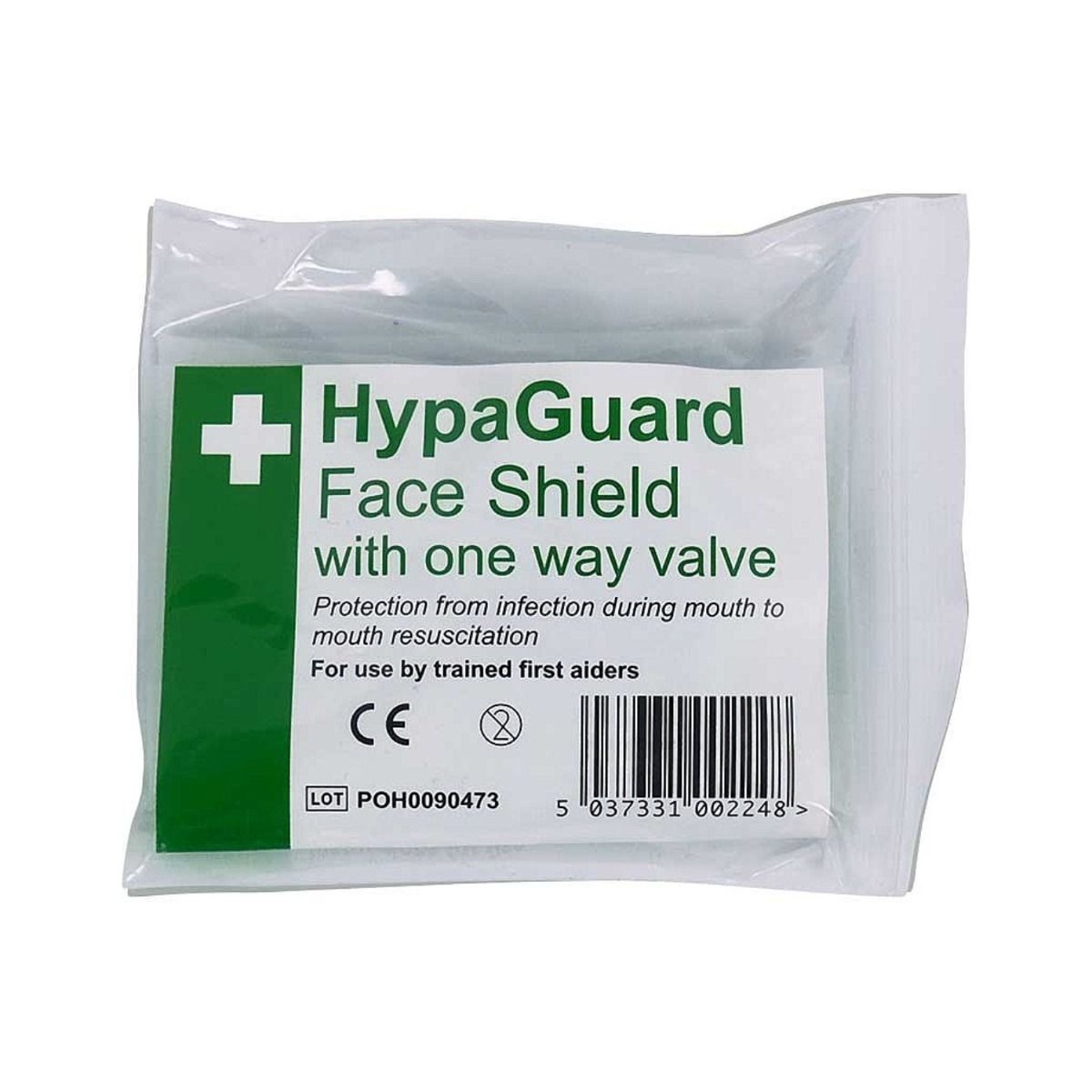
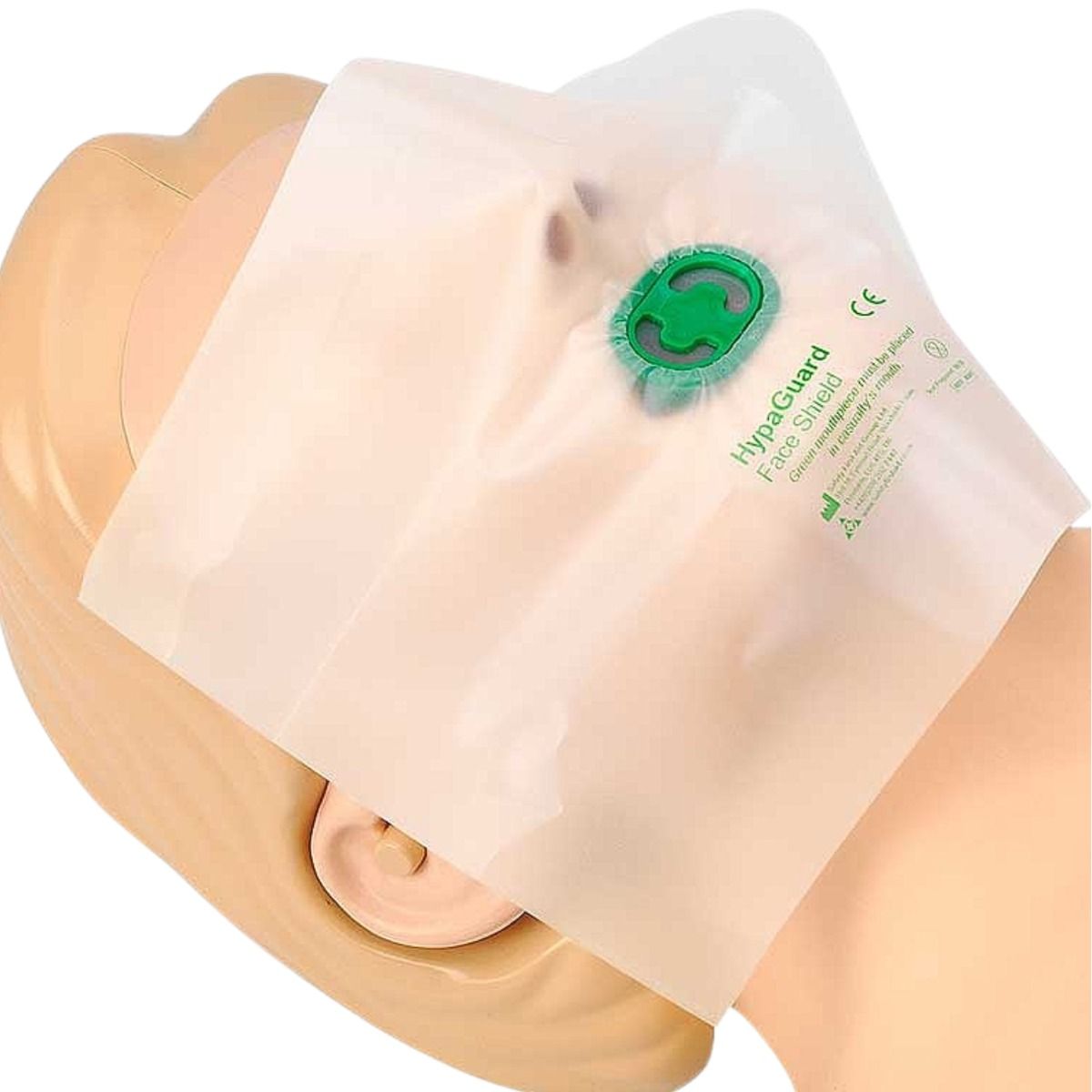
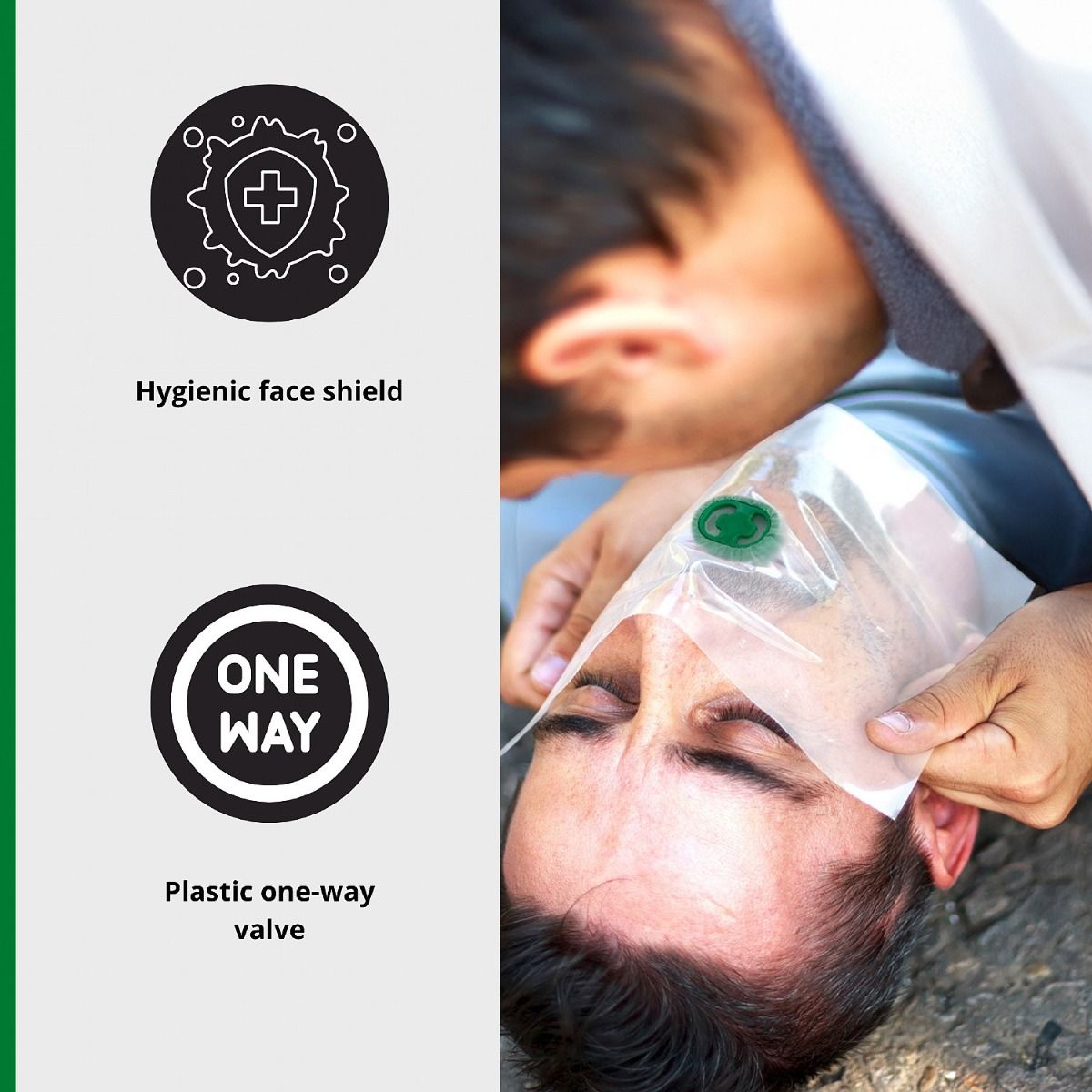
A CPR face shield with a one-way valve that gives a trained first aider a barrier between their mouth and the casualty’s during rescue breaths. The clear film lies over the casualty’s face, and the oval plastic valve sits over the mouth. Each shield is single use, folded into its own sealed bag with resuscitation instructions.
How a Face Shield Helps First Aiders Start CPR Sooner
Many people hesitate to give rescue breaths because of direct contact with a stranger’s mouth and bodily fluids. That pause costs time when a casualty is not breathing. A face shield with a one-way valve puts a barrier in place, so the first aider can start rescue breaths with more confidence.
Key Features
Plastic one-way valve: lets the first aider’s breath pass through while acting as a barrier against the casualty’s fluids.
Oval valve shape: shaped to fit over the casualty’s mouth.
Clear film shield: covers the face so the first aider can see the casualty’s mouth and nose.
Single use: one shield per casualty, so there is no cleaning or reuse.
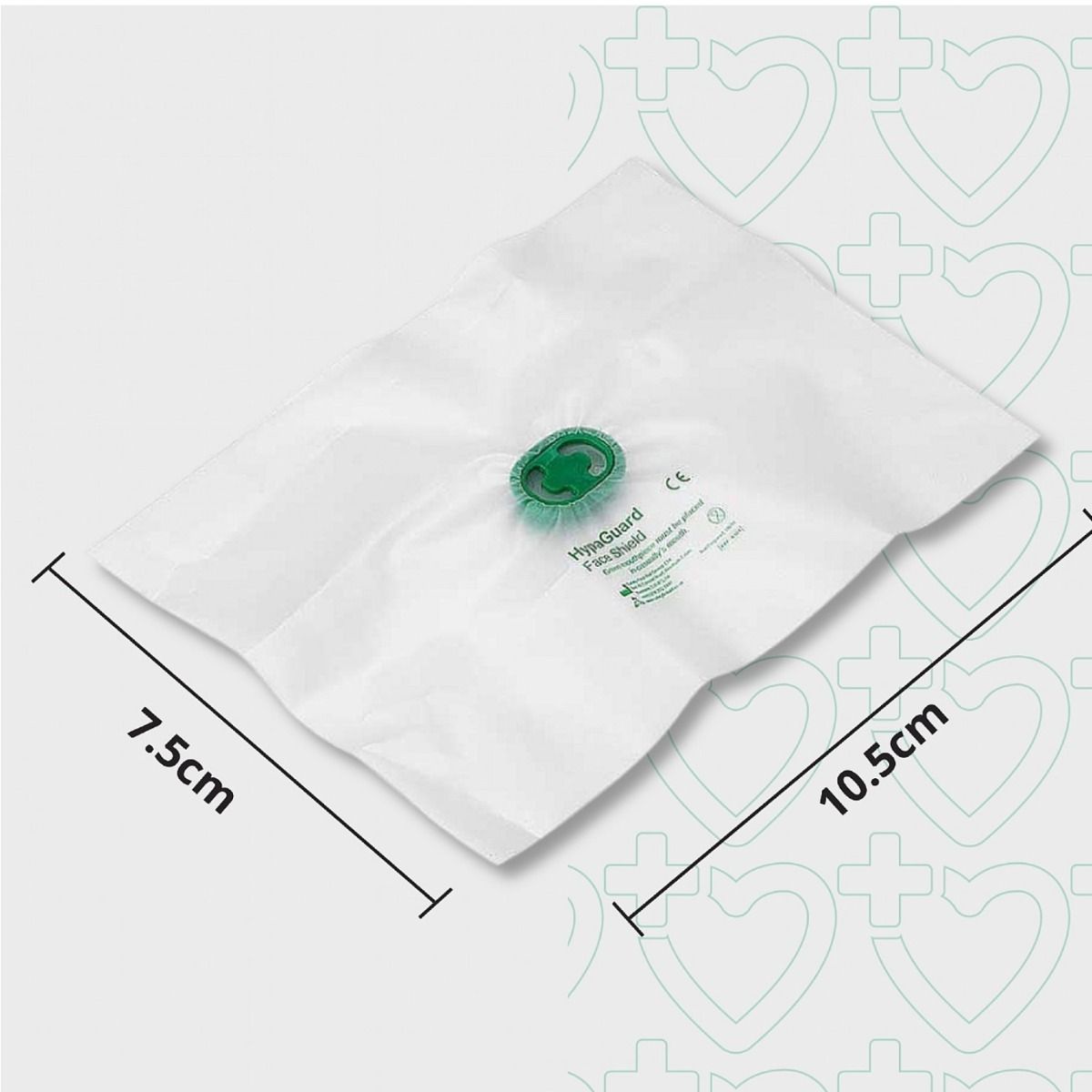
Compact sealed bag: folds to 7.5cm x 10.5cm, small enough for any first aid kit or pocket.
Pictorial instructions: resuscitation guidance is supplied with the shield.
Who is this for
Trades and roles
First aiders
Appointed persons
Health and safety managers
Facilities managers
Security and venue staff
Trainers running CPR courses
Industries
Construction
Offices and facilities management
Warehousing and industrial sites
Education
Leisure, sport and hospitality
Specifications
Specification
Detail
Product name
CPR Face Shield - With One-Way Valve
Product code
HSAFS001
Product type
CPR face shield for rescue breaths
Valve
Plastic one-way valve, oval shaped
Use
Single use only
Intended user
Trained first aiders
Instructions
Resuscitation protocol and pictorial instructions included
Folded size
7.5cm x 10.5cm
Packaging
Individually sealed bag
Marking
CE
Colour
Clear shield, green valve
Compatibility
Use or condition
Suitability
Rescue breaths during CPR by a trained first aider
Suitable
Restocking the resuscitation aid in BS 8599-1 workplace first aid kits
Suitable
Keeping beside a defibrillator
Suitable, for rescue breaths alongside the AED
Personal kits for first aiders and lone workers
Suitable, compact and individually sealed
Reuse on a second casualty
Not recommended, single use only
Use by people with no CPR training
Not recommended, the pack states it is for trained first aiders
Professional ventilation with oxygen
Not recommended, use a pocket mask or bag valve mask
Typical Users and Projects
Trained first aiders keep CPR face shields in workplace kits, beside defibrillators and in personal first aid pouches. Employers buy them to restock the resuscitation aid in BS 8599-1 kits and to give each first aider their own. They suit offices, sites, schools, gyms and venues.
Typical applications
Restocking the resuscitation aid in BS 8599-1 workplace first aid kits after use.
Keeping a face shield with each defibrillator for rescue breaths during CPR.
Issuing a shield to every trained first aider for their personal kit.
Equipping venues, gyms and schools where cardiac arrest can happen in public.
Supplying shields for CPR refresher training.
How to use
Step 1: Call 999, or ask someone else to, and send for a defibrillator. Step 2: Open the bag and unfold the shield. Step 3: Lay the shield over the casualty’s face with the valve over their mouth. Step 4: Tilt the head back, pinch the nose through the shield and give rescue breaths through the valve, as trained. Step 5: Continue CPR until help arrives or the defibrillator tells you to stop. Step 6: Dispose of the used shield safely and restock the kit.
Common mistakes
Delaying chest compressions while searching for a face shield.
Placing the valve over the nose instead of the mouth.
Reusing a shield on another casualty.
Keeping shields far from the defibrillator.
Not replacing a used shield, leaving the kit without one.
Safety
For use by trained first aiders. A face shield is a barrier, not a guarantee against infection. Follow current CPR training and the instructions supplied. Never delay chest compressions to find or fit a shield.
Maintenance
Keep shields sealed in their bags until needed. Check them during monthly kit checks, and replace any with damaged packaging.
Frequently Asked Questions
Q: What is a CPR face shield for? A: It gives a first aider a barrier between their mouth and the casualty’s during rescue breaths. The one-way valve sits over the casualty’s mouth. It helps first aiders give rescue breaths with less hesitation.
Q: What does one-way valve mean? A: The valve lets the first aider’s breath pass through to the casualty. It acts as a barrier against fluids coming back from the casualty’s mouth.
Q: Is this the resuscitation aid in a BS 8599-1 first aid kit? A: BS 8599-1 workplace kits include a resuscitation aid, and a face shield like this fills that place. It suits restocking the kit after use.
Q: What is this face shield not suitable for? A: It is not for reuse, as it is single use only. It is not for people with no CPR training, as the pack states it is for trained first aiders. It is not a replacement for a pocket mask where oxygen is used.
Q: Should I choose a face shield or a pocket mask? A: A face shield is compact, low cost and single use, so it suits first aid kits and personal pouches. A pocket mask is a rigid mask, often used by trained responders and with oxygen. Many workplaces keep shields in every kit.
Q: Do I have to give rescue breaths? A: Follow your CPR training and the instructions from the 999 call handler. A face shield makes rescue breaths easier for trained first aiders who choose to give them. Chest compressions should never be delayed.
Q: How should face shields be stored? A: Keep them sealed in their bags in a first aid kit or beside a defibrillator. Check them during monthly kit checks and replace any with damaged packaging.
A practical guide to water safety equipment for UK sites. It covers the law on drowning risk, how to choose between manual and automatic lifejackets, and how to build a complete lifebuoy point. A four-step kit builder suggests the lifejackets and lifebuoy sets your site needs.
Not sure whether your workplace needs a defibrillator? This guide explains what an AED does, compares fully and semi-automatic models, and covers placement, maintenance and The Circuit.