Not sure whether your workplace needs a defibrillator? This guide explains what an AED does, compares fully and semi-automatic models, and covers placement, maintenance and The Circuit.
Loading...
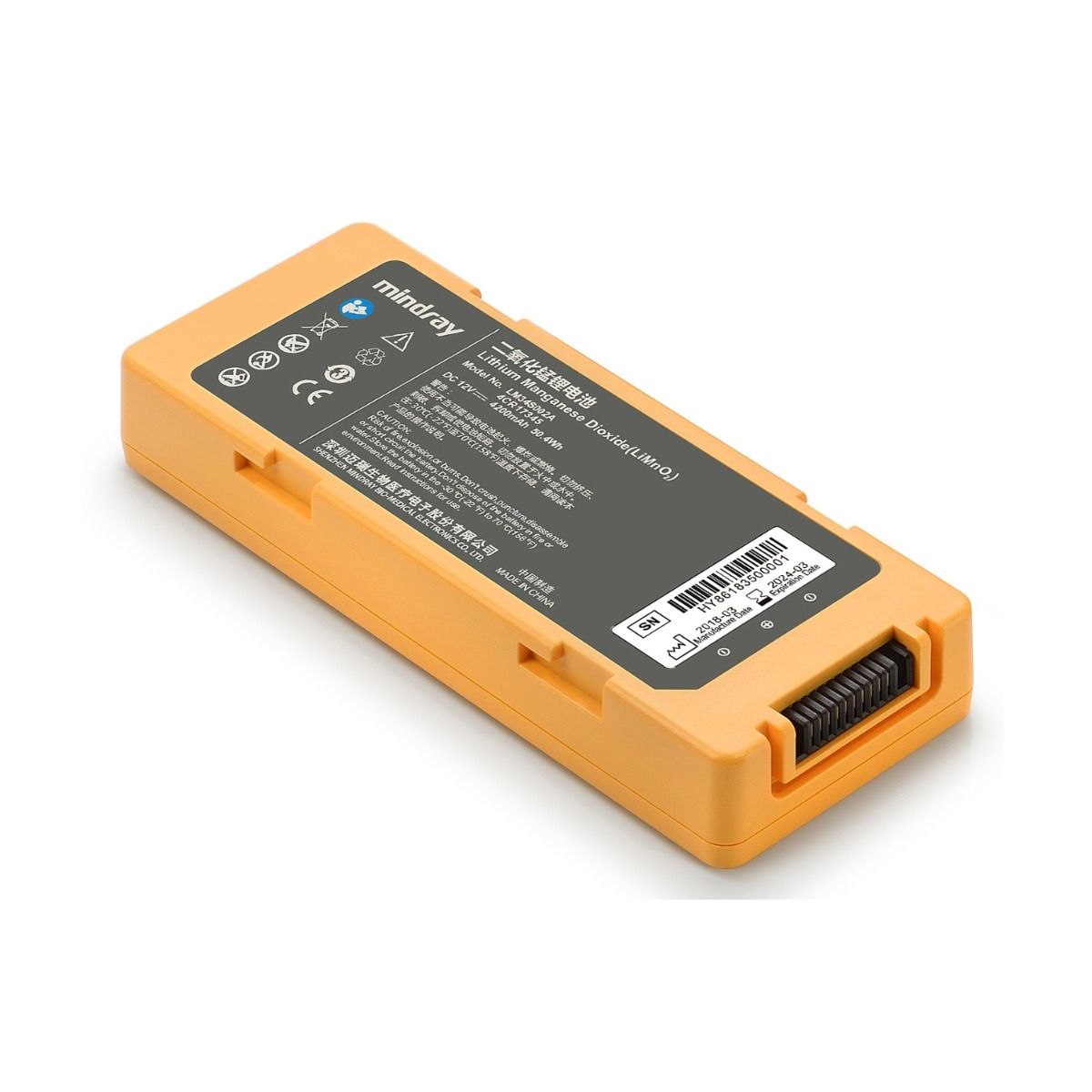
Replacement defibrillator battery for Mindray BeneHeart C1A and C2 AEDs, a 12V lithium pack that keeps workplace and public access defibrillators ready to shock.
Replacement defibrillator battery for Mindray BeneHeart C1A and C2 AEDs, a 12V lithium pack that keeps workplace and public access defibrillators ready to shock.
Order 1x to earn 338 FASTPoints
Order to earn 338 FASTPoints
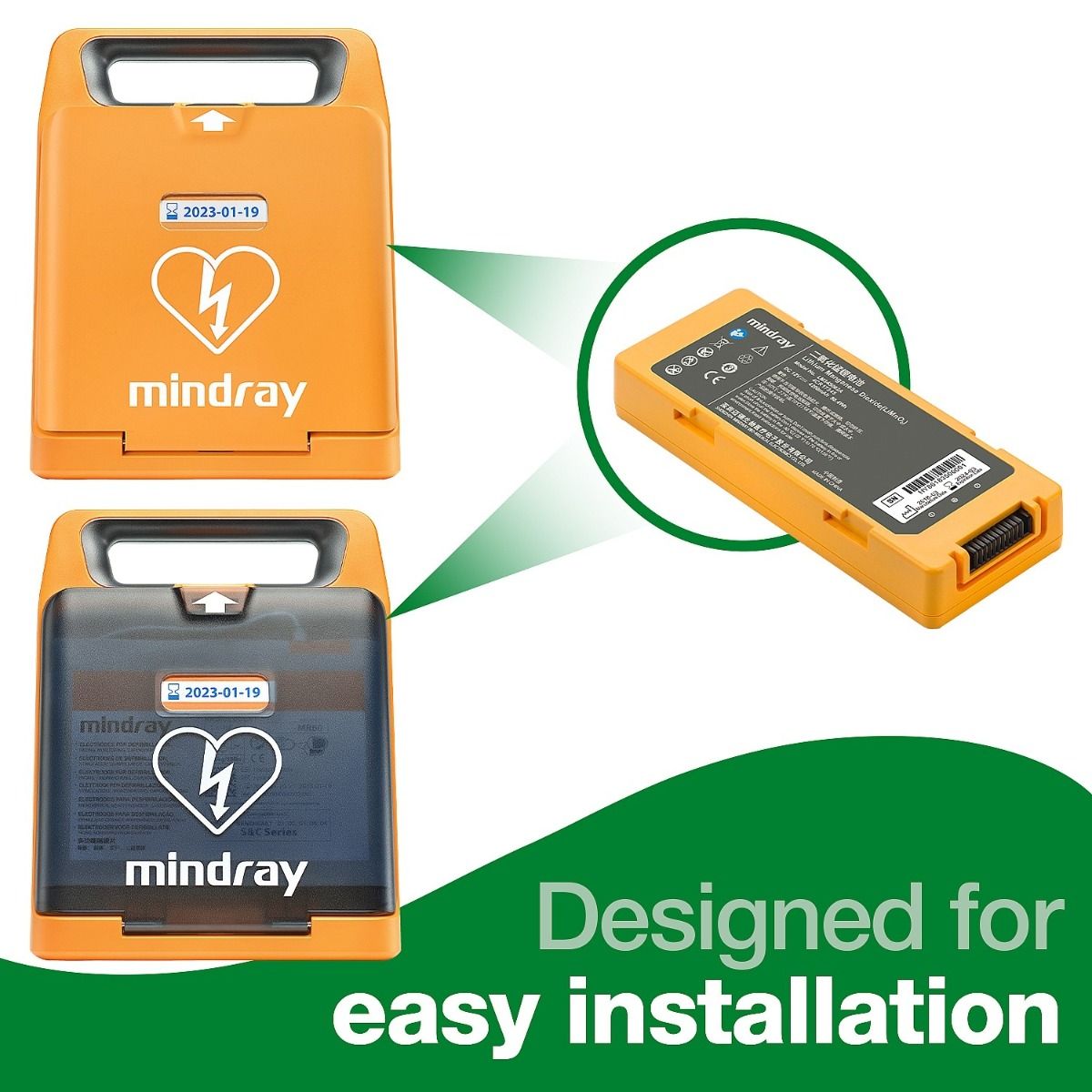
Log in to access trade discountsThis replacement defibrillator battery is a 12V, 4200mAh lithium manganese dioxide pack that powers an AED’s self-tests, analysis and shocks. It is non-rechargeable and slots straight into the AED with no tools or changes. One battery covers years of standby and up to 400 shocks at 200J.
An AED spends most of its life on the wall, running regular self-tests that slowly use up the battery. Once the battery runs low, the AED may not be able to analyse or shock when someone collapses. Replacing the battery before it expires, or when the AED warns, keeps the unit ready for a rescue.
Up to 400 shocks at 200J: enough power for long rescues and repeated use.
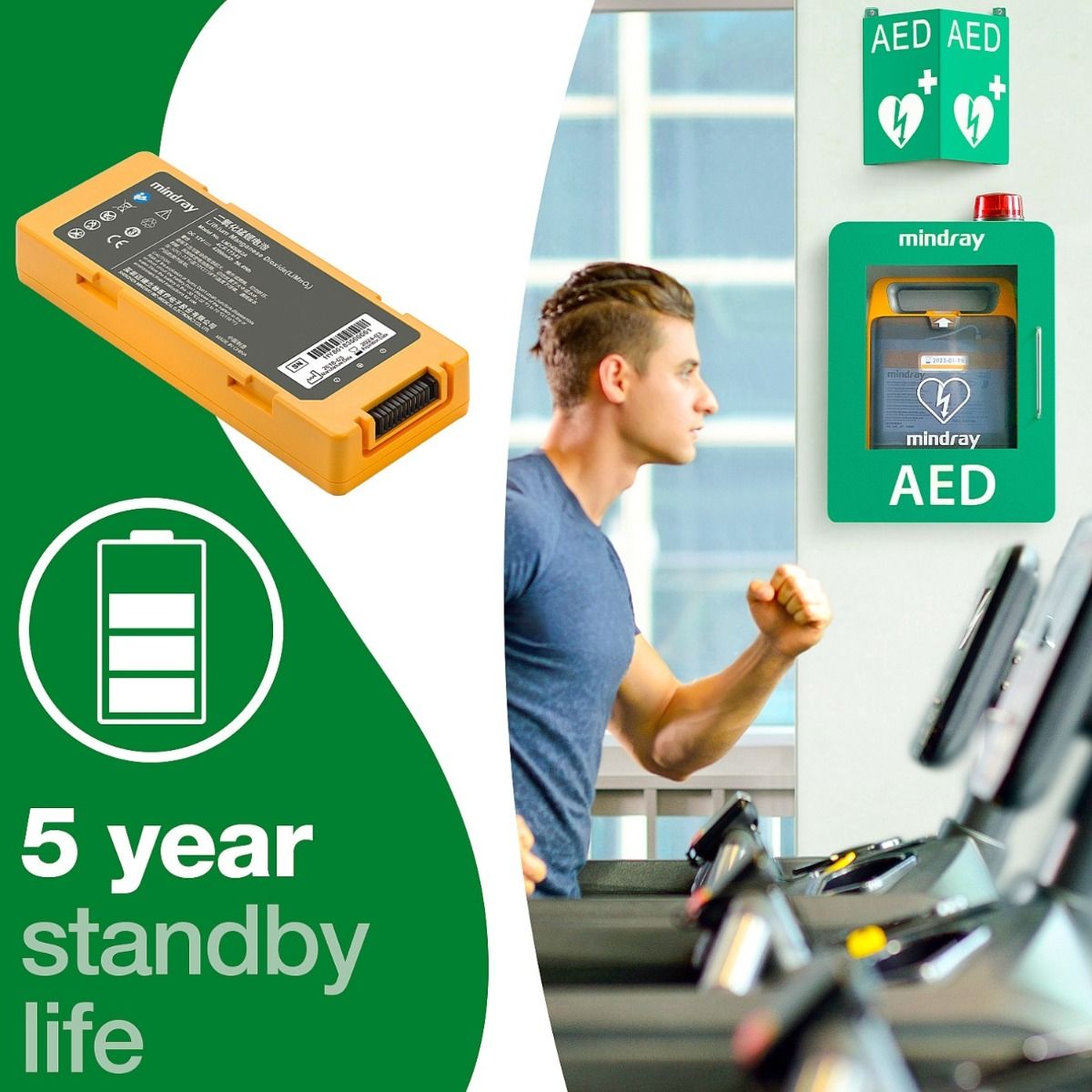
Up to 6-year standby: with weekly self-tests, or 5 years with daily self-tests.
Early replace warning: the AED warns while at least 10 shocks or 30 minutes of use are still left.
At least 15 hours operating time: at 20 degrees Celsius, for long incidents and monitoring.
Lithium manganese dioxide cells: 12V and 4200mAh in a 300g pack.
Tool-free fitting: slots straight into the AED with no modifications.
Trades and roles
AED guardians and first aiders
Health and safety managers
Facilities managers
Site managers
School business managers
Industries
Construction and civil engineering
Offices and commercial buildings
Education
Sport, leisure and hospitality
Community and public access sites
| Specification | Detail |
|---|---|
| Product name | Replacement Defibrillator Battery - 12V 4200mAh |
| Product code | HS040011 |
| Product type | Replacement AED battery, non-rechargeable |
| Compatible AEDs | Mindray BeneHeart C1A and C2 |
| Chemistry | Lithium manganese dioxide (Li/MnO2), disposable |
| Voltage | 12V DC |
| Capacity | 4200mAh (50.4Wh) |
| Shocks | Up to 400 at 200J |
| Operating time | At least 15 hours at 20 degrees Celsius plus or minus 5 |
| Standby life | 6 years with weekly self-tests, 5 years with daily self-tests (at 20 degrees Celsius plus or minus 5, not in use) |
| Replace battery warning | Appears with at least 10 shocks at 200J or 30 minutes of operating time left (typical, at 20 degrees Celsius plus or minus 5) |
| Storage temperature | -30 to 70 degrees Celsius |
| Marking | CE |
| Weight | 300g |
| Brand | Mindray |
| Colour | Orange |
| AED, use or condition | Suitability |
|---|---|
| AED Defibrillator - Fully Automatic (HS040009) | Suitable |
| Mindray BeneHeart C1A semi-automatic AED | Suitable |
| Mindray BeneHeart C2 AED | Suitable |
| Keeping as a spare beside the AED | Suitable, store between -30 and 70 degrees Celsius |
| Recharging | Not recommended, the battery is non-rechargeable |
| Other makes of AED | Not recommended, designed for Mindray C Series AEDs only |
| Crushing, puncturing or taking apart | Not recommended, risk of fire, explosion or burns |
| Disposal in fire, water or general waste | Not recommended, take it to a battery recycling point |
AED guardians and facilities teams replace defibrillator batteries when they reach their expiry date or when the AED shows a low battery warning. Many keep a spare beside the AED so it is never out of action. Fitting a new battery takes seconds and needs no tools.
Replacing a battery that has reached the end of its standby life.
Fitting a new battery after the AED shows a replace battery warning.
Keeping a spare battery with the AED for continuous cover.
Replacing the battery and pads together during planned AED maintenance.
Restocking AEDs across several sites on one maintenance schedule.
Step 1: Check the expiry date on the new battery label.
Step 2: Remove the old battery from the AED, following the AED’s instructions.
Step 3: Fit the new battery into the AED, as shown in the AED instructions.
Step 4: Check the AED’s status indicator shows it is ready.
Step 5: Note the new battery’s expiry date in your AED check records.
Step 6: Take the old battery to a battery recycling point.
Ignoring the replace battery warning.
Trying to recharge the battery.
Storing a spare battery somewhere very hot or very cold.
Throwing old batteries in general waste.
Forgetting to check the pads at the same time.
Risk of fire, explosion or burns. Do not crush, puncture, take apart or short circuit the battery. Do not dispose of it in fire or water. Store it between -30 and 70 degrees Celsius.
Check the AED’s status indicator during routine checks. Replace the battery before its expiry date, or as soon as the AED shows a low battery warning.
Q: Which defibrillators does this battery fit?
A: It fits Mindray BeneHeart C1A and C2 AEDs, including our fully automatic AED. It is not designed for other makes of defibrillator.
Q: What do 12V and 4200mAh mean on a defibrillator battery?
A: 12V is the battery’s voltage, which must match the AED. 4200mAh is its capacity, meaning how much charge it stores. Together they give 50.4Wh of energy, enough for up to 400 shocks at 200J.
Q: How long does the battery last on standby?
A: Up to 6 years if the AED runs weekly self-tests, or 5 years with daily self-tests. Both figures assume about 20 degrees Celsius and that the AED is not used.
Q: What is this battery not suitable for?
A: It is not rechargeable and must not be put on a charger. It does not fit other makes of AED. It must not be crushed, taken apart or disposed of in fire or water.
Q: What does the replace battery warning mean?
A: The AED warns while there is still enough power for at least 10 shocks at 200J or 30 minutes of use. That gives time to fit a new battery before the AED is out of action.
Q: Should I replace the pads at the same time?
A: Pads and batteries have separate expiry dates, so check both. Many AED guardians replace them together during planned maintenance to keep records simple.
Q: How do I dispose of an old AED battery?
A: Take it to a battery recycling point, as the crossed-out bin symbol on the label shows. Never put it in general waste, fire or water.