Not sure whether your workplace needs a defibrillator? This guide explains what an AED does, compares fully and semi-automatic models, and covers placement, maintenance and The Circuit.
Loading...
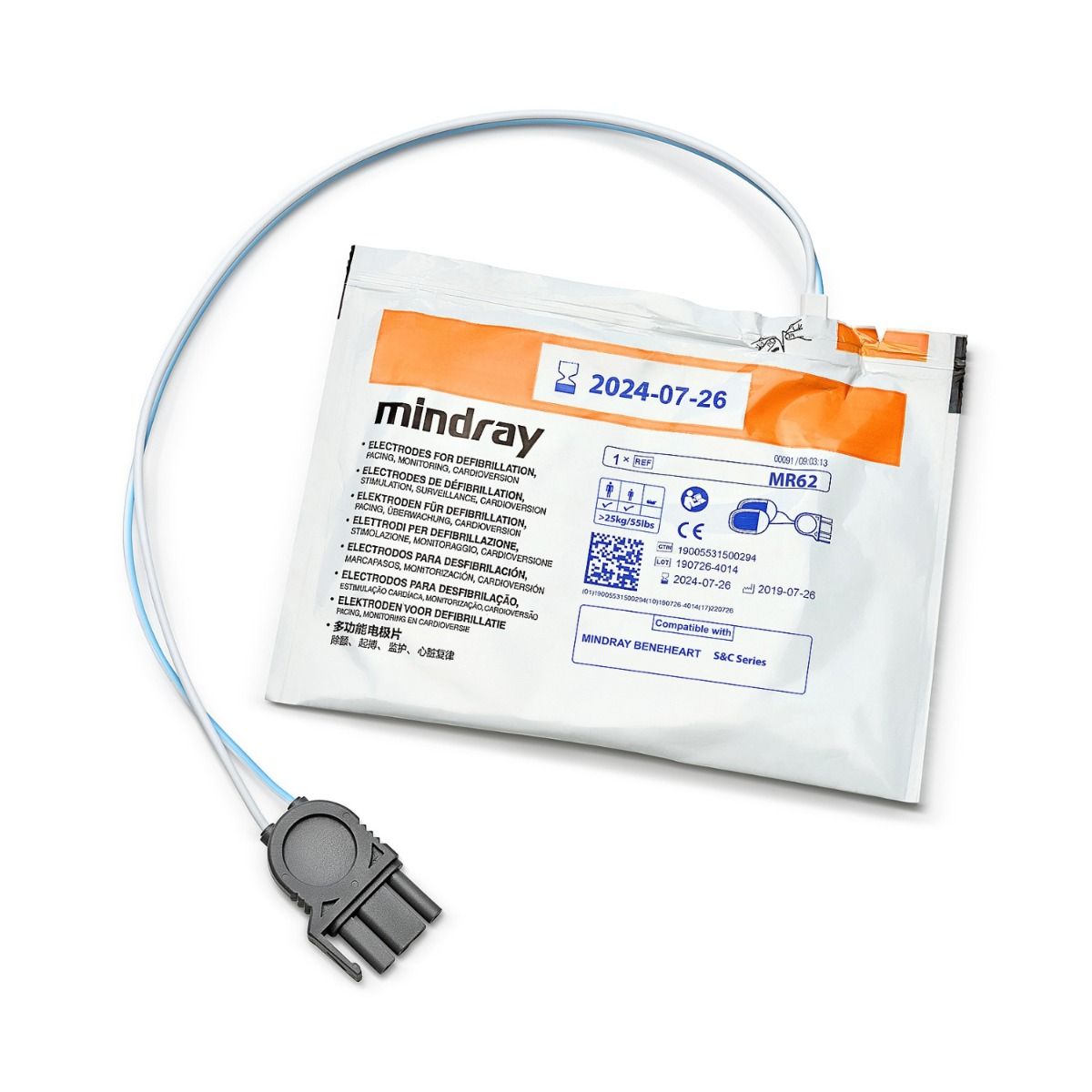
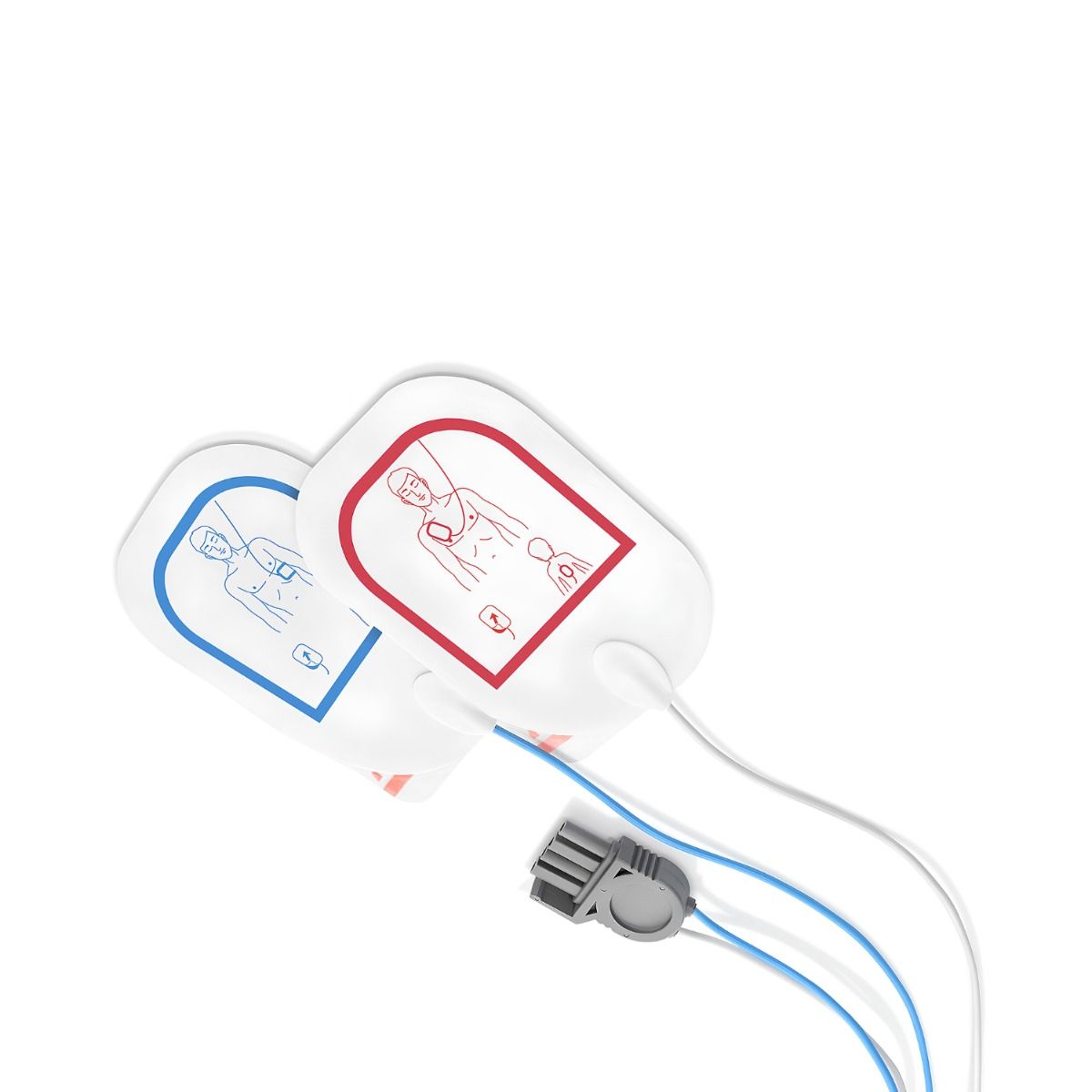
Replacement defibrillator pads for Mindray BeneHeart C Series AEDs, one universal pair for adult and child casualties at workplaces, schools and public access sites.
Replacement defibrillator pads for Mindray BeneHeart C Series AEDs, one universal pair for adult and child casualties at workplaces, schools and public access sites.
| BULK DISCOUNT | 3 | 6 |
|---|---|---|
| Price | £75.50 £90.60 | £69.90 £83.88 |
Order 1x to earn 79 FASTPoints
Order to earn 79 FASTPoints
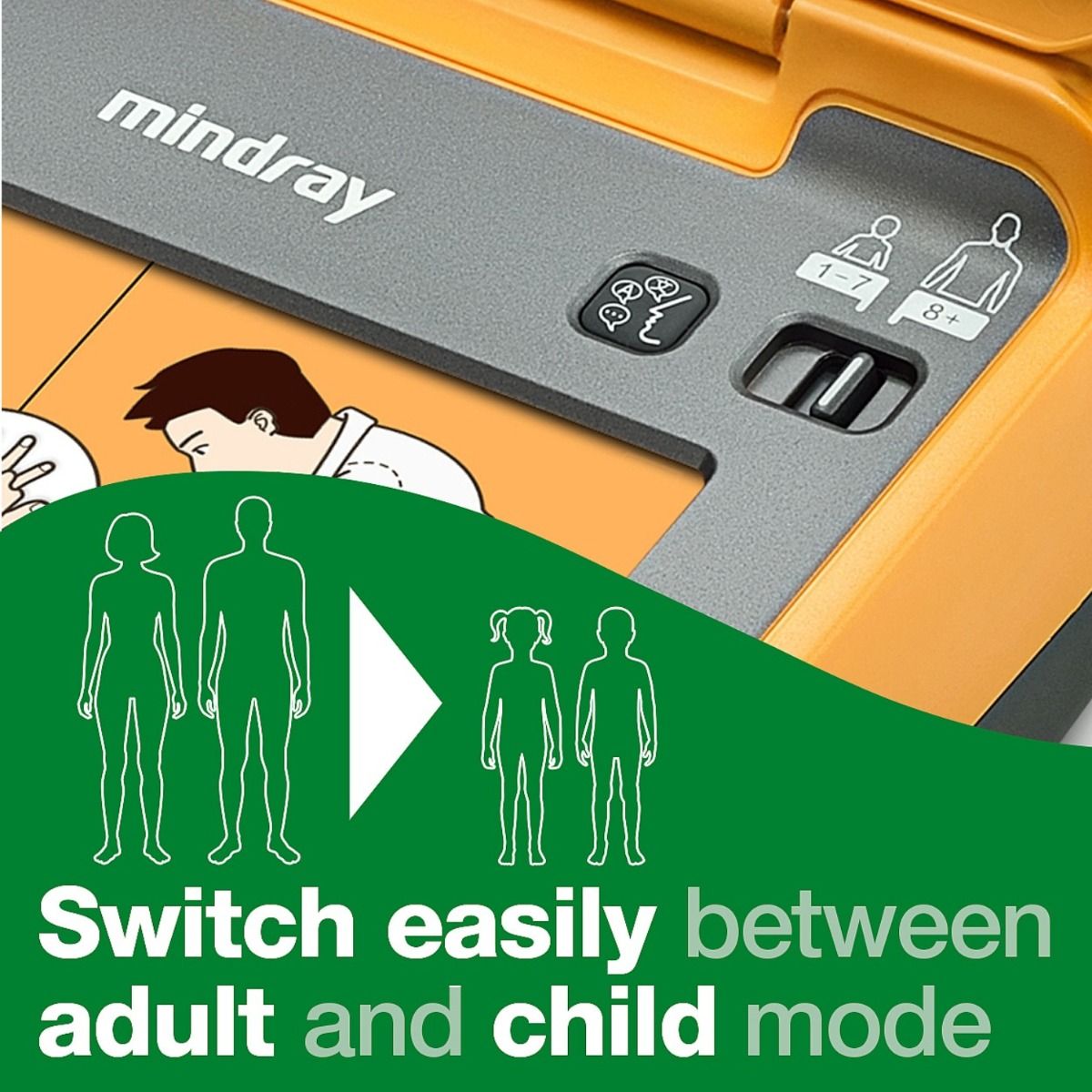
Log in to access trade discountsReplacement defibrillator pads are the self-adhesive electrodes that stick to a casualty’s chest and carry the AED’s shock to the heart. This pair is pre-gelled and pre-connectable, so it can stay plugged into the AED ready for use. One set covers both adults and children, with the AED switched to child mode for a child.
The gel on defibrillator pads slowly dries out, even in a sealed pack. Expired pads may not stick to the chest or carry the full shock, which can cost a life in a cardiac arrest. Replacing pads after every use and before the expiry date keeps the AED ready when it is needed.
Adult and paediatric in one pair: no need to store or swap separate child pads.
Pre-connectable cable: the pads stay plugged into the AED, saving seconds in an emergency.
Self-adhesive, pre-gelled electrodes: stick straight to the chest for a secure contact.
Placement diagrams on each pad: show the rescuer exactly where each pad goes.
Expiry date on the pack front: easy to check during routine AED inspections.
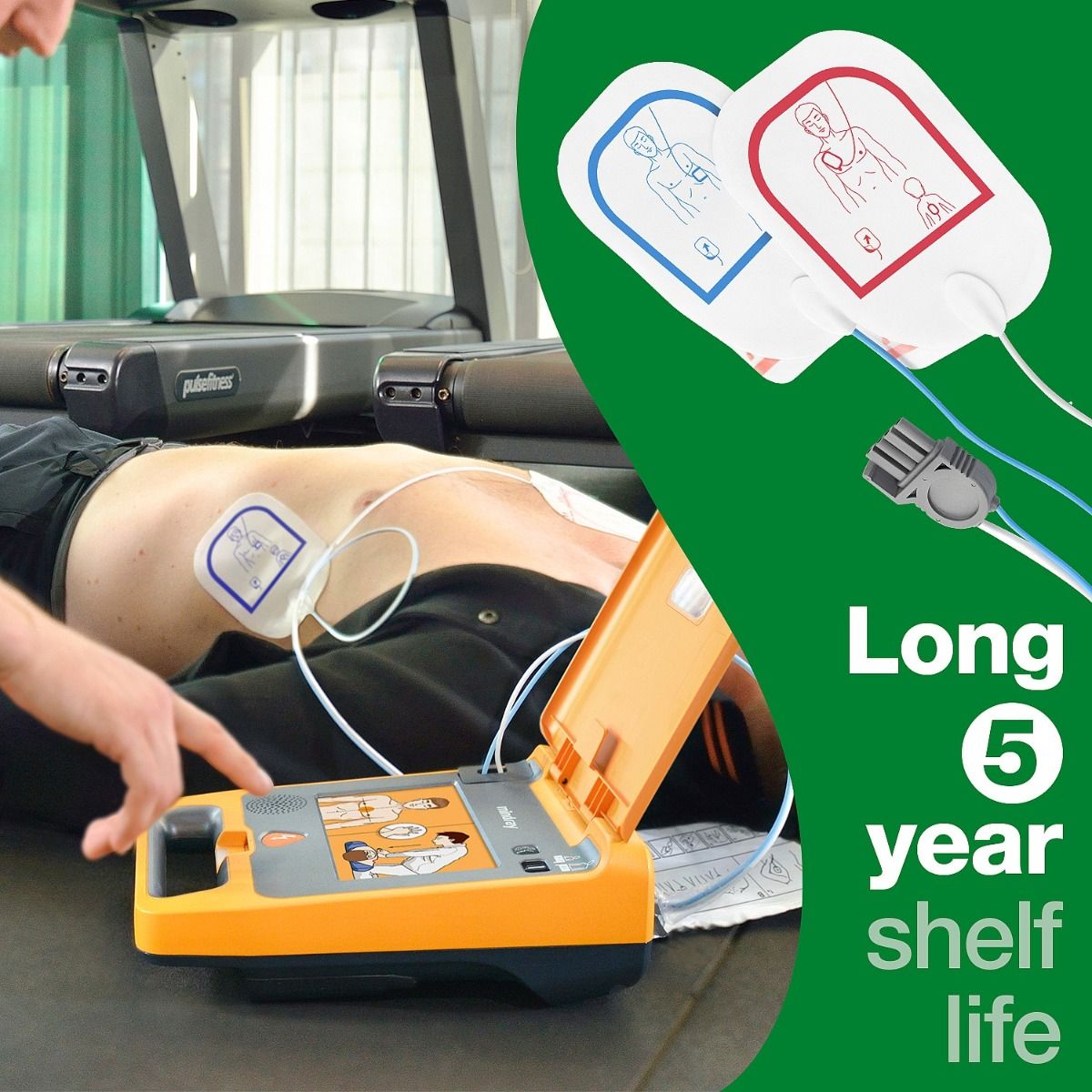
Up to 5-year shelf life: from manufacture, so replacements are needed less often.
Trades and roles
AED guardians and first aiders
Health and safety managers
Facilities managers
Site managers
School business managers
Industries
Construction and civil engineering
Offices and commercial buildings
Education
Sport, leisure and hospitality
Community and public access sites
| Specification | Detail |
|---|---|
| Product name | Replacement Defibrillator Pads - Adult and Paediatric |
| Product code | HS040010 |
| Product type | Disposable AED electrode pads, adult and paediatric |
| Compatible AEDs | Mindray BeneHeart C Series: C1A fully automatic, C1A semi-automatic and C2 |
| Patients | Adults and children, with the AED set to child mode for children |
| Pad set | One pair (two pads) |
| Electrodes | Self-adhesive and pre-gelled |
| Connection | Pre-connectable cable and connector, can stay connected to the AED |
| Use | Single use, disposable |
| Shelf life | Up to 5 years from manufacture |
| Brand | Mindray |
| AED, patient or condition | Suitability |
|---|---|
| AED Defibrillator - Fully Automatic (HS040009) | Suitable |
| Mindray BeneHeart C1A semi-automatic AED | Suitable |
| Mindray BeneHeart C2 AED | Suitable |
| Child casualties | Suitable, set the AED to child mode |
| Mindray training AED | Not recommended, not compatible |
| Other makes of AED | Not recommended, designed for Mindray C Series AEDs only |
| Reuse after a rescue | Not recommended, single use only |
| Pads past their expiry date | Not recommended, the gel dries out and may not stick or conduct |
AED guardians and facilities teams buy replacement pads to keep defibrillators in workplaces, schools and public spaces ready for use. Pads are replaced after every rescue and before their expiry date. Fitting a new set takes a few minutes and needs no tools or training.
Replacing pads after an AED has been used in a rescue.
Swapping out pads before they reach their expiry date.
Keeping a spare set beside the AED in case the first set is damaged.
Maintaining public access defibrillators registered on The Circuit.
Restocking AEDs across several sites as part of a planned maintenance schedule.
Step 1: Check the expiry date on the pack and that the pack is undamaged.
Step 2: Unplug the old pads from the AED and dispose of them.
Step 3: Plug the new pads’ connector into the AED, leaving the pads sealed in their pack.
Step 4: Store the pack in the AED as shown in the AED’s instructions, and check the status indicator.
Step 5: In an emergency, open the pack, peel the pads and place them on the bare chest as shown on each pad.
Leaving expired pads in the AED.
Putting used pads back in the AED after a rescue.
Opening the sealed pack before an emergency, which dries out the gel.
Forgetting to switch the AED to child mode for a child.
Buying pads for the training AED instead of the live unit.
Use only with live Mindray BeneHeart C Series AEDs. Do not use pads that are past their expiry date or that come from a damaged pack. Always call 999 in a cardiac arrest.
Check the pad expiry date during routine AED inspections. Order replacements before the date is reached, and always after a rescue.
Q: Which defibrillators are these pads compatible with?
A: They fit Mindray BeneHeart C Series AEDs, including the C1A fully automatic, C1A semi-automatic and C2 models. They are not compatible with the Mindray training AED.
Q: Can these pads be used on children?
A: The same pair is used for adults and children. Switch the AED to child mode before fitting the pads. On the C1A, the switch is marked 1 to 7 for children and 8+ for adults.
Q: Why do defibrillator pads expire?
A: The pads carry a gel that conducts the shock through the skin to the heart. Over time the gel breaks down and dries out, so the pads may not stick or deliver the full shock. That is why each pack carries an expiry date.
Q: What are these pads not suitable for?
A: They are not for training AEDs or for AEDs from other manufacturers. They are not for reuse, and must not be used after their expiry date.
Q: Why choose universal adult and paediatric pads?
A: One pair covers both adults and children, so there is no separate child set to buy, store or swap. The rescuer simply sets the AED to child mode.
Q: Can the pads stay connected to the AED?
A: The pads are pre-connectable, so the connector stays plugged into the AED while the pads remain sealed. In an emergency, the rescuer only needs to open the pack and place the pads.
Q: How long do the pads last?
A: The pads have a shelf life of up to 5 years from manufacture. Check the expiry date on the pack during routine checks, and replace the pads after every use.