Emergency Eye Wash Station with Mirror - 2 x 500ml Sterile Saline
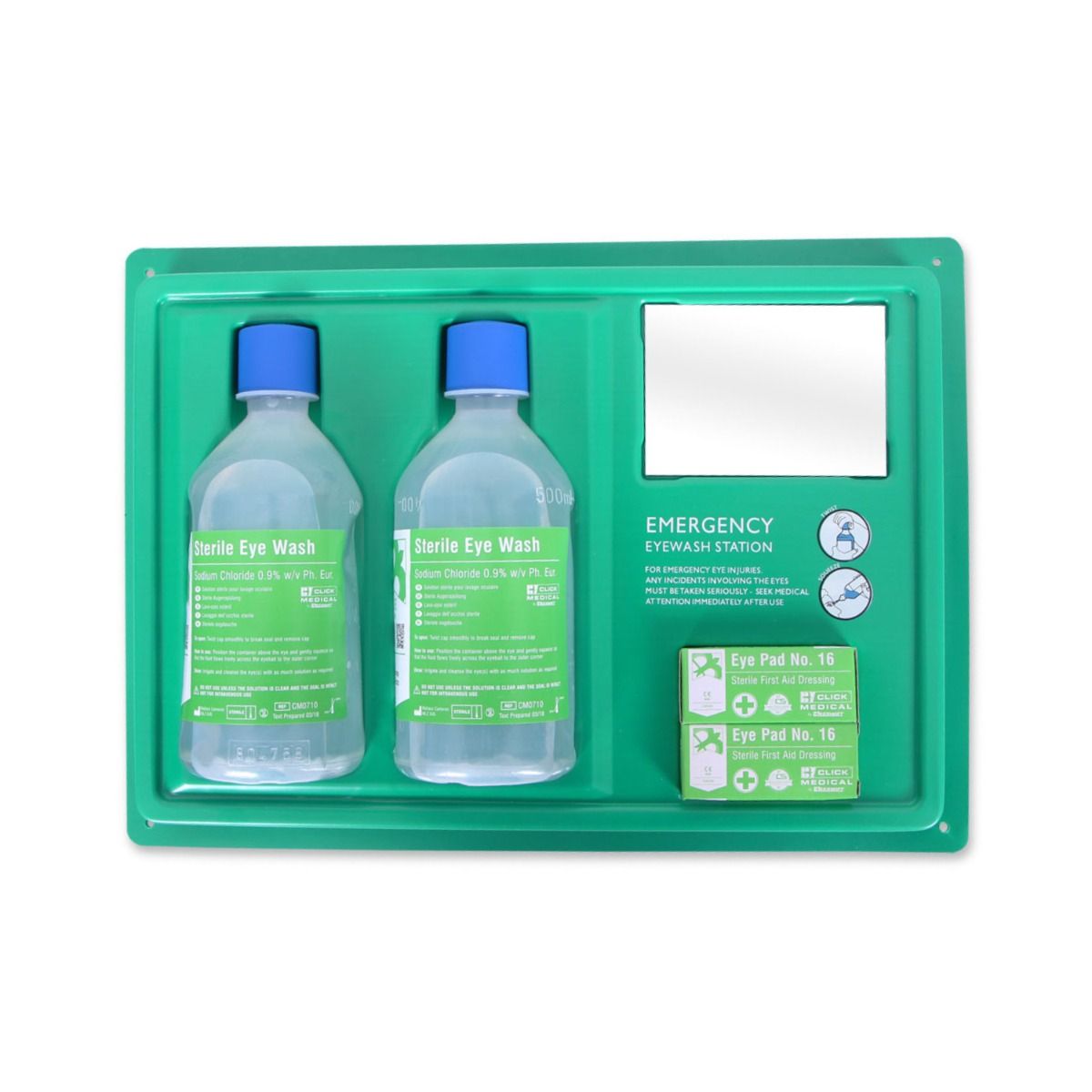
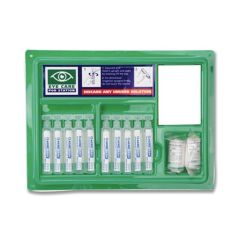
An emergency eye wash station is a wall-mounted holder with two 500ml bottles of sterile saline, two sterile eye pads and a built-in mirror. It gives anyone with dust, debris or a splash in the eye a full litre of solution to rinse with, straight away. After rinsing, an eye pad covers the eye until medical help takes over.
How a Full Litre of Saline Keeps Rinsing Going Until Help Arrives
Small eye wash pods run out after a few seconds, often before the grit or splash is fully cleared. The casualty is then left looking for water while the eye stings. Two 500ml bottles give a steady flow for much longer, so rinsing can continue while medical help is called.
Key Features
1 litre of sterile saline: two 500ml bottles give the amount HSE guidance suggests where mains tap water is not readily available.
Sodium chloride 0.9% w/v Ph. Eur.: sterile saline at the body’s own salt level, gentle on the eye.
Built-in mirror: lets the casualty see the eye and aim the bottle when treating themselves.
Twist-to-open sealed caps: the seal breaks as the cap turns, so each bottle stays sterile until used.
Green wall-mounted panel: easy to spot at a first aid point, with four fixing holes.
Pictorial instructions: twist and squeeze icons show how to use the bottles at a glance.
Who is this for
Trades and roles
Site managers
Health and safety managers
First aiders and appointed persons
Workshop and plant supervisors
Facilities managers
Laboratory and technical staff
Industries
Construction and groundworks
Manufacturing and engineering
Warehousing and logistics
Education and laboratories
Facilities management
Specifications
Specification
Detail
Product name
Emergency Eye Wash Station - 2 x 500ml Sterile Saline
Workplaces where mains tap water is not readily available
Suitable, holds the 1 litre of sterile saline HSE guidance suggests
Dust, dirt and loose debris in the eye
Suitable
Splashes of solvents, oils and non-corrosive liquids
Suitable for immediate rinsing, then seek medical attention
Corrosive chemicals such as acids and alkalis
Not recommended as the only eye wash, the risk assessment may call for a plumbed eye wash unit
Objects stuck in the eye
Not recommended, do not try to remove them, cover the eye and seek medical help
Reusing an opened bottle
Not recommended, risk of infection, replace after use
Unheated or outdoor locations below 5 degrees Celsius
Not recommended, store between 5 and 35 degrees Celsius
Typical Users and Projects
Employers fit eye wash stations where dust, grit or liquids can reach the eyes, such as cutting areas, workshops, stores and labs. On construction sites they often sit in welfare units, where mains water may be some distance away. First aiders use them, and the mirror lets lone workers treat themselves.
Typical applications
Rinsing concrete, stone and brick dust from the eyes near cutting and drilling areas.
Flushing grit and debris after grinding, sanding or demolition work.
Rinsing oil or solvent splashes in workshops and maintenance bays.
Providing eye wash in site welfare units where mains tap water is not close by.
Equipping school and college labs, workshops and design and technology rooms.
Setting up an eye wash point beside the main workplace first aid kit.
How to use
Step 1: Twist the cap smoothly to break the seal, then remove it. Step 2: Tilt the head towards the injured side, and hold the eye open. Step 3: Hold the bottle above the eye and squeeze gently, so the solution flows from the inner corner to the outer corner. Step 4: Keep rinsing, using the second bottle if needed, and call for medical help. Step 5: Cover the eye with an eye pad and seek medical attention straight away. Step 6: Throw away opened bottles and restock the station.
Common mistakes
Squeezing the bottle hard, which can push debris further into the eye.
Stopping rinsing too soon after a chemical splash.
Keeping an opened bottle for later, which risks infection.
Trying to remove an object stuck in the eye instead of covering it.
Mounting the station far from the hazard, or in a cold or sunny spot.
Safety
Seek medical attention after every eye injury, as the station panel states. Do not use a bottle unless the solution is clear and the seal is intact. Not for intravenous use. Where corrosive chemicals are used, follow your COSHH and first aid needs assessments, which may call for a plumbed eye wash unit.
Maintenance
Check the bottles and eye pads during routine first aid checks. Replace any opened, damaged or out-of-date items. Keep the station between 5 and 35 degrees Celsius, out of direct sunlight.
Frequently Asked Questions
Q: What is an emergency eye wash station used for? A: It is used to rinse dust, dirt, splinters and chemical splashes out of the eyes straight after an incident. The two bottles hold sterile saline, which is gentle on the eye. An eye pad then covers the eye until it is seen by a medical professional.
Q: What does 2 x 500ml mean on an eye wash station? A: It means two bottles of eye wash, each holding 500ml. Together they give 1 litre of sterile saline. That amount matters because it is what HSE guidance suggests where mains tap water is not readily available.
Q: How much eye wash does HSE guidance recommend? A: Where mains tap water is not readily available for eye irrigation, HSE guidance suggests at least 1 litre of sterile water or sterile saline. It should be in sealed, disposable containers. Your first aid needs assessment decides how many stations you need and where.
Q: What is this eye wash station not suitable for? A: It is not a replacement for a plumbed eye wash unit where corrosive chemicals are handled and the risk assessment calls for one. It is not for removing objects stuck in the eye. Opened bottles are not for reuse.
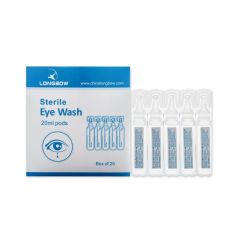
Q: Should I choose a bottle station or eye wash pods? A: Pods are small and single use, so they suit first aid kits and vehicles for a speck of dust. A bottle station gives a full litre at a fixed point, for longer rinsing after dust clouds or splashes. Many workplaces keep pods in kits and a station near the main hazard.
Q: Where should an eye wash station be mounted? A: Mount it on a wall close to where eye injuries are most likely, at a height people can reach easily. Keep it visible and clear of obstructions. Avoid cold spots and direct sunlight, as the bottles should be stored between 5 and 35 degrees Celsius.
Q: How long does the eye wash solution last? A: Unopened bottles last at least 5 years from the date of manufacture. Check the expiry dates during first aid checks and replace any bottle that has been opened or damaged.
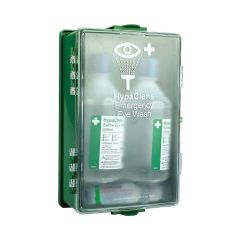
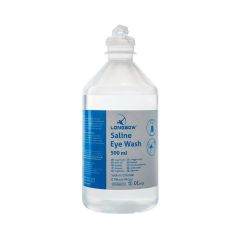
Not sure which eye wash your workplace needs? This guide explains HSE’s 1 litre guidance, compares bottle stations, cabinets and pod stations, and shows where to place eye wash and how to rinse an eye.
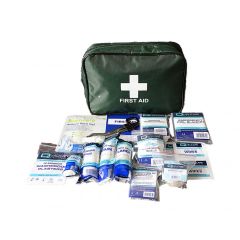
Not sure which first aid kit your workplace needs? This guide compares HSE and BS 8599-1 kits, explains kit sizes by headcount and hazard level, and covers travel kits for drivers and lone workers. Use our kit finder to match your team to the right kit in seconds.