A practical guide to water safety equipment for UK sites. It covers the law on drowning risk, how to choose between manual and automatic lifejackets, and how to build a complete lifebuoy point. A four-step kit builder suggests the lifejackets and lifebuoy sets your site needs.
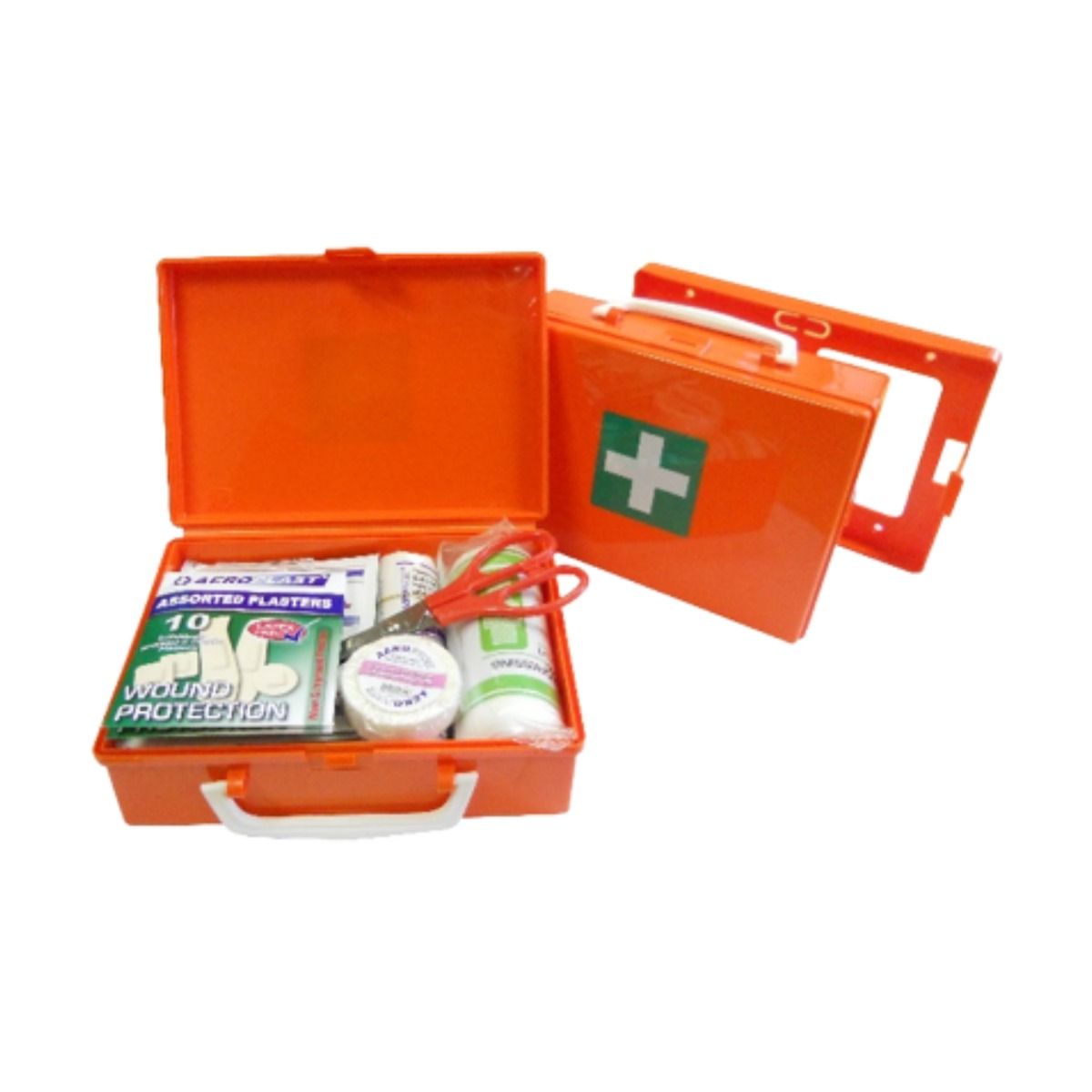
Vehicle first aid kit in a compact hard case with wall bracket, for treating minor injuries in HGV cabs, vans and fleet vehicles.
- Wall bracket for cab mounting
- Hard plastic case with carry handle
- Washproof plasters and HSE dressing
- Triangular and conforming bandages
- Alcohol free cleansing wipes
- First aid leaflet included
Vehicle First Aid Kit
Vehicle first aid kit in a compact hard case with wall bracket, for treating minor injuries in HGV cabs, vans and fleet vehicles.
- Wall bracket for cab mounting
- Hard plastic case with carry handle
- Washproof plasters and HSE dressing
- Triangular and conforming bandages
- Alcohol free cleansing wipes
- First aid leaflet included
- Buy 10 for £24.28 £20.23 each and save 8%
- Buy 20 for £22.07 £18.39 each and save 17%
| BULK DISCOUNT | 10 | 20 |
|---|---|---|
| Price | £20.23 £24.28 | £18.39 £22.07 |
Order 1x to earn 22 FASTPoints
Order to earn 22 FASTPoints
Log in to access trade discountsVehicle First Aid Kit - for Vans and HGVs
A vehicle first aid kit/ van kits holds the basics for treating minor injuries on the road, in a hard plastic case with a carry handle. The case clips onto a wall bracket that is fixed inside the cab, so the kit stays in one place. It carries plasters, dressings, bandages, cleansing wipes and scissors for cuts, grazes and wounds.
How a Wall Bracket Keeps the Kit Within Reach in the Cab
A loose first aid kit slides around a cab and often ends up under a seat or behind kit and paperwork. When someone is hurt, time goes on searching for it. Fixing the case to its wall bracket keeps it in the same visible spot, ready to lift off and carry to the casualty.
Key Features
-
Wall bracket for cab mounting: holds the kit in a fixed, visible place inside the vehicle.
-
Hard plastic case: protects the contents from knocks, dust and spills in the cab.
-
Carry handle: lift the case off the bracket and carry it to the casualty.
-
Washproof plasters and HSE dressing: cover small cuts and larger bleeding wounds.
-
Triangular and conforming bandages: make slings and hold dressings in place.
-
Alcohol free cleansing wipes: clean around wounds without stinging.
Who is this for
Trades and roles
-
HGV and LGV drivers
-
Van drivers and mobile tradespeople
-
Fleet and transport managers
-
Delivery and courier drivers
-
Health and safety managers
Industries
-
Road haulage and logistics
-
Construction and plant hire
-
Utilities and highways maintenance
-
Parcel and home delivery
-
Facilities and field services
Specifications
| Specification | Detail |
|---|---|
| Product name | Vehicle First Aid Kit |
| Product code | HS30RH2 |
| Product type | Vehicle first aid kit for minor injuries |
| Case | Hard plastic case with green first aid cross on the lid |
| Handle | Carry handle |
| Mounting | Separate wall bracket, for fixing inside the cab |
| Guidance | First aid leaflet included |
| Case colour | Orange |
Contents
| Contents | Quantity |
|---|---|
| First aid leaflet | 1 |
| Assorted washproof plasters env10 | 2 |
| Calico triangular bandage | 1 |
| Safety pins pack 6 | 1 |
| HSE dressings 18x18 with bandage | 1 |
| Alcohol free cleansing wipes | 6 |
| Micropore tape 1.25cm x 9.1m | 1 |
| Conforming bandages 5cm x 4.5m | 2 |
| Low adherent pad 75x75mm | 2 |
| Fingerstalls | 2 |
| Scissors poly prop handle | 1 |
| Total | 20 (44 pieces counting every plaster and pin + wall bracket separately.) |
Compatibility
| Vehicle, use or condition | Suitability |
|---|---|
| HGV and lorry cabs | Suitable, fix the bracket within reach of the driver |
| Vans and pickups | Suitable |
| Company cars and pool vehicles | Suitable |
| Minor cuts, grazes and wounds | Suitable |
| Eye injuries | Not recommended, no eye wash is included, add eye wash pods or a travel kit with eyewash |
| Buses and coaches | Not recommended, these must carry a kit with the contents set by PSV regulations |
| Fleets that require BS 8599-2 kits | Not recommended, this kit is not stated as BS 8599-2 |
| Workplaces and sites | Not recommended as the main kit, use a BS 8599-1 workplace kit |
Typical Users and Projects
Fleet managers fit vehicle first aid kits across HGV, van and car fleets, one kit per vehicle. Drivers who work away from base use them for minor injuries on the road, at delivery points and on site. The leaflet inside guides people without first aid training.
Typical applications
-
Equipping every HGV cab in a haulage fleet with a mounted kit.
-
Fitting first aid kits to tradespeople’s vans.
-
Treating cuts and grazes from loading, unloading and securing loads.
-
Giving delivery drivers first aid cover when working away from base.
-
Keeping a kit in pool cars and site vehicles.
How to use
Step 1: Fix the wall bracket inside the cab, where the driver can reach it easily and it does not block controls or airbags.
Step 2: Clip the case onto the bracket.
Step 3: In an emergency, make the scene safe and call 999 if needed.
Step 4: Lift the kit off the bracket and follow the first aid leaflet.
Step 5: Restock anything used before the vehicle goes back on the road.
Common mistakes
-
Keeping the kit loose in the footwell or behind seats.
-
Mounting the bracket where it blocks controls, mirrors or airbags.
-
Driving on with a half-empty kit after an incident.
-
Expecting the kit to cover eye injuries, when no eye wash is included.
-
Using this kit on buses and coaches, which need a PSV kit.
Safety
Make the scene safe before giving first aid, especially at the roadside. Call 999 for serious injuries. Employers should assess first aid needs for drivers working away from base, as set out in HSE guidance.
Maintenance
Check the kit during routine vehicle checks. Replace used or damaged items and anything past its expiry date. Keep the case closed and clean.
Frequently Asked Questions
Q: Do HGVs and vans legally need a first aid kit?
A: UK law does not require HGVs, vans or cars to carry a first aid kit. Buses and coaches are different, as PSV regulations set what they must carry. Employers must still make first aid arrangements for staff who drive for work, under the Health and Safety (First-Aid) Regulations 1981.
Q: What is in the vehicle first aid kit?
A: It holds 2 envelopes of 10 washproof plasters, an HSE 18cm x 18cm dressing, triangular and conforming bandages, 6 cleansing wipes, low adherent pads, tape, fingerstalls, safety pins, scissors and a first aid leaflet. The full list is in the Specifications tab.
Q: Is this a BS 8599-2 kit?
A: The kit is not stated as BS 8599-2, the British Standard for motor vehicle first aid kits. If your fleet policy requires a BS 8599-2 kit, choose one marked to that standard.
Q: What is this kit not suitable for?
A: It is not for buses and coaches, which need a PSV kit. It has no eye wash, so add eye wash pods if drivers face dust or splashes. It is not meant as the main kit for a workplace or site.
Q: Why choose a hard case kit with a bracket over a pouch?
A: A pouch suits a glovebox or pocket for one person. A hard case on a bracket stays fixed in the cab and protects the contents from knocks and spills. It suits vehicles that are shared or used every day.
Q: Where should the bracket go in the cab?
A: Fix it where the driver can reach it easily, such as the bulkhead or behind a seat. Keep it clear of controls, mirrors and airbags.
Q: Do I need a first aid kit to drive abroad?
A: Some European countries require vehicles to carry a first aid kit. Check the rules for each country before travelling.