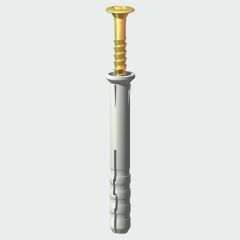
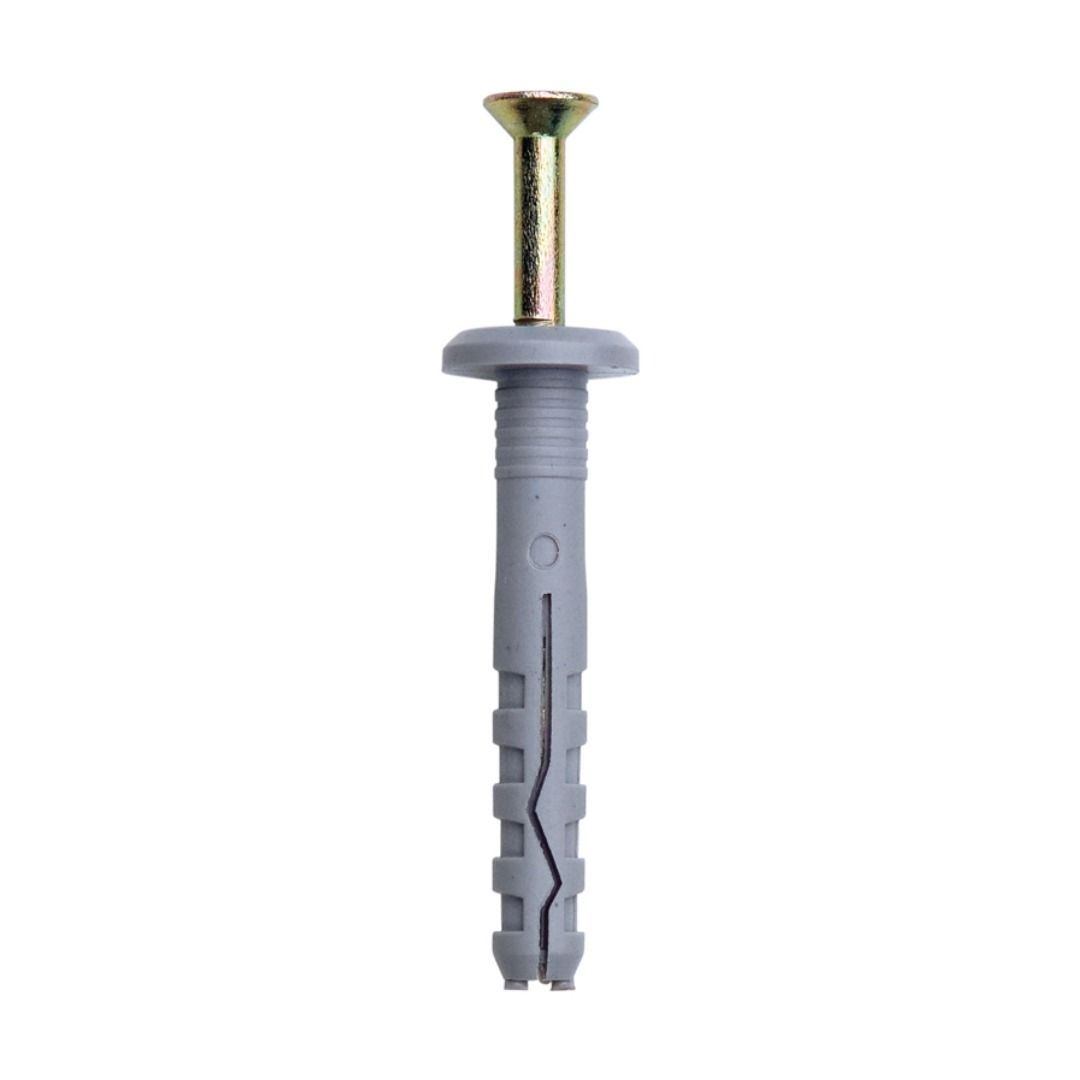
Flange head hammerscrews for fast through fixing into concrete and masonry, with a zinc plated steel screw and ribbed PA6 nylon plug.
- Zinc and yellow plated steel screw with ribbed PA6 polyamide nylon plug
- Flange head distributes tightening load over a greater surface area
- Through fixing method for timber battens, electrical boxes, frame ties, and conduit clips
- For use in concrete and masonry substrates
- Hammer installation, no screwdriving required
- Box of 100
Flange Head Hammerscrews 6 x 40mm - Nylon Plug Zinc Plated
Flange head hammerscrews for fast through fixing into concrete and masonry, with a zinc plated steel screw and ribbed PA6 nylon plug.
- Zinc and yellow plated steel screw with ribbed PA6 polyamide nylon plug
- Flange head distributes tightening load over a greater surface area
- Through fixing method for timber battens, electrical boxes, frame ties, and conduit clips
- For use in concrete and masonry substrates
- Hammer installation, no screwdriving required
- Box of 100
- Buy 10 for £3.90 £3.25 each and save 14%
- Buy 50 for £3.48 £2.90 each and save 23%
| BULK DISCOUNT | 10 | 50 |
|---|---|---|
| Price | £3.25 £3.90 | £2.90 £3.48 |
Flange Head Hammerscrews 6 x 40mm
A hammerscrew is a two-part fixing made up of a ribbed nylon expansion plug and a hardened steel screw. You drill a hole in the substrate, push the plug in flush, and drive the screw home with a hammer. As the screw goes in, it expands the plug and locks the fixing in place. No screwdriver required, which makes them fast on repetitive site tasks like fixing battens, conduit clips, and electrical back boxes to concrete and masonry walls.
Why the flange head makes a difference on site
A standard countersunk hammerscrew has a small head that concentrates the tightening load on a narrow contact area. When fixing through a conduit clip, electrical box flange, or thin timber batten, that small head can pull through or damage the material being fixed if the hole is slightly oversize or the material is not fully solid. The flange head on this fixing has a significantly larger diameter, which spreads the load across a broader contact area and reduces the risk of pull-through on fixing elements with wider holes or softer contact faces. It also sits flat and flush on the surface, which keeps the fixing neat and does not snag cables or clips running adjacent to it.
Key Features
-
Flange head: Large diameter head spreads the tightening load across a wider surface area, reducing the risk of pull-through on clips, boxes, and battens with larger fixing holes.
-
Ribbed PA6 nylon plug: The polyamide PA6 plug expands radially as the screw is driven in. The ribs grip the substrate bore and resist rotation, keeping the fixing aligned during installation.
-
Zinc and yellow plated steel screw: The plating protects against corrosion in dry indoor environments and provides the surface hardness needed for hammer installation without deformation of the head.
-
Through fixing design: The screw passes through the item being fixed and into the substrate below. The flange head bears on the top face of the fixed element.
-
Hammer installation: No screwdriving or torque tool required. Drive the screw flush with a hammer in a single action, which significantly speeds up repetitive fixing work on site.
Who Is This For
Trades and roles:
-
Electricians and first fix operatives
-
Mechanical and electrical contractors
-
Groundworkers and concreters
-
General site operatives
-
Maintenance and fit-out teams
Industries:
-
Construction and fit-out
-
Mechanical and electrical installation
-
Facilities management
-
Industrial maintenance
-
Residential and commercial renovation
Specifications
| Specification | Detail |
|---|---|
| Product name | Flange Head Hammerscrews 6 x 40mm - Nylon Plug Zinc Plated |
| SKU | NHS06040FH |
| Product type | Flange head hammerscrew with nylon expansion plug |
| Size | 6mm diameter x 40mm length |
| Head type | Flange head, large diameter |
| Fixing method | Through fixing, hammer installation |
| Screw material | Steel |
| Screw finish | Zinc and yellow plated |
| Plug material | Polyamide PA6 nylon |
| Plug type | Ribbed expansion plug |
| Pack quantity | Box of 100 |
Compatibility
| Application or condition | Status |
| Concrete | ✓ Suitable |
| Masonry (brick, block, stone) | ✓ Suitable |
| Timber battens fixed to concrete or masonry | ✓ Suitable |
| Electrical back boxes and conduit clips | ✓ Suitable |
| Frame ties and metal framing components | ✓ Suitable |
| Hollow block or cavity walls without solid backing | ✗ Not suitable |
| Plasterboard, timber stud, or lightweight board | ✗ Not suitable |
| Structural or high-load fixings | ✗ Not suitable, check load ratings before specifying |
| Outdoor or exposed environments | ✗ Not recommended, zinc plating is for dry indoor use |
Who Is This For
These hammerscrews are used by electricians, M&E contractors, and first fix operatives fixing conduit clips, cable trunking, back boxes, and frame ties directly into concrete and masonry walls. They are equally well suited to groundworkers and general operatives fixing timber battens and preserving boards to block or concrete substrates where screws and plugs would be slower. The flange head makes them a natural choice wherever the fixing element has a wider hole or a contact face that a countersunk head would pull through or sit poorly against.
Typical Applications
-
Fixing conduit clips and cable trunking directly to concrete and masonry walls where speed matters on high-volume M&E first fix.
-
Securing electrical back boxes through plaster or render into solid masonry or concrete backing.
-
Attaching timber battens and preserving boards to blockwork or concrete walls during fit-out and first fix.
-
Fixing metal frame ties and restraint straps to concrete and masonry during structural framing.
-
Attaching pipe clips, brackets, and support channels to concrete soffits and block walls in mechanical installation work.
How to Use
Step 1: Drill a 6mm hole to the required depth in the concrete or masonry substrate. Clear debris from the hole.
Step 2: Push the nylon plug into the hole flush with the surface.
Step 3: Position the item to be fixed over the plug, aligning the fixing hole with the plug centre.
Step 4: Insert the screw through the item and into the plug. Drive it home with a hammer until the flange head sits flat against the surface of the fixed element.
Step 5: Check the fixing is secure and the flange head is sitting flush with no tilt or gap.
Common Mistakes
-
Drilling the hole too large: a 6mm hammerscrew needs a 6mm hole. A larger hole prevents the plug from gripping the bore and the fixing will pull out under minimal load.
-
Not clearing the hole before insertion: concrete dust left in the bore reduces plug grip. Blow the hole clear before pushing the plug in.
-
Hammering at an angle: driving the screw off-centre bends the plug as it expands, reducing grip and leaving the head sitting proud. Keep the hammer blow square and aligned with the hole axis.
-
Using on hollow or cavity substrates without solid backing: the plug needs solid material to expand against. Without it, the fixing has no holding power.
-
Specifying for high-load applications without checking rated pull-out values: hammerscrews are for light to medium-duty fixing. Always check the manufacturer's rated values before using in any application where pull-out would cause a safety risk.
Safety
These fixings are for light to medium-duty through fixing in concrete and masonry. They are not rated for structural, overhead high-load, or safety-critical applications without checking the manufacturer's published pull-out and shear load data for the specific substrate. The zinc and yellow plating provides corrosion resistance for dry indoor environments. Do not use outdoors or in damp, corrosive, or chemically aggressive environments without confirming the suitability of the plating for those conditions. Wear eye protection when drilling and when driving screws by hammer.
Maintenance
Hammerscrews are permanent fixings and do not require maintenance once installed. Inspect installed fixings periodically for any movement, corrosion at the screw head, or cracking of the surrounding substrate. A fixing that moves under hand pressure has failed and must be replaced. Do not attempt to re-tighten a hammerscrew that has come loose. Rmove it, fill the hole if necessary, and install a new fixing into solid material.
Frequently Asked Questions
Q: What is the difference between a flange head hammerscrew and a standard countersunk hammerscrew?
A: A countersunk head has a small tapered head that sits recessed into the fixing surface. A flange head has a large flat washer-style head that sits on top of the fixing surface and spreads the tightening load across a wider contact area. For conduit clips, back boxes, and frame ties with wider fixing holes, the flange head reduces the risk of the fixing pulling through the hole under load. For timber battens, it gives a cleaner, flatter bearing surface.
Q: What substrates can these be used in?
A: These hammerscrews are designed for use in solid concrete and solid masonry substrates including brick, block, and stone. They are not suitable for hollow block, cavity walls without solid backing, plasterboard, timber stud walls, or any substrate where the plug cannot expand against solid material.
Q: What is this fixing NOT suitable for?
A: Not suitable for hollow or cavity substrates, plasterboard, timber stud walls, or any application without solid backing behind the fixing point. Not recommended for outdoor or damp environments as the zinc and yellow plating is intended for dry indoor use. Not rated for structural or safety-critical high-load applications without checking published pull-out and shear values for the specific substrate.
Q: Can these be used outdoors?
A: The zinc and yellow plating provides corrosion resistance for dry indoor environments. For outdoor, damp, or corrosive environments, a stainless steel or A4-grade fixing would be the appropriate specification. Using these outdoors risks corrosion at the screw head, which can weaken the fixing over time and stain adjacent surfaces.
Q: How do I know what drill bit size to use?
A: Use a 6mm masonry drill bit. The plug is designed to expand in a 6mm bore. Drilling oversize will prevent the plug from gripping the substrate walls and the fixing will have no meaningful hold. Drilling undersize will prevent the plug from seating fully.
Q: Can I remove and reuse a hammerscrew once installed?
A: No. Once the screw has been hammered in and expanded the plug, the fixing is permanent. The plug deforms during expansion and cannot be contracted back. If you need to remove a hammerscrew, the plug must be drilled out. A new fixing should be installed into a fresh hole where possible.