Full circle drain rod plungers with a rubber disc and universal fitting, for clearing blocked drains, used by drainage contractors, groundworkers and maintenance teams.
- Full circle rubber disc seals across the drain bore
- Universal (standard) type threaded fitting
- Fits universal polypropylene drain rods
- Push and pull action drives water through blockages
- Rotate clockwise only
- Available in multiple sizes
Full Circle Drain Rod Plungers - Universal Fitting
Full circle drain rod plungers with a rubber disc and universal fitting, for clearing blocked drains, used by drainage contractors, groundworkers and maintenance teams.
- Full circle rubber disc seals across the drain bore
- Universal (standard) type threaded fitting
- Fits universal polypropylene drain rods
- Push and pull action drives water through blockages
- Rotate clockwise only
- Available in multiple sizes
Full Circle Drain Rod Plungers
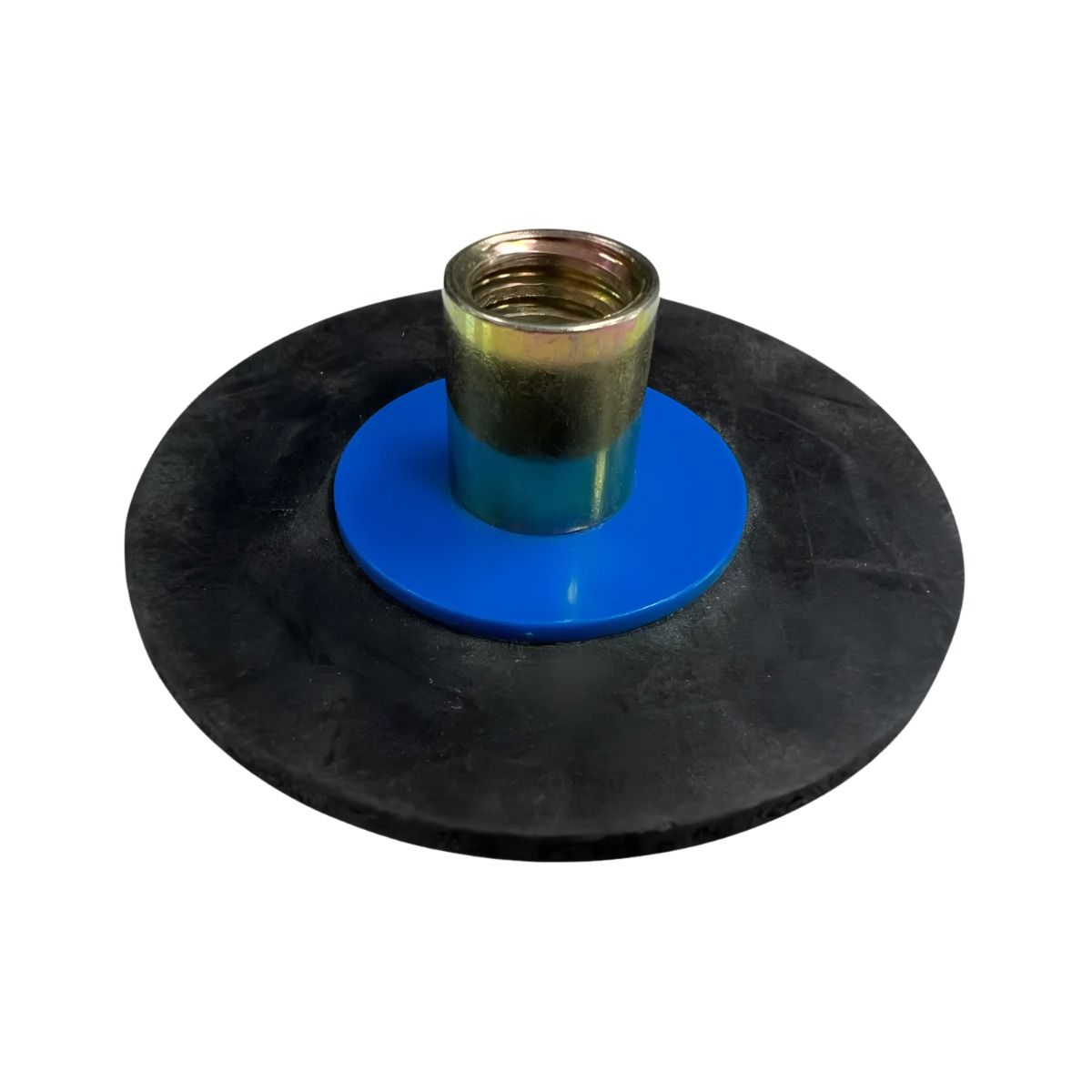
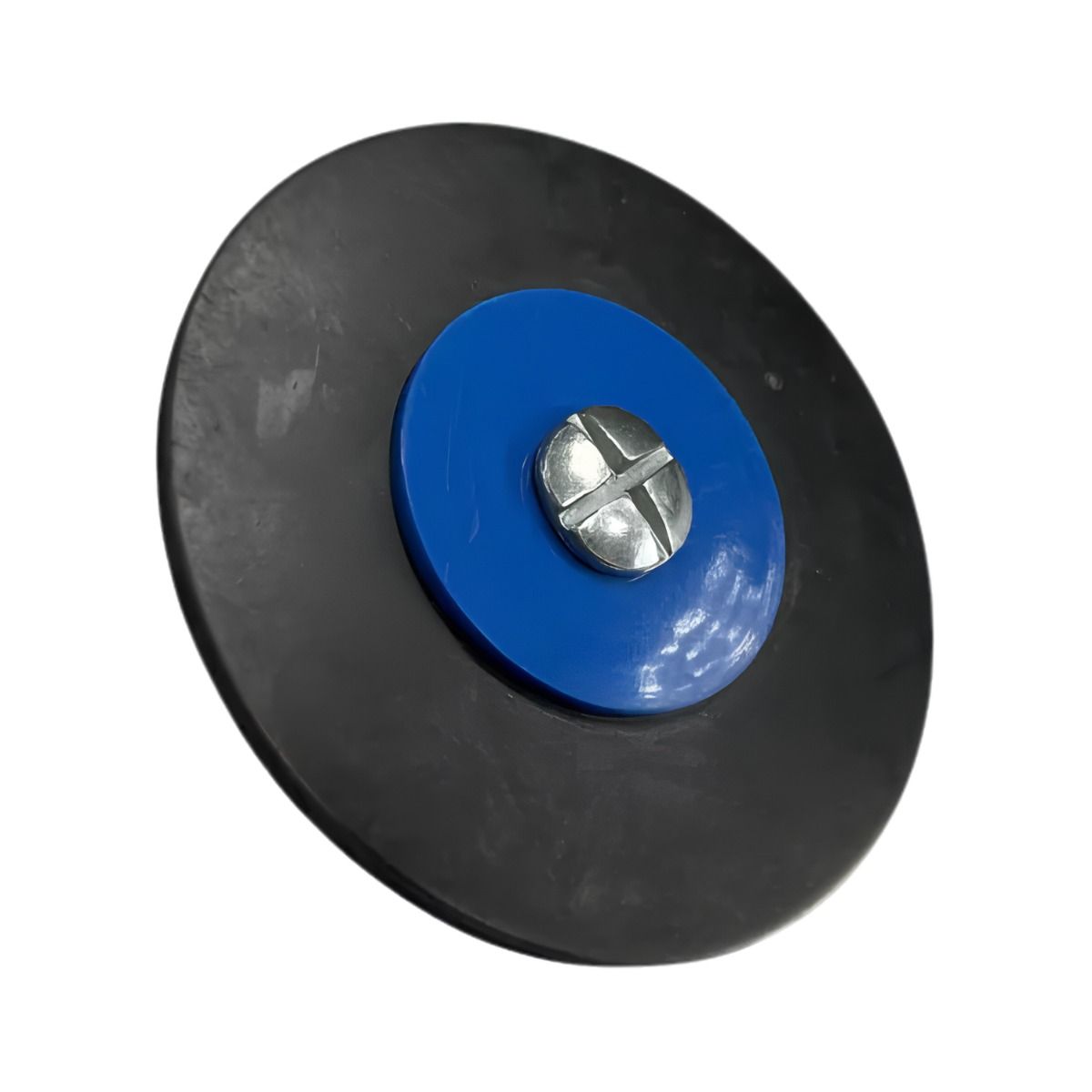
Full circle drain rod plungers screw onto universal drain rods and clear blockages by driving water along the drain. Each one is a round rubber disc held between rigid backing plates, with a threaded metal socket for the rod. You work it from an inspection chamber or rodding point, pushing and pulling it through the drain run.
How a Full Circle Disc Clears What a Bare Rod Leaves Behind
A worm screw or bare rod can pierce a blockage but leaves silt and debris sitting in the pipe. On site, that means the drain can block again soon after the job is signed off. A full circle rubber disc fills the pipe bore, so each stroke pushes a column of water that flushes loosened material down the run.
Key Features
-
Full circle rubber disc: fills the drain bore, so each push moves water and debris along the pipe instead of slipping past it.
-
Universal threaded socket: screws straight onto universal drain rods, the standard joint on most UK rod sets.
-
Rigid backing plates: support the rubber disc behind the socket so it keeps its shape under pressure.
-
Plated metal socket: gives a firm thread for repeated fitting and removal on site.
-
Push and pull action: clears blockages with water pressure and suction, with no power supply needed.
Who is this for
Trades and roles
-
Drainage engineers
-
Groundworkers
-
Plumbers
-
Site managers
-
Maintenance operatives
-
Facilities teams
Industries
-
Construction
-
Civil engineering
-
Housebuilding
-
Facilities management
-
Social housing maintenance
Specifications
| Specification | Detail |
|---|---|
| Product name | Full Circle Drain Rod Plungers - Universal Fitting |
| Product code | DRFM |
| Product type | Drain rod plunger attachment |
| Plunger type | Full circle, round rubber disc |
| Fitting | Universal (standard) type, female threaded socket |
| Compatible rods | Universal drain rods, including polypropylene rods with brass universal joints |
| Rotation | Clockwise only |
| Clearing action | Push and pull, using water pressure and suction |
| Construction | Rubber disc with rigid backing plates, centre screw fixing and plated metal threaded socket |
| Plunger material | Rubber |
Size Selection
| Product code | Disc diameter | Suits drain pipe bore |
|---|---|---|
| DR4FM | 100mm (4in) | 100mm (4in) drain runs |
| DR6FM | 150mm (6in) | 150mm (6in) drain runs |
Compatibility
| Base material, tool or condition | Suitability |
|---|---|
| Universal drain rods | Suitable, screws on with the universal fitting |
| Polypropylene rods with brass universal joints | Suitable |
| Drain pipe matching the disc size | Suitable |
| Water-filled drain run | Suitable, the disc drives the standing water along the pipe |
| Lockfast (Ideal) drain rods | Not recommended, the joint does not match, use a lockfast plunger |
| Steel thrust rods with spanner joints | Not recommended, different joint system |
| Anti-clockwise rotation | Not recommended, the joint can unscrew and leave the plunger in the drain |
| Pipe bore smaller than the disc | Not recommended, choose the smaller size |
| Sinks, baths and toilets without rods | Not recommended, use a hand-held plunger |
| Solid blockages and roots | Not recommended as the first tool, break them up with a worm screw first |
Typical Users and Projects
Drainage contractors, groundworkers and maintenance teams use drain rod plungers on housing estates, commercial sites and public buildings. Most work happens from inspection chambers and rodding points on underground foul and surface water drains. It suits trained operatives and competent site staff clearing routine blockages without jetting equipment.
Typical applications
-
Clearing a blocked 100mm foul drain between two inspection chambers on a housing development.
-
Flushing silt and debris from a surface water drain run after groundworks.
-
Finishing off a clearance after a worm screw has broken up the blockage.
-
Shifting a blockage in a 150mm drain serving a commercial or public building.
-
Clearing site welfare unit drains during a project.
-
Restoring flow in a drain run before a CCTV survey or drain test.
How to use
Step 1: Choose the plunger size that matches the drain pipe bore, using the Size Selection table.
Step 2: Lift the chamber cover with manhole keys and wear waterproof gloves before reaching into the chamber.
Step 3: Screw the plunger clockwise onto the first rod, then add rods as needed, tightening each joint clockwise.
Step 4: Feed the plunger into the drain run towards the blockage.
Step 5: Push and pull firmly in short strokes to drive water through the blockage. If you turn the rods, turn them clockwise only.
Step 6: Once the water flows, flush the run with clean water and withdraw the rods, still turning clockwise.
Common mistakes
-
Turning the rods anti-clockwise, which can unscrew the joint and leave the plunger in the drain.
-
Trying to fit a universal plunger to lockfast rods.
-
Using a disc larger than the pipe bore, so it jams instead of plunging.
-
Plunging a solid blockage before breaking it up with a worm screw.
-
Leaving the plunger dirty after use, which spreads contamination and wears the rubber.
Safety
Sewage can carry leptospirosis (Weil’s disease) and other infections. Follow HSE guidance on working with sewage: wear waterproof gloves and eye protection, cover cuts, and wash your hands before eating. Never enter a manhole or chamber to work. Entering one is confined space work under the Confined Spaces Regulations 1997 and needs a trained team. Use manhole keys to lift covers and keep open chambers guarded.
Maintenance
Wash the plunger with clean water and disinfectant after each use. Check the rubber disc for splits and the socket thread for damage before the next job. Store it dry and flat, away from direct sunlight.
Frequently Asked Questions
Q: Will this plunger fit my drain rods?
A: It fits drain rods with universal (standard) type joints, such as polypropylene rods with brass universal connectors. It will not fit lockfast (Ideal) rods or steel thrust rods, which use different joints. Check the joint on your rods before ordering.
Q: What does 100mm (4in) mean on a drain rod plunger?
A: It is the diameter of the rubber disc. 100mm is the metric size and 4in is the same size in inches. Choose the size that matches the bore of the drain pipe you are clearing.
Q: Which size do I need, 100mm or 150mm?
A: Most domestic foul and surface water drains are 100mm (4in), so the 100mm plunger covers most jobs. Larger drains serving several properties or commercial buildings are often 150mm (6in). If you are unsure, check the pipe bore at the inspection chamber.
Q: What is this plunger not suitable for?
A: It is not suitable for lockfast or steel thrust rods, pipes smaller than the disc, or sinks and toilets without rods. Solid blockages and root ingress should be broken up with a worm screw or other cutting tool first.
Q: Why use a plunger rather than a worm screw alone?
A: A worm screw breaks into a blockage, but the debris often stays in the pipe. The full circle disc fills the bore and pushes water through, flushing the loosened material down the run. Many teams use the worm screw first, then the plunger to finish the clearance.
Q: Why must universal drain rods only turn clockwise?
A: Universal joints and the plunger socket are screw threads that tighten clockwise. Turning anti-clockwise can unscrew a joint inside the drain and leave the plunger or rods stuck in the pipe. Keep turning clockwise, even when pulling the rods out.
Q: How do I clean the plunger after use?
A: Wash it with clean water and disinfectant, then check the rubber disc for splits. Dry it before storing, and wash your hands after handling equipment that has been in a sewer.
Q: How does a full circle plunger clear a blocked drain?
A: The rubber disc forms a seal across the pipe. Pushing it forward drives a column of water against the blockage, and pulling back creates suction. Repeated short strokes loosen the blockage until water flows again.