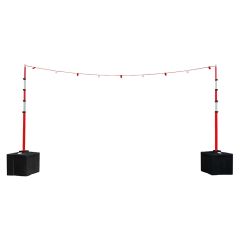
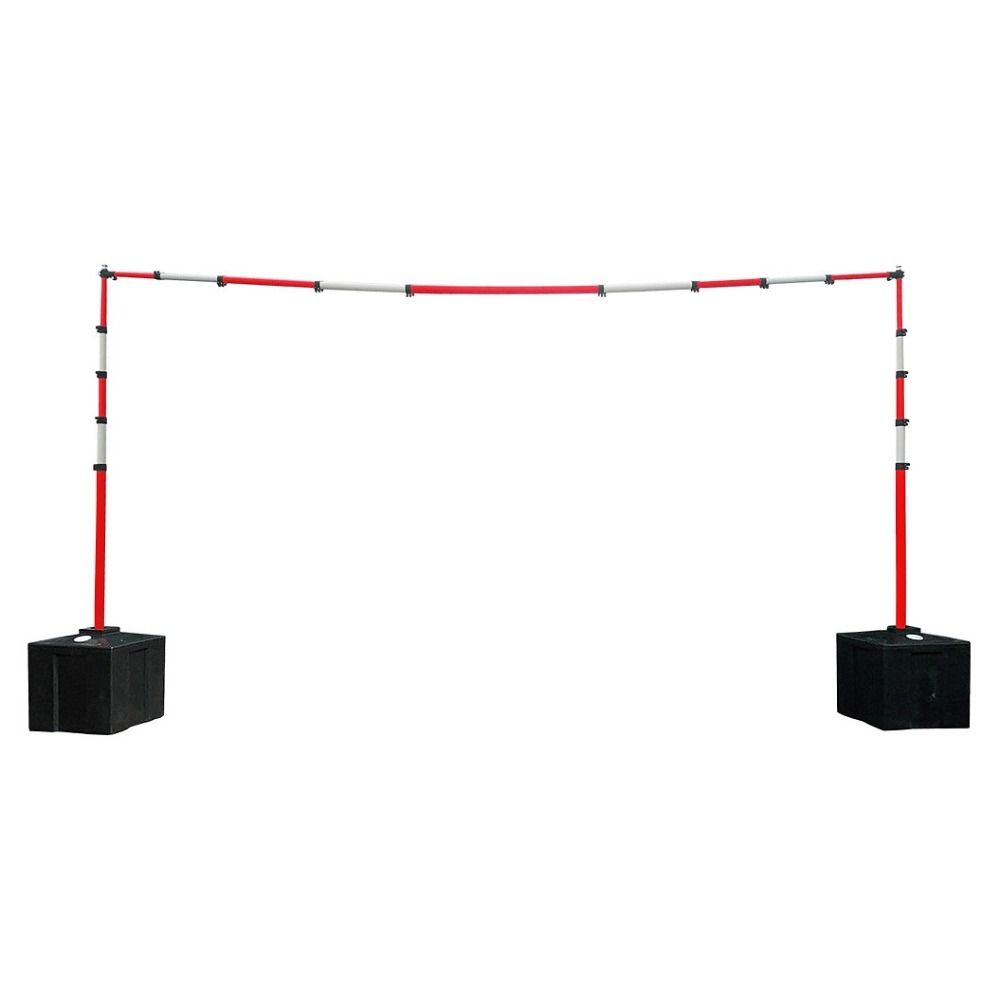
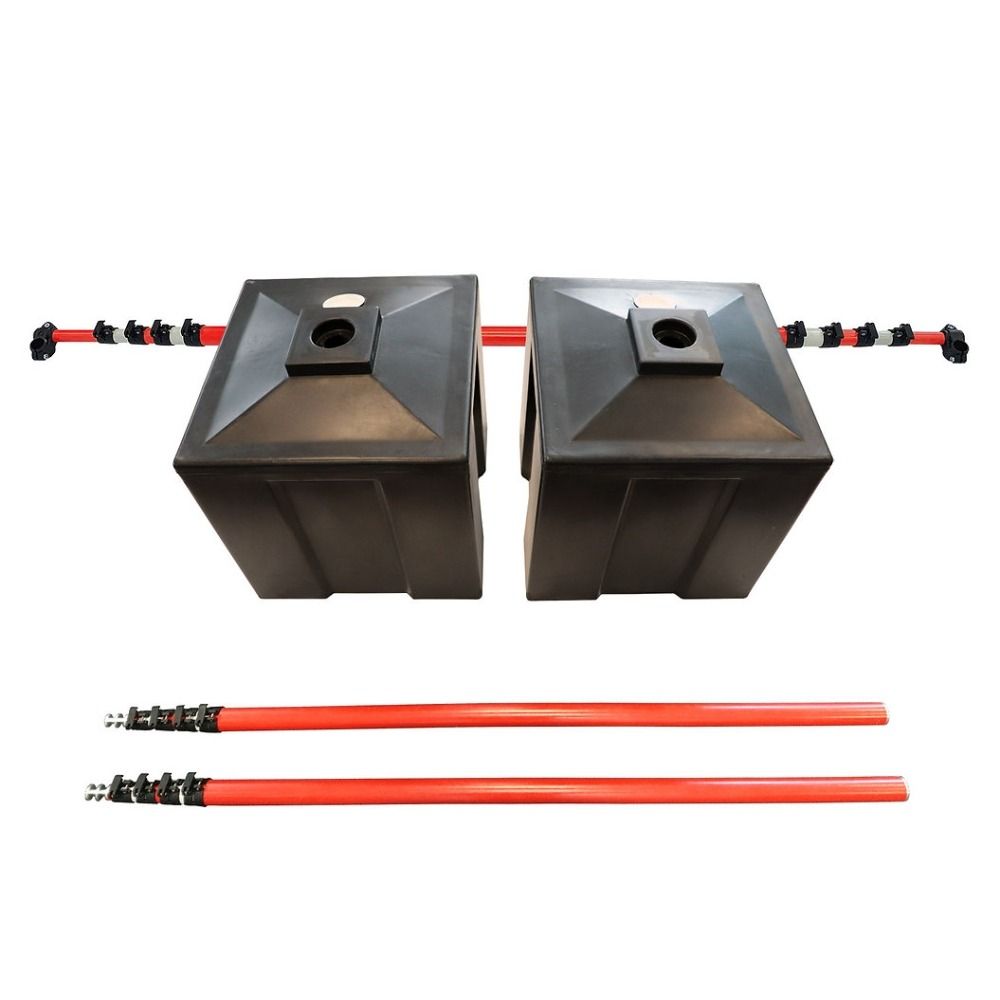
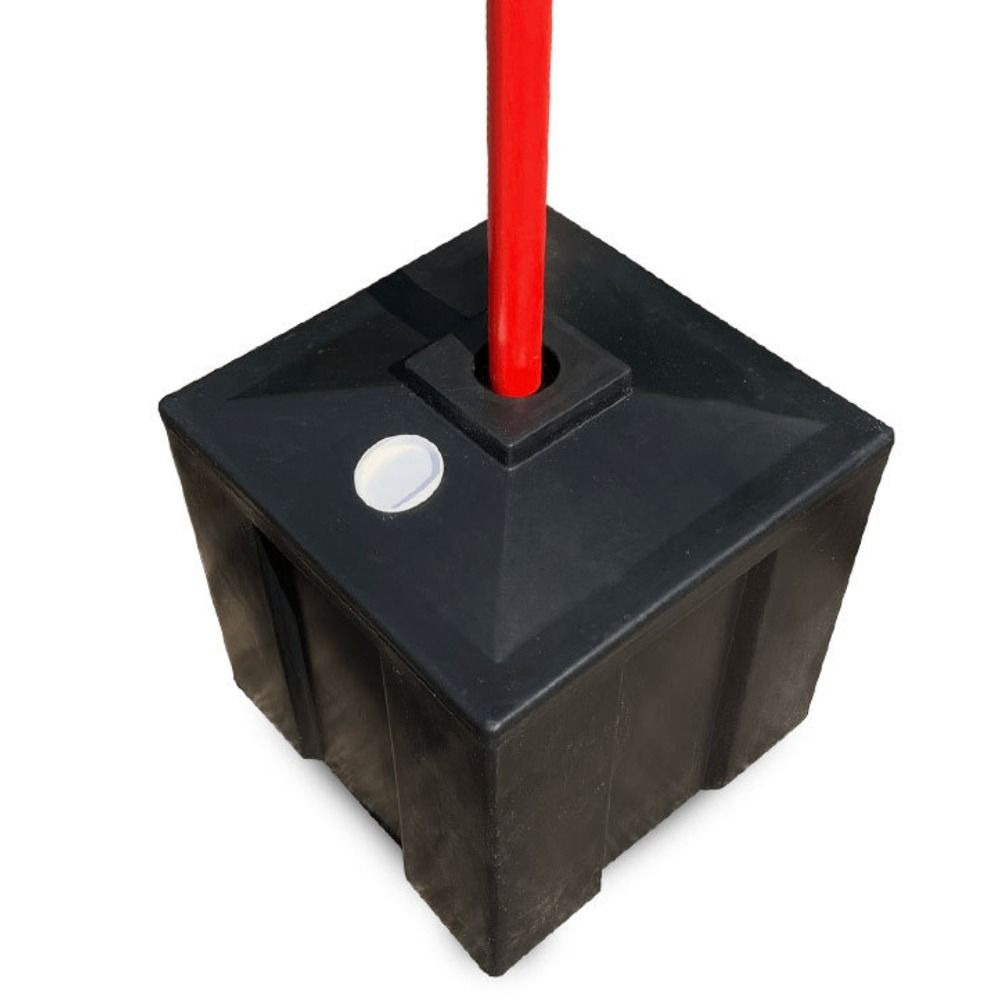
GS6 goalpost kit with ballast block bases and a telescopic crossbar for warning vehicles of overhead power line and cable hazards on exposed sites.
-
- HSE GS6 compliant height restriction system
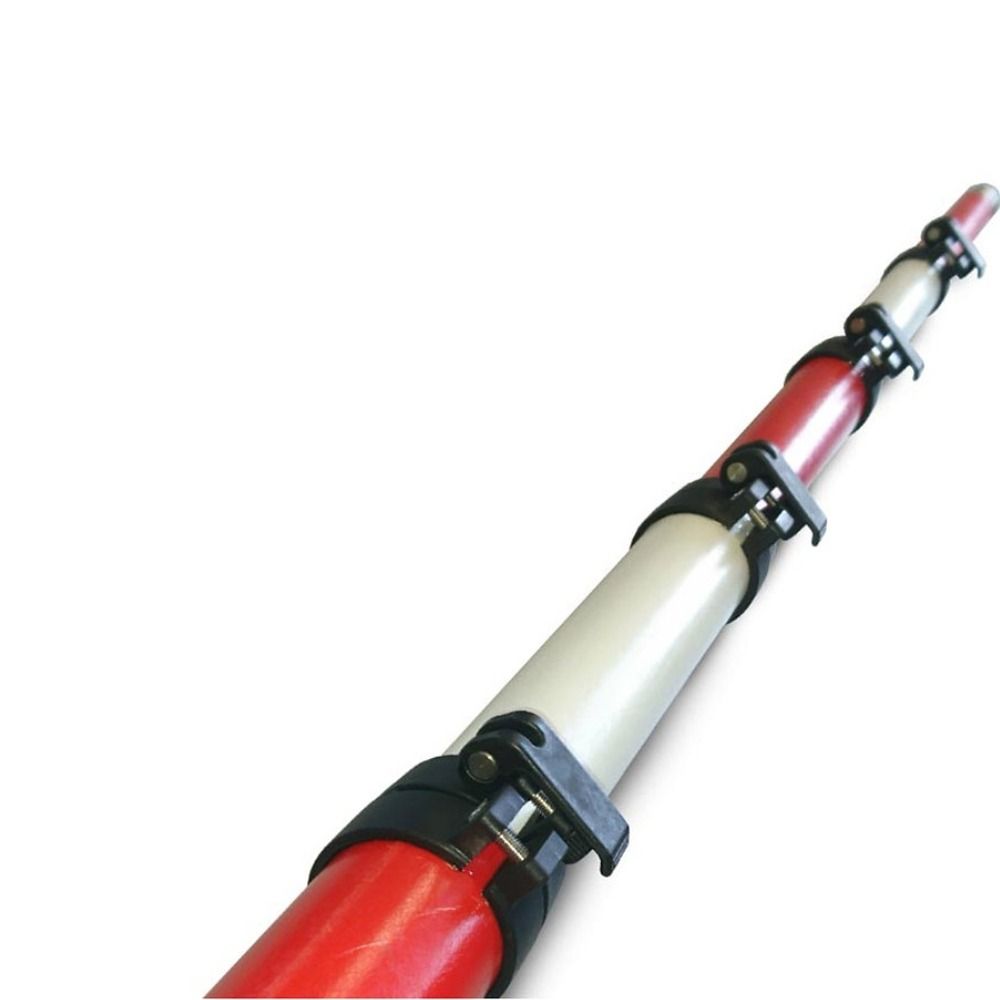
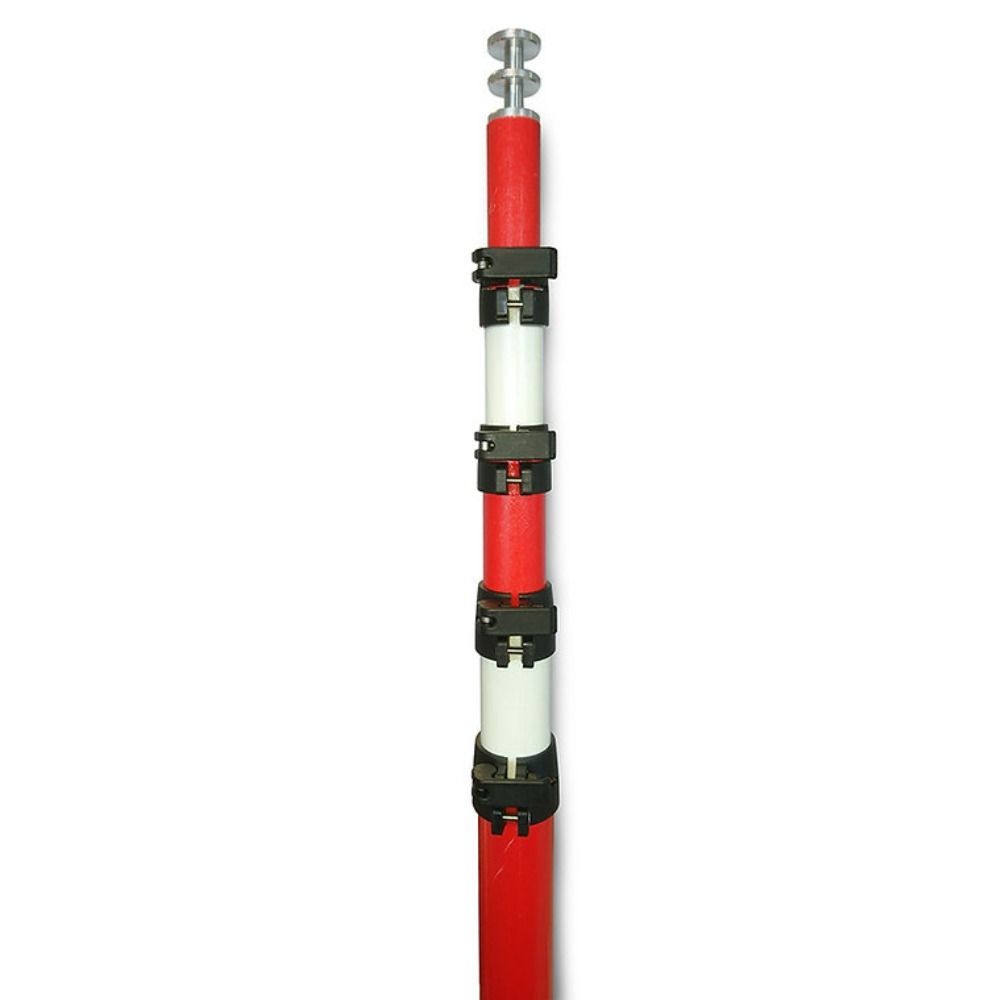
- Two 7.38m fibreglass telescopic poles insulated to 75kV
- MIRA wind speed tested ballast block bases
- Fillable with water to yield 110kg per base
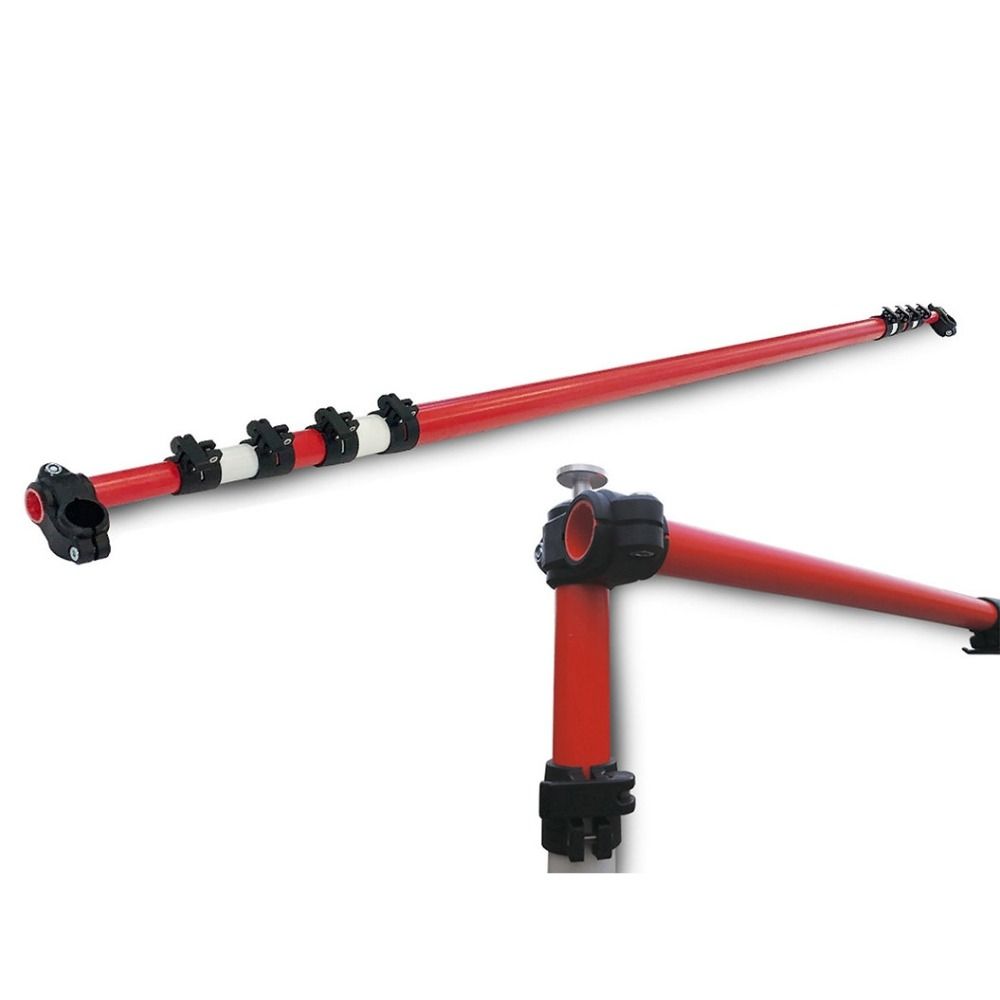
- 7m telescopic crossbar for rigid height restriction
- Opens to a gateway width of up to 7.6m
- Red and white poles for highway and construction site use
- Set includes two ballast block bases, two poles & bunting
GS6 Goalpost Kit - Telescopic Crossbar - Ballast Block Base
GS6 goalpost kit with ballast block bases and a telescopic crossbar for warning vehicles of overhead power line and cable hazards on exposed sites.
-
- HSE GS6 compliant height restriction system
- Two 7.38m fibreglass telescopic poles insulated to 75kV
- MIRA wind speed tested ballast block bases
- Fillable with water to yield 110kg per base
- 7m telescopic crossbar for rigid height restriction
- Opens to a gateway width of up to 7.6m
- Red and white poles for highway and construction site use
- Set includes two ballast block bases, two poles & bunting
Order 1x to earn 376 FASTPoints
Order to earn 376 FASTPoints
Log in to access trade discountsGS6 Goal Post Kit - Telescopic Crossbar - Ballast Block Base
GS6 goalpost kit built for site managers, groundworkers, and traffic management teams warning vehicles of overhead power lines, cables, and bridges on exposed or high-traffic construction and highway sites. Two 7.38m telescopic fibreglass poles connect via a simple elbow fitting to a 7m telescopic crossbar, forming a rigid height restriction gateway up to 7.6m wide, fully compliant with HSE GS6 guidance. MIRA wind speed tested ballast block bases provide the maximum stability available across the range, particularly where the kit is left in place for extended periods in exposed conditions.
How maximum base stability and a rigid crossbar work together on exposed sites
A fixed crossbar only holds its position reliably if the base beneath it does the same, and a lightweight base struggling against wind loading undermines the rigidity the crossbar is designed to provide. On open or high-traffic sites, that combination of a moving base and a rigid bar under tension is where fixings loosen and the restriction becomes unreliable over time. This kit pairs the telescopic crossbar with MIRA tested ballast block bases fillable to 110kg, giving the crossbar a genuinely stable foundation to hold its height under demanding site conditions.
Key Features
- MIRA wind speed tested ballast block bases: Independently tested for stability in demanding wind conditions, giving the crossbar a stable foundation to hold its position
- 7m telescopic crossbar: Provides a rigid, fixed height reference rather than a bunting line that can sag or twist in wind
- Fillable to 110kg with water: Adds substantial stability without transporting a heavy base to site, with sand, gravel, or concrete available where maximum weight is required
- Gateway width up to 7.6m: Accommodates wider vehicle access points without narrowing the usable route
- HSE GS6 compliant construction: Meets HSE guidance for avoiding danger from overhead power lines, giving site managers a recognised standard to reference in RAMS documentation
- Flexible elbow connection system: Copes with natural motion between the poles and crossbar in varying weather conditions without loosening
- Multi-layered fibreglass construction insulated to 75kV: Reduces the risk of conductivity should the kit make contact with a live line
Who is this for
Trades and roles:
- Site managers
- Traffic management teams
- Groundworkers
- Highway contractors
Industries:
- Construction
- Highways and roadworks
- Utilities
- Civil engineering
Specifications
| Specification | Detail |
| Product Name | GS6 Goalpost Kit - Telescopic Crossbar - Ballast Block Base |
| SKU / Product Code | GS6MBB |
| Product Type | Height restriction goalpost kit |
| Pack Contents | 2 x telescopic pole, 2 x ballast block base, 1 x 7m telescopic crossbar |
| Compliance Standard | HSE GS6 guidelines |
| Pole Material | Multi-layered fibreglass |
| Pole Insulation | Insulated to over 75kV |
| Pole Extended Length | 7.38m |
| Pole Collapsed Length | 1.8m |
| Tube Diameter | 50mm base section |
| Pole Weight | 3.5kg per pole |
| Clamping System | Anti-pinch glass reinforced clamping |
| Pole Colour | Red and white (highway and construction use) |
| Height Restriction Method | 7m telescopic fibreglass crossbar |
| Crossbar Connection | Elbow fitting to poles |
| Maximum Gateway Width | Up to 7.6m |
| Base Type | Ballast block |
| Base Testing | Wind speed tested by MIRA |
| Base Fillable Weight | Up to 110kg with water |
| Alternative Fill Options | Sand, gravel, or concrete for maximum stability |
| Warranty | 2 year manufacturer warranty |
Compatibility
| Application or condition | Status |
| Overhead power line and cable hazard warning | ✓ Compatible |
| Exposed, high-wind, or high-traffic sites needing maximum stability | ✓ Compatible |
| Regularly used vehicle access points needing a fixed height reference | ✓ Compatible |
| Extended or long-duration installation on the same site | ✓ Compatible |
| Rail industry lineside use | ✗ Not recommended, use the blue and white pole variant |
| Sites requiring frequent daily relocation of the goalpost | ✗ Not recommended, use the blue and white pole variant |
| Vehicle or plant contact protection | ✗ Not recommended, use the blue and white pole variant |
Who is this for
This goalpost kit is specified by site managers and traffic management teams who need both a rigid, fixed height reference and maximum base stability, typically on exposed, high-traffic, or longer-duration installations. It suits highways contractors and groundworks teams managing busy access points on open sites where wind loading is a genuine concern and where a bunting line or lightweight base would not hold its position reliably. This is the highest-specification configuration in the range, combining the crossbar's rigidity with the ballast block base's tested stability.
Typical applications
- Warning drivers of overhead power lines at busy, regularly used access points on exposed sites.
- Marking a fixed vehicle height limit at construction site entrances left in place for extended periods in open or windy conditions.
- Providing a rigid height reference ahead of a low bridge or structure on longer-duration diversion routes with high vehicle footfall.
- Protecting utilities and groundworks teams working beneath or near overhead cables from over-height vehicle strikes.
- Supporting RAMS documentation for sites identified as having overhead line risk under HSE GS6 guidance.
- Restricting vehicle access height at open compounds and haul roads with limited natural wind shelter.
How to use
Step 1: Assess the site for overhead line height and confirm the required restriction height before erecting the goalpost.
Step 2: Position the ballast block bases either side of the vehicle route on solid, level ground, allowing for the required gateway width.
Step 3: Fill each ballast block with water, sand, gravel, or concrete to the stability level required for the site's wind exposure.
Step 4: Extend each telescopic pole to the required height using the anti-pinch clamping system, checking each section locks securely.
Step 5: Connect the telescopic crossbar to both poles using the elbow fitting, extending it to the confirmed height and locking it in place.
Step 6: Inspect the full kit periodically for pole and crossbar damage, clamp security, and base fill level, particularly after high winds.
Common mistakes
- Leaving the ballast block bases unfilled or only partially filled, reducing the stability the MIRA testing is based on and undermining the crossbar's rigidity.
- Extending the crossbar beyond the confirmed safe height, reducing the clearance margin below the actual overhead hazard.
- Failing to seat the elbow fitting securely, allowing the crossbar to work loose under vehicle vibration or wind.
- Assuming a water fill is sufficient in freezing conditions without considering sand, gravel, or concrete as an alternative.
- Failing to reinspect the kit after high winds or a vehicle strike before returning it to service.
Safety
This kit warns of overhead hazards; it does not physically prevent vehicle contact with overhead lines. Poles and crossbar are insulated to over 75kV but must not be assumed to eliminate risk of contact with live conductors. Confirm the actual height of the overhead hazard before setting the restriction height, in line with HSE GS6 guidance for avoiding danger from overhead power lines. Ballast block bases must be filled to the appropriate weight for site conditions; an unfilled or underfilled base does not carry the stability the crossbar relies on or the MIRA testing confirms.
Maintenance
Check poles and the crossbar for cracking, UV degradation, or damage to the red and white sections before each use. Confirm the anti-pinch clamping system and elbow fitting lock securely at each extension point. Confirm ballast blocks remain filled and have not developed leaks if water filled. Drain water fill before transport if the kit is being relocated.
Frequently Asked Questions
Q: How much weight do the ballast block bases actually provide for this crossbar kit?
A: Each ballast block can be filled with water to yield 110kg, giving the crossbar a stable foundation well beyond what a lightweight base secured with sandbags could offer. Where a site needs even greater stability, sand, gravel, or concrete are viable alternative fill options for maximum weight. The blocks have been wind speed tested by MIRA, giving an independently verified basis for their stability rating.
Q: What does HSE GS6 compliance actually mean for this kit?
A: GS6 is HSE guidance titled "Avoiding danger from overhead power lines," setting out recommended precautions for working near or crossing beneath overhead electrical cables. A GS6 compliant goalpost uses insulated, non-conductive poles and a clearly visible restriction reference to warn vehicles before they reach the hazard, reducing the risk of contact with live overhead conductors. This kit's fibreglass poles and crossbar are insulated to over 75kV specifically to meet that guidance. Compliance with GS6 supports a site's RAMS documentation where overhead line risk has been identified, though it does not remove the underlying hazard itself.
Q: What is this goalpost kit NOT suitable for?
A: This kit is not designed for rail industry lineside use, where the blue and white pole variant is the recognised standard. It is not intended as a physical barrier capable of stopping vehicle contact with overhead lines, only as a visible warning system. It is also the heaviest configuration in the range once filled, making it better suited to fixed installations than sites needing daily repositioning.
Q: Why choose this combination over the crossbar with a steel base?
A: The ballast block base has been wind speed tested by MIRA and can be filled to significantly greater weight than a steel base relying on sandbags, giving the rigid crossbar a genuinely stable foundation on exposed or high-traffic sites. Where the kit needs to be moved frequently, the steel base crossbar version is lighter and easier to relocate day to day.
Q: Can this kit be used with bunting instead of the crossbar?
A: Yes. The same ballast block base and pole system is used in the bunting version of this kit, which replaces the crossbar with 25m of red and white bunting for a faster, more easily deployed height restriction. Both versions share the same MIRA tested base and GS6 compliant poles.
Q: How wide a gateway can this crossbar cover?
A: The telescopic crossbar extends to accommodate a gateway width of up to 7.6m, connecting to both poles via a simple elbow fitting. This makes it suitable for wider vehicle access points than a fixed-length restriction system would allow, even on sites where the ballast block bases are positioned further apart for stability.
Q: How quickly can I get a GS6 goalpost kit delivered to a live site?
A: Order by 7pm for next-day delivery nationwide on stocked lines. For time-critical requirements, such as an unplanned overhead line risk identified mid-project, CMT Group's VIP 2-hour delivery service is available from any depot UK-wide, with What3Words integration allowing delivery to a specific compound gate or access point without a postcode.
Q: How do I know CMT Group supplies goalpost kits that genuinely meet GS6 requirements?
A: CMT Group holds ISO 9001:2015 and CHAS Elite accreditation, alongside Crown Commercial Service Supplier status, reflecting a compliance-led approach across the equipment it supplies to UK construction and highway sites. The technical specifications for each goalpost kit, including base testing and compliance standard, are confirmed and published in full on the product page and technical data sheet. We are rated Excellent on Trustpilot for service reliability.