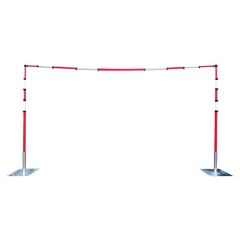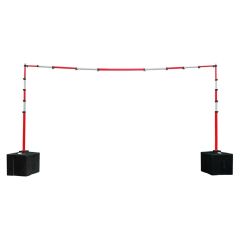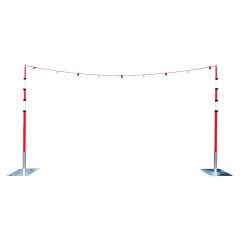
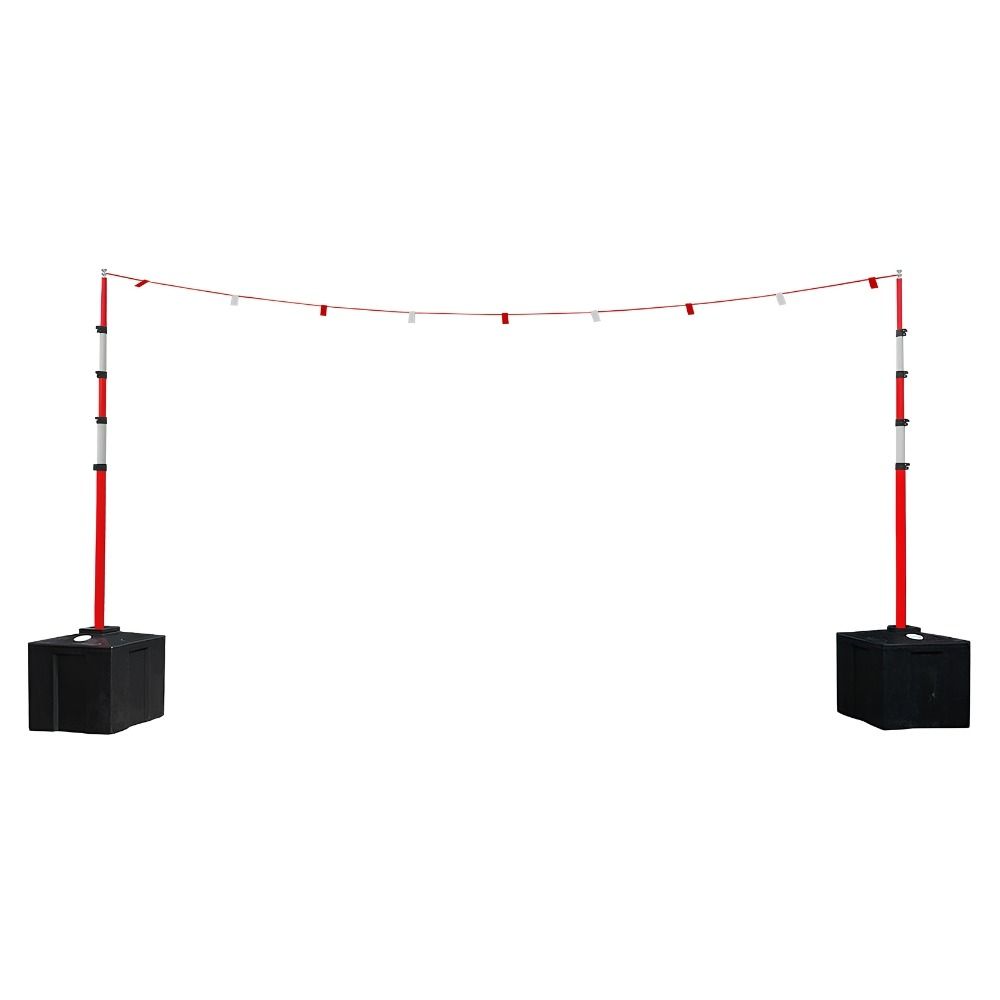
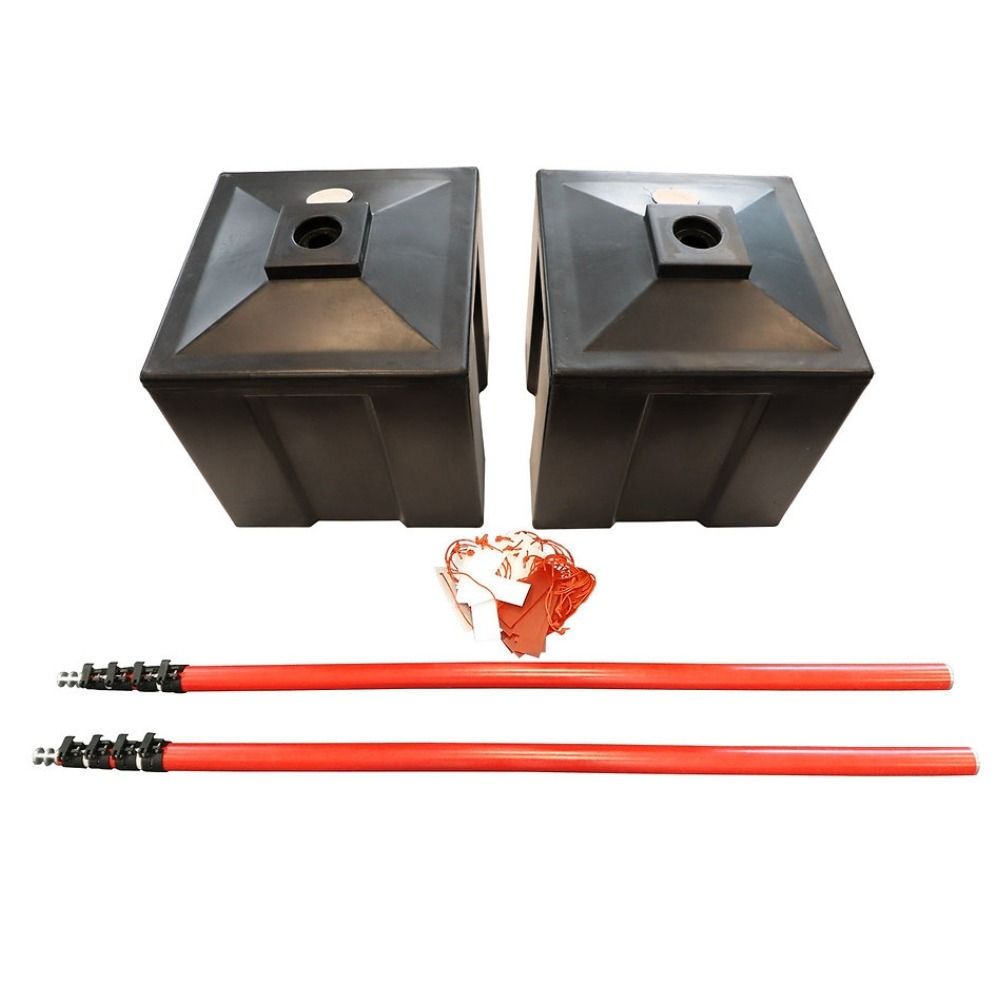
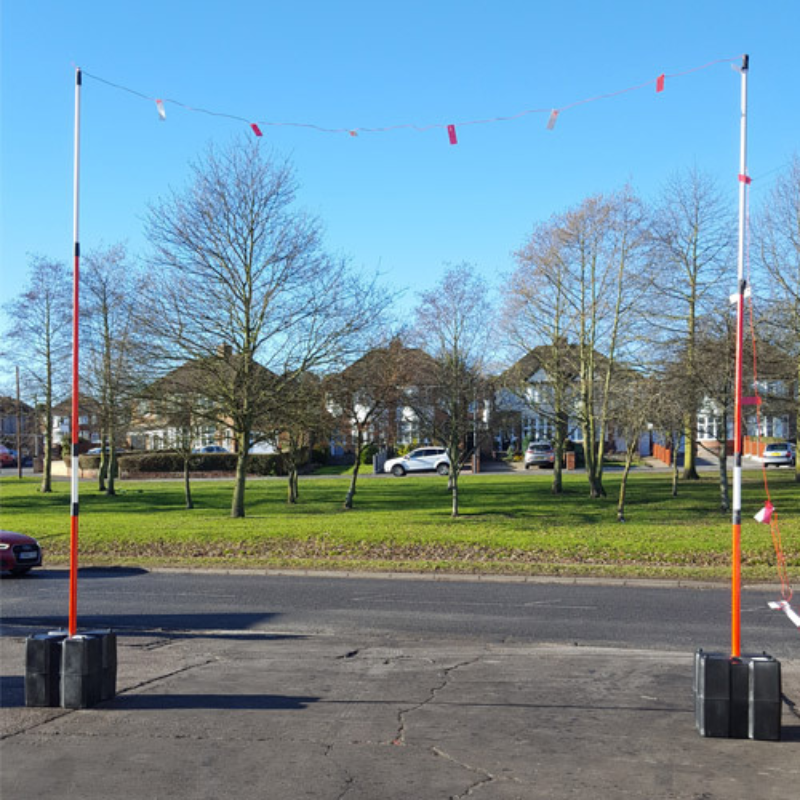
GS6 goalpost kit with ballast block bases and bunting for warning vehicles of overhead power line and cable hazards on exposed sites.
-
- HSE GS6 compliant height restriction system
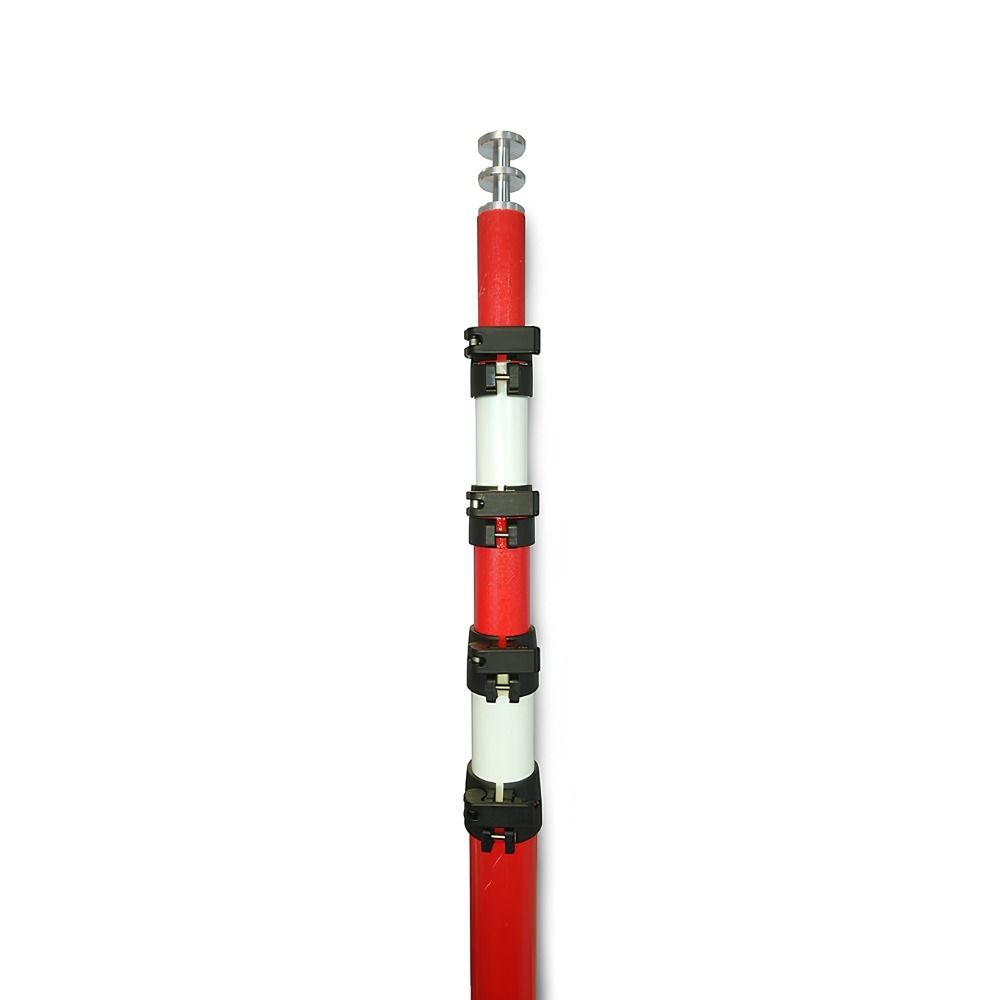
- Two 7.38m fibreglass telescopic poles insulated to 75kV
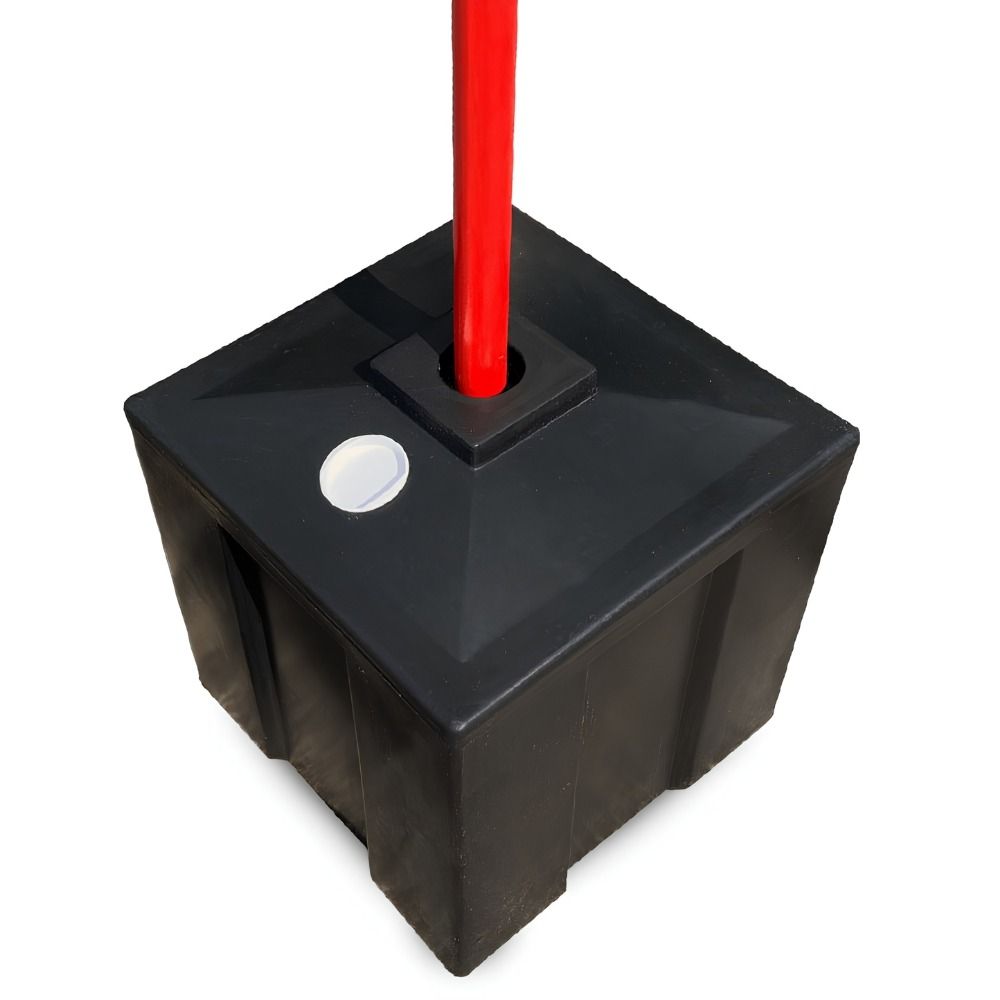
- MIRA wind speed tested ballast block bases
- Fillable with water to yield 110kg per base
- 25m red and white bunting for height restriction
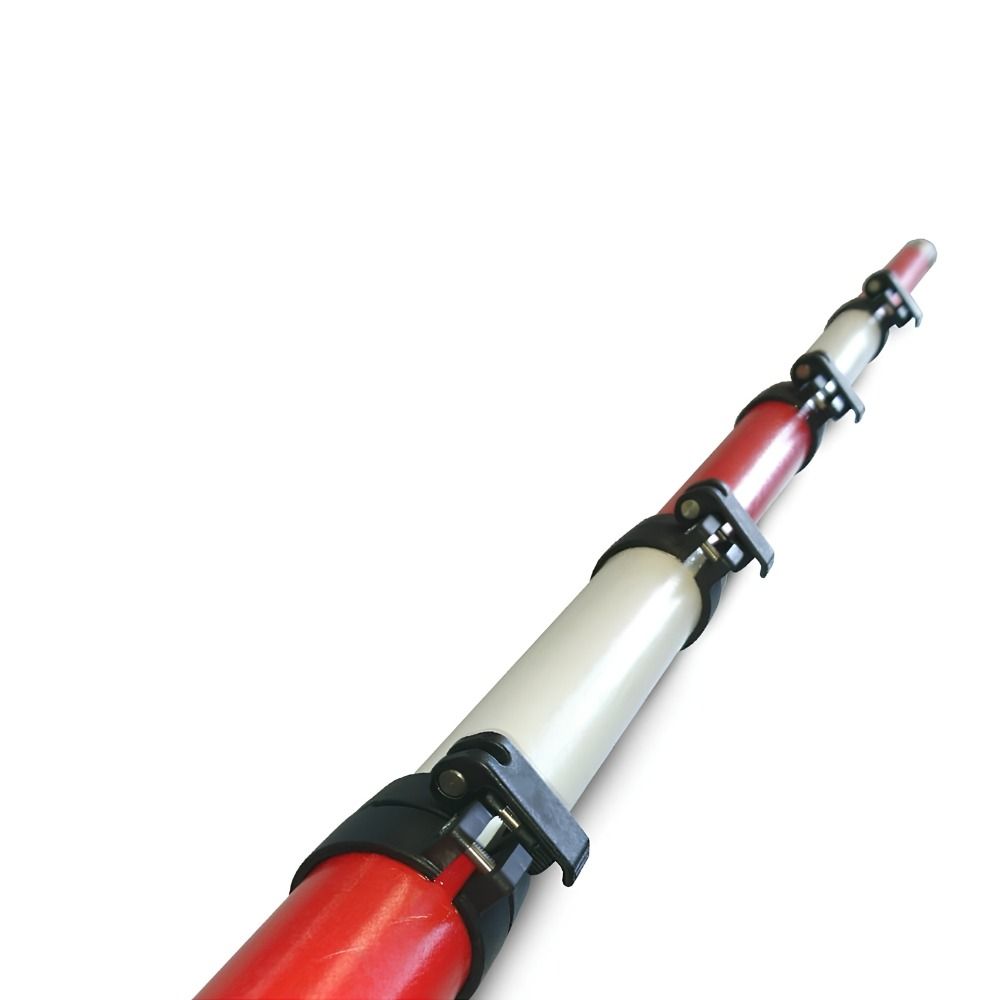
- Anti-pinch clamping system for quick height adjustment
- Red and white poles for highway and construction site use
- Includes two ballast bases, two poles and bunting
GS6 Goal Post Kit - Bunting - Ballast Block Base
GS6 goalpost kit with ballast block bases and bunting for warning vehicles of overhead power line and cable hazards on exposed sites.
-
- HSE GS6 compliant height restriction system
- Two 7.38m fibreglass telescopic poles insulated to 75kV
- MIRA wind speed tested ballast block bases
- Fillable with water to yield 110kg per base
- 25m red and white bunting for height restriction
- Anti-pinch clamping system for quick height adjustment
- Red and white poles for highway and construction site use
- Includes two ballast bases, two poles and bunting
Order 1x to earn 295 FASTPoints
Order to earn 295 FASTPoints
Log in to access trade discountsGS6 Goal Post Kit - Bunting - Ballast Block Base
GS6 goalpost kit built for site managers, groundworkers, and traffic management teams warning vehicles of overhead power lines, cables, and bridges on exposed or high-footfall construction and highway sites. Two 7.38m telescopic fibreglass poles link with 25m of red and white bunting to create a clearly visible height restriction barrier, fully compliant with HSE GS6 guidance. MIRA wind speed tested ballast block bases provide a level of stability beyond what a steel base and sandbags can offer, particularly where the kit is left in place for extended periods.
How MIRA tested ballast blocks hold their ground in exposed conditions
A lightweight base anchored only with sandbags can shift or tip in strong or gusting wind, particularly on open sites with little shelter or where the goalpost is left erected over several days. That kind of movement compromises the accuracy of the height restriction and creates a hazard of its own if a base is knocked or blown out of position. This kit uses ballast block bases that have been wind speed tested by MIRA and can be filled with water, sand, gravel, or concrete to reach the stability required for the specific site conditions.
Key Features
- MIRA wind speed tested ballast block bases: Independently tested for stability in demanding wind conditions, giving a higher level of confidence than an untested base
- Fillable to 110kg with water: Adds substantial stability without transporting a heavy base to site, with sand, gravel, or concrete available where maximum weight is required
- HSE GS6 compliant construction: Meets HSE guidance for avoiding danger from overhead power lines, giving site managers a recognised standard to reference in RAMS documentation
- Multi-layered fibreglass poles insulated to 75kV: Reduces the risk of conductivity should a pole make contact with a live line
- 25m red and white bunting: Provides a highly visible height restriction line strung between the two poles
- Anti-pinch clamping system: Extends each pole to the required height quickly and safely without trapping fingers during adjustment
- Red and white pole sections: Five UV tolerant sections designed for highway and construction site visibility
Who is this for
Trades and roles:
- Site managers
- Traffic management teams
- Groundworkers
- Highway contractors
Industries:
- Construction
- Highways and roadworks
- Utilities
- Civil engineering
Specifications
| Specification | Detail |
| Product Name | GS6 Goalpost Kit - Bunting - Ballast Block Base |
| SKU / Product Code | GLPST1 |
| Product Type | Height restriction goalpost kit |
| Pack Contents | 2 x telescopic pole, 2 x ballast block base, 1 x 25m bunting |
| Compliance Standard | HSE GS6 guidelines |
| Pole Material | Multi-layered fibreglass |
| Pole Insulation | Insulated to over 75kV |
| Pole Extended Length | 7.38m |
| Pole Collapsed Length | 1.8m |
| Tube Diameter | 50mm base section |
| Pole Weight | 3.5kg per pole |
| Clamping System | Anti-pinch glass reinforced clamping |
| Pole Colour | Red and white (highway and construction use) |
| Height Restriction Method | 25m red and white cable bunting |
| Base Type | Ballast block |
| Base Testing | Wind speed tested by MIRA |
| Base Fillable Weight | Up to 110kg with water |
| Alternative Fill Options | Sand, gravel, or concrete for maximum stability |
| Warranty | 2 year manufacturer warranty |
Compatibility
| Application or condition | Status |
| Overhead power line and cable hazard warning | ✓ Compatible |
| Exposed or open sites with higher wind exposure | ✓ Compatible |
| Extended or long-duration installation on the same site | ✓ Compatible |
| Sites where maximum base weight is achievable using water, sand, gravel, or concrete | ✓ Compatible |
| Rail industry lineside use | ✗ Not recommended, use the blue and white pole variant |
| Sites requiring frequent relocation of the goalpost | ✗ Not recommended, use the blue and white pole variant |
| Vehicle or plant contact protection | ✗ Not recommended, use the blue and white pole variant |
Who is this for
This goalpost kit is specified by site managers and traffic management teams working on exposed or open sites where a steel base and sandbags may not provide sufficient stability against wind. It suits highways contractors and groundworks teams setting up longer-duration height restrictions at compound entrances or haul roads, particularly where the goalpost will remain in place for several days or weeks rather than being moved daily. The ballast block base and bunting configuration favours sites where stability matters more than frequent relocation.
Typical applications
- Warning drivers of overhead power lines on exposed sites where wind loading is a genuine concern.
- Marking safe vehicle height limits at construction site entrances left in place for extended periods.
- Providing a visible height restriction ahead of a low bridge or structure on longer-duration diversion routes.
- Protecting utilities and groundworks teams working beneath or near overhead cables from over-height vehicle strikes.
- Supporting RAMS documentation for sites identified as having overhead line risk under HSE GS6 guidance.
- Restricting vehicle access height at open compounds and storage yards with limited natural wind shelter.
How to use
Step 1: Assess the site for overhead line height and confirm the required restriction height before erecting the goalpost.
Step 2: Position the ballast block bases either side of the vehicle route on solid, level ground.
Step 3: Fill each ballast block with water, sand, gravel, or concrete to the stability level required for the site's wind exposure.
Step 4: Extend each telescopic pole to the required height using the anti-pinch clamping system, checking each section locks securely.
Step 5: String the 25m bunting between both poles, ensuring it sits at the confirmed restriction height and is clearly visible to approaching vehicles.
Step 6: Inspect the full kit periodically for pole damage, clamp security, and base fill level, particularly after high winds.
Common mistakes
- Leaving the ballast block bases unfilled or only partially filled, reducing the stability the MIRA testing is based on.
- Extending the poles beyond the confirmed safe height, reducing the clearance margin below the actual overhead hazard.
- Leaving the bunting slack rather than tensioned, reducing its visibility to approaching drivers.
- Assuming a water fill is sufficient in freezing conditions without considering sand, gravel, or concrete as an alternative.
- Failing to reinspect the kit after high winds or a vehicle strike before returning it to service.
Safety
This kit warns of overhead hazards; it does not physically prevent vehicle contact with overhead lines. Poles are insulated to over 75kV but must not be assumed to eliminate risk of contact with live conductors. Confirm the actual height of the overhead hazard before setting the restriction height, in line with HSE GS6 guidance for avoiding danger from overhead power lines. Ballast block bases must be filled to the appropriate weight for site conditions; an unfilled or underfilled base does not carry the stability the MIRA testing confirms.
Maintenance
Check poles for cracking, UV degradation, or damage to the red and white sections before each use. Confirm ballast blocks remain filled and have not developed leaks if water filled. Inspect bunting for tears or fading and replace if visibility is reduced. Drain water fill before transport if the kit is being relocated.
Frequently Asked Questions
Q: How much weight do the ballast block bases actually provide?
A: Each ballast block can be filled with water to yield 110kg, giving substantially more stability than a lightweight base secured with sandbags. Where a site needs even greater stability, sand, gravel, or concrete are viable alternative fill options for maximum weight. The blocks have been wind speed tested by MIRA, giving an independently verified basis for their stability rating.
Q: What does HSE GS6 compliance actually mean for this kit?
A: GS6 is HSE guidance titled "Avoiding danger from overhead power lines," setting out recommended precautions for working near or crossing beneath overhead electrical cables. A GS6 compliant goalpost uses insulated, non-conductive poles and a clearly visible restriction line to warn vehicles before they reach the hazard, reducing the risk of contact with live overhead conductors. This kit's fibreglass poles are insulated to over 75kV specifically to meet that guidance. Compliance with GS6 supports a site's RAMS documentation where overhead line risk has been identified, though it does not remove the underlying hazard itself.
Q: What is this goalpost kit NOT suitable for?
A: This kit is not designed for rail industry lineside use, where the blue and white pole variant is the recognised standard. It is not intended as a physical barrier capable of stopping vehicle contact with overhead lines, only as a visible warning system. It is also heavier to relocate than the steel base kit once filled, making it better suited to longer-duration installations than sites needing daily repositioning.
Q: Why choose a ballast block base over a steel base?
A: A ballast block base has been wind speed tested by MIRA and can be filled to significantly greater weight than a steel base relying on sandbags alone. This makes it the more stable option for exposed sites or installations left in place for extended periods. Where the kit needs to be moved frequently, the lighter steel base version is easier to relocate day to day.
Q: Can this kit be used with a crossbar instead of bunting?
A: Yes. The same ballast block base and pole system is used in the crossbar version of this kit, which replaces the bunting with a rigid telescopic crossbar for a fixed height reference. Both versions share the same MIRA tested base and GS6 compliant poles.
Q: How long does the ballast block fill typically last before needing to be topped up?
A: A water fill can reduce over time through evaporation, particularly during warmer months, and should be checked periodically to confirm it remains at the required level. Sand, gravel, or concrete fills do not require topping up in the same way and suit installations where the goalpost is expected to remain in place for a longer period without regular inspection access.
Q: How quickly can I get a GS6 goalpost kit delivered to a live site?
A: Order by 7pm for next-day delivery nationwide on stocked lines. For time-critical requirements, such as an unplanned overhead line risk identified mid-project, CMT Group's VIP 2-hour delivery service is available from any depot UK-wide, with What3Words integration allowing delivery to a specific compound gate or access point without a postcode.
Q: How do I know CMT Group supplies goalpost kits that genuinely meet GS6 requirements?
A: CMT Group holds ISO 9001:2015 and CHAS Elite accreditation, alongside Crown Commercial Service Supplier status, reflecting a compliance-led approach across the equipment it supplies to UK construction and highway sites. The technical specifications for each goalpost kit, including base testing and compliance standard, are confirmed and published in full on the product page and technical data sheet. We are rated Excellent on Trustpilot for service reliability.