How to specify certified PPE for UK construction sites, EN standards explained for cut-resistant gloves, safety glasses, safety goggles, ear defenders, and helmets, with product comparisons and selection guides.
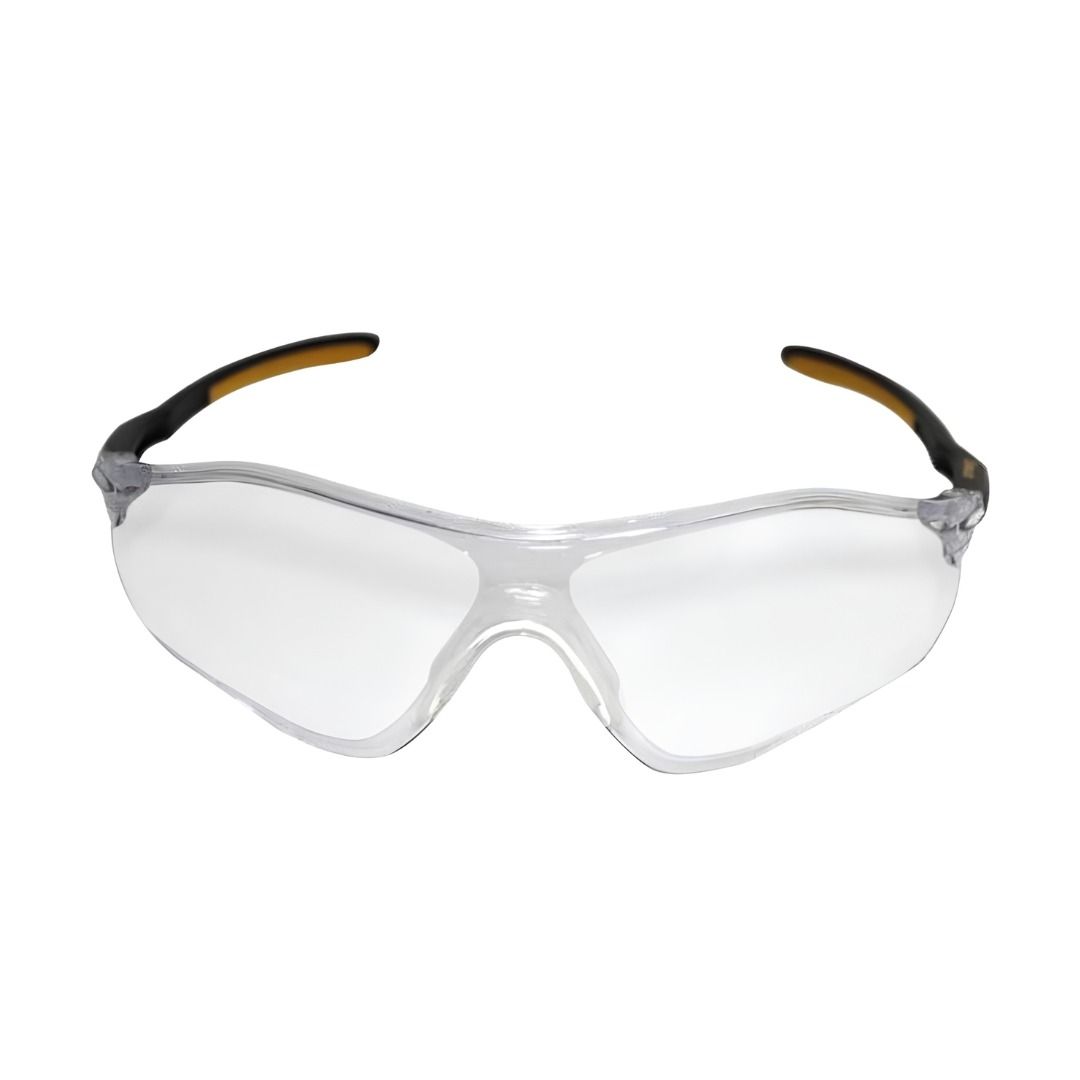
Anti-fog optical class 1 safety glasses for construction, engineering, and industrial operatives requiring clear certified vision in humid and demanding site environments.
- EN166 FTKN certified, EN170 2C-1.2 UV protection
- CE and UKCA marked
- Optical class 1 clear polycarbonate lens and frame
- Permanent anti-fog and scratch-resistant coatings
- Non-slip arms secured with stainless steel screws
- TPE nose rest for extended all-day comfort
- Lightweight, approximately 22g
- Recycled polyester pouch and recycled paper box
Anti-fog optical class 1 safety glasses for construction, engineering, and industrial operatives requiring clear certified vision in humid and demanding site environments.
- EN166 FTKN certified, EN170 2C-1.2 UV protection
- CE and UKCA marked
- Optical class 1 clear polycarbonate lens and frame
- Permanent anti-fog and scratch-resistant coatings
- Non-slip arms secured with stainless steel screws
- TPE nose rest for extended all-day comfort
- Lightweight, approximately 22g
- Recycled polyester pouch and recycled paper box
- Buy 20 for £8.38 £6.98 each and save 12%
- Buy 50 for £7.08 £5.90 each and save 26%
| BULK DISCOUNT | 20 | 50 |
|---|---|---|
| Price | £6.98 £8.38 | £5.90 £7.08 |
Order 1x to earn 7 FASTPoints
Order to earn 7 FASTPoints
Log in to access trade discountsarmourU Kanchenjunga Safety Glasses - Anti-Fog
Anti-fog optical class 1 safety glasses built for construction operatives, engineers, and industrial workers who require EN166 certified eye protection with maximum optical clarity in humid environments, mask-wearing conditions, and physically demanding all-day site use. The permanent anti-fog and scratch-resistant coatings applied to both sides of the polycarbonate lens maintain clear, undistorted vision in conditions where cheaper optical class 2 alternatives mist, distort, and deteriorate under regular site use. Certified to EN166 FTKN and EN170 2C-1.2, CE and UKCA marked, and supplied in recycled packaging as part of the CMT ThinkGreen range.
How permanent dual-side anti-fog coating maintains clear vision where standard coatings fail
Standard safety glasses apply anti-fog treatment to the inner lens surface only, the side that faces the eye, which deteriorates through repeated face contact, site sweat, and cleaning, leaving operatives with progressively worsening misting as a shift continues. In mask-wearing environments, temperature changes between indoor and outdoor areas, and high-activity tasks, that single-side coating creates a compliance gap: operatives remove their glasses to wipe the lens and the eye protection interval is precisely when incidents occur. Coating both sides of the polycarbonate lens permanently, inner surface for facial heat and exhalation, outer surface for environmental condensation, maintains clear vision across both fogging mechanisms throughout the working day without deteriorating under normal cleaning and use.
Key Features
-
Permanent anti-fog and scratch-resistant coatings, both sides: Applied permanently to both the inner and outer lens surface rather than as a wash-off treatment. The inner coating resists fogging from body heat and exhaled breath. The outer coating resists condensation in temperature-change environments. Both coatings meet EN166 N and K performance requirements independently.
-
Optical class 1 clear polycarbonate lens: The highest optical quality rating under EN166, minimum distortion, suitable for all-day wear, and the only class rated for use when driving with eye protection required. Optical class 2 lenses, common in lower-cost alternatives, introduce measurable peripheral distortion and are not rated for prolonged wear.
-
EN166 FTKN and EN170 2C-1.2 certified, CE and UKCA marked: FTKN confirms low energy impact resistance (F), hot particle resistance (T), anti-scratch (K), and anti-fog (N) under EN166. EN170 2C-1.2 confirms UV protection with a clear lens at optical class 1 quality. Independently assessed under UK PPE Regulations.
-
Non-slip arms secured with stainless steel screws: Stainless steel screw fixings prevent arms loosening over a full shift. The non-slip arm material maintains position during physical activity, overhead work, and repeated fitting and removal throughout the day.
-
TPE nose rest: Thermoplastic elastomer nose rest distributes frame weight evenly across the bridge of the nose, preventing sliding during sweating or physical exertion and maintaining consistent eye protection positioning.
-
Lightweight at approximately 22g: Significantly lighter than standard construction safety spectacles, reducing cumulative pressure and fatigue during extended all-day wear.
-
Recycled packaging: Supplied in a recycled polyester pouch made from two reclaimed 1-litre plastic water bottles and a recycled paper box. No virgin single-use plastic in the packaging.
Who is this for
Trades and roles:
-
Site operatives and groundworkers
-
Engineers and maintenance workers
-
Construction site managers
-
H&S and PPE procurement leads
-
Laboratory and industrial operatives
Industries:
-
Construction
-
Engineering and manufacturing
-
Utilities and infrastructure
-
Facilities management
-
Logistics and warehousing
Specifications
| Specification | Detail |
|---|---|
| Product Name | armourU Kanchenjunga Safety Glasses - Anti-Fog Optical Class 1 EN166 |
| SKU | AEYKAN |
| Product Type | Safety glasses (safety spectacles) |
| EN Standard | EN166:2001 and EN170:2002 |
| EN166 Marking | FTKN |
| EN166 F | Low energy impact resistance — 45 m/s steel ball |
| EN166 T | Resistance to hot particles and extreme temperatures |
| EN166 K | Resistance to surface damage by fine particles (anti-scratch) |
| EN166 N | Not susceptible to fogging (anti-fog) |
| EN170 Marking | 2C-1.2 |
| UV Protection | Filter code 2C — full UV-A and UV-B protection |
| Optical Class | Class 1 — highest optical quality, minimum distortion |
| Lens Material | Clear polycarbonate (PC) |
| Frame Material | Clear polycarbonate (PC) |
| Lens Colour | Clear |
| Lens Treatment | Permanent anti-fog and scratch-resistant coatings — both sides |
| Field of Vision | Excellent — wide-aperture lens design |
| Arms | Non-slip, secured with stainless steel screws |
| Nose Rest | TPE (thermoplastic elastomer) |
| Weight | Approximately 22g |
| Compliance Markings | CE and UKCA |
| Pouch | Recycled polyester (made from two reclaimed 1-litre plastic water bottles) |
| Packaging | Recycled paper box |
Compatibility
| Application or Condition | Detail |
|---|---|
| Low energy impact — flying debris, chips, particles | ✓ Compatible |
| Hot particle exposure — grinding, cutting, welding flash | ✓ Compatible |
| UV protection — outdoor construction and site work | ✓ Compatible |
| Humid environments and mask-wearing conditions (anti-fog) | ✓ Compatible |
| Temperature change environments — indoor/outdoor transitions | ✓ Compatible |
| All-day wear — optical class 1 | ✓ Compatible |
| General construction, engineering, and industrial site use | ✓ Compatible |
| Chemical or liquid splash protection | ✗ Not recommended — open frame cannot seal |
| Large dust or fine particle ingress protection | ✗ Not recommended — sealed goggles required |
| High energy impact tasks (B or A rated) | ✗ Not recommended — rated F (low energy) only |
| Laser protection | ✗ Not recommended — no laser filter rating |
| Welding arc protection | ✗ Not recommended — no welding filter |
Who is this for
Anti-fog optical class 1 safety glasses used by construction operatives, engineers, and industrial workers who require EN166 certified eye protection with sustained optical clarity in demanding all-day environments. They are particularly suited to operatives who alternate between indoor and outdoor conditions, where temperature differentials trigger persistent lens misting, and to those wearing face-fitted respirators where exhaled breath drives inner lens fogging throughout the shift. H&S leads and procurement teams managing large site PPE issue programmes also specify these, as EN166 FTKN certification with optical class 1 satisfies the vast majority of site and contractor eye protection requirements under UK PPE Regulations.
Typical applications
-
Overhead drilling, cutting, and fixing work on construction sites where debris, dust, and chips fall toward the face.
-
Grinding, sanding, and surface preparation tasks in engineering and fabrication environments producing fine metallic particles and hot sparks.
-
General site work in warm, humid, or plant room environments where persistent lens misting compromises vision and PPE compliance.
-
Outdoor construction and groundwork with continuous UV exposure requiring certified UV protection throughout the working day.
-
Operatives wearing FFP2 or FFP3 respirators where exhaled breath escaping upward from the mask drives continuous inner lens fogging.
-
Site management, safety inspection, and visitor PPE where EN166 certified eye protection is required throughout the site visit.
-
Warehouse, logistics, and industrial environments with forklift traffic, dust, and airborne particle hazards requiring all-day certified eyewear.
-
Laboratory and light industrial environments where optical class 1 and EN166 FTKN certification are required by the site risk assessment.
How to use
Step 1: Hold the glasses by the arms and position the lens in front of the eyes, then extend the arms over the ears until they seat comfortably and securely.
Step 2: Check the TPE nose rest sits flat across the bridge of the nose without pressure points. Reposition by gently adjusting the arms if the frame sits unevenly or too high.
Step 3: Confirm the non-slip arm material is in contact with the head behind the ears and the frame is stable before beginning work.
Step 4: Do not touch the inner lens surface with bare fingers — skin oils degrade the anti-fog coating over time and reduce its effectiveness. Handle by the frame and arms only.
Step 5: Store in the supplied recycled polyester pouch after every use to protect the lens from scratching during transport and storage.
Common mistakes
-
Wiping the lens with a dirty cloth, sleeve, or paper tissue: abrasive particles embedded in fabric or paper will scratch the polycarbonate surface and permanently damage the anti-scratch coating. Use only dedicated lens wipes or a clean soft cloth.
-
Using solvent-based cleaning products: acetone, alcohol-based sprays, and solvent cleaners degrade polycarbonate and permanently impair both the anti-fog and anti-scratch coatings. Clean only with water or a water-based lens cleaning solution.
-
Storing without the pouch: safety glasses stored loose in a tool bag, pocket, or van door pocket accumulate lens scratches from keys, fixings, and debris within days. The pouch is a functional component, not optional packaging.
-
Continuing to use a cracked or heavily scratched lens: a polycarbonate lens with visible damage no longer provides reliable impact protection under EN166. Replace immediately when cracking, deep scratching, or yellowing is visible.
-
Using these glasses for chemical splash tasks: the open frame design cannot seal against liquid. Sealed safety goggles with an EN166 liquid splash (3) rating are required for any task with chemical splash exposure.
Safety
These glasses are certified to EN166 FTKN (low energy impact, hot particles, anti-scratch, anti-fog) and EN170 2C-1.2 (UV filter, optical class 1). They provide protection against low energy impacts such as flying debris and particles at up to 45 m/s, and are suitable for general construction, engineering, and industrial tasks. They do not protect against chemical or liquid splash, large dust ingress, high energy impacts, or laser exposure. Specify and use in accordance with the Personal Protective Equipment at Work Regulations 1992 (as amended) and the findings of a suitable workplace risk assessment. Note that EN166 is being superseded by EN ISO 16321.
Maintenance
Clean lenses only with dedicated lens wipes or a clean soft cloth lightly moistened with water or a water-based lens cleaning solution. Pat dry rather than wiping to reduce scratch risk. Never use paper tissue, rough fabrics, or solvent-based cleaners. Inspect lenses before each use and replace if cracking, impact damage, or heavy scratching is present. Store in the supplied recycled polyester pouch between uses to prevent lens damage.
Frequently Asked Questions
Q: What is Optical Class 1?
A: Optical Class 1 is the highest lens quality rating under EN166, minimum distortion, maximum light transmission, and the only class rated for all-day wear. Class 2 lenses, common in cheaper alternatives, introduce peripheral distortion that causes eye fatigue over a full shift and are not rated for prolonged use. For operatives wearing eye protection all day, Class 1 is the correct specification for both comfort and compliance.
Q: What are these glasses not suitable for?
A: The open frame cannot seal against the face, so these glasses must not be used for liquid splash, fine dust, or gas exposure, sealed goggles with the relevant EN166 field-of-use rating are required for those hazards. They are rated F (low energy, 45 m/s) only and must not be used for high-velocity impact tasks requiring B or A rated protection. They carry no laser filter or welding filter rating.
Q: Why is anti-fog coating on both sides?
A: Inner-only coating addresses fogging from body heat and exhaled breath but leaves the outer surface unprotected. When moving from cold outdoor air into warm indoor environments, condensation forms on the cooler outer lens surface, inner coating alone does not stop this. Coating both sides permanently tackles both mechanisms, maintaining clear vision through temperature changes where inner-only treated lenses would still mist on the outside.
Q: Do these work with face masks and respirators?
A: Yes. Exhaled breath escaping upward from a face-fitted FFP2 or FFP3 respirator is one of the most common causes of inner lens fogging on site. The permanent anti-fog coating on the inner surface is specifically effective in this condition, maintaining clear vision where untreated or single-side-coated lenses mist within minutes of mask wear.
Q: Is EN166 still valid or should I be specifying EN ISO 16321?
A: EN166 was superseded by EN ISO 16321 for new certifications from November 2025. Products already certified to EN166 remain legally valid and compliant until their certificate expires, up to a maximum of five years from the certification date, so EN166 stock can remain on the market until at least late 2029. No immediate action is needed for existing stock.
Q: How do I maintain the coatings?
A: Clean with dedicated lens wipes or a clean soft cloth and water only, never solvent-based cleaners, alcohol sprays, or paper tissue, all of which degrade polycarbonate and damage both coatings. Store in the supplied recycled polyester pouch after every use. Replace lenses when cracking, impact damage, or heavy scratching is visible.
Q: Can I order in bulk for a site PPE issue programme?
A: CMT Group holds large UK stock of core PPE lines with no backorders, and despatches same or next working day for orders placed by 7pm. The EDGE portal provides agreed contract pricing, role-based spending controls by project, and full delivery tracking from despatch to drop-off, practical for procurement teams managing safety glasses issue across multiple sites or large operative counts.