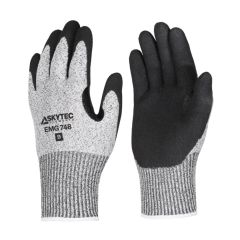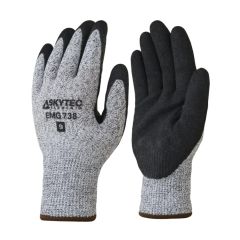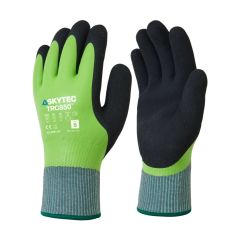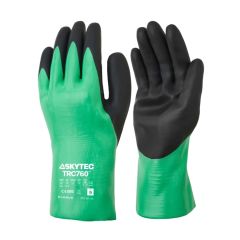
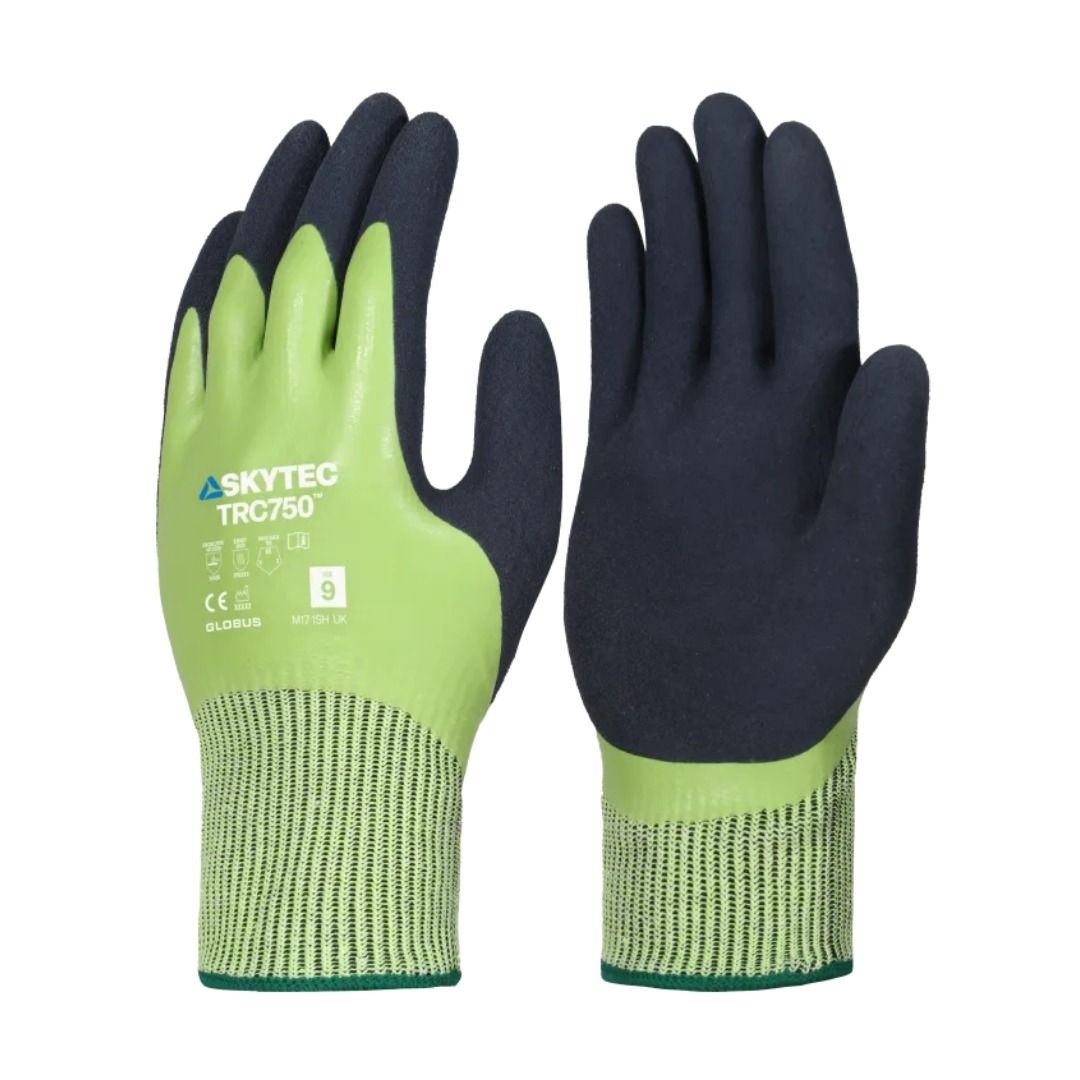
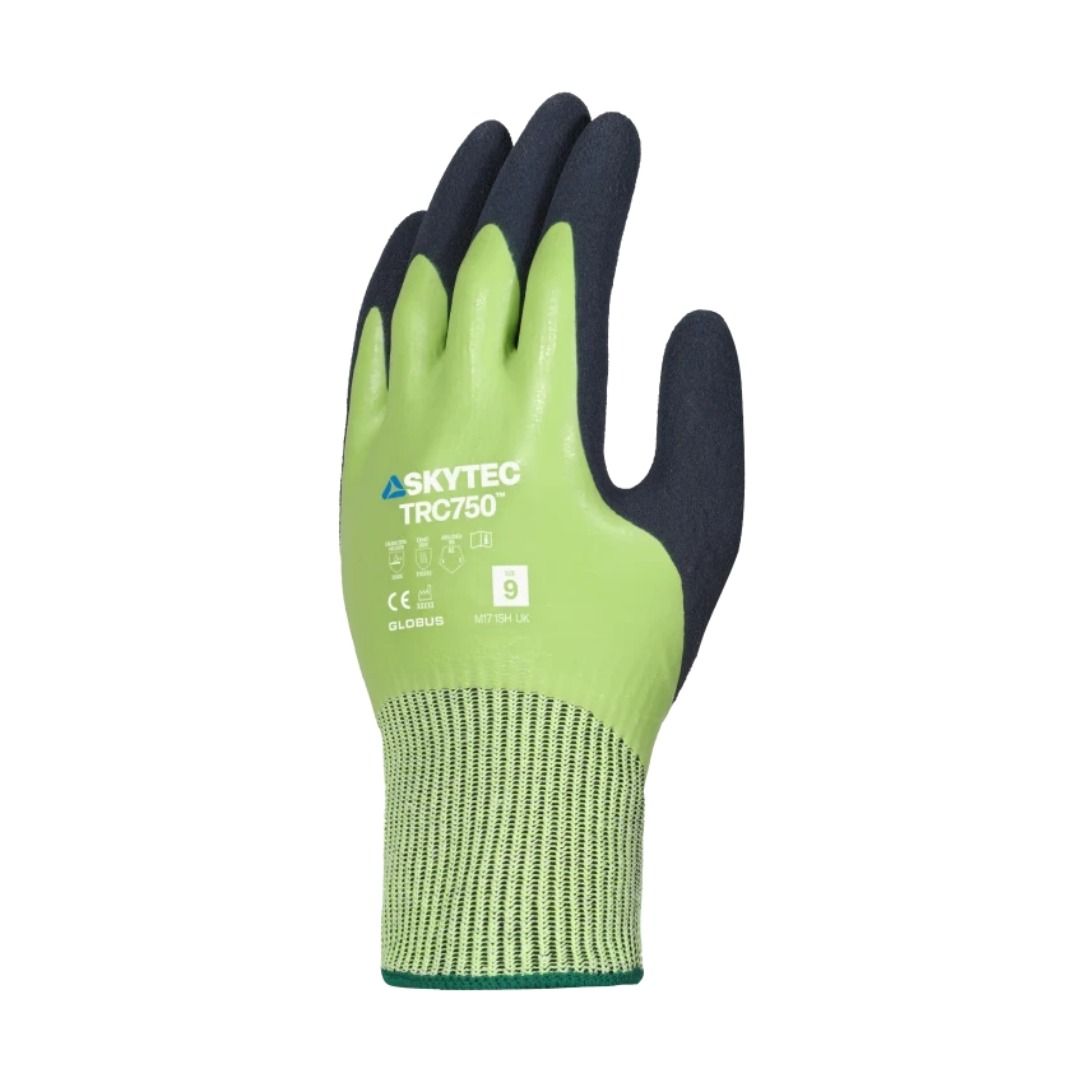
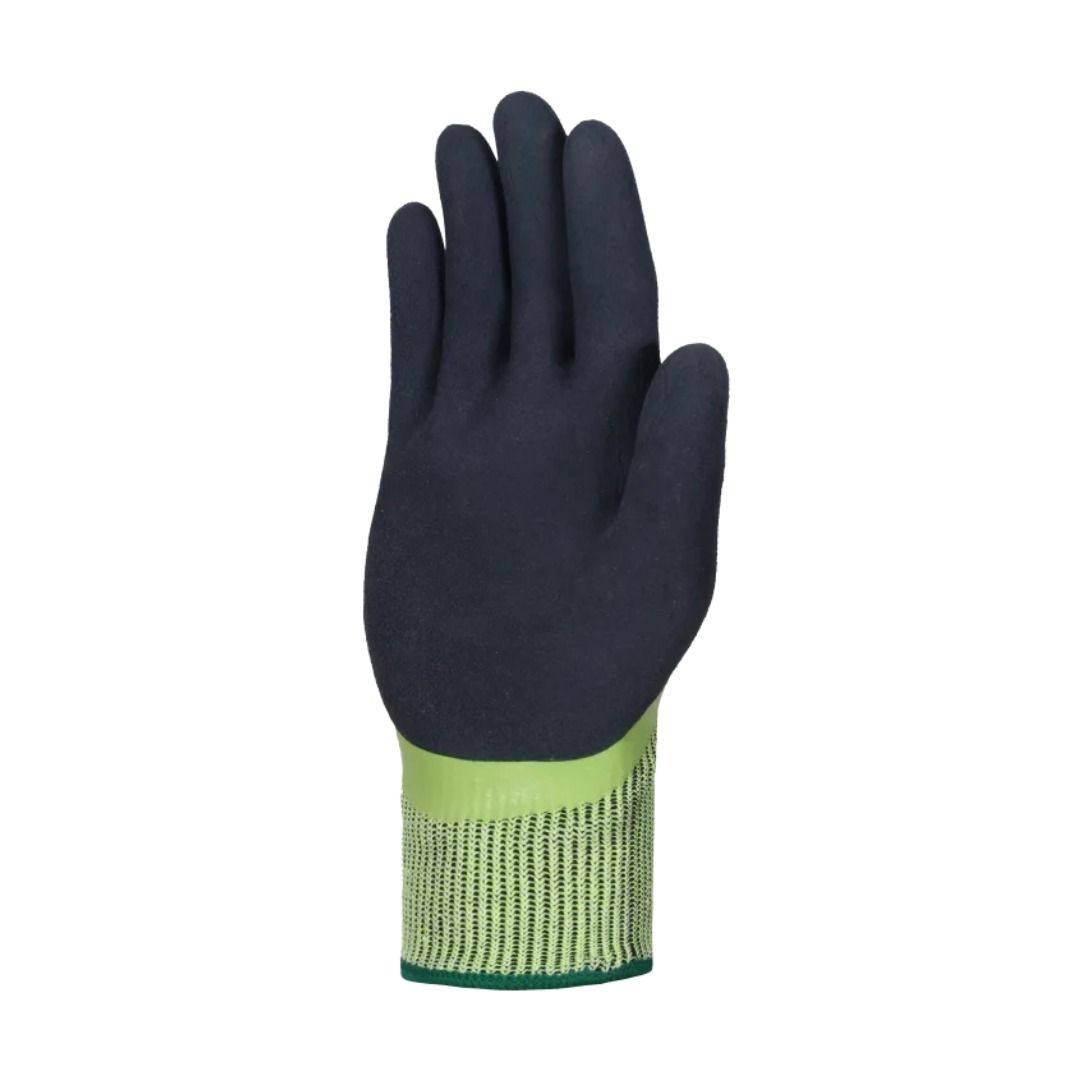
Fully-coated double-dipped latex cut resistant gloves built for glass handlers, utilities operatives, and construction workers requiring TDM Level E protection in wet, damp, and sharp-material handling conditions.
- TDM Cut Level E, ISO 13997 straight-blade tested
- EN388:2016+A1:2018 certified, CE marked, rated 3X43E
- Double-dipped fully-coated latex, waterproof entire hand
- 13-gauge engineered HPPE, steel fibre, and nylon composite liner
- Foam latex palm over smooth latex outer, wet and damp grip
- Touchscreen compatible, RCS certified
- Available in size 10
- Available in bulk packs
Skytec Latex Fully-Coated Cut Level E Cut Resistant Gloves - Glass and Wet Handling
Fully-coated double-dipped latex cut resistant gloves built for glass handlers, utilities operatives, and construction workers requiring TDM Level E protection in wet, damp, and sharp-material handling conditions.
- TDM Cut Level E, ISO 13997 straight-blade tested
- EN388:2016+A1:2018 certified, CE marked, rated 3X43E
- Double-dipped fully-coated latex, waterproof entire hand
- 13-gauge engineered HPPE, steel fibre, and nylon composite liner
- Foam latex palm over smooth latex outer, wet and damp grip
- Touchscreen compatible, RCS certified
- Available in size 10
- Available in bulk packs
Skytec Latex Fully-Coated Cut Level E Cut Resistant Gloves
Fully-coated double-dipped latex cut resistant gloves designed for glass handlers, glaziers, utilities operatives, and construction workers handling sharp, abrasive, and glass materials in wet or damp site conditions. The engineered HPPE, steel fibre, and nylon composite liner achieves TDM Cut Level E under ISO 13997, whilst the double-dipped latex construction seals the entire hand surface for consistent waterproof protection from fingertip to cuff. Certified to EN388:2016+A1:2018 rated 3X43E and EN407:2020 rated X1XXXX, CE marked CAT II, and RCS certified with 29g of reduced CO2 per pair versus a virgin polyester alternative.
How double-dipped fully-coated latex delivers cut protection and waterproofing simultaneously
A palm-coated cut resistant glove protects the hand on the gripping surface only, leaving the back of the hand, knuckles, and fingers exposed to water ingress through the uncoated knitted liner. For glass handlers and utilities operatives working in wet or damp conditions, that exposed liner saturates within the first hour of a shift, reducing grip performance and exposing the hand to cold and contamination. The TRC750 applies two latex coats across the complete hand surface: a foam latex layer at the palm for grip, followed by a smooth latex outer coat that seals the entire hand. The result is a glove that delivers TDM Level E cut resistance and full waterproof protection in a single construction without compromising dexterity.
Key Features
-
Double-dipped fully-coated latex construction: Two latex coats seal the entire hand from fingertip to cuff. Foam latex at the palm maintains grip on wet glass, wet stone, and saturated materials. Smooth latex outer coat provides the waterproof barrier against rain, standing water, and damp handling conditions.
-
TDM Cut Level E liner: Engineered HPPE, steel fibre, and nylon composite yarn at 13 gauge achieves TDM Level E under ISO 13997. The steel fibre component adds cut resistance at the liner stage without requiring a heavier gauge, preserving dexterity for glass and precision material handling tasks.
-
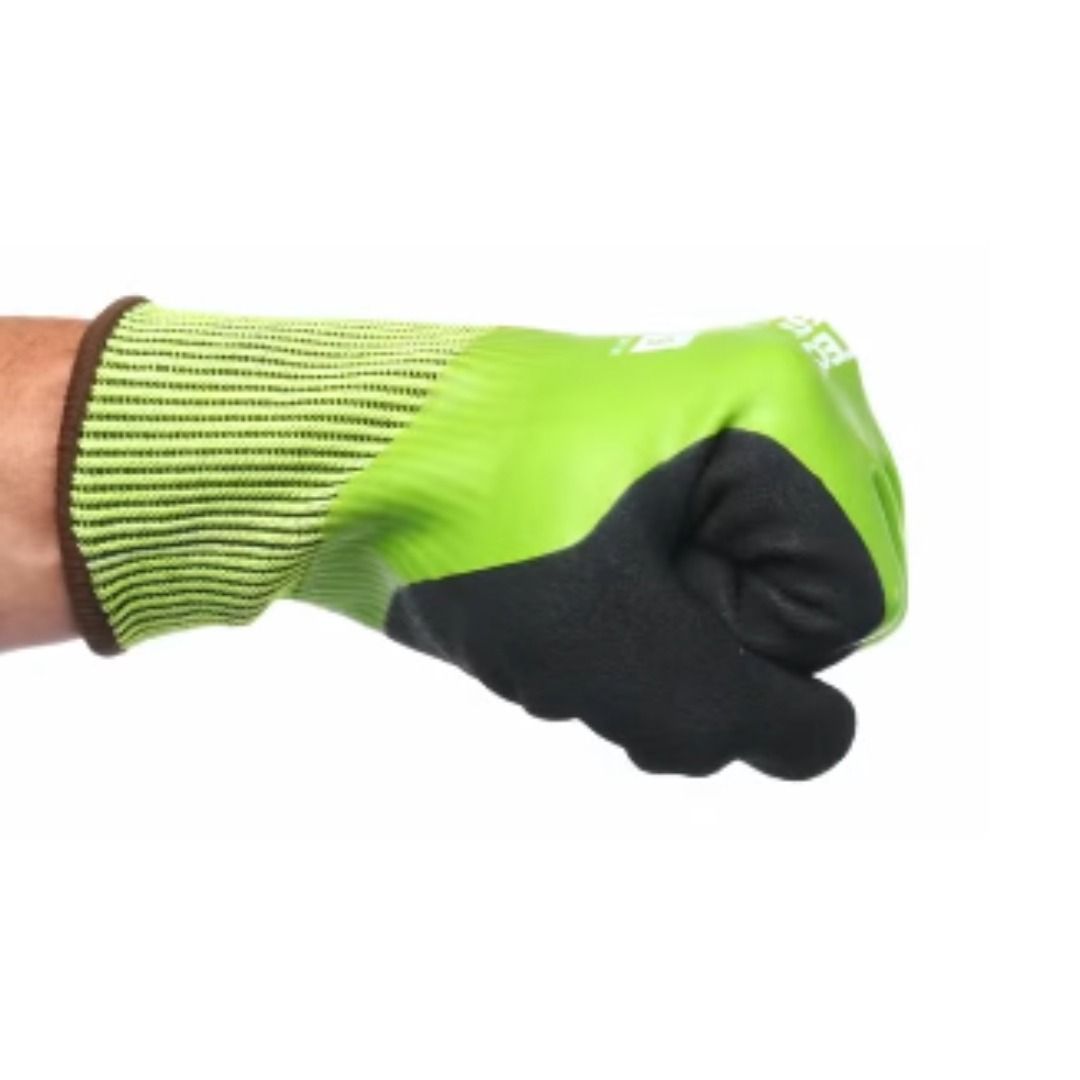
Waterproof fully-coated construction: The smooth latex outer coat covers fingers, knuckles, and the back of the hand completely. No uncoated liner surface is exposed to water ingress regardless of hand position or grip angle.
-
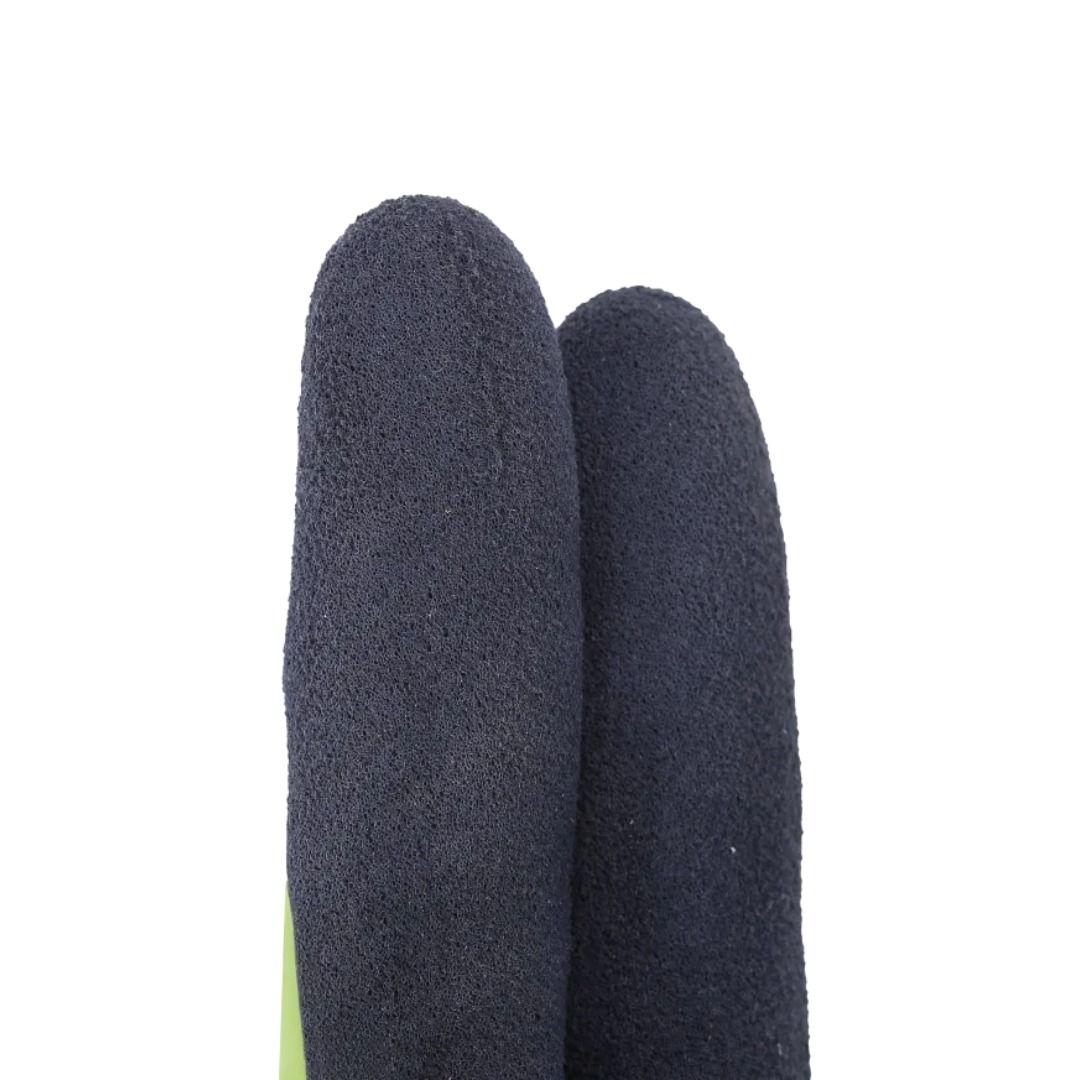
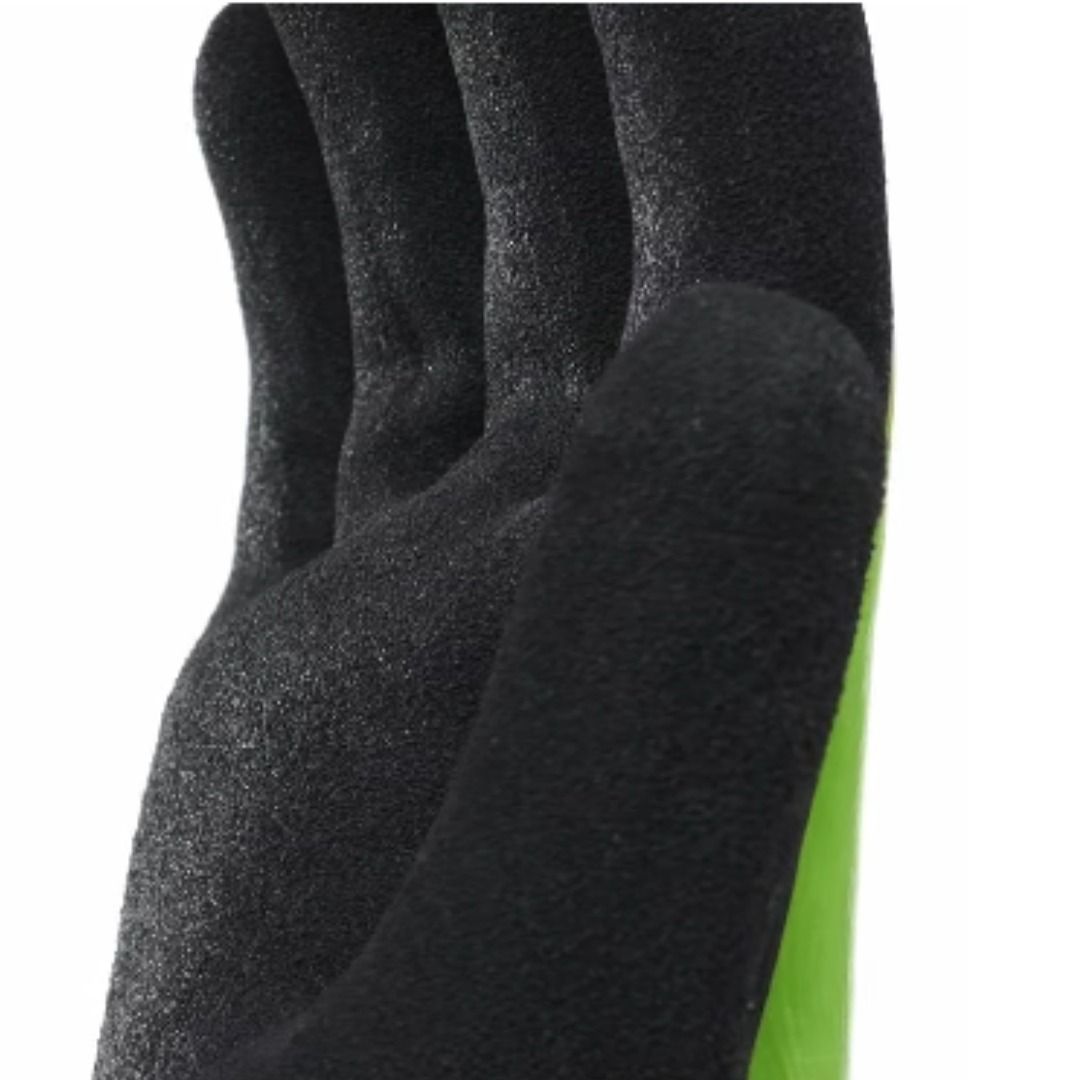
Foam latex grip surface: The palm foam layer creates contact points on wet glass surfaces, wet stone, and saturated materials where a flat latex surface would lose traction. Grip performance is maintained throughout a wet shift.
-
Touchscreen compatible: Fingertip construction allows use of touchscreen devices without removing the glove, reducing on-site interruption during inspection and documentation tasks.
-
RCS certified sustainability credential: Each pair is manufactured using yarn equivalent to one recycled 500ml PET bottle, delivering 29g of reduced CO2 versus a virgin polyester alternative. Relevant for procurement teams with ESG, carbon reduction, and sustainable procurement requirements.
-
EN21420:2020 certified: Meets the general requirements standard for protective gloves, confirming ergonomic performance, sizing accuracy, and innocuousness of materials alongside the EN388 mechanical protection rating.
Who is this for
Trades and roles:
- Glass handlers and glaziers
- Utilities operatives
- Waste and recycling operatives
- Construction and civils workers
- Facilities management operatives
Industries:
- Glass and glazing
- Construction
- Utilities
- Waste and recycling
- Facilities management
Specifications
| Specification | Detail |
| Product name | Skytec Latex Fully-Coated Cut Level E Cut Resistant Gloves - Glass and Wet Handling |
| SKU / product code | TRC750 |
| Glove category | Cut resistant fully-coated waterproof handling glove |
| Primary protection type | Cut resistant, TDM Cut Level E — fully waterproof |
| EN standard | EN388:2016+A1:2018 |
| EN388 rating code | 3X43E |
| Abrasion resistance | Level 3 |
| Coupe blade cut resistance | X, not tested / unreliable result |
| Tear resistance | Level 4 |
| Puncture resistance | Level 3 |
| TDM cut resistance (ISO 13997) | Level E |
| Impact protection | Not tested |
| Secondary standard | EN407:2020 |
| EN407 rating code | X1XXXX |
| Contact heat resistance | Level 1, protection to 100°C for up to 15 seconds |
| Additional standard | EN21420:2020 certified |
| Certification | CE marked, CAT II |
| Sustainability certification | RCS (Recycled Claim Standard) certified |
| Sustainability credential | 1 pair = 1 recycled 500ml PET bottle, 29g CO2 saving vs virgin polyester |
| Coating type | Double-dipped, foam latex palm over smooth latex outer |
| Coating coverage | Fully coated, fingertip to cuff |
| Waterproof protection | Yes, fully coated construction |
| Grip performance | Wet, damp, and general handling conditions |
| Liner material | 13-gauge engineered HPPE, nylon, steel fibre, HPPE |
| Liner construction | Seamless knit |
| Cuff style | Elasticated knit wrist |
| Touchscreen compatible | Yes |
| Glove length | 250mm |
| Sizes available | 10 (XL) |
| Pack quantity | 10 pairs per pack |
| Colour | Green liner / black latex coating |
Compatibility
| Application or condition | Status |
| Glass and glazing handling | ✓ Compatible |
| Handling sharp or abrasive materials | ✓ Compatible |
| Wet and damp site handling conditions | ✓ Compatible |
| Waste and recycling material handling | ✓ Compatible |
| Construction and civils general handling | ✓ Compatible |
| Utilities maintenance and handling tasks | ✓ Compatible |
| Incidental contact with warm surfaces to 100°C (max 15 seconds) | ✓ Compatible |
| Touchscreen device operation | ✓ Compatible |
| Sustained heat or open flame exposure | ✗ Not recommended |
| Chemical immersion or prolonged chemical contact | ✗ Not recommended |
| Very high cut risk tasks, power cutting, blade grinding | ✗ Not recommended, use TDM Level F |
| Needle-stick or hypodermic hazards | ✗ Not recommended, EN388 puncture is not needle-stick |
| Electrical hazard work | ✗ Not recommended |
| Operatives with latex allergy | ✗ Not recommended, contains natural latex |
Who is this for
Cut Level E fully-coated latex gloves of this specification are used primarily by glass handlers, glaziers, and utilities operatives who require high cut protection alongside consistent waterproof performance throughout a wet or damp working shift. They are equally suited to construction and civils workers handling sharp abrasive materials, reinforcement, and fabricated components in outdoor or wet site conditions, and to waste and recycling operatives handling sharp mixed materials where both cut hazard and contamination exposure are present. Procurement teams specifying PPE for high cut-hazard environments under the Personal Protective Equipment at Work Regulations 1992 will find the EN388:2016+A1:2018 rating of 3X43E meets the requirement for TDM Level E protection.
Typical applications
-
Handling cut glass sheets, glazing panels, and glass offcuts on construction and installation sites where sharp edge contact is continuous and wet conditions are common.
-
Installing and handling double-glazing units, curtain walling, and structural glazing components where both cut risk and grip in wet conditions are critical.
-
Utilities maintenance tasks involving sharp pipework, ducting, and metal infrastructure in outdoor or wet ground conditions.
-
Waste and recycling operative tasks involving mixed sharp materials, broken glass, metal offcuts, and abrasive packaging in damp or wet handling environments.
-
Construction site handling of sharp stone, concrete blocks, rough-sawn timber, and rebar in wet weather conditions where cut protection and waterproofing are both required.
-
Facilities management maintenance tasks involving sharp fixings, broken materials, and general sharp-edge handling in both indoor and outdoor environments.
-
General sharp and abrasive material handling in manufacturing and industrial environments where hands are exposed to wet or contaminated conditions alongside moderate to high cut hazard.
How to use
Step 1: Select the correct size. S fits hand size 7, M fits 8, L fits 9, XL fits 10, XXL fits 11, XXXL fits 12. A correctly fitting glove seats fully at the fingertips with no bunching at the palm or fingers.
Step 2: Pull the glove fully over the hand, ensuring all fingers are completely seated within the latex coating. Check that the coating covers the entire hand surface from fingertips to cuff with no liner visible through any gap in the latex.
Step 3: Seat the elasticated knit cuff flat against the wrist before beginning work. Check there are no folds or pressure points at the wrist that could allow water to enter the cuff during handling tasks.
Step 4: Inspect the latex coating before each use. Check fingertips, the back of the hand, and the palm surface for cracking, peeling, or any breach in the coating. A single breach breaks the waterproof seal and compromises the protective barrier.
Step 5: After use, wipe with a damp cloth to remove contamination. Do not use solvent-based cleaners. Air dry away from direct heat sources and sunlight before storing.
Step 6: Replace when cracking, peeling, or thinning of the latex coating is visible at any point, or when grip performance drops noticeably on wet surfaces.
Common mistakes
-
Selecting the wrong size: An oversized glove reduces grip sensitivity on glass and precision materials, increases fatigue, and allows the latex coating to bunch and crease at the fingertips where it is most exposed to cut stress.
-
Using these gloves for very high cut risk tasks: TDM Level E is the correct specification for high cut-hazard environments including glass handling and sharp abrasive material work. It is not sufficient for power cutting, blade grinding, or the highest-risk cut applications where TDM Level F is required.
-
Assuming latex coating provides chemical protection: The latex coating is a waterproof grip barrier, not a chemical-resistant barrier. These gloves carry no EN374 rating and must not be used for chemical handling or prolonged chemical immersion tasks.
-
Leaving the gloves contaminated between shifts: Glass dust, cement slurry, and sharp particulate matter trapped on the latex surface abrade the coating from the outside during storage. Wipe clean and air dry after every shift.
-
Using these gloves near moving machinery: The fully-coated latex construction creates an entanglement risk near rotating parts and moving machinery. Do not use near plant or machinery where entanglement is possible.
-
Operatives with latex allergy using these gloves: These gloves contain natural latex. Any operative with a confirmed or suspected latex sensitivity must not use them. A nitrile-coated alternative should be sourced for latex-sensitive workers.
Safety
These gloves are certified to EN388:2016+A1:2018 (3X43E), EN407:2020 (X1XXXX), and EN21420:2020 under UK PPE Regulations, CAT II. TDM Level E cut protection is appropriate for high cut-hazard tasks including glass handling, sharp abrasive material work, and utilities maintenance. These gloves are not suitable for chemical immersion, sustained heat, open flame, electrical hazard work, or needle-stick environments. The EN407 contact heat rating of Level 1 covers incidental contact with surfaces up to 100°C for a maximum of 15 seconds only. Operatives with a confirmed or suspected latex allergy must not use these gloves. Avoid use near moving machinery where entanglement is a risk. A task-specific risk assessment under the Personal Protective Equipment at Work Regulations 1992 should confirm suitability before use.
Maintenance
Wipe with a damp cloth after each use to remove glass dust, sharp particulate matter, and general contamination. Do not use solvent-based cleaners, these degrade latex rapidly. Air dry fully before storing. Store in dry conditions between 10°C and 30°C, away from direct sunlight, heat sources, ozone, and chemical vapour. Do not exceed 40°C storage temperature. Inspect the latex coating at the fingertips, palm, and back of hand before every shift. Replace when cracking, peeling, or any breach in the coating is visible. When stored correctly, the gloves will not suffer a change in mechanical properties for up to three years from the date of manufacture.
Frequently Asked Questions
Q: Is TDM Level E cut protection necessary for glass handling, or will Level D be sufficient?
A: For regular glass handling tasks involving cut sheet glass, glazing panels, and glass offcuts, TDM Level E is the correct specification. Glass edges, particularly freshly cut or broken glass, generate a consistent, fine-edged cut hazard that sits at the upper boundary of Level D protection. Level E provides the additional cut resistance margin required for operatives handling glass as a primary daily task. For occasional or incidental glass contact within a broader general handling role, Level D may be assessed as sufficient through a task-specific risk assessment under the Personal Protective Equipment at Work Regulations 1992.
Q: What does the EN388:2016+A1:2018 rating of 3X43E actually mean?
A: EN388 is the UK standard for gloves protecting against mechanical risks. Each position in the rating code represents an individual test result. The first digit (3) is abrasion resistance at Level 3. The second position (X) means the Coupe rotating blade test was not conducted or returned an unreliable result, this is normal for gloves containing steel fibre and cut-resistant composite yarns that blunt the test blade, and the X does not indicate a failure. The third digit (4) is tear resistance at the maximum Level 4. The fourth digit (3) is puncture resistance at Level 3. The fifth position (E) is the TDM straight-blade cut result under ISO 13997, this is the definitive cut resistance rating for this glove and the figure that must be used in RAMS and risk assessment documentation. CE CAT II marking confirms independent third-party assessment under UK PPE Regulations.
Q: What are these gloves NOT suitable for?
A: These gloves are not suitable for chemical immersion or prolonged chemical contact, the latex coating is a waterproof grip barrier, not a chemical-resistant barrier, and no EN374 rating is held. They are not suitable for sustained heat, open flame, or temperatures above 100°C beyond a 15-second incidental contact. They must not be used for the very highest cut risk tasks where TDM Level F is required. They are not needle-stick resistant, EN388 puncture resistance tests a blunt probe, not a hypodermic needle. They must not be used near moving machinery where entanglement is a risk. Operatives with a confirmed or suspected latex allergy must not use these gloves.
Q: What makes the double-dipped fully-coated construction superior to a single-coat fully-coated alternative?
A: A single latex coat applied across the hand surface thins at the fingertips and at the junction between the palm and back of hand through normal handling contact. Once that single coat breaches, the waterproof barrier is lost and the cut-resistant liner is exposed to direct contact. Double-dipping applies a second latex layer over the first, reinforcing the areas of highest wear, the fingertips, knuckle line, and grip surface, and extending the working life of both the waterproof barrier and the protective function of the liner.
Q: Can operatives with a latex allergy use these gloves?
A: No. These gloves contain natural latex throughout the coating and must not be used by any operative with a confirmed or suspected latex sensitivity. Latex allergy reactions range from contact dermatitis to anaphylaxis, any operative who experiences a reaction must stop use immediately and seek medical advice. A nitrile-coated fully-coated cut resistant alternative at an equivalent cut level should be sourced for latex-sensitive workers. Speak to the CMT Group sales team for recommendations.
Q: What does the RCS certification mean for procurement teams with ESG requirements?
A: RCS stands for Recycled Claim Standard, an internationally recognised certification that verifies the recycled content of a product throughout the supply chain. Each pair of these gloves is manufactured using yarn equivalent to one recycled 500ml PET bottle, delivering 29g of reduced CO2 per pair compared with a virgin polyester alternative. For procurement teams managing carbon reporting, sustainable procurement policies, or ESG commitments, this provides a verified and auditable sustainability credential for PPE spend. Carbon impact data is trackable per pair, making it compatible with project-level CO2 reporting via the CMT EDGE procurement portal.
Q: Is the EN388 puncture resistance rating on these gloves the same as needle-stick protection?
A: No. The EN388 puncture test presses a blunt 1mm-diameter probe through the glove material at a controlled force, it measures resistance to blunt pointed objects such as nails, wire, and tool tips. It does not assess protection against hypodermic needles or fine-pointed instruments. The Level 3 puncture result must not be interpreted as needle-stick protection. Operatives working in environments where hypodermic needle exposure is a risk should use gloves specifically rated for needle-stick resistance under a separate applicable standard.
Q: How quickly can I get these cut resistant gloves delivered to a construction site or warehouse?
A: Order by 7pm for next-day delivery nationwide at no extra cost on stocked lines. CMT Group operates its own fleet of vehicles covering over 95% of the UK mainland, with live order tracking, real-time ETAs, and What3Words integration for delivery to a specific site entrance, compound gate, or loading bay without needing a full postcode.
Q: How do I know CMT Group stocks the right cut resistant gloves for our site PPE requirements?
A: CMT Group holds ISO 9001:2015 quality management accreditation, CHAS Elite status, BSIF Registered Safety Supplier approval, and Crown Commercial Service Supplier status, all independently verified. Large UK stock holdings across CMT's fulfilment network mean no backorders on core PPE lines. For procurement teams managing multiple sites or volume requirements, the EDGE portal provides contract pricing, role-based spending controls, live stock visibility, and full delivery tracking from dispatch to drop-off.