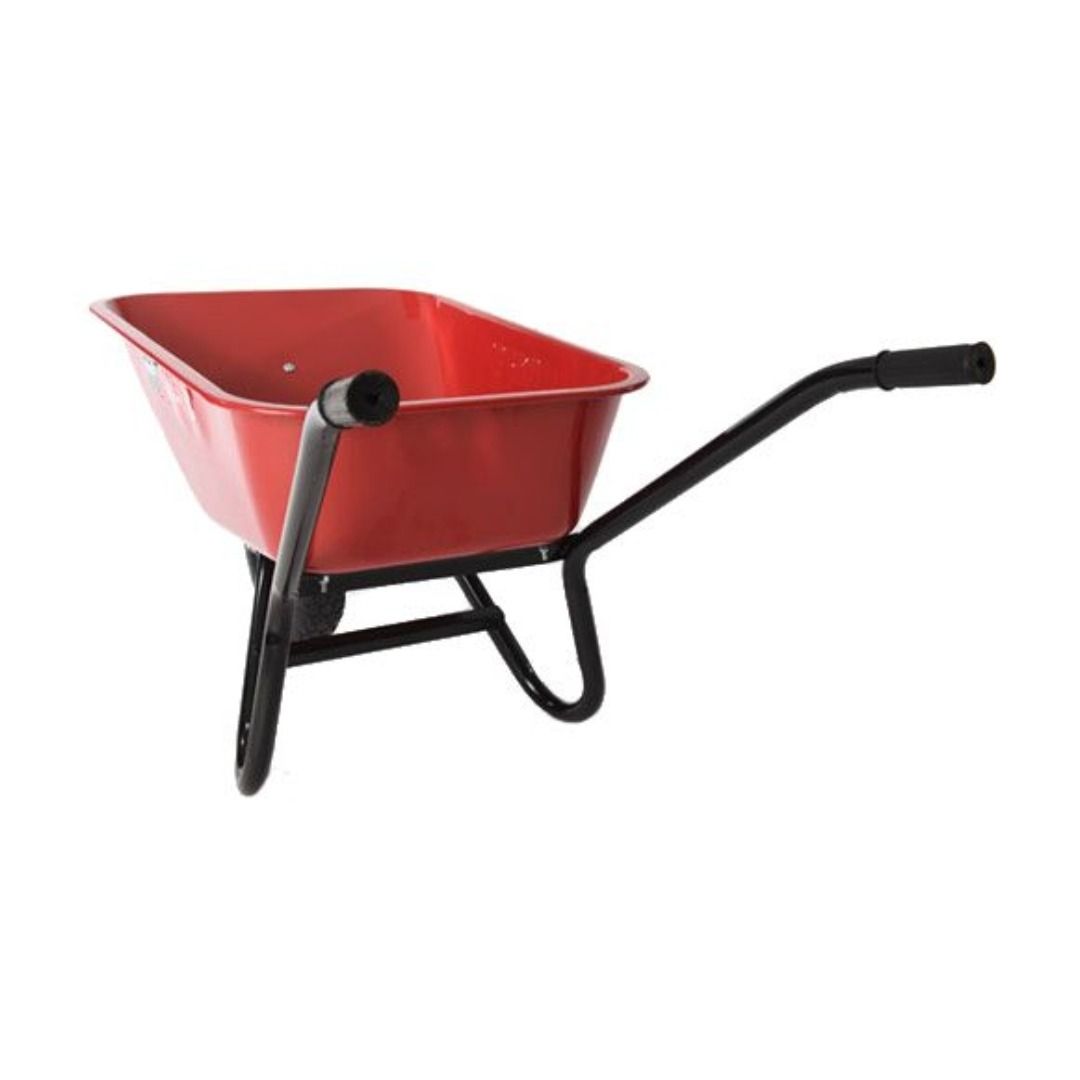
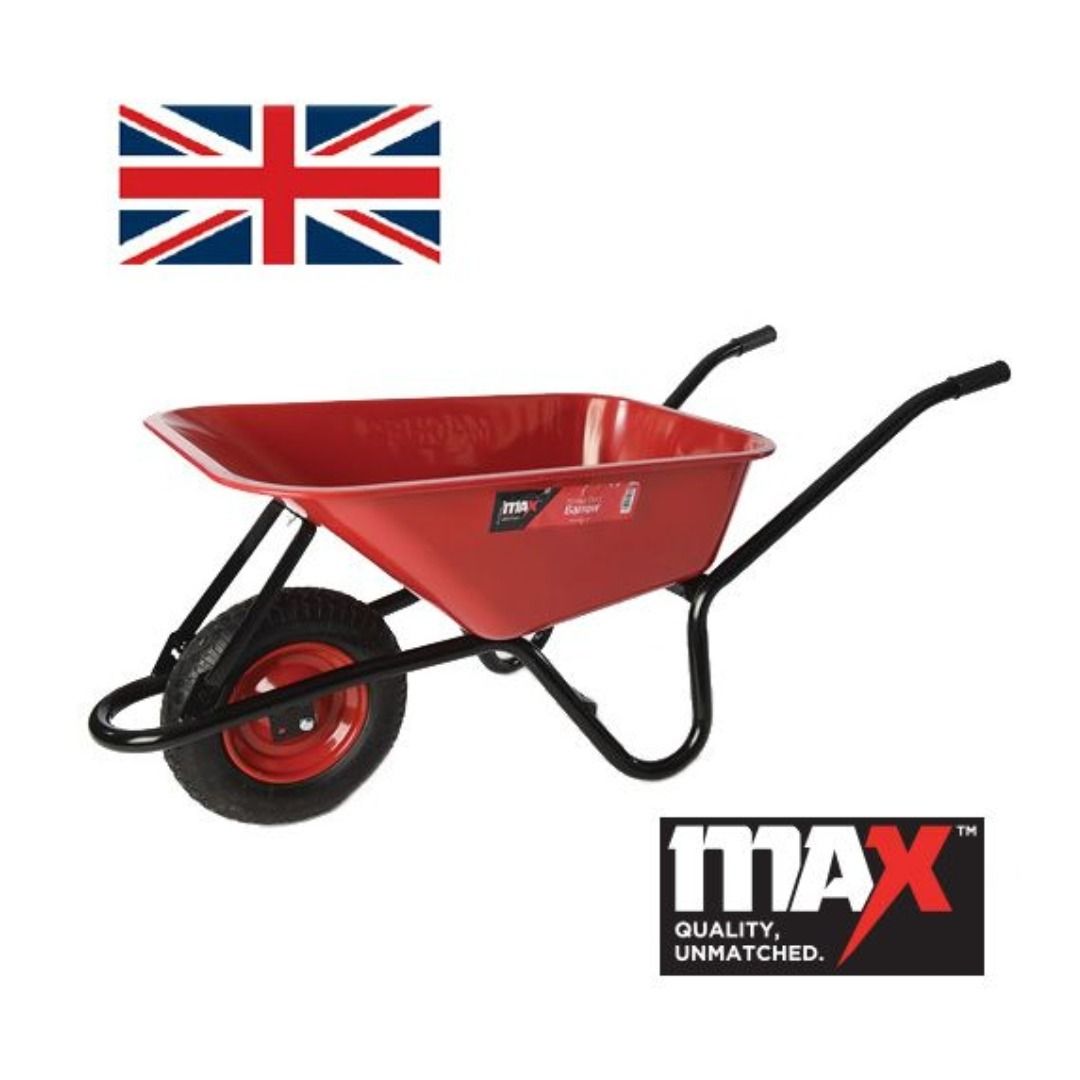
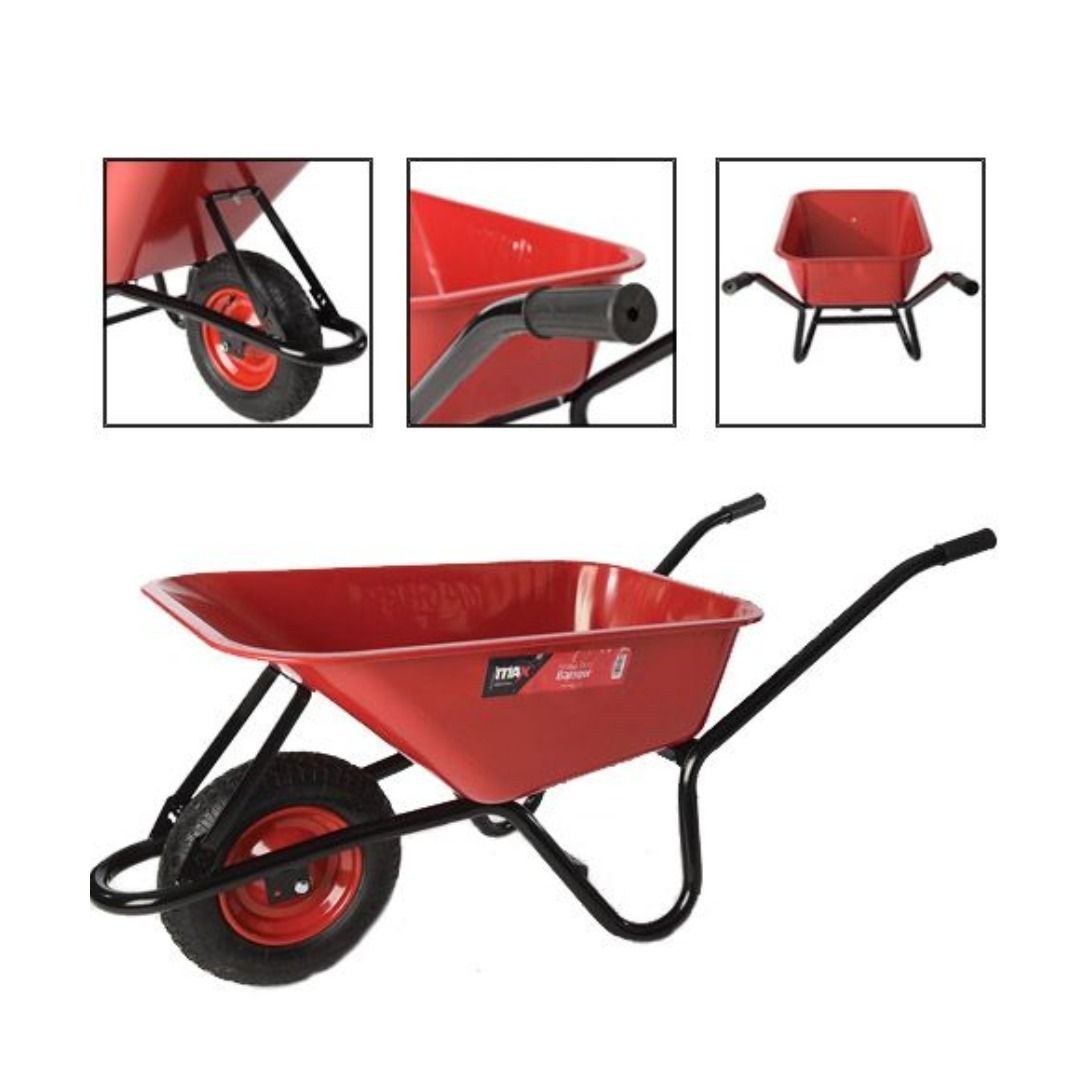
Heavy duty galvanised wheelbarrow 100 litre red pan black frame front three-quarter view | CMT Group UK
Heavy duty galvanised wheelbarrow 100 litre red pan black frame front three-quarter view | CMT Group UK MAX Heavy Duty Wheelbarrow 100 Litre | CMT Group UK  Heavy Duty Wheelbarrow 100 Litre | CMT Group UK MAX heavy duty wheelbarrow 100 litre metal wheel with bearing side view | CMT Group UK
Heavy duty contractor wheelbarrow height-adjustable tipping point nose detail close-up | CMT Group UK MAX Heavy Duty Wheelbarrow 100 Litre UK | CMT Group UK MAX Heavy Duty Wheelbarrow 100 Litre - different parts| CMT Group UK

A 100-litre galvanised steel heavy duty wheelbarrow built for contractors, groundworkers, and site operatives handling heavy materials daily on UK construction sites.

  • One-piece 32mm rigid tubular frame, no welded joints to flex or fail under repeated loading
  • Height-adjustable tipping point clears every kerb without manual adjustment mid-run
  • Wider leg stance, zero tip rating for stability under load on uneven site surfaces
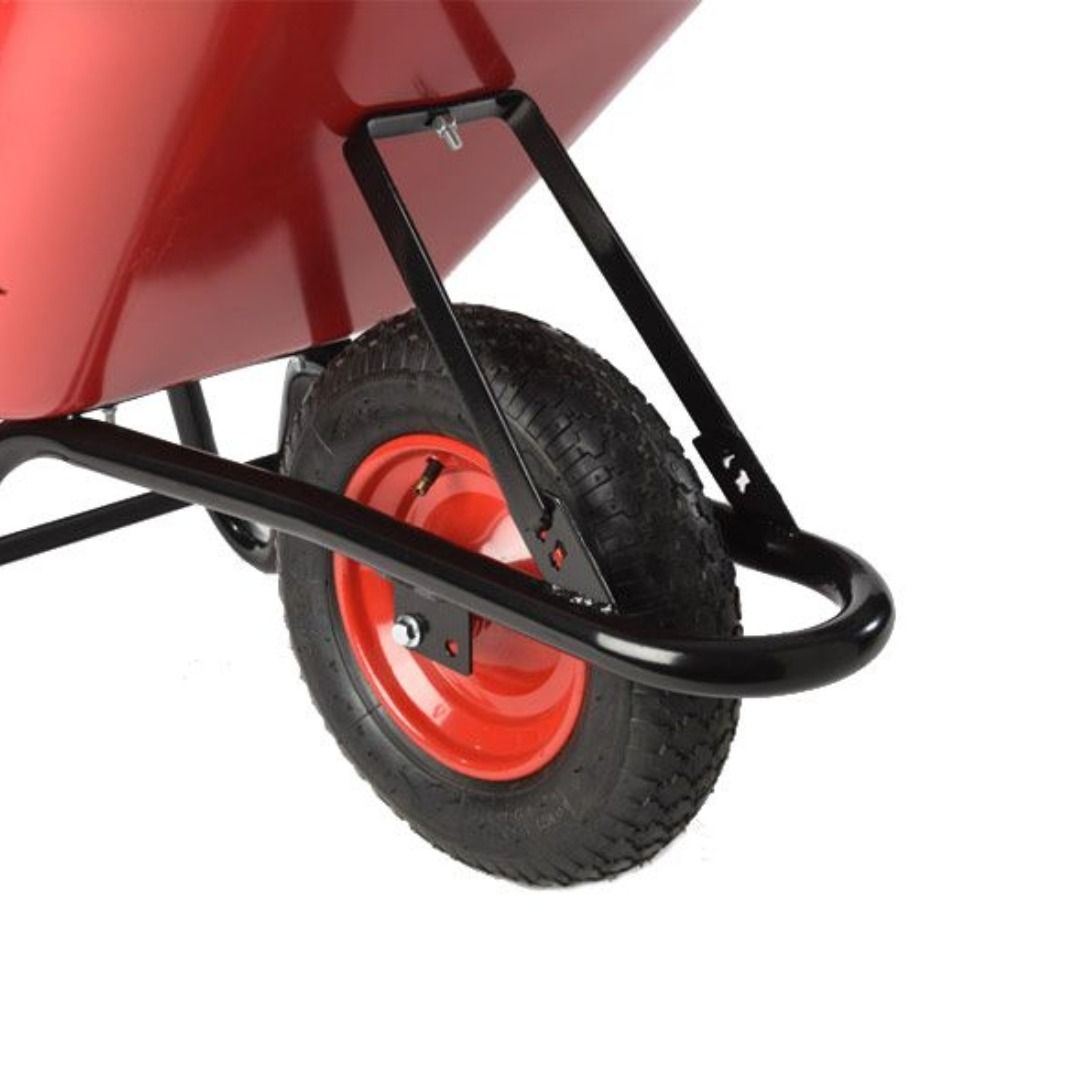
  • Metal wheel with bearing for smooth controlled movement across site
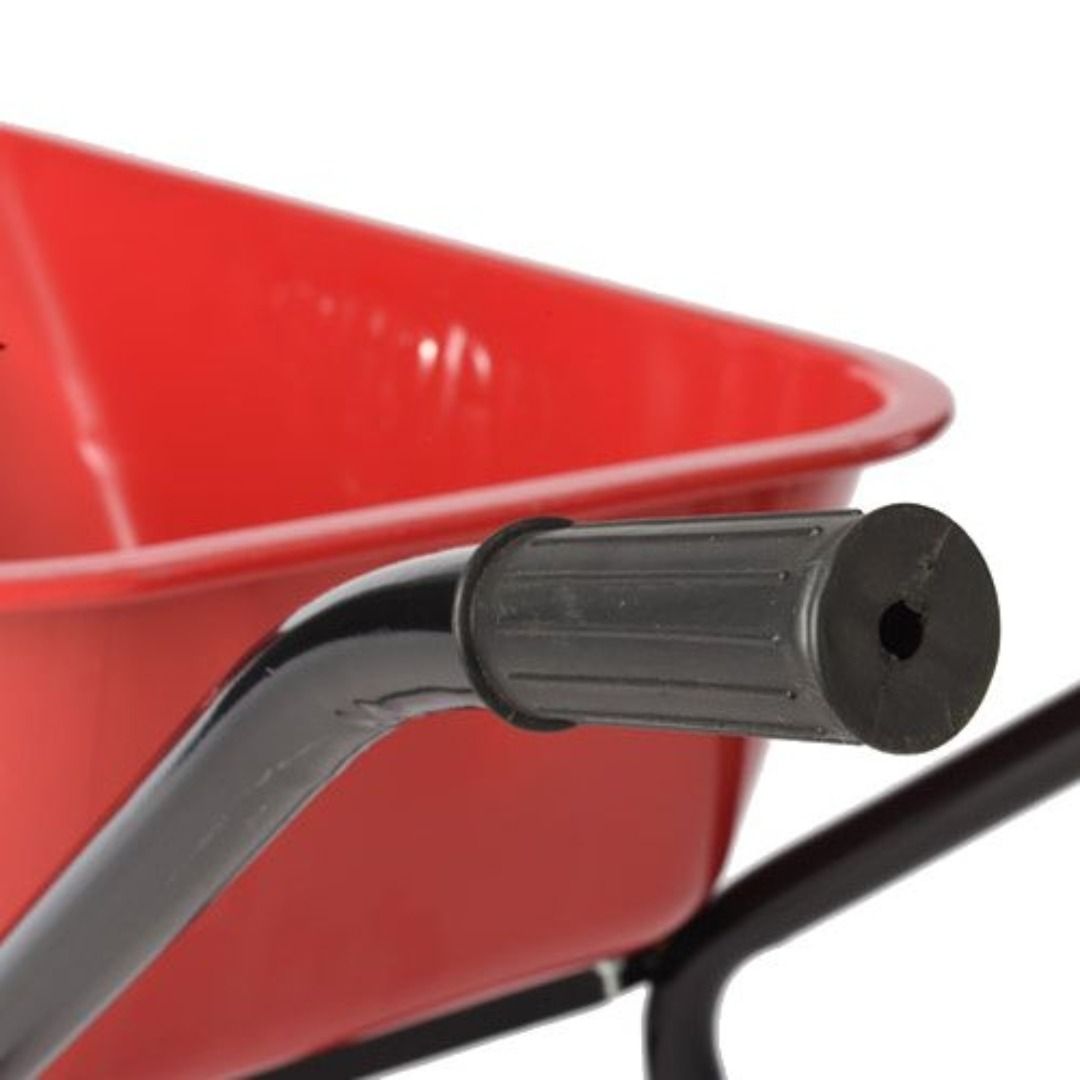
  • Extra long handles with non-slip comfort grip for push control and ease of tipping
  • Locking nuts fix pan securely to frame under heavy load and impact
  • Available with puncture-proof solid tyre or pneumatic tyre

MAX Heavy Duty Wheelbarrow 100 Litre

Code
MAXBARR
In stock

A 100-litre galvanised steel heavy duty wheelbarrow built for contractors, groundworkers, and site operatives handling heavy materials daily on UK construction sites.

  • One-piece 32mm rigid tubular frame, no welded joints to flex or fail under repeated loading
  • Height-adjustable tipping point clears every kerb without manual adjustment mid-run
  • Wider leg stance, zero tip rating for stability under load on uneven site surfaces
  • Metal wheel with bearing for smooth controlled movement across site
  • Extra long handles with non-slip comfort grip for push control and ease of tipping
  • Locking nuts fix pan securely to frame under heavy load and impact
  • Available with puncture-proof solid tyre or pneumatic tyre
Grouped product items
MAXbarrow Heavy Duty Wheelbarrow 100 Litre - Pneumatic Tyre Code MAXBARROW
£77.15 £64.29
Bulk Discounts
Buy full box of: 10

MAX Heavy Duty Wheelbarrow 100 Litre - One Piece 32mm Frame

Heavy duty galvanised steel contractor wheelbarrow built for groundworkers, demolition operatives, concreters, and site teams who move heavy materials continuously across UK construction sites. The one-piece 32mm tubular frame eliminates the welded joints that flex and fatigue under daily professional use, and the height-adjustable tipping point clears kerbs and lips cleanly on every run without stopping to adjust mid-route. Available in two configurations: pneumatic tyre for general site use, and puncture-proof solid tyre for demolition, strip-out, and reinstatement sites where nails, rebar offcuts, and sharp aggregate make a pneumatic tyre impractical.

How the one-piece frame keeps a contractor barrow in service longer

Cheaper wheelbarrows use multi-piece frames with welded joints at the highest stress points: the leg connections, the handle-to-frame joints, and the pan mounting brackets. Under repeated heavy loading and tipping impact, those joints flex and eventually crack, putting the barrow out of service long before the pan or wheel shows any wear. The MAXbarrow frame is formed from a single continuous 32mm steel tube, removing those failure points entirely. The result is a frame that absorbs tipping shock and uneven ground loading without flexing at the joints, giving a working life measured in seasons rather than weeks on a busy site.

Key Features

  • One-piece 32mm rigid tubular frame: Single-tube construction removes the welded joint failure points common in cheaper multi-piece frames. Absorbs impact from repeated tipping and uneven ground without flexing or cracking at the stress points.

  • Height-adjustable tipping point: Sets the nose clearance height to suit the specific kerb or lip height on any site. Clears obstacles cleanly on every loaded run without mid-route manual adjustment or load spillage at the nose.

  • Leg support brace for extreme endurance: Additional structural brace between the frame legs absorbs the impact loading generated by tipping and rough ground, extending service life under daily professional use beyond what a standard unsupported leg geometry provides.

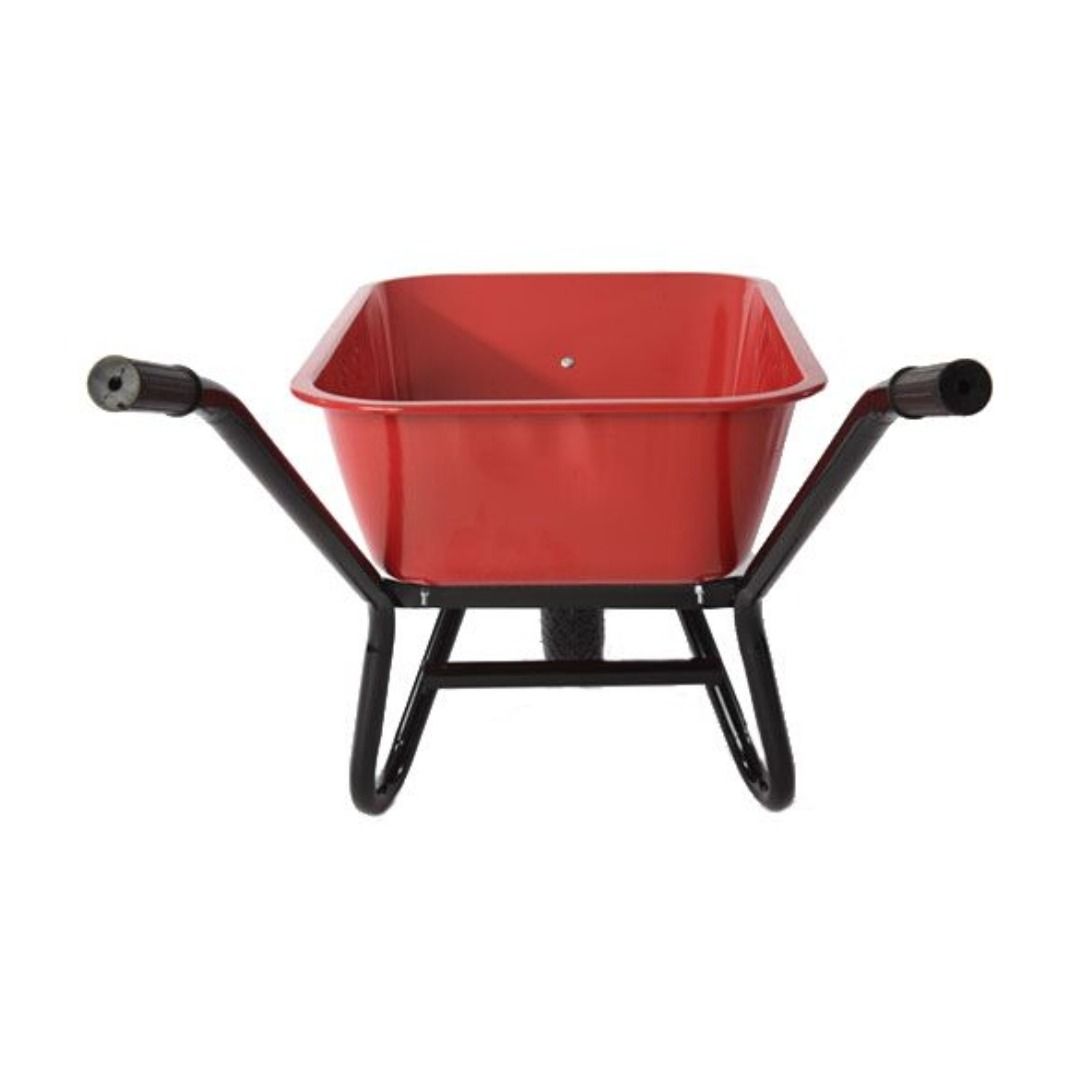
  • Wider leg stance, zero tip rating: Wider leg geometry lowers the loaded barrow's centre of gravity, resisting sideways tipping on sloped ground and uneven site surfaces under full load.

  • Extra long handles with non-slip comfort grip: Longer handle geometry increases leverage at the grip, reducing the force needed to tip the load and maintaining push control on long material runs and inclines.

  • Metal wheel with bearing: Bearing-mounted wheel runs smoothly across compacted site surfaces, reducing rolling resistance and push effort compared to a fixed axle or plastic-centred wheel under load.

  • Locking nuts fixed to pan: Pan secured to the frame with locking nuts. No movement, rattle, or pan shift under heavy load or tipping impact.

  • Galvanised steel pan: Pan galvanised against corrosion from cement, water, and outdoor site exposure. Red powder coat finish over the galvanising for additional surface protection.

Who is this for

Trades and roles:

  • Groundworkers

  • Demolition operatives

  • Concreters

  • Bricklayers and masons

  • Site labourers and material handlers

  • Reinstatement operatives

Industries:

  • Construction

  • Civil engineering

  • Groundworks

  • Demolition and strip-out

  • Utilities and infrastructure

  • Landscaping and external works

 Specifications

Specification Detail
Product Name MAX Heavy Duty Wheelbarrow 100 Litre
SKU / Product Code MAXBARR
Pan Material Galvanised steel with red powder coat finish
Pan Capacity 100 litres
Frame Construction One-piece 32mm rigid tubular steel
Frame Support Leg support brace for extreme endurance
Tipping Point Height adjustable
Leg Design Wider stance, zero tip rating
Pan Fixing Locking nuts fixed to pan
Handle Type Extra long, non-slip comfort grip
Wheel Type Metal wheel with bearing
Assembly Assembled in the UK
Tyre Type Pneumatic (MAXBARROW) or puncture-proof solid tyre (MAXBARROW-SW)
Colour Red pan, black frame

Compatibility

Application or condition Status
Concrete, mortar, and cement handling ✓ Compatible
General site material handling — rubble, aggregate, soil ✓ Compatible
Demolition and strip-out sites (puncture-proof variant) ✓ Compatible
Groundwork and drainage installation ✓ Compatible
Reinstatement and asphalt patching ✓ Compatible
Bricklaying and masonry supply runs ✓ Compatible
General outdoor site use in rain and wet ground ✓ Compatible
Debris-contaminated sites with nails and rebar (pneumatic variant) ✗ Use puncture-proof variant
Hot asphalt or bitumen loads (standard galvanised pan) ✗ Not recommended — use HDPE pan barrow
Powered or motorised attachment use ✗ Not applicable — manual use only


Who is this for

This wheelbarrow is used primarily by groundworkers, demolition operatives, and concreters on UK construction sites where heavy materials are moved continuously across a shift. It suits site teams on projects where barrow downtime directly affects programme: drainage installations, slab pours, reinstatement works, and strip-out operations where the ground surface is contaminated with sharp debris. Both variants serve professional users, the pneumatic tyre for general site use on clean or compacted ground, and the puncture-proof solid tyre for sites where nails, rebar offcuts, and broken aggregate are present at ground level throughout the working day.

Typical applications

  • Moving mixed concrete and mortar across a construction site between the mixing point and the pour location during slab and foundation work.

  • Transporting rubble, broken block, and demolition debris from strip-out areas to skips or segregation bays during internal and external demolition operations.

  • Carrying aggregate, sand, and drainage stone to trench and drainage installation locations during groundwork and utilities projects.

  • Supply runs on bricklaying operations, moving bricks, blocks, and bagged mortar from the delivery point to the working gang.

  • Shifting and placing reinstatement material including cold-lay asphalt and road planings during highway reinstatement and patching works.

  • Moving excavated soil and spoil from trench excavations to spoil heaps or skips during foundation, service trench, and ducting works.

  • General site labouring on construction projects, moving materials between deliveries, storage areas, and working zones throughout the working day.

  • External landscaping and civils works involving topsoil, aggregates, paving materials, and wet concrete in open site conditions.

How to use

Step 1: Select the correct variant for the site conditions. Use the pneumatic tyre variant on clean, compacted, or smooth site surfaces. Use the puncture-proof solid tyre variant on demolition, strip-out, or debris-contaminated sites where the ground surface contains nails, rebar, broken tile, or sharp aggregate.

Step 2: Before loading, check that the locking nuts securing the pan to the frame are fully tightened. Check the frame and leg brace for any visible cracking or deformation. Do not use a barrow with a damaged frame.

Step 3: Load material centrally in the pan, keeping the weight positioned over and slightly forward of the wheel axle. Front-heavy loading improves tipping control; rear-heavy loading makes the barrow difficult to balance on long runs.

Step 4: Set the tipping point height before starting the run. Adjust to clear the kerb or lip height at the tipping location. This avoids having to stop and adjust mid-run under load.

Step 5: When tipping, position the nose at the tip point, grip both handles firmly, and tip smoothly. Do not drop the handles abruptly after tipping, control the return to the pushing position to avoid frame stress.

Step 6: After use, rinse concrete and cement residue from the pan before it sets. Hardened concrete in the pan reduces capacity and increases the load on the frame on every subsequent run.

Common mistakes

  • Loading too far to the rear: Placing heavy material at the back of the pan shifts the balance point behind the wheel, making the barrow unstable to push and significantly increasing the effort needed to lift and move it. Load centrally or slightly forward of the axle.

  • Not adjusting the tipping point before the run: The height-adjustable tipping point exists to prevent nose-catching on kerbs. Failing to set it before loading means stopping under load to adjust, which risks spillage and unnecessary strain on the operative.

  • Using the pneumatic variant on debris sites: A single nail puncture puts a pneumatic-tyred barrow out of service until a replacement wheel is sourced. On demolition or strip-out sites, specify the puncture-proof variant from the outset rather than waiting for the first failure.

  • Leaving cement residue to set in the pan: Hardened concrete bonds to the galvanised pan surface and is extremely difficult to remove once set. Rinse the pan with clean water at the end of every shift to preserve pan condition and maintain full capacity.

  • Carrying overloaded or unbalanced loads on inclines: A 100-litre pan loaded beyond safe capacity on a sloped surface increases the risk of loss of control and tip-over. Use the wider leg stance as a reference: if the barrow feels unstable on level ground, the load is too heavy or positioned incorrectly.

Safety

Use this wheelbarrow only for manual material handling tasks within its design capacity. Do not modify the frame, handles, or tipping point mechanism. Inspect the frame, leg brace, pan, and wheel before each use, do not use a barrow with a bent or cracked frame, loose pan fixings, or a damaged wheel bearing. On sloped or uneven ground, keep loads within a weight that allows full control throughout the run. Operatives should use appropriate PPE including safety footwear when loading and unloading heavy materials. When manoeuvring near excavations, trenches, or edges, maintain a safe distance from the edge at all times.

Maintenance

Rinse concrete, cement, and mortar from the pan with clean water at the end of each shift before residue sets. Check and re-tighten the pan locking nuts weekly under heavy daily use. Inspect the wheel bearing monthly, a stiff or noisy bearing increases push effort and should be replaced. For the pneumatic tyre variant, check tyre pressure at the start of each week and inflate to the recommended pressure. Store the barrow upright or inverted in a covered area when not in use to protect the pan and frame from prolonged standing water. Touch up any paint chips on the frame promptly to slow surface corrosion at exposed steel points.

Frequently Asked Questions

Q: What is the difference between the pneumatic tyre and puncture-proof tyre variants?
A: The pneumatic tyre variant uses an air-filled tyre mounted on a metal wheel with bearing, which gives a slightly smoother ride on compacted or uneven ground and absorbs some of the vibration from rough surfaces. The puncture-proof solid tyre variant uses a solid rubber tyre with no inner tube and no air, making it immune to punctures from nails, rebar offcuts, sharp stone, and broken site debris. On demolition, strip-out, reinstatement, and debris-contaminated sites, the solid tyre is the correct specification because a single puncture on a pneumatic tyre puts the barrow out of service until a replacement wheel is fitted. On clean, compacted, or indoor site surfaces, either variant performs well.

Q: What does "one-piece 32mm tubular frame" mean in practice, and why does it matter?
A: A one-piece frame is formed from a single continuous steel tube bent to shape, with no separate sections welded together at the leg joints, handle connections, or pan mounts. Cheaper wheelbarrows use multi-piece frames where individual sections are welded at the highest-stress points: the leg connections and the handle-to-frame joints. Under repeated heavy loading and tipping impact, those welded joints flex and eventually crack, putting the barrow out of service before the pan or wheel shows any wear. The 32mm tube diameter provides the rigidity needed for sustained professional use. The combination of single-tube construction and 32mm diameter removes the primary failure mode of light-trade and domestic barrows used in a contractor environment.

Q: What is the height-adjustable tipping point, and how does it work?
A: The tipping point is the nose of the barrow frame that contacts the ground or lip when the barrow is tipped to empty the pan. On a fixed-height barrow, the nose height is set at manufacture and may sit too high or too low to clear the specific kerb, lip, or edge at the tipping location, meaning the operative has to stop and manually adjust mid-run or tip at an awkward angle. The adjustable tipping point on this barrow allows the nose clearance height to be set before the run begins, so it clears the kerb cleanly on every loaded pass without interruption. This is particularly useful on sites with varying tip-point heights across different locations.

Q: Is this wheelbarrow suitable for carrying hot asphalt or bitumen?
A: The standard galvanised steel pan is not recommended for hot asphalt or bitumen loads. Bituminous materials at working temperature bond to steel pan surfaces and are extremely difficult to remove once cooled. For asphalt and bitumen applications, a high-density polyethylene (HDPE) pan wheelbarrow is the correct specification, as the material does not bond to HDPE. This barrow is well suited to cold-lay reinstatement material and road planings, which are handled at ambient temperature.

Q: What is the "zero tip rating" and the wider leg stance?
A: The zero tip rating refers to the leg geometry being designed so the loaded barrow does not tip sideways when stationary on a level surface under normal loading. The wider leg stance achieves this by lowering the centre of gravity of a loaded pan relative to the leg contact points. On sloped or uneven ground, the wider stance provides greater lateral stability than a narrow-leg barrow under equivalent loads, reducing the risk of sideways tip during positioning and loading.

Q: How should I maintain the pan to prevent concrete from bonding to the surface?
A: Rinse the pan with clean water at the end of every shift before concrete or cement residue has a chance to set. Hardened concrete bonds strongly to the galvanised steel surface and is very difficult to remove once cured, reducing effective pan capacity and adding unwanted weight to every subsequent run. A 60-second rinse at the end of the shift prevents this entirely. If concrete does set in the pan, a rubber mallet and chisel can remove most of it without damaging the galvanising, but prevention is significantly easier than removal.

Q: How long should a MAXbarrow last under daily contractor use?
A: Service life depends on the load weights being carried, the ground surfaces encountered, and how well the barrow is maintained. Under daily professional use with correct loading and end-of-shift cleaning, the frame and pan should provide multiple seasons of service. The components most likely to require replacement over time are the wheel bearing and, on the pneumatic variant, the tyre. Replacement pneumatic wheels are available from CMT Group (MAXPWHL) for straightforward in-field replacement without specialist tools.

CMT Equipment Ltd