Most contractors own a manual resin applicator gun. Most have also squeezed one to exhaustion halfway through a large anchoring programme. This guide covers the practical differences between battery and manual resin guns: output consistency, operator fatigue, dosatron dosing, and a decision table for UK construction professionals.
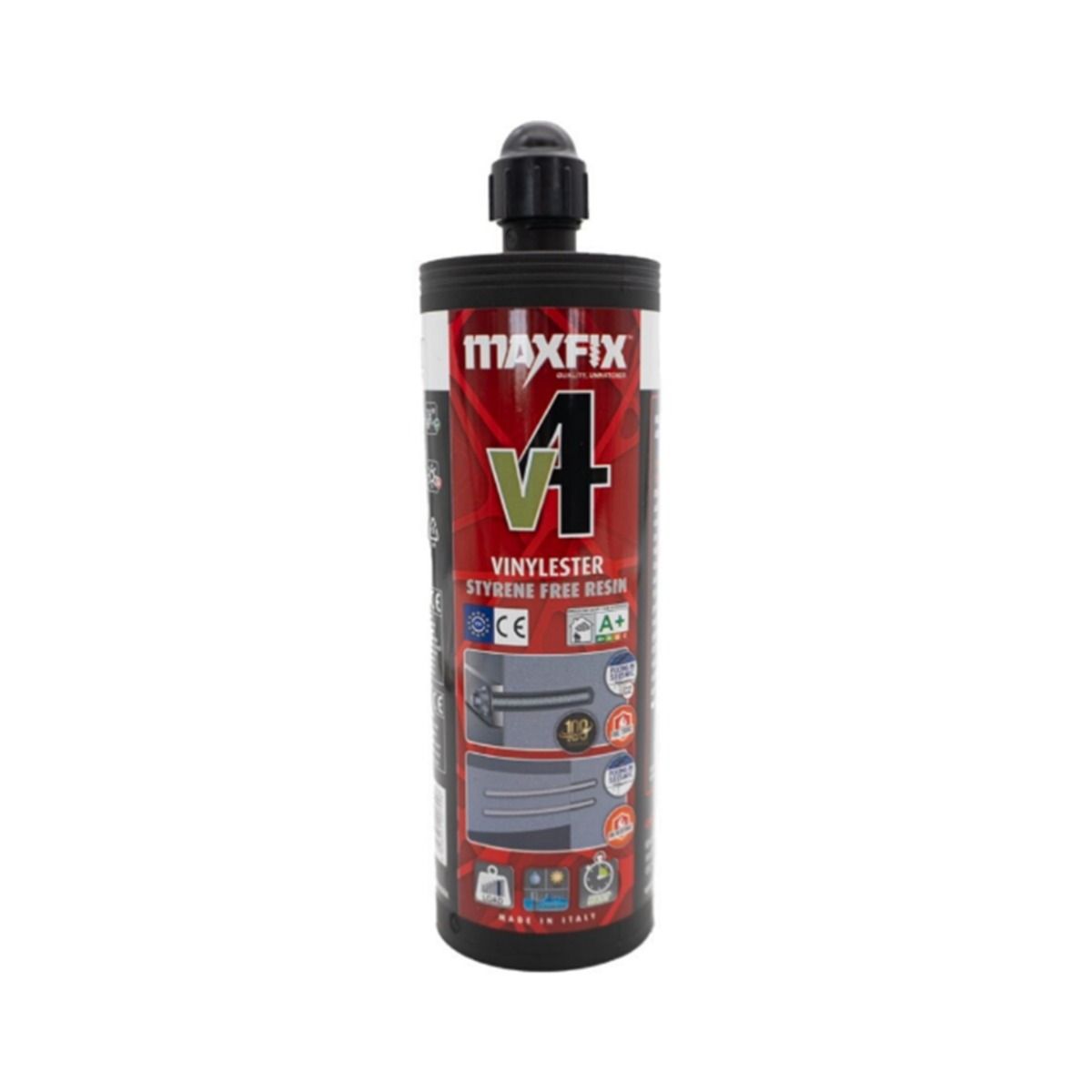
Vinylester chemical anchor resin engineered for structural fixings into cracked and non-cracked concrete, rated for seismic performance categories C1 and C2.
- Styrene-free two-component vinylester resin
- ETA Option 1 and Option 7 approved, cracked and non-cracked concrete
- Seismic qualified to performance categories C1 and C2
- ETA approved for post-installed rebar from 8mm to 32mm
- Suitable for dry, wet and flooded holes
- Installable with hollow drill bits, no dust removal needed
- Buy 12 for £8.94 £7.45 each and save 7%
- Buy 24 for £8.47 £7.06 each and save 12%
| BULK DISCOUNT | 12 | 24 |
|---|---|---|
| Price | £7.45 £8.94 | £7.06 £8.47 |
Order 1x to earn 8 FASTPoints
Order to earn 8 FASTPoints
Log in to access trade discountsMAXFIX V4 Vinylester Chemical Anchor Resin 400ml - Styrene-Free
Vinylester chemical anchor resin built for structural and high-load fixings into cracked and non-cracked concrete, including projects specified in seismic zones. The styrene-free, thixotropic formulation resists slump in overhead and vertical fixings, and cures reliably in dry, wet and flooded holes. It carries dual ETA approval, Option 1 for cracked concrete and Option 7 for non-cracked concrete, alongside seismic qualification to performance categories C1 and C2 for threaded rod.
How dual seismic qualification protects fixings in earthquake-rated structures
A standard chemical anchor resin, even one rated for cracked concrete, has no proven performance under the cyclic and shock loading a seismic event applies, because static load testing doesn't replicate that stress pattern. Specifying a resin without seismic qualification on a project that requires it means the fixing can't be signed off by a structural engineer working to seismic design codes, regardless of how strong the resin performs under normal load. This resin holds seismic qualification to both performance category C1 and C2 for threaded rod, giving specifiers a single resin that meets seismic requirements across a wider range of anchor diameters than products qualified to only one category.
Key Features
-
Dual seismic qualification (C1 and C2): Covers a wider range of threaded rod diameters under seismic design requirements than resins qualified to a single performance category
-
Styrene-free formulation: Low odour and Class A+ VOC emissions, suited to indoor and confined space installation
-
Dual ETA approval (Option 1 and Option 7): Confirms full rated performance across both cracked and non-cracked concrete from a single product
-
Post-installed rebar approval (8mm to 32mm): Extends use into rebar dowelling and concrete strengthening work under the same ETA assessment
-
Hollow drill bit installation: Can be installed without a dust removal procedure, cutting hole preparation time on large installation runs
-
All-condition curing: Performs in dry, wet and flooded holes with threaded bars from M8 to M30
-
Thixotropic, non-slump consistency: Stays in place during overhead and vertical fixings without premixing required
Who is this for
Trades and roles:
-
Structural engineers
-
Steel fixers and groundworkers
-
Seismic retrofit and strengthening contractors
Industries:
-
Civil engineering and infrastructure
-
Seismic zone construction
-
Industrial fabrication and structural steelwork
Specifications
| Specification | Detail |
| Product Name | MAXFIX V4 Vinylester Chemical Anchor Resin 400ml - Styrene-Free Seismic C1 and C2 |
| SKU / Product Code | FI100004 |
| Product Type | Vinylester Chemical Anchor Resin |
| Cartridge Volume | 400ml |
| Resin Type | Bi-component vinylester, styrene-free |
| ETA Approval | ETA-25/0041, Option 1 (Cracked Concrete) and Option 7 (Non-Cracked Concrete) |
| Post-Installed Rebar Approval | ETA-25/0051, 8mm to 32mm |
| CE Marking | CE marked |
| Seismic Qualification | Performance categories C1 and C2 (threaded rod) |
| VOC Emissions | Class A+, LEED compliant |
| Base Materials | Concrete C20/25 to C50/60, natural stone, solid/perforated/hollow masonry, hollow concrete block |
| Hole Conditions | Dry, wet, flooded (threaded bars M8 to M30) |
| Installation Method | Standard or hollow drill bit (no dust removal required with hollow bit) |
| Anchorage Depth | Flexible, up to 20 times rod diameter |
| Certified Service Temperature | -40°C to +80°C (long-term max +50°C) |
| Installation Temperature Range | Base material -10°C to +40°C; cartridge +5°C to +20°C |
| Consistency | Thixotropic, non-slump |
| Mixing | No premixing required, mixes during extrusion |
Compatibility
| Application or condition | Status |
| Cracked concrete C20/25 to C50/60 | ✓ Compatible |
| Non-cracked concrete C20/25 to C50/60 | ✓ Compatible |
| Natural stone | ✓ Compatible |
| Solid, perforated and hollow masonry | ✓ Compatible |
| Hollow concrete block | ✓ Compatible |
| Cellular aerated concrete (AAC) | ✓ Compatible |
| Dry, wet and flooded holes | ✓ Compatible |
| Seismic zone structural fixings (C1 and C2) | ✓ Compatible |
| Cartridge temperatures outside +5°C to +20°C | ✗ Not recommended |
| Base material temperatures outside -10°C to +40°C | ✗ Not recommended |
Minimum Curing Time
| Concrete Temperature | Gel / Working Time | Minimum Curing Time in Dry Concrete | Minimum Curing Time in Wet Concrete |
|---|---|---|---|
| -10°C | 50 minutes | 240 minutes | x2 |
| -5°C | 40 minutes | 180 minutes | x2 |
| 5°C | 20 minutes | 90 minutes | x2 |
| 15°C | 9 minutes | 60 minutes | x2 |
| 25°C | 5 minutes | 30 minutes | x2 |
| 35°C | 3 minutes | 20 minutes | x2 |
Fixings per 400ml Cartridge (Threaded Rod, Solid Material)
| Rod Diameter | Hole Diameter (mm) | Anchor Depth (mm) | Fixings per Cartridge |
|---|---|---|---|
| M8 | 10 | 80 | 75.5 |
| M10 | 12 | 90 | 51.5 |
| M12 | 14 | 110 | 34 |
| M16 | 18 | 125 | 21 |
| M20 | 24 | 170 | 7.5 |
| M24 | 28 | 210 | 5 |
| M30 | 35 | 270 | 2.5 |
Typical Users and Projects
Structural engineers and specifiers working on projects in seismic design zones, where anchors must carry rated performance under both static and seismic load categories. Steel fixers and groundworkers use it for heavy structural steelwork, balcony extensions, facades and safety barrier fixings, particularly where fast curing and non-slump consistency matter on overhead or vertical work. Civil engineering and infrastructure contractors specify it for post-installed rebar connections and concrete strengthening on bridges, industrial buildings and structural retrofits.
Typical applications
-
Fixing threaded rod and structural steelwork in projects designed to seismic performance categories C1 or C2
-
Installing post-fix rebar as dowels or starter bars into existing reinforced concrete, from 8mm to 32mm diameter
-
Anchoring balcony extensions, safety barriers, facades and handrails to concrete or masonry structures
-
Structural strengthening and retrofit work on bridges and industrial buildings
-
Fixing into hollow masonry, hollow concrete block and natural stone where a versatile substrate range is needed
-
Overhead and vertical fixings where a non-slump, thixotropic resin is required to prevent sagging
-
Wet, flooded or damp hole applications on groundwork and civil engineering projects
How to use
Step 1: Drill the hole to the correct diameter and depth, using standard or hollow drill bits, referring to the setting parameters table for the specific rod or rebar size.
Step 2: Clean the hole using a brush and blow-out pump to remove drilling debris and dust, repeating three to four times or until clear (not required when using the hollow drill bit method).
Step 3: Attach the mixer nozzle to the cartridge and extrude the initial resin to waste until an even colour is achieved.
Step 4: Fill the hole from the bottom, to one third or one half full, with the resin.
Step 5: Insert the stud or rebar into the base material by hand, using a twisting motion to screw in securely.
Step 6: Allow the resin to cure for the working and curing time shown on the setting times table for the relevant base material temperature.
Step 7: Attach the fixture and tighten with a torque wrench to the recommended installation torque.
Common mistakes
-
Ignoring the seismic category for the specific rod diameter: qualification varies by size, so confirming C1 or C2 applies to the exact diameter specified is essential before sign-off
-
Working outside the cartridge temperature range: cartridge temperature must stay between +5°C and +20°C for reliable mixing and cure
-
Underestimating cure time in cold or wet conditions: curing time extends significantly at lower base material temperatures and in wet concrete compared with dry, warm conditions
-
Skipping hole cleaning when not using hollow drill bits: standard drilled holes still need the full brush and blow-out sequence to achieve rated bond strength
-
Using expired cartridge stock: resin performance is not guaranteed beyond the 16 month shelf life
Safety
Wear appropriate hand and eye protection when handling the two-part resin, in line with standard practice for vinylester and epoxy-based systems. Confirm the correct seismic category, rod diameter and embedment depth against the ETA documentation before use on any seismic-rated structural fixing, since incorrect specification is a structural safety risk rather than a resin performance issue.
Maintenance
No maintenance is required once cured. Store unused cartridges upright between 15°C and 25°C, away from direct sunlight and heat, and use within the 16 month shelf life. Check the cartridge is sealed correctly between uses to prevent premature curing.
Frequently Asked Questions
Q: Is this resin suitable for seismic zone construction?
A: Yes. It carries seismic qualification to performance categories C1 and C2 for threaded rod, covering a wider range of anchor diameters under seismic design requirements than resins qualified to only one category. This sits alongside ETA-25/0041 approval for both cracked (Option 1) and non-cracked (Option 7) concrete, so the same resin covers both standard structural and seismic-rated specifications. Always confirm which seismic category applies to the specific rod diameter and application against the ETA documentation.
Q: What do ETA Option 1, Option 7 and seismic categories C1/C2 actually mean?
A: ETA Option 1 confirms the resin performs at its full rated load in cracked concrete, the condition most reinforced structures experience under normal service loading. Option 7 covers non-cracked concrete only, a less demanding condition. Seismic categories C1 and C2 are separate qualifications under EOTA technical assessment for anchors used in earthquake-rated structures, with C2 generally representing a more demanding performance requirement than C1. This resin holds ETA-25/0041 for Option 1 and Option 7, and is separately qualified for both C1 and C2 seismic performance on threaded rod, plus ETA-25/0051 for post-installed rebar connections from 8mm to 32mm.
Q: What is this resin NOT suitable for?
A: This resin is not approved for use outside the confirmed installation temperature range, base material temperature outside -10°C to +40°C or cartridge temperature outside +5°C to +20°C. It's not intended for non-masonry substrates such as timber or plastic. Always check the specific rod diameter against the seismic category and ETA documentation before specifying it for a seismic-rated application, since qualification varies by diameter.
Q: Why choose a vinylester resin over a pure epoxy or polyester system?
A: Vinylester resin sits between polyester and pure epoxy in typical performance, offering high bond strength and fast curing with better chemical and temperature resistance than polyester at a lower cost than some pure epoxy systems. This particular resin adds dual seismic qualification and post-installed rebar approval, which many vinylester and polyester products don't carry. For projects in seismic zones or specifying rebar dowelling, this combination is a key reason to choose it over a generic vinylester alternative.
Q: Which rod diameters and hole preparation method does this resin support?
A: The resin supports threaded rod from M8 to M30 and rebar from 8mm to 32mm, with full setting parameters and load data provided for each diameter across both cracked and non-cracked concrete. It can be installed using standard hammer-drilled holes or hollow drill bits, the latter removing the need for a separate dust removal procedure. Always confirm hole diameter and embedment depth against the setting parameters table for the specific rod or rebar size being used.
Q: How long can cartridges be stored before use?
A: Cartridges have a shelf life of 16 months from the date of manufacture when stored correctly. Store upright in a cool, dry location between 15°C and 25°C, away from direct sunlight and heat sources, and ensure the cartridge is tightly sealed between uses to prevent the resin curing prematurely. Avoid freezing temperatures, which can affect the resin's chemical properties.