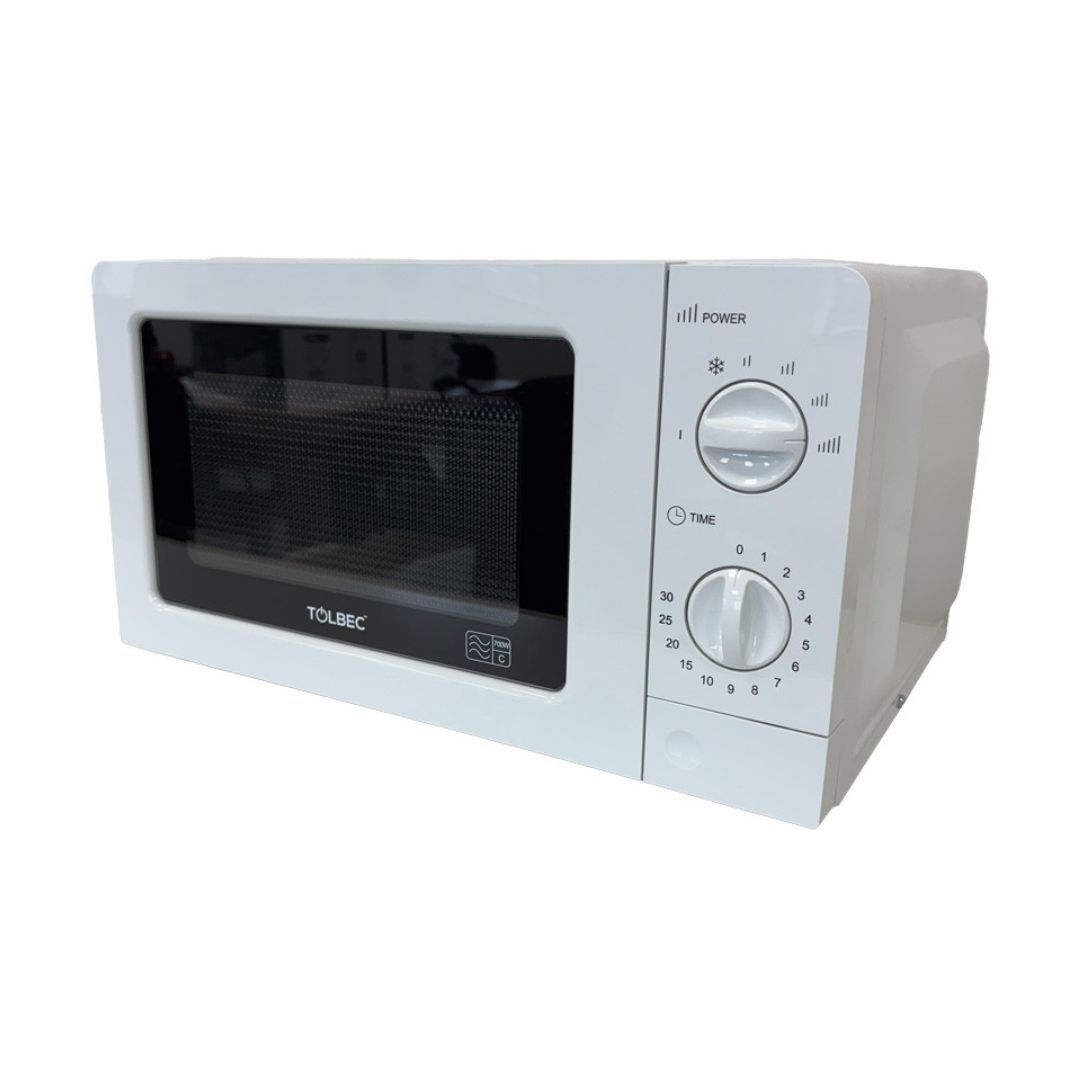
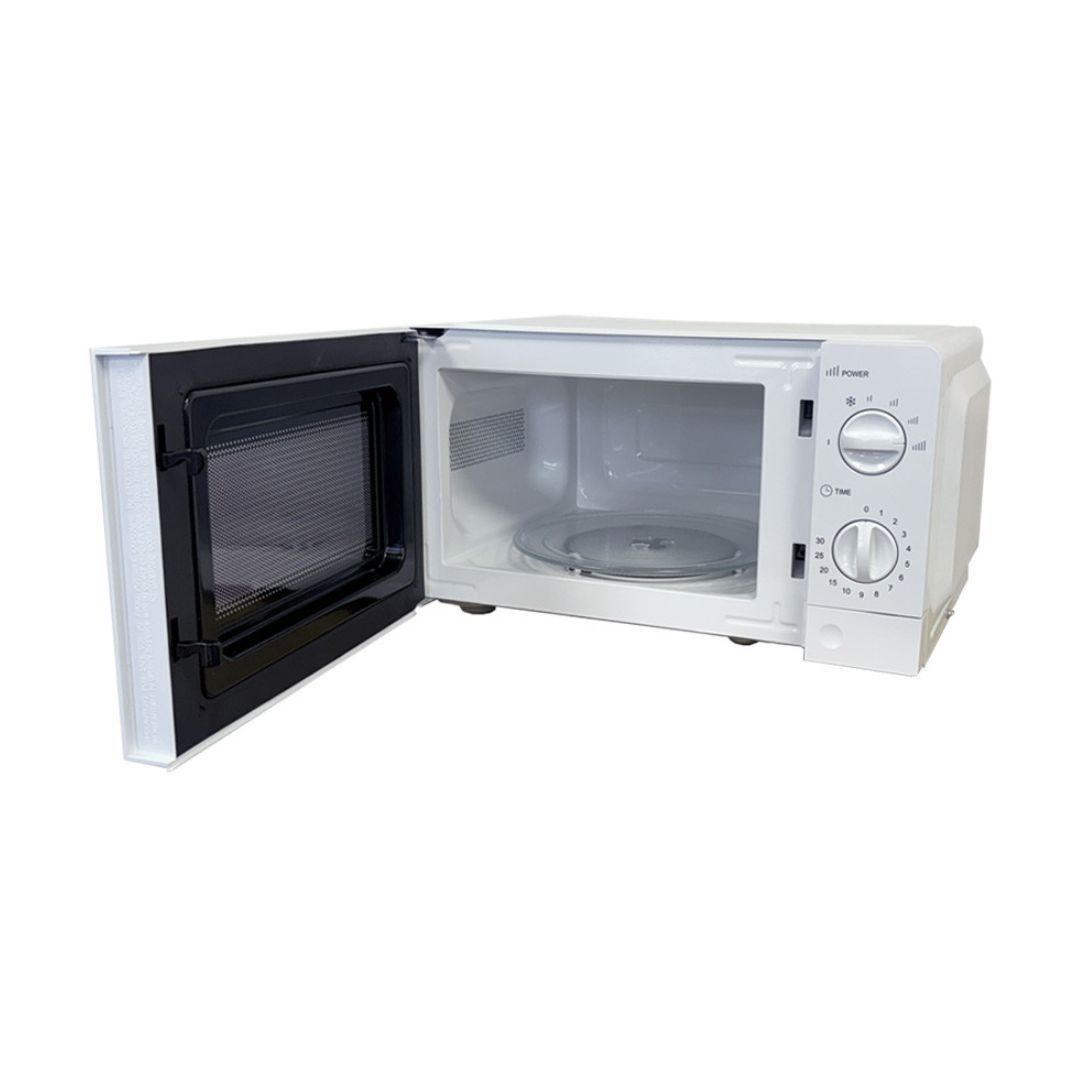
240V site canteen microwave oven for welfare cabins, construction site rest facilities, and site canteens requiring a reliable mains-powered food heating solution.
- 700W output, suitable for reheating and defrosting in a shared canteen environment
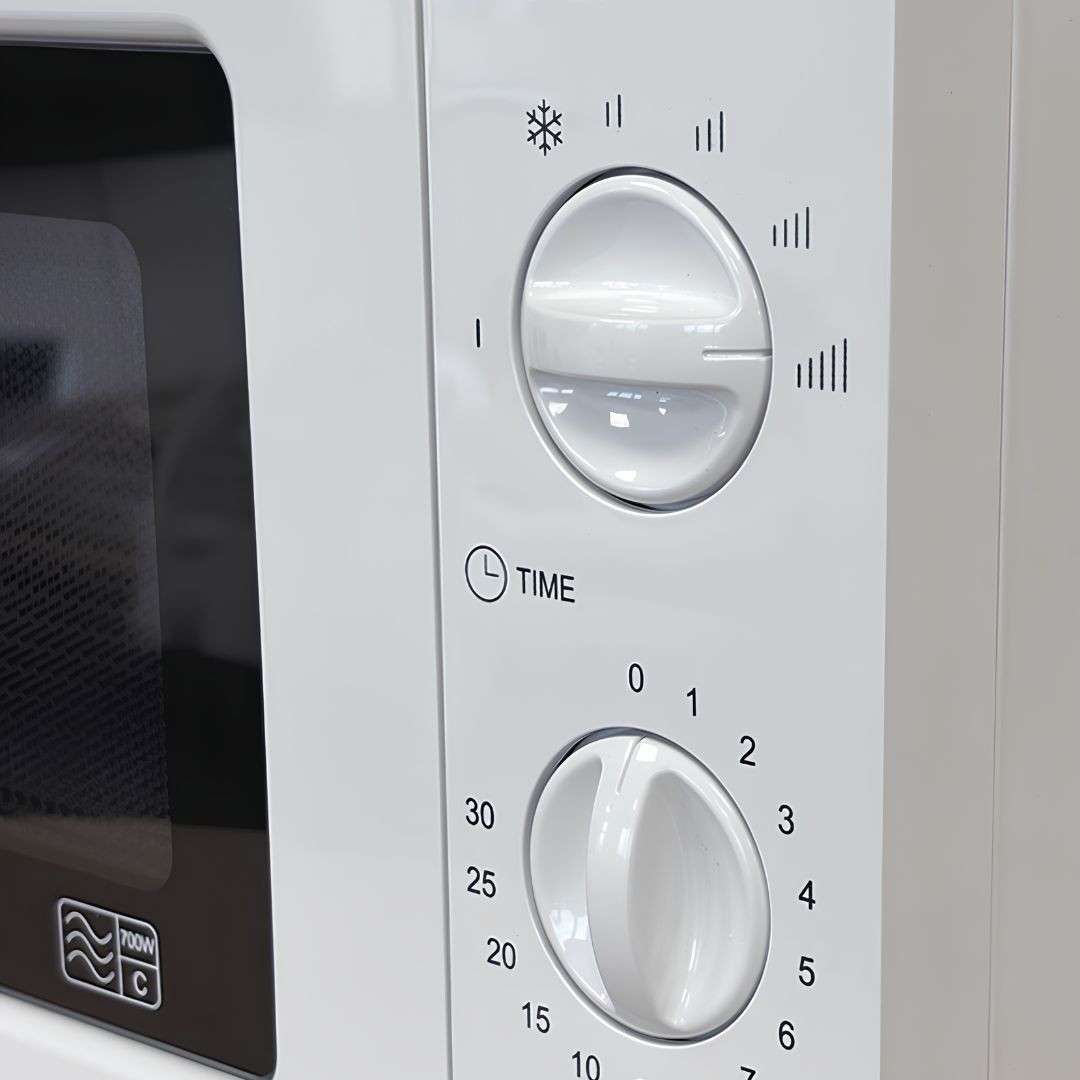
- 6 power levels including defrost
- Manual rotary power selector and timer dial, 0 to 30 minutes
- 17 litre capacity with removable glass turntable
- Auto shut-off safety function
- White casing
- 240V AC mains
240V Site Canteen Microwave Oven 700W - 17L White
240V site canteen microwave oven for welfare cabins, construction site rest facilities, and site canteens requiring a reliable mains-powered food heating solution.
- 700W output, suitable for reheating and defrosting in a shared canteen environment
- 6 power levels including defrost
- Manual rotary power selector and timer dial, 0 to 30 minutes
- 17 litre capacity with removable glass turntable
- Auto shut-off safety function
- White casing
- 240V AC mains
- Buy 3 for £118.80 £99.00 each and save 9%
- Buy 6 for £106.80 £89.00 each and save 18%
| BULK DISCOUNT | 3 | 6 |
|---|---|---|
| Price | £99.00 £118.80 | £89.00 £106.80 |
Order 1x to earn 109 FASTPoints
Order to earn 109 FASTPoints
Log in to access trade discounts240V Site Canteen Microwave Oven 700W
Site canteen microwave oven built for welfare cabins, construction site rest areas, and temporary canteen facilities requiring a straightforward, durable food heating appliance on a standard 240V mains supply. At 700W output with six power levels and a 30-minute rotary timer, it covers the daily heating demands of a shared site canteen without digital controls that fail in humid, dusty site environments.
How manual rotary controls outperform touchpads in site conditions
Digital touchpad microwaves are designed for domestic kitchens. In a site canteen, accumulated grease, dust, and moisture cause touchpad controls to become unresponsive within weeks of installation, and operatives with dirty or wet hands cannot operate them reliably. A manual rotary dial requires no surface contact sensitivity, it functions consistently regardless of the condition of the controls or the hands operating it, making it the correct specification for shared-use site welfare facilities.
Key Features
-
700W output: Sufficient power for reheating packed meals, soups, and hot drinks across a full shift cycle. Draws less peak current than higher-wattage domestic alternatives, reducing the load on site welfare cabin power supply.
-
Six power levels including defrost: Covers the full range of heating tasks typical in a site canteen, from gentle defrost of frozen packed lunches to full-power reheating of plated meals.
-
Manual rotary controls: Two rotary dials control power level and cooking time independently. No touchpad, no programming, no failure modes common to digital interfaces in site environments.
-
30-minute rotary timer: Simple graduated timer dial with automatic cut-off at the set time. No operator intervention required once cooking begins.
-
Removable glass turntable: Lifts out for cleaning, essential in a shared-use canteen context where regular hygiene maintenance is a site management requirement.
-
Auto shut-off: Cuts power automatically at the end of the set time. Reduces the risk of unattended heating incidents in an unsupervised canteen.
-
240V AC mains supply: Compatible with standard mains-connected welfare cabin electrical circuits.
Who is this for
Trades and roles:
-
Site managers
-
Welfare facility managers
-
Construction project coordinators
-
Facilities management teams
-
Principal contractors
Industries:
-
Construction
-
Civil engineering
-
Utilities and infrastructure
-
Facilities management
-
Site welfare provision
Specifications
| Specification | Detail |
| Product Name | 240V Site Canteen Microwave Oven 700W - 17L White |
| SKU | MICROW01 |
| Product Type | Solo microwave oven |
| Power Output | 700W |
| Capacity | 17 litres |
| Power Levels | 6 (including defrost) |
| Timer | Rotary dial, 0 to 30 minutes |
| Controls | Manual rotary dials, power selector and timer |
| Turntable | Removable glass turntable |
| Auto Shut-Off | Yes, activates at end of set time |
| Voltage | 240V AC |
| Colour | White |
Compatibility
| Application or condition | Status |
| Mains-connected welfare cabin (240V) | ✓ Compatible |
| Construction site canteen | ✓ Compatible |
| Site rest area or drying room | ✓ Compatible |
| Reheating plated meals and soups | ✓ Compatible |
| Defrosting frozen packed lunches | ✓ Compatible |
| Heating liquids and hot drinks | ✓ Compatible |
| Generator-only powered sites | ✗ Not recommended, voltage fluctuations may damage the appliance |
| Commercial or production catering | ✗ Not suitable, light-duty domestic-grade appliance only |
| Outdoor or unenclosed installation | ✗ Not suitable, indoor use only |
| Cooking raw meat from room temperature | ✗ Not recommended without temperature verification |
Who is this for
Site managers and welfare facility coordinators equipping mains-connected welfare cabins, construction site canteens, and temporary rest facilities for site operatives. Suited to principal contractors furnishing welfare provision at the start of a project and facilities management teams maintaining canteen equipment across multiple sites. The manual rotary controls and auto shut-off are specifically relevant for shared-use environments where the appliance operates unsupervised across shifts.
Typical applications
-
Reheating plated meals and packed lunches for construction site operatives during morning and afternoon breaks in a welfare cabin canteen.
-
Defrosting frozen packed lunches brought to site by operatives at the start of a shift, using the dedicated defrost power level.
-
Heating soups, stews, and hot drinks in shared site canteen facilities on mains-connected construction sites.
-
Providing food-heating provision on civil engineering and utilities sites to meet the welfare requirements of Schedule 2 of the Construction (Design and Management) Regulations 2015.
-
Equipping temporary site offices and welfare units with a compliant food-warming appliance at project mobilisation.
-
Replacing failed or damaged canteen microwaves on active construction sites requiring same-day or next-day turnaround.
How to use
Step 1: Place food or liquid in a microwave-safe container on the glass turntable. Ensure the turntable is correctly seated on its support ring before closing the door.
Step 2: Close the door fully. The door safety interlock prevents operation with the door ajar.
Step 3: Turn the power dial to select the required power level. For defrosting, select the defrost setting. For reheating, select a mid to high power level.
Step 4: Turn the timer dial clockwise to the required cooking time (maximum 30 minutes). The microwave begins operating as soon as the timer dial is turned past zero.
Step 5: The appliance switches off automatically at the end of the set time. Open the door and remove food using appropriate handling precautions, as containers and contents will be hot.
Common mistakes
-
Using non-microwave-safe containers: metal, foil trays, and some plastics cause arcing or chemical contamination. Only use clearly marked microwave-safe containers.
-
Operating the appliance without food inside: running an empty microwave damages the magnetron. Always ensure there is food or liquid in the cavity before starting.
-
Leaving the turntable out during use: the turntable ensures even heat distribution. Operating without it results in cold spots and uneven reheating.
-
Setting maximum power for all tasks: high power on dense or large portions results in cold centres and overheated edges. Use lower power settings and longer times for thick items.
-
Not cleaning the interior after use: food residue left on the cavity walls and turntable absorbs microwave energy in subsequent cycles, reducing heating efficiency and creating hygiene issues in a shared-use environment.
Safety
This appliance is rated for indoor use on a 240V AC mains-connected supply only. Do not use on generator-powered circuits, which can produce voltage fluctuations that damage the magnetron. Do not heat sealed containers or whole eggs. Do not operate with the door damaged or interlock mechanism compromised. The auto shut-off cuts power at the end of the set time but does not prevent re-use: designate a responsible person to manage shared canteen appliances on site. Keep ventilation clearances as specified in the user manual. In the event of sparking or unusual noise, stop operation immediately and do not use until inspected.
Maintenance
Wipe the interior cavity, door seal, and turntable after each use to prevent food residue build-up. Remove and wash the glass turntable and support ring separately using warm soapy water. Do not use abrasive cleaners on the interior cavity or door glass. Inspect the door seal and interlock mechanism periodically. Clean the exterior casing with a damp cloth. Do not immerse in water or use a steam cleaner on the appliance.
Frequently Asked Questions
Q: Is 700W powerful enough to heat food effectively in a site canteen?
A: 700W is the standard power output specified for site welfare and canteen microwaves across the UK construction sector. It heats a standard meal portion in two to four minutes depending on density and starting temperature. Higher-wattage appliances heat faster but draw more current from the welfare cabin's electrical circuit, which can be a constraint on sites with limited power supply. For typical site canteen use involving reheating plated meals, soups, and hot drinks, 700W is the appropriate specification.
Q: What do the six power levels cover?
A: The six power levels range from defrost at the lowest setting through low, medium-low, medium, medium-high, and full power at 700W. Defrost circulates the magnetron at reduced duty cycle to thaw frozen food without cooking the outer layers. Mid-range settings are suited to reheating dense items such as rice dishes and stews, where full power would overheat the edges before the centre reaches temperature. Full power is appropriate for liquids and standard meal portions.
Q: Why are manual rotary controls better suited to site use than digital touchpad controls?
A: Touchpad controls require clean, dry fingertip contact to register accurately. In a site canteen, operatives frequently arrive with dirty or wet hands, and the control panel is exposed to grease and steam from daily use. Touchpad surfaces become unresponsive under these conditions within weeks. Manual rotary dials operate through direct mechanical contact and function consistently regardless of the state of the control surface or the hands operating them. They also require no programming knowledge, which matters in a shared-use environment where multiple operatives use the appliance independently.
Q: Does this microwave meet the welfare requirements under CDM Regulations?
A: Schedule 2 of the Construction (Design and Management) Regulations 2015 requires principal contractors to provide suitable facilities for heating food and boiling water on construction sites where workers cannot leave the site boundary during breaks. A 700W mains-connected microwave oven in a welfare cabin canteen satisfies the food-heating requirement. This appliance is the specification commonly used by welfare cabin suppliers and principal contractors across UK construction sites to meet that requirement.
Q: Can this appliance run on a site generator?
A: This appliance is rated for 240V AC mains-connected supply. Generator power supplies can produce voltage fluctuations and harmonic distortion that damage the magnetron and control circuit of a microwave oven. Use on a stable mains-connected welfare cabin circuit only. If the site runs exclusively on generator power, consult an electrician about power conditioning before connecting any domestic-grade appliance.
Q: How should a shared-use site canteen microwave be cleaned between uses?
A: The interior cavity, door seal, and turntable should be wiped down after each use to prevent food residue accumulating between shifts. The glass turntable is removable and should be washed separately in warm soapy water. In a shared-use environment, designating cleaning responsibility to a named person per shift is the most practical approach. Accumulated food residue reduces heating efficiency and creates a hygiene risk on a site that may be subject to welfare inspection.