The complete guide to NLG dropped object prevention at CMT Group UK. Every product in the range explained and compared, from tether rings to MEWP bags, organised by the three-step tethering system and matched to your trade. Includes comparison tables, ANSI/ISEA 121-2023 compliance guidance, and a trade-by-trade buying guide for scaffolders, electricians, rope access technicians, MEWP operators, telecoms engineers, and wind energy technicians.
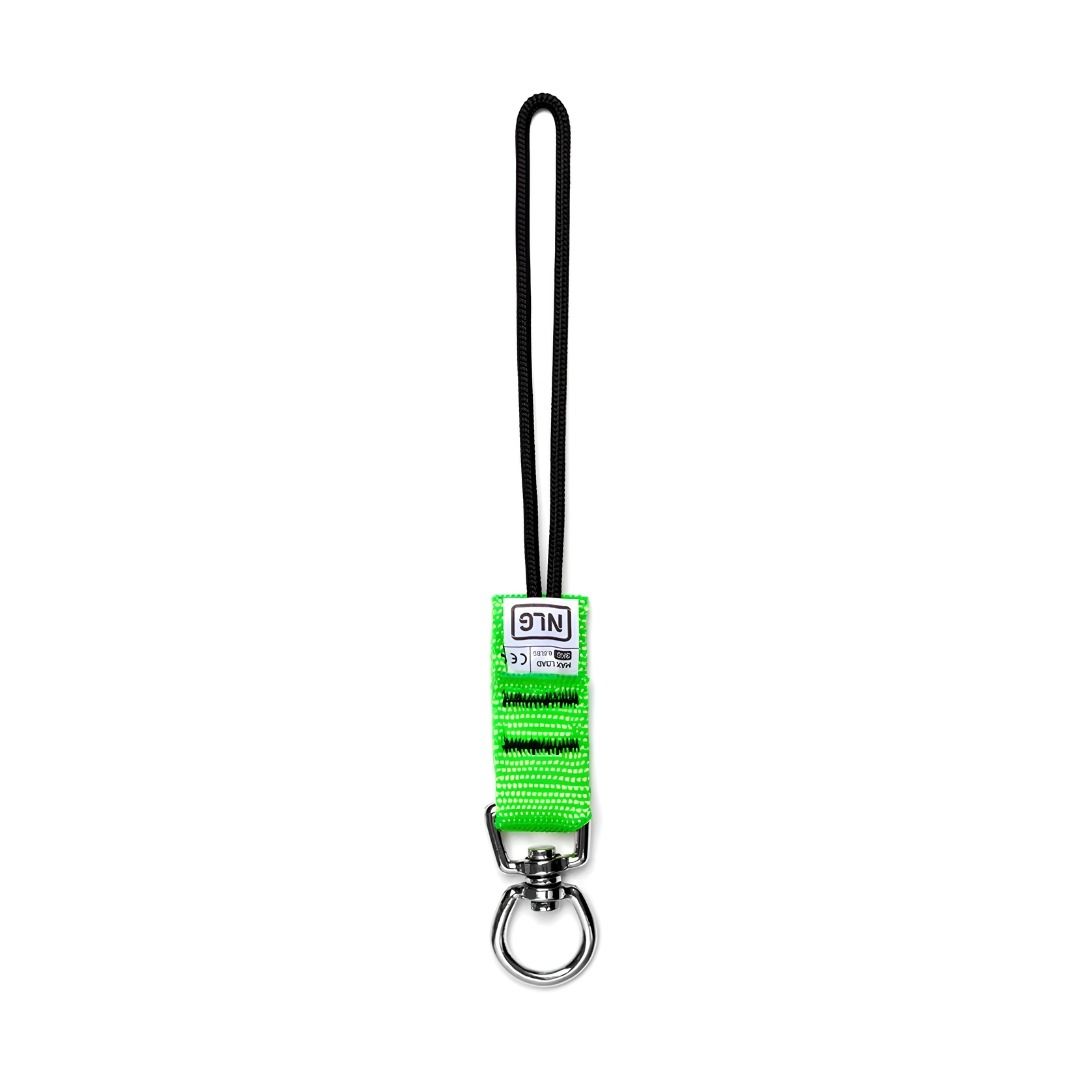
360° rotating D-Ring tool tethering attachment rated to 3kg for any hand tool with a captive hole or a body the climbing cord can cinch around.
- 3kg max load, dynamically tested at 2:1 safety factor
- Certified to ANSI/ISEA 121-2023 and NS 9611:2022+AC
- CE and UKCA marked
- 360° rotating D Ring prevents lanyard tangling and twisting during use
- Rugged climbing cord installs through captive hole or cinches directly around the tool body
- Contrast stitching enables faster visual pre-use inspection
- Self-install in seconds, no tools required, tools can be prepared off-site
- NLG ID orange scannable tag for certificates, inspection records, and installation videos
360° rotating D-Ring tool tethering attachment rated to 3kg for any hand tool with a captive hole or a body the climbing cord can cinch around.
- 3kg max load, dynamically tested at 2:1 safety factor
- Certified to ANSI/ISEA 121-2023 and NS 9611:2022+AC
- CE and UKCA marked
- 360° rotating D Ring prevents lanyard tangling and twisting during use
- Rugged climbing cord installs through captive hole or cinches directly around the tool body
- Contrast stitching enables faster visual pre-use inspection
- Self-install in seconds, no tools required, tools can be prepared off-site
- NLG ID orange scannable tag for certificates, inspection records, and installation videos
- Buy 10 for £11.69 £9.74 each and save 5%
- Buy 20 for £10.79 £8.99 each and save 13%
| BULK DISCOUNT | 10 | 20 |
|---|---|---|
| Price | £9.74 £11.69 | £8.99 £10.79 |
Order 1x to earn 10 FASTPoints
Order to earn 10 FASTPoints
Log in to access trade discountsNLG 360 D-Ring Loop
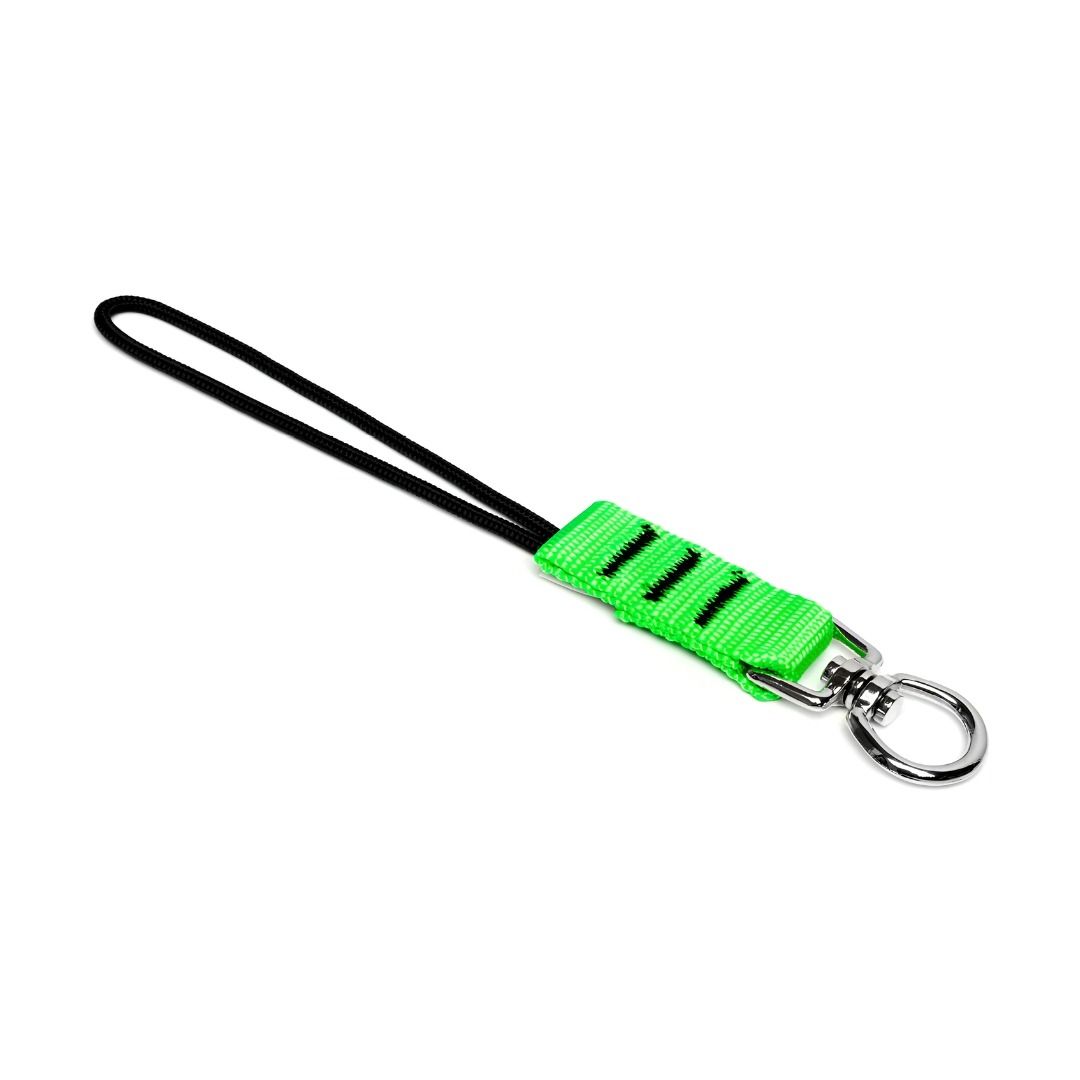
360° rotating D-Ring tool tethering attachment rated to 3kg. A rugged climbing cord loop passes through a tool's captive hole or cinches directly around the tool body, while the rotating D Ring swivel at the base prevents the lanyard from tangling or twisting during use. Self-installs in seconds without tools. Contrast stitching supports faster visual inspection. Tools can be prepared off-site for immediate connection on arrival at height.
How the 360-Degree Swivel Solves the Twisted Lanyard Problem
A fixed connection point between a tool and its lanyard transfers every rotation the tool makes directly into the lanyard cord. Over the course of a shift, that builds into a tightly wound, shortened lanyard that catches on structure and frustrates the worker enough to be removed. The 360° rotating D Ring breaks that link entirely, the tool rotates freely in any direction without transferring movement to the lanyard, maintaining full working length and eliminating tangle throughout the shift.
Key Features
360° rotating D Ring swivel: The D Ring rotates freely in any direction, preventing the lanyard from twisting or tangling regardless of how the tool moves during use. Keeps full lanyard working length maintained across the whole shift.
Rugged climbing cord loop: The black climbing cord can be passed through a captive hole in the tool or cinched directly around the tool body. Cinching extends compatibility to tools that have no captive hole, making this the most versatile attachment in the NLG range.
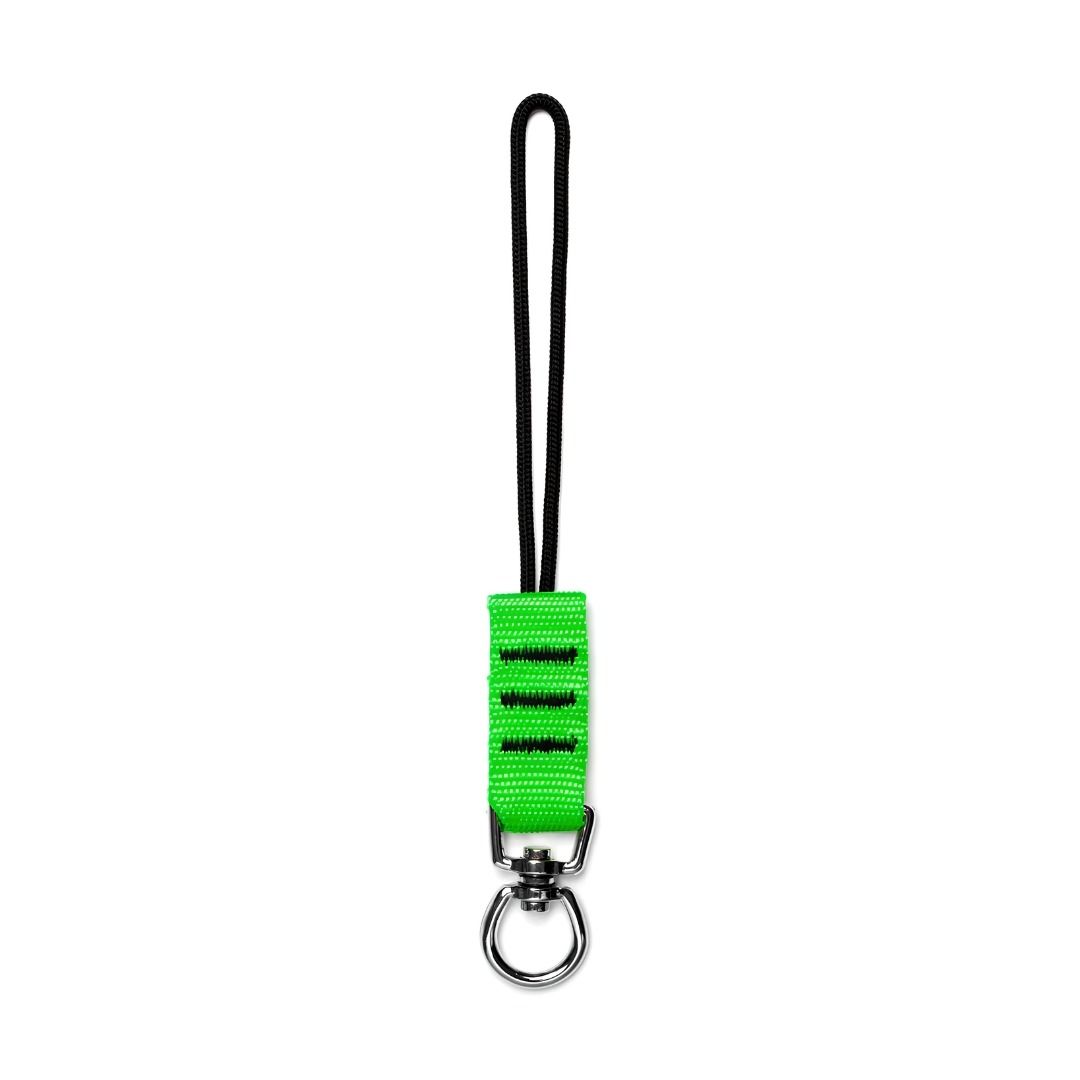
Contrast stitching: Black contrast stitching on the green webbing creates a clear visual reference point for inspection. Fraying, cuts, or damage to the stitching are visible at a glance without close examination, supporting faster pre-use checks.
No tools, no downtime: Fits in seconds with no pliers, screwdrivers, or specialist equipment. Tools can be fitted off-site and arrive ready for immediate lanyard connection on the platform or scaffold.
3kg load rated, dynamically tested: Certified to ANSI/ISEA 121-2023 and NS 9611:2022+AC. Third-party tested with a 2:1 dynamic safety factor.
NLG ID serialised technology: Unique serial number per unit. Scan the orange NLG ID tag with a phone to access certificates, Declarations of Conformity, and installation videos. Supports tool tethering audit programmes with per-unit inspection records.
This is For
Trades and roles:
-
Scaffolders
-
Electricians
-
Telecoms engineers
-
Rope access technicians
-
Construction operatives
-
Carpenters and joiners working at height
-
Utilities engineers
Industries:
-
Construction
-
Telecoms and utilities
-
Wind energy and renewables
-
Rail
-
Oil and gas
-
Building services and fit-out
Specifications
| Specification | Detail |
| Product Name | NLG 360 D-Ring Loop - 3kg Anti-Tangle Tool Tethering |
| SKU | NLG101363 |
| Product Type | 360° Rotating D-Ring Tool Tethering Attachment — Step 1 Tether Point |
| Max Load | 3 KG / 6.6 LBS |
| Load Testing | Dynamic, 2:1 Safety Factor, Third-Party Certified |
| Safety Standards | ANSI/ISEA 121-2023, NS 9611:2022+AC |
| Compliance Markings | CE, UKCA |
| D Ring | 360° rotating swivel — prevents lanyard tangling and twisting |
| Cord Loop | Rugged climbing cord — fits captive hole or cinches directly around tool body |
| Inspection Feature | Contrast stitching for faster visual pre-use inspection |
| NLG ID Technology | Scannable orange tag — access certificates, inspection records, and installation videos via phone |
| Serialisation | Unique serial number per unit |
| Dimensions | 200mm (L) x 25mm (W) |
| Max Lanyard Length | 200 CM / 78 IN |
| Unit Weight | 28g |
Compatibility
| Application or condition | Status |
| Tools with captive holes — cord passes through the hole | ✓ Compatible |
| Tools without captive holes — cord cinches directly around the tool body | ✓ Compatible |
| Tools with handles (hammers, saws, screwdrivers) | ✓ Compatible |
| Applications where lanyard twist or tangle is a known issue | ✓ Compatible — 360° swivel prevents twist |
| Off-site tool preparation — attach before arriving on site | ✓ Compatible |
| Tools weighing over 3kg | ✗ Not Suitable — use NLG Tether Choke (20kg rated) |
| Power tools — require specialist tethering attachment methods | ✗ Not Suitable |
| Personal fall arrest — tool attachment only, not a fall protection component | ✗ Not Suitable |
| Lanyard connection to cord loop — always connect to the D Ring, not the cord | ✗ Not Suitable |
Who Is This For
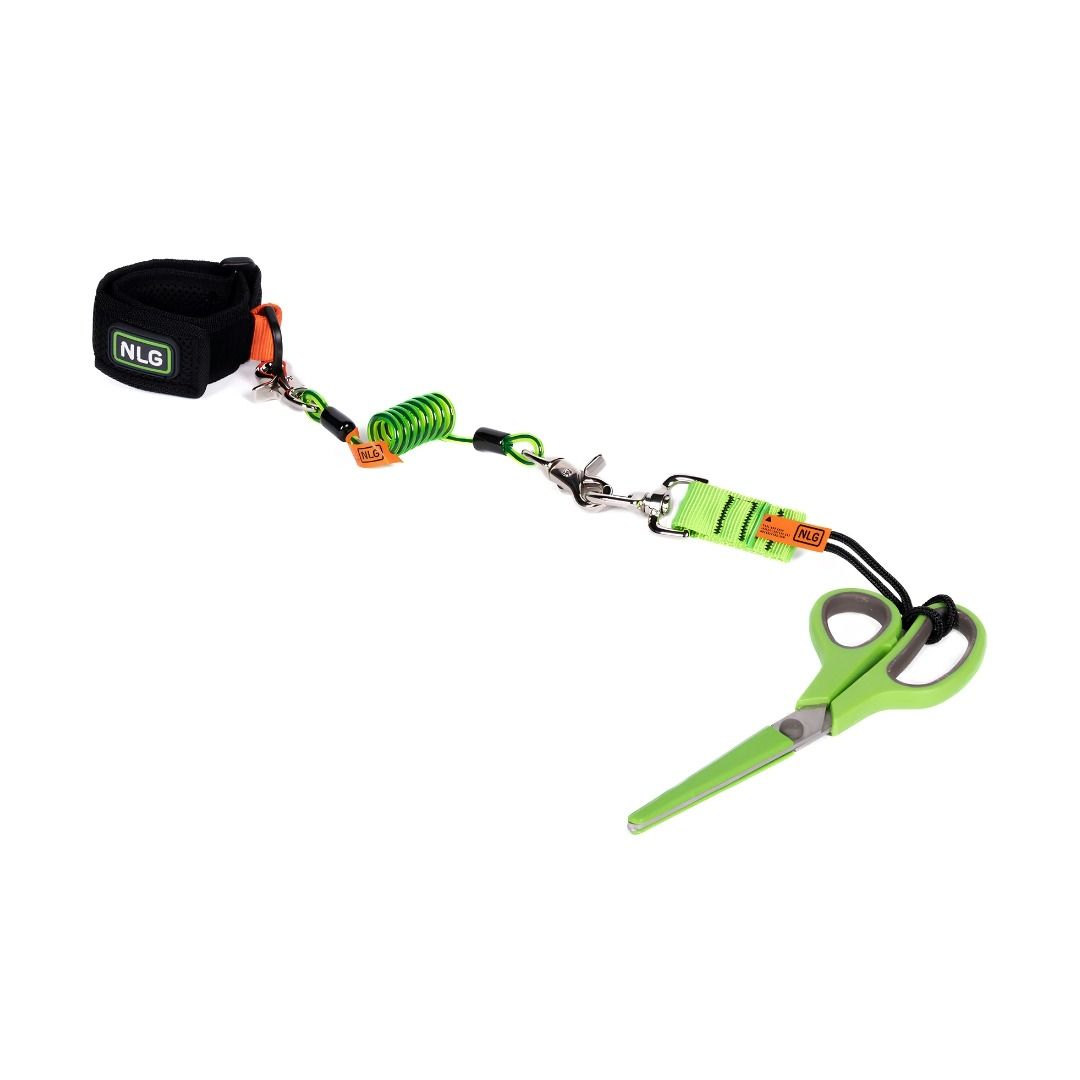
The 360 D-Ring Loop is used by workers who carry hand tools at height and need a fast, versatile tether attachment that works regardless of whether their tools have a captive hole. It is the right choice where lanyard tangling is a known issue on site, where workers are preparing tools off-site for rapid connection on arrival, and where a range of different tool types needs to be tethered using a single attachment method. As Step 1 in the NLG three-part system, it connects to a tool lanyard (Step 2) and a body or structure anchor (Step 3) in the same way as the Tether Ring and Tether Loop, the difference is the cinch capability and the anti-tangle swivel that makes it the broadest-compatibility option in the range.
Typical Applications
-
Tethering scissors, snips, and utility knives by cinching the climbing cord around the tool body where no captive hole is present.
-
Creating a tether point on screwdrivers, chisels, and spanners through the captive hole, with the 360° swivel preventing the lanyard from twisting during precision work.
-
Preparing a full set of hand tools off-site with D-Ring Loop attachments before arrival on a scaffold or MEWP platform, enabling immediate connection without stopping to rig equipment at height.
-
Providing a tangle-free tether connection on MEWP baskets where workers frequently rotate and reposition tools during the working day.
-
Supporting dropped object prevention programmes with CE and UKCA certified, serialised attachment points that carry a formal inspection record for each unit.
-
Meeting the employer's duty under the Work at Height Regulations 2005 to prevent objects falling from height, for hand tools up to 3kg.
How to Use
Step 1: Choose the attachment method. For tools with a captive hole, pass the climbing cord loop through the hole. For tools without a captive hole, cinch the cord directly around the tool body or handle by looping it around and threading the D Ring end back through the cord loop.
Step 2: Confirm the cord is firmly seated against the tool. A loosely cinched cord will slip under load.
Step 3: Connect an approved NLG tool lanyard rated to at least 3kg to the 360° rotating D Ring. Always connect to the D Ring, never to the cord loop.
Step 4: Test the tether point firmly before putting the tool into use.
Step 5: For off-site preparation, complete Steps 1 to 3 before arriving on site. Tools arrive ready for immediate use on the platform or scaffold.
Step 6: After any drop event, quarantine the D-Ring Loop immediately and inspect all components against the NLG Inspection Checklist before returning to service.
Common Mistakes
-
Cinching the cord too loosely. The cord must be pulled tight and firmly seated against the tool body, a slack cinch will slip when the lanyard is loaded.
-
Connecting the lanyard to the cord loop instead of the D Ring. The lanyard must always connect to the 360° rotating D Ring at the base. Connecting to the cord loop bypasses the swivel, removes the anti-tangle function, and may compromise the load path.
-
Using on tools over 3kg. The 3kg maximum applies to this product. For heavier tools, use the NLG Tether Choke rated to 20kg.
-
Skipping the pre-use inspection. Check the cord, stitching, and D Ring swivel before each use. The contrast stitching makes this faster, any damage to the stitching pattern is a signal to inspect more closely.
Safety
The 360 D-Ring Loop is rated to 3kg maximum load. Do not use on tools exceeding this weight. This product is a tool tethering attachment only, it is not a personal fall protection component and must not be used in any fall arrest or restraint system. Always connect the tool lanyard to the D Ring, not the cord loop. After any drop event, quarantine all components and inspect against the NLG Inspection Checklist before returning to service. Employers have a duty under the Work at Height Regulations 2005 to take suitable steps to prevent objects falling from height.
Maintenance
Before each use, inspect the climbing cord for cuts, abrasion, fraying, burns, soiling, and discolouration. Inspect the contrast stitching for wear, fraying, and cuts, damage to the stitching is a signal to look more closely at the webbing beneath. Inspect the D Ring and swivel for distortion, cracks, sharp edges, and corrosion, and confirm the swivel rotates freely. Inspect the NLG ID label for legibility. Clean with a water-dampened cloth and mild soap solution; air dry away from direct heat, steam, and sunlight. Store in a clean, dry environment away from fumes and corrosive elements. Record formal inspections by serial number using the NLG Inspection Checklist. Retire immediately if any component shows signs of wear, damage, or corrosion.
Frequently Asked Questions
Q: What types of tool does the 360 D-Ring Loop work on?
A: It works on any hand tool with a captive hole, where the cord passes through the hole to create the attachment point. It also works on tools without a captive hole using the cinch method, where the cord loops around and pulls tight against the tool body or handle. This makes it the most versatile attachment in the NLG range, covering tools that the Tether Ring and Tether Loop cannot accommodate. The only tools it does not suit are power tools, which require specialist tethering methods.
Q: What is the difference between the cinch method and the captive hole method?
A: With the captive hole method, the climbing cord is passed through a pre-formed hole in the tool body, keeping the attachment fixed at that point. With the cinch method, the cord loops around the tool body or handle and is tightened against it, creating the attachment point without needing a hole. The cinch must be pulled firmly before connecting the lanyard. Both methods use the same 360° rotating D Ring as the lanyard connection point.
Q: What do the safety standards mean for UK compliance?
A: The D-Ring Loop is certified to ANSI/ISEA 121-2023, the current international standard for dropped object prevention equipment, and NS 9611:2022+AC, the standard for personal tool attachment systems used at height. Dynamic load testing at 2:1 safety factor means the product is tested at 6kg against its 3kg rating before certification. CE and UKCA marking confirms it meets UK and European safety requirements.
Q: What is this product NOT suitable for?
A: The D-Ring Loop is not suitable for tools weighing more than 3kg. Use the NLG Tether Choke rated to 20kg for heavier tools. It must not be used as a personal fall protection component in any fall arrest or restraint system. Power tools require specialist attachment methods. The lanyard must always connect to the D Ring, connecting to the cord loop is not a safe attachment method.
Q: How does the 360° swivel actually stop the lanyard from tangling?
A: A fixed D Ring transfers every rotation of the tool directly into the lanyard cord. Over the course of a shift, repeated rotation in one direction winds the lanyard into a twisted, shortened cord that catches on structure and reduces working length. The 360° swivel breaks that connection, the D Ring rotates independently of the cord and webbing body, so the tool can spin freely in any direction without the lanyard absorbing that movement. The lanyard stays straight and at full working length throughout the shift.
Q: Can I prepare tools with the D-Ring Loop before getting on site?
A: Yes, and this is one of the product's practical advantages. The D-Ring Loop can be fitted to tools at ground level or off-site, with the lanyard already connected to the D Ring, so the tool arrives on the platform or scaffold ready for immediate attachment to the anchor point. This removes the need to rig tools at height, saving time and reducing handling on the platform.
Q: What does contrast stitching mean for inspection?
A: The black contrast stitching on the green webbing creates a clear, visible pattern that makes damage easier to spot during a pre-use inspection. Fraying, cuts, or degradation of the stitching shows up immediately against the green background without the need to pull the webbing apart or inspect at close range. For sites running pre-shift inspections across multiple tethered tools, this reduces inspection time per item.
Q: When should the D-Ring Loop be retired from service?
A: Retire the product immediately if the climbing cord shows cuts, fraying, or abrasion damage; if the contrast stitching is significantly worn or cut; if the D Ring shows distortion, cracks, sharp edges, or corrosion; or if the swivel no longer rotates freely. Any unit involved in a drop event must be quarantined and inspected against the NLG Inspection Checklist before it is returned to service. If a unit has arrested an actual drop, consider retiring it regardless of visible condition.
Q: How quickly can I get these to site?
A: Order by 7pm for next-day delivery anywhere on the UK mainland. CMT Group operates its own delivery fleet covering over 95% of the UK, with live tracking, real-time ETAs, and What3Words integration for delivery to a specific site entrance or compound. VIP 2-hour delivery from any CMT depot is available for urgent requirements.
Q: What makes CMT Group a reliable source for NLG tool tethering products?
A: CMT Group is rated Excellent on Trustpilot and holds over 400 verified Reviews.io reviews reflecting consistent stock availability and service across UK construction and industrial projects. Founded in 2010 and now one of the UK's fastest-growing independent suppliers, CMT is a BSIF Registered Safety Supplier, ISO 9001:2015 accredited, and a Crown Commercial Service Supplier. NLG products are stocked from UK fulfilment centres with no backorders on core lines.