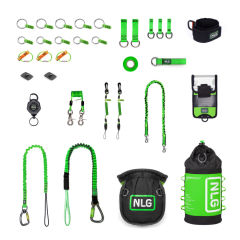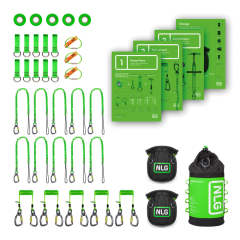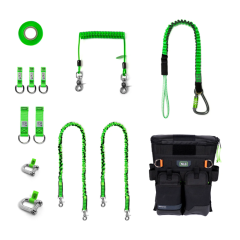

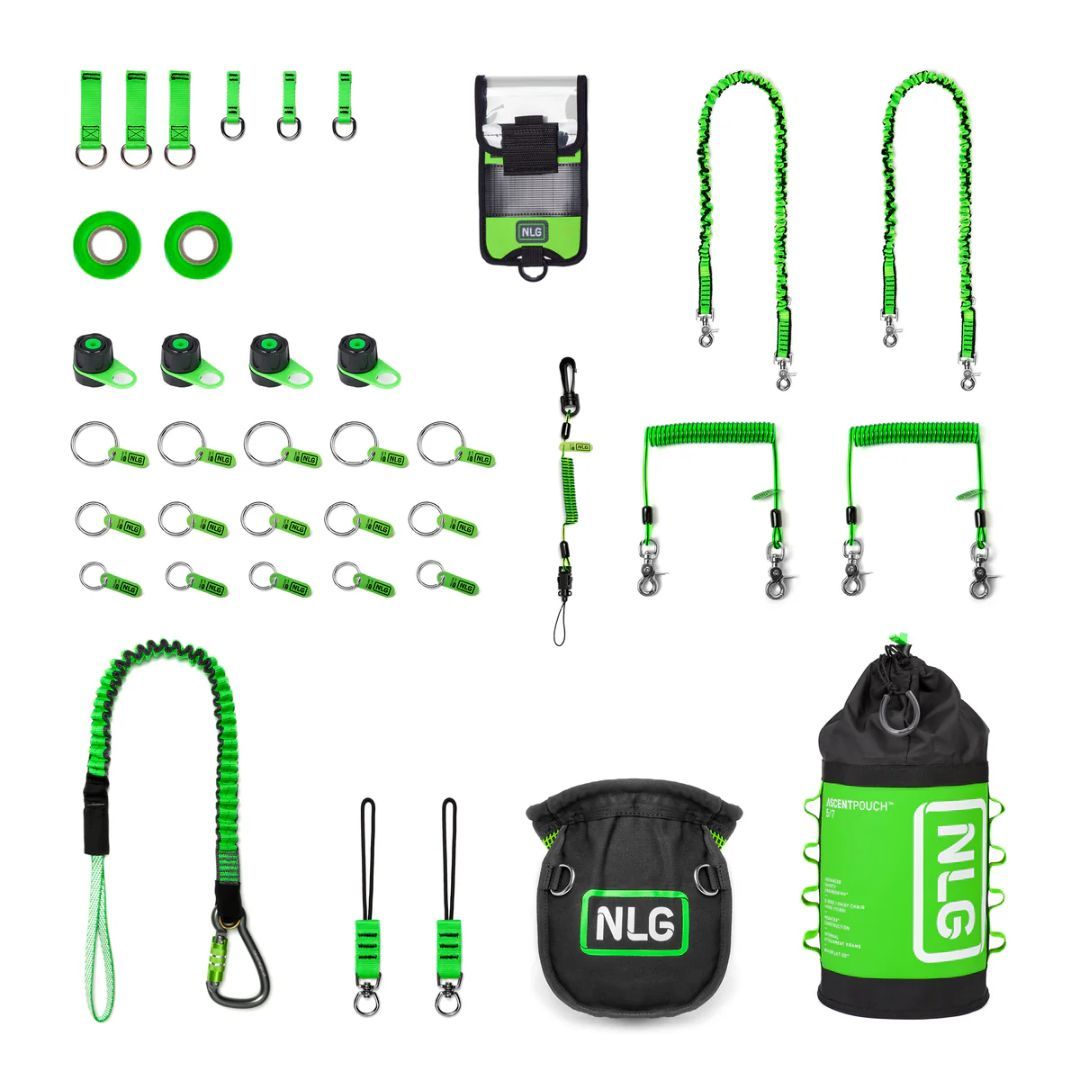
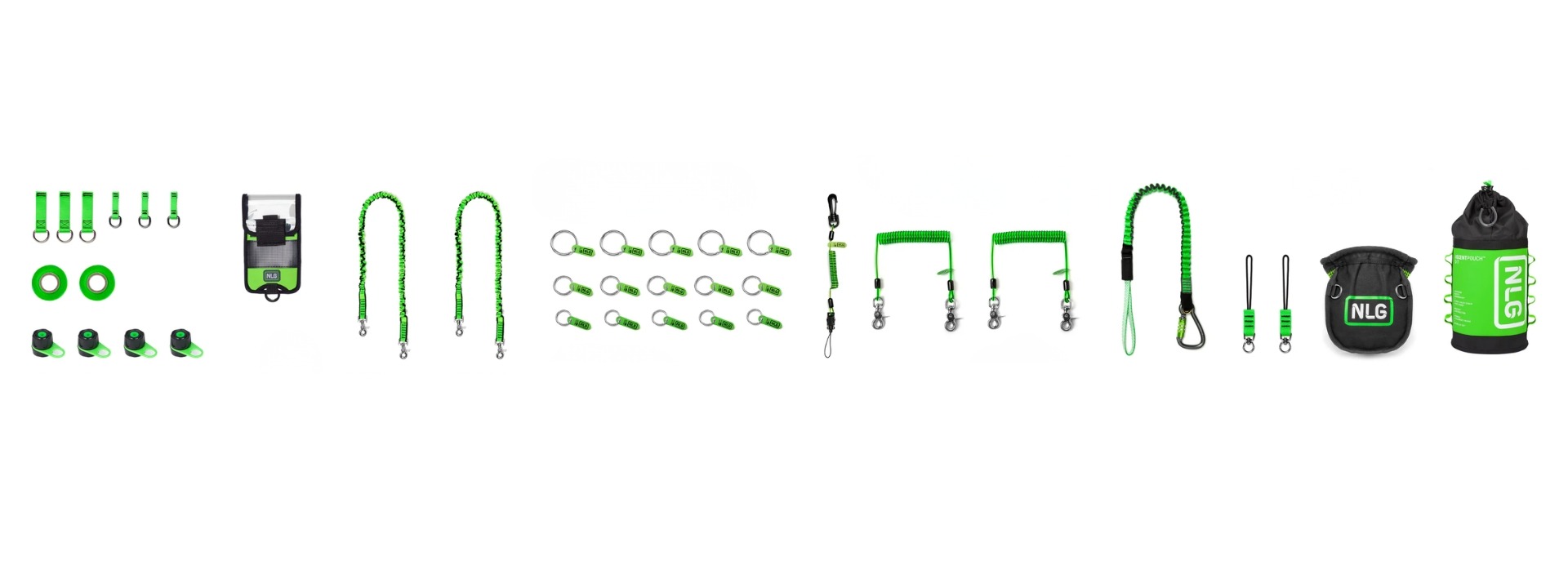
NLG Telecoms Technicians Tethering Kit is a complete three-step tool tethering system with 15 products and 38 individual pieces, built for technicians working on towers and masts.
- 15 products covering tether points, lanyards, and pouches
- 38 individual pieces, ready to deploy
- Covers all three tethering steps
- Aero Pouch and Ascent Pouch for storage
- Phone Case included for device tethering
- Spin Tethers and 360 D-Ring Loops for rotating tools
- NLG ID technology, serialised for inspections
NLG Telecoms Technicians Tethering Kit - Complete Three-Step System for Tower Technicians

NLG Telecoms Technicians Tethering Kit is a complete three-step tool tethering system with 15 products and 38 individual pieces, built for technicians working on towers and masts.
- 15 products covering tether points, lanyards, and pouches
- 38 individual pieces, ready to deploy
- Covers all three tethering steps
- Aero Pouch and Ascent Pouch for storage
- Phone Case included for device tethering
- Spin Tethers and 360 D-Ring Loops for rotating tools
- NLG ID technology, serialised for inspections
Order 1x to earn 484 FASTPoints
Order to earn 484 FASTPoints
Log in to access trade discountsNLG Telecoms Technicians Tethering Kit
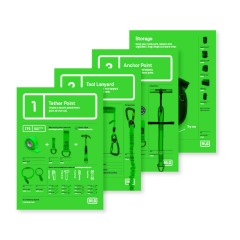
NLG Telecoms Technicians Tethering Kit is a complete tool tethering starter system for telecoms engineers working on towers, masts, and rooftop structures. It contains 15 different NLG products totalling 38 individual pieces, covering all three steps of the NLG tethering system: tool-side attachment, lanyard connection, and anchor point. Built specifically for the confined access points and frequent hand-to-hand tool passing typical of tower and mast work, it removes the guesswork of assembling a compliant tethering system component by component.
How a complete starter kit removes the guesswork of tool tethering
Tower and mast environments involve technicians working at multiple levels, often passing tools between colleagues, in confined access points where a dropped tool has no clear fall path to intercept. Assembling a tethering system for this environment from individual components requires matching tether ring sizes to specific hand tools, choosing lanyard types suited to frequent repositioning, and selecting anchor points that won't interfere with climbing movement. This kit removes that risk by including a curated selection across all three steps, pre-matched to the tool types and access conditions typical of telecoms tower and mast maintenance.
Key Features
-
15 different products, 38 pieces total: covers tether rings in three sizes, D-rings, tether tape, spin tethers, lanyards, and two storage pouches
-
Complete three-step coverage: tool-side attachment (tether rings, D-rings, tether tape, spin tethers), lanyards (bungee, extended bungee, extended coil, mini coil), and storage via Aero Pouch and Ascent Pouch
-
Multiple tether ring sizes: 5x Small, 5x Medium, and 5x Large Tether Rings cover the full range of hand tool shapes encountered on tower and mast work
-
Spin Tethers and 360 D-Ring Loops included: 4x Spin Tethers and 2x 360 D-Ring Loops suit tools that rotate frequently during antenna alignment and cable work
-
Extended reach lanyards: 2x Extended Coil and 2x Extended Bungee lanyards accommodate the greater working distances common on tower structures
-
NLG Phone Case included: tethers the most commonly dropped item on any elevated worksite
-
NLG ID technology on eligible components: scannable serial numbers for inspection records and certification access
Who Is This For
Trades and roles:
-
Telecoms tower technicians
-
Mast climbers and riggers
-
Antenna installation engineers
-
Site managers equipping new starters
-
Telecoms safety officers
Industries:
-
Telecoms and network infrastructure
-
Broadcast and communications
-
Rooftop and structure maintenance
-
Height safety training providers
Specifications
| Specification | Detail |
| Product Name | NLG Telecoms Technicians Tethering Kit - Complete Three-Step System for Tower and Mast Technicians |
| SKU | NLG101617 |
| Product Type | Multi-component tool tethering starter kit |
| Total Products in Kit | 15 different products |
| Total Pieces in Kit | 38 individual pieces |
| System Coverage | Step 1 (tool attachment), Step 2 (lanyard), storage via pouches |
| Max Load | N/A (kit-level), individual components rated per product |
| Safety Standards | ANSI/ISEA 121-2018, NS 9611:2022+AC (component-dependent) |
| NLG ID Technology | Present on eligible individual components, serialised |
| Country of Origin | UK |
| Unit Weight (Kit) | 1,911g |
Kit contents
| NLG Extended Coil Tool Lanyard | 2x, Code NLG101476 |
| NLG Small D Ring Tool Tether | 3x, Code NLG101361 |
| NLG Large D Ring Tool Tether | 3x, Code NLG101362 |
| NLG Heavy Duty Bungee Tool Lanyard | 1x, Code NLG101373 |
| NLG Tether Ring, Small | 5x, Code NLG101466 |
| NLG Tether Tape | 2x, Code NLG101355 |
| NLG 360 D Ring Loop Tool Tether | 2x, Code NLG101363 |
| NLG Extended Bungee Tool Lanyard | 2x, Code NLG101434 |
| NLG Spin Tether | 4x, Code NLG101670 |
| NLG Aero Pouch | 1x, Code NLG101400 |
| NLG Ascent Pouch | 1x, Code NLG101520 |
| NLG Mini Coil Tool Lanyard | 1x, Code NLG101371 |
| NLG Phone Case | 1x, Code NLG101383 |
| NLG Tether Ring, Medium | 5x, Code NLG101273 |
| NLG Tether Ring, Large | 5x, Code NLG101275 |
Compatibility
| Application or condition | Status |
| Telecoms tower and mast maintenance and installation work | Compatible |
| New starters and crews being equipped for the first time | Compatible |
| Hand tools with captive holes or shaped mid-sections | Compatible |
| Tools requiring frequent rotation, such as during antenna alignment | Compatible |
| Mobile phone tethering during climbs | Compatible |
| Power tools exceeding individual lanyard ratings | Not recommended |
| Use as a personal fall arrest or restraint system | Not recommended |
| Use without matching each component's individual load rating to the tool | Not recommended |
Who Is This For
The NLG Telecoms Technicians Tethering Kit is used by tower and mast technicians, antenna installation engineers, and crews new to formal tool tethering who need a complete, pre-matched system without researching every individual component. It suits site managers equipping new starters ahead of their first tower climb, and experienced technicians building a full spares set covering multiple tether ring sizes and lanyard types for varied tool loads encountered during tower, mast, and rooftop maintenance.
Typical Applications
-
Equipping a new telecoms tower technician with a complete tool tethering system ahead of their first climb.
-
Tethering hand tools during antenna alignment and cable connection work where tools rotate frequently.
-
Building out a tool tethering kit for confined mast access points where dropped tools have no clear fall path to intercept.
-
Supplying a training centre or induction programme with a representative full-range tethering kit for demonstration and practice.
-
Standardising tool tethering equipment across a telecoms maintenance team to a single supplier and specification.
-
Supporting rooftop and structure maintenance work requiring multiple tool sizes and shapes.
How to Use
Step 1: Unpack the kit and identify each of the 15 products against the kit contents list.
Step 2: Fit tether rings, D-rings, tether tape, or Spin Tethers to each hand tool requiring a Step 1 tool-side attachment point, matching size to the tool's captive hole or shaped section.
Step 3: Select the appropriate lanyard for each tool based on weight and reach requirement: extended coil or extended bungee lanyards for greater working distances, heavy duty bungee for slightly heavier tools, and mini coil for close-work tasks.
Step 4: Fit the Phone Case and tether it using an appropriate lanyard from the kit before climbing.
Step 5: Use the Aero Pouch and Ascent Pouch to store loose tools and fixings throughout the task.
Step 6: Confirm Step 3 anchor points at the belt, harness, or structure using existing NLG anchor equipment before starting work.
Step 7: Log inspection of each NLG ID enabled component before first use and at each subsequent formal inspection interval.
Common Mistakes
-
Using a single lanyard type for every tool: the kit includes multiple lanyard types for a reason. Match lanyard type and length to individual tool weight and task reach.
-
Not using Spin Tethers on rotating tools: tools used with frequent rotation, such as during antenna alignment, need a swivel attachment. Using a fixed tether ring instead increases wear and tangling risk.
-
Oversizing tether rings on shaped tools: if a tether ring or D-ring can slide off the tool, the tether point is compromised. Size down when in doubt.
-
Skipping the anchor point step: a lanyard connected to a tool with no certified anchor at the body or structure end is not a compliant system. This kit does not include a dedicated anchor product; confirm a suitable NLG anchor is in place separately.
-
Skipping pre-use inspection on individual components: each of the 15 products must be inspected according to its own product datasheet before use, not just at kit unboxing.
Safety
Each component within this kit carries its own individual load rating and safety standard, detailed on that product's own datasheet. There is no single kit-level load rating; this kit is a bundled selection of individually rated products, not a unified load-rated system. Always match lanyard rating to the actual tool weight being tethered. This kit does not include a Step 3 anchor point product or personal fall arrest, restraint, or work positioning equipment. Comply with the Work at Height Regulations 2005 for all tool tethering activity.
Maintenance
Inspect each individual component according to its own product-specific maintenance guidance before each use. Clean surface dirt with a water-dampened cloth, using a mild soap or detergent solution for more thorough cleaning. Wipe with a clean cloth and hang to dry away from excessive heat, steam, or sunlight. Store the full kit in a clean, dry environment free from fumes or corrosive elements. Complete a formal inspection using the NLG Inspection Checklist at intervals appropriate to frequency of use, recording pass or fail status for webbing and cord, stitching, hardware, labels, and base fabric on each applicable component.
Frequently Asked Questions
Q: What exactly is included in the Telecoms Technicians Tethering Kit?
A: The kit contains 15 different NLG products totalling 38 individual pieces. It includes tether rings in small, medium, and large sizes, small and large D-rings, tether tape, 360 D-Ring Loops, and Spin Tethers for Step 1 tool-side attachment. Lanyards include extended coil, extended bungee, heavy duty bungee, and mini coil versions for Step 2. Storage comes from an Aero Pouch and an Ascent Pouch, plus a Phone Case for device tethering.
Q: What is the max load rating of this kit?
A: There is no single kit-level load rating. This is a bundled selection of individually rated products, each carrying its own specific load rating detailed on that product's own datasheet. When tethering a tool, always match the individual lanyard rating to the actual weight of that specific tool.
Q: Does this kit include an anchor point?
A: No. This kit focuses on Step 1 tool-side attachments and Step 2 lanyards, along with storage pouches. A Step 3 anchor point, such as a Belt Loop Anchor, BiLock, or TriLock Velcro Anchor, must be sourced separately to complete a compliant three-step system.
Q: What is this kit NOT suitable for?
A: This kit does not include personal fall arrest, restraint, or work positioning equipment and must not be used as a substitute for a harness-based fall protection system. It is not designed for power tools exceeding the individual load ratings of the lanyards included. It should not be used without matching each component's rating to the specific tool being tethered.
Q: Why does this kit include Spin Tethers and 360 D-Ring Loops?
A: Telecoms tower and mast work frequently involves tools that rotate during use, particularly during antenna alignment and cable connection tasks. A fixed tether ring on a rotating tool increases lanyard wear and tangling risk. The 4x Spin Tethers and 2x 360 D-Ring Loops in this kit provide swivel attachment points designed specifically for this working pattern.
Q: How should the components in this kit be maintained and inspected?
A: Each component should be inspected according to its own individual product datasheet before every use. Clean surface dirt with a water-dampened cloth, using a mild soap solution for a more thorough clean, then air dry away from heat and direct sunlight. Store the full kit in a clean, dry environment. Complete formal inspections using the NLG Inspection Checklist, recording pass or fail status for webbing, stitching, hardware, labels, and base fabric as applicable to each product.