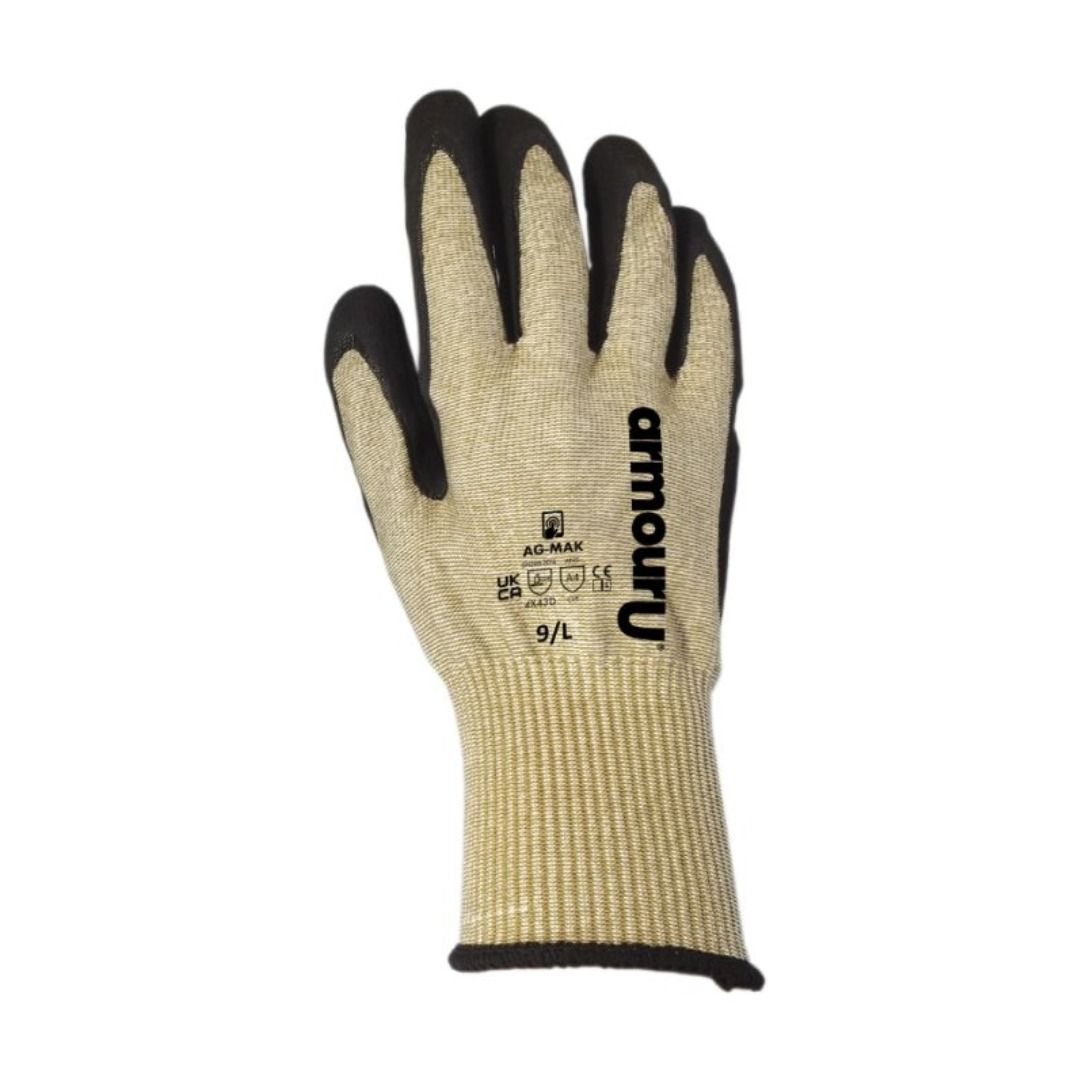
Cut resistant sandy nitrile palm coated gloves beige and black pair front view | CMT Group UK
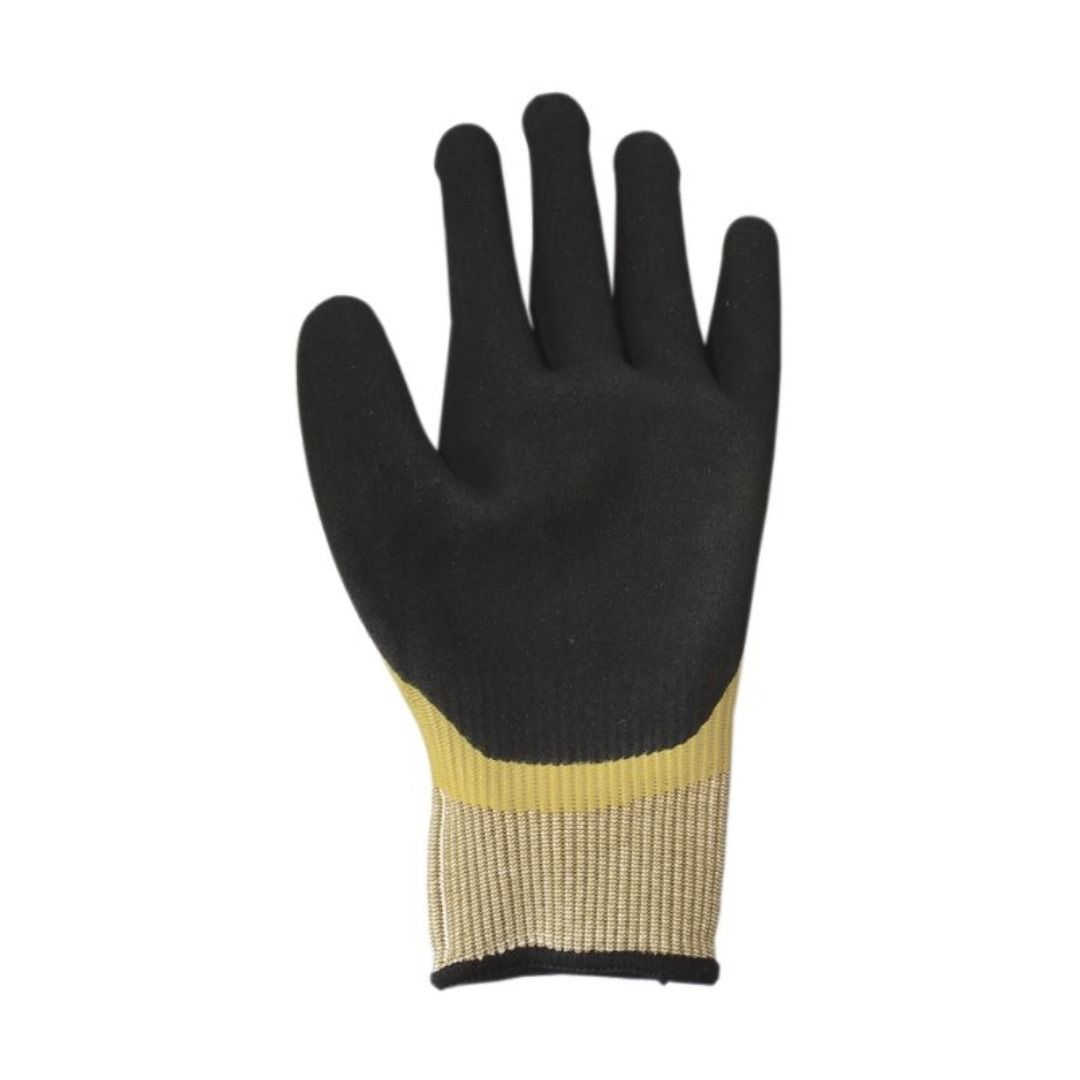
Cut resistant sandy nitrile palm coated gloves beige and black pair front view | CMT Group UK Cut resistant palm coated gloves breathable knitted back of hand and fingers construction | CMT Group UK armourU Sandy Nitrile Gloves TDM Level D | CMT Group UK Sandy nitrile double dipped palm coating texture close-up cut resistant gloves fingertip detail | CMT Group UK Product Spotlight | armourU Heavy Duty Gloves

Cut resistant sandy nitrile palm coated work gloves built for engineering, fabrication, and industrial operatives working with sharp materials and machinery.

  • TDM Cut Level D, ISO 13997 straight-blade tested
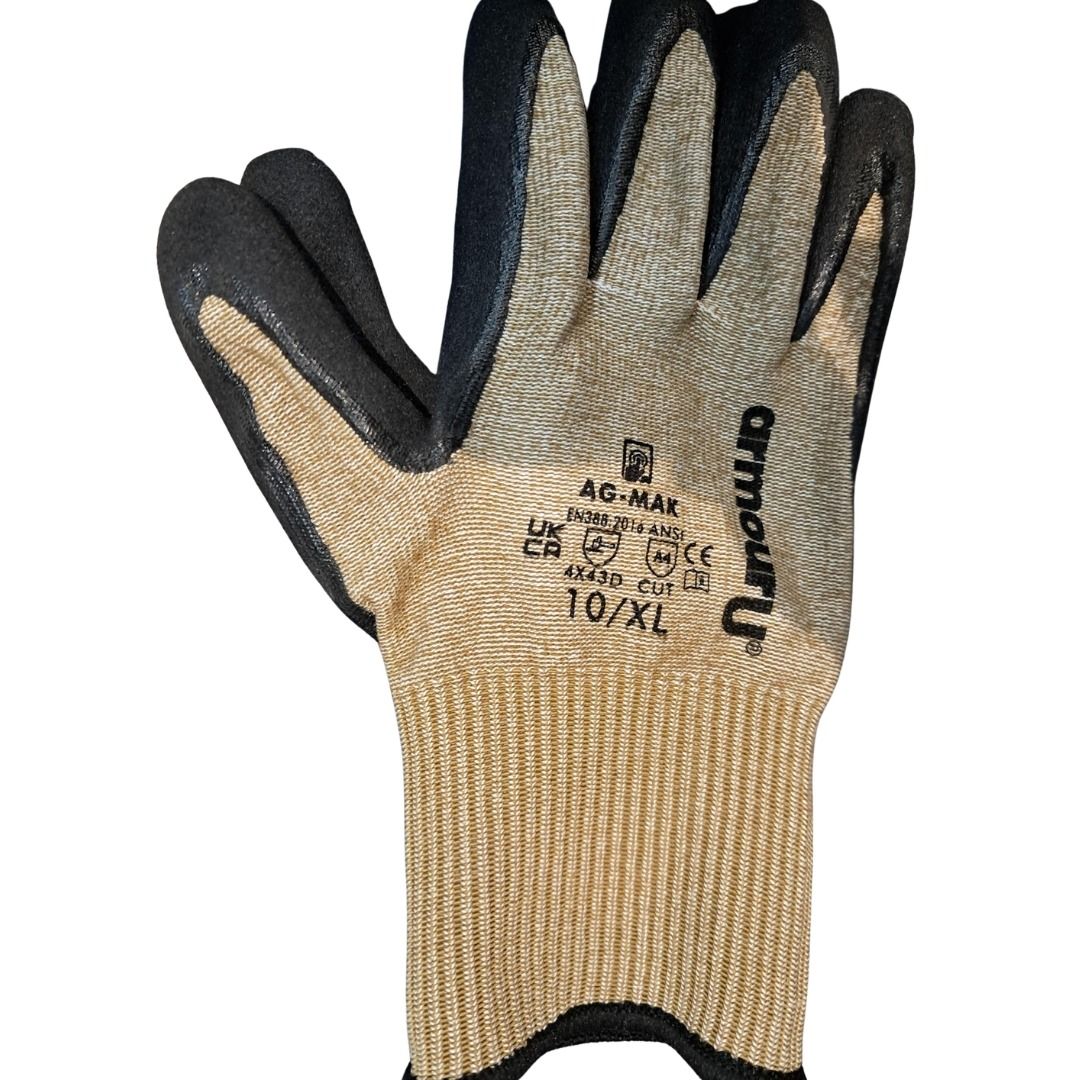
  • EN388:2016 certified, CE and UKCA marked, rated 4X43D
  • Double dipped black sandy nitrile palm and fingertip coating
  • Oil resistant, water repellent construction
  • Touchscreen compatible, breathable back of hand and fingers
  • Available in multiple sizes
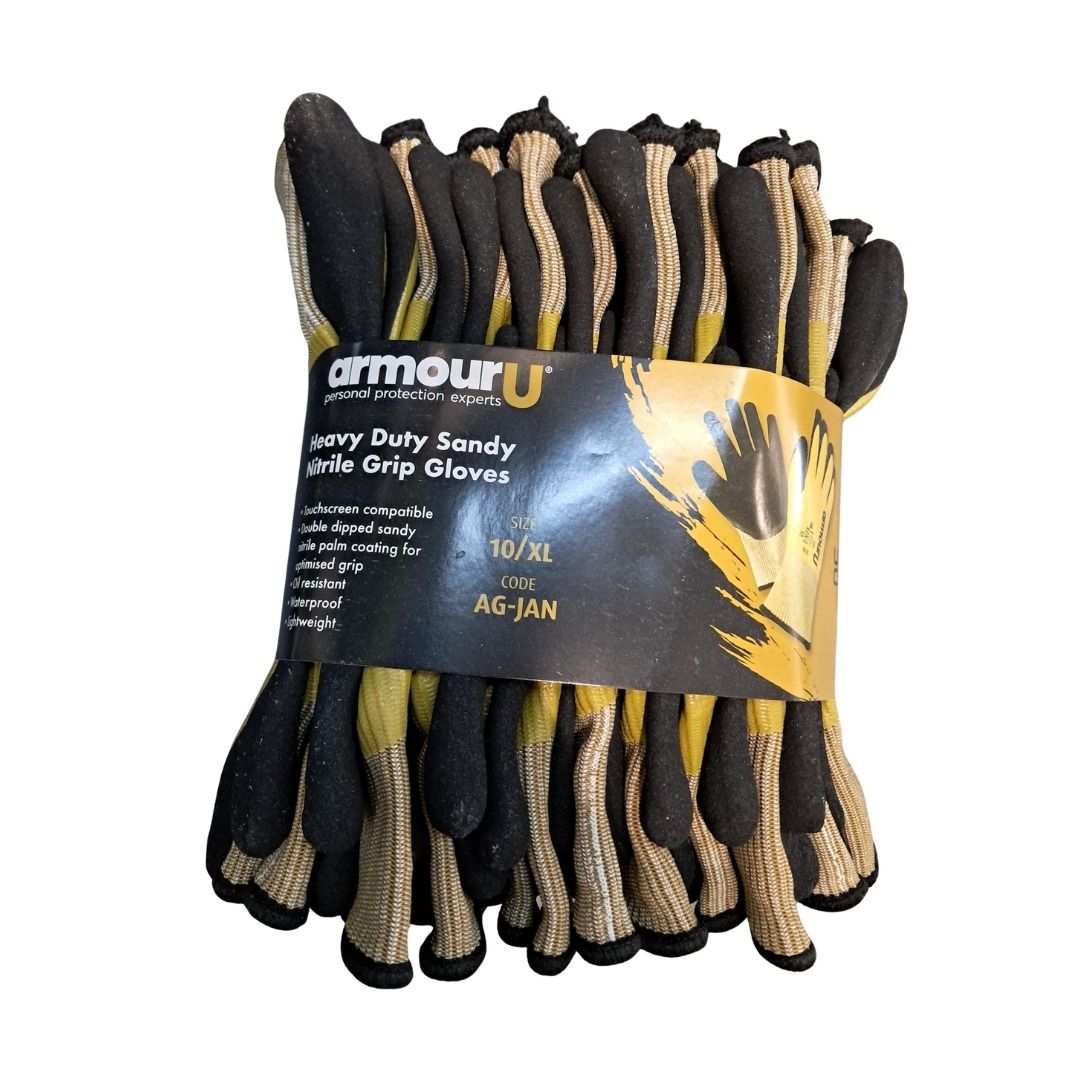
  • Supplied in pack quantities of 12 pairs
  • Plastic-free, zero-waste packaging

armourU Cut Resistant Sandy Nitrile Palm Coated Gloves - TDM Level D

Code
AGMAK
In stock

Cut resistant sandy nitrile palm coated work gloves built for engineering, fabrication, and industrial operatives working with sharp materials and machinery.

  • TDM Cut Level D, ISO 13997 straight-blade tested
  • EN388:2016 certified, CE and UKCA marked, rated 4X43D
  • Double dipped black sandy nitrile palm and fingertip coating
  • Oil resistant, water repellent construction
  • Touchscreen compatible, breathable back of hand and fingers
  • Available in multiple sizes
  • Supplied in pack quantities of 12 pairs
  • Plastic-free, zero-waste packaging
Grouped product items
Size 8/M Code AGMAK-08
£7.78 £6.48
Bulk Discounts
Size 9/L Code AGMAK-09
£7.78 £6.48
Bulk Discounts
Size 10/XL Code AGMAK-10
£7.78 £6.48
Bulk Discounts
Size 11/XXL Code AGMAK-11
£7.78 £6.48
Bulk Discounts

armourU Cut Resistant Level DSandy Nitrile Palm Coated Gloves

Cut resistant sandy nitrile palm coated work gloves specified for engineering operatives, fabricators, and industrial workers handling sharp materials, metal components, and machinery alongside oil and grease. The double dipped palm and fingertip coating delivers TDM Level D cut protection combined with consistent grip across dry, oily, and lightly damp surfaces.

How double dipped sandy nitrile outperforms standard coating in oily and sharp environments

A standard single-coat nitrile glove applies one layer of nitrile over the liner, a layer that thins at the palm and fingertips under sustained contact with sharp metal edges, abrasive surfaces, and oily components before the liner itself shows wear. When grip coating degrades mid-shift, operatives compensate by gripping harder, increasing hand fatigue and raising the risk of dropped components on close-tolerance assembly and handling tasks. The double dipped construction applies a second sandy nitrile coat over the first, building a more resilient coating at the two highest-wear zones, palm and fingertips, and maintaining grip performance across a full working day in engineering and fabrication environments.

Key Features

  • TDM Level D cut resistance (ISO 13997): Straight-blade tested to a 15 Newton cut force threshold, providing meaningful protection against lacerations from sheet metal, glass edges, sharp component flanges, and cutting debris on engineering and fabrication sites.

  • Double dipped sandy nitrile palm coating: Two nitrile coats applied over the palm and fingertips build a more resilient grip surface than single-dip alternatives. The raised sandy texture maintains traction on oily metal, greasy components, and lightly damp surfaces where flat nitrile or foam nitrile coatings lose grip.

  • EN388:2016 certified, CE and UKCA marked: Rated 4X43D for maximum abrasion resistance (Level 4), maximum tear resistance (Level 4), and Level 3 puncture resistance, alongside TDM Level D cut protection. CE and UKCA markings confirm third-party assessment under UK PPE Regulations.

  • Oil resistant construction: The nitrile coating resists oil penetration, maintaining grip integrity in automotive, engineering, and maintenance environments where lubricants, cutting oils, and hydraulic fluids are present.

  • Touchscreen compatible: Operatives can use mobile devices, tablets, and site management tools without removing the gloves, supporting digital site workflows and EDGE portal access during the working shift.

  • Breathable back of hand: The open-knit construction on the back of the hand allows heat and moisture to escape, reducing sweating and improving comfort during extended shifts in indoor engineering and assembly environments.

  • Plastic-free, zero-waste packaging: Supplied without single-use plastic for sites with sustainability and ESG procurement requirements.

Who is this for

Trades and roles:

  • Engineers and mechanical operatives

  • Fabricators and metal assemblers

  • Automotive and vehicle technicians

  • Utilities and infrastructure workers

  • Warehouse and logistics operatives handling sharp materials

Industries:

  • Engineering and manufacturing

  • Automotive and vehicle maintenance

  • Utilities and infrastructure

  • Construction

  • Logistics and warehousing

 Specifications

Specification Detail
Product Name armourU Cut Resistant Sandy Nitrile Palm Coated Gloves - TDM Level D
SKU AGMAK
Glove Category Cut Resistant General Handling Grip Glove
TDM Cut Resistance (ISO 13997) Level D — 15N cut force
EN Standard EN388:2016
EN388 Rating 4X43D
Abrasion Resistance Level 4 (8,000 rub cycles — maximum)
Coupe Blade Cut Test X — not tested; TDM Level D is the applicable cut rating
Tear Resistance Level 4 (75N — maximum)
Puncture Resistance Level 3 (100N)
Impact Protection Not tested
Coating Type Double dipped sandy nitrile
Coating Coverage Palm coated — palm and fingertips
Coating Colour Black
Grip Conditions Dry, oily, and lightly damp surfaces
Oil Resistance Oil resistant
Water Resistance Water repellent
Touchscreen Compatible Yes
Liner Construction Knitted liner with cut-resistant construction
Back of Hand Breathable knitted construction
Cuff Type Knitted elasticated cuff
Compliance Markings CE and UKCA
Packaging Plastic-free, zero-waste — CMT ThinkGreen range
Sizes Available M (8), L (9), XL (10), XXL (11)
Pack Quantity 12 pairs
Liner Colour Beige/tan

Compatibility

Application or Condition Detail
Sharp metal components and edges ✓ Compatible
Sheet metal fabrication and assembly ✓ Compatible
Glass handling with sharp edges ✓ Compatible
Oily and greasy surfaces ✓ Compatible
Dry surface handling ✓ Compatible
Touchscreen device use on site ✓ Compatible
Sharp cable, pipe, and utilities components ✓ Compatible
Chemical immersion or prolonged chemical contact ✗ Not recommended
Heat or flame exposure ✗ Not recommended
Fully wet or submerged conditions ✗ Not recommended
Needle-stick hazard environments ✗ Not recommended
Electrical hazard tasks ✗ Not recommended


Who is this for

Cut resistant sandy nitrile palm coated work gloves used primarily by engineering operatives, fabricators, and maintenance workers who handle sharp metal components, sheet materials, glass, and oily machinery parts across extended shifts in indoor and outdoor industrial environments. They are equally suited to utilities workers handling sharp cable, pipe, and conduit during infrastructure installation and maintenance, and to automotive technicians working with oily components and sharp part edges where both cut protection and consistent grip are required simultaneously throughout the day.

Typical applications

  • Handling sheet metal, pressed steel components, and sharp metal fabrications during engineering assembly and production line operations.

  • Processing and moving cut glazing, glass panels, and sharp-edged architectural materials in glazing, fit-out, and construction environments.

  • Assembling sharp precision components, metal fixings, and parts on manufacturing and light engineering production lines.

  • Working with sharp pipes, cable, conduit, and wire during utilities installation, ducting, and infrastructure maintenance.

  • Mechanical maintenance tasks on oily machinery, plant equipment, and industrial systems where both grip and cut protection are required.

  • Warehouse and logistics picking operations involving cardboard, packaging straps, banding, and sharp-edged materials throughout the shift.

  • General construction site tasks involving rebar ends, tie wire, metal fixings, and sharp building materials.

  • Automotive repair and servicing work on oily components, sharp-edged panels, and precision assembly tasks.

How to use

Step 1: Select the correct size. M fits hand size 8, L fits size 9, XL fits size 10, XXL fits size 11. An oversized glove bunches at the fingertips during precision component handling and increases the risk of snagging on sharp edges.

Step 2: Pull the glove fully over the hand, ensuring all fingers are fully seated and the sandy nitrile coating covers the palm and fingertips completely before beginning work.

Step 3: Check that the elasticated cuff seats firmly at the wrist with no gaps or folded material. A loose cuff allows debris and sharp swarf to enter the glove from the wrist.

Step 4: Inspect the sandy nitrile coating surface before each use for visible cracking, thinning, or peeling, particularly at the fingertips and thumb where wear accumulates first. Do not use a glove with visible coating damage.

Step 5: Replace gloves when the sandy nitrile surface shows visible deterioration or when grip performance drops noticeably on the material being handled.

Common mistakes

  • Selecting the wrong size: an oversized glove reduces grip precision on sharp component handling and assembly tasks, and an undersized glove stresses the nitrile coating at the knuckles and palm, shortening service life considerably.

  • Using these gloves for chemical tasks: the sandy nitrile coating provides oil resistance and water repellency but carries no EN374 chemical resistance rating. Chemical-resistant gloves must be specified separately for tasks involving direct chemical contact.

  • Assuming water repellent means waterproof: these gloves resist light moisture and surface splashing but are not designed for sustained waterproof performance. For fully sealed waterproof protection at TDM Level D, the armourU Sandy Nitrile Fully Coated Grip Gloves provide complete coverage across the hand.

  • Leaving oily and metallic residue on the coating: oil contamination and metal filings that are not removed after each shift degrade the nitrile surface over time, shortening service life and reducing grip texture. Wipe clean after use and allow to dry before storage.

  • Reusing gloves with visible coating damage: a crack or tear in the sandy nitrile palm coating reduces both grip performance and cut protection integrity at the point of damage. Inspect before every shift and replace immediately when wear is visible.

Safety

These gloves are certified to EN388:2016 (4X43D) for mechanical risk protection and provide TDM Level D cut resistance under ISO 13997. They are designed for sharp material handling, engineering assembly, and oily industrial environments. They are not suitable for chemical immersion, heat or flame exposure, needle-stick hazards, or tasks requiring electrical insulation. Specify and use in accordance with the Personal Protective Equipment at Work Regulations 1992 (as amended) and the findings of a suitable workplace risk assessment.

Maintenance

Wipe clean after each use to remove oil, metal filings, swarf, and abrasive residue from the palm and fingertip coating. Allow to air dry away from direct heat sources and direct sunlight. Store away from solvents and chemicals that degrade nitrile. Inspect the palm and fingertip coating before each shift. Replace when the sandy nitrile surface shows visible cracking, thinning, or loss of grip texture.

Frequently Asked Questions

Q: What does TDM Level D mean for these cut resistant gloves?
A: TDM Level D is a cut resistance rating measured under ISO 13997 using a straight downward blade applied to the glove material at increasing loads until the blade penetrates, not the older rotating Coupe test, which is subject to blade dulling and is no longer the primary benchmark under EN388:2016. Level D corresponds to a cut force of 15 Newtons, placing it in the upper-middle range of the A to F scale, where A is the lowest protection and F is the maximum. For engineering, fabrication, and sharp materials handling environments, TDM Level D is a commonly specified threshold providing meaningful laceration protection against sheet metal edges, glass, and sharp component flanges without the liner stiffness associated with Levels E and F. The UK Health and Safety Executive and BSIF recognise TDM Level D as a robust benchmark for hand protection in general mechanical hazard environments under the Personal Protective Equipment at Work Regulations 1992.

Q: What does the EN388:2016 rating of 4X43D mean?
A: EN388:2016 is the UK and European standard for gloves protecting against mechanical risks. Each character in the 4X43D code represents a separate test result. The first digit (4) is abrasion resistance, Level 4 is the maximum, reached only after 8,000 rub cycles before material failure, indicating strong durability against rough and abrasive surfaces. The second character (X) indicates the Coupe rotating blade test was not conducted or returned an unreliable result; this is not a low cut rating, it simply means the TDM straight-blade result in the fifth position is the applicable measure of cut resistance. The third digit (4) is tear resistance, Level 4 requires 75 Newtons of force to tear the material, again the maximum. The fourth digit (3) is puncture resistance at Level 3, requiring 100 Newtons of force before penetration. The fifth character (D) is the TDM cut level from ISO 13997, confirming 15 Newtons of cut force resistance. CE and UKCA markings confirm independent third-party assessment under UK PPE Regulations.

Q: What are these gloves NOT suitable for?
A: These gloves carry no EN374 chemical resistance rating and must not be used for chemical immersion or sustained contact with corrosive substances, chemical-resistant gloves must be specified for those tasks. They are not rated for heat or flame exposure and must not be used near welding, grinding sparks, or high-temperature surfaces. They are water repellent, not waterproof, and are not suitable for fully wet or submerged conditions. EN388 puncture resistance is not the same as needle-stick protection, these gloves must not be used in environments where hypodermic needle hazards are present.

Q: Why choose double dipped sandy nitrile over a standard single-coat nitrile glove?
A: A standard single-coat nitrile glove applies one layer of nitrile over the liner, a coating that thins at the palm and fingertips under sustained contact with sharp metal edges and abrasive surfaces before the liner itself begins to wear. When the grip coating degrades mid-shift, operatives compensate by gripping harder, increasing hand fatigue and reducing precision on close-tolerance handling tasks. Double dipping applies a second nitrile coat over the first, building a more resilient coating surface that maintains grip performance across a full working day. The sandy texture adds raised contact points that maintain traction on oily metal, greasy components, and lightly damp surfaces where smooth or foam nitrile coatings lose grip.

Q: Do these gloves maintain grip on oily and greasy surfaces?
A: Sandy nitrile is specifically chosen for grip performance on oily and greasy surfaces. The raised textured surface creates multiple small contact points that resist the lubricating effect of oil and grease, where smooth or foam nitrile coatings can lose traction as oil builds between the glove and the component surface. The gloves also carry an oil resistant designation, meaning the nitrile material resists oil penetration through the coating itself. They are not rated for chemical resistance under EN374 and should not be used for direct chemical contact beyond oil and water exposure.

Q: How long should a pair last under regular use?
A: Service life depends on the task and materials being handled. In heavy engineering or fabrication environments with daily contact with sharp metal edges and abrasive surfaces, the fingertip coating area shows wear first. Wiping the gloves clean after each shift to remove oil, swarf, and metal debris significantly extends service life compared with leaving contaminants to degrade the nitrile surface during storage. Inspect before every shift and replace when visible thinning, cracking, or loss of sandy texture is present at the palm or fingertips.

Q: Are these gloves compatible with touchscreen devices on site?
A: Yes. These gloves are touchscreen compatible, allowing operatives to use mobile devices, site tablets, and digital site management tools without removing the gloves. This is useful for site managers and operatives accessing delivery tracking, digital documentation, or the CMT EDGE portal via the EDGE App during the working shift.

Q: Can I order these cut resistant gloves in bulk for multiple sites or large projects?
A: CMT Group maintains large UK stock holdings of these gloves across its fulfilment centres, with no backorders on core PPE lines, and ships to multiple site addresses from a single order. The EDGE procurement portal provides agreed contract pricing by volume tier, role-based spending controls per project, and full delivery tracking from despatch to drop-off, managing bulk PPE procurement across multiple sites from a single account. Orders can be placed 24/7 online or via the CMT EDGE App.

CMT Equipment Ltd