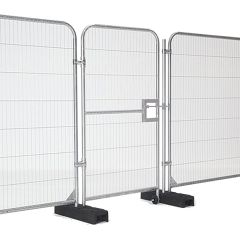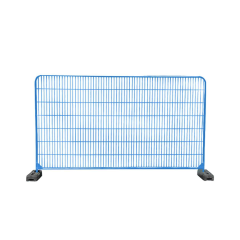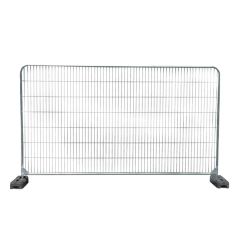
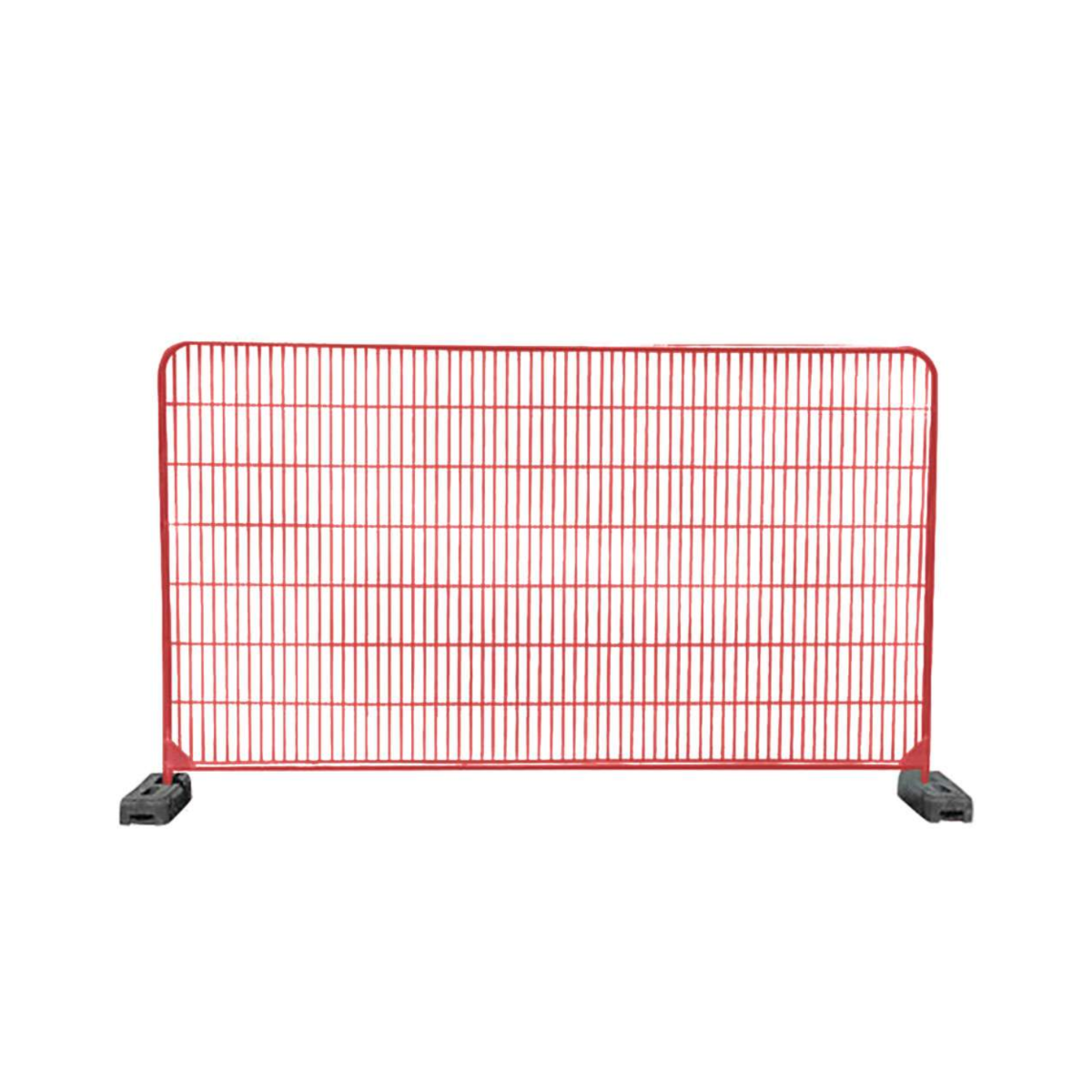

Red round top temporary fence panels with anti-climb mesh, for contractors marking restricted areas and exclusion zones on construction sites and at events.
- Red powder-coated finish over galvanised steel
- Anti-climb mesh with a 40mm horizontal pitch
- Rounded top corners
- Joins galvanised panels from the same range in one run
- Supplied as a single panel, feet and couplers sold separately
- 3450mm long x 2025mm high (the first number is the length, the second is the height)
Securasite Red Round Top Temporary Fence Panels - Powder-Coated & Anti-Climb

Red round top temporary fence panels with anti-climb mesh, for contractors marking restricted areas and exclusion zones on construction sites and at events.
- Red powder-coated finish over galvanised steel
- Anti-climb mesh with a 40mm horizontal pitch
- Rounded top corners
- Joins galvanised panels from the same range in one run
- Supplied as a single panel, feet and couplers sold separately
- 3450mm long x 2025mm high (the first number is the length, the second is the height)
Order 1x to earn 37 FASTPoints
Order to earn 37 FASTPoints
Log in to access trade discountsSecurasite Red Round Top Temporary Fence Panels - Powder-Coated & Anti-Climb
Red round top temporary fence panels are galvanised steel mesh panels with a red powder-coated finish and rounded top corners. Each panel stands in fence feet and joins the next with couplers, so a secure perimeter goes up without digging or ground fixings. The red finish marks a run as a restricted area or exclusion zone, where standard galvanised fencing would blend into the site.
How a Red Finish Marks Exclusion Zones That Grey Fencing Hides
Galvanised fencing looks the same around every part of a site, so a restricted zone inside the perimeter is easy to miss. Workers and visitors then walk up to lifting areas, live works or hazards they should keep clear of. A red run sets the zone apart at a glance, while the anti-climb mesh still keeps people out.
Key Features
- Red powder-coated finish: marks restricted areas, exclusion zones and hazard boundaries at a glance.
- Anti-climb mesh: the 40mm horizontal pitch leaves no secure foothold, so the run is hard to scale.
- Round top frame: rounded top corners in place of the square corners on standard panels.
- Galvanised steel base: the steel beneath the powder coat is galvanised to protect it against corrosion.
- Same size as galvanised panels: joins standard panels from the same range, so red is used only where it is needed.
- Freestanding and reusable: stands in fence feet with no ground fixings, then comes down and moves to the next job.
Who is this for
Trades and roles
- Site managers
- Groundworkers and civil engineers
- Demolition contractors
- Utility and street works teams
- Event organisers and crowd safety teams
- Facilities managers
Industries
- Construction
- Demolition
- Civil engineering and infrastructure
- Utilities
- Events
- Facilities management
- Local authorities
Specifications
| Specification | Detail |
|---|---|
| Product name | Securasite Red Round Top Temporary Fence Panels - Powder-Coated & Anti-Climb |
| Product code | TF-30-RT-001-RED |
| Product type | Round top anti-climb temporary fence panel |
| Colour | Red |
| Finish | Powder-coated |
| Infill | Anti-climb mesh |
| Mesh horizontal pitch | 40mm |
| Top profile | Round top |
| Base material | Galvanised steel |
| Length | 3450mm (11ft 4in) |
| Height | 2025mm (6ft 8in) |
| Weight | 15kg (33lb) |
| Brand | Securasite |
Specification verified against the Securasite product page (securasite.com) on [TO CONFIRM].
Compatibility
| Base material, tool or condition | Suitability |
|---|---|
| Standard thermoplastic fence feet | Suitable, one foot at each joint and one at each end of the run |
| Standard fence couplers | Suitable, at least one coupler at every joint |
| Fence stabilisers | Suitable, recommended on long or exposed runs |
| Fence ballast blocks | Suitable, add weight where the run needs extra stability |
| Galvanised and other colour panels in the same range | Suitable, same size, weight and mesh, so colours can be mixed in one run |
| Fence sheeting and banners | Suitable, add stabilisers and ballast, as sheeting increases wind load |
| Exposed or windy sites without stabilisers | Not recommended, add stabilisers and ballast first |
| Standing panels without fence feet | Not recommended, the panel is designed to stand in fence feet |
| Permanent boundary fencing | Not recommended, use a permanent fencing system |
| Front-of-stage barriers taking crowd pressure | Not recommended, use a purpose-built crowd barrier |
Typical Users and Projects
Site managers, groundworkers and event teams use red panels inside or alongside a main perimeter to mark areas people must keep out of. Typical projects include building sites, demolition jobs, utility works and outdoor events. The panels need no specialist skills to put up, but runs on exposed or public-facing sites should be planned with a temporary works check.
Typical applications
- Fencing off lifting zones and crane exclusion areas within a construction site.
- Marking demolition exclusion zones where falling debris is a risk.
- Closing off excavations and open trenches that sit inside a wider site perimeter.
- Separating fuel, gas cylinder and other hazardous storage from the rest of a compound.
- Creating restricted areas at events, such as generator and plant zones, away from public routes.
- Marking keep-out areas around utility works, alongside the signing and guarding the works require.
How to use
Step 1: Plan the run, with one foot for each panel plus one to finish the end, and a coupler for every joint.
Step 2: Place the first fence foot on firm, level ground and drop the panel uprights into it.
Step 3: Stand the next panel in the shared foot alongside the first.
Step 4: Fit a coupler over the two uprights at each joint and tighten it.
Step 5: Add stabilisers and ballast blocks on long, exposed or sheeted runs.
Step 6: Fit warning signs to the run so the reason for the restriction is clear.
Step 7: Inspect the run daily and after high winds.
Common mistakes
- Ordering panels without enough feet and couplers to complete the run.
- Leaving out couplers, so panels can be lifted out or pushed apart.
- Adding sheeting or banners without extra stabilisers and ballast.
- Relying on red fencing alone, with no signs to explain the hazard.
- Standing feet on soft or sloping ground without levelling them first.
Safety
Plan perimeter and exclusion zone fencing as part of the site's security and public protection arrangements, following HSE guidance and the Construction (Design and Management) Regulations 2015. Mesh panels can blow over in high winds, especially with sheeting fitted, so stabilise exposed runs and check them after bad weather. Each panel is 3450mm long, so plan handling to avoid strain injuries and contact with overhead obstructions.
Maintenance
Check couplers, feet and mesh during routine site inspections, and replace damaged panels. Store panels flat or in a fence stillage to protect the powder coat between jobs.
Frequently Asked Questions
Q: What do I need to order with red round top temporary fence panels?
A: Fence feet and couplers are ordered separately. A straight run needs one foot for each panel, plus one more to finish the end. Fit at least one coupler at every joint between panels. Add stabilisers and ballast blocks on long or exposed runs.
Q: What does 3450mm x 2025mm mean on a temporary fence panel?
A: The first number is the panel length and the second is the panel height. Each panel adds close to 3.45m to a run. Panels of this type are often described as 3.5m x 2m in the trade.
Q: What makes the mesh anti-climb?
A: The mesh wires sit close together, with a 40mm horizontal pitch. The narrow gaps do not give a secure foothold. That makes the fence much harder to climb than a wide-mesh panel.
Q: What are these panels not suitable for?
A: They are not designed for permanent boundary fencing or as front-of-stage barriers that take crowd pressure. They should not be stood without fence feet, or left on exposed sites without stabilisers. For those jobs, use a permanent fencing system, a purpose-built crowd barrier or a stabilised run.
Q: Why choose red panels instead of galvanised?
A: Galvanised fencing looks the same across a whole site, so a hazard zone inside the perimeter does not stand out. Red sets a restricted area or exclusion zone apart at a glance. The panel size, weight and mesh stay the same, so only the finish changes.
Q: Can red panels be joined to galvanised panels in the same run?
A: The red panel has the same size, weight and mesh as the galvanised and other colour panels in the range. Standard feet and couplers join them in one run. That lets you use red only for the section around the hazard.
Q: How do I keep a run stable in windy weather?
A: Fit stabilisers along long or exposed runs, and add ballast blocks where extra weight is needed. Sheeting and banners increase wind load, so add more support when you fit them. Check the run after high winds and before work restarts. On exposed sites, a temporary works design can set the stabiliser spacing.
Q: How should red fence panels be stored between jobs?
A: Stack panels flat or in a fence stillage to protect the powder coat from chips and scrapes. Check the mesh, frame and coating before reuse, and set aside damaged panels. Keep feet and couplers with the panels so each run can be rebuilt complete.