A complete 7-step guide to dewatering a construction site excavation safely and legally, covering spill prevention, hydrocarbon testing, pump selection, discharge routing, sediment filtration, and residual drainage to 1mm. All products available from CMT Group with next-day delivery.
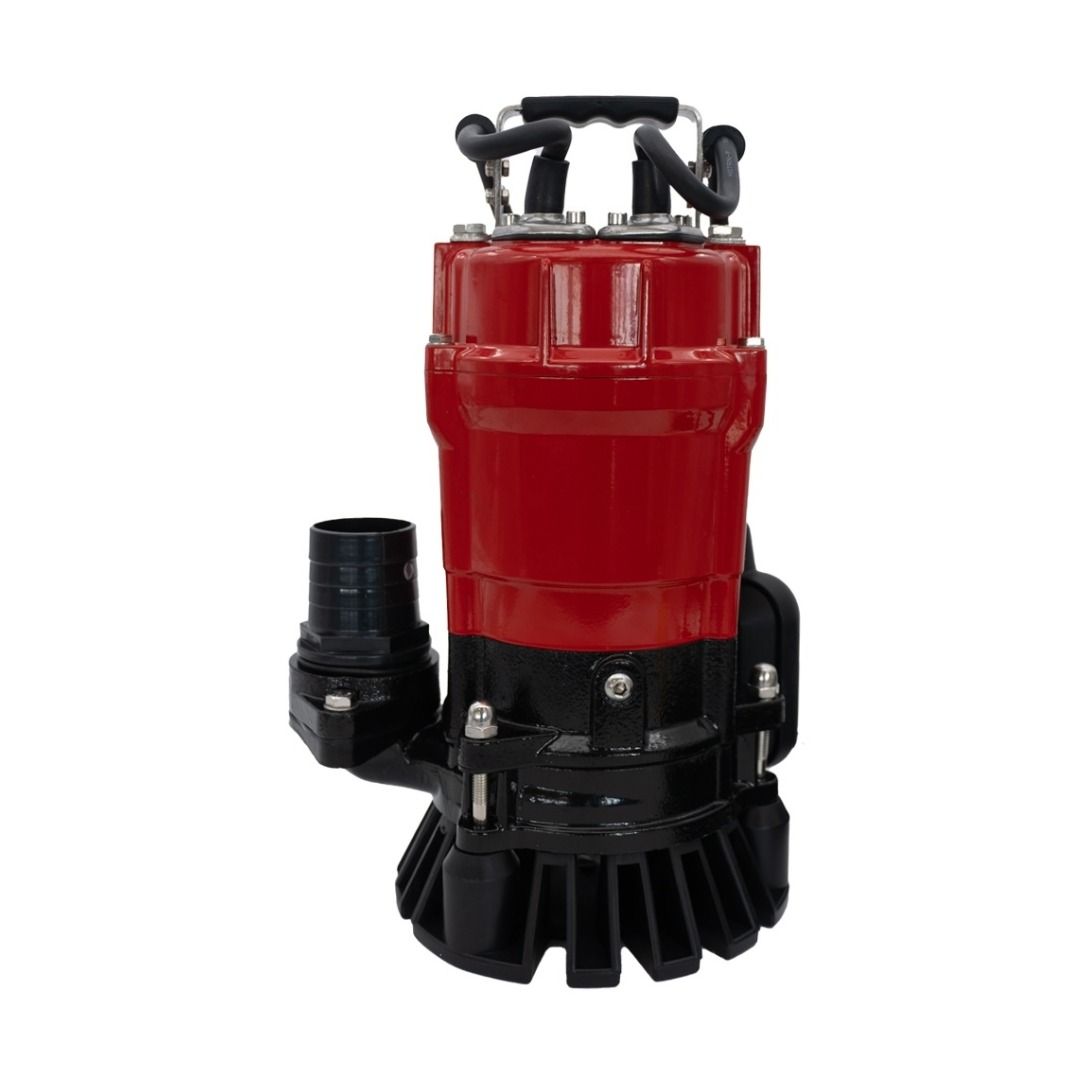
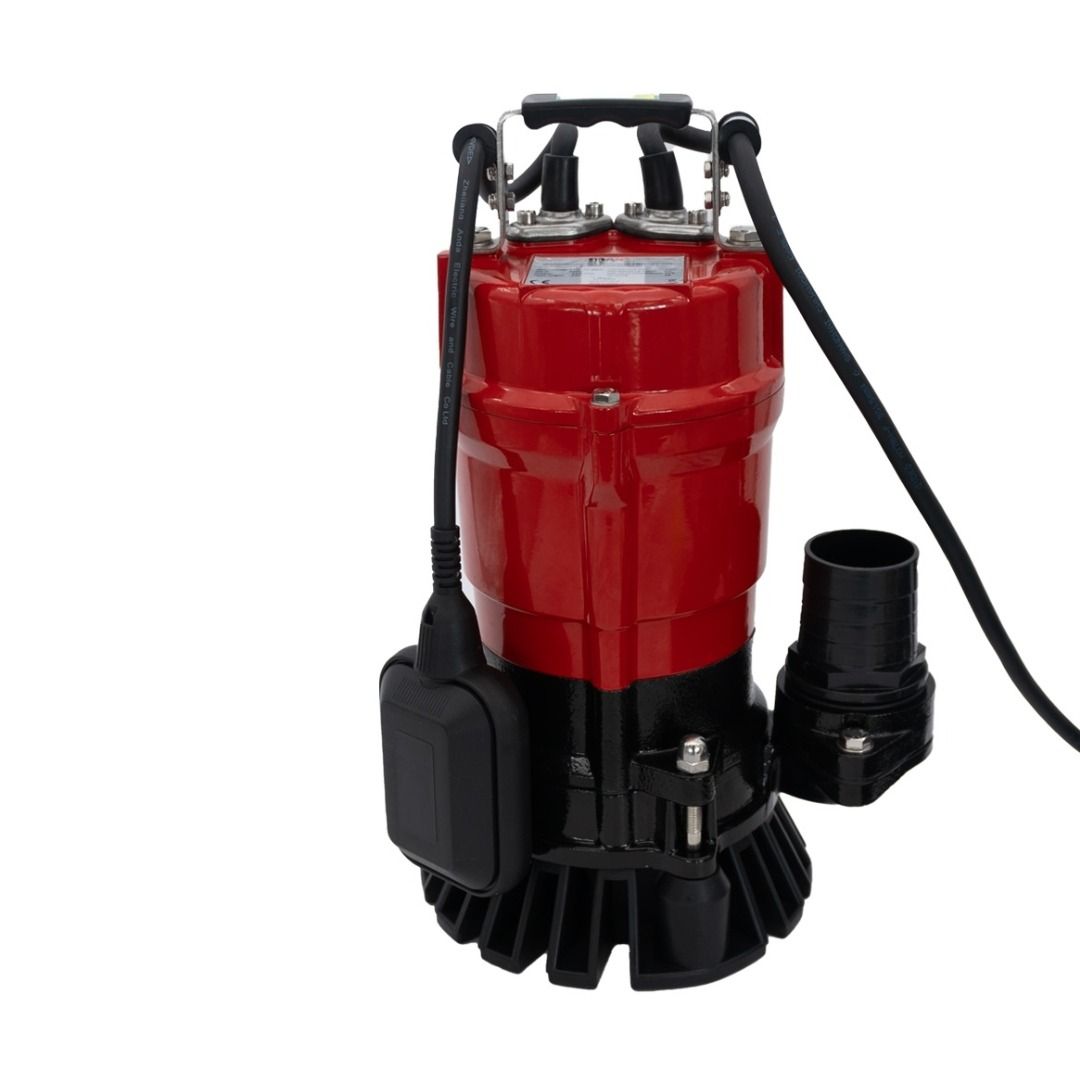
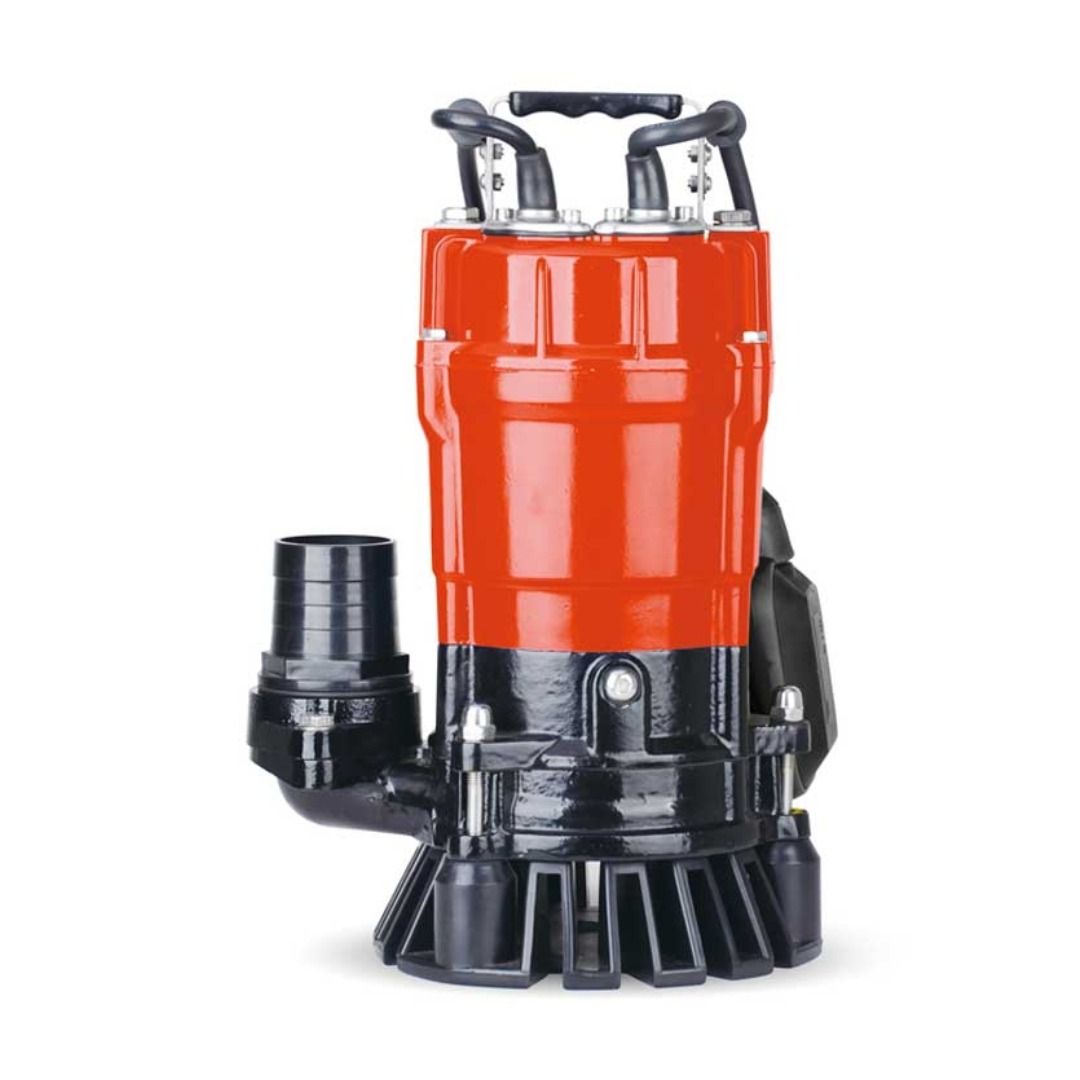
110V submersible water pump for dewatering excavations, foundations, tanks, and sumps on UK construction and industrial sites, operating on the reduced-risk site safety voltage required by most principal contractors.
- 110V AC site safety voltage
- 500W rated input
- Integrated automatic float switch, starts and stops with water level
- 210 L/min max flow rate
- 12m max head height
- 50mm (2") outlet
- handles particles up to 7mm
- IP68 rated
- fully submersible to 5m depth
- 10m power cable
- Thermal overload protection
- CE marked
110V submersible water pump for dewatering excavations, foundations, tanks, and sumps on UK construction and industrial sites, operating on the reduced-risk site safety voltage required by most principal contractors.
- 110V AC site safety voltage
- 500W rated input
- Integrated automatic float switch, starts and stops with water level
- 210 L/min max flow rate
- 12m max head height
- 50mm (2") outlet
- handles particles up to 7mm
- IP68 rated
- fully submersible to 5m depth
- 10m power cable
- Thermal overload protection
- CE marked
- Buy 3 for £320.64 £267.20 each and save 16%
- Buy 6 for £265.63 £221.36 each and save 31%
| BULK DISCOUNT | 3 | 6 |
|---|---|---|
| Price | £267.20 £320.64 | £221.36 £265.63 |
Order 1x to earn 318 FASTPoints
Order to earn 318 FASTPoints
Log in to access trade discountsMAX 110V 500W Submersible Water Pump 2" Outlet Float Switch
110V submersible water pump built for dewatering excavations, foundations, tanks, and sumps on UK construction and industrial sites. Running on the reduced-risk site safety voltage specified by most principal contractors for work in wet environments, it delivers 210 litres per minute at up to 12 metres of head height, with an integrated automatic float switch that starts and stops the pump as water levels rise and fall without requiring manual intervention.
How automatic float switch operation keeps excavations clear without manual supervision
A manually operated pump on an active construction site depends on an operative being present to start and stop it as water accumulates. In an unattended excavation or sump, water can rise undetected between visits, slowing groundwork and creating a safety risk. The integrated float switch on this pump triggers automatically when the water level reaches the float's activation point, starts the pump, and cuts it again when the water drops to the switch's lower threshold. The excavation stays clear throughout the working day without anyone monitoring it.
Key Features
-
Integrated automatic float switch: Activates the pump when water rises to the set level and cuts it when the level drops. Removes the need for manual monitoring of water accumulation in sumps, tanks, and excavations.
-
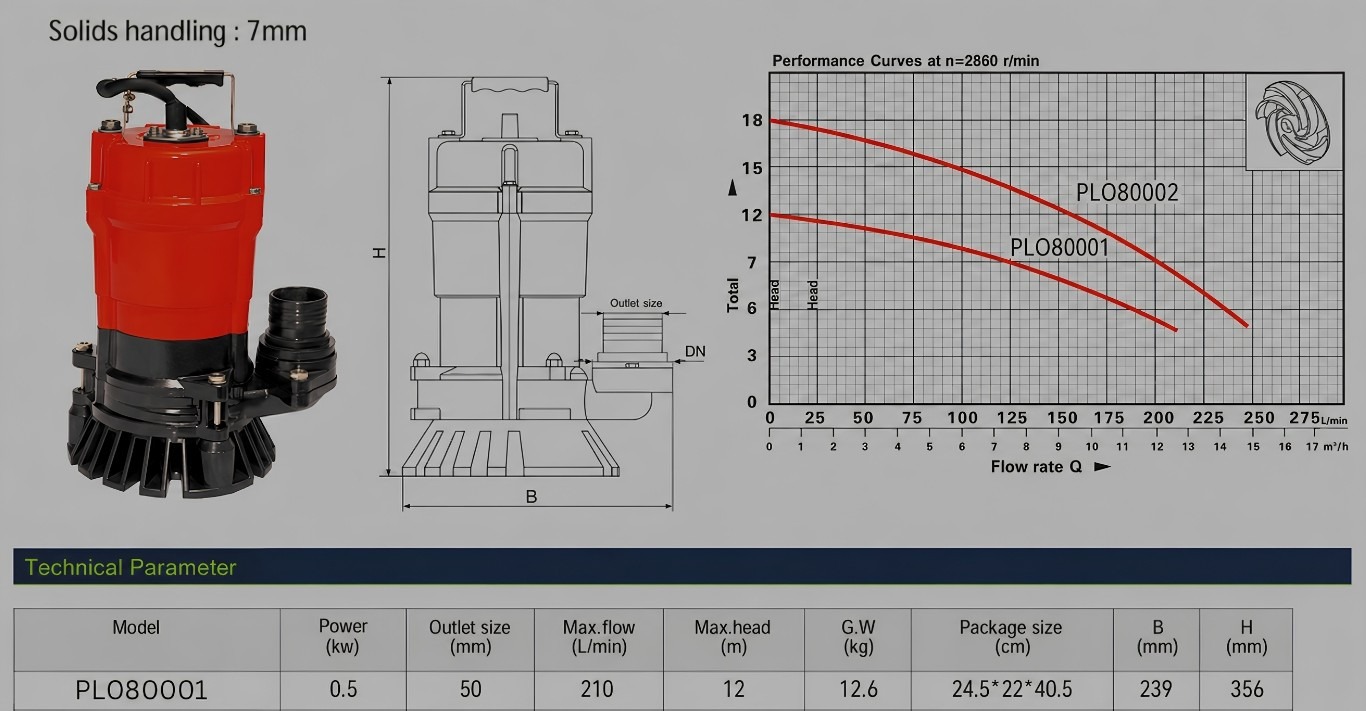
210 L/min max flow rate at 12m head: Moves up to 210 litres per minute with the capacity to lift water vertically up to 12 metres. Flow rate decreases as head height increases; check the performance curve when planning discharge routing.
-
110V site safety voltage: Operates on 110V AC centre-tapped-to-earth supply, the standard specification for most UK construction sites. Requires a 110V transformer or site supply; not compatible with standard 230V mains without a transformer.
-
IP68 rating: Fully sealed and rated for continuous submersion beyond 1 metre. Operates safely fully submerged in the excavation or sump being drained.
-
7mm particle handling: The impeller passes particles up to 7mm diameter without blocking. Suitable for water containing small grit, aggregate fines, and light debris. Not suitable for slurry, silt-laden water, or sewage.
-
Thermal overload protection: Cuts the motor automatically if the pump overheats due to running dry, blockage, or restricted flow. Resets when the motor cools; protects the motor from permanent damage.
-
10m power cable: Provides working reach from a 110V transformer without an extension lead in most site configurations.
-
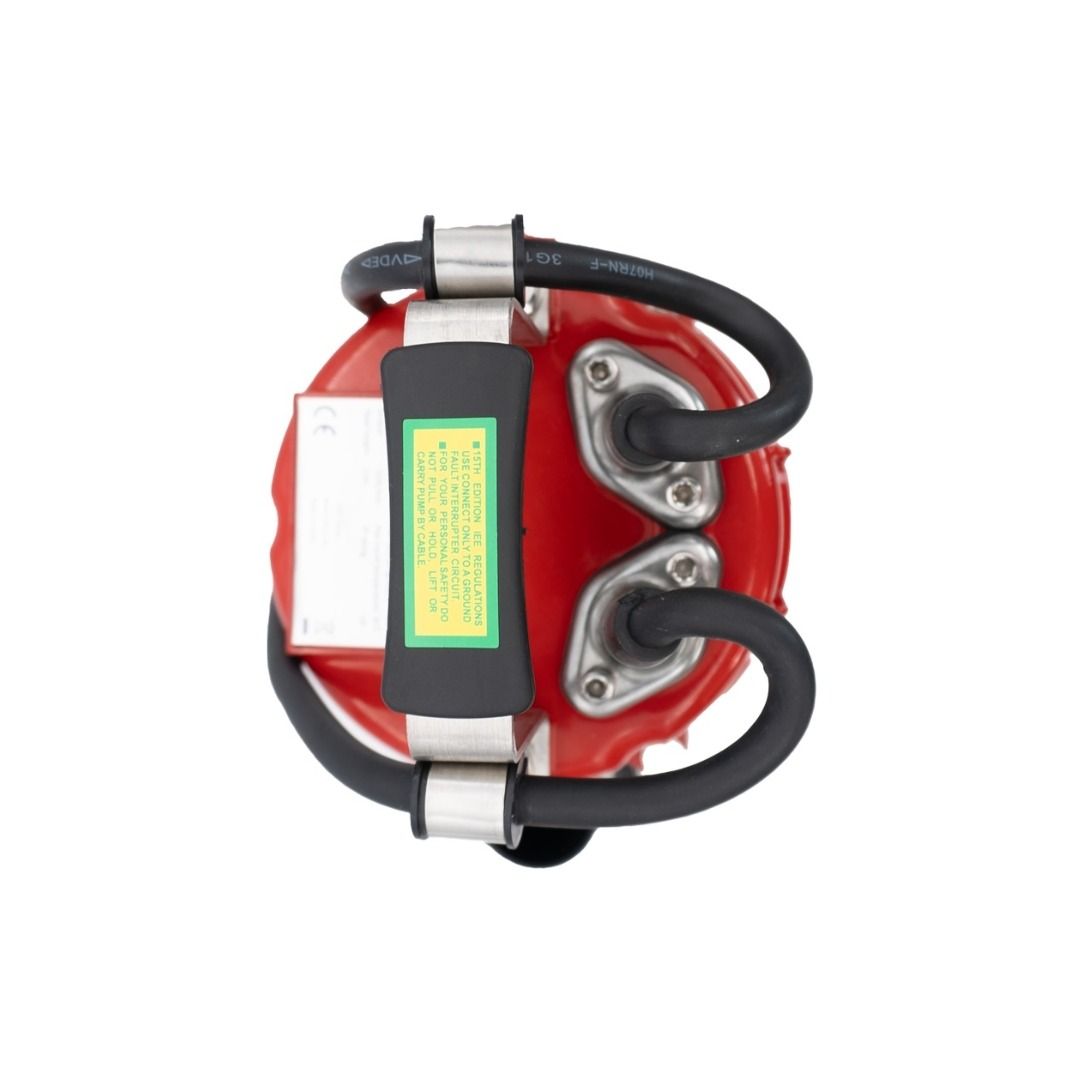
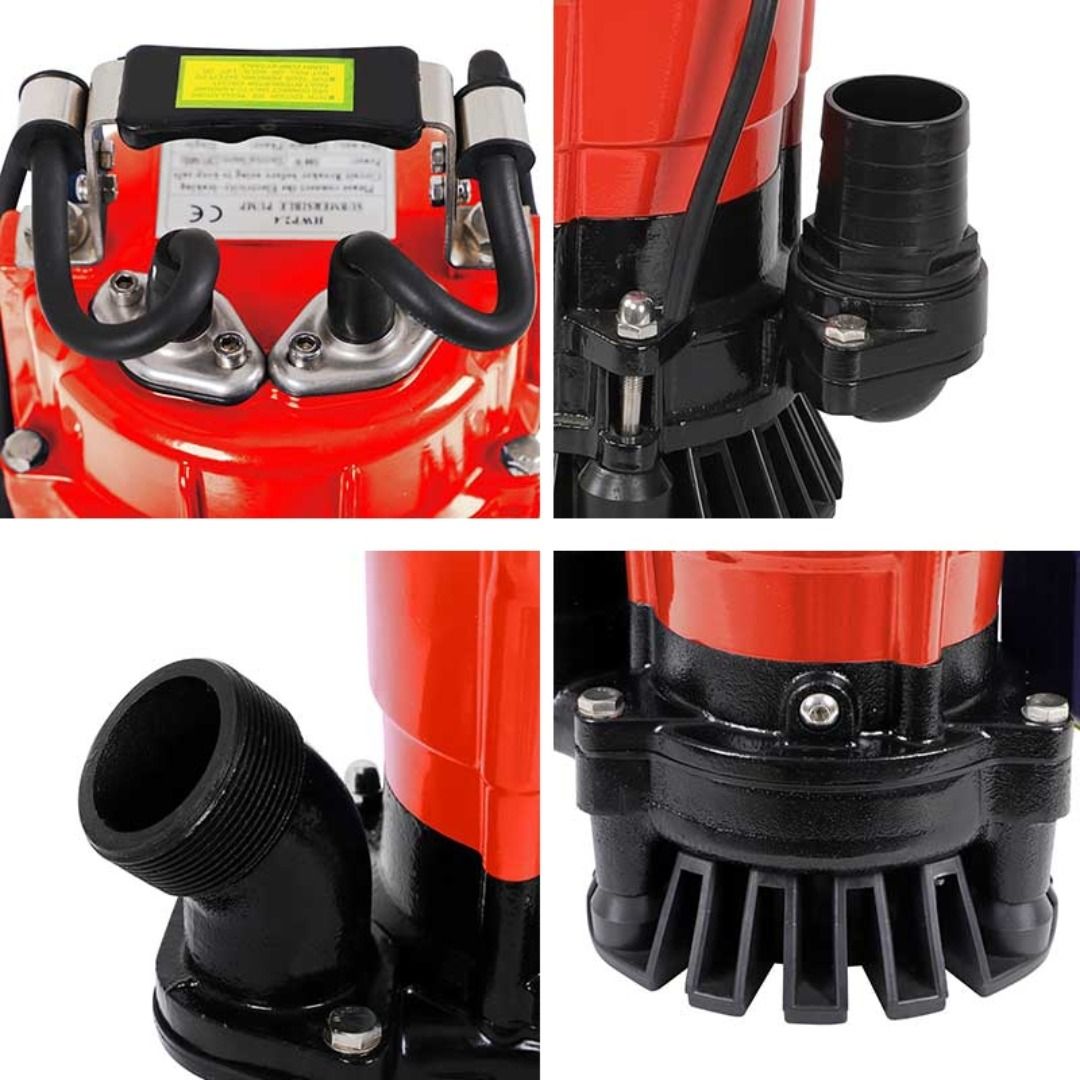
Aluminium alloy die-cast motor housing: Robust construction for site handling. Carry handle fitted for single-operative deployment.
Who is this for
Trades and roles:
-
Site managers and groundworkers
-
Civil engineers
-
Utilities operatives
-
Plant hire operators
-
Maintenance engineers
-
Drainage contractors
Industries:
-
Construction and civil engineering
-
Utilities and infrastructure
-
Industrial maintenance
-
Highways and transport
-
Agricultural drainage
Specifications
| Specification | Detail |
| Product Name | MAX 110V 500W Submersible Water Pump - 2" Outlet Float Switch |
| SKU | PL080001 |
| Brand | MAX |
| Voltage | 110V AC 50Hz |
| Rated Input Power | 500W (0.5kW) |
| Max Flow Rate | 210 L/min |
| Max Head Height | 12m |
| Outlet Size | 50mm (2") |
| Float Switch | Integrated automatic float switch |
| Suction Type | Submersible |
| Max Operating Depth | 5m |
| Max Water Temperature | 0 to 40°C |
| Max Particle Size | 7mm |
| Power Cable Length | 10m |
| IP Rating | IP68 |
| Motor Housing | Aluminium alloy die casting |
| Thermal Overload Protection | Yes |
| Compliance | CE marked |
| Dimensions (W x D x H) | 239mm x 239mm x 356mm |
| Weight | 12.6kg |
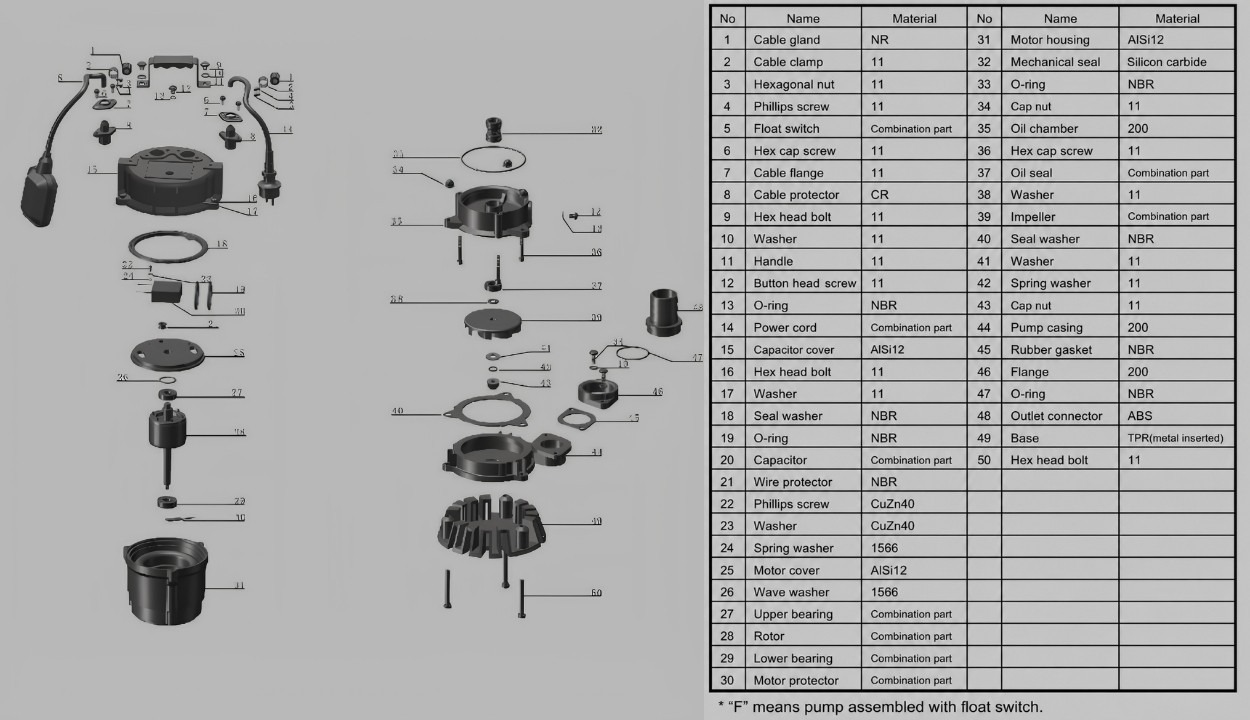
Exploded views

Compatibility
| Application or condition | Status |
| Dewatering excavations and foundations | ✓ Compatible |
| Pumping water from tanks, pits, and sumps | ✓ Compatible |
| Emergency floodwater removal | ✓ Compatible |
| Temporary site drainage during rainfall | ✓ Compatible |
| Water containing particles up to 7mm | ✓ Compatible |
| Unattended automatic operation via float switch | ✓ Compatible |
| Full submersion to 5m depth | ✓ Compatible |
| 110V site supply via transformer | ✓ Required |
| Slurry or silt-laden water | ✗ Not suitable |
| Sewage or foul water | ✗ Not suitable |
| Flammable or corrosive liquids | ✗ Not suitable |
| Water above 40°C | ✗ Not suitable |
| Particles larger than 7mm | ✗ Not suitable, risk of impeller damage |
| Direct 230V mains supply | ✗ Not compatible, 110V supply required |
Model Comparison
| Specification | PL080001 | PL080002 | PL080003 | PL080004 |
|---|---|---|---|---|
| Power and Electrical | ||||
| Voltage | 110V AC | 110V AC | 110V AC | 230V AC |
| Rated Input Power | 500W (0.5kW) | 750W (0.75kW) | 530W (0.53kW) | 530W (0.53kW) |
| Motor Housing | Aluminium alloy die cast | Aluminium alloy die cast | Steel plate stretch | Steel plate stretch |
| Performance | ||||
| Max Flow Rate | 210 L/min | 250 L/min | 250 L/min | 170 L/min |
| Max Head Height | 12m | 18m | 11m | 11m |
| Max Particle Size | 7mm | 7mm | 6mm | 6mm |
| Connections | ||||
| Outlet Size | 50mm (2") | 80mm (3") | 50mm (2") | 25mm (1") |
| Max Operating Depth | 5m | 5m | 5m | 5m |
| Min Water Level | Not specified | Not specified | Not specified | 1mmFlat base drains to 1mm |
| Power Cable Length | 10m | 10m | 10m | 10m |
| Features and Safety | ||||
| Float Switch | Yes — integrated | Yes — integrated | Yes — integrated | No float switch |
| IP Rating | IP68 | IP68 | IP68 | IP68 |
| Thermal Overload Protection | Yes | Yes | Yes | Yes |
| Swing Check Valve | No | No | No | YesPrevents backflow on shutdown |
| Priming Required | No | No | No | Yes — before first start |
| Max Water Temperature | 0 to 40°C | 0 to 40°C | 0 to 40°C | 0 to 40°C |
| Compliance | CE marked | CE marked | CE marked | CE marked |
| Physical | ||||
| Dimensions (B x H) | 239 x 356mm | 312 x 389mm | 185 x 305mm | 195 x 335mm |
| Pump Body Width (B) | 239mm | 312mm | 185mm | 195mm |
| Pump Body Height (H) | 356mm | 389mm | 305mm | 335mm |
| Package Size (W x D x H) | 24.5 x 22 x 40.5 cm | 32 x 22.5 x 44 cm | 28.5 x 27.3 x 36.5 cm | 28.5 x 27.5 x 39.5 cm |
| Weight | 12.6kg | 19.0kg | 13.0kg | 13.8kg |
| Best Suited To | ||||
| Primary Application | General site dewatering, 110V supply, moderate volumes | High-volume dewatering, long discharge runs, large excavations | Compact site dewatering, high flow at lower head, 110V supply | Final-stage residual puddle clearing to 1mm, 230V mains supply |
Who is this for
Site managers, groundworkers, and civil engineers working on UK construction and infrastructure sites where dewatering of excavations, foundations, and sumps is a regular task. Suited to principal contractors and plant hire operators specifying 110V site-rated equipment, utilities operatives managing standing water during cable and pipe installation work, and maintenance engineers draining tanks, chambers, and flood-affected structures. The integrated float switch makes this pump particularly suited to locations that require continuous unattended water management across a working day.
Typical applications
-
Dewatering foundation excavations and trenches during groundworks on construction sites where water ingress from rain or groundwater slows progress.
-
Pumping accumulated water from sumps and pits in basements, lift shafts, and underground structures during fit-out and finishing work.
-
Emergency removal of floodwater from site compounds, welfare units, and access routes following heavy rainfall.
-
Draining water from tanks, storage chambers, and settlement pools during maintenance and inspection work.
-
Managing water accumulation in highway and utilities excavations during cable and pipe installation in wet ground conditions.
-
Temporary site drainage during storm events where surface water would otherwise halt groundwork operations.
How to use
Step 1: Before lowering the pump, check the water for debris larger than 7mm. Remove any stones, timber, or large aggregate fragments that could block the impeller.
Step 2: Confirm a 110V AC supply is available from a site transformer. This pump is not compatible with a standard 230V mains outlet.
Step 3: Connect the discharge hose to the 50mm (2") outlet. Secure with a hose clip. Route the hose to the discharge point, ensuring the discharge point is no more than 12m above the pump's position.
Step 4: Lower the pump into the water using the carry handle. Ensure the pump is upright on a stable base. Do not suspend the pump by the power cable.
Step 5: Connect to the 110V supply. The float switch will activate the pump automatically as the water level rises above the float's trigger point and stop it when the level drops.
Step 6: Check the discharge point is running freely. Monitor the pump periodically when unattended to confirm the float switch is operating correctly.
Step 7: When dewatering is complete, disconnect from power before retrieving the pump. Allow the pump to stop fully before lifting.
! Some models may run continuously once powered on, ignoring the float switch, switch off manually when needed.
Common mistakes
-
Running the pump dry: operating without water submerging the pump causes the motor to overheat rapidly. The thermal overload protection will shut it down, but repeated dry running shortens motor life. Always ensure the pump remains submerged during operation.
-
Connecting to 230V supply: this pump requires a 110V AC supply from a site transformer. Connecting to 230V mains will damage the motor immediately and permanently. Confirm the voltage of the supply before connecting.
-
Exceeding the 7mm particle size limit: stones, concrete lumps, or timber fragments above 7mm will jam the impeller and may require professional service to clear. Remove large debris from the water before starting.
-
Incorrect head height calculation: head height is the vertical distance from the water surface to the highest point of the discharge, not the total length of the hose. A hose running 30 metres horizontally before rising 8 metres vertically has a head height of 8 metres. Exceeding 12m head height reduces flow rate to zero.
-
Ignoring the water temperature limit: the pump is rated to 40°C maximum. Use in hot water above this temperature degrades seals and impeller materials.
Safety
This pump operates at 110V AC and must be connected via a 110V centre-tapped-to-earth transformer with an RCD. Do not operate in standing water where the pump cable or connections are damaged. Do not handle the pump or make connections while standing in water. The IP68 rating confirms sealed construction but does not eliminate electrical risk from damaged cables or connections. Do not use for flammable liquids, corrosive fluids, or sewage. Never run dry. Keep power cable clear of the discharge hose and pump base during operation. Technical servicing must only be carried out by qualified personnel.
Maintenance
Flush the pump with clean water after each use to clear sediment and debris from the impeller housing. Check the impeller for blockages or wear after use in particularly gritty water. Inspect the power cable and connections for damage before each use. Store in a dry location. Do not allow water inside the pump to freeze; drain fully before storage in cold conditions.
!For permanent installations, run the pump weekly to prevent motor issues.
Wipe the pump exterior with a dry or damp cloth only, avoid solvents or harsh chemicals.
Store away from direct sunlight and frost.
Frequently Asked Questions
Q: Why does this pump run on 110V rather than 230V?
A: 110V centre-tapped-to-earth is the standard voltage for most UK construction sites and is specified by principal contractors and the HSE guidance for work in wet or outdoor environments. In a centre-tapped 110V system, the maximum voltage to earth is 55V, significantly reducing the severity of an electric shock compared to 230V mains. Most site-based electrical equipment including power tools, transformers, and pumps is specified at 110V for this reason. A 110V transformer is required to operate this pump on site.
Q: What does the integrated float switch do and how does it work?
A: The float switch is a buoyancy-activated control that automates the pump's operation. When the water level rises and lifts the float to a set height, it triggers the pump to start. When the water level drops and the float falls below the lower threshold, it cuts the pump. In an excavation or sump, this means the pump manages water accumulation continuously and automatically without requiring an operative to be present to switch it on and off. This is particularly valuable in locations that fill slowly overnight or during rain when no one is on site.
Q: What is head height and how do I calculate it for my site?
A: Head height is the vertical distance between the water surface and the highest point of the discharge route, not the total length of the hose. If the discharge hose runs 20 metres horizontally before rising 6 metres vertically to reach an outlet, the effective head height is 6 metres, well within this pump's 12m maximum. As head height increases, flow rate decreases. At the maximum head height of 12m, flow rate approaches zero. Plan your discharge route to keep the head height as low as practically possible for maximum pumping efficiency.
Q: What type of water can this pump handle?
A: This pump is designed for clean water and water containing small particles up to 7mm in diameter, such as grit, fine aggregate, and light debris typical of excavation and groundwork dewatering. It is not suitable for slurry, silt-laden water, sewage, foul water, or water containing chemical contaminants. Before pumping, remove any particles larger than 7mm from the water. For water containing significant sediment or oil contamination, consider dewatering filters in line with the discharge.
Q: What does IP68 mean and why does it matter for a submersible pump?
A: IP68 is an ingress protection rating under the IEC 60529 standard. The first digit (6) means the pump is fully sealed against dust and solid particles. The second digit (8) means it is rated for continuous submersion in water beyond one metre depth. For a submersible pump operating fully submerged in a flooded excavation, IP68 confirms the motor and electrical components are adequately sealed against water ingress under normal operating conditions at depths up to the stated 5m maximum.
Q: What triggers the thermal overload protection and what should I do when it activates?
A: The thermal overload protection cuts the motor automatically if the pump's internal temperature exceeds a safe threshold. Common triggers include running dry without water to cool the motor, a blocked impeller restricting flow, or extended continuous operation in very warm conditions. When the thermal overload activates, disconnect the pump from power, allow it to cool for at least 20 to 30 minutes, and identify the cause before restarting. Repeated thermal overload activation indicates a persistent problem that requires investigation.
Q: Can this pump run unattended overnight to manage a slow-filling excavation?
A: Yes, the integrated float switch is specifically designed for unattended automatic operation. The pump starts when water rises to the float's activation point and stops when the level drops. For overnight unattended use, ensure the discharge route is clear and free-draining, confirm the 110V supply is stable and protected by an RCD, and check that the power cable and connections are in good condition before leaving. Inspect on return to confirm correct operation.