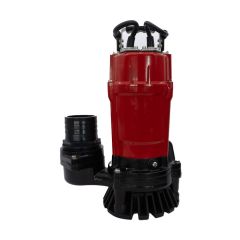
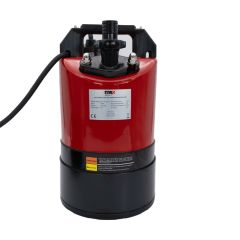
A complete 7-step guide to dewatering a construction site excavation safely and legally, covering spill prevention, hydrocarbon testing, pump selection, discharge routing, sediment filtration, and residual drainage to 1mm. All products available from CMT Group with next-day delivery.
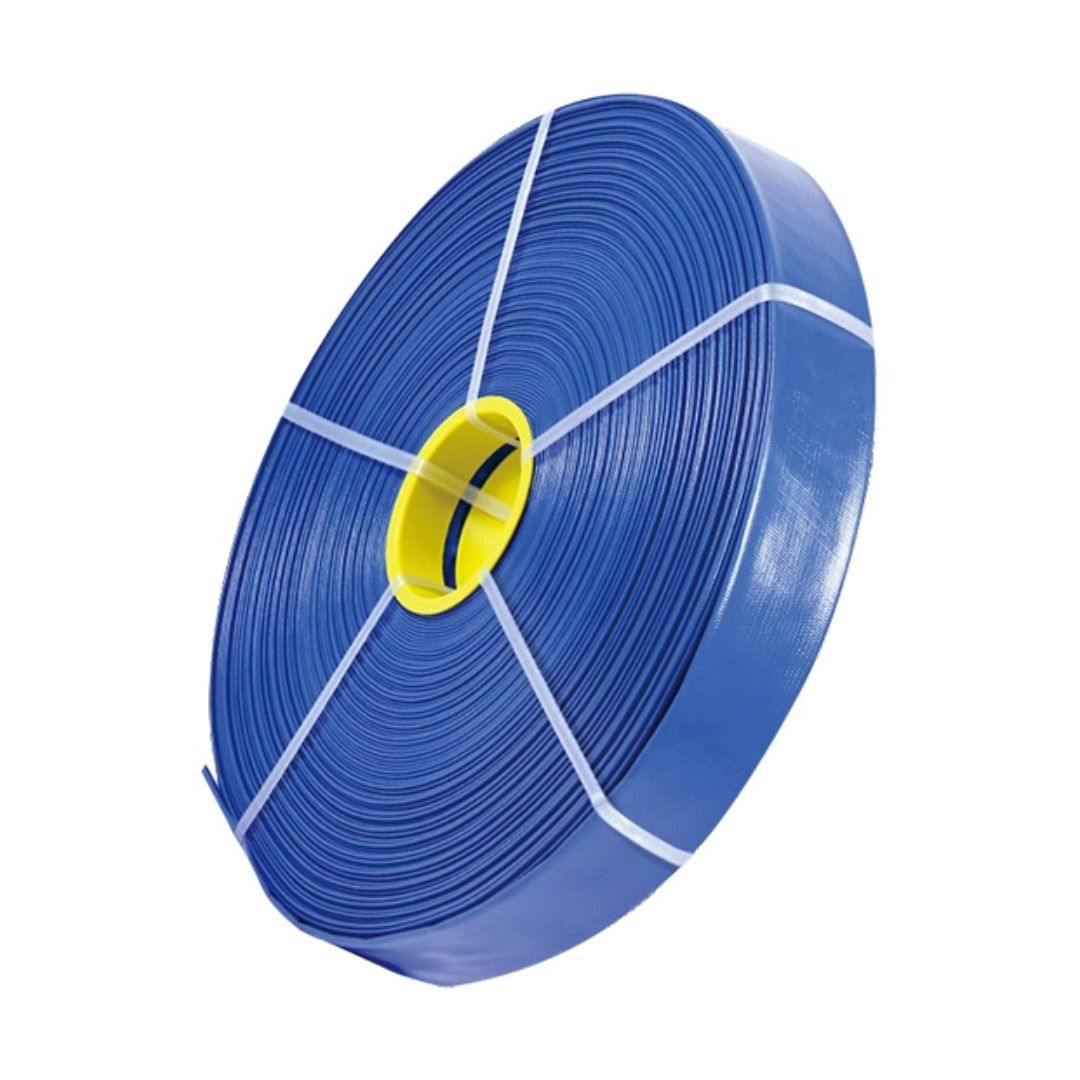
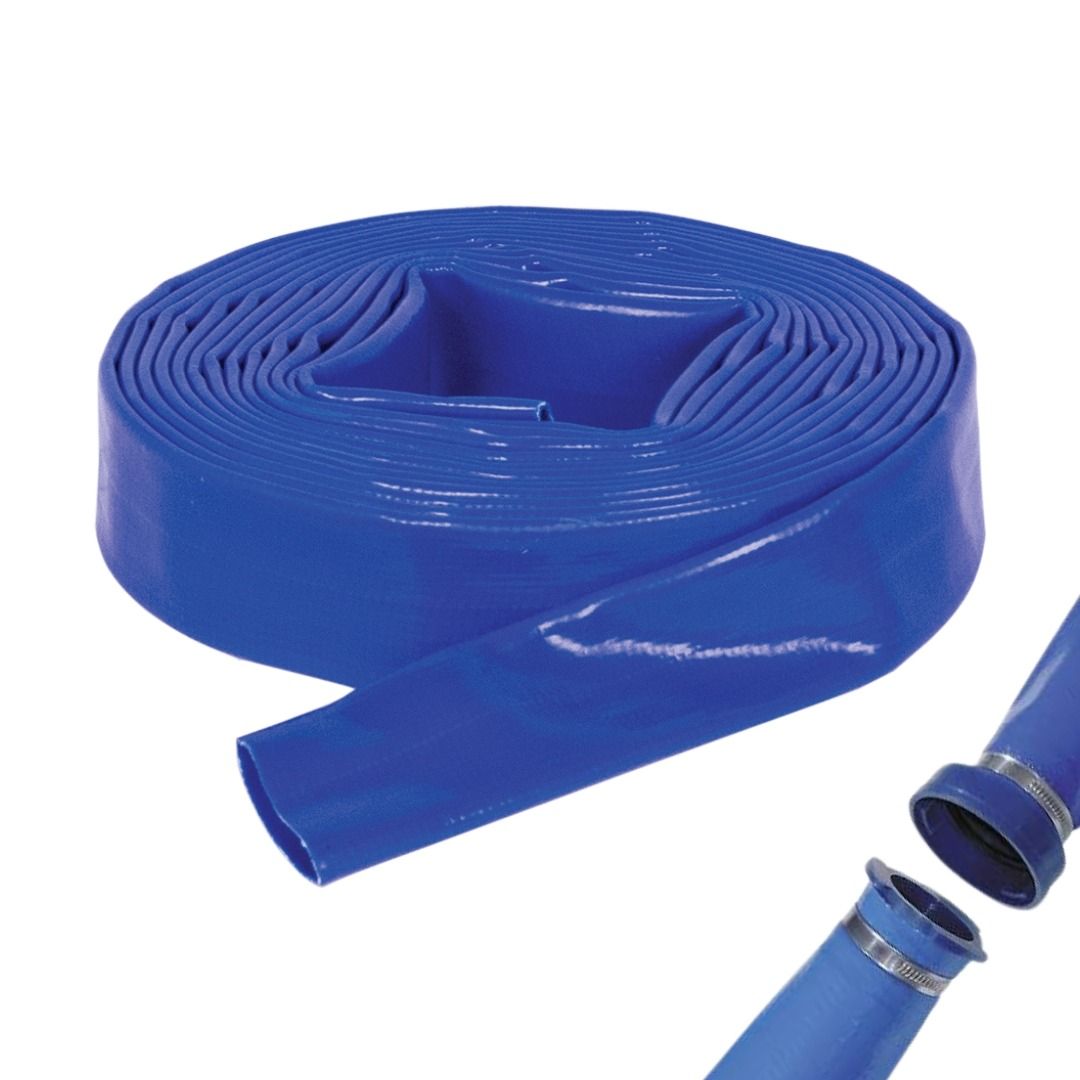
Layflat hose for connecting to the outlet of site submersible pumps, supplied with jubilee clips, for pump discharge on construction, dewatering, and water transfer applications.
- High-strength polyester yarn construction
- 8 bar working pressure
- Working temperature -5°C to +65°C
- Lies flat when empty, firms up under pressure
- Rolls and stores compactly for site use
- Supplied with jubilee clips
- Available in 2" x 50m, 2" x 100m, and 3" x 50m
- For discharge side use only, not suction
Layflat Hose - Pump Discharge with Jubilee Clips
Layflat hose for connecting to the outlet of site submersible pumps, supplied with jubilee clips, for pump discharge on construction, dewatering, and water transfer applications.
- High-strength polyester yarn construction
- 8 bar working pressure
- Working temperature -5°C to +65°C
- Lies flat when empty, firms up under pressure
- Rolls and stores compactly for site use
- Supplied with jubilee clips
- Available in 2" x 50m, 2" x 100m, and 3" x 50m
- For discharge side use only, not suction
Layflat Hose
Layflat hose for routing pumped water from the outlet of site submersible pumps to the discharge point, supplied with jubilee clips for direct connection to the pump outlet stub. The hose lies flat and compact when empty, unrolls quickly across a site without specialist fittings or supports, and firms up to a round cross-section under water pressure for consistent flow throughout the discharge run. Available in 2" and 3" internal diameters to match the outlet sizes of the MAX submersible pump range, in 50m and 100m lengths. Polyester yarn construction rated to 8 bar working pressure, significantly above the 3 to 3.5 bar typical of standard PVC layflat hose.
How compact layflat construction speeds up pump discharge on an active construction site
Getting a dewatering pump operational quickly on an active construction site means connecting to a discharge route without delay. Rigid hose requires fittings, supports, and multiple sections to cover distance. Layflat hose unrolls directly from a compact flat roll, lies against the ground without creating a fixed obstruction, and connects to the pump outlet stub with the supplied jubilee clips and a screwdriver. When pumping ends the hose drains flat, rolls back onto the roll, and stacks in a van or site store in a fraction of the space rigid alternatives require. The polyester yarn wall handles 8 bar working pressure, providing a safe margin above the output pressure of the MAX 110V submersible range.
Key Features
-
8 bar working pressure: More than double the 3 to 3.5 bar typical of standard PVC layflat hose. Provides a safe operating margin across the full MAX submersible pump range.
-
High-strength polyester yarn construction: Greater abrasion, ageing, and corrosion resistance than standard PVC layflat for extended outdoor site use across varied ground conditions.
-
Lies flat when empty: Stores and transports as a compact flat roll. Unrolls across the site without requiring fittings or supports and lies flat against the ground.
-
Firms up under pressure: Inflates to full round cross-section under water pressure, maintaining consistent internal bore and flow rate throughout the run.
-
Jubilee clips included: Hose clamps supplied for securing to the pump outlet stub. No specialist tooling required.
-
Three variants: 2" x 50m (LFH250), 2" x 100m (LFH2100), and 3" x 50m (LFH350). Match the internal diameter to the pump outlet size and select the length for the discharge run.
-
Discharge side use only: Not a suction hose. For use on the outlet side of the pump where water is under positive pressure.
Who is this for
Trades and roles:
-
Site managers and groundworkers connecting submersible dewatering pumps to discharge routes
-
Civil engineers managing excavation dewatering operations
-
Plant hire operators equipping pump deployments
-
Utilities operatives managing water transfer on site
Industries:
-
Construction and civil engineering
-
Utilities and infrastructure
-
Highways and drainage
-
Agricultural irrigation and water transfer
-
Mining and quarrying
Specifications
| Specification | Detail |
| Product Name | Layflat Hose - Pump Discharge with Jubilee Clips |
| Parent SKU | LFH |
| Construction | High-strength polyester yarn |
| Working Pressure | 8 bar |
| Working Temperature | -5°C to +65°C |
| Colour | Blue |
| Supplied With | Jubilee clips |
| Application | Discharge side only, not for suction use |
Variant Comparison
| Specification | LFH250 | LFH2100 | LFH350 |
|---|---|---|---|
| Dimensions | |||
| Nominal Size | 2" (51mm) | 2" (51mm) | 3" (76mm) |
| Internal Diameter | 51mm | 51mm | 76mm |
| Length | 50m | 100m | 50m |
| Approx. Weight | 20kg | 40kg | 40kg |
| Performance | |||
| Working Pressure | 8 bar | 8 bar | 8 bar |
| Working Temperature | -5°C to +65°C | -5°C to +65°C | -5°C to +65°C |
| Compatibility | |||
| Matched pump outlet | 2" (50mm) | 2" (50mm) | 3" (80mm) |
| MAX pump match | PL080001, PL080003 | PL080001, PL080003 | PL080002 |
| Best Suited To | |||
| Primary use | Standard discharge runs up to 50m with 2" pump outlet | Longer discharge runs over 50m with 2" pump outlet | High-flow discharge runs with 3" pump outlet |
Compatibility
| Application or condition | Status |
| Pump discharge side routing | ✓ Compatible |
| Site dewatering discharge runs | ✓ Compatible |
| Ground-level water transfer | ✓ Compatible |
| Open-air and outdoor site use | ✓ Compatible |
| Connection via jubilee clips to pump outlet stub | ✓ Compatible |
| Year-round outdoor use in UK conditions | ✓ Compatible |
| Suction side use | ✗ Not suitable, discharge side only |
| Underground or buried installation | ✗ Not suitable |
| Tight bends, steps, or steep uphill runs | ✗ Not recommended, risk of kinking |
| Chemical or sewage transfer | ✗ Not suitable |
| Potable water supply | ✗ Not rated for drinking water |
Who is this for
Site managers, groundworkers, and civil engineers connecting submersible dewatering pumps to a discharge route on UK construction and civils sites. Plant hire operators equipping pump deployments where the hose run to the outfall exceeds the reach of a rigid fitting. Utilities operatives managing water transfer from excavations to a settlement point or outfall during cable and pipe installation. Select the 2" variant for pumps with a 2" outlet and the 3" variant for the MAX 750W pump with a 3" outlet. Select 50m or 100m based on the distance from the pump to the discharge point.
Typical applications
-
Routing discharge water from a site submersible pump across a construction site to a surface drain, outfall, or designated discharge area.
-
Extending pump discharge runs across yards, access roads, and open ground where the outfall is at distance from the pump position.
-
Temporary water transfer from an excavation to a settlement tank or bunded area before final discharge.
-
Dewatering discharge routing on flood response operations where the hose must be deployed and recovered rapidly.
-
General site water transfer between locations where a temporary flexible connection is required.
How to use
Step 1: Select the correct variant. Match the internal diameter to the pump outlet: 2" hose for a 2" outlet, 3" hose for a 3" outlet. Select 50m or 100m based on the distance from the pump to the discharge point.
Step 2: Unroll the hose from the roll. Lay it across the ground in the intended discharge route, avoiding tight bends, steps, or sharp obstacles that would cause kinking under pressure.
Step 3: Push the hose end fully onto the pump outlet stub. Slide the supplied jubilee clip over the hose end and position it behind the outlet stub bead. Tighten the jubilee clip screw firmly with a screwdriver until the hose is secure.
Step 4: Route the free end to the discharge point. Confirm the discharge location is a legal discharge point before starting the pump.
Step 5: Start the pump. The hose firms up under pressure. Check the jubilee clip connection for leaks before leaving unattended.
Step 6: When pumping is complete, stop the pump and allow the hose to drain flat. Loosen the jubilee clip, remove the hose from the outlet, and re-roll for storage.
Common mistakes
-
Using this hose on the suction side: layflat hose is a discharge hose only. On the suction side the pump creates negative pressure, the hose walls collapse inward, and flow stops. Use a semi-rigid suction hose on the suction side.
-
Running the hose over sharp bends or obstacles: kinking collapses the internal bore at that point, reducing or stopping flow. Plan the route to avoid tight bends before deploying.
-
Mismatching the hose diameter to the pump outlet: a 2" hose on a 3" outlet will not seal and will leak or pull off under pressure. Always match internal diameter to outlet size.
-
Not tightening the jubilee clip sufficiently: a loose clip will allow the hose to pull off under pressure. Tighten firmly until secure.
-
Burying the hose underground: layflat hose is not rated for buried installation. Use semi-rigid suction delivery hose with nylon spiral reinforcement for permanent underground runs.
Safety
This hose is rated for discharge side use only at a maximum working pressure of 8 bar and a maximum temperature of 65°C. Do not exceed the stated working pressure. Do not use for chemical transfer, sewage, or potable water. Ensure the discharge point is a legal discharge location before pumping. A disconnected discharge hose under pump pressure can cause injury and flooding.
Maintenance
Flush with clean water after use. Allow to drain and dry fully before rolling for storage to prevent degradation inside the hose. Store away from direct sunlight, which degrades polyester yarn and PVC over time. Inspect for cuts, abrasions, and weak spots before each deployment. Do not store with sharp kinks locked into the roll.
Frequently Asked Questions
Q: Which size do I need — 2" or 3"?
A: Match the hose internal diameter to the pump outlet size. The 2" (51mm) variants connect to a 2" pump outlet, such as the MAX PL080001 500W and PL080003 530W submersible pumps. The 3" (76mm) variant connects to a 3" outlet, such as the MAX PL080002 750W submersible pump. Using the wrong diameter will result in a poor seal, leaks, or the hose pulling off under pressure.
Q: Should I choose 50m or 100m?
A: Choose 50m if the distance from the pump to the discharge point is 50m or less, or if the roll weight needs to stay manageable for a single operative. The 2" x 50m roll weighs approximately 20kg and the 2" x 100m approximately 40kg. For longer discharge runs where connecting two 50m lengths mid-run would be inconvenient, the 100m roll covers the full distance in one piece.
Q: Can this hose be used on the suction side of the pump?
A: No. Layflat hose is a discharge hose only. On the suction side the pump creates negative pressure inside the hose, causing the walls to collapse inward and stopping flow. For the suction side, use a semi-rigid suction hose with nylon spiral reinforcement that resists collapse under vacuum.
Q: What happens if the hose kinks?
A: A kink collapses the internal bore at that point, reducing or stopping flow. If kinking occurs, stop the pump, straighten the hose to restore the bore, and restart. To avoid kinking, plan the discharge route to avoid tight bends, obstacles, and steps before deploying.
Q: Is this hose suitable for burying underground?
A: No. Layflat hose is not rated for buried installation. For permanent underground discharge runs use semi-rigid suction delivery hose with nylon spiral reinforcement, which resists crush and collapse when buried.
Q: Why is 8 bar working pressure significant?
A: Standard PVC layflat hose is typically rated to 3 to 3.5 bar working pressure. At 8 bar, this hose provides more than double that margin, comfortably above the output pressure of the MAX submersible pump range and reducing the risk of hose failure on high-output pump deployments.
Q: How do I connect this hose to my pump with the jubilee clips?
A: Push the hose end fully over the pump outlet stub until it seats behind the bead or ridge at the end of the outlet. Slide the jubilee clip over the hose at that point and tighten the screw with a screwdriver until the clip band grips the hose firmly against the outlet. Check by pulling the hose; it should not move. Check the connection for leaks once the pump is running before leaving unattended.
Q: How quickly can I get this delivered to site?
A: Order by 7pm for next-day delivery on stocked lines. CMT Group operates its own fleet covering over 95% of the UK mainland with live tracking and What3Words integration for precise site delivery. VIP 2-hour depot delivery is available UK-wide for urgent requirements. Order at cmt.co.uk.