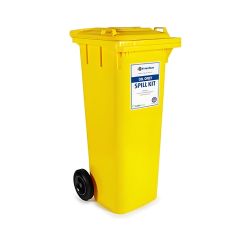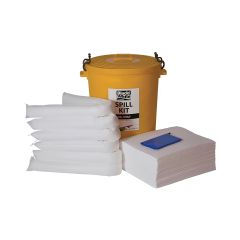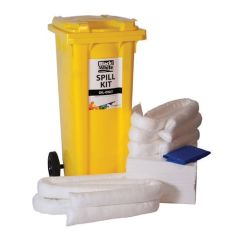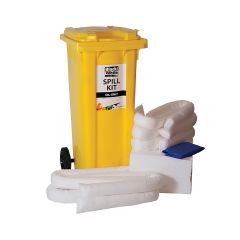
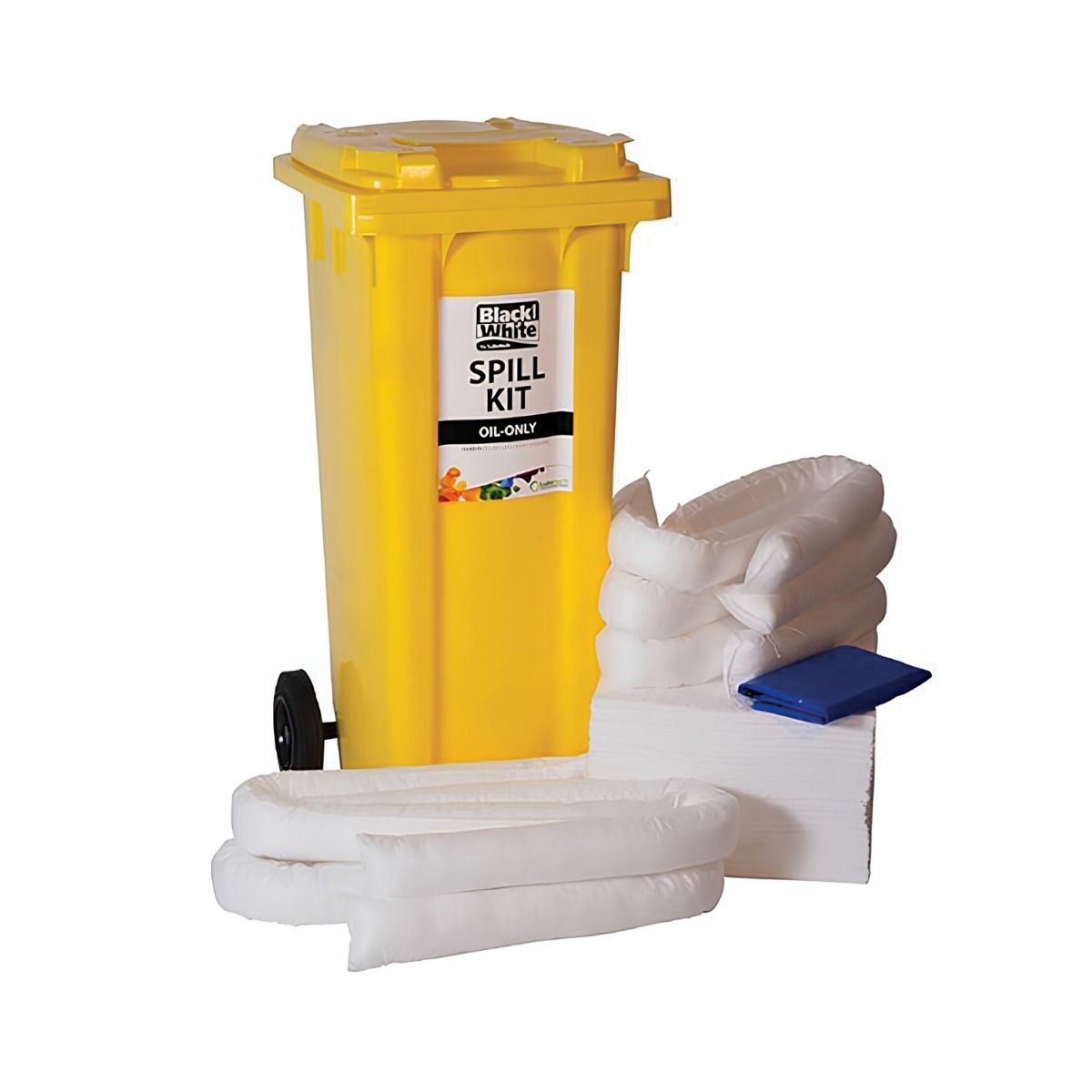
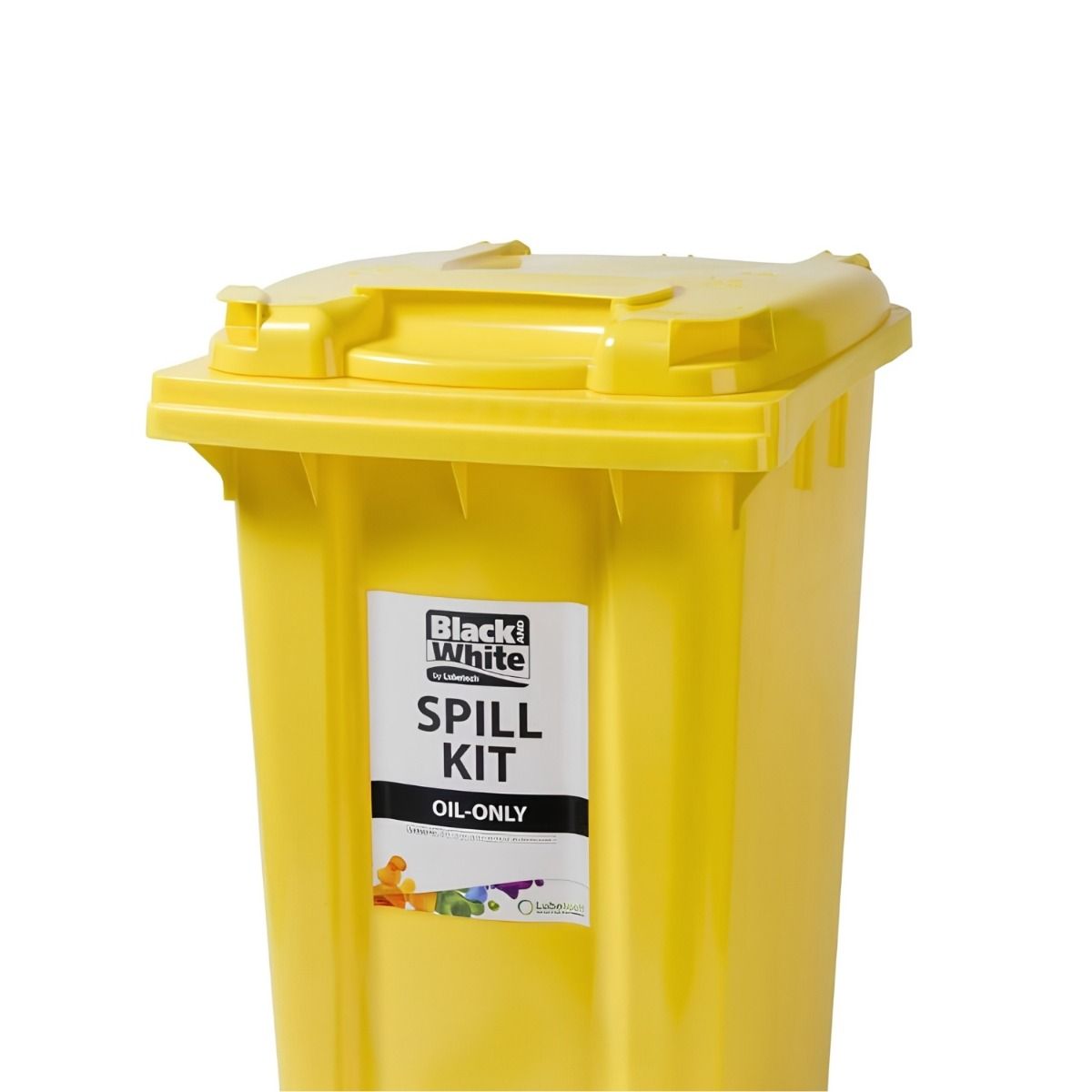
A 120 litre oil-only spill kit in a mobile yellow wheelie bin for rapid containment and absorption of petroleum oil, diesel, petrol, and hydraulic fluid spills on construction sites and at refuelling points.
This kit is for oil-based spills only. Not suitable for chemical or water-based spills.
- Oil-only hydrophobic absorbents, absorbs petroleum oils, diesel, petrol, and hydraulic fluids
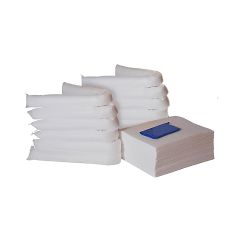
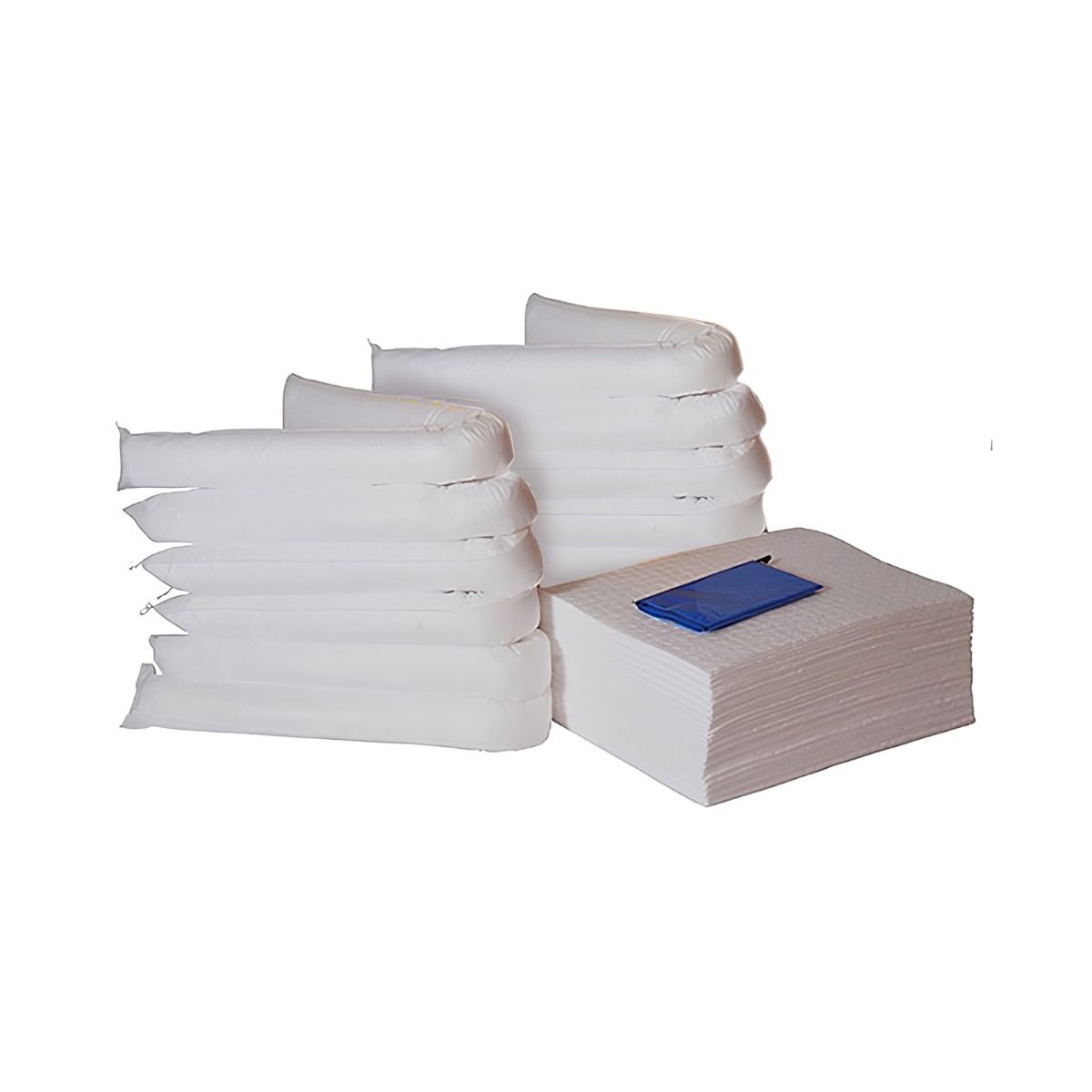
- 45 absorbent pads for bulk spill absorption
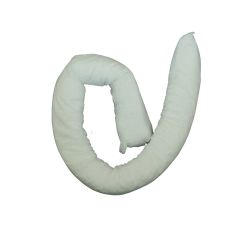
- 10 absorbent socks for spill containment and perimeter berming
- 5 hazard waste bags for correct disposal of used absorbents
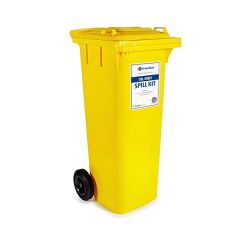
- Yellow wheeled bin with flip-top lid, deployable by one person
- Absorbs up to 120 litres of oil-based liquid
120 Litre Oil-Only Spill Kit - Wheelie Bin Pads and Socks
A 120 litre oil-only spill kit in a mobile yellow wheelie bin for rapid containment and absorption of petroleum oil, diesel, petrol, and hydraulic fluid spills on construction sites and at refuelling points.
This kit is for oil-based spills only. Not suitable for chemical or water-based spills.
- Oil-only hydrophobic absorbents, absorbs petroleum oils, diesel, petrol, and hydraulic fluids
- 45 absorbent pads for bulk spill absorption
- 10 absorbent socks for spill containment and perimeter berming
- 5 hazard waste bags for correct disposal of used absorbents
- Yellow wheeled bin with flip-top lid, deployable by one person
- Absorbs up to 120 litres of oil-based liquid
- Buy 3 for £230.21 £191.84 each and save 7%
- Buy 6 for £209.40 £174.50 each and save 16%
| BULK DISCOUNT | 3 | 6 |
|---|---|---|
| Price | £191.84 £230.21 | £174.50 £209.40 |
Order 1x to earn 206 FASTPoints
Order to earn 206 FASTPoints
Log in to access trade discounts120 Litre Oil-Only Spill Kit
A 120 litre oil-only spill kit in a mobile yellow wheelie bin for rapid containment of petroleum oil, diesel, petrol, and hydraulic fluid spills. The kit contains 45 absorbent pads, 10 absorbent socks, and 5 hazard waste bags, all pre-packed and ready to deploy the moment a spill occurs. One person can wheel it to the affected point, form a containment berm with the socks, and deploy the pads over the spill without needing additional equipment.
This kit is oil-only. It must not be used for chemical spills, acid spills, or water-based fluid spills.
What Oil-Only Means and Why Spill Type Matters
Oil-only absorbents are made from hydrophobic polypropylene fibres. They absorb petroleum-based oils and fuels while actively repelling water. This makes them effective at fuel spill points where rainwater or groundwater is present — they pick up the oil and leave the water behind. The same property means they have no effect on water-based chemicals, acids, or solvents. Deploying an oil-only kit on a chemical spill leaves the hazard uncontained. Specifying the correct absorbent type for the actual spill type is a legal compliance issue as much as a practical one.
Key Features
-
Oil-only hydrophobic absorbents: Absorb petroleum oils, diesel, petrol, lubricants, and hydraulic fluids. Repel water — effective in wet outdoor conditions without absorbing rainwater.
-
45 absorbent pads: Flat white pads laid over the contained spill to absorb the bulk of the liquid. Can be used to wipe residual film from hard surfaces after bulk absorption.
-
10 absorbent socks: Cylindrical containment rolls placed around the spill perimeter to form a berm and prevent the liquid from spreading to drains or under plant.
-
5 hazard waste bags: Used oil-contaminated absorbents are classified as hazardous waste. The bags are for safe containment of used material prior to disposal through a licensed contractor.
-
Yellow wheelie bin with flip-top lid: Stores all components in one weatherproof, mobile container. Wheels to the spill point in seconds. One person operation. Flip-top lid opens instantly without tools.
-
Ready to deploy: All components are pre-packed in the bin. No assembly required when a spill occurs.
Who Is This For
Trades and roles:
-
Site managers and environmental officers
-
Plant operators and groundworkers
-
Workshop and factory supervisors
-
Fleet and refuelling point managers
-
Facilities managers
Industries:
-
Construction and groundworks
-
Engineering and manufacturing
-
Plant hire and maintenance
-
Fleet and transport operations
-
Warehouse and logistics
Specifications
| Specification | Detail |
| Product Name | 120 Litre Oil-Only Spill Kit - Wheelie Bin Pads and Socks |
| SKU | SK120L |
| Absorbency Capacity | 120 litres |
| Absorbent Type | Oil-only (hydrophobic polypropylene) |
| Suitable Liquids | Petroleum oil, diesel, petrol, lubricants, hydraulic fluid |
| NOT Suitable For | Chemical spills, acids, solvents, water-based fluids |
| Storage Container | Yellow wheelie bin, flip-top lid, wheeled |
Kit contents
| Item | Quantity and Detail |
| Wheelie bin | 1x yellow, flip-top lid, wheeled |
| Absorbent pads | 45x (oil-only, hydrophobic) |
| Absorbent socks | 10x (for spill containment and berming) |
| Hazard waste bags | 5x (for disposal of used absorbents as controlled waste) |
Compatibility
| Application or condition | Status |
| Petroleum oils and lubricants | ✓ Compatible (oil-only) |
| Diesel and derv | ✓ Compatible (oil-only) |
| Petrol and aviation fuel | ✓ Compatible (oil-only) |
| Hydraulic fluid and mineral oils | ✓ Compatible (oil-only) |
| Use in wet outdoor environments | ✓ Compatible (repels water) |
| Chemical spills (acids, alkalis, solvents) | ✗ NOT SUITABLE - use a chemical spill kit |
| Water-based fluids and coolants | ✗ NOT SUITABLE |
| Unknown or mixed spill type | ✗ Use a universal spill kit instead |
| Disposal in general waste | ✗ Hazardous waste - licensed contractor required |
Who Is This For
This 120 litre oil-only spill kit is for site managers, plant operators, facilities managers, and environmental officers at locations where petroleum oil, diesel, or fuel spills are a credible risk. The wheelie bin format makes it suitable for outdoor siting at refuelling points, plant parking areas, drum storage zones, and workshop entrances where a mobile, weatherproof kit is needed.
For chemical spills, a universal or chemical-specific kit must be specified instead.
Typical Applications
-
Containing and absorbing diesel spills from plant and vehicles at construction site refuelling points.
-
Responding to hydraulic fluid leaks from excavators, rollers, and other plant equipment.
-
Absorbing engine oil spills in workshops and maintenance bays.
-
Containing fuel spills at drum storage areas in factories and warehouses.
-
Emergency response to oil or fuel spills near drainage channels or watercourses on construction sites.
-
Routine use at locations where oil drips and minor leaks occur regularly.
How to Use
Step 1: Move the wheeled bin to the spill point immediately. Speed of response limits spill spread and reduces the risk of the liquid reaching drains or watercourses.
Step 2: Remove the absorbent socks and place them around the perimeter of the spill to form a containment berm. This prevents the liquid spreading further under plant or toward drainage.
Step 3: Deploy the absorbent pads flat over the contained spill. Allow them to absorb. Replace with fresh pads if the first layer is saturated before full absorption.
Step 4: Use additional pads to wipe any residual surface film once the bulk liquid is absorbed.
Step 5: Place all used absorbents into the hazard waste bags and seal them. Used oil-contaminated absorbents are hazardous waste. Do not place in general waste.
Step 6: Arrange disposal through a licensed hazardous waste contractor. Document the spill incident in the site environmental log.
Step 7: Restock the kit before the next potential incident. Do not leave a partially depleted kit in service.
Common Mistakes
-
Using an oil-only kit on a chemical spill: oil-only absorbents have no effective absorption on chemicals, acids, or water-based fluids. The hazard remains uncontained. Specify a universal or chemical kit for those applications.
-
Disposing of used absorbents as general waste: oil-contaminated absorbents are hazardous waste under the Environmental Protection Act 1990. General waste disposal is illegal and can result in prosecution.
-
Deploying pads before forming a berm: always deploy socks to contain the spill perimeter first. Pads placed directly over a spreading spill allow the liquid to continue moving beyond the absorbent area.
-
Not restocking after use: a kit missing pads or socks cannot absorb the rated 120 litres. Reorder and restock immediately after any deployment.
-
Storing the kit where it cannot be reached quickly: site the bin at the highest-risk point. Every person who may encounter a spill must know exactly where it is.
Safety
Oil and fuel spills on construction sites and in industrial environments can ignite, contaminate groundwater, and enter drainage systems causing serious environmental damage. The Environmental Protection Act 1990 and Water Resources Act 1991 impose legal duties on site operators to prevent and contain oil pollution. This kit is for oil-based spills only. Do not use for chemical, solvent, acid, or water-based fluid spills. Used absorbents must be treated as hazardous waste and disposed of through a licensed contractor. Document every spill and response action in the site environmental log.
Maintenance
Inspect the kit regularly to confirm all components are present and undamaged. Do not leave a partially used kit in service, a kit missing socks or pads cannot absorb the rated 120 litres in an emergency. Replace used components immediately after any deployment. Check the bin lid closes and latches correctly and the wheels run freely. Store in a location visible and accessible to all site operatives who may need to respond to a spill.
Frequently Asked Questions
Q: What does oil-only mean and which spills is this kit suitable for?
A: Oil-only spill kits contain hydrophobic polypropylene absorbents that absorb petroleum-based oils and fuels while repelling water. This kit absorbs petroleum oil, diesel, petrol, lubricants, and hydraulic fluids. It is not suitable for chemical spills, acid spills, water-based fluids, or solvents. For chemical or unknown spill types, specify a universal spill kit.
Q: What is this kit NOT suitable for?
A: This kit must not be used for chemical spills, acids, alkalis, solvents, or water-based fluids. Oil-only absorbents do not absorb these materials. Deploying an oil-only kit on a chemical spill leaves the hazard uncontained and provides false confidence that the spill has been dealt with when it has not. For chemical spills, use a universal or chemical-specific kit.
Q: What are the socks used for?
A: Absorbent socks are cylindrical rolls placed around the edge of a spill to form a containment berm before pads are deployed over the surface. They prevent the liquid from spreading further, from flowing under plant or equipment, and from reaching drains or watercourses. Deploy socks first to contain the perimeter, then use pads to absorb the bulk of the liquid.
Q: How do I dispose of used absorbents?
A: Used oil-contaminated absorbents are classified as hazardous waste under the Environmental Protection Act 1990. Place them in the included hazard waste bags, seal the bags, and arrange disposal through a licensed hazardous waste contractor. Do not place contaminated absorbents in general waste skips. Incorrect disposal of hazardous waste is a criminal offence.
Q: How much oil can this kit absorb?
A: The kit is rated to absorb up to 120 litres of oil-based liquid across the full complement of 45 pads and 10 socks. Rapid response limits spill spread and means the full absorbency capacity is available for the actual volume of liquid released.
Q: Where should this kit be stored on site?
A: At the highest-risk location, the refuelling point, plant area, drum storage zone, or wherever a spill is most likely. It must be visible and accessible to any site operative without delay. Every person likely to encounter a spill should know where the kit is sited.
Q: What legislation makes this kit relevant on a UK construction site?
A: The Environmental Protection Act 1990, Water Resources Act 1991, and Control of Pollution (Oil Storage) Regulations 2001 all impose duties to prevent and contain oil pollution. Having a correctly sited and maintained spill kit at oil storage and refuelling points demonstrates active compliance with these duties. Every spill and response should be logged in the site environmental record.