
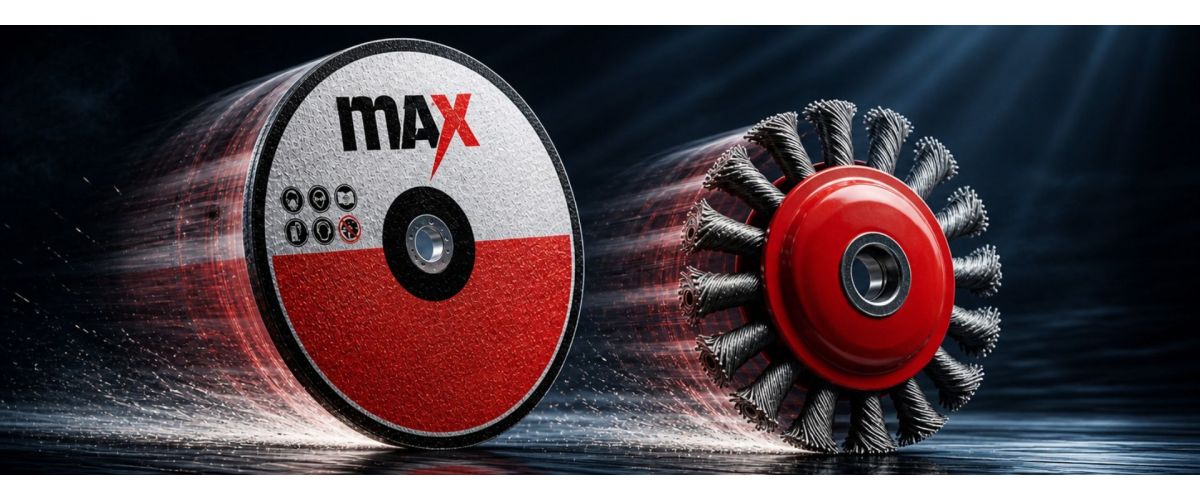
The complete guide to abrasive discs: cutting, grinding, sanding and wire brushing
Fitting the wrong disc to an angle grinder is one of the most common causes of serious injury on UK construction sites. The right disc for the right material and the right machine is not a preference. It is a safety requirement. This guide covers every abrasive disc type used in construction, fabrication, and maintenance in 2026.
Shop the full abrasive range →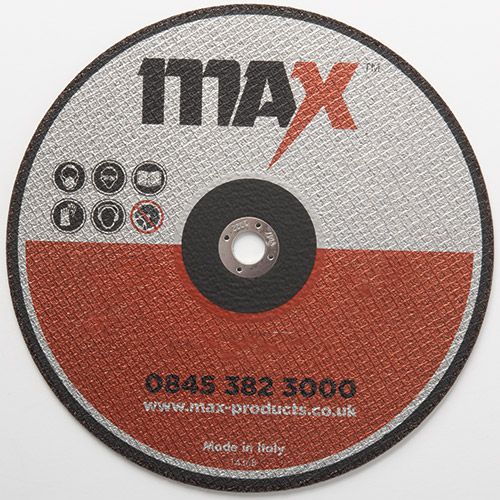
How abrasive discs work and what separates a good disc from a cheap one
Every abrasive disc works on the same principle: abrasive grains bonded together or to a backing material cut, grind, or abrade the workpiece surface as the disc rotates at high speed. The performance of that disc depends on three variables: the abrasive grain type, the bond that holds it together, and the disc geometry. Get any of these wrong for the material and task, and you pay for it in shortened disc life, poor cut quality, or in the worst case, disc failure under load.
Abrasive grain types
The grain is the cutting element. Different grains are suited to different materials and tasks.
- Aluminium oxide: The most widely used abrasive grain. Good performance on mild steel, carbon steel, and wood. Less effective on stainless steel and hard alloys due to heat sensitivity. Most budget grinding and cutting discs use aluminium oxide.
- Zirconia alumina: Tougher than standard aluminium oxide. Self-sharpening under pressure. The correct specification for heavy stock removal on steel, structural sections, and weld grinding where disc life and cut rate both matter. Used in premium flap discs and grinding wheels.
- Silicon carbide: Very hard and sharp but brittle. Suited to stone, concrete, masonry, tile, and non-ferrous metals. Poor choice for steel as it fractures quickly under the heat and impact of metal cutting.
- Ceramic alumina: Engineered grain with a self-sharpening fracture pattern. Highest performance and longest life of any coated abrasive grain. Used in premium flap discs and fibre discs for high-output metal fabrication where cost per cut matters more than disc price.
- Diamond: Hardest cutting material. Used in diamond cutting wheels and hole saws for stone, concrete, porcelain, and reinforced concrete. Not an abrasive disc in the traditional sense but commonly grouped in the same product category.
Bond types
Bonded abrasives (grinding wheels, cutting discs) use a resin bond that holds the grain in a rigid matrix. The bond must be hard enough to hold the grain under load but soft enough to release worn grains and expose fresh cutting edges. A bond that is too hard produces glazing: the grain dulls without shedding and the disc stops cutting. Coated abrasives (flap discs, sanding discs, fibre discs) use an adhesive to bond grain to a flexible backing, which allows the disc to conform to irregular surfaces.
Disc geometry and shape
Shape determines both the application and the safety of the disc under load.
- Type 41 (flat cutting disc): Flat profile for straight plunge cuts. Maximum cutting depth. Used only for cutting, never for grinding.
- Type 27 (depressed centre grinding disc): Raised centre hub allows the disc to be used at a low working angle (0 to 15 degrees) for flat surface grinding without the hub fouling the workpiece.
- Type 42 (depressed centre cutting disc): Combination of flat cutting profile with slightly raised centre. Allows some working angle flexibility.
Critical rule: A cutting disc must never be used for grinding, and a grinding disc must never be used for cutting. The geometry, thickness, and bond of each type is engineered for one load pattern. Using a cutting disc at an angle as a grinder subjects the thin disc to lateral forces it is not designed to resist, which causes catastrophic disc failure.
Cutting discs: metal, stainless steel, stone and masonry
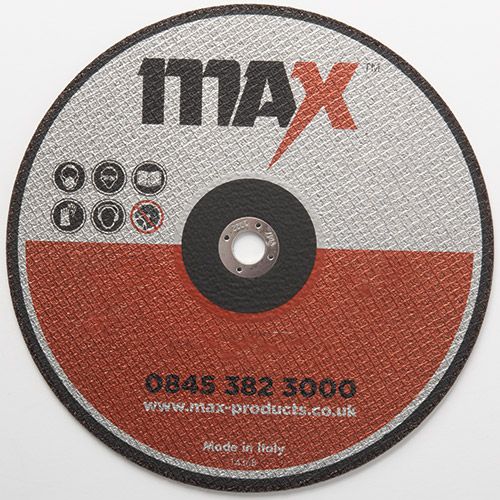
Cutting discs are thin, rigid discs used to cut through material by plunge cutting at 90 degrees to the workpiece surface. They are the most widely used abrasive disc type on UK construction and fabrication sites. Thickness, grain type, and reinforcement all determine which cutting disc is correct for the material and the machine power available.
The standard cutting disc for mild steel, structural steel sections, rebar, angle iron, and steel plate. Aluminium oxide or zirconia alumina grain, glass-fibre reinforced, used at 90 degrees to the workpiece in a plunge cut. Available in 115mm, 125mm, and 230mm diameters. Thickness ranges from 1mm for light sheet metal work through to 3mm for heavy structural cutting.
- Use 1mm to 1.6mm for sheet metal and thin-wall sections where minimal kerf loss matters
- Use 2mm to 3mm for heavy plate, structural steel, and rebar where disc rigidity prevents flex under load
- Always cut at 90 degrees: never use as a grinding disc at an angle
- Match disc RPM rating to grinder maximum no-load speed before fitting
- Use on a grinder with a minimum 900W motor for consistent cut performance in thick material
Stainless steel requires a different disc specification from mild steel. The cutting grain must not contaminate the stainless surface with iron particles that cause rust spots, and the disc must run cool enough to avoid heat discolouration at the cut edge. Extra thin slitting discs (0.8mm to 1mm) in aluminium oxide or zirconia are the correct specification. They cut faster, generate less heat, and leave a cleaner, lower-burr edge than thicker discs on stainless.
- Specify discs marked "Inox" or "stainless" to confirm iron-free grain and bond composition
- 0.8mm to 1mm thickness produces the cleanest cut with minimum heat input on thin-wall stainless
- Never use a standard mild steel cutting disc on stainless: iron contamination causes corrosion at the cut edge
- Let the disc do the work: excessive feed pressure on thin discs causes disc deflection and kickback risk
- Suitable for 304 and 316 grade stainless steel pipework, sheet, and sections
Stone and masonry cutting discs use silicon carbide or aluminium oxide grain in a hard resin bond that withstands the abrasive and impact loading of cutting concrete, brick, block, and roof tile. They are thicker than metal cutting discs and run at lower RPM on larger grinders. These are the correct choice for chasing, cutting expansion joints, trimming brick courses, and cutting roof tile on site without a tile cutter.
- Not suitable for cutting reinforced concrete: use a diamond blade for RC work
- Produces significant silica dust: always wear FFP2 or FFP3 dust mask and use water suppression or extraction where possible
- Available in 115mm, 125mm, and 230mm for handheld grinders
- Check disc is rated for dry cutting before use: some stone discs are wet-use only
- For roof tile: use light feed pressure to prevent cracking the tile body
Cutting disc thickness guide
| Material | Recommended thickness | Grain type | Notes |
|---|---|---|---|
| Sheet metal (up to 2mm) | 0.8mm to 1mm | Aluminium oxide | Fast cut, minimal heat, low burr |
| Thin-wall tube and pipe | 1mm | Aluminium oxide or zirconia | Prevents distortion on thin sections |
| Mild steel plate (3 to 10mm) | 1.6mm to 2.5mm | Zirconia alumina | Rigidity prevents disc flex under load |
| Structural steel and rebar | 2mm to 3mm | Aluminium oxide | Thicker disc withstands impact loading |
| Stainless steel (all gauges) | 0.8mm to 1.6mm | Aluminium oxide (Inox rated) | Iron-free grade prevents contamination |
| Brick and block | 3mm to 4mm | Silicon carbide | Thicker disc resists masonry abrasion |
| Concrete and screed | 3mm to 4mm | Silicon carbide | For light cutting only; diamond blade for heavy cutting |
| Roof tile and slate | 3mm | Silicon carbide | Light feed pressure to prevent cracking |
Grinding and depressed-centre discs
Grinding discs are thicker and more rigid than cutting discs and are used at a low working angle of 0 to 15 degrees to the workpiece surface. They are for stock removal, weld grinding, surface preparation, and shaping rather than cutting. The depressed centre (Type 27) design allows the disc to sit flat on the work surface without the hub mounting fouling the material.
The standard grinding disc for steel fabrication, structural metalwork, and construction site metalwork. Used for weld dressing and removal, deburring cut edges, removing rust and scale, and shaping metal sections. Available in 115mm, 125mm, and 230mm diameters. Grain size determines the rate of material removal: coarser grain removes material faster but leaves a rougher surface finish that will need further work before painting or coating.
- Aluminium oxide grain for mild steel; zirconia for harder alloys and stainless
- 6mm disc thickness is the standard for general purpose grinding
- Use at 5 to 15 degree working angle to the workpiece for best material removal rate
- A 230mm disc on a large grinder removes significantly more material per pass than a 125mm disc on a small machine: use the largest disc the task allows
- Never use on stone or masonry: grinding discs are not rated for silicon carbide materials
Stone grinding discs use a harder bond and silicon carbide or aluminium oxide grain to withstand the abrasive wear of concrete, render, and stone surface preparation. Used for removing high spots from concrete slabs, flattening render, grinding back mortar, and preparing concrete surfaces for bonding or coating. Produces significant silica dust: dust control is mandatory.
- For heavy concrete surface removal, a diamond cup wheel is faster and more cost-effective than a bonded grinding disc
- Always wear FFP2 or FFP3 dust mask: silica dust from concrete grinding is a category 1 carcinogen under UK COSHH regulations
- Wet grinding dramatically reduces airborne silica: use water suppression wherever site conditions allow
- Check disc speed rating matches your grinder before fitting: stone discs often have lower maximum RPM than metal discs of the same diameter
Weld grinding tip: Start with a grinding disc to remove the bulk of the weld bead, then switch to a flap disc to blend the surface. This two-step approach produces a cleaner result with less risk of grinding too deep into the parent metal, and leaves a surface that needs minimal further preparation before painting or inspection.
Flap discs: finishing, blending and surface preparation
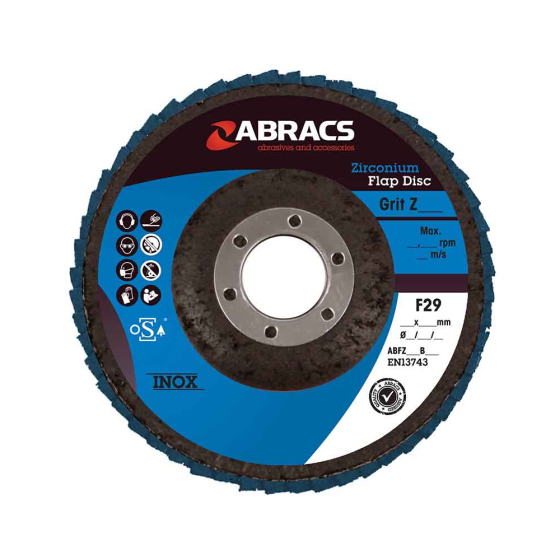
A flap disc is constructed from overlapping abrasive sheets bonded to a backing plate. As the disc wears, fresh abrasive is continuously exposed from the overlapping flap layers, which means the disc cuts consistently throughout its service life rather than degrading rapidly as the outer layer dulls. Flap discs produce a better surface finish than grinding wheels and are the correct tool for blending, finishing, and light stock removal where the surface quality after grinding matters.
Zirconia alumina is the standard grain for flap discs used in construction and fabrication. It is tougher and more self-sharpening than aluminium oxide, which gives zirconia flap discs a longer service life under the heavy load of weld blending and aggressive surface preparation. Available in multiple grit sizes from P40 (coarse, for rapid stock removal and weld blending) through to P120 (fine, for surface preparation before painting or coating).
- P40 to P60: weld removal, heavy rust, scale, and aggressive stock removal on structural steel
- P60 to P80: blending welds, removing grinding marks, general surface preparation
- P80 to P120: pre-paint preparation, fine blending, and light finishing on fabricated assemblies
- Use at 5 to 15 degree angle to the workpiece for best balance of cut rate and finish
- Flap discs can be used on mild steel, stainless steel (zirconia grade), aluminium, and wood
- Replace when the abrasive flaps are fully worn to the backing plate: a worn flap disc running on its backing will damage the surface
Flap disc grit guide
| Grit | Application | Surface result |
|---|---|---|
| P40 | Heavy weld removal, severe rust, aggressive shaping | Coarse scratch pattern, significant material removal |
| P60 | Weld blending, moderate rust, scale removal | Medium scratch pattern, good for further finishing |
| P80 | General surface preparation, blending grinding marks | Fine scratch pattern, suitable for primer application |
| P120 | Pre-paint finish, light blending, aluminium and stainless | Very fine scratch, near-paintable surface |
Wire brushes and cup brushes: rust removal, surface cleaning and weld preparation
Wire brushes fit to angle grinders and are used for rust and paint stripping, scale removal, weld spatter cleaning, and preparing metal surfaces for coating or inspection. The wire type and configuration determines the aggressiveness of the action and the risk of surface marking.
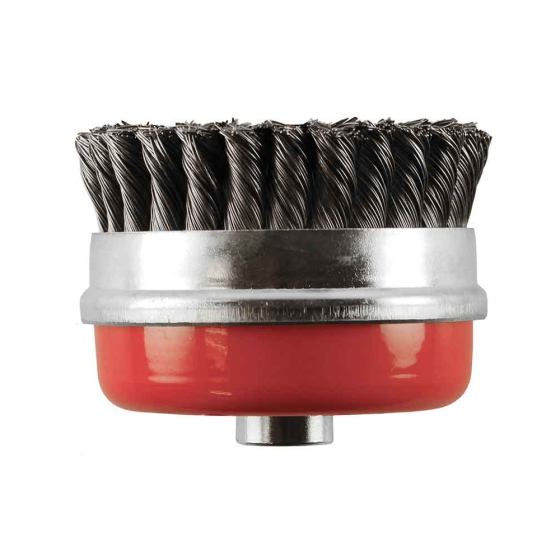
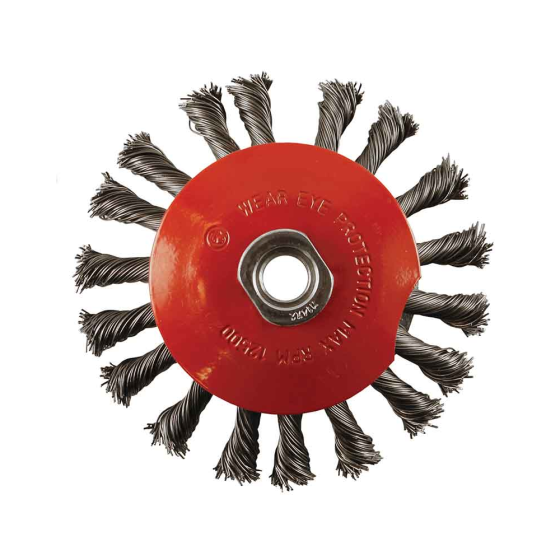
Twisted wire (T-Knot) brushes have wires twisted together in knots, which makes them significantly more aggressive than straight-wire alternatives. The twisted wire cuts into rust, scale, and weld spatter rather than simply scrubbing the surface. Correct for heavy rust removal from structural steel, removing mill scale before welding, and cleaning weld beads. Available in flat and bevel profiles for different access requirements.
- T-Knot brushes are more aggressive and have longer service life than crimped wire on heavy-duty cleaning tasks
- Use full face guard and visor: wire ends are regularly ejected at high speed from wire brushes in use
- Never exceed the maximum RPM marked on the brush: wire brush failure at overspeed is a severe safety risk
- Not for use on stainless steel with carbon steel wire: use a stainless steel wire brush to prevent contamination
- Available in M14 thread fitment for standard angle grinders
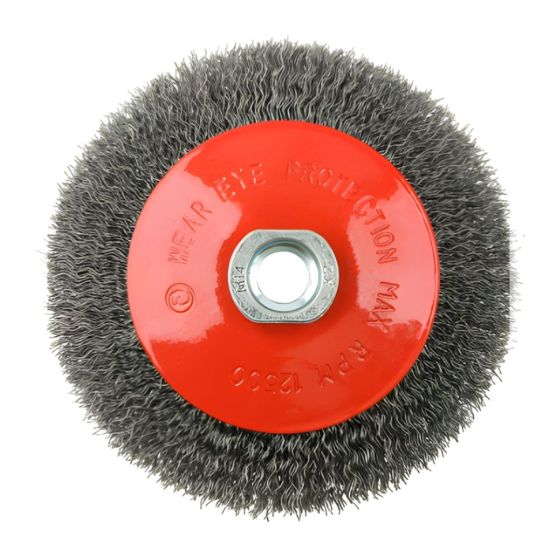
Crimped (wavy) wire brushes are less aggressive than T-Knot and are suited to lighter surface cleaning, paint removal from thinner substrates, and weld spatter removal where marking the parent metal is a concern. The bevel profile (cup shape) covers a wider surface area per pass and is better suited to cleaning large flat areas such as plate surfaces, flanges, and weld zones before inspection.
- Crimped wire produces less surface marking than T-Knot: correct for visible or coated metal surfaces
- Bevel profile suits flat surface cleaning; flat profile suits edge and joint access
- Available in carbon steel wire (for mild steel) and stainless wire (for stainless and high-purity applications)
- Always wear face shield: crimped wire brushes still eject wire ends in use
Wire brush safety: Wire brushes cause more eye and face injuries than almost any other angle grinder accessory. The guard must remain in place. A full face visor, not just safety glasses, is the correct PPE for wire brush work. Never press hard into a wire brush to increase the cleaning rate: high feed pressure bends the wire ends outward and dramatically increases the rate of wire ejection.
Sanding discs: hook and loop for surface preparation and finishing
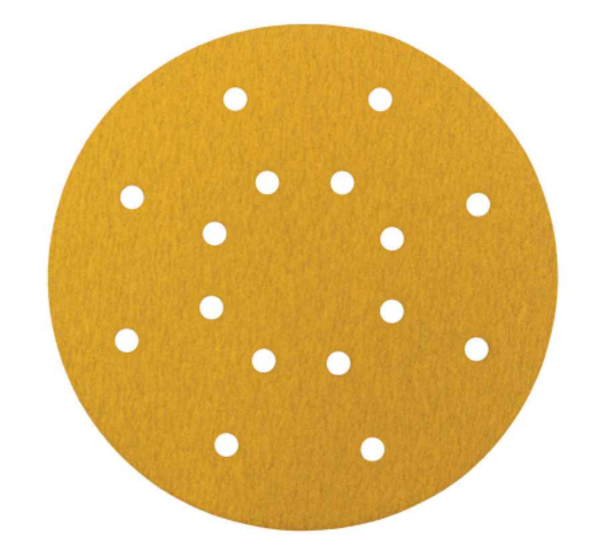
Hook and loop sanding discs (also called Velcro discs) attach to a backing pad fitted to a random orbital sander or angle grinder with a sanding pad attachment. The hook and loop system allows fast disc changes without tools and is the dominant format for trade sanding applications in construction, refurbishment, and finishing work. The disc grit determines the stock removal rate and the surface finish left behind.
Grit selection for sanding
Sanding is typically a progressive process: start with a coarser grit to remove material or defects, then work through progressively finer grits to achieve the target surface quality. Skipping grits wastes time because each grit must remove the scratch marks left by the previous one.
| Grit | Application | Typical use on site |
|---|---|---|
| P40 to P60 | Coarse: heavy material removal | Removing old paint, adhesive, or filler from large surfaces |
| P80 | Medium-coarse: shaping and levelling | Levelling joint filler, shaping edges, removing deep scratches |
| P100 to P120 | Medium: general surface preparation | Standard pre-paint preparation on plaster, wood, and MDF |
| P150 to P180 | Fine: pre-finish smoothing | Between-coat sanding, final preparation before top coat |
| P220+ | Very fine: finishing and polishing | Final sanding of painted surfaces, cabinetry, and high-quality joinery |
Large-format sanding discs (225mm)
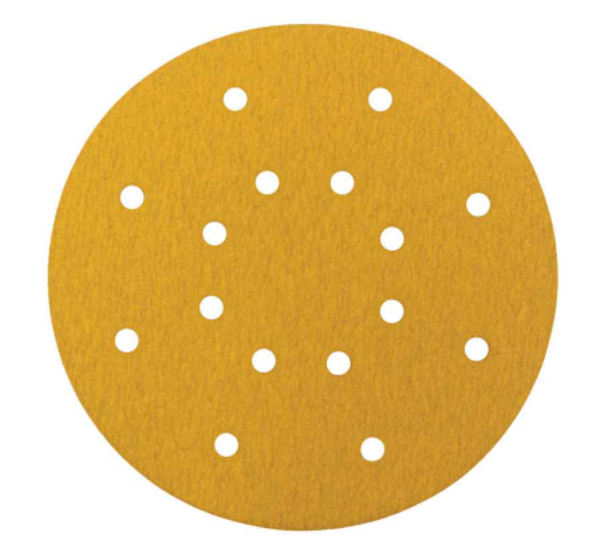
Large-format 225mm hook and loop sanding discs are used with long-reach random orbital sanders for skimmed wall and ceiling preparation, joint compound sanding, and large flat surface finishing in drylining, plastering, and refurbishment work. The large disc diameter covers more area per pass and reduces the time needed to prepare large surfaces compared to a standard 125mm sanding disc. Available in packs of 25 and 50 to cover the volume requirements of commercial and residential finishing projects.
225mm sanding tip: Always use the correct backing pad for the disc diameter. A 225mm disc fitted to a 125mm backing pad will overhang dangerously and produce an uncontrolled, uneven scratch pattern. Use a long-reach sander specifically designed for 225mm discs on wall and ceiling work.
Quick decision table: disc type for every task
| Task and material | Correct disc type | Key specification |
|---|---|---|
| Cutting mild steel, rebar, and structural sections | Flat metal cutting disc (Type 41) | 1.6mm to 3mm thick, aluminium oxide or zirconia |
| Cutting stainless steel pipe and sheet | Extra thin slitting disc (Type 41, Inox rated) | 0.8mm to 1mm, iron-free grain, stainless rated |
| Cutting brick, block, and roof tile | Flat stone cutting disc (Type 41) | 3mm to 4mm, silicon carbide, dry-rated |
| Grinding welds and heavy stock removal on steel | Depressed centre grinding disc (Type 27) | 6mm thick, aluminium oxide or zirconia |
| Weld dressing and blending on structural steel | Zirconia flap disc P40 to P60 | Zirconia alumina, 115mm or 125mm |
| Surface preparation before painting on steel | Zirconia flap disc P80 to P120 | Zirconia alumina, matched to target finish |
| Heavy rust, scale, and mill scale removal | T-Knot wire brush | Twisted wire, carbon or stainless, M14 fitment |
| Light rust, paint, and weld spatter removal | Crimped wire bevel brush | Crimped wire, bevel profile, M14 fitment |
| Wall and ceiling skimmed plaster sanding | 225mm hook and loop sanding disc | P100 to P120 for pre-paint, P80 for levelling |
| Between-coat sanding on painted surfaces | 225mm hook and loop sanding disc | P150 to P180 for fine finish |
| Heavy paint and adhesive removal from large surfaces | 225mm hook and loop sanding disc | P80 coarse for rapid material removal |
| Concrete surface grinding and preparation | Depressed centre grinding disc (stone grade) | Silicon carbide, use dust suppression |
| Cutting reinforced concrete | Diamond cutting blade (not an abrasive disc) | Segmented or turbo diamond blade |
Safety: the disc rules every operative must know before they start
Abrasive disc failures cause some of the most serious injuries in construction and fabrication. A cutting disc shattering at 12,000 RPM releases fragments with the energy of a projectile. The rules below are not advisory. They are the minimum standard for working safely with angle grinder discs on UK sites.
Non-negotiable safety rules for abrasive discs
- Check the maximum RPM on the disc before fitting. The disc RPM must equal or exceed the no-load speed of the grinder. Never fit a disc rated below the grinder speed.
- Inspect every disc before use. Check for cracks, chips, or visible damage. Never use a damaged disc. Discard any disc that has been dropped.
- Never use a cutting disc for grinding. Lateral force on a thin cutting disc causes catastrophic failure. Use a grinding disc for grinding.
- Never use a grinding disc for cutting. The geometry is wrong and the disc will bind and kick back in the cut.
- Keep the guard in place at all times. Removing the guard is illegal under UK PUWER regulations and makes a disc failure fatal rather than survivable.
- Wear a full face visor for wire brush work, not just safety glasses. Wire ends eject at speed throughout normal wire brush operation.
- Wear FFP2 or FFP3 dust mask for stone, concrete, and masonry cutting. Silica dust is a category 1 carcinogen under UK COSHH regulations.
- Check the disc is correctly mounted and the flange nut is tight before applying power. A loose disc is a flying disc.
- Allow the grinder to reach full speed before applying the disc to the workpiece. Applying load during spin-up stresses the disc unevenly.
- Never use a disc beyond its marked expiry date. Resin bonds degrade over time and a stored disc past its date should be discarded.
The CMT Group abrasive disc and wire brush range
CMT Group stocks a comprehensive range of abrasive discs, wire brushes, and sanding products from the MAX and standard ranges, covering cutting, grinding, flap disc finishing, wire brushing, and large-format sanding. All available for next working day delivery to UK mainland sites.
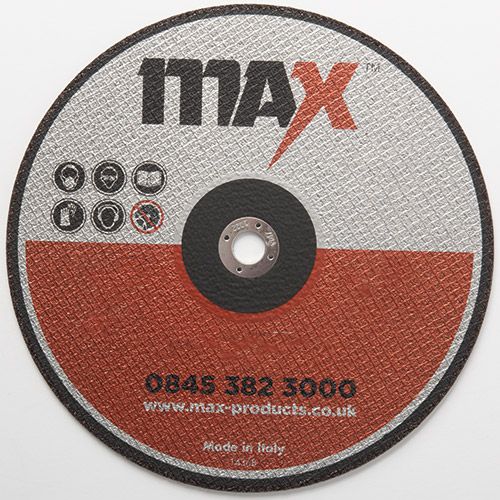
Cutting discs
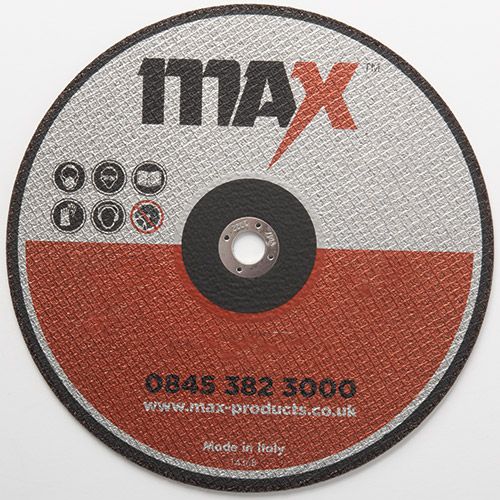
Grinding discs
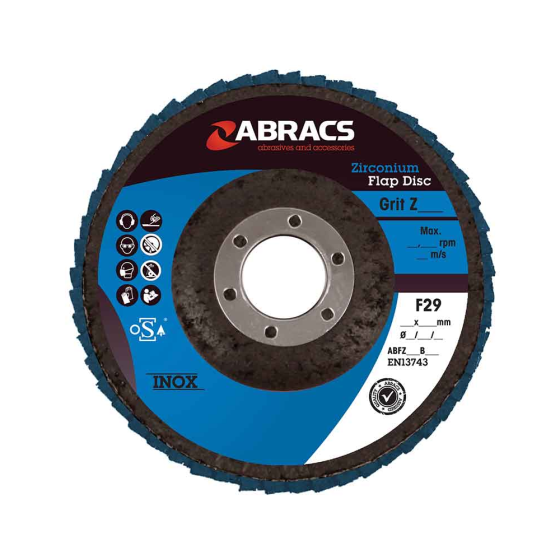
Flap discs
Wire brushes
Hook and loop sanding discs - 225mm

The full CMT Group abrasive range is available at cmt.co.uk. Next working day delivery on orders placed by 7pm online. VIP dedicated delivery available UK-wide for urgent site requirements, dispatched within 30 minutes on a dedicated vehicle. Trade accounts and EDGE portal ordering available for procurement teams requiring agreed pricing and full order visibility.
Shop the full abrasive range →