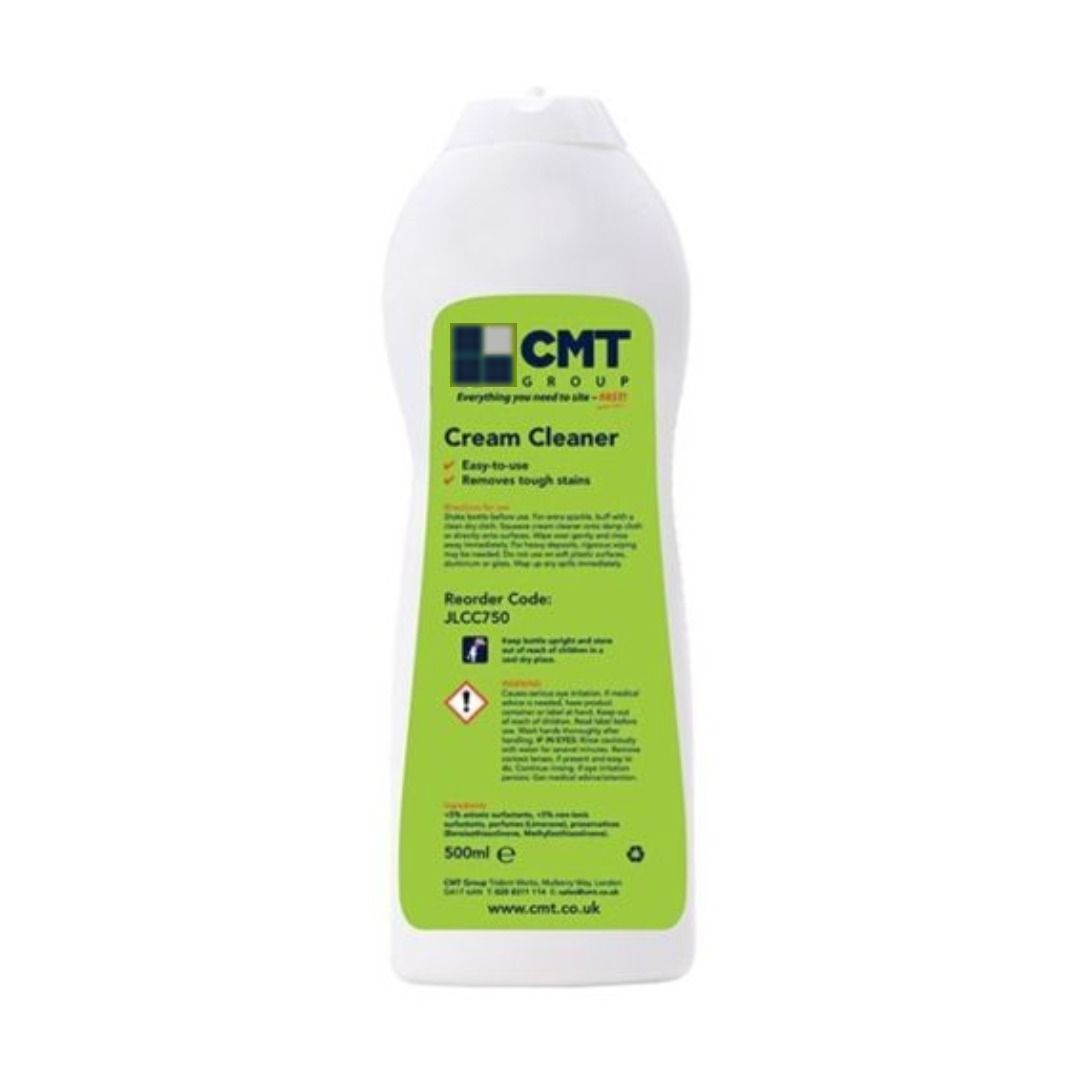
Cream cleaner for removing tough stains, limescale, and grease deposits from welfare unit sinks, canteen hobs, tiles, and hard surfaces on construction and industrial sites.
- Cream abrasive formula
- Squeeze onto damp cloth or surface, wipe and rinse immediately
- Lemon fragrance, pH 10.5 alkaline formula
- Not suitable for soft plastic surfaces, aluminium, or glass
Cream Cleaner
Cream cleaner for removing tough stains, limescale, and grease deposits from welfare unit sinks, canteen hobs, tiles, and hard surfaces on construction and industrial sites.
- Cream abrasive formula
- Squeeze onto damp cloth or surface, wipe and rinse immediately
- Lemon fragrance, pH 10.5 alkaline formula
- Not suitable for soft plastic surfaces, aluminium, or glass
- Buy 12 for £3.32 £2.77 each and save 12%
- Buy 24 for £2.82 £2.35 each and save 25%
| BULK DISCOUNT | 12 | 24 |
|---|---|---|
| Price | £2.77 £3.32 | £2.35 £2.82 |
Order 1x to earn 3 FASTPoints
Order to earn 3 FASTPoints
Log in to access trade discountsCream Cleaner 500ml
Cream cleaner for removing limescale, soap scum, baked-on grease, and tough surface deposits from welfare unit sinks, canteen hobs, tiles, and general hard surfaces in site facilities. Formulated as a viscous cream abrasive with an alkaline surfactant blend at pH 10.5, it provides mechanical and chemical cleaning action without strong acid or solvent chemistry.
Spray cleaners and general-purpose surface products rely on surfactant chemistry and dilution to remove soiling, which is sufficient for light daily cleaning but inadequate for baked-on grease, limescale, and mineral deposits that build up on welfare unit sinks, canteen hobs, and worktops over extended site operations. Deposits left to accumulate become progressively more difficult to remove, require longer cleaning time, and give a poor impression of welfare facility standards during site audits and HSE inspections. The viscous cream abrasive formula provides mechanical cleaning action alongside the alkaline surfactant blend at pH 10.5, loosening and lifting deposits that spray cleaners cannot shift without the need for harsh acid chemistry or solvent-based products.
Key Features
-
Cream abrasive formula: The viscous cream provides gentle mechanical abrasion to lift tough stains, limescale, and baked-on deposits from hard surfaces without scratching non-porous ceramic, porcelain, or stainless steel.
-
Alkaline cleaning action: pH 10.5 formula assists in cutting through grease, soap scum, and general kitchen soiling alongside the abrasive action.
-
Simple application: Squeeze directly onto a damp cloth or surface, wipe over, and rinse immediately. Rigorous wiping followed by rinsing handles heavier deposits. Buff with a dry cloth for a polished finish on stainless steel and ceramic.
-
Lemon fragrance: Mild lemon odour leaves welfare unit sinks and canteen surfaces with a clean, fresh finish after use.
-
500ml squeeze bottle: Sized for welfare unit canteen supply cupboards and site compound cleaning stores, dispensing a controlled amount per application.
-
Surface restriction: Do not use on soft plastic surfaces, aluminium, or glass. Test on a concealed area before use on unfamiliar surfaces.
Who is this for
Trades and roles:
-
Welfare unit operatives
-
Site managers
-
Facilities managers
-
Maintenance contractors
-
Compound managers
Industries:
-
Construction
-
Civil engineering
-
Utilities and groundworks
-
Industrial facilities management
-
Hospitality and catering
Specifications
| Specification | Detail |
|---|---|
| Product Name | Cream Cleaner |
| SKU / Product Code | JLCC500 |
| Fixed Specifications | |
| Product Type | Cream abrasive surface cleaner, all-purpose |
| Application | Tough stain and deposit removal from hard surfaces in welfare units and site facilities |
| Use Category | For professional use only |
| Surfactant Content | Non-ionic surfactants less than 5% |
| Fragrance | Lemon-like (contains D-Limonene — fragrance allergen declared at greater than 0.01%) |
| pH | 10.5 (alkaline) |
| Appearance | Viscous liquid |
| Biodegradability | Rapidly degradable |
| Hazard Classification | WARNING, GHS07 — H319 causes serious eye irritation |
| Application Method | Squeeze onto damp cloth or surface, wipe and rinse immediately |
| Incompatible With | Acids |
| Surfaces Not Suitable | Soft plastic surfaces, aluminium, glass |
| Storage | Store in a well-ventilated, cool place. Keep out of reach of children. |
| Transport Classification | Not regulated for transport |
| Variable Specifications | |
| Volume | 500ml |
| Relative Density | 1.21 |
Compatibility
| Surface or Application | Status |
|---|---|
| Stainless steel sinks and taps | ✓ Compatible |
| Ceramic and porcelain surfaces | ✓ Compatible |
| Glazed tiles | ✓ Compatible |
| Enamel surfaces | ✓ Compatible |
| Hobs and cooker surrounds (non-porous) | ✓ Compatible |
| Non-porous worktops | ✓ Compatible |
| Soft plastic surfaces | ✗ Not suitable — will scratch |
| Aluminium surfaces | ✗ Not suitable — will scratch |
| Glass | ✗ Not suitable — will scratch |
| Highly polished decorative surfaces | ✗ Test on concealed area first |
| Acid-based cleaning products (combined use) | ✗ Not recommended — incompatible |
Who is this for
Welfare unit operatives and site facilities managers responsible for maintaining canteen sinks, hobs, worktops, and tiled surfaces in construction compound welfare facilities will find this product suited to routine and periodic cleaning where spray cleaners have proved insufficient for stubborn soiling. Maintenance contractors undertaking periodic deep cleans of welfare units on construction sites where tough stains, limescale, and grease deposits have accumulated will find the calcium carbonate abrasive effective on non-porous hard surfaces without the need for specialist chemical products. General facilities management staff in industrial compounds, site offices, and temporary accommodation facilities can use this product as a straightforward welfare surface cleaner for everyday maintenance.
Typical applications
-
Cleaning stainless steel sinks in site welfare unit canteens where limescale from hard water supply and general soiling have built up around the basin, drain, and tap surrounds.
-
Removing baked-on grease and food residue from hob surrounds and cooking surface areas in welfare unit kitchen and canteen facilities.
-
Cleaning glazed wall tiles in welfare unit washrooms and canteen areas where soap scum, grease, and general soiling have built up on the tile surface and grout lines.
-
Removing limescale deposits from tap heads, tap surrounds, and basin edges in site compound ablution and washing facilities.
-
Cleaning non-porous worktops and food preparation surfaces in welfare unit canteen kitchens where grease and food residue have accumulated during the working week.
-
Buffing stainless steel sinks and surfaces to a clean finish after removing heavy deposits, using a dry cloth after rinsing to restore surface appearance.
How to use
Step 1: Shake the bottle before use to ensure an even consistency throughout the product.
Step 2: Squeeze the cream cleaner directly onto a damp cloth or directly onto the surface to be cleaned.
Step 3: Wipe gently over the surface for light soiling, then rinse away immediately with clean water.
Step 4: For heavier deposits, apply with more rigorous wiping and allow the abrasive to work over the deposit before rinsing clean.
Step 5: For extra sparkle on stainless steel or ceramic surfaces, buff with a clean dry cloth after rinsing.
Step 6: Rinse up any product spilt on floor surfaces immediately to avoid a slip hazard.
Common mistakes
-
Using on soft plastic, aluminium, or glass: the calcium carbonate abrasive will scratch these surfaces. Always confirm the surface type before applying and do not use on any of these materials.
-
Not rinsing immediately after wiping: cream cleaner left to dry on surfaces leaves a chalky calcium carbonate residue. Rinse promptly after every application.
-
Applying to a completely dry surface: apply to a damp cloth or damp surface for best results. Dry application reduces cleaning performance and makes rinsing more difficult.
-
Not shaking the bottle before use: abrasive particles settle during storage. Shaking before each use ensures consistent product texture and cleaning performance.
-
Leaving spilt product on floor surfaces: cream cleaner on floors is a slip hazard. Rinse up any spillage immediately.
Safety
WARNING classification (see product label). Avoid contact with eyes. If eye contact occurs, rinse cautiously with water for several minutes, remove contact lenses if present, and seek medical attention if irritation persists. Wash hands thoroughly after use. Not classified as hazardous under current legislation when used as directed. Keep out of reach of children. Store upright in a cool place away from heat sources and direct sunlight. Do not use on soft plastic surfaces, aluminium, or glass. Rinse any product spilt on floor surfaces immediately to prevent slipping.
Maintenance
Replace cap securely after each use to prevent the product from drying out or thickening. Store upright at all times to prevent leakage. Store in a cool, dry location away from heat sources and direct sunlight. Inspect the bottle for damage or leakage before use.
Frequently Asked Questions
Q: What surfaces is this cream cleaner suitable for?
A: This cream cleaner is suitable for stainless steel sinks and taps, ceramic and porcelain surfaces, glazed tiles, enamel, hobs and cooker surrounds, and non-porous worktops. It provides effective abrasive cleaning on these surfaces for limescale, baked-on grease, soap scum, and general soiling. Always squeeze onto a damp cloth or damp surface and rinse immediately after wiping to avoid residue build-up.
Q: What surfaces must this cream cleaner not be used on?
A: Do not use on soft plastic surfaces, aluminium, or glass. The calcium carbonate abrasive will scratch all three. For highly polished or decorative surfaces not listed above, test on a concealed area before full application. This product is also not suitable for porous surfaces, bare wood, or any surface that cannot be rinsed with water immediately after cleaning.
Q: How do I tackle heavy deposits with this product?
A: For heavy limescale or baked-on grease, squeeze the cream cleaner directly onto the surface and wipe with firm, rigorous strokes rather than a gentle wipe. The abrasive needs contact time and mechanical pressure to work on stubborn deposits. Rinse thoroughly once the deposit has been lifted. For very heavy scale build-up, a dedicated descaling product such as a liquid descaler may be more appropriate before finishing with the cream cleaner.
Q: Is this product safe to use in a site welfare unit canteen?
A: This product is not classified as hazardous under current legislation when used as directed. It carries a WARNING classification on the label for potential eye irritation at concentrate. Avoid contact with eyes, wash hands after use, and rinse surfaces thoroughly with water after cleaning to remove all product residue before the surface is used for food preparation. Keep out of reach of children.
Q: What is the difference between a cream cleaner and a spray surface cleaner for site welfare use?
A: A spray surface cleaner relies on surfactant chemistry and dilution to remove soiling, making it effective for light daily cleaning and general hygiene maintenance. A cream cleaner adds a calcium carbonate abrasive at 30 to 60%, which provides the mechanical scrubbing action needed to lift limescale, baked-on grease, and deposits that surfactants alone cannot shift. The two products complement each other: spray cleaners for routine daily cleaning, cream cleaner for periodic deep cleaning of sinks, hobs, and tiled surfaces where soiling has built up.
Q: Can this product be used on stainless steel?
A: Yes. Stainless steel sinks, taps, and surfaces are compatible with this cream cleaner. Squeeze onto a damp cloth, wipe with the grain of the steel where visible, rinse immediately, and buff with a dry cloth for a clean finish. The calcium carbonate abrasive is fine enough for stainless steel without leaving scratches under normal use.
Q: Does this cream cleaner contain any fragrance allergens?
A: The formula contains D-Limonene, a citrus-derived fragrance allergen declared at greater than 0.01% in accordance with detergent labelling requirements. Operatives with a known sensitivity to citrus fragrances should check the product label before use. No other fragrance allergens are declared in the current product formulation.