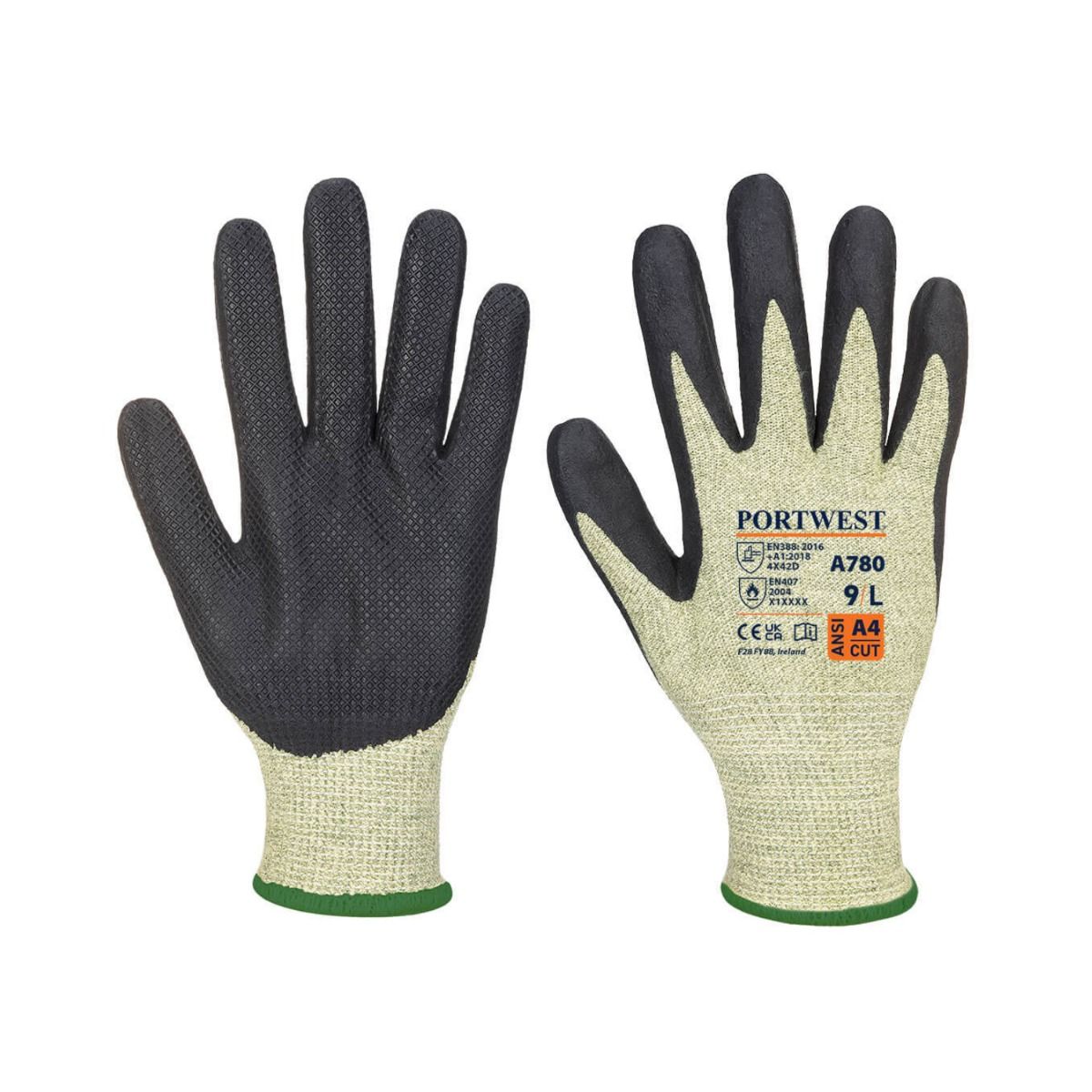
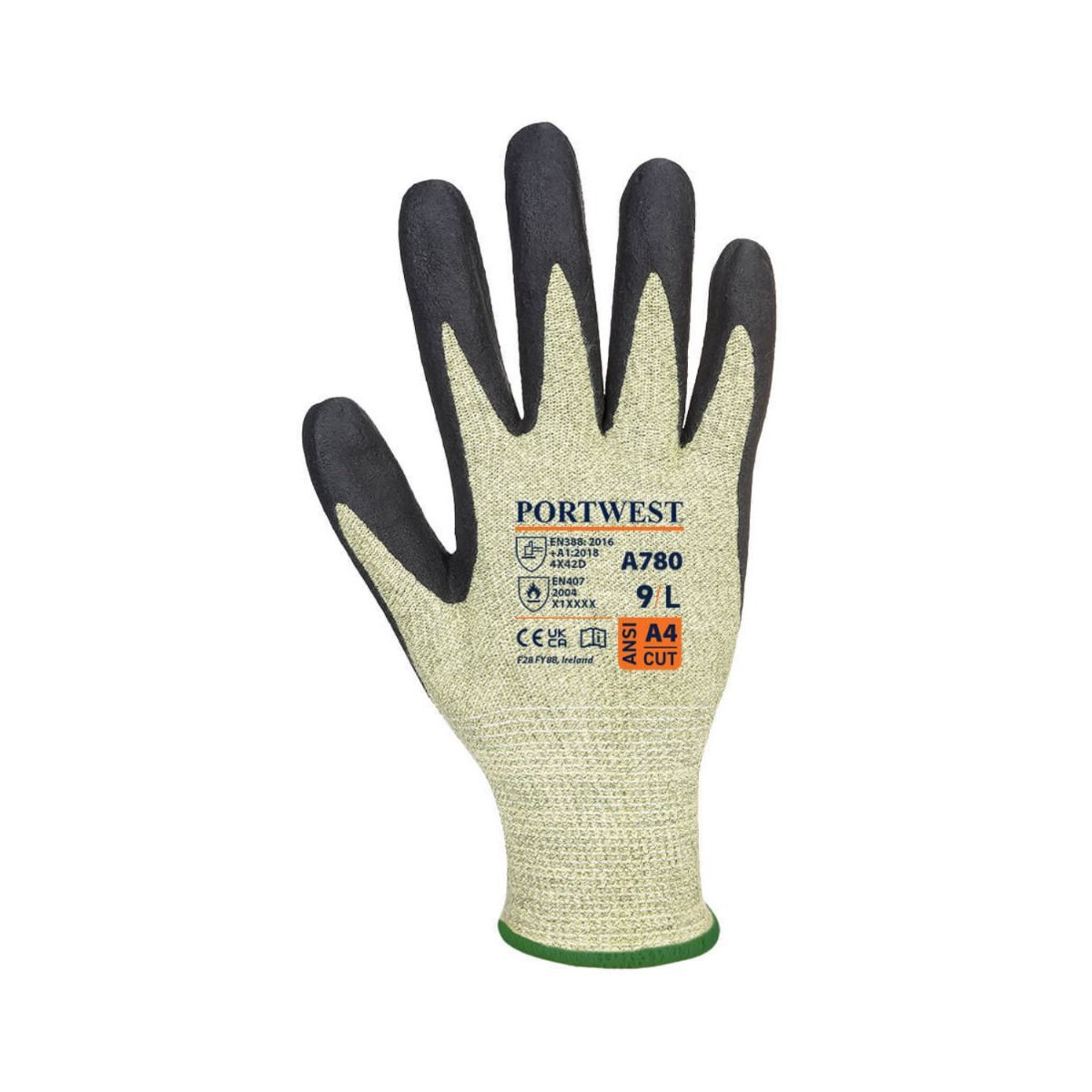
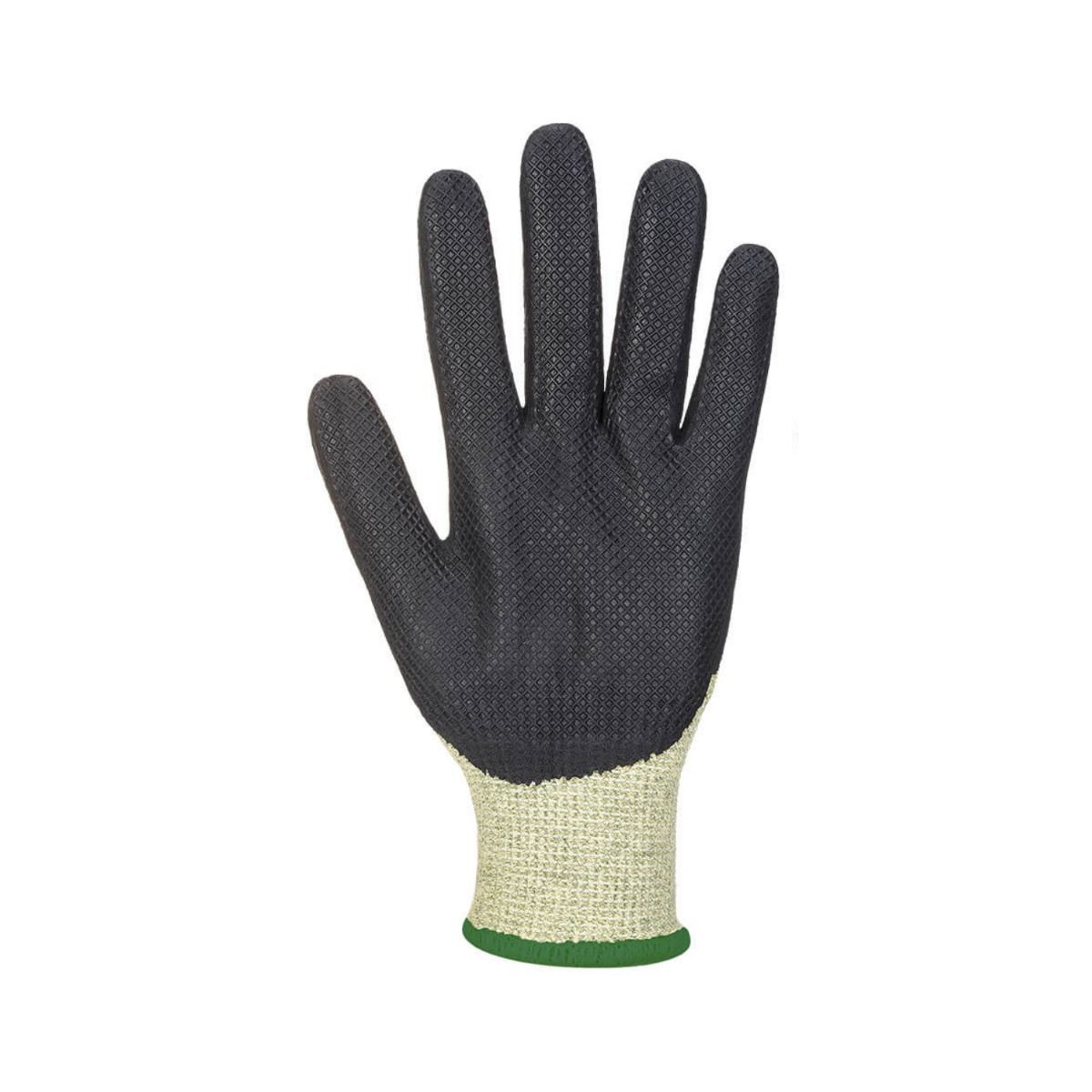

Arc flash gloves rated 9.5 cal/cm2, fire and cut resistant, for electricians, utilities and maintenance teams working near arc flash hazards.
- Arc rated ATPV 9.5 cal/cm2, ASTM F2675-13 Class 2
- EN 407:2020 41XXXX and EN 388:2016+A1:2018 4X42D
- Inherently flame-resistant, self-extinguishing liner
- Cut level D with dexterity level 5
- Neoprene palm coating for a firm grip
- UKCA and CE marked
- Available in multiple sizes
Arc Flash Gloves - 9.5 cal/cm2 Fire and Cut Resistant

Arc flash gloves rated 9.5 cal/cm2, fire and cut resistant, for electricians, utilities and maintenance teams working near arc flash hazards.
- Arc rated ATPV 9.5 cal/cm2, ASTM F2675-13 Class 2
- EN 407:2020 41XXXX and EN 388:2016+A1:2018 4X42D
- Inherently flame-resistant, self-extinguishing liner
- Cut level D with dexterity level 5
- Neoprene palm coating for a firm grip
- UKCA and CE marked
- Available in multiple sizes
Arc Flash Gloves - 9.5 cal/cm2 Fire and Cut Resistant level D
Arc flash gloves protect the hands from the intense heat released when an electrical arc flash occurs. These have a 13-gauge knitted liner made from an inherently flame-resistant blend of aramid, glass fibre and modacrylic, with a flame-resistant neoprene coating on the palm and fingers. They are arc rated at 9.5 cal/cm2 and cut resistant to level D, for electrical maintenance, utilities and industrial work.
How an Arc-Rated Liner Protects Hands When Standard Gloves Fail
Many standard cut-resistant work gloves use synthetic fibres such as nylon or HPPE, which can melt and ignite in an arc flash. In an incident, molten fibres stick to the skin and make hand burns far worse. These gloves use fibres that are flame resistant by nature, so the liner and coating self-extinguish instead of melting, and they are tested to an arc rating of 9.5 cal/cm2.
Key Features
-
Arc rated to 9.5 cal/cm2: tested to ASTM F2675-13 Class 2, for work where the risk assessment calls for arc-rated hand protection.
-
Inherently flame-resistant liner: the aramid, glass fibre and modacrylic blend self-extinguishes rather than melting onto the skin.
-
Cut level D: high cut resistance on the TDM test, for handling sharp cable, trunking and metal edges.
-
Flame-resistant neoprene palm: a firm grip on tools and components, without adding a flammable coating.
-
Dexterity level 5: the highest dexterity rating, so fingers stay precise on terminals and small fixings.
-
13-gauge knit: a close, fine knit that fits snugly and keeps the gloves comfortable over long shifts.
Who is this for
Trades and roles
-
Electricians
-
Electrical maintenance engineers
-
Switchgear and substation technicians
-
Utilities field crews
-
Facilities engineers
-
Rail and infrastructure electrical teams
Industries
-
Electrical contracting
-
Power generation and distribution
-
Utilities
-
Rail
-
Manufacturing and process plants
-
Data centres
Specifications
| Specification | Detail |
|---|---|
| Product name | Arc Flash Gloves - 9.5 cal/cm2 Fire and Cut Resistant |
| Product code | HW45 |
| Product type | Arc flash gloves, flame and cut resistant |
| Arc rating | ATPV 9.5 cal/cm2 |
| Arc test standard | ASTM F2675-13, Class 2 |
| Heat and flame standard | EN 407:2020, 41XXXX: limited flame spread 4, contact heat 1, convective heat X, radiant heat X, small molten splashes X, large molten splashes X |
| Mechanical standard | EN 388:2016+A1:2018, 4X42D: abrasion 4, coupe cut X, tear 4, puncture 2, TDM cut D |
| Dexterity | EN ISO 21420:2020, level 5 |
| ANSI/ISEA 105:2016 | Cut level A4, abrasion level 6, puncture level 4 |
| Marking | UKCA and CE |
| Liner | 13-gauge knit, aramid, glass fibre and modacrylic |
| Coating | Flame-resistant neoprene, palm and fingers |
| Brand | Portwest |
| Colour | Green and black |
Size Selection
| Product code | Size | Typical hand circumference | Typical hand length |
|---|---|---|---|
| HW45-M | 8 (Medium) | 203mm | 182mm |
| HW45-L | 9 (Large) | 229mm | 192mm |
| HW45-XL | 10 (XL) | 254mm | 204mm |
Other Variations in the Range, Contact to Order
| Product code | Size | Typical hand circumference | Typical hand length |
|---|---|---|---|
| HW45-XXL | 11 (XXL) | 279mm | 215mm |
Compatibility
| Base material, tool or condition | Suitability |
|---|---|
| Work where the risk assessment calls for arc-rated hand protection up to 9.5 cal/cm2 | Suitable, ATPV 9.5 cal/cm2 |
| Handling sharp cable, cable tray and sheet metal edges | Suitable, TDM cut level D |
| Brief contact with surfaces up to 100 degrees C | Suitable, contact heat level 1 |
| Terminals, small fixings and fine adjustment | Suitable, dexterity level 5 |
| Live working where shock protection is needed | Not recommended, these are not insulating gloves, use EN 60903 insulating gloves |
| Incident energy above 9.5 cal/cm2 | Not recommended, choose hand protection with a higher arc rating |
| Welding and molten metal splash | Not recommended, molten metal protection not tested |
| Radiant or convective heat, such as furnaces | Not recommended, not tested |
| Chemicals and solvents | Not recommended, no chemical protection rating |
Typical Users and Projects
Electricians, maintenance engineers and utilities crews wear arc flash gloves for work near energised equipment, where an arc flash is a risk. Typical settings are switchrooms, substations, distribution boards, control panels and industrial plant. They suit trained, competent electrical workers following a written risk assessment and safe system of work.
Typical applications
-
Operating and racking switchgear in switchrooms and substations.
-
Inspection and maintenance of distribution boards and control panels.
-
Testing and fault finding on low-voltage industrial installations.
-
Handling cable, cable trays and trunking with sharp cut edges.
-
Maintenance on utility networks and rail power equipment.
-
Work in data centres and process plants where arc flash PPE is required.
How to use
Step 1: Check the incident energy for the task in your arc flash risk assessment, and confirm 9.5 cal/cm2 is enough.
Step 2: Choose the correct size from the Size Selection table.
Step 3: Inspect the gloves for holes, cuts, contamination or worn coating before each use.
Step 4: Wear them with arc-rated clothing and face protection rated for the same incident energy.
Step 5: Where there is also a shock risk, use insulating gloves to EN 60903 as your risk assessment requires.
Step 6: After use, store the gloves clean and dry, away from oils and solvents.
Common mistakes
-
Treating arc flash gloves as insulating gloves, which they are not.
-
Using them where the incident energy is higher than 9.5 cal/cm2.
-
Wearing gloves contaminated with oil or grease, which can burn in an arc flash.
-
Pairing them with clothing that has a lower arc rating than the task needs.
-
Carrying on with gloves that are cut, holed or worn through.
Safety
The Electricity at Work Regulations 1989 require work on or near live conductors to be avoided where possible, and controlled where it can’t be. Arc flash PPE is a last line of defence after isolation and safe systems of work. These gloves protect against the heat of an arc flash, not against electric shock.
Maintenance
Keep the gloves clean, dry and free from oil, grease and flammable contamination. Replace them after any arc flash exposure, or when the liner or coating is damaged.
Frequently Asked Questions
Q: What does 9.5 cal/cm2 mean on arc flash gloves?
A: It is the arc thermal performance value (ATPV), the arc rating measured to ASTM F2675-13. It is the incident energy at which the material gives a 50% chance of a second-degree burn behind it. Your arc flash risk assessment should show an incident energy at or below 9.5 cal/cm2 for these gloves to be suitable.
Q: What do the sizes 8 to 11 mean on these gloves?
A: The number is the glove size, based on the circumference of your hand around the palm. Size 8 is Medium, 9 is Large, 10 is XL and 11 is XXL.
Q: What does EN 388 4X42D mean?
A: EN 388 rates gloves against mechanical risks, one character per test. The 4 is abrasion level 4, and the X means the coupe cut test was not used. The next 4 is tear level 4, the 2 is puncture level 2, and the D is cut resistance level D on the TDM test.
Q: What does EN 407 41XXXX mean?
A: EN 407 rates gloves against heat and flame. The 4 is limited flame spread at the top level of 4, so the gloves self-extinguish quickly. The 1 is contact heat level 1, for surfaces up to 100 degrees C, and the four X marks mean the other heat and molten metal tests were not carried out.
Q: Do arc flash gloves protect against electric shock?
A: No. Arc flash gloves protect against the heat of an arc flash, not against current passing through the body. Where there is a shock risk, use insulating gloves to EN 60903, as your risk assessment requires.
Q: What are these gloves not suitable for?
A: They are not suitable for live work that needs shock protection, or for incident energy above 9.5 cal/cm2. They also aren’t rated for welding, molten metal, radiant heat or chemicals.
Q: Why choose arc flash gloves over standard cut-resistant gloves?
A: Many standard cut gloves use nylon or HPPE fibres, which can melt and ignite in an arc flash. These gloves are made from fibres that are flame resistant by nature and are arc rated to 9.5 cal/cm2, while still giving cut level D.
Q: How should I store and replace arc flash gloves?
A: Keep them clean, dry and free from oil or grease, which can burn in an arc flash. Replace them after any arc flash exposure, or as soon as the liner or coating is damaged.