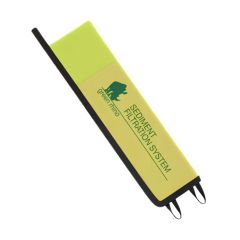
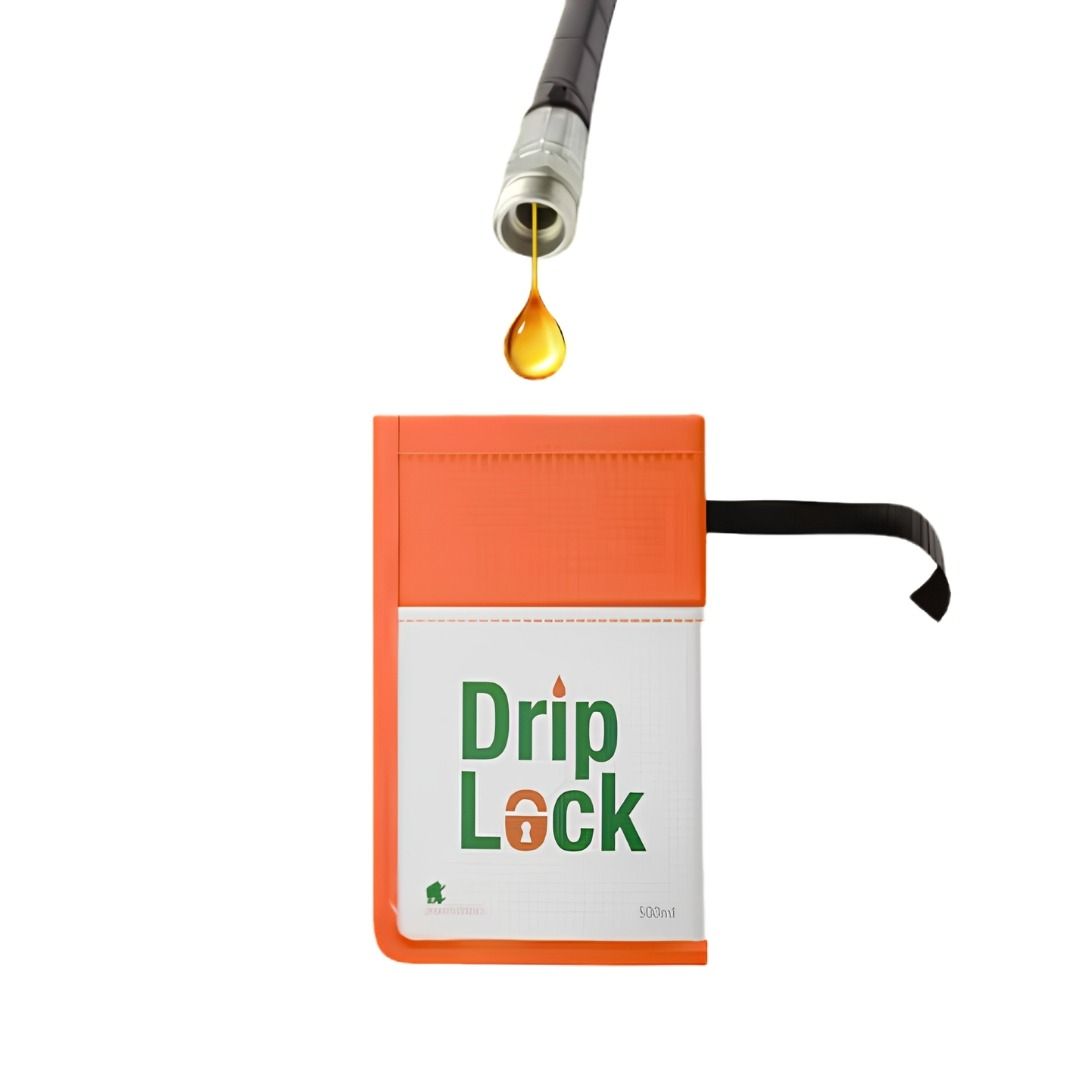
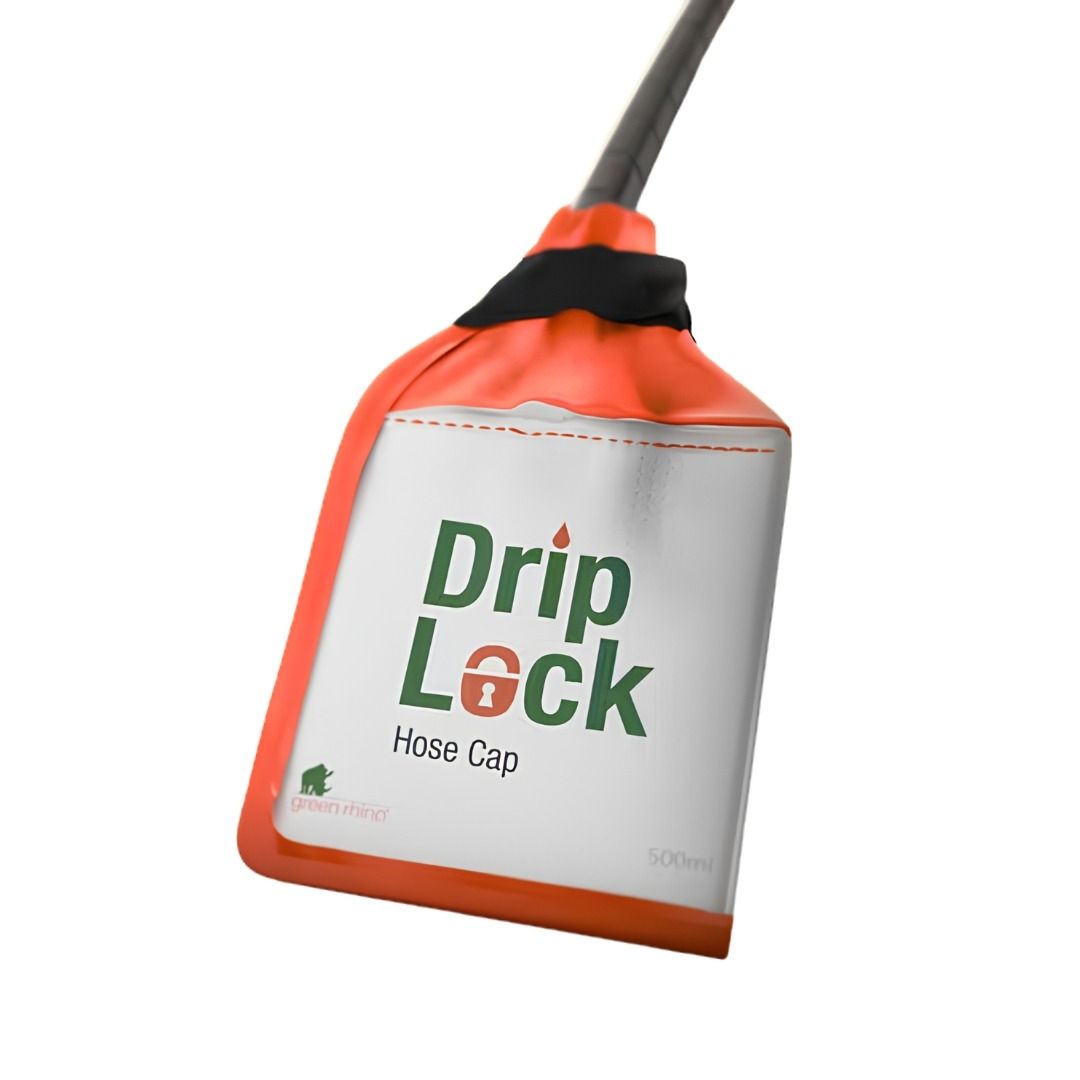
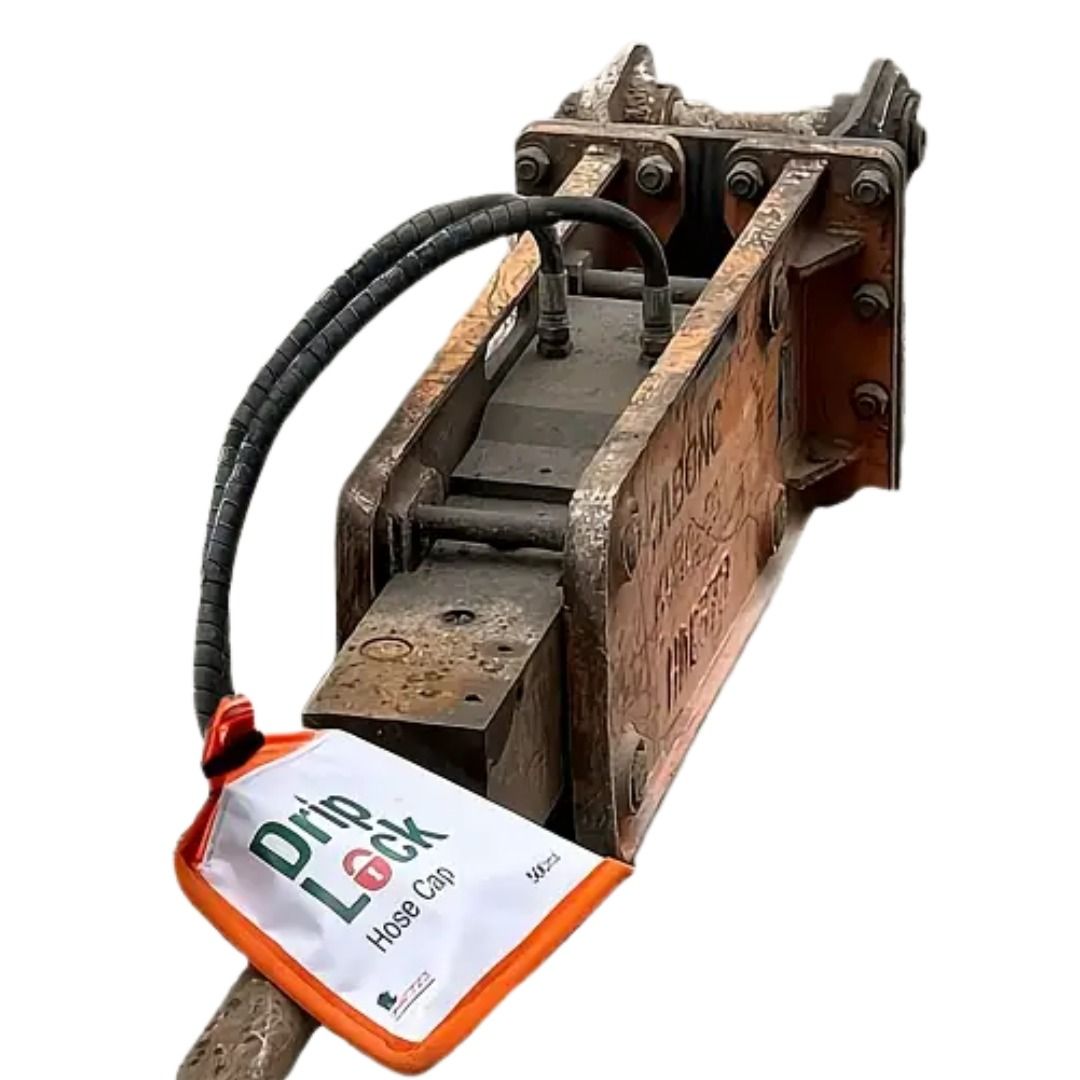
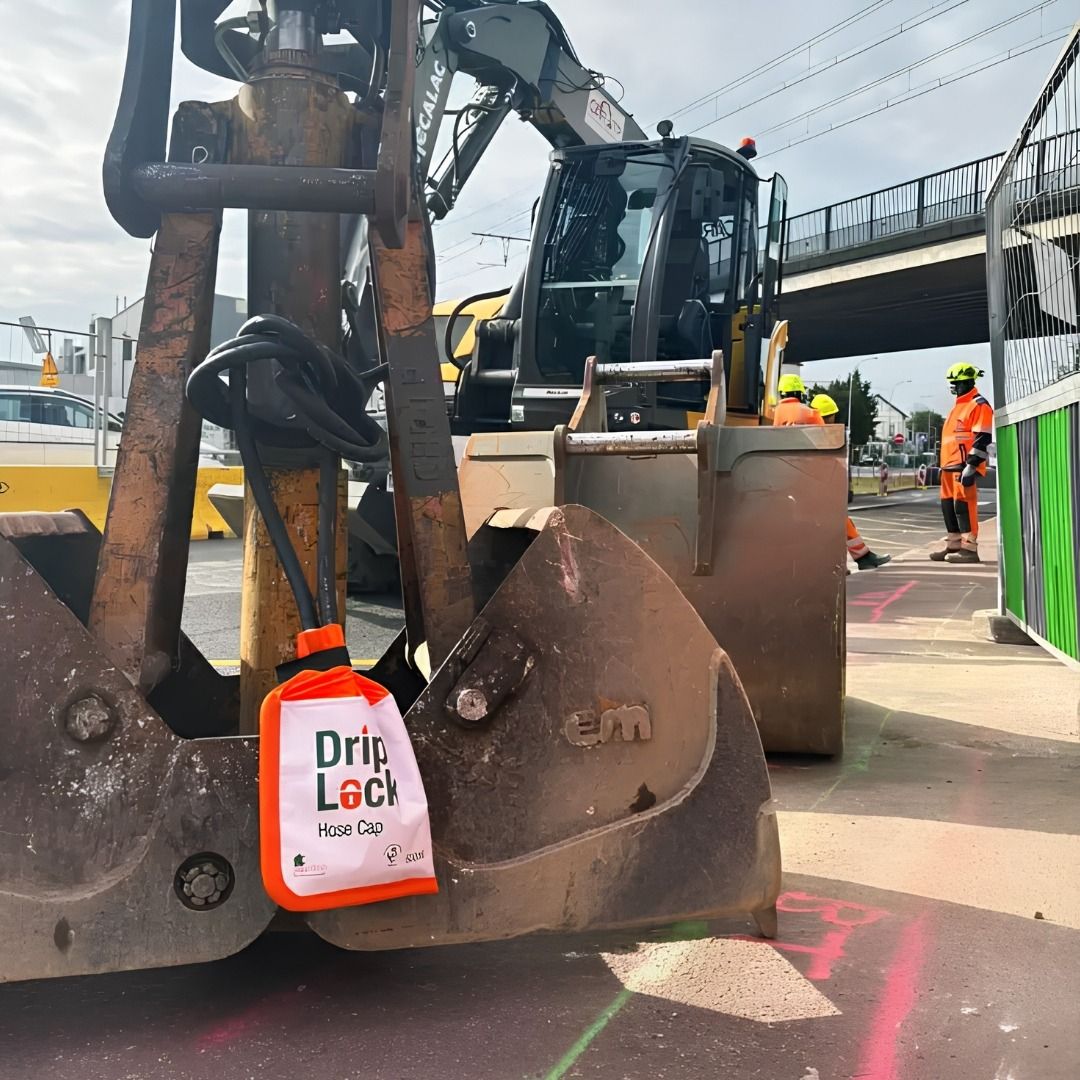
Hydrocarbon spill containment hose cap for construction plant, using patented Neutroilize™ Smart Fabric to permanently convert hydraulic fluid drips and leaks into a non-leaching solid.
- Patented Neutroilize™ Smart Fabric permanently converts hydrocarbons to non-leaching solid
- Hydrophobic, repels water and reacts only with hydrocarbons
- Up to 500ml capacity based on diesel and HVO
- Fits two hose ends or up to 4" total diameter
- Hook-and-loop strap for secure tool-free attachment
- Compatible with motor oil, petrol, diesel, HVO, and hydraulic fluids including bio
- Leakproof, prevents secondary spills during storage
- Dispose in COSHH bin when full, no mess or downtime
Green Rhino DripLock Hose Cap
Hydrocarbon spill containment hose cap for construction plant, using patented Neutroilize™ Smart Fabric to permanently convert hydraulic fluid drips and leaks into a non-leaching solid.
- Patented Neutroilize™ Smart Fabric permanently converts hydrocarbons to non-leaching solid
- Hydrophobic, repels water and reacts only with hydrocarbons
- Up to 500ml capacity based on diesel and HVO
- Fits two hose ends or up to 4" total diameter
- Hook-and-loop strap for secure tool-free attachment
- Compatible with motor oil, petrol, diesel, HVO, and hydraulic fluids including bio
- Leakproof, prevents secondary spills during storage
- Dispose in COSHH bin when full, no mess or downtime
- Buy 5 for £38.94 £32.45 each and save 7%
- Buy 10 for £35.88 £29.90 each and save 15%
| BULK DISCOUNT | 5 | 10 |
|---|---|---|
| Price | £32.45 £38.94 | £29.90 £35.88 |
Order 1x to earn 34 FASTPoints
Order to earn 34 FASTPoints
Log in to access trade discountsGreen Rhino DripLock Hose Cap - 500ml
DripLock Hose Cap fits securely onto hydraulic hose ends to capture incidental hydrocarbon drips from construction plant, machinery, and equipment before they reach the ground. Unlike standard absorbent pads and drip trays, the patented Neutroilize™ Smart Fabric permanently converts captured hydrocarbons into a non-leaching solid rather than absorbing them into a material that can still leak. The hydrophobic construction means the cap ignores water entirely, reacting only with hydrocarbons regardless of site weather conditions.
Why permanently converting hydrocarbons matters more than absorbing them
Standard absorbent pads capture hydraulic fluid but do not neutralise it. A saturated absorbent pad still contains free liquid that can leach into soil or reach waterways if the pad is damaged, overfilled, or put into the wrong waste stream. Under the Water Resources Act 1991, causing or knowingly permitting water pollution carries significant penalties, and a sodden absorbent pad in the wrong bin is a compliance failure waiting to happen. Neutroilize™ Smart Fabric converts hydrocarbons permanently into a non-leaching solid. When the DripLock Hose Cap is full, it contains a solid material, not a liquid, and can be disposed of correctly in a COSHH bin without risk of further contamination.
Key Features
-
Patented Neutroilize™ Smart Fabric: The only smart polymer technology that retains hydrocarbons permanently as a non-leaching solid. Standard absorbents retain fluid in liquid form. Neutroilize converts it chemically and permanently, eliminating the secondary spill risk that absorbent pads carry.
-
Hydrophobic construction: The smart fabric repels water and reacts only with hydrocarbons. The cap will not become waterlogged on a wet site and will not waste absorption capacity on rainfall or cleaning water.
-
500ml capacity based on diesel and HVO: Capacity varies by fluid type. Compatible with motor oil, petrol, diesel, HVO, and hydraulic fluids including bio variants. The mesh fabric wicks hydrocarbons across the surface to areas of unused polymer, ensuring maximum use of every cap before replacement is needed.
-
Fits two hose ends or up to 4" diameter: Sized for the paired hose ends commonly found on hydraulic implements and attachments. Single larger hoses up to 4" total diameter also fit securely.
-
Hook-and-loop fastening strap: Tool-free attachment and removal. The strap wraps around the hose and locks securely so the cap stays in place throughout the working day, even on plant in active operation.
-
Leakproof construction: Captured fluid is converted to solid within the cap. The leakproof design prevents secondary spills during storage or transport of a partially used cap between deployments.
-
Dispose in COSHH bin when full: No decanting, no mess. When capacity is reached, the cap goes into a COSHH bin as solid waste and a fresh cap replaces it. No downtime, no handling of contaminated liquid.
Who is this for
Trades and roles:
-
Plant operators and machine operators
-
Site managers and environmental compliance officers
-
Plant hire companies and plant managers
-
Agricultural contractors
-
Marine operatives
Industries:
-
Construction and civil engineering
-
Plant hire and plant management
-
Agriculture and forestry
-
Marine and offshore
-
Industrial and commercial maintenance
Specifications
| Specification | Detail |
| Product Name | Green Rhino DripLock Hose Cap – 500ml Hydrocarbon Spill Control |
| SKU | HS060007 |
| Brand | Green Rhino |
| Technology | Patented Neutroilize™ Smart Fabric |
| Hydrocarbon Action | Permanently converts hydrocarbons to non-leaching solid (does not merely absorb) |
| Capacity | Up to 500ml (based on diesel and HVO; varies by fluid type) |
| Hose Compatibility | Two hose ends, or up to 4″ total diameter |
| Compatible Hydrocarbons | Motor oil, petrol, diesel, HVO, hydraulic fluids (including bio variants) |
| Water Resistance | Hydrophobic – repels water and reacts only with hydrocarbons |
| Attachment | Hook-and-loop fastening strap |
| Storage | Leakproof – no secondary spill risk from captured fluid |
| Disposal | COSHH bin when full – do not dispose of in general waste |
| Dimensions | 24.5 x 39.5 cm |
| Suitable Industries | Construction, plant hire, marine, agriculture |
Compatibility
| Application or condition | Status |
| Incidental hydraulic fluid drips from plant machinery hose ends | ✓ Suitable – primary design application |
| Motor oil, petrol, diesel, HVO, and bio hydraulic fluids | ✓ Compatible – all confirmed hydrocarbon types |
| Two hose ends or hoses up to 4″ total diameter | ✓ Suitable – within designed capacity |
| Wet outdoor conditions | ✓ Suitable – hydrophobic construction repels water |
| Construction, plant hire, marine, and agricultural environments | ✓ Suitable |
| Overnight storage of hose ends to capture residual drips | ✓ Suitable – leakproof construction prevents secondary spill |
| Spills or leaks above 500ml capacity | ✗ Not sufficient – use secondary containment with adequate capacity for larger volumes |
| Disposal in general waste when full | ✗ Not permitted – dispose in COSHH bin only |
| Submersion or pressurised water exposure | ✗ Not designed for this application |
| Reuse after full saturation | ✗ Not recommended – replace when capacity is reached |
Who is this for
Plant operators, site managers, and environmental compliance officers on UK construction sites using hydraulic plant. The DripLock Hose Cap is the first line of defence for any site where hydraulic machinery is connected and disconnected regularly, where hoses show signs of minor weeping, or where overnight storage of implements risks residual fluid reaching the ground.
Typical applications
-
Fitting to hydraulic hose ends on excavators, telehandlers, and other plant during hose connection, disconnection, and overnight storage.
-
Capturing incidental hydraulic fluid drips from weeping hoses during normal plant operation on active construction sites.
-
Protecting sensitive ground conditions, drainage channels, and watercourses adjacent to plant working areas.
-
Preventing ground contamination during plant servicing and hydraulic system maintenance in the field.
-
Overnight containment of residual hydrocarbon drips from stored implements and attachments.
-
Agriculture: capturing fluid from hydraulic systems during implement changes on tractors and farm machinery.
-
Marine and offshore: containing incidental hydrocarbon drips from hydraulic systems in environmentally sensitive waterside locations.
How to use
Step 1: Open the DripLock Hose Cap and place the hydraulic hose end or ends inside the pouch. Ensure all hose ends that may drip are inside the cap.
Step 2: Wrap the hook-and-loop fastening strap securely around the hose. The strap should hold the cap firmly in place without being over-tightened against the hose body.
Step 3: The Neutroilize™ Smart Fabric begins working immediately on contact with hydrocarbons, converting drips to a non-leaching solid. No activation or priming is required.
Step 4: Inspect the cap regularly. The mesh fabric wicks hydrocarbons to unused polymer areas to maximise capacity. Replace when the fabric is fully saturated and no unused capacity remains.
Step 5: When full, remove the cap and dispose of in a COSHH bin. Do not dispose of in general waste. Fit a replacement cap immediately to maintain uninterrupted spill control.
Common mistakes
-
Using the DripLock Hose Cap for a large or continuous leak: the cap is designed for incidental drips up to 500ml. A significant hydraulic system leak requires the hose to be repaired and secondary containment with adequate capacity to be in place. Do not rely on the hose cap as the only control measure for a known major leak.
-
Disposing of in general waste: even though the cap contains solid material rather than free liquid when full, it is contaminated waste and must go into a COSHH bin in line with your site waste management plan.
-
Reusing a fully saturated cap: a cap that has reached capacity has no remaining conversion ability. Replace it. Continuing to use a saturated cap provides no further protection.
-
Assuming the cap is suitable for water: the hydrophobic construction means the cap will not absorb water and will not be waterlogged on a wet site, but it is not a waterproof cap for hose ends during pressure washing or immersion.
Safety
The DripLock Hose Cap is designed for incidental hydrocarbon drips. Where a larger spill is possible, secondary containment with adequate capacity must also be in place. Failure to implement effective spill control can result in prosecution under the Water Resources Act 1991 and Environmental Protection Act 1990. Dispose of full caps in a COSHH bin in accordance with your site's environmental and waste management plan. Record spill control measures as part of your site's environmental management documentation.
Maintenance
Inspect the cap before each deployment to confirm it has not reached capacity. Partially used caps can be stored safely due to the leakproof construction and can be reused until full. The rugged outer construction can be wiped clean between deployments. Do not attempt to extract or reuse the Neutroilize fabric once hydrocarbons have been captured.
Frequently Asked Questions
Q: How does Neutroilize™ Smart Fabric work differently from a standard absorbent pad?
A: A standard absorbent pad traps hydrocarbon fluid in the pad material, but the fluid remains in liquid form and can still leach out if the pad is damaged, overfilled, or disposed of incorrectly. Neutroilize™ Smart Fabric uses smart polymers that chemically convert hydrocarbons permanently into a non-leaching solid. The result is a material that cannot migrate back into the environment, regardless of what happens to the cap after the conversion has occurred. Green Rhino pioneered the use of smart polymers for spill control and Neutroilize™ is the only method that achieves permanent retention.
Q: Which hydrocarbons does the DripLock Hose Cap work with?
A: The cap is compatible with motor oil, petrol, diesel, hydrotreated vegetable oil (HVO), and hydraulic fluids including bio variants. The smart polymer blend works with a wide range of workplace hydrocarbons. The 500ml capacity figure is based on diesel and HVO. Actual capacity varies by fluid type, as different hydrocarbons interact with the polymer at different rates.
Q: What is this product NOT suitable for?
A: The cap is designed for incidental drips and small leaks up to 500ml. For larger spills or a known continuous hydraulic leak, secondary containment with adequate capacity must be used alongside or instead of the hose cap. The cap is not suitable for general waste disposal when full; a COSHH bin is required. It is not designed for submersion, pressure washing exposure, or use with non-hydrocarbon fluids.
Q: How do I know when the cap is full and needs replacing?
A: The Neutroilize mesh fabric wicks hydrocarbons across its surface to unused polymer areas, maximising capacity before replacement is needed. When all polymer has been converted, no further absorption or conversion occurs. Inspect the cap during regular plant checks. A cap that feels firm and solid throughout rather than having areas of unused soft fabric is approaching or at full capacity. Replace before it reaches the point where drips are no longer being captured.
Q: What regulations make hydraulic fluid spill control a legal requirement on UK construction sites?
A: The Water Resources Act 1991 prohibits causing or knowingly permitting the entry of polluting matter into controlled waters, which includes groundwater, rivers, and drainage systems. The Environmental Protection Act 1990 covers duty of care for controlled waste and the prevention of pollution to land. Failure to implement adequate spill control measures for hydraulic plant on a construction site can result in fines, site closures, and prosecution. The Environment Agency's Pollution Prevention Guides provide additional guidance specific to construction sites.
Q: Can I use a single DripLock Hose Cap for a leaking hydraulic system?
A: The cap captures incidental drips only and is not a repair for a leaking hydraulic system. If a hose is actively leaking, the correct response is to isolate the system, repair or replace the hose, and use secondary containment with appropriate capacity for the volume at risk during the repair period. The hose cap is a containment measure for incidental drips, not a substitute for hydraulic system maintenance.