A complete 7-step guide to dewatering a construction site excavation safely and legally, covering spill prevention, hydrocarbon testing, pump selection, discharge routing, sediment filtration, and residual drainage to 1mm. All products available from CMT Group with next-day delivery.
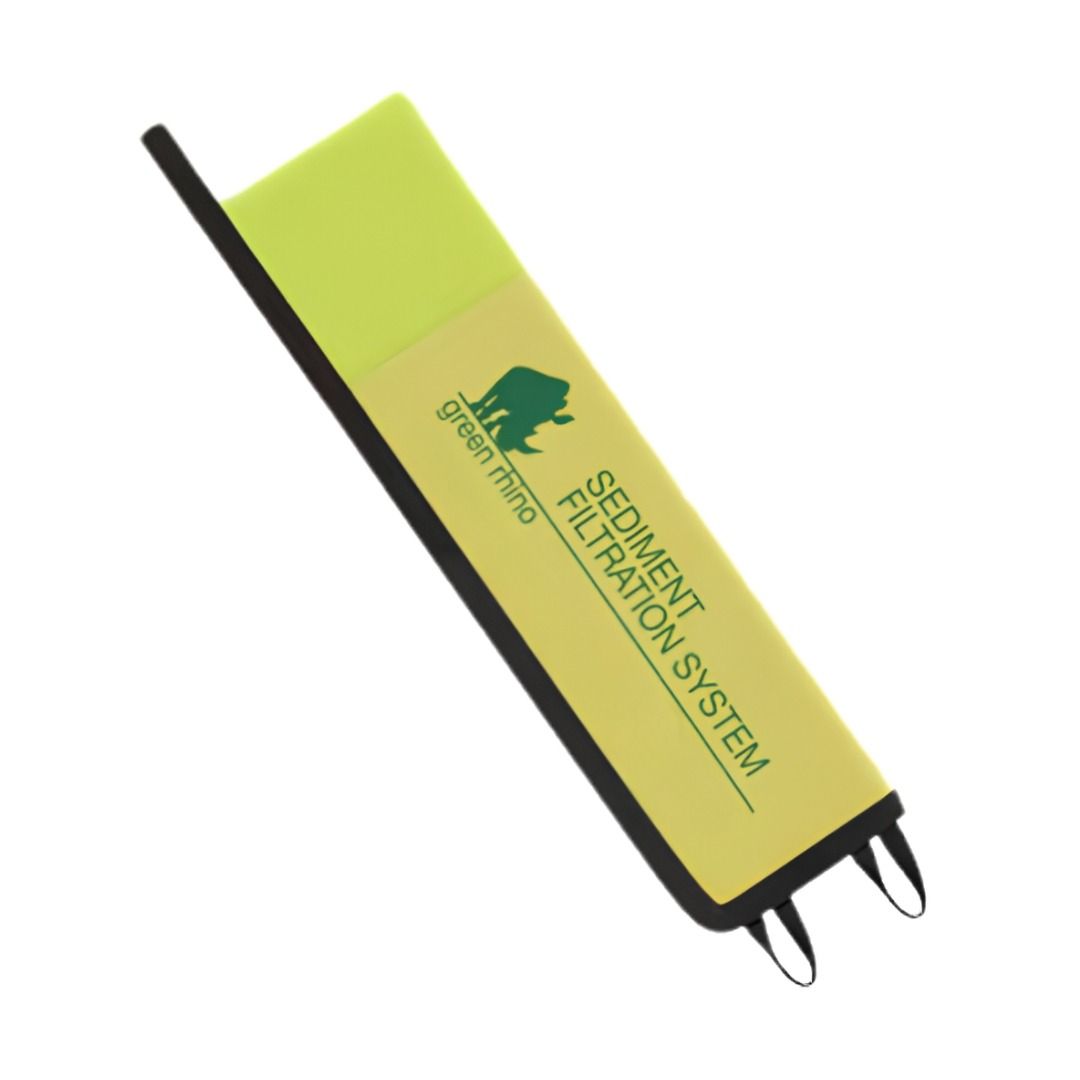
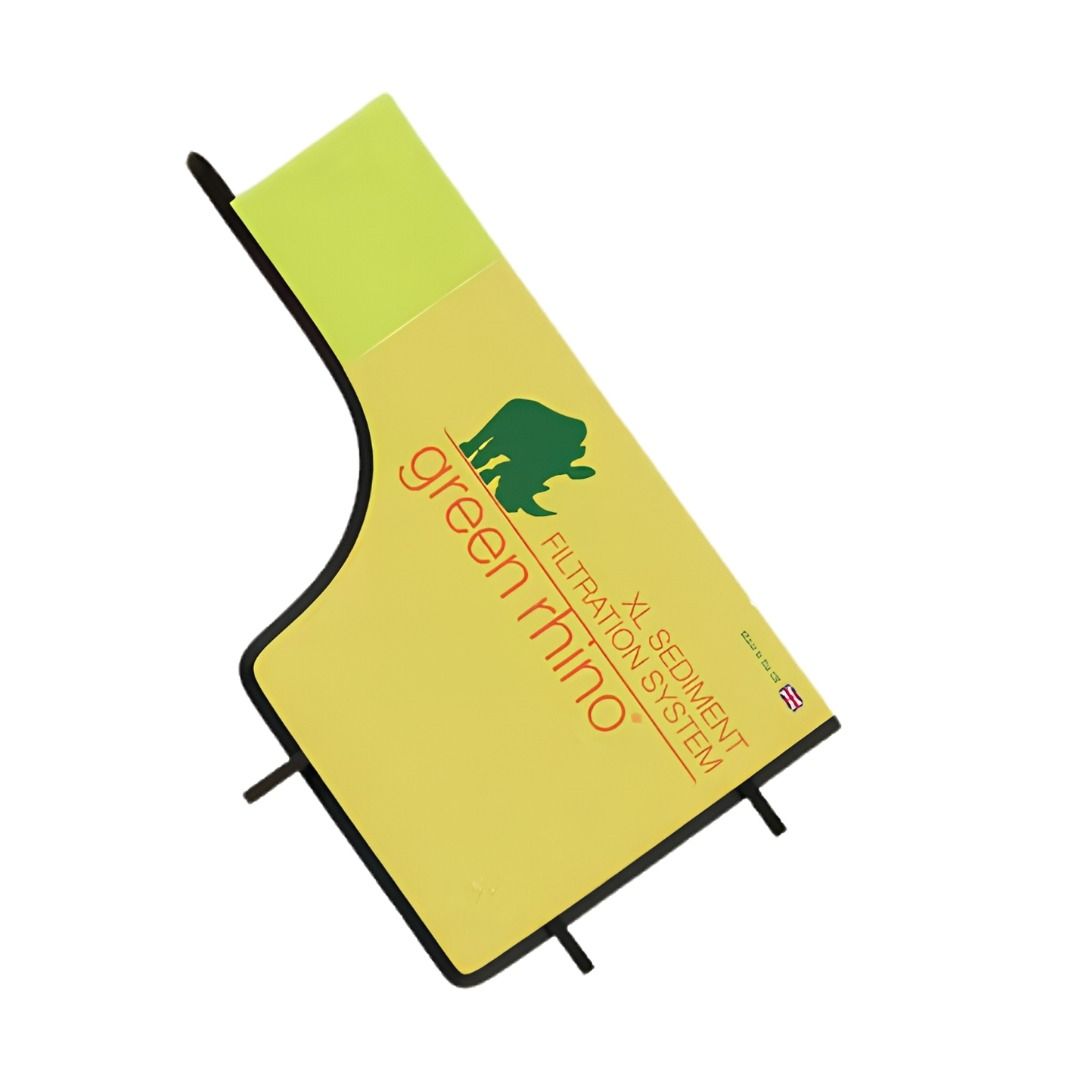
Green Rhino reusable sediment dewatering filters for compliant pump discharge on regular construction site dewatering, available in standard (L) and XL sizes for different pump outputs and sediment volumes.
- Reusable up to 20 times
- Integrated hydrocarbon detection indicator, turns dark blue to signal stop pumping
- 150µm filtration, suitable for compliant surface water discharge
- L: 150 x 35cm, 20kg sediment capacity, 450 L/min
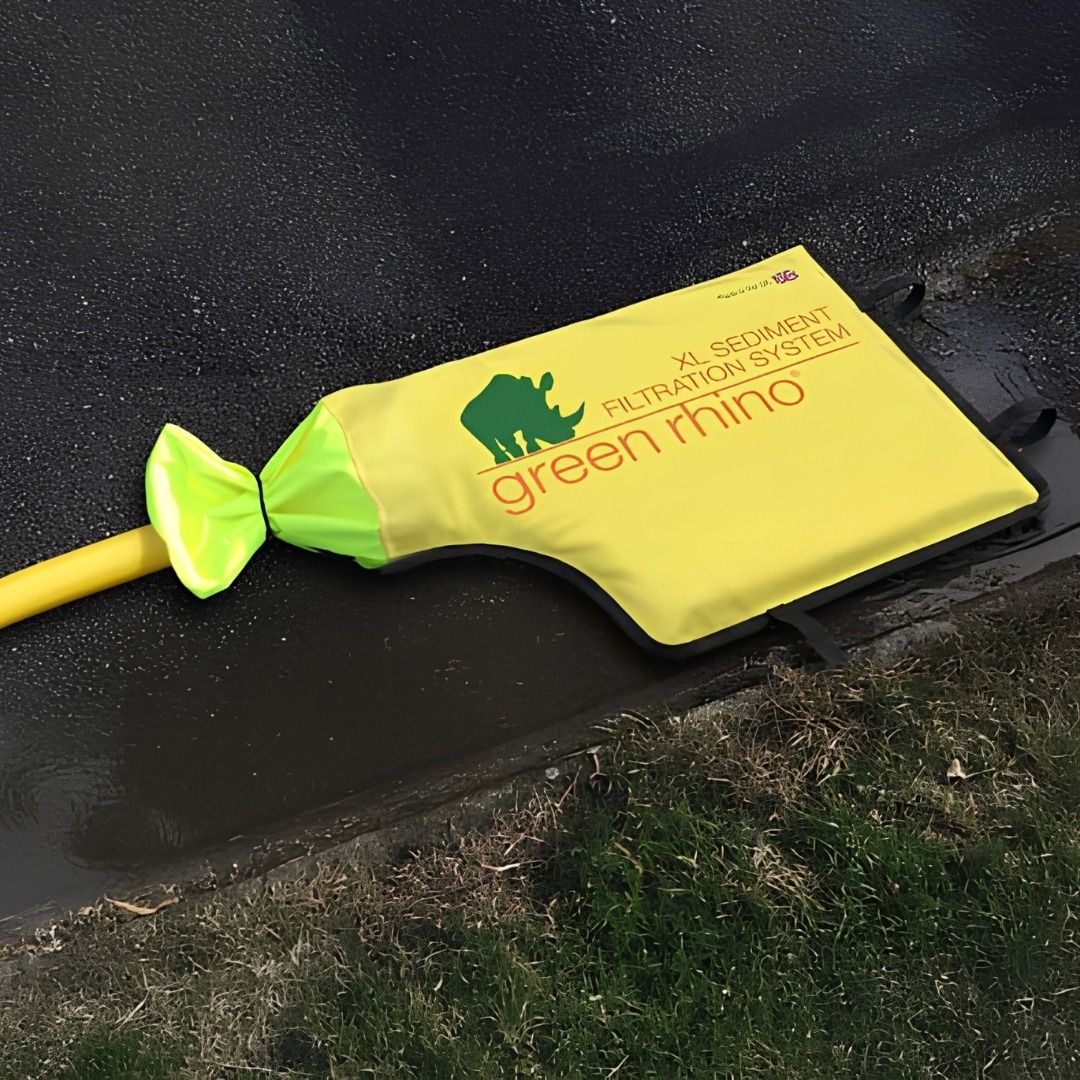
- XL: 150 x 80cm, 40kg sediment capacity, 800 L/min
- More cost-effective than vacuum tankers or settlement tanks
- UK manufactured
Green Rhino reusable sediment dewatering filters for compliant pump discharge on regular construction site dewatering, available in standard (L) and XL sizes for different pump outputs and sediment volumes.
- Reusable up to 20 times
- Integrated hydrocarbon detection indicator, turns dark blue to signal stop pumping
- 150µm filtration, suitable for compliant surface water discharge
- L: 150 x 35cm, 20kg sediment capacity, 450 L/min
- XL: 150 x 80cm, 40kg sediment capacity, 800 L/min
- More cost-effective than vacuum tankers or settlement tanks
- UK manufactured
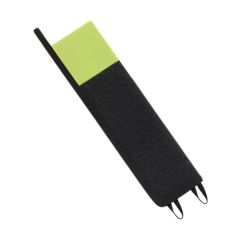
Green Rhino Sediment Dewatering Filters - 150 Micron
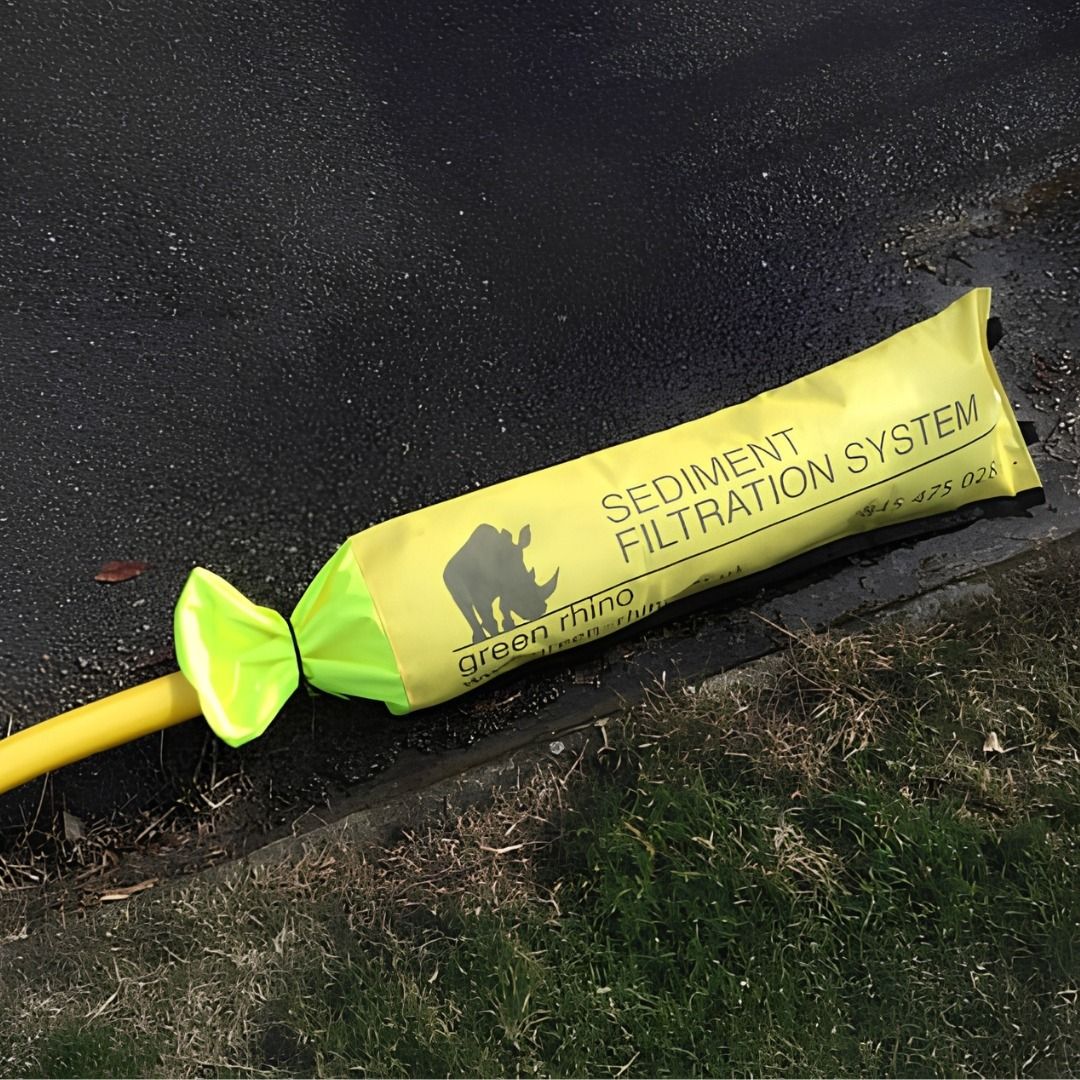
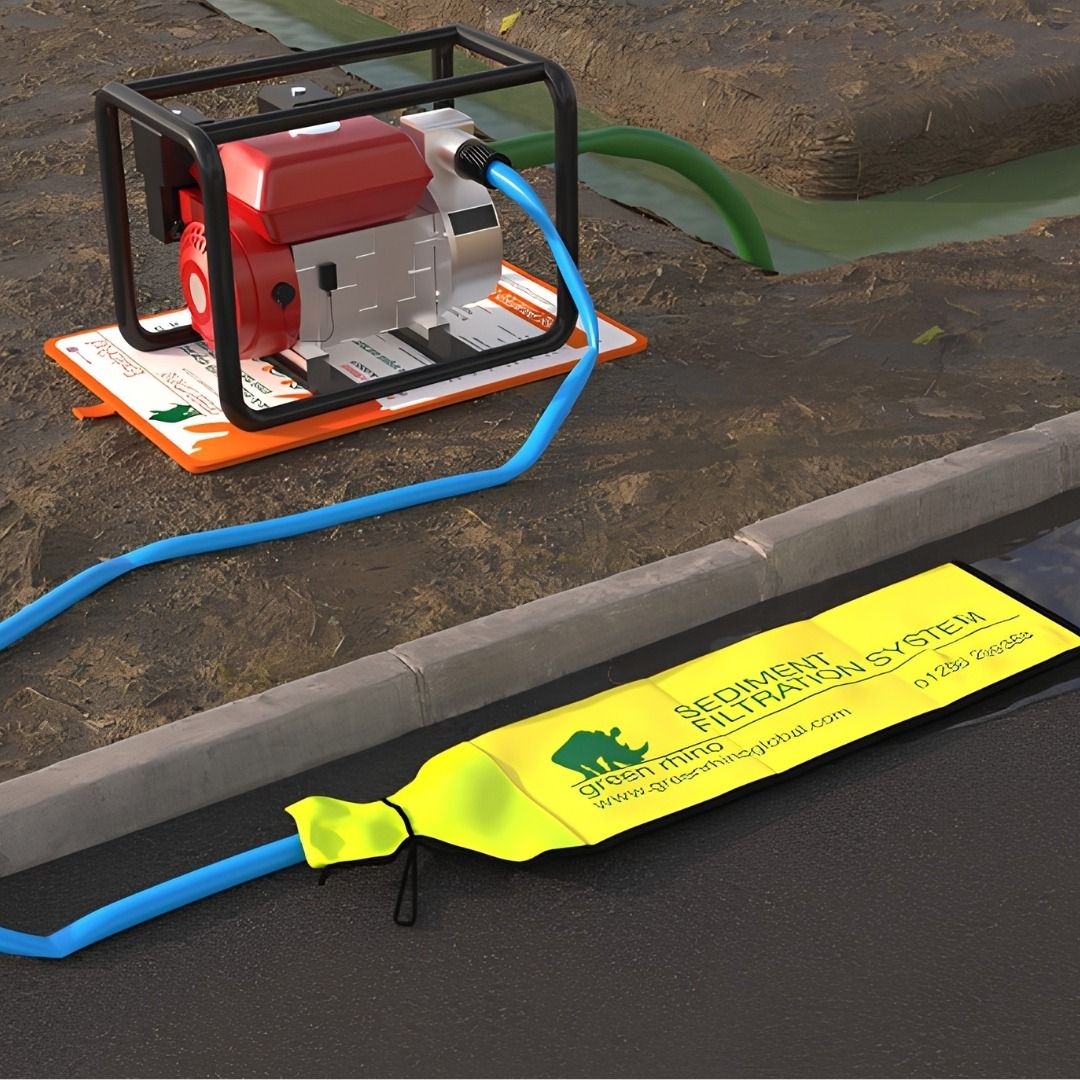
Reusable sediment dewatering filters for removing suspended sediment from excavation discharge water, for regular dewatering operations on UK construction, civils, and utilities sites. Each filter fits over the discharge end of the pump hose, trapping sediment inside the geotextile media as water passes through at 150µm filtration. The filter can be emptied and reused up to 20 times, making it significantly more cost-effective than single-use alternatives across multiple site visits. An integrated hydrocarbon detection indicator is printed directly onto the filter: if the light blue indicator turns dark blue, stop pumping immediately as hydrocarbons are present in the water.
How the integrated hydrocarbon indicator protects against accidental pollution incidents
The most dangerous moment in any dewatering operation is not knowing what is in the water before pumping begins. A hydrocarbon detection strip test (Step 3 of a compliant dewatering workflow) addresses this before pumping starts. The integrated indicator on the sediment filter provides a second checkpoint during pumping: if hydrocarbons enter the water mid-session from plant drips, a change in ground conditions, or an unexpected contamination source, the indicator changes from light blue to dark blue. This stops the operator pumping contaminated water through a sediment-only filter to a surface water drain. These filters remove sediment. They do not remove hydrocarbons. The indicator tells you when to stop.
Key Features
-
Reusable up to 20 times: Empty the sediment, rinse, and redeploy. Across 20 uses, the cost per dewatering session is a fraction of single-use alternatives. Cost-effective for any site with regular or repeat dewatering requirements.
-
Integrated hydrocarbon detection indicator: Printed directly onto the filter fabric. Light blue at the start of pumping. Turns dark blue if hydrocarbons are detected in the discharge water. Stop pumping immediately when this happens and switch to an oil and sediment filter.
-
150µm filtration: Removes suspended sediment particles above 150 micrometres, cleaning the water to a standard suitable for discharge to surface water drains and watercourses on sites with no hydrocarbon contamination.
-
Two sizes: The L (GRR010502SEDO) at 150 x 35cm and 20kg capacity for standard 2-inch outlet pumps at 450 L/min. The XL (GRR010510SEDO) at 150 x 80cm and 40kg capacity for higher-output pumps at 800 L/min.
-
UK manufactured: Made in the UK.
Who is this for
Trades and roles:
-
Site managers and environmental managers on regular dewatering sites
-
Groundworkers and drainage operatives on active construction projects
-
Civil engineers managing ongoing excavation dewatering
-
Utilities operatives dewatering cable and pipe excavations repeatedly
Industries:
-
Construction and civil engineering
-
Utilities and infrastructure
-
Highways and drainage
-
Environmental remediation
Specifications
| Specification | Detail |
| Product Name | Green Rhino Sediment Dewatering Filters - Reusable 150 Micron |
| Parent Code | GRR010 |
| Filtration Rating | 150µm (150 microns) |
| Hydrocarbon Indicator | Yes, integrated. Light blue turns dark blue when hydrocarbons detected |
| Reusable | Yes, up to 20 times |
| What It Removes | Suspended sediment only. Does not remove hydrocarbons or oil |
| Origin | UK manufactured |
Variant Comparison
| Specification | Sediment Filter L | Sediment XL Filter |
|---|---|---|
| Product | ||
| SKU | GRR010502SEDO | GRR010510SEDO |
| Name | Sediment Dewatering Filter | XL Sediment Filter |
| Performance | ||
| Size | 150 x 35cm | 150 x 80cm |
| Sediment Capacity | 20kg | 40kg |
| Max Flow Rate | 450 L/min | 800 L/min |
| Filtration Rating | 150µm | 150µm |
| Reuse | Up to 20x | Up to 20x |
| Compatibility | ||
| Matched pump type | 2" outlet pumps up to 450 L/min | Higher-output pumps up to 800 L/min |
| Compatible MAX pump | PL080001 (500W), PL080003 (530W) | PL080002 (750W) |
| Best Suited To | ||
| Primary use | Standard construction site dewatering, regular excavations | Large excavations, high-volume dewatering, fast pumping operations |
Compatibility
| Application or condition | Status |
| Regular excavation dewatering on construction sites | ✓ Compatible |
| Discharge to surface water drains and watercourses | ✓ Compatible, sediment-contaminated water only |
| Reuse across multiple dewatering sessions | ✓ Compatible, up to 20 times |
| Sites where hydrocarbon indicator guidance is needed mid-session | ✓ Compatible, indicator alerts operator to stop pumping |
| Water confirmed to contain hydrocarbons | ✗ Not suitable, use Green Rhino Oil and Sediment Filter |
| Sites where oil removal is required | ✗ Not suitable, sediment removal only |
| Use beyond 20 reuse cycles | ✗ Not recommended, replace filter |
Who is this for
Site managers, environmental managers, and groundworkers on UK construction and civils sites where excavation dewatering is a regular or ongoing activity. The reusable design makes this the standard specification for principal contractors and utilities operatives who dewater multiple excavations across a project rather than a single one-off task. The integrated hydrocarbon indicator provides a mid-session safety check that protects the operator against accidental discharge of contaminated water when conditions change during pumping.
Typical applications
-
Filtering sediment-laden water from foundation and trench excavations during groundwork and civil engineering operations before discharge to a surface water drain.
-
Regular dewatering on utilities sites where cable and pipe excavations fill repeatedly with groundwater during extended installation programmes.
-
Providing reusable sediment filtration across a programme of similar excavations on the same site, emptying and redeploying the filter between sessions.
-
Dewatering highway excavations where discharge to a roadside gully is the most practical outfall and sediment filtration is required for EA compliance.
-
Supplying the Step 6 filtration element in a complete site dewatering system alongside hydrocarbon detection strips, submersible pumps, and layflat hose.
How to use
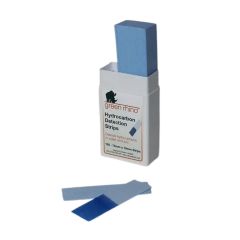
Step 1: Before fitting the filter, test the excavation water with a hydrocarbon detection strip. If the strip returns a positive result, use the Green Rhino Oil and Sediment Filter instead.
Step 2: Slide the open end of the filter over the discharge hose end. The filter is sized to fit a standard 2-inch discharge hose for the L variant. Secure with the integral cord by tying firmly around the hose.
Step 3: Position the filter at the discharge point. The filter should lie flat, allowing water to exit freely through the geotextile media into the drain or watercourse below.
Step 4: Start the pump. Monitor the integrated hydrocarbon indicator throughout pumping. If the light blue indicator starts to turn dark blue, stop pumping immediately. The water contains hydrocarbons that this filter cannot remove. Switch to the Green Rhino Oil and Sediment Filter.
Step 5: When the filter becomes hard to pump through, it has reached its sediment capacity. Stop the pump, empty the accumulated sediment into site waste, rinse the filter, and allow to dry before redeployment. The filter can be reused up to 20 times.
Step 6: After 20 uses or when the filter media shows visible damage or degradation, dispose of and replace.
Common mistakes
-
Ignoring the hydrocarbon indicator mid-session: the indicator turning dark blue during pumping is a direct instruction to stop. Continuing to pump when the indicator has activated discharges hydrocarbon-contaminated water through a sediment-only filter to the drain. Stop, disconnect, and switch to the Oil and Sediment Filter.
-
Not testing with a hydrocarbon strip before fitting the filter: the indicator provides a warning during pumping but testing first is the correct step before starting. If contamination is present from the outset, the indicator will begin to turn before significant volume has been pumped.
-
Exceeding 20 reuse cycles: the geotextile media degrades over repeated use. After 20 uses, the filtration performance cannot be guaranteed and the filter should be replaced.
-
Using the L filter with the 750W 3-inch outlet pump: the L filter handles 450 L/min from a 2-inch outlet pump. The 750W pump (PL080002) outputs 250 L/min through an 80mm outlet. Use the XL filter (800 L/min capacity) with the 750W pump.
Safety
These filters remove suspended sediment. They do not remove hydrocarbons, dissolved chemicals, heavy metals, or other contaminants. The integrated hydrocarbon indicator is a warning device, not a treatment mechanism. When the indicator turns dark blue, stop pumping and do not resume until the water source has been assessed and an appropriate oil and sediment filter has been fitted. Discharging hydrocarbon-contaminated water to a watercourse or surface drain is an offence under the Water Resources Act 1991 regardless of whether a sediment filter is in use.
Maintenance
Empty sediment from the filter after each use. Rinse with clean water and allow to dry before storage. Inspect the geotextile media for tears, holes, or degradation before each redeployment. Store clean and dry, away from direct sunlight. Check the hydrocarbon indicator condition before each use. Replace after 20 uses or when media damage is visible.

Frequently Asked Questions
Q: How does the integrated hydrocarbon indicator work?
A: The hydrocarbon indicator is a reactive element printed onto the filter fabric. It starts light blue. If hydrocarbons are present in the water passing through the filter, the indicator reacts and turns dark blue. When this happens, stop pumping immediately. The indicator is signalling that hydrocarbons are present in the water and this filter cannot remove them. Switch to the Green Rhino Oil and Sediment Filter to continue dewatering compliantly.
Q: Does this filter remove oil as well as sediment?
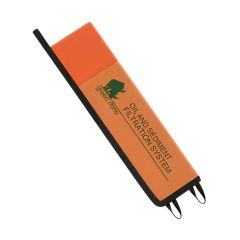
A: No. These are sediment-only filters. They remove suspended sediment particles above 150 micrometres. They do not retain, absorb, or remove hydrocarbons, oil, or fuel from the water. The integrated indicator tells you when hydrocarbons are present so you can stop pumping before contaminated water reaches the drain. For sites where oil contamination is confirmed or suspected, use the Green Rhino Oil and Sediment Filter, which removes both sediment and light hydrocarbon sheen.
Q: What is the difference between the L and XL filter?
A: The L (GRR010502SEDO) is 150 x 35cm with a 20kg sediment capacity and 450 L/min maximum flow rate, matched to standard 2-inch outlet 110V submersible pumps. The XL (GRR010510SEDO) is 150 x 80cm with a 40kg capacity and 800 L/min maximum flow rate, suited to higher-output pumps and larger dewatering operations. Both filter to 150µm, are reusable up to 20 times, and include the integrated hydrocarbon indicator.
Q: How do I clean and reuse the filter?
A: When the filter becomes difficult to pump through, empty the accumulated sediment into site waste. Rinse the filter with clean water to remove residual fine sediment and allow it to drain and dry before redeployment. Inspect the geotextile media for damage before each reuse. The filter can be reused up to 20 times. After 20 uses, or when visible damage appears, replace the filter.
Q: What is the difference between this and the Economy filter?
A: The Economy Sediment Filter (GRR010601BFIL) is single-use, filters at 100µm, and has no hydrocarbon indicator. It is designed for occasional or one-off dewatering. The standard and XL Sediment Dewatering Filters filter at 150µm, are reusable up to 20 times, and include the integrated hydrocarbon indicator. For regular dewatering across a project, the reusable filter is significantly more cost-effective per session and provides the additional safety of mid-session hydrocarbon detection.
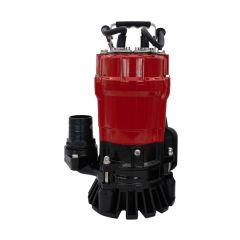
Q: Which filter do I need for the MAX 750W submersible pump?
A: Use the XL Sediment Filter (GRR010510SEDO) with the MAX 750W pump (PL080002). The 750W pump delivers up to 250 L/min through an 80mm (3-inch) outlet. The XL filter is rated to 800 L/min and is sized to handle the higher flow output of the 750W pump. The standard L filter at 450 L/min is matched to the 500W and 530W 2-inch outlet pumps.