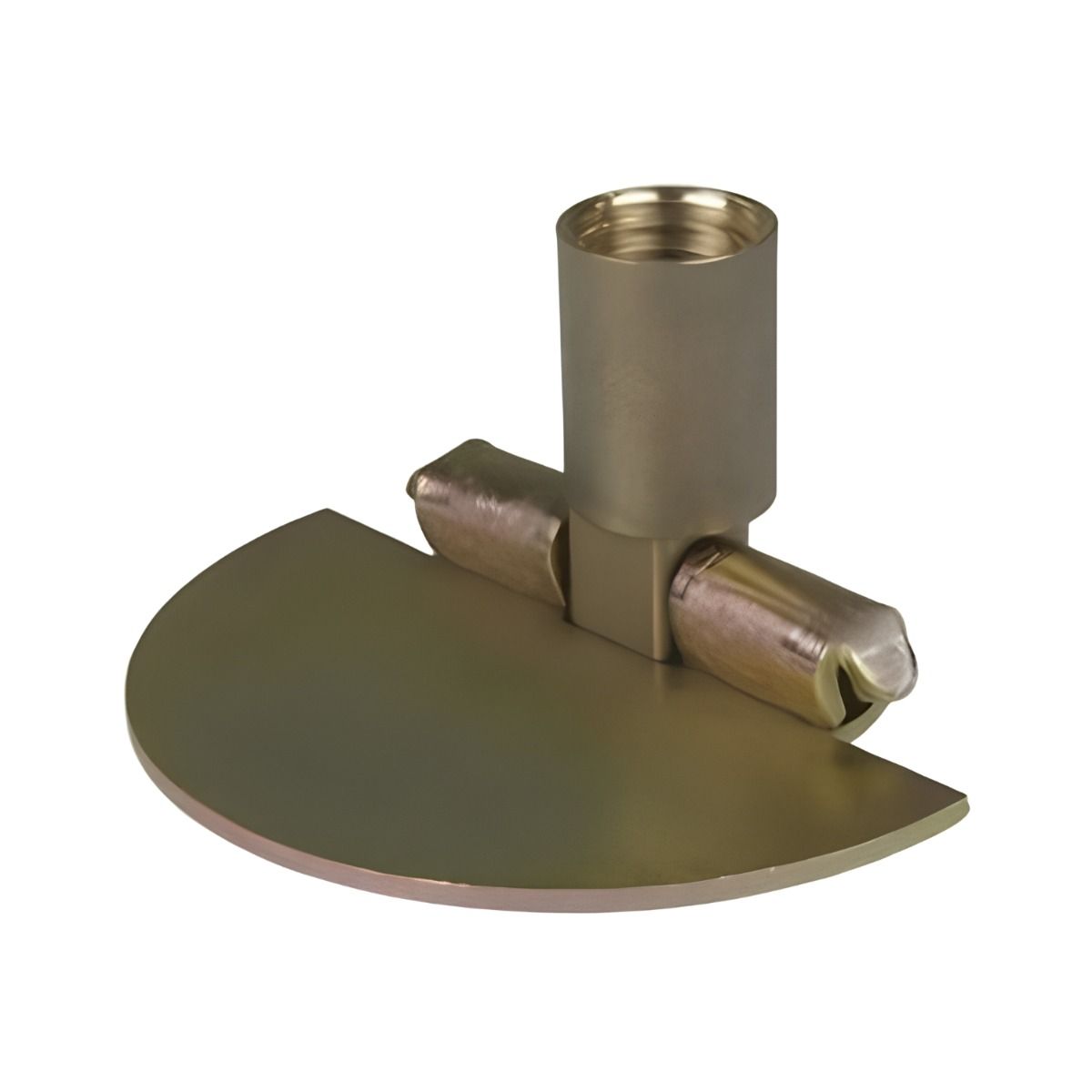
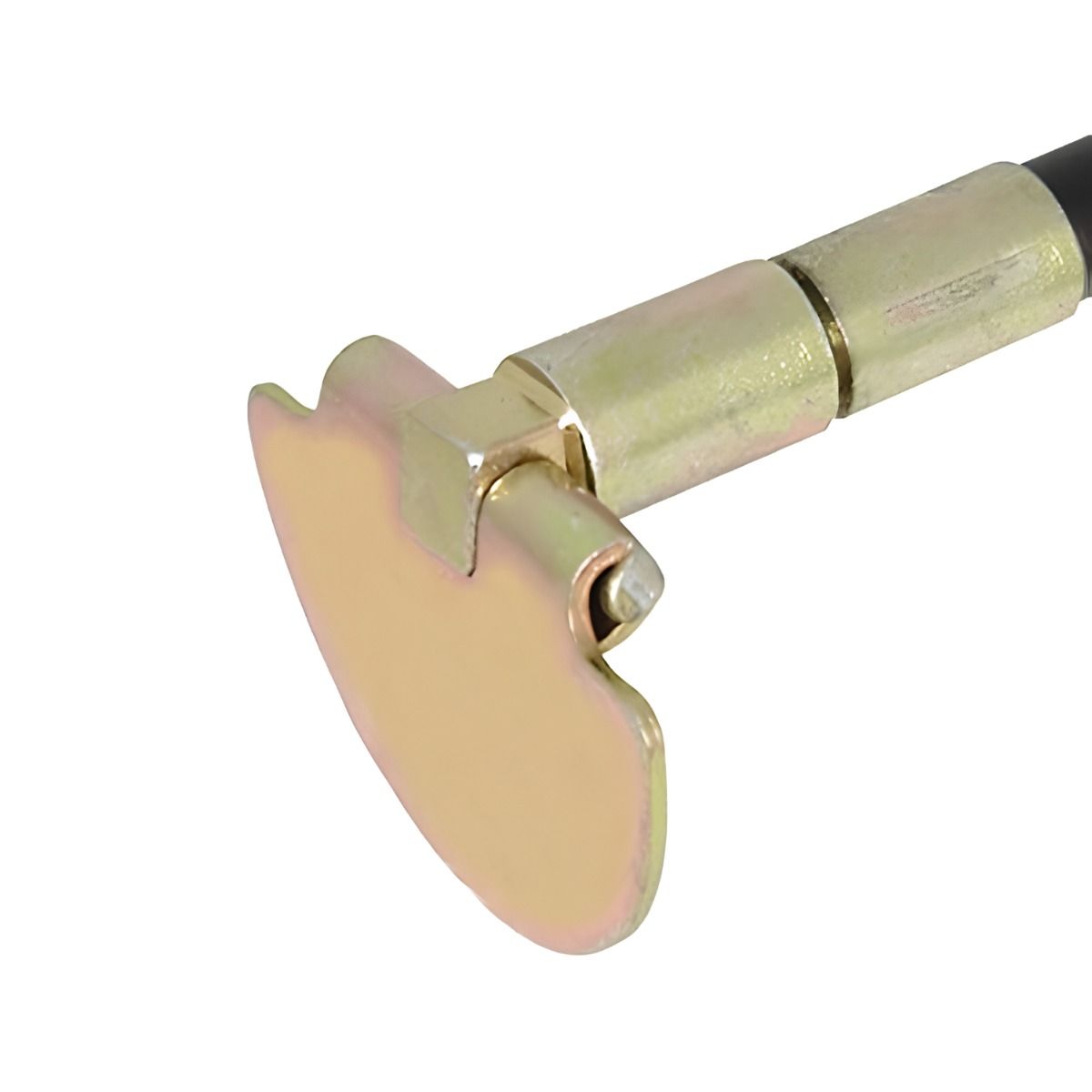
Half circle drain rod drop scrapers with a hinged blade and universal fitting, for dragging silt and debris from drains, for drainage contractors and groundworkers.
- Hinged half circle blade drops to drag debris back
- Universal (standard) type threaded fitting
- Fits universal polypropylene drain rods
- Plated steel construction
- Rotate clockwise only
- Available in multiple sizes
Half Circle Drain Rod Drop Scrapers - Universal Fitting
Half circle drain rod drop scrapers with a hinged blade and universal fitting, for dragging silt and debris from drains, for drainage contractors and groundworkers.
- Hinged half circle blade drops to drag debris back
- Universal (standard) type threaded fitting
- Fits universal polypropylene drain rods
- Plated steel construction
- Rotate clockwise only
- Available in multiple sizes
Half Circle Drain Rod Drop Scrapers
Half circle drain rod drop scrapers screw onto universal drain rods and pull silt, mud and loose debris back out of a drain run. A half circle steel blade hangs from a hinge below a threaded socket. Going in, the blade lies back and passes over the material. On the pull back, it drops and drags the material towards the operator.
How a Hinged Blade Pulls Out What Pushing Leaves Behind
Pushing rods through silt can pack the material tighter further down the pipe. On site, that can move the blockage beyond the chamber you’re working from and make it harder to clear. A drop scraper rides over the silt on the way in, then its blade drops and drags the material back to the chamber, where it can be lifted out.
Key Features
-
Hinged half circle blade: lies back as you push and drops as you pull, so it passes over debris and then brings it out.
-
Pull-back action: returns silt and debris to the chamber for removal, rather than pushing it further down the run.
-
Curved blade edge: follows the round shape of the pipe, so it scrapes along the drain wall.
-
Universal threaded socket: screws straight onto universal drain rods, the standard joint on most UK rod sets.
-
Plated steel construction: a rigid blade and socket that hold their shape when dragging heavy silt.
Who is this for
Trades and roles
-
Drainage engineers
-
Groundworkers
-
Plumbers
-
Site managers
-
Maintenance operatives
-
Facilities teams
Industries
-
Construction
-
Civil engineering
-
Housebuilding
-
Facilities management
-
Social housing maintenance
Specifications
| Specification | Detail |
|---|---|
| Product name | Half Circle Drain Rod Drop Scrapers - Universal Fitting |
| Product code | DRHM |
| Product type | Drain rod drop scraper attachment |
| Blade | Hinged half circle blade |
| Fitting | Universal (standard) type, female threaded socket |
| Compatible rods | Universal drain rods, including polypropylene rods with brass universal joints |
| Rotation | Clockwise only |
| Clearing action | Passes over debris going in, blade drops to drag it back |
| Material | Plated steel |
Size Selection
| Product code | Size | Suits drain pipe bore |
|---|---|---|
| DR4HM | 100mm (4in) | 100mm (4in) drain runs |
| DR6HM | 150mm (6in) | 150mm (6in) drain runs |
Compatibility
| Base material, tool or condition | Suitability |
|---|---|
| Universal drain rods | Suitable, screws on with the universal fitting |
| Polypropylene rods with brass universal joints | Suitable |
| Silt, mud and loose debris | Suitable, the blade drags it back to the chamber |
| Drain pipe matching the scraper size | Suitable |
| Lockfast (Ideal) drain rods | Not recommended, the joint does not match, use a lockfast drop scraper |
| Steel thrust rods with spanner joints | Not recommended, different joint system |
| Anti-clockwise rotation | Not recommended, the joint can unscrew and leave the scraper in the drain |
| Pipe bore smaller than the scraper size | Not recommended, choose the smaller size |
| Compacted blockages and roots | Not recommended as the first tool, break them up with a worm screw first |
| Flushing a drain run with water | Not recommended, use a full circle drain rod plunger |
Typical Users and Projects
Drainage contractors, groundworkers and maintenance teams use drop scrapers on new build sites, housing estates and commercial premises. Most work happens from inspection chambers on underground foul and surface water drains, where silt and site debris have settled in the pipe. It suits trained operatives clearing drains by hand, without jetting equipment.
Typical applications
-
Dragging silt and mud out of a surface water drain after groundworks and site clearance.
-
Pulling loose debris back to an inspection chamber before plunging a blocked foul drain.
-
Clearing settled grit from drain runs before a CCTV survey or drain test.
-
Removing material washed into drains during heavy rain on an open site.
-
Recovering loose debris from 150mm drains serving commercial buildings.
How to use
Step 1: Choose the scraper size that matches the drain pipe bore, using the Size Selection table.
Step 2: Lift the chamber cover with manhole keys and wear waterproof gloves.
Step 3: Screw the scraper clockwise onto the first rod, then add rods as needed, tightening each joint clockwise.
Step 4: Push the scraper into the drain run past the debris. The blade lies back as it goes in.
Step 5: Pull the rods back steadily so the blade drops and drags the material towards the chamber.
Step 6: Lift the material out of the chamber, then repeat until the run is clear. Withdraw the rods turning clockwise only.
Common mistakes
-
Turning the rods anti-clockwise, which can unscrew a joint and leave the scraper in the drain.
-
Fitting a universal scraper to lockfast rods.
-
Using the scraper on a compacted blockage before breaking it up with a worm screw.
-
Pulling back too hard and fast, so the blade rides over the material instead of dragging it.
-
Leaving the dragged-back material in the chamber, where it washes straight back into the pipe.
Safety
Sewage can carry leptospirosis (Weil’s disease) and other infections. Follow HSE guidance on working with sewage: wear waterproof gloves and eye protection, cover cuts, and wash your hands before eating. Never enter a manhole or chamber to work. Entering one is confined space work under the Confined Spaces Regulations 1997 and needs a trained team. Keep open chambers guarded and use manhole keys to lift covers.
Maintenance
Wash the scraper with clean water and disinfectant after each use. Check that the blade swings freely on its hinge and that the socket thread is undamaged. Dry it before storing to limit corrosion.
Frequently Asked Questions
Q: Will this drop scraper fit my drain rods?
A: It fits drain rods with universal (standard) type joints, such as polypropylene rods with brass universal connectors. It will not fit lockfast (Ideal) rods or steel thrust rods, which use different joints. Check the joint on your rods before ordering.
Q: What does 100mm (4in) mean on a drop scraper?
A: It is the drain pipe size the scraper suits. 100mm is the metric size and 4in is the same size in inches. Choose the size that matches the bore of the drain you are clearing.
Q: How does a drop scraper work?
A: The half circle blade hangs from a hinge below the rod socket. As you push the rods in, the blade lies back and passes over the debris. When you pull back, it drops and drags the material towards you.
Q: What is a drop scraper not suitable for?
A: It is not suitable for lockfast or steel thrust rods, or for pipes smaller than its size. It is not the first tool for compacted blockages or roots, which need breaking up with a worm screw. It does not flush water through a drain, which is a job for a plunger.
Q: Should I use a drop scraper or a plunger?
A: Use the drop scraper to pull silt and loose debris back out of the pipe. Use a full circle plunger to push water through and flush the run once the debris is out. Many teams use both, scraper first and plunger second.
Q: Why must universal drain rods only turn clockwise?
A: Universal joints and the scraper socket are screw threads that tighten clockwise. Turning anti-clockwise can unscrew a joint in the drain and leave the scraper or rods stuck in the pipe. Keep turning clockwise, even when withdrawing the rods.
Q: Which size do I need, 100mm or 150mm?
A: Most domestic foul and surface water drains are 100mm (4in), so the 100mm scraper covers most jobs. Larger drains serving several properties or commercial buildings are often 150mm (6in). Check the pipe bore at the inspection chamber if unsure.
Q: How do I look after a drop scraper?
A: Wash it with clean water and disinfectant after use, and check the blade swings freely on its hinge. Dry it before storing so the hinge doesn’t seize.