A practical 2026 guide to choosing the right wheelbarrow, sack truck, drum lifter, or pallet truck for your site, comparing every CMT Group model side by side so you can specify with confidence and avoid costly downtime.
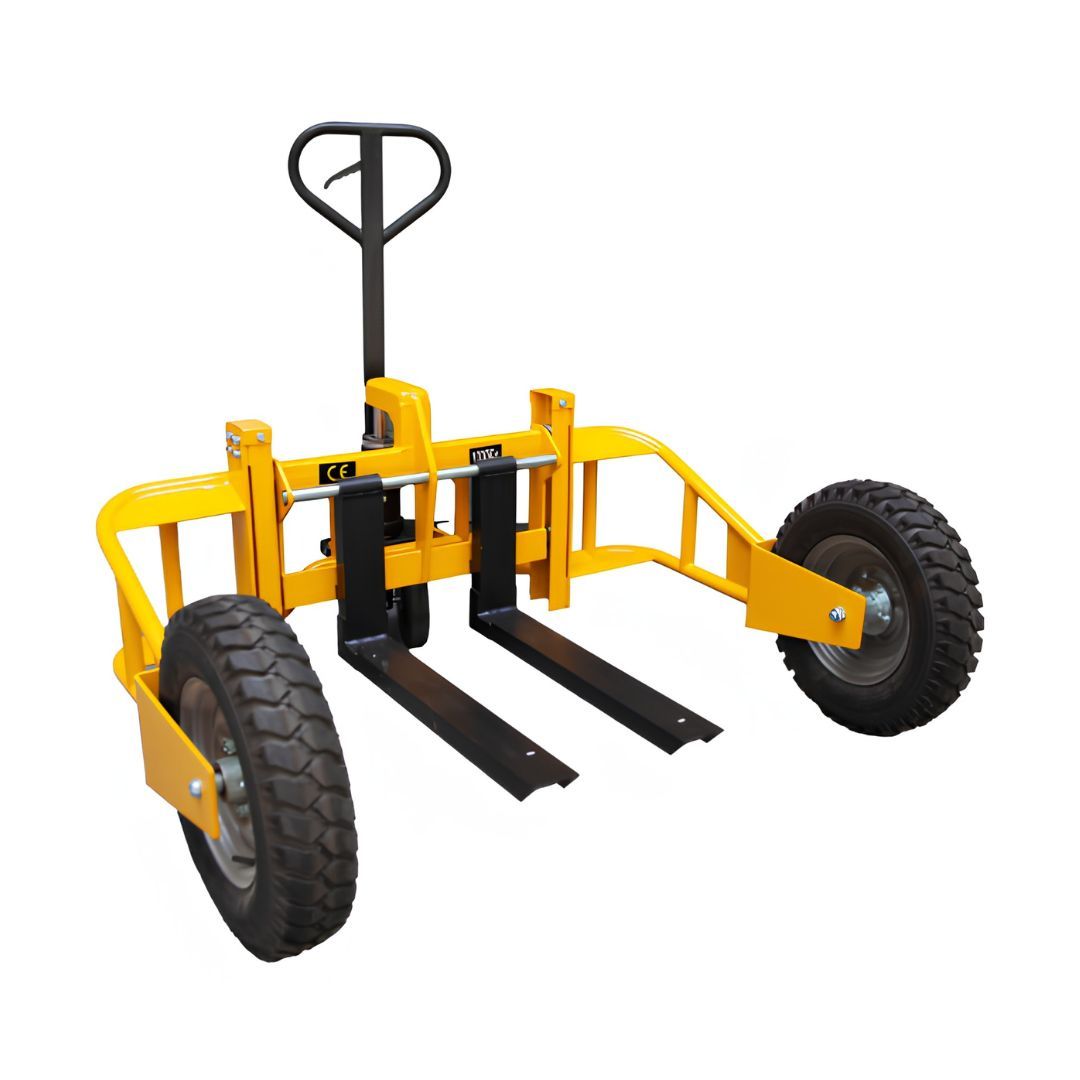
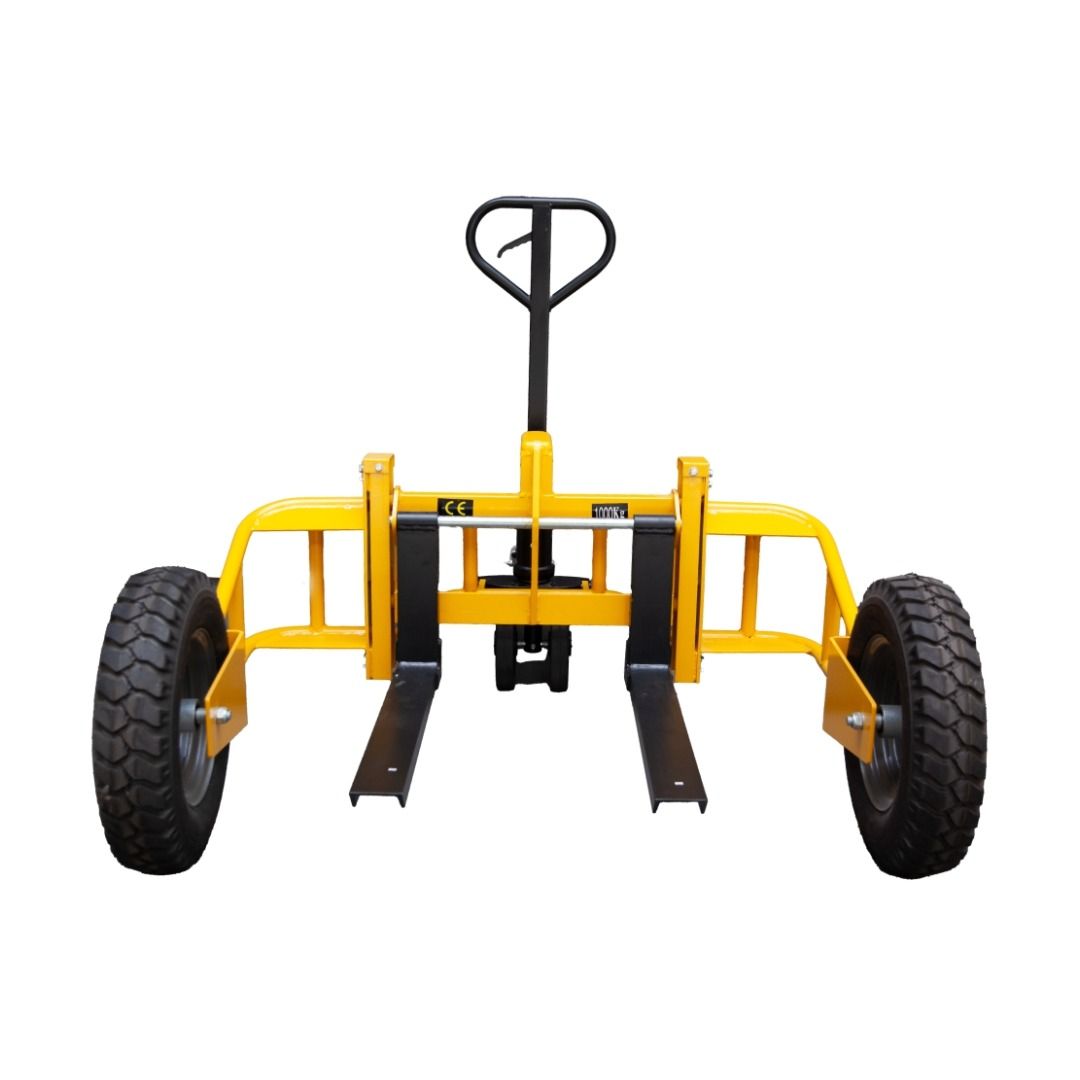
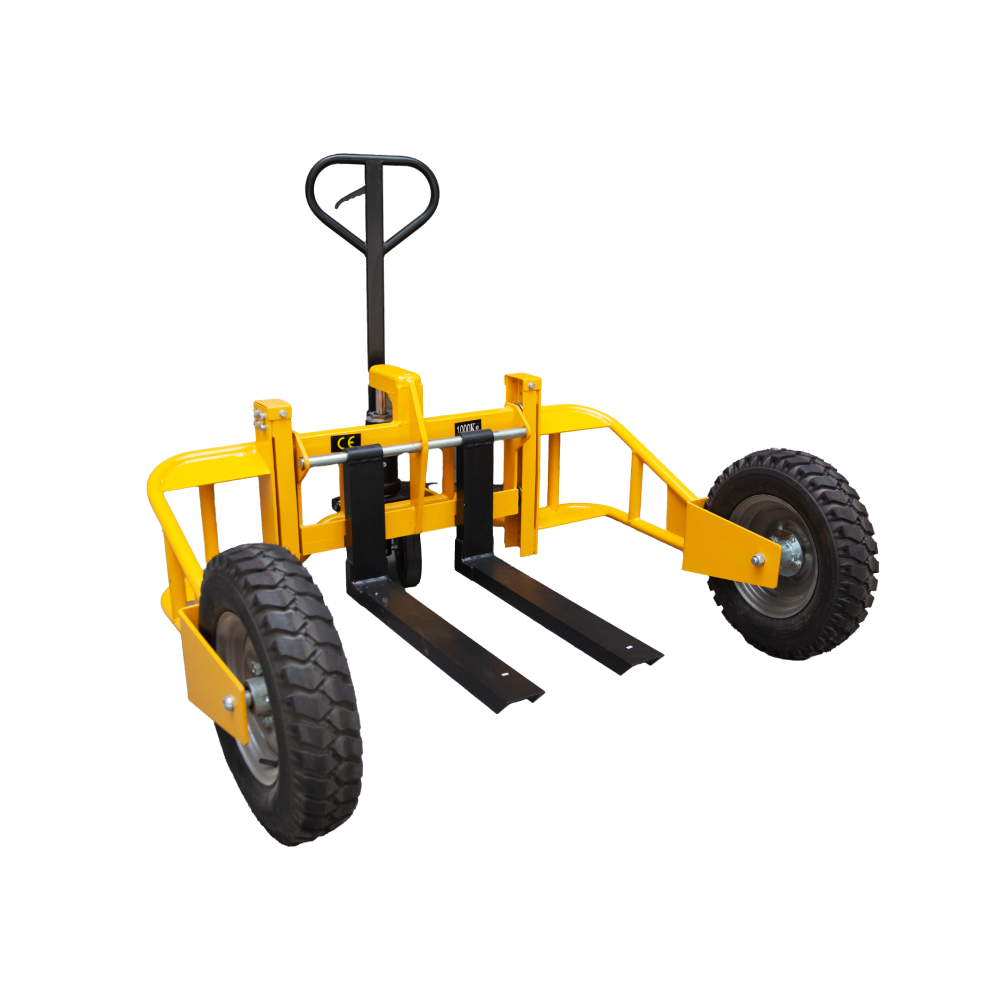
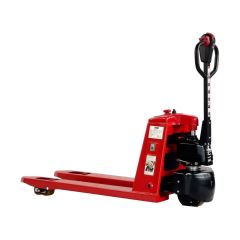
Rough terrain pallet truck built for lifting and transporting 1000kg loads across construction sites and uneven outdoor ground.
- Pneumatic front wheels, 568 x 145mm for shock absorption on rough terrain
- Solid rear wheels, 250 x 50mm, resist deformation under load
- Dual-action hydraulic pump for fast lifting with reduced operator effort
- Adjustable forks, 216 to 680mm width, fit a range of pallet sizes
- 800mm fork length suits standard and oversized pallets
- Net weight 218kg
Rough Terrain Pallet Truck - 1000kg Capacity for Construction and Uneven Ground
Rough terrain pallet truck built for lifting and transporting 1000kg loads across construction sites and uneven outdoor ground.
- Pneumatic front wheels, 568 x 145mm for shock absorption on rough terrain
- Solid rear wheels, 250 x 50mm, resist deformation under load
- Dual-action hydraulic pump for fast lifting with reduced operator effort
- Adjustable forks, 216 to 680mm width, fit a range of pallet sizes
- 800mm fork length suits standard and oversized pallets
- Net weight 218kg
- Buy 3 for £1,137.60 £948.00 each and save 5%
- Buy 6 for £1,074.00 £895.00 each and save 10%
| BULK DISCOUNT | 3 | 6 |
|---|---|---|
| Price | £948.00 £1,137.60 | £895.00 £1,074.00 |
Order 1x to earn 995 FASTPoints
Order to earn 995 FASTPoints
Log in to access trade discountsRough Terrain Pallet Truck - 1000kg Capacity
Rough terrain pallet truck designed for groundworkers, site operatives, and yard staff moving palletised loads across gravel, mud, and unfinished ground where standard warehouse pallet trucks cannot operate. The combination of large pneumatic front wheels and solid rear wheels gives the truck stable handling on uneven surfaces whilst maintaining structural integrity under full 1000kg loads. Adjustable forks accommodate a range of pallet widths, making it suited to construction sites, builders' yards, and outdoor material handling tasks where standard pallet trucks fail.
How pneumatic front wheels solve uneven ground handling
A standard pallet truck fitted with small polyurethane or nylon wheels struggles the moment it leaves a flat warehouse floor, catching on gravel, sinking into soft ground, or transmitting every bump directly into the load and the operator's hands. On a construction site or builders' yard, this means dropped loads, operator fatigue, and damaged goods when pallets are jolted across rutted or unfinished surfaces. The large pneumatic front wheels on this truck absorb shock from uneven ground whilst the solid rear wheels maintain load stability, allowing the operator to move a full pallet across rough terrain without the truck bogging down or the load shifting.
Key Features
-
Pneumatic front wheels, 568 x 145mm: Large-diameter air-filled tyres absorb shock from gravel, ruts, and uneven ground, reducing jolting transferred to the load and the operator
-
Solid rear wheels, 250 x 50mm: Resist deformation and compression under sustained heavy loads, maintaining stable steering even when fully laden
-
Dual-action hydraulic pump: Delivers fast initial lift with a high-volume stroke, then switches to a finer stroke for controlled lifting under load, reducing operator effort
-
Adjustable fork width, 216 to 680mm: Accommodates narrow stillages through to standard Euro and UK pallets without needing a second truck
-
800mm fork length: Suits standard pallet depths and most stringer-based pallet types used on UK construction sites
-
Low minimum fork height, 70mm: Engages low-profile pallets and skids that taller trucks cannot get under
-
1400mm minimum turning radius: Manoeuvrable in yard and site access points where space is restricted
Who is this for
Trades and roles:
-
Groundworkers
-
Site operatives
-
Yard and warehouse staff
-
Builders' merchants staff
Industries:
-
Construction
-
Civil engineering
-
Builders' merchants
-
Agriculture
-
Garden centres
Specifications
| Specification | Detail |
| Product Name | Rough Terrain Pallet Truck - 1000kg Capacity for Construction and Uneven Ground |
| SKU | SE110002 |
| Lifting Capacity | 1000kg (1 tonne) |
| Front Wheel Type | Pneumatic, 568 x 145mm |
| Rear Wheel Type | Solid rubber, 250 x 50mm |
| Pump Type | Dual-action hydraulic |
| Max Lifting Height | 240mm |
| Min Fork Height | 70mm |
| Fork Length | 800mm |
| Adjustable Fork Width | 216 to 680mm |
| Minimum Turning Radius | 1400mm |
| Overall Dimensions (LxWxH) | 1407 x 1670 x 1280mm |
| Net Weight | 218kg |
| Colour | Yellow and black |
Compatibility
| Application or condition | Status |
| Gravel, mud, and unfinished ground | Compatible |
| Construction sites and builders' yards | Compatible |
| Standard and adjustable-width pallets within fork range | Compatible |
| Garden centres, farms, and outdoor yards | Compatible |
| Pallets exceeding 1000kg gross weight | Not recommended |
| Steep gradients or loose deep mud | Not recommended |
| Use as a stacker or lifting beyond 240mm | Not recommended |
Who is this for
This rough terrain pallet truck is used by groundworkers, builders' merchants, and site operatives who need to move palletised materials across surfaces a standard warehouse pallet truck cannot handle: gravel yards, unfinished construction sites, and outdoor storage areas. It suits contractors moving building materials between delivery points and work areas, agricultural operations transporting feed or supplies across yards, and garden centres handling stock across gravel and grass paths. The 1000kg capacity covers the majority of palletised building materials, bagged products, and general site stock without requiring a forklift or telehandler.
Typical applications
-
Moving palletised building materials such as blocks, bagged cement, and aggregates from delivery vehicles to storage areas across unfinished ground
-
Transporting stock across gravel yards and unsurfaced areas at builders' merchants and trade counters
-
Handling pallets on construction sites where forklift access is restricted or impractical
-
Moving feed, fencing materials, or supplies across farm yards and uneven outdoor ground
-
Relocating stock or display pallets across gravel paths and grassed areas at garden centres
-
Transferring pallets between vehicles and storage where the ground is too rough for standard nylon-wheeled trucks
-
Short-distance haulage of palletised goods on sites without fixed flooring or tarmac
How to use
Step 1: Lower the forks fully using the pump handle release lever before positioning the truck.
Step 2: Adjust the fork width to match the pallet by sliding the fork arms within the 216 to 680mm range, then lock in position.
Step 3: Position the forks fully under the pallet, ensuring both arms are evenly inserted before lifting.
Step 4: Pump the handle to raise the load. The dual-action pump delivers a fast initial stroke, then a finer controlled stroke as resistance increases under load.
Step 5: Check the load is stable and the forks are fully raised to clear the ground before moving the truck.
Step 6: Use the handle to steer and pull the truck across the ground, keeping speed controlled on uneven or sloped sections.
Step 7: Lower the load fully using the release lever once at the destination, then withdraw the forks.
Common mistakes
-
Overloading beyond the 1000kg rated capacity, which places excessive strain on the hydraulic pump and wheel axles
-
Attempting to cross steep gradients or deep mud, conditions the pneumatic front wheels are not designed to handle safely
-
Inserting forks only partially under the pallet, causing load instability during lifting or transport
-
Leaving tyre pressure unchecked, which reduces shock absorption and increases the risk of the truck bottoming out on rough ground
-
Using the truck as a static lifting platform rather than a transport device, which is outside its intended design
Maintenance
Check front tyre pressure regularly, as underinflation reduces shock absorption and ground clearance. Inspect the hydraulic pump for leaks and the forks for cracking or bending before use. Keep pivot points and wheel axles free of mud and debris build-up. Store undercover where possible to protect the hydraulic seals and paintwork from prolonged outdoor exposure.

Frequently Asked Questions
Q: What is the actual lifting capacity and how does it compare to a standard pallet truck?
A: This truck lifts up to 1000kg, in line with most standard warehouse pallet trucks. The difference is not capacity but where it can operate: the pneumatic front wheels and reinforced frame allow it to carry that same 1000kg load across gravel, mud, and unfinished ground where a standard nylon-wheeled truck would stall or struggle.
Q: Why does it have two different wheel types?
A: The pneumatic front wheels, at 568 x 145mm, absorb shock and roll over uneven ground without transferring every bump into the load. The solid rear wheels, at 250 x 50mm, do not deform under sustained heavy loads, keeping the truck stable for steering even when fully laden. Pairing a shock-absorbing front wheel with a load-bearing rear wheel is standard rough terrain design, balancing comfort and durability in a single unit.
Q: What is this truck NOT suitable for?
A: It is not designed for steep gradients, deep mud, or loose excavated ground, where the pneumatic front wheels cannot maintain traction safely. It is not rated to lift loads above 1000kg, and it is not intended for use as a stacker or static lifting platform above its 240mm maximum fork height. For indoor warehouse use on smooth flooring, a standard pallet truck with smaller wheels is more efficient.
Q: Why choose this over a standard pallet truck for site use?
A: A standard pallet truck with small polyurethane wheels will catch, sink, or stall the moment it leaves flat warehouse flooring. This truck's pneumatic front wheels and reinforced 218kg frame are built specifically to handle gravel, ruts, and unfinished ground, meaning fewer dropped loads and less operator strain when moving materials around an active construction site or builders' yard.
Q: What pallet sizes does it fit?
A: The adjustable forks span 216 to 680mm in width, with an 800mm fork length, covering standard Euro and UK pallets as well as narrower stillages and skids. Check the pallet's base width against this range before use to confirm fit.
Q: How long does the hydraulic pump last before it needs servicing?
A: Service life depends on usage intensity and storage conditions. Keeping the truck undercover when not in use and checking for hydraulic fluid leaks periodically extends pump life significantly. Daily heavy use on rough terrain will wear the pump faster than occasional yard use, so routine inspection before use is the most effective way to catch issues early.