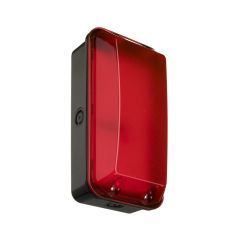
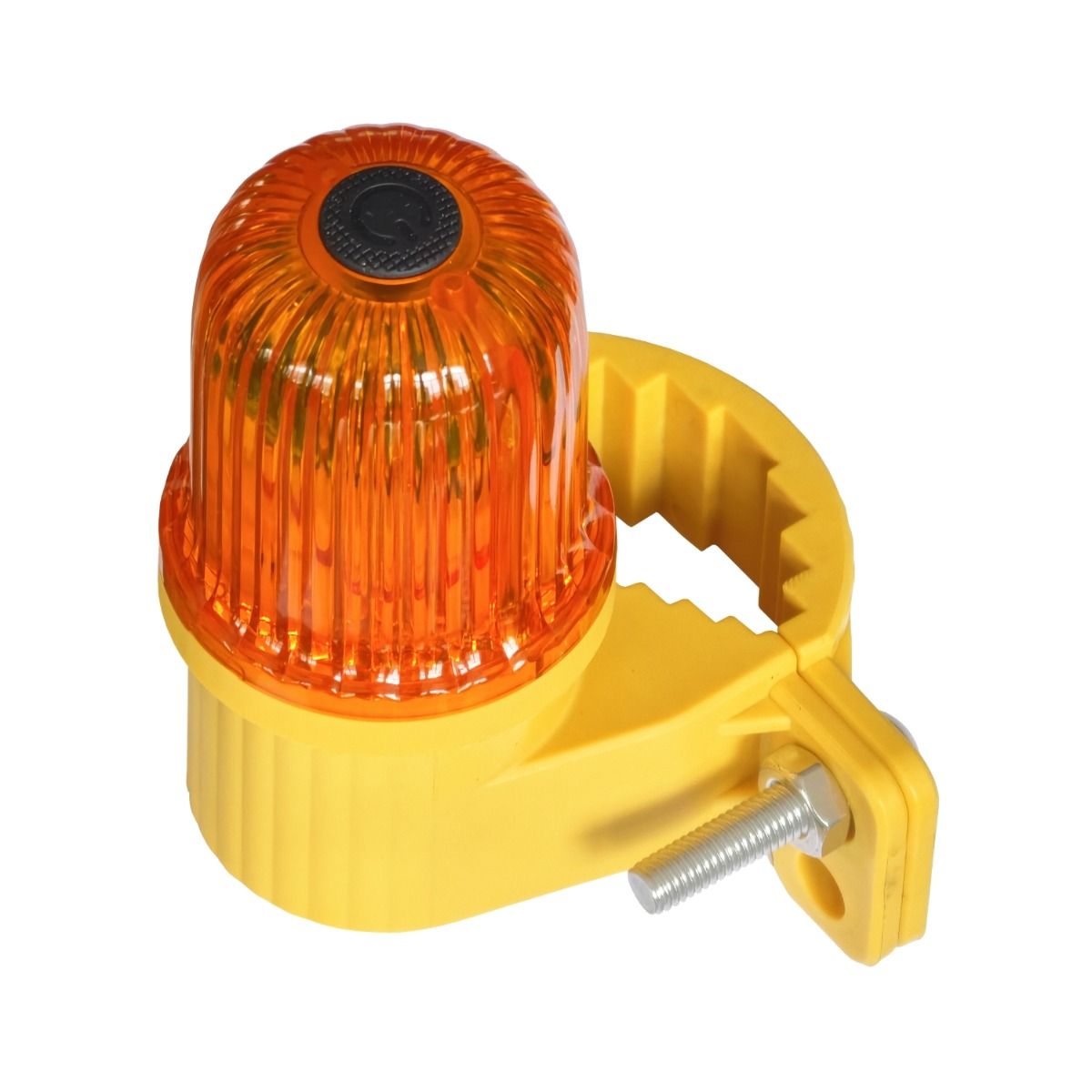
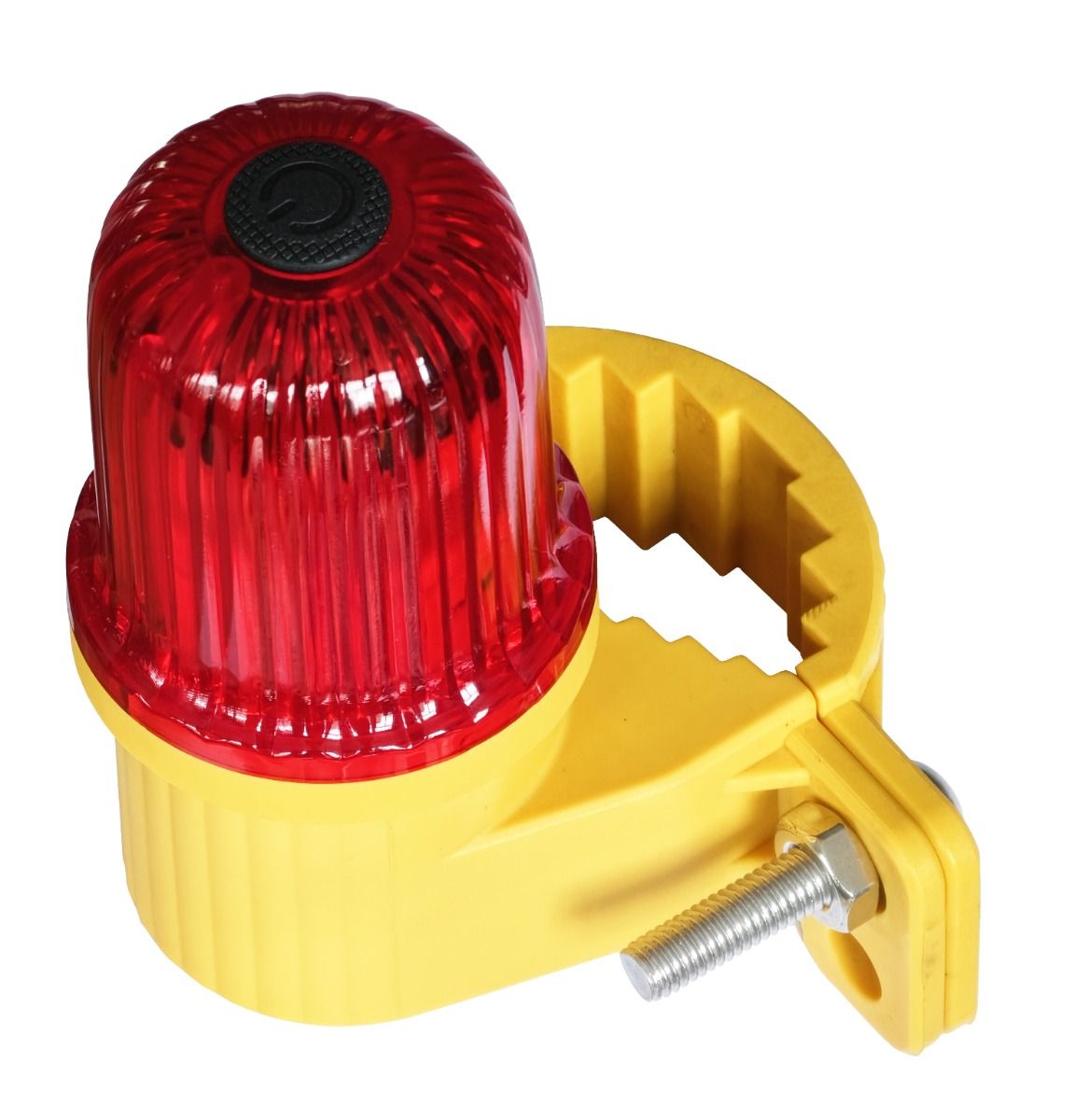
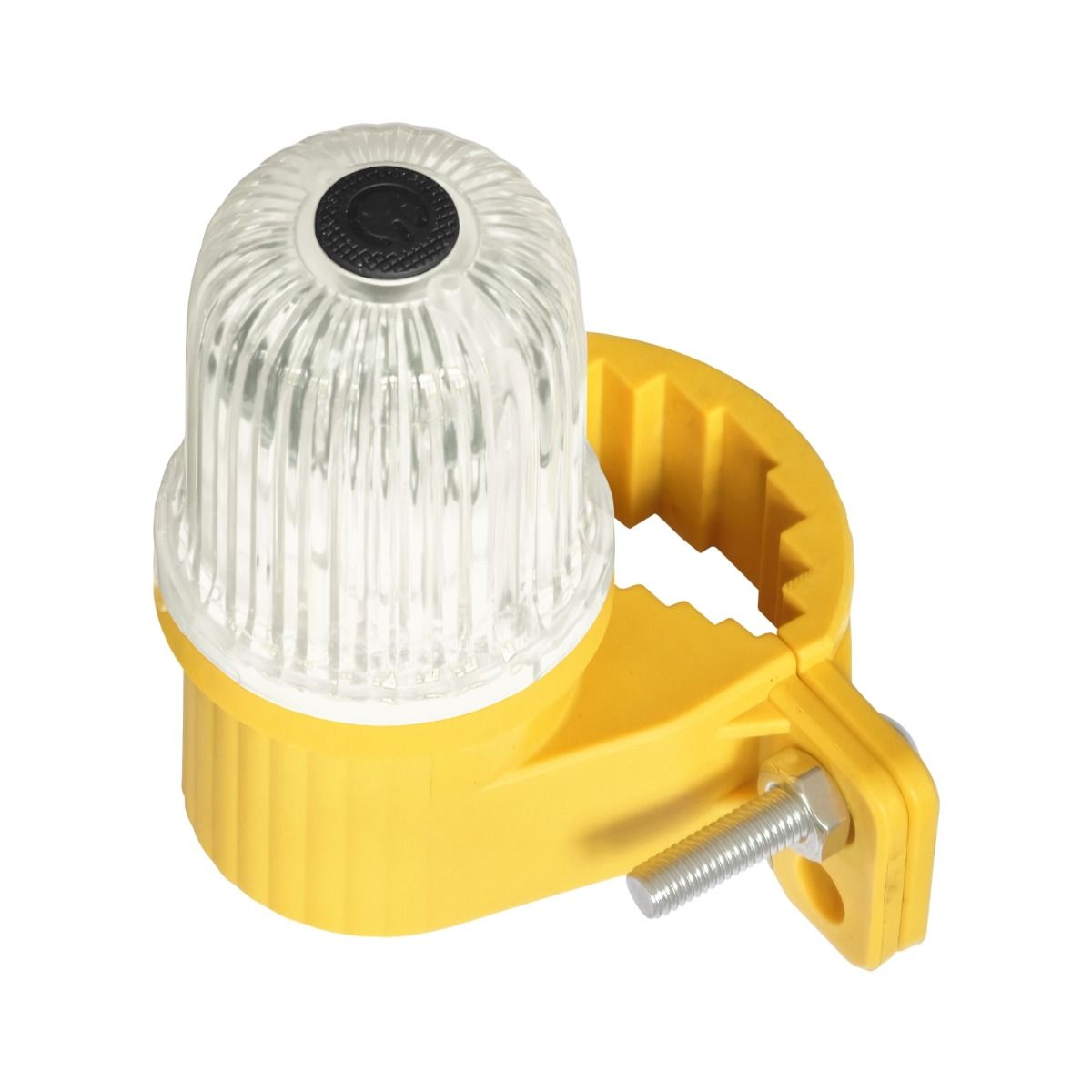
A battery powered LED scaffold and barrier safety light that fits to the side of scaffold tubes or barrier posts for after-dark warning and marking.
- Built-in dusk-to-dawn sensor activates the light automatically
- Flashing, static or off modes
- Side mount bracket
- Four LED output, 60 flashes per minute, 200 millisecond flash duration
- IP54 rated housing
- Powered by two AA alkaline batteries
- Available in multiple lens colours: amber, red and white
LED Scaffold and Barrier Safety Light - Side Mount
A battery powered LED scaffold and barrier safety light that fits to the side of scaffold tubes or barrier posts for after-dark warning and marking.
- Built-in dusk-to-dawn sensor activates the light automatically
- Flashing, static or off modes
- Side mount bracket
- Four LED output, 60 flashes per minute, 200 millisecond flash duration
- IP54 rated housing
- Powered by two AA alkaline batteries
- Available in multiple lens colours: amber, red and white
LED Scaffold and Barrier Safety Light
LED scaffold and barrier safety lights make scaffolding and barriers visible to drivers and pedestrians at night. This side-mount lamp runs on standard batteries and switches on by itself when it gets dark. That suits licensed scaffolds and sites with no mains supply.
How a Dusk-to-Dawn Sensor Keeps Scaffolds Lit Overnight
Manually switched warning lamps rely on someone turning them on before dark and off again in the morning. When that gets missed, a scaffold or barrier run stands unlit on a public footway, which is a hazard to pedestrians and a breach of most scaffold licence conditions. The built-in sensor on this lamp activates the light when it gets dark, so the structure stays marked overnight with nobody on site.
Key Features
-
Dusk-to-dawn sensor: The light activates automatically in darkness, so scaffolds and barriers left unattended overnight or over a weekend stay marked.
-
Flashing or static modes: One press gives flashing, two gives static illumination and three switches off, so the same lamp covers warning and walkway duties.
-
60 flashes per minute: A single 200 millisecond flash every second draws attention to scaffold ends and barrier corners.
-
IP54 protection: The lamp is protected against dust and splashing water from any direction, so it copes with rain on an exposed scaffold.
-
Security screw fixing: The side mount fastens with security screws, which makes casual removal from street-side scaffolding harder.
-
Standard AA power: Two AA alkaline batteries power the lamp. Replacements are easy to source and no cabling is needed.
-
Three lens colours: Red, white and amber lenses share one design, so each lamp can match the colour your licence or site plan requires.
Who is this for
Trades and roles:
-
Scaffolders
-
Scaffold contractors
-
Site managers
-
Groundworkers
-
Building contractors
-
Facilities managers
Industries:
-
Scaffolding
-
Construction
-
Civil engineering
-
Street works
-
Demolition
-
Facilities management
Specifications
| Specification | Detail |
| Product Name | LED Scaffold and Barrier Safety Light - Side Mount |
| SKU / Product Code | EL0600-SL |
| Product type | Battery-powered LED safety light |
| Application | Scaffolding and barriers |
| Mounting | Side mount with security screws |
| Light source | 4 LEDs |
| Operating modes | Flashing, static, off |
| Flash pattern | Single flash, 60 flashes per minute |
| Flash duration | 200 milliseconds |
| Light sensor | Built-in dusk-to-dawn sensor |
| Ingress protection | IP54 |
| Power supply | 2 x AA standard alkaline batteries |
| Battery access | Phillips screwdriver required |
| Lens colours available | Amber, red, white |
| Variant codes | EL060019 Amber, EL060023 Red, EL060024 White |
| Mounting base colour | Yellow |
Lens Colour Guide
| Variant code | Lens colour | Typical use | Common locations | Suggested mode |
|---|---|---|---|---|
| EL060023 | Red | Marking the ends and roadside face of a structure on the highway | Scaffold ends, corners and roadside faces | Flashing or static, as your licence requires |
| EL060024 | White | Lighting a route for pedestrians | Walkways, gantries and covered footways under scaffolding | Static |
| EL060019 | Amber | Warning drivers and pedestrians of a hazard | Scaffolding, hoardings and pedestrian barriers | Flashing or static, as your licence requires |
Compatibility
| Application | Suitability |
|---|---|
| Scaffold marking at night | ✓ Suitable |
| Site and pedestrian barrier marking | ✓ Suitable |
| Outdoor use in rain | ✓ Suitable, IP54 protects against splashing water |
| Unattended overnight warning lighting | ✓ Suitable, sensor activates the light when dark |
| Sites with no mains supply | ✓ Suitable, battery powered |
| Daylight hazard marking | ✗ Not recommended, sensor activates the light when dark |
| Pressure washing or submersion | ✗ Not recommended, outside IP54 protection |
| Task or area work lighting | ✗ Not recommended, warning lamp only |
| Hazardous or explosive atmospheres | ✗ Not recommended, no hazardous area rating stated |
Typical Users and Projects
This lamp is mainly used by scaffolding contractors working under council scaffold licences, where structures on or over the highway must be lit through the hours of darkness. Site managers and groundworkers also use it to mark barrier runs around open works, compounds and temporary pedestrian routes, often on sites left unattended overnight. It suits crews who need a lamp they can fit quickly to tube or barrier and leave running without a mains supply.
Typical applications
-
Marking each end of a licensed scaffold on a public footway with red lamps, so the structure is lit between sunset and sunrise.
-
Lighting a pedestrian walkway or gantry beneath scaffolding with white lamps where the licence requires it.
-
Marking temporary pedestrian barriers around an excavation or open works area with amber lamps overnight.
-
Fitting lamps at the intervals set in a council scaffold licence along the roadside face of a scaffold.
-
Lighting scaffold corners and barrier runs on sites with no mains supply, where battery power avoids running temporary cables.
-
Keeping scaffolds and barriers marked over weekends and bank holidays, with the sensor switching the lamps on each evening.
How to use
Step 1: Check your scaffold licence or site plan and choose the lens colour it requires.
Step 2: Remove the screws beneath the lens body, lift the lens, and twist off the battery cap. Fit two AA alkaline batteries with the correct polarity, then refit the cap and lens and tighten the screws.
Step 3: Position the lamp base on the scaffold tube or barrier with the lens uppermost. Fasten it using the security screws and the tool provided.
Step 4: Align the light module with the base, twist it into position, and secure the underside screw.
Step 5: Press the ON/OFF button once for flashing, twice for static illumination, or a third time to switch off.
Step 6: Check at dusk that each lamp has switched on and is visible from the road or footway.
Common mistakes
-
Choosing a lens colour without checking the licence, for example fitting amber where the council requires red at scaffold ends.
-
Mounting the lamp with the lens facing sideways or down instead of uppermost as the fitting instructions require.
-
Fitting batteries with the wrong polarity, which stops the lamp working.
-
Spacing lamps further apart than the licence allows along the roadside face of the scaffold.
-
Fitting lamps and never checking them again, so a flat battery leaves part of the scaffold unlit.
Safety
Do not look directly at the LEDs. Keep the lamp away from heat and naked flame, and keep the batteries dry. Keep lamps and batteries out of reach of children. IP54 covers splashing water only, so do not pressure wash or submerge the lamp. For scaffolding on the highway, follow the lighting conditions in your Section 169 licence. For works in the road, follow the Safety at Street Works and Road Works Code of Practice.
Maintenance
-
Check every lamp is working as part of routine scaffold and site inspections.
-
Replace batteries using the steps above, always fitting two AA alkaline batteries with the correct polarity.
-
Keep the lens clear of dirt and debris so the light stays visible.
-
Check the security screws are tight and the light module is secure in the base.
-
Dispose of used batteries appropriately at end of life.
-
Retain and follow the product instructions.
Frequently Asked Questions
Q: Which lens colour do I need for scaffolding next to a public road?
A: Red is the usual colour for marking the ends and roadside face of scaffolding on the highway, and white is used to light pedestrian walkways under or alongside it. Many council scaffold licences set this out directly, for example red lights at each end of the scaffold and at fixed intervals, with white lights under any gantry. Amber is commonly used to mark barriers and equipment. Always check the lighting conditions on your licence, because colours and spacing vary between councils.
Q: What does the IP54 rating mean for site use?
A: IP54 is an ingress protection code made up of two digits. The first digit, 5, means the lamp is protected against dust to a level that does not interfere with operation, although it is not fully dust-tight. The second digit, 4, means it is protected against splashing water from any direction, which covers rain on an exposed scaffold. It does not cover water jets or submersion. The lamp is suitable for outdoor use, but it should not be pressure washed or left in standing water.
Q: What is this light not suitable for?
A: It is a warning lamp for marking scaffolds and barriers, not a work light, so it will not light a working area for tasks. It is not designed for pressure washing, submersion or hazardous atmospheres, and no hazardous area rating is stated. Where a contract or licence specifies a particular road warning lamp standard, use a lamp certified to that standard.
Q: Why choose a lamp with a dusk-to-dawn sensor over a basic flashing light?
A: A lamp without a sensor has to be switched on and off by hand, so it either runs in daylight or relies on someone remembering to switch it on before dark. The built-in sensor activates this light when it gets dark, so the scaffold or barrier stays marked overnight without anyone on site. That matters on licensed scaffolds, which must be lit through the hours of darkness.
Q: How do I switch between flashing and static mode?
A: Press the ON/OFF button once for flashing, twice for static illumination, and a third time to switch the lamp off. Flashing mode gives a single 200 millisecond flash 60 times per minute.
Q: How do I replace the batteries?
A: Remove the screws beneath the lens body with a Phillips screwdriver, lift off the lens, then twist and remove the battery cap. Fit two AA alkaline batteries with the correct polarity, refit the cap and lens, and tighten the screws. Check each lamp during routine site inspections so a flat battery is caught before a scaffold is left unlit.
Q: Which way up should the lamp be fitted?
A: Fit the lamp with the lens uppermost and fasten the base using the security screws and the tool provided. Then align the light module with the base, twist it into position and secure the underside screw.
Q: Is lighting a legal requirement for scaffolding on the highway?
A: Yes, for scaffolding licensed on or over a highway in England and Wales. Section 169 of the Highways Act 1980 requires the structure to be adequately lit between half an hour after sunset and half an hour before sunrise. The local highway authority sets the detailed lighting conditions in each licence.
Q: My scaffold licence starts tonight and I have no lights on site. Can I get them today?
A: VIP Rapid 2-hour delivery is available from any depot across the UK, so lamps can reach site before dark when a licence deadline is close.
Q: We run scaffolds on several sites. Can we manage lamp orders centrally?
A: The free EDGE procurement portal lets you set separate budgets, delivery addresses and users for each project, so lamps for each site are ordered and tracked against the right job. Orders can also be placed through the EDGE App, which shows live pricing and stock. Punchout, EDI and API integration are available if your purchasing runs through your own system. Contract pricing for repeat orders is available through CMT Group.