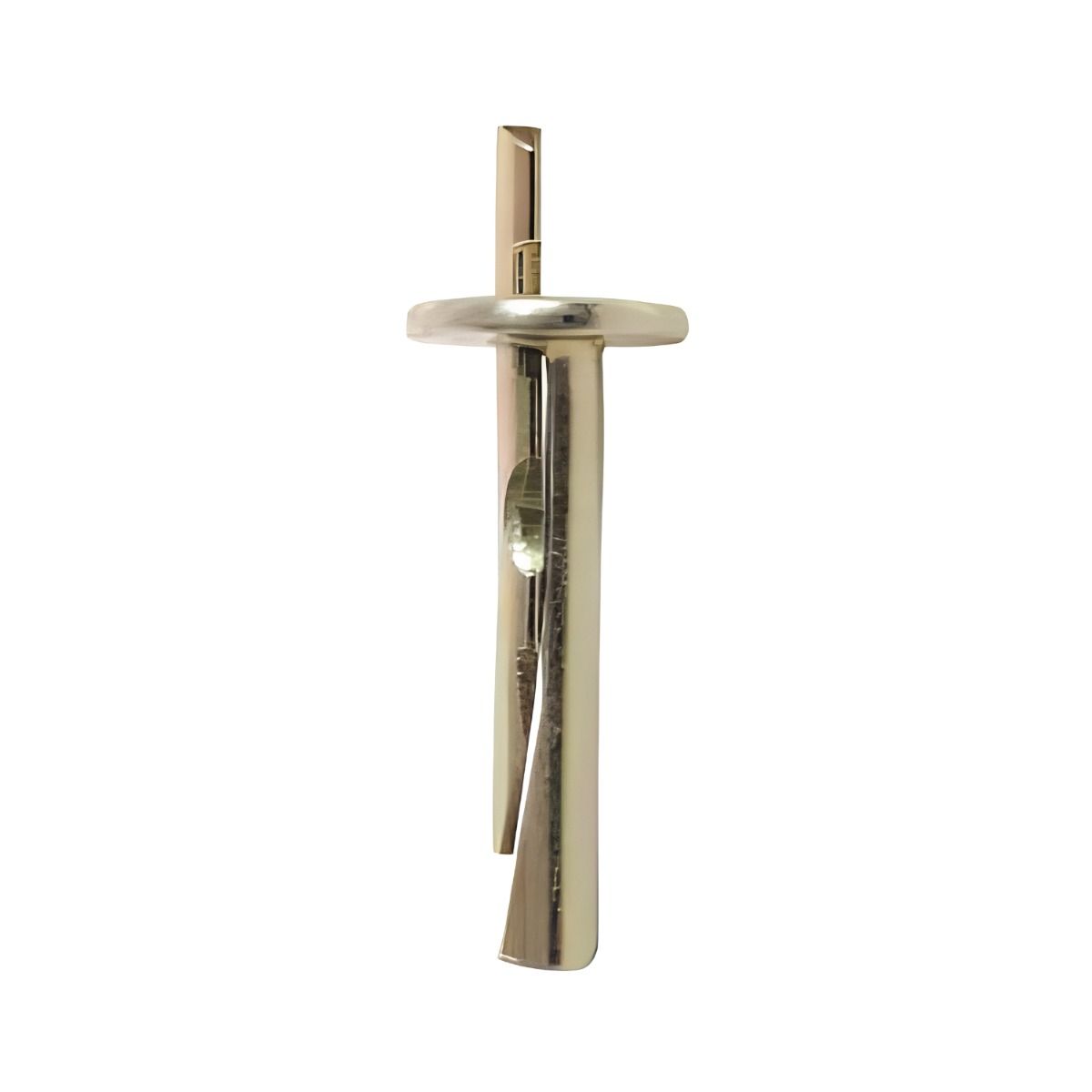

Metal nail in anchors are all-steel hammer-in fixings for ceiling hangers, trims, conduit clips and thin brackets in concrete, block, brick and stone.
- 15mm large flange head
- All-steel construction
- Hammer-in, no setting tool needed
- Non-removable and vandal-proof
- Available in multiple sizes (The first number is the anchor diameter, which is also the drill size. The second number is the total anchor length.)
Metal Nail In Anchor - Large Flange Ceiling Anchor
Metal nail in anchors are all-steel hammer-in fixings for ceiling hangers, trims, conduit clips and thin brackets in concrete, block, brick and stone.
- 15mm large flange head
- All-steel construction
- Hammer-in, no setting tool needed
- Non-removable and vandal-proof
- Available in multiple sizes (The first number is the anchor diameter, which is also the drill size. The second number is the total anchor length.)
Metal Nail In Anchor
Metal nail in anchors are all-steel expansion fixings that set with a hammer, with no setting tool needed. Ceiling installers, electricians and fit-out trades use them for light fixings into concrete, block, brick and natural stone. The large flange head holds thin straps and brackets flush to the surface.
How a Large Flange Head Stops Thin Brackets Pulling Through
A small screw or anchor head can pull straight through a thin metal strap or slotted bracket. On site, that means ceiling hangers, trims and conduit clips working loose and being fixed twice. The 15mm flange head spreads the load across a wider area, giving high pull-over strength on thin fixtures.
Key Features
-
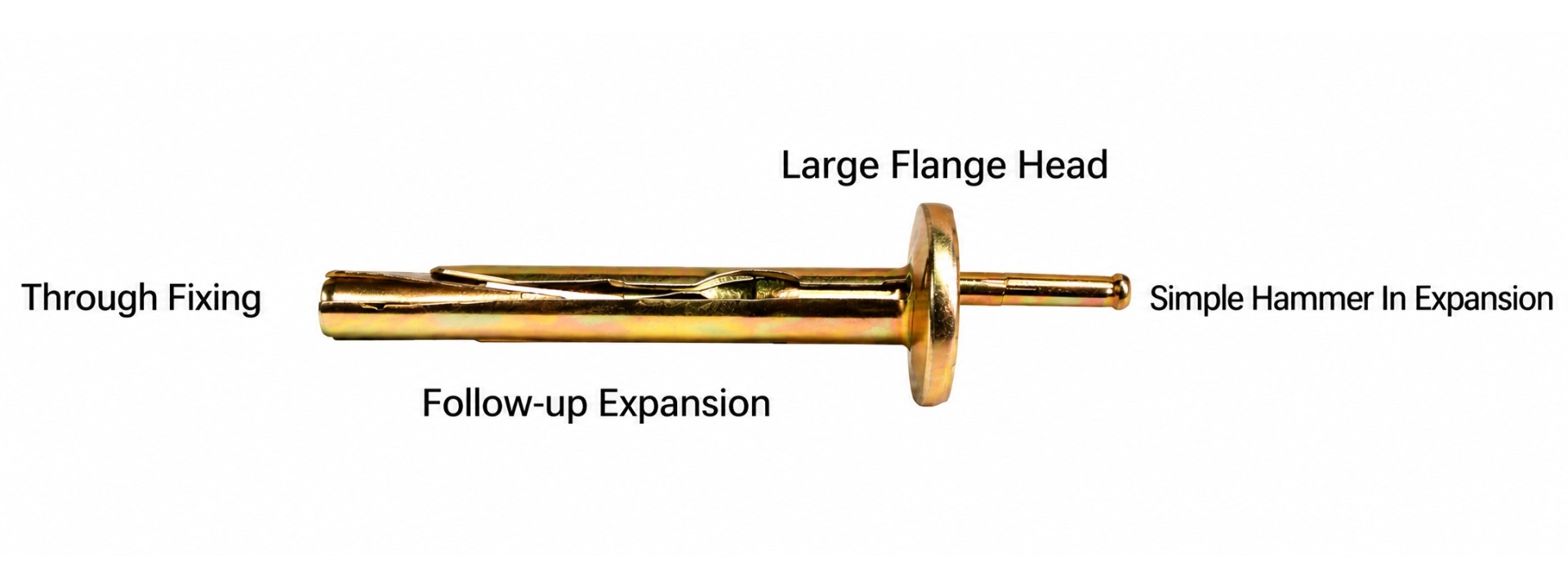
Large 15mm flange head: spreads the load over thin straps and slotted brackets, so the fixture cannot pull over the head.
-
All-steel construction: suited to installations where a higher degree of fire resistance is required than plastic fixings can give.
-
Hammer-in follow-up expansion: driving the pin expands the internally tapered body for a firm grip, with no setting tool to carry.
-
Through fixing: drilled and fitted through the fixture in one position, so there is no marking out or realigning holes.
-
Non-removable and vandal-proof: once set, it cannot be unscrewed, which suits signs and fittings in public areas.
-
Flush finish: the pin sits level with the head for a neat result on exposed fixings.
Who is this for
Trades and roles
-
Suspended ceiling installers
-
Drylining and partition contractors
-
Electricians
-
Containment and M&E installers
-
Sign installers
-
Maintenance teams
Industries
-
Construction
-
Commercial fit-out
-
Building services
-
Facilities management
-
Retail and public buildings
Specifications
| Specification | Detail |
| Product name | Metal Nail In Anchor - Large Flange Ceiling Anchor |
| Product code | MDA060 |
| Product type | Hammer-in expansion anchor (nail in anchor) |
| Material | Steel |
| Anchor diameter | 6mm |
| Drill hole diameter | 6mm |
| Minimum hole depth | 35mm |
| Flange head diameter | 15mm |
| Installation | Through fixing, hammer-in follow-up expansion, no setting tool required |
| Recommended tensile load | 0.8 kN in 30 N/mm2 concrete |
| Recommended shear load | 1.1 kN in 30 N/mm2 concrete |
| Removability | Non-removable once set |
| Brand | JCP |
| Anchor lengths | 40mm, 65mm |
Size Selection
| Product code | Size | Anchor length | Max fixture thickness |
|---|---|---|---|
| MDA06040 | 6 x 40mm | 40mm | 5mm |
| MDA06065 | 6 x 65mm | 65mm | 30mm |
The first number is the anchor diameter, which is also the drill size, so 6mm. The second number is the total anchor length. The anchor needs at least 35mm in the hole, so the rest of the length is the thickest item it can fix: up to 5mm with the 6 x 40mm, and up to 30mm with the 6 x 65mm.
Compatibility
| Application or condition | Status |
| Reinforced concrete, non-cracked | Suitable, loads stated for 30 N/mm2 concrete |
| Concrete blocks | Suitable, load limited by block strength |
| Solid brickwork | Suitable, load limited by brick strength |
| Natural stone | Suitable, load limited by stone strength |
| Hollow materials | Suitable in some cases only, check wall thickness and test on site |
| Cracked concrete | Not recommended, use an anchor approved for cracked concrete |
| Fixtures thicker than 30mm | Not recommended, exceeds maximum fixture thickness |
| Fixings that need removing later | Not recommended, use a concrete screw or drop-in anchor |
| Loads above the recommended values | Not recommended, use a heavier duty anchor |
Typical Users and Projects
Fit-out and building services trades use metal nail in anchors on commercial, education, retail and public building projects. Most fixings go overhead into concrete soffits, with the rest into block and brick walls. Installers often fit hundreds per job, so speed and a consistent set matter as much as holding power.
Typical applications
-
Fixing suspended ceiling hangers to concrete soffits before the ceiling grid is installed.
-
Securing suspended ceiling perimeter trim and wall angle to block or brick walls.
-
Fixing electrical back boxes and junction boxes to concrete and masonry.
-
Fixing conduit clips and saddles along walls and soffits.
-
Mounting signs and notices in public areas where a tamper-proof fixing is needed.
-
Fixing thin metal straps and brackets where a standard screw head could pull through.
How to use
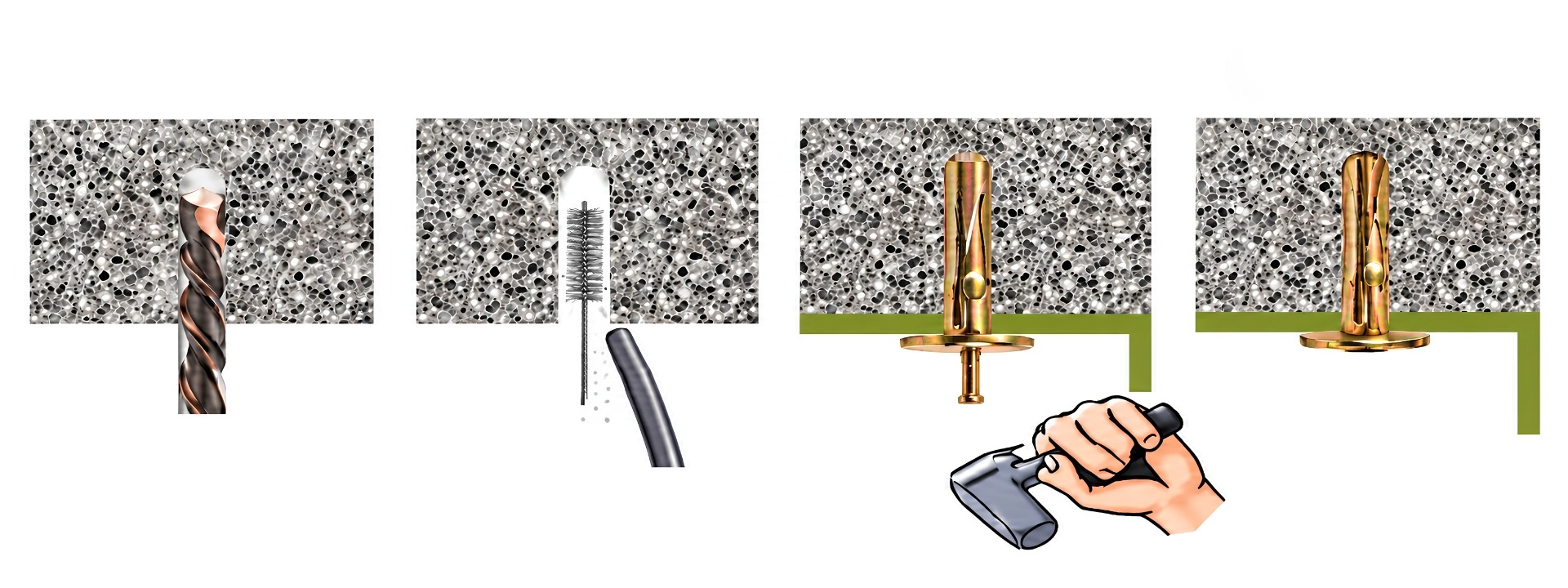
Step 1: Choose the length, as the 6 x 40mm takes fixtures up to 5mm thick and the 6 x 65mm up to 30mm.
Step 2: Drill a 6mm hole through the fixture position into the base material, at least 35mm deep.
Step 3: Clean the hole by brushing and blowing out the dust.
Step 4: Push the anchor through the fixture into the hole until the flange sits on the fixture.
Step 5: Hammer the pin in until it sits flush with the head.
Common mistakes
-
Drilling the hole shallower than 35mm, so the pin cannot be driven fully home.
-
Using the 40mm length on fixtures thicker than 5mm, leaving too little anchor in the base material.
-
Skipping hole cleaning, which leaves dust that reduces grip.
-
Using a permanent anchor where the fixture will need removing later.
-
Loading the fixing beyond the 0.8 kN recommended tensile load.
Safety
Wear eye protection when drilling and hammering. Drilling concrete and masonry releases respirable crystalline silica dust, so use on-tool extraction and suitable RPE in line with HSE guidance. Recommended loads apply to 30 N/mm2 concrete and are lower in block, brick and stone. Plan overhead fixing under the Work at Height Regulations 2005.
Maintenance
Store anchors dry in their pack until use. Each anchor is single-use, and the head must be cut or drilled off to remove a fixture. Inspect fixed items during planned maintenance for movement or damage.
Frequently Asked Questions
Q: Which length of metal nail in anchor do I need?
A: Pick the length by the thickness of the item being fixed. The 6 x 40mm takes fixtures up to 5mm thick, such as ceiling hangers and conduit clips. The 6 x 65mm takes fixtures up to 30mm thick, such as timber battens and trims. Both need a 6mm hole at least 35mm deep.
Q: How much load can a metal nail in anchor hold?
A: The recommended tensile load is 0.8 kN, roughly 80kg, and the recommended shear load is 1.1 kN. These figures are for 30 N/mm2 concrete. Tensile is a straight pull out of the hole, and shear is a sideways load across it. In block, brick and natural stone the load is lower, limited by the strength of the base material.
Q: What are metal nail in anchors not suitable for?
A: They are not suitable for cracked concrete, heavy loads or fixtures thicker than 30mm. They cannot be removed, so they should not be used for anything that needs taking down later. Use in hollow materials only after checking the wall thickness and testing on site.
Q: Why use a metal nail in anchor instead of a plug and screw?
A: A nail in anchor goes in with a hammer in one action, which is much faster across hundreds of ceiling hangers. The all-steel body suits installations where a higher degree of fire resistance is required than plastic plugs give. It is also vandal-proof, as there is no screw head to undo.
Q: Which base materials can I fix into?
A: They suit most solid base materials, including reinforced concrete, concrete blocks, brickwork and natural stone. They can be used in some hollow materials, depending on wall thickness and the application, but the load is limited by the material.
Q: Do I need a setting tool?
A: No setting tool is needed. The pin is driven with an ordinary hammer until it sits flush with the head.
Q: Can a nail in anchor be removed once fitted?
A: No, it is a permanent fixing designed to be vandal-proof. To remove a fixture, the anchor head has to be cut or drilled off.
Q: Are metal nail in anchors suitable where fire resistance matters?
A: The anchors are all steel, so they suit uses where a higher degree of fire resistance is required. Ceiling hangers and containment fixed with plastic plugs can fail early in a fire. Check the project's fire strategy for any specific fixing requirements.
Q: What does 6 x 40mm mean on a nail in anchor?
A: The 6 is the anchor diameter in millimetres, which is also the drill bit size you need. The 40mm is the total length of the anchor. At least 35mm must sit in the hole, so the remaining length is the thickest item it can fix: 5mm for the 6 x 40mm and 30mm for the 6 x 65mm.