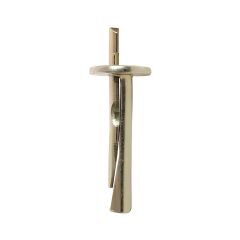

Zinc yellow plated ceiling wire hanger anchors hammer in and pull down to set, holding suspension wires for ceilings, cables and bird wires.
- Pull-down expansion, hammer-in fixing
- Reaction to Fire Class A1
- 6mm eye for suspension wire
- Zinc plated and yellow passivated
- For non-cracked concrete C20/25 and above
- 6mm x 55mm (The first number is the anchor hole size, which is also the drill size. The second number is the total anchor length.)
- Pack of 100
Zinc Yellow Plated Ceiling Wire Hanger Anchor - 6mm x 55mm
Zinc yellow plated ceiling wire hanger anchors hammer in and pull down to set, holding suspension wires for ceilings, cables and bird wires.
- Pull-down expansion, hammer-in fixing
- Reaction to Fire Class A1
- 6mm eye for suspension wire
- Zinc plated and yellow passivated
- For non-cracked concrete C20/25 and above
- 6mm x 55mm (The first number is the anchor hole size, which is also the drill size. The second number is the total anchor length.)
- Pack of 100
- Buy 10 for £8.15 £6.79 each and save 9%
- Buy 50 for £7.46 £6.22 each and save 17%
| BULK DISCOUNT | 10 | 50 |
|---|---|---|
| Price | £6.79 £8.15 | £6.22 £7.46 |
Order 1x to earn 7 FASTPoints
Order to earn 7 FASTPoints
Log in to access trade discountsZinc Yellow Plated Ceiling Wire Hanger Anchor 6mm x 55mm
Ceiling wire hanger anchors are steel expansion anchors with an eye, made to hold suspension wires from concrete and masonry. Suspended ceiling installers, electricians and fit-out trades use them to hang ceiling grids, cables and bird wires. The anchor hammers into a 6mm hole and sets with a firm pull down.
How Pull-Down Expansion Speeds Up Ceiling Hanger Installation
A suspended ceiling can need hundreds of hanger points, and screw-in or tool-set anchors slow every one of them down. On a large soffit, that adds hours of overhead work and more time on access equipment. This wire hanger anchor is hammered in and then pulled down with a claw hammer to expand, so each point is set in seconds with the tools already on the belt.
Key Features
-
Pull-down expansion: pulling the eye down with a claw hammer expands the anchor in the hole, giving a secure set without a setting tool.
-
Hammer-in through fixing: drilled and driven straight into the soffit, with no screwing or torque setting.
-
6mm eye: takes the suspension wire directly, with no separate hook or eye bolt needed.
-
Reaction to Fire Class A1: the highest reaction to fire class, important for ceilings covered by a fire strategy.
-
Zinc yellow plated finish: a minimum 5 micron zinc coating with yellow passivation protects the steel in internal conditions.
Who is this for
Trades and roles
-
Suspended ceiling installers
-
Drylining contractors
-
Electricians and cable installers
-
Bird control installers
-
Maintenance teams
Industries
-
Commercial fit-out
-
Construction
-
Building services
-
Facilities management
-
Retail and public buildings
Specifications
| Specification | Detail |
| Product name | Zinc Yellow Plated Ceiling Wire Hanger Anchor - 6mm x 55mm |
| Product code | FF090001 |
| Product type | Hammer-in expansion anchor with eye (wire hanger) |
| Material | Steel |
| Finish | Zinc plated and yellow passivated (ZYP), minimum 5 microns |
| Anchor hole size | 6mm |
| Anchor length | 55mm |
| Eye diameter | 6mm |
| Minimum hole depth | 40mm |
| Installation | Through fixing, hammer-in, pull-down expansion |
| Recommended tensile load | 1.5 kN |
| Reaction to fire | Class A1 |
| Application type | Non-structural |
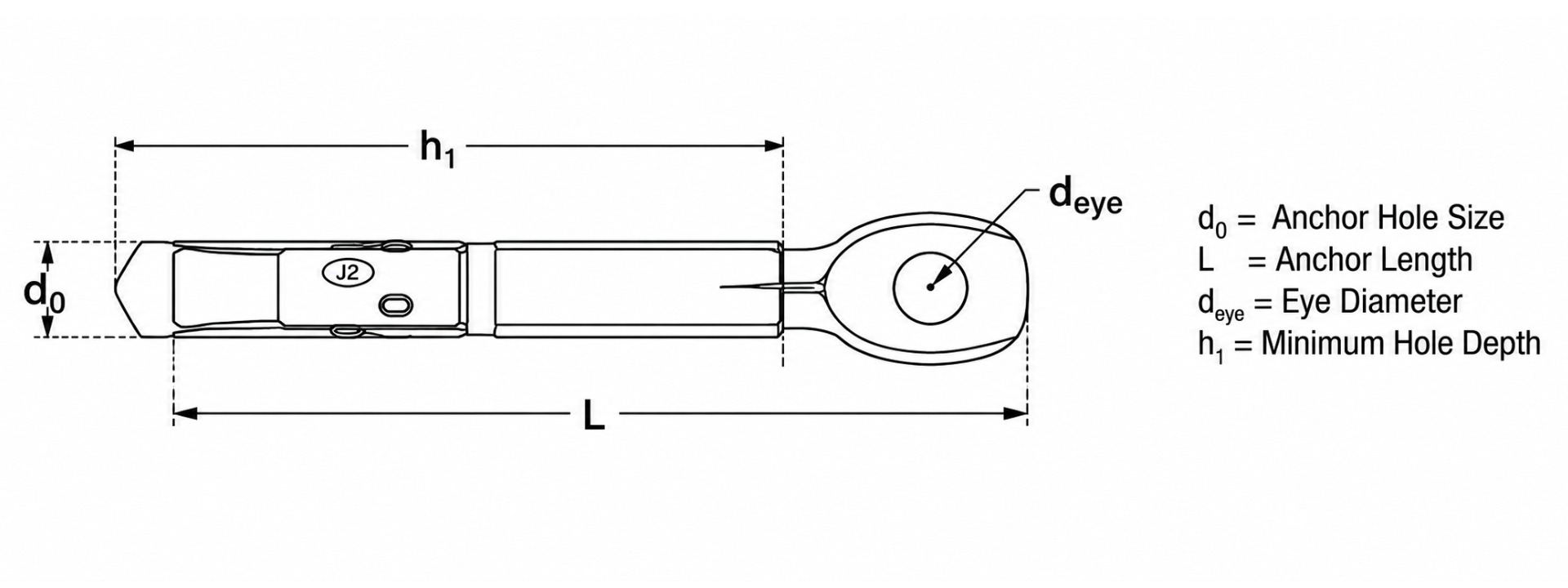
| Code | Anchor Hole Size mm d0 |
Anchor Length mm L |
Eye Diameter mm deye |
Minimum Hole Depth mm h1 |
Rec Tensile Load kN |
| FF090001 | 6 | 55 | 6 | 40 | 1.5 |
Compatibility
| Base material, use or condition | Suitability |
|---|---|
| Non-cracked solid concrete, C20/25 or stronger | Suitable |
| Hard concrete block | Suitable |
| Hard natural stone | Suitable |
| Solid brick | Suitable |
| Suspension wire through a 6mm eye | Suitable |
| Cracked concrete | Not recommended, use an anchor approved for cracked concrete |
| Concrete weaker than C20/25 | Not recommended, below the minimum concrete class |
| Hollow, perforated or lightweight blocks | Not recommended, not a listed base material |
| Structural or safety-critical fixings | Not recommended, for non-structural use only |
Typical Users and Projects
Ceiling and fit-out contractors use wire hanger anchors on offices, schools, hospitals and retail units with concrete soffits. Most work is overhead from towers or MEWPs, setting long runs of hanger points in a single shift. Installers are experienced trades working to the ceiling system's hanger spacing and load guidance.
Typical applications
-
Hanging suspended ceiling grid wires from concrete soffits in offices, schools and retail units.
-
Suspending cables on wire from concrete soffits in plant areas and corridors.
-
Anchoring bird wire systems into solid concrete, brick or natural stone.
-
Adding extra hanger points during ceiling refurbishment or when grids are extended.
How to use
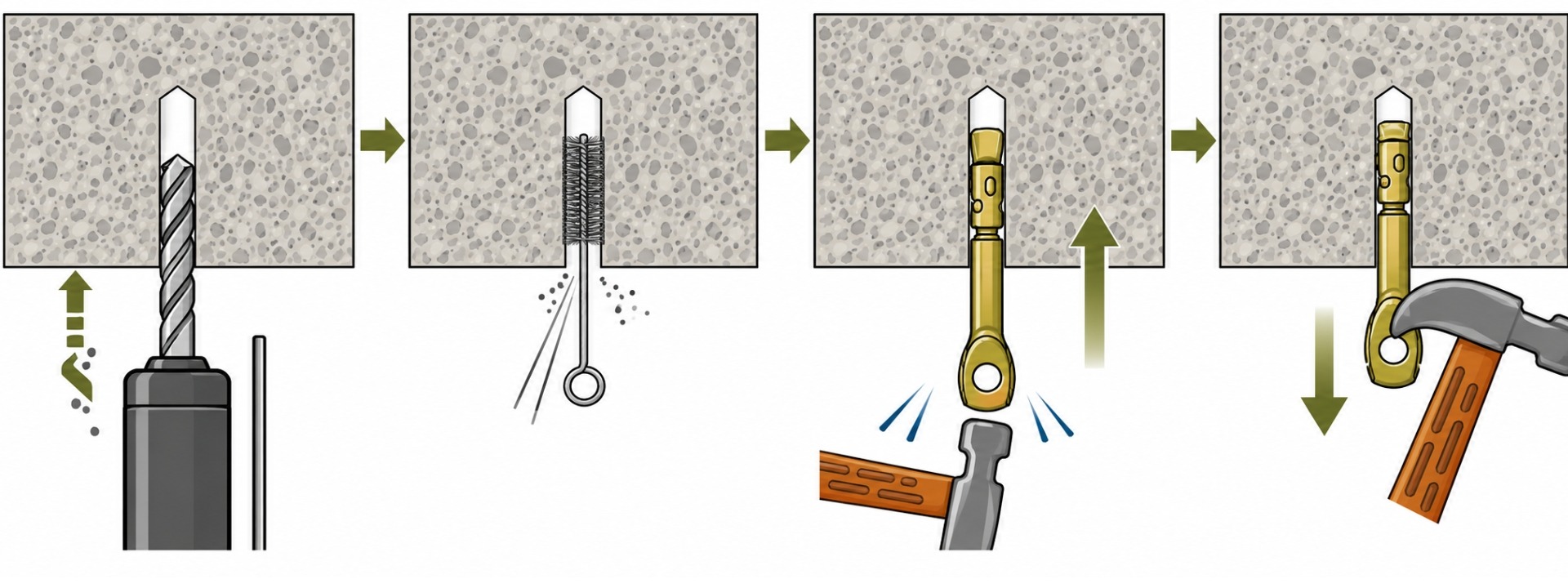
Step 1: Drill a 6mm hole at least 40mm deep into the base material.
Step 2: Clean the hole by brushing and blowing to remove drilling debris and dust.
Step 3: Insert the anchor and hammer it fully into the hole.
Step 4: Pull the anchor firmly down with a claw hammer to expand it.
Step 5: Thread the suspension wire through the eye and secure it to the ceiling system's guidance.
Common mistakes
-
Skipping the pull-down step, so the anchor is never fully expanded.
-
Drilling shallower than 40mm, which stops the anchor seating fully.
-
Leaving dust in the hole, which reduces grip.
-
Fixing into cracked concrete, weak concrete or lightweight block.
-
Using the anchor for structural or safety-critical loads.
Safety
Wear eye protection when drilling and hammering overhead. Drilling concrete and masonry releases respirable crystalline silica dust, so use on-tool extraction and suitable RPE in line with HSE guidance. This anchor is for non-structural applications only. Plan overhead work under the Work at Height Regulations 2005.
Maintenance
Store anchors dry in their pack until use. Each anchor is single-use once expanded. Check hanger points during ceiling maintenance for movement or corrosion.
Frequently Asked Questions
Q: How do I install a ceiling wire hanger anchor?
A: Drill a 6mm hole at least 40mm deep and clean out the dust. Hammer the anchor fully into the hole, then pull it firmly down with a claw hammer to expand it. Thread the suspension wire through the 6mm eye and fix it as the ceiling system requires.
Q: What does Reaction to Fire Class A1 mean?
A: Reaction to fire classes are set by BS EN 13501-1 and run from A1 down to F. Class A1 is the highest, meaning the product is non-combustible and makes no contribution to a fire. This matters for suspended ceilings, where fixings must not fail early and bring the ceiling down. Plastic plugs cannot reach this class, which is why steel anchors are specified for ceiling hangers.
Q: What is this anchor not suitable for?
A: It is not suitable for structural or safety-critical fixings, as it is for non-structural use only. It should not be used in cracked concrete, concrete weaker than C20/25, or hollow and lightweight blocks.
Q: Why use a wire hanger anchor instead of a plug and eye screw?
A: A wire hanger anchor sets with a hammer in seconds, while a plug and eye screw has to be screwed in at every point. Across hundreds of hanger points that saves hours of overhead work. The steel anchor also meets Reaction to Fire Class A1, which plastic plugs cannot.
Q: Which base materials can it be fixed into?
A: It suits non-cracked solid concrete of C20/25 or stronger, hard concrete block, hard natural stone and solid brick. It is not designed for hollow, perforated or lightweight blocks.
Q: What does 6mm x 55mm mean?
A: The 6mm is the anchor hole size, which is also the drill bit you need. The 55mm is the total length of the anchor. The hole must be at least 40mm deep for the anchor to seat and expand correctly.
Q: What load can the wire hanger anchor take?
A: The recommended tensile load is 1.5 kN, roughly 150kg, as a straight pull down the wire. It is designed for non-structural loads such as ceiling grids, cables and bird wires. Always follow the ceiling system's guidance on hanger spacing and load per hanger.
Q: How long will the zinc yellow plated finish last?
A: In dry internal areas above a suspended ceiling, the zinc and yellow passivation protect the steel for a long service life. In damp or external locations the coating will corrode faster, so check conditions before fixing.
Q: Can ceiling fixings be stocked on site for a large fit-out?
A: Large fit-outs get through ceiling fixings fast, and running out stops the ceiling gang. A SiteHive automated site store keeps core fixings on site 24/7, with zero carriage charge on replenishment orders. Teams can also reorder by project through the free EDGE portal from CMT Group.