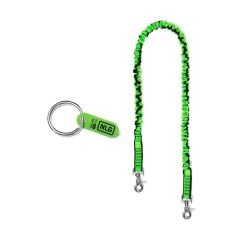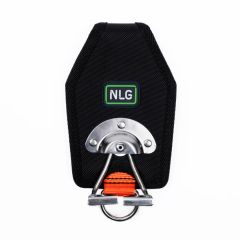
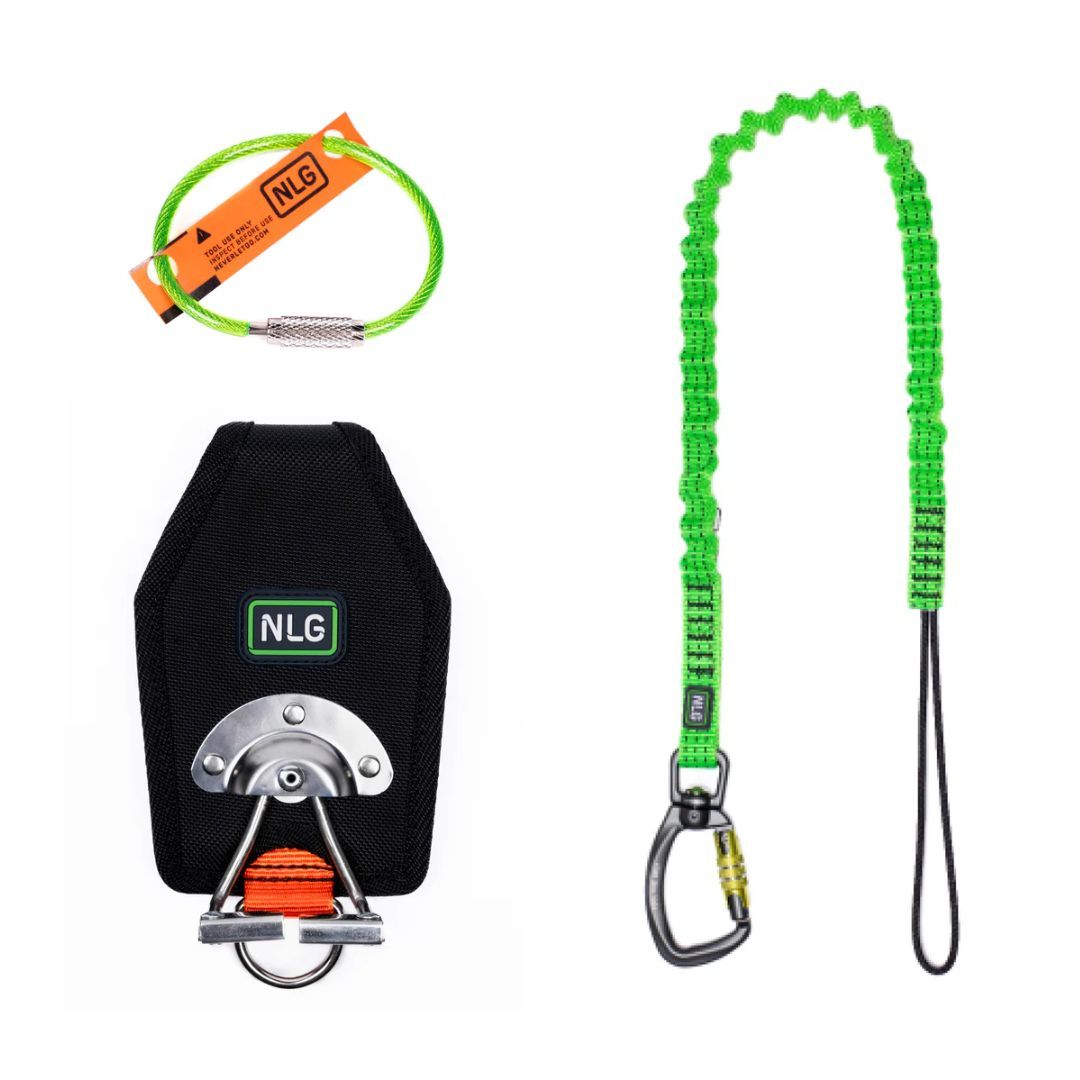
Hammer tool tethering kit providing complete dropped object prevention for hammers at height, with a dedicated holster for safe docking between strikes, rated to 3kg (6.6lbs).
- Three-component kit including Tether Loop
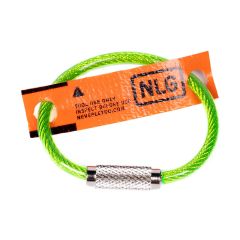
- Tether Loop™ 150mm
- Cradle arm Hammer Holster
- Medium Duty Bungee Lanyard extends 80-120cm
- NLG ID tag system included
- ANSI/ISEA 121-2023, third-party tested and certified
- Max load: 3kg (6.6lbs)
- Lanyard length: 80-120cm extended
NLG Hammer Tool Tethering Kit - 3kg Tether Loop Bungee Lanyard and Hammer Holster

Hammer tool tethering kit providing complete dropped object prevention for hammers at height, with a dedicated holster for safe docking between strikes, rated to 3kg (6.6lbs).
- Three-component kit including Tether Loop
- Tether Loop™ 150mm
- Cradle arm Hammer Holster
- Medium Duty Bungee Lanyard extends 80-120cm
- NLG ID tag system included
- ANSI/ISEA 121-2023, third-party tested and certified
- Max load: 3kg (6.6lbs)
- Lanyard length: 80-120cm extended
Order 1x to earn 75 FASTPoints
Order to earn 75 FASTPoints
Log in to access trade discountsNLG Hammer Tool Tethering Kit
Hammer tool tethering kit providing the three components needed to secure a hammer at height: a Tether Loop™ for attaching to the hammer handle, a Medium Duty Bungee Lanyard rated to absorb the arrest forces of a dropped hammer, and a Hammer Holster with a cradle arm system that docks the tool safely between strikes. Most hammer tethering setups stop at the lanyard. This kit addresses what happens when the operative is not actively swinging the hammer, keeping it under positive control at all times rather than swinging freely from the lanyard. Third-party tested to ANSI/ISEA 121-2023, with the NLG ID tag system included for inspection logging and certificate access.
How the Hammer Holster's cradle arm system keeps the hammer under control between strikes
A tethered hammer hanging loose on a lanyard between strikes swings against the operative's leg, catches on harness webbing, and pulls against scaffold tubes and adjacent structure with each movement. On a scaffold lift or MEWP platform, a swinging 2-3kg hammer creates a genuine hazard to nearby workers. The NLG Hammer Holster's cradle arm system solves this by providing a docking position for the hammer head between uses: the cradle arms accept the hammer head from above and retain it securely until needed, eliminating the pendulum effect without requiring the operative to unclip or re-attach the lanyard.
Key Features
- Tether Loop™ 150mm with aircraft-grade steel core: Passes through the captive hole at the end of the hammer handle to create a secure, rated attachment point. The aircraft-grade steel core withstands the repeated mechanical stress of an active working day without stretching or degrading.
- Hammer Holster with unique cradle arm system: The curved metal retention arms cradle the hammer head when docked, preventing the tool from swinging loose between strikes. Dimensions of 17cm (H) x 11cm (W) suit standard claw and club hammers. Mounts to belt, harness strap, or structural rail.
- Medium Duty Bungee Lanyard, extends 80-120cm: The bungee construction absorbs the arrest impulse of a dropped 3kg hammer, protecting anchor fittings and the tether connection from the shock load of sudden arrest. The screw-lock carabiner prevents accidental gate opening under vibration and movement.
- NLG ID tag system included: Scan with a smartphone to access load test certificates, instruction videos, and the NLG Inspection Checklist for formal compliance documentation.
- ANSI/ISEA 121-2023 compliant, third-party tested: Independent load testing confirms the system's 3kg rating covers the full range from standard claw hammers to club hammers used at height. Declarations of Conformity available on request from NLG.
Who is this for
Trades and roles:
-
Scaffolders
-
Steelworkers and structural steel erectors
-
Site carpenters and joiners
-
Civil and groundwork operatives
-
Maintenance engineers
Industries:
-
Construction
-
Structural steel and fabrication
-
Civil engineering
-
Facilities management and industrial maintenance
-
Oil, gas, and utilities
Specifications
| Specification | Detail |
|---|---|
| Product Name | NLG Hammer Tool Tethering Kit - 3kg Tether Loop Bungee Lanyard and Hammer Holster |
| SKU | NLG101554 |
| System Max Load | 3kg (6.6lbs) |
| Compliance Standard | ANSI/ISEA 121-2023 |
| Testing | Third-party laboratory load tested. Declarations of Conformity available on request. |
| NLG ID Tag | Included. Scan for certificates, instruction videos, and inspection logs. |
| Tether Loop Size | 150mm (NLG101381) |
| Tether Loop Construction | Aircraft-grade steel core |
| Tether Loop Max Load | 3kg (6.6lbs) |
| Bungee Lanyard Extended Length | 80-120cm |
| Bungee Lanyard Max Load | 5kg (11lbs) |
| Hammer Holster Dimensions | 17cm (H) x 11cm (W) |
| Hammer Holster System | Unique cradle arm system for effortless docking and secure retention |
| Hammer Holster Max Lanyard Length | 200cm (78") |
| Hammer Holster Max Load | 5kg (11lbs) |
Kit Contents
| Component | Detail |
|---|---|
| 1X NLG Tether Loop™ 150 | SKU: NLG101381 / Max load: 3kg (6.6lbs) / 150mm, aircraft-grade steel core |
| 1X NLG Bungee Tool Lanyard | SKU: NLG101372 / Max load: 5kg (11lbs) / Extends 80-120cm, medium duty |
| 1X NLG Hammer Holster | SKU: NLG101496 / Max load: 5kg (11lbs) / Cradle arm system, 17cm H x 11cm W, max lanyard 200cm |
Compatibility
| Application / Tool Type | Status |
|---|---|
| Claw hammers up to 3kg with captive hole through the handle | ✓ Compatible |
| Club and lump hammers up to 3kg with captive handle hole | ✓ Compatible |
| Mallets and jointing hammers up to 3kg with captive handle hole | ✓ Compatible |
| Scaffold erection, structural steelwork, and MEWP platform operations | ✓ Compatible |
| Belt loop and structural anchor deployments | ✓ Compatible |
| Hammers exceeding 3kg system max load | ✗ Not recommended |
| Hammers without a captive hole through the handle | ✗ Not recommended |
| Wrist anchor for hammers above 1.5kg | ✗ Not recommended |
| Fall arrest or personal safety applications | ✗ Not recommended |
| Load-bearing lifting or material handling | ✗ Not recommended |
Who is this for
The hammer tool tethering kit is used by scaffolders, steelworkers, site carpenters, and general construction operatives who use a hammer as a primary working tool at height and operate under a site dropped object prevention policy. It is suited to scaffold erection and dismantling where hammers are in near-continuous use at various elevations, structural steelwork connections and fabrication at height, and any maintenance or civil engineering task where a hammer is used above ground level and a dropped tool presents a hazard to personnel below. The Hammer Holster makes the kit particularly suited to tasks involving repeated put-down and pick-up cycles, where the operative needs both a secure tether and a controlled resting position for the tool during the working day.
Typical applications
-
Scaffold erection and dismantling at height, where the hammer is used repeatedly across a shift and must be controlled between fittings to prevent swinging against scaffold tubes or adjacent operatives.
-
Structural steelwork assembly where bolts, pins, and connections are driven at elevation and the hammer must be holstered securely between strikes on each connection.
-
Shuttering and formwork operations where a hammer is used to drive wedges and pins and must be accessible and controlled throughout the pour.
-
Roofing and cladding work at height where the operative is moving across a roof plane and a loose, tethered hammer would swing and create a trip or snagging hazard.
-
Civil engineering tasks including kerbing, paving, and drainage installation where an operative is working at a raised level and must keep hands free between hammer strikes.
-
Any height safety programme requiring mandatory tethering of all tools above a defined threshold weight, where a standard lanyard alone is insufficient for operator comfort during a full shift.
How to use
Step 1: Confirm the hammer's total weight does not exceed 3kg. Verify the hammer has a captive hole through the handle end for the Tether Loop™ to pass through.
Step 2: Pass the Tether Loop™ 150mm through the hole in the hammer handle and close the barrel connector to secure. The steel loop should seat firmly and not slide out under a manual pull test.
Step 3: Connect the bungee lanyard to the Tether Loop™ attachment point and to the chosen anchor point: a belt loop, harness anchor, or structural anchor point rated for the dynamic load. For hammers above 1.5kg, do not use a wrist anchor - use a belt loop or structural anchor only.
Step 4: Mount the Hammer Holster to the belt, harness strap, or rail at a comfortable hip position. The holster should be positioned so the hammer can be docked and retrieved with one hand without looking down.
Step 5: Confirm the lanyard length allows the hammer to reach the holster docking position without going fully taut. Dock the hammer into the cradle arms and confirm it is retained securely before beginning work.
Step 6: Scan the NLG ID tag system to confirm the kit is within its inspection interval before beginning work.
Common mistakes
-
Using a wrist anchor for a heavy hammer: The suggested maximum tool weight for a wrist anchor is 1.5kg. Most club hammers and heavier claw hammers exceed this. For any hammer above 1.5kg, use a belt loop or structural anchor point only.
-
Threading the Tether Loop through the wrong point on the handle: The Tether Loop should thread through the captive hole at the end of the hammer handle, not around the shaft or grip. A loop around the grip will slide during use and may release under load.
-
Not docking the hammer in the holster between strikes: The holster only performs its function when the hammer is actively placed into the cradle arms. Allowing the hammer to hang loose on the lanyard defeats the purpose of the holster and recreates the pendulum hazard.
-
Selecting the wrong anchor height for the holster: If the holster is mounted too high or too low, retrieving and docking the hammer requires awkward movement that operatives will avoid. Position the holster at a natural hip height so docking is as easy as putting the hammer down.
-
Continuing to use a kit after a drop event: Following any drop or arrest event, quarantine the full kit including the Tether Loop, lanyard, and holster for a full inspection before returning to service.
Safety
This kit is rated to a system max load of 3kg (6.6lbs) and must not be used with hammers exceeding this weight. Hammers above 1.5kg must not be anchored to a wrist band - use a belt loop or structural anchor rated for the full dynamic load of the tool. The Tether Loop™ must thread through a captive hole in the hammer handle and must not be used on hammers without a suitable hole. This kit is for tool tethering only and must never be used for fall arrest or personal safety. Inspect all components before each use and retire immediately if damage or deformation is visible. In the event of any drop or arrest event, quarantine the complete kit and inspect in full before returning to service. Equipment must be used in accordance with the Working at Height Regulations 2005 and any applicable site dropped object prevention policy.
Maintenance
Inspect the Tether Loop™ before each use for deformation of the steel core, damage to the outer coating, and function of the barrel connector. Check the bungee lanyard for cuts, fraying, and correct function of the carabiner gate. Inspect the Hammer Holster cradle arms for deformation, cracking, and secure mounting attachment. Clean all components with mild soap and water only. Store away from direct sunlight, heat, and chemical exposure. Scan the NLG ID tag system to log inspections and access the NLG Inspection Checklist. Retire any component showing wear or damage before returning the kit to service.
Frequently Asked Questions
Q: Which hammers are compatible with this kit?
A: The kit is suited to standard claw hammers, club hammers, lump hammers, and mallets with a captive hole through the handle end, up to 3kg in total weight. Most standard professional hammers carry this hole. The Hammer Holster dimensions of 17cm (H) x 11cm (W) accommodate standard hammer head sizes - confirm fit for non-standard or specialist hammers before deploying the kit.
Q: What is ANSI/ISEA 121-2023 and why does it apply to this kit?
A: ANSI/ISEA 121-2023 is the current American National Standard for dropped object prevention solutions, specifying performance requirements and test methods for tool tethering equipment. This kit has been independently laboratory tested and certified to that standard, confirming the 3kg system load rating. Across UK construction, industrial, and utilities sectors, ANSI/ISEA 121-2023 is the benchmark standard referenced by site dropped object prevention policies. Declarations of Conformity are available on request from NLG.
Q: What is this kit NOT suitable for?
A: This kit must not be used with hammers exceeding 3kg. Hammers without a captive hole through the handle end cannot be tethered with the Tether Loop™ and are not compatible with this kit. Hammers above 1.5kg must not be anchored via a wrist band - a belt loop or structural anchor is required. The kit is not suitable for fall arrest or any personal safety application, and must not be used for load-bearing lifting or material handling.
Q: Why does this kit include a holster as well as a tether and lanyard?
A: A tether and lanyard alone prevent the hammer from falling but do nothing to control it when the operative is not actively using it. A 2-3kg hammer hanging on an 80cm lanyard swings freely with every movement, catching on harness webbing, striking scaffold tubes, and fatiguing the operative's core and legs throughout a shift. The Hammer Holster docks the hammer between strikes, keeping it under positive retention rather than pendulum motion. For any operative who uses a hammer repeatedly over a full shift at height, the holster is the difference between a workable system and one that operatives will start to circumvent.
Q: How does the Tether Loop™ attach to a hammer?
A: The Tether Loop™ passes through the captive hole at the end of the hammer handle - the same hole the tool is sometimes hung from on a rack. The barrel connector is then closed to lock the loop in position. Once closed and loaded, the aircraft-grade steel core cannot pull free through a standard handle hole. Apply a manual tension test before beginning work to confirm the barrel connector is fully engaged.
Q: How do I know when to retire any part of this kit?
A: Inspect the Tether Loop™ for core deformation, coating damage, and barrel connector function before each use. Check the bungee lanyard for cuts, fraying, and smooth carabiner gate action. Inspect the Hammer Holster cradle arms for bending, cracking, or looseness. Retire any component immediately if it shows damage. Following any drop or arrest event, quarantine the entire kit for full inspection before returning to service - arrest loads can cause internal damage not visible externally. The NLG ID tag system provides the NLG Inspection Checklist and log access via smartphone scan.
Q: Can I source replacement components individually?
A: Yes. The NLG Tether Loop™ 150 (NLG101381), NLG Bungee Tool Lanyard (NLG101372), and NLG Hammer Holster (NLG101496) are all stocked individually at CMT Group. Replace any retired component with the rated NLG equivalent and confirm it meets ANSI/ISEA 121-2023 before returning the kit to service.