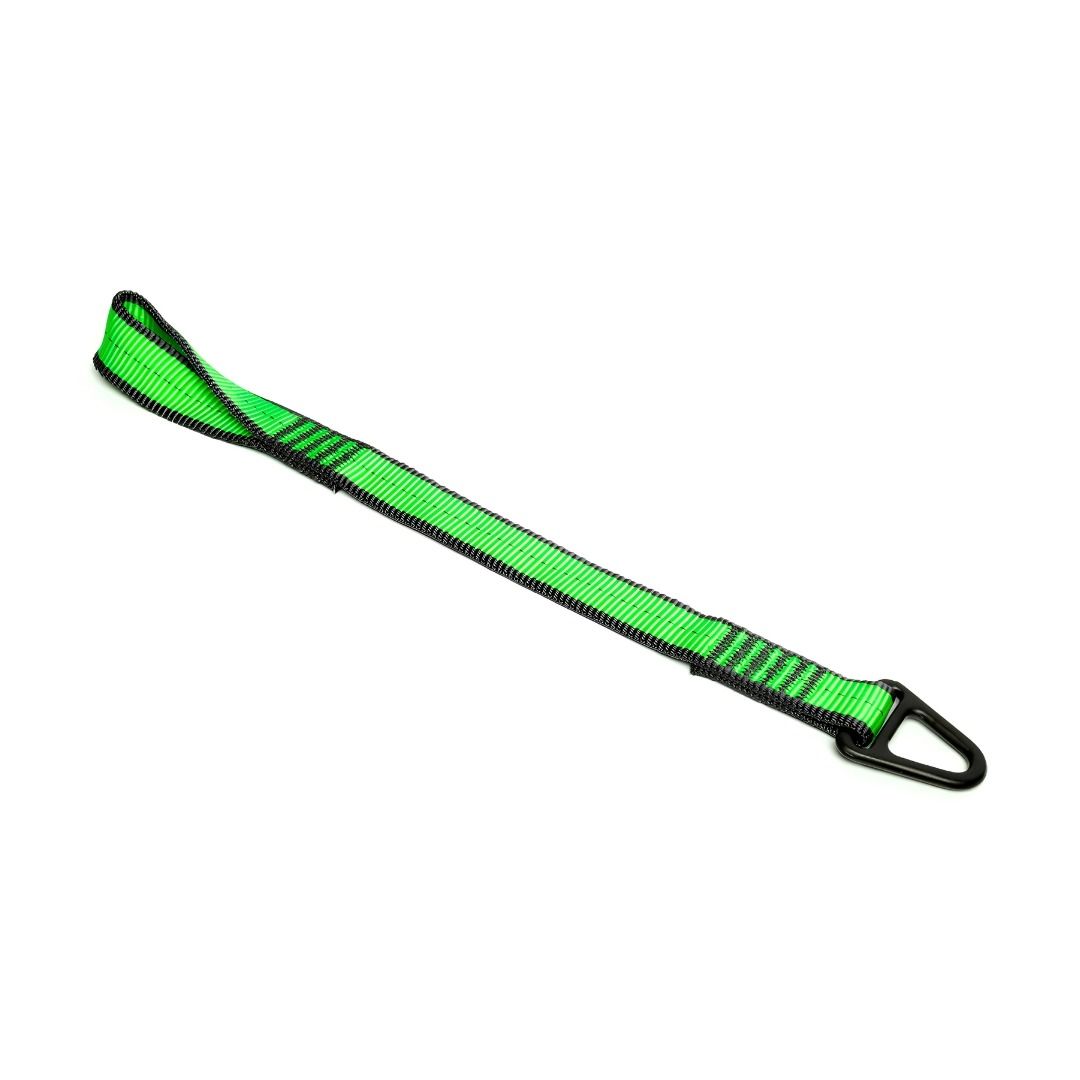
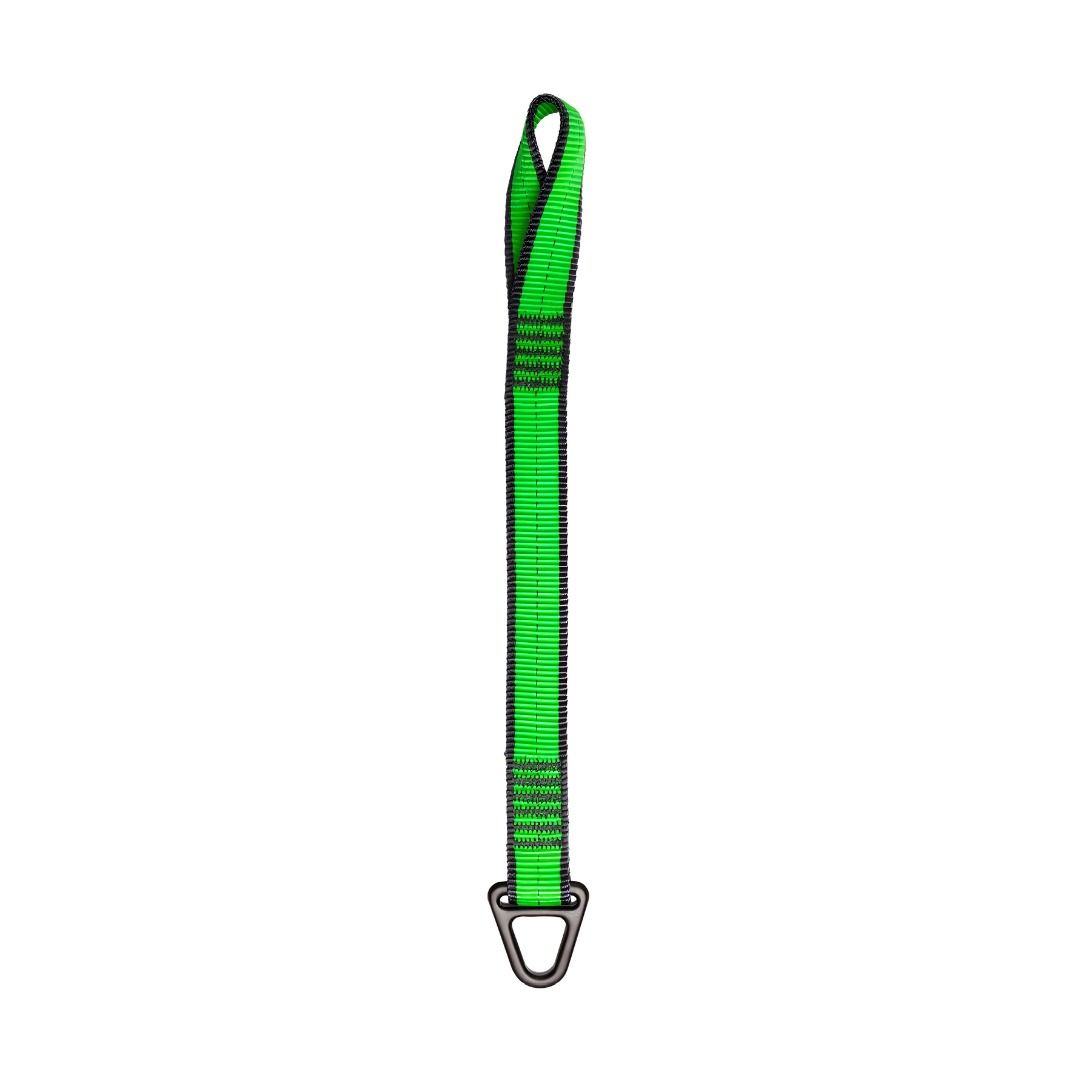
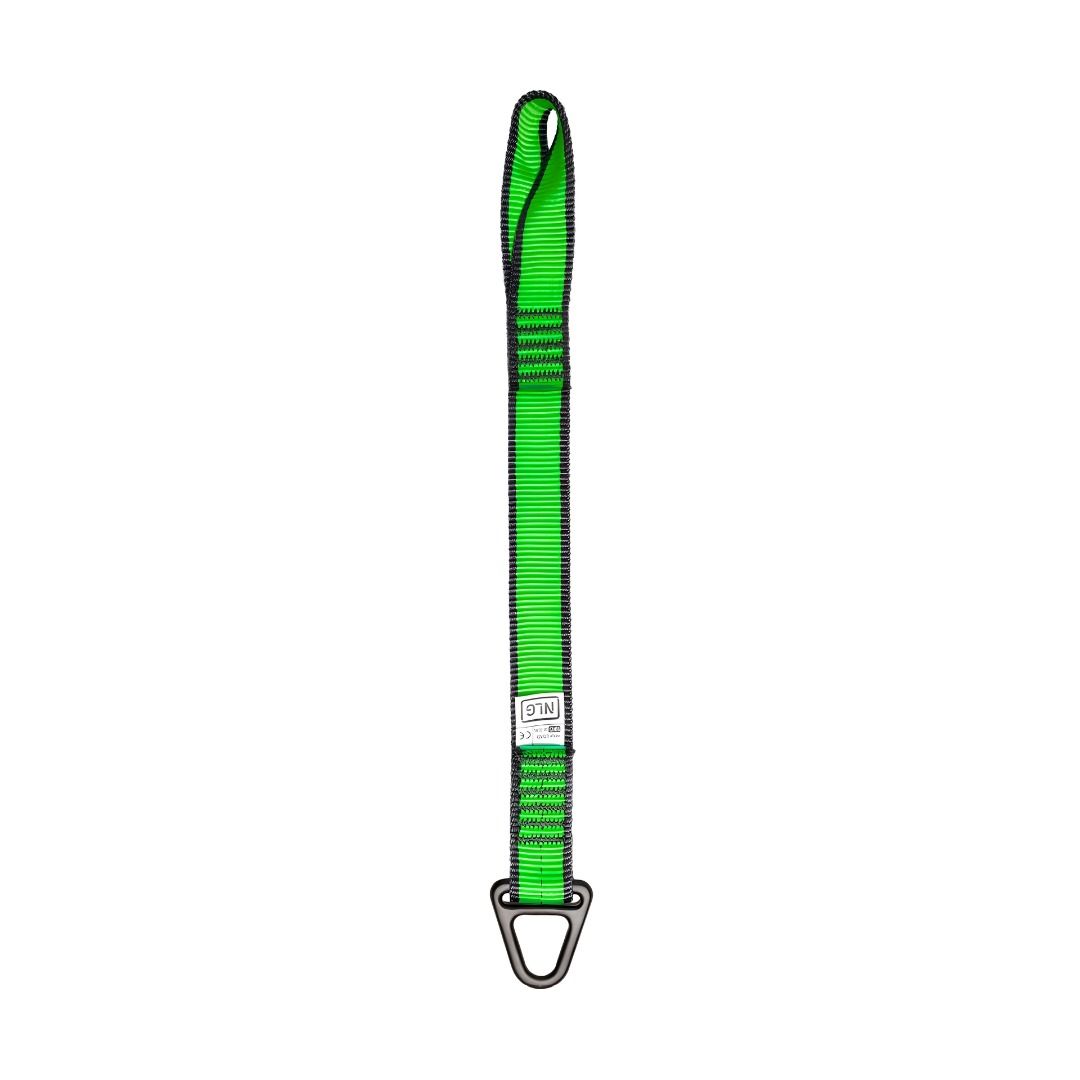
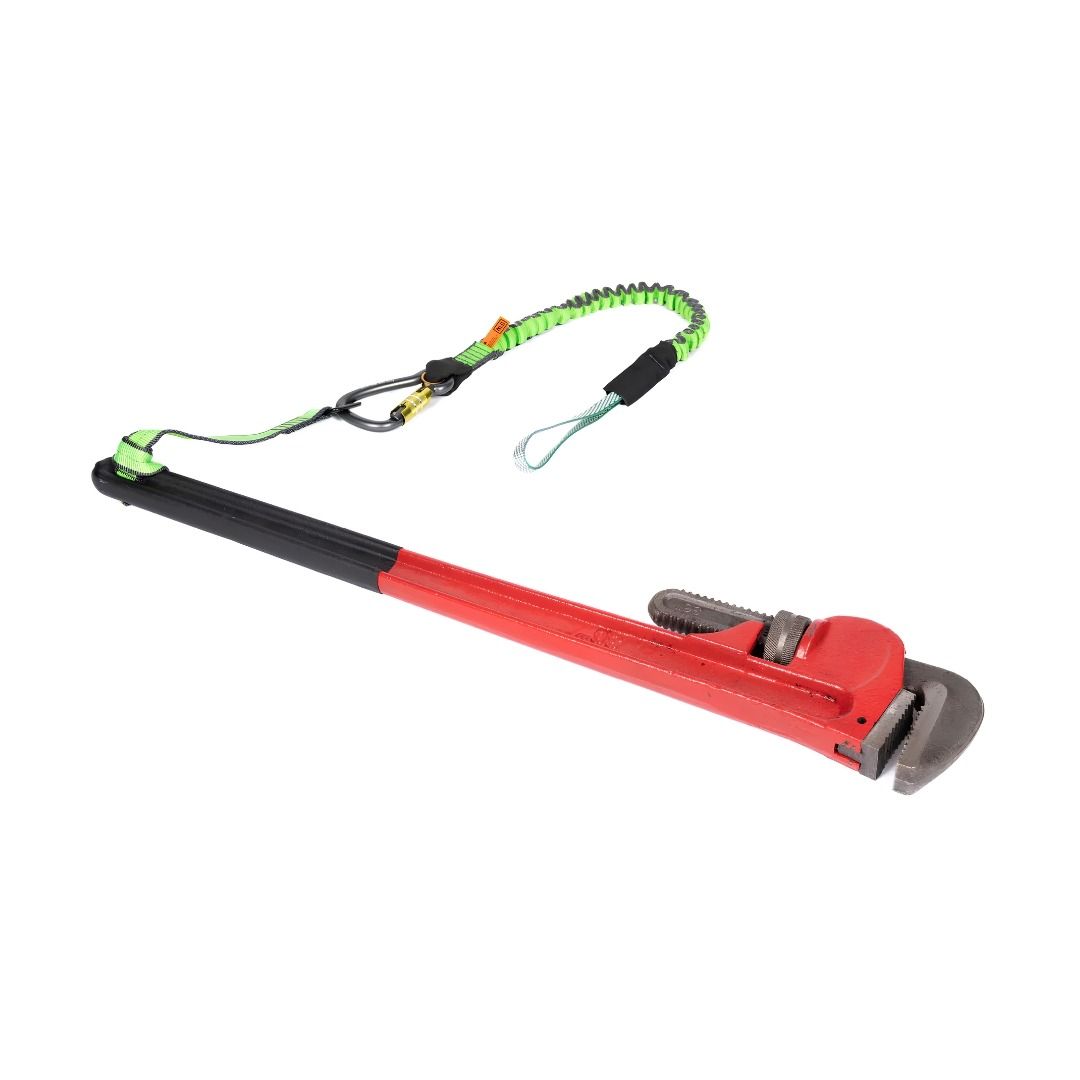
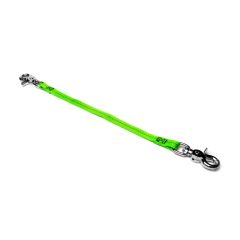
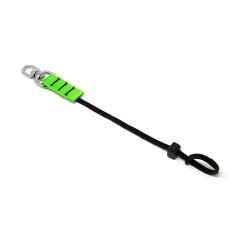
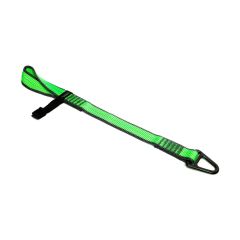
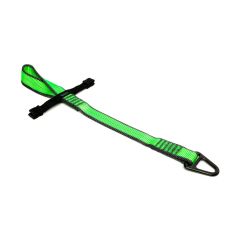
Heavy-duty webbing choke tether rated to 20kg for power tools, large hand tools, and heavy site equipment used at height.
- 20kg max load, dynamically tested at 2:1 safety factor
- Certified to ANSI/ISEA 121-2023 and NS 9611:2022+AC
- CE and UKCA marked
- Extra high-strength webbing with optimised V Ring for heavy-load choke tethering
- Contrast wear indicators give early warning of structural damage before failure
- Heavy-duty contrast stitching for faster visual pre-use inspection
- Cinch installation does not compromise tool grip or working function
- NLG ID orange scannable tag for certificates, inspection records, and installation videos
Heavy-duty webbing choke tether rated to 20kg for power tools, large hand tools, and heavy site equipment used at height.
- 20kg max load, dynamically tested at 2:1 safety factor
- Certified to ANSI/ISEA 121-2023 and NS 9611:2022+AC
- CE and UKCA marked
- Extra high-strength webbing with optimised V Ring for heavy-load choke tethering
- Contrast wear indicators give early warning of structural damage before failure
- Heavy-duty contrast stitching for faster visual pre-use inspection
- Cinch installation does not compromise tool grip or working function
- NLG ID orange scannable tag for certificates, inspection records, and installation videos
- Buy 10 for £16.92 £14.10 each and save 9%
- Buy 20 for £15.58 £12.98 each and save 16%
| BULK DISCOUNT | 10 | 20 |
|---|---|---|
| Price | £14.10 £16.92 | £12.98 £15.58 |
Order 1x to earn 15 FASTPoints
Order to earn 15 FASTPoints
Log in to access trade discountsNLG Tether Choke Original
Heavy-duty webbing tether attachment rated to 20kg for power tools, large hand tools, and heavy site equipment that exceed the 3kg capacity of cord-based tether attachments. The webbing cinches around the captive handle or hole of the tool without restricting its grip, ergonomics, or working function. An optimised V Ring provides the lanyard connection point. Built-in contrast wear indicators give early warning of structural wear before the webbing reaches end of life.
How Contrast Wear Indicators Give Warning Before the Webbing Fails
Standard webbing tether attachments give no visible sign of structural wear until the damage is already significant at depth. At 20kg, a tether attachment failing without warning is a serious incident. The Tether Choke Original addresses this with contrast wear indicators built into the webbing construction itself. As surface wear progresses, the contrasting colour beneath becomes visible, providing a clear and unambiguous signal that the attachment is approaching the end of its safe service life well before structural integrity is affected.
Key Features
20kg max load, dynamically tested: Rated to 20kg across a dynamic 2:1 safety factor test. The highest load rating in the NLG tether attachment range, covering power tools and large hand tools that exceed the 3kg capacity of cord-based alternatives.
Extra high-strength webbing: The webbing construction is specified for the choke method at high loads, distributing force across the full width of the strap rather than concentrating it at a single point as a cord cinch would.
Optimised V Ring: The V Ring geometry is specifically designed for the choke cinch method, providing secure lanyard connection without creating stress concentrations in the webbing at load.
Contrast wear indicators: Built into the webbing itself. When the contrasting colour beneath the outer layer becomes visible, the attachment should be retired from service. This is an early warning system, not a failure signal.
Heavy-duty contrast stitching: Provides a fast visual inspection reference across the full length of the webbing. Damage to the stitching pattern is visible at a glance during pre-use checks.
Ergonomic cinch design: The webbing sits around the handle or hole without adding bulk or changing the grip profile of the tool. Tool functionality and ergonomics are not compromised during use.
NLG ID serialised technology: Unique serial number per unit. Scan the orange NLG ID tag to access certificates, Declarations of Conformity, and installation videos. Supports per-unit inspection records for formal compliance programmes.
Who Is This For
Trades and roles:
-
Electricians using heavy power tools at height
-
Construction operatives with angle grinders and impact wrenches
-
Scaffolders with large pipe wrenches and heavy equipment
-
Groundworkers and civil engineers using heavy hand tools
-
Utilities engineers working at height with heavy kit
-
Rope access technicians handling heavier tools
Industries:
-
Construction and civil engineering
-
Utilities and infrastructure
-
Telecoms
-
Wind energy and renewables
-
Oil and gas
-
Rail and transport
Specifications
| Specification | Detail |
| Product Name | NLG Tether Choke Original - 20kg Heavy-Duty Tool Tethering |
| SKU | NLG101367 |
| Product Type | Heavy-Duty Webbing Choke Tether — Step 1 Tether Point |
| Max Load | 20 KG / 44 LBS |
| Load Testing | Dynamic, 2:1 Safety Factor, Third-Party Certified |
| Safety Standards | ANSI/ISEA 121-2023, NS 9611:2022+AC |
| Compliance Markings | CE, UKCA |
| Webbing | Extra high-strength heavy-duty webbing |
| Connection Point | Optimised V Ring — designed for choke cinch method at high loads |
| Inspection Feature | Heavy-duty contrast stitching for faster visual inspection |
| Wear Indicators | Contrast wear indicators — early warning of structural damage before failure |
| NLG ID Technology | Scannable orange tag — access certificates, inspection records, and installation videos via phone |
| Dimensions | 340mm (L) x 25mm (W) |
| Max Lanyard Length | 200 CM / 78 IN |
| Unit Weight | 53g |
Compatibility
| Application or condition | Status |
| Heavy power tools including angle grinders, impact wrenches, and heavy drills | ✓ Compatible |
| Large hand tools including pipe wrenches, heavy spanners, and sledgehammers | ✓ Compatible |
| Tools with captive handles or holes where webbing can cinch securely | ✓ Compatible |
| High-movement applications where tool rotation and repositioning are required | ✓ Compatible |
| Tools used regularly at height where a reusable, inspectable attachment is required | ✓ Compatible |
| Tools weighing over 20kg | ✗ Not Suitable |
| Tools with smooth cylindrical bodies where webbing cannot cinch without slipping | ✗ Not Suitable — use Single Arm or Twin Arm variant |
| Personal fall arrest — tool attachment only, not a fall protection component | ✗ Not Suitable |
| Lanyard connection to webbing loop — always connect to the V Ring | ✗ Not Suitable |
Who Is This For
The Tether Choke Original is used by workers who carry power tools and large hand tools at height where no cord-based tether attachment in the NLG range can meet the load requirement. An electrician with a heavy impact wrench on a MEWP platform, a scaffolder carrying a large pipe wrench, or a groundwork operative with a heavy maul working from an elevated position all fall into this category. It suits any application where the tool weight is between 3kg and 20kg, where a high degree of movement is needed during use, and where the tether must not interfere with the tool's grip or working function. It is often specified on sites where tools over 5kg are in regular use at height.
Typical Applications
-
Tethering heavy power tools including angle grinders, impact wrenches, and heavy-duty drills used from scaffolding, MEWPs, and elevated platforms.
-
Securing large pipe wrenches, heavy spanners, and substantial hand tools on scaffold platforms and construction sites above ground level.
-
Creating a compliant tether point on sledgehammers and heavy mallets where the handle allows the webbing to cinch securely without restricting the swing.
-
Providing a reusable, inspectable tether attachment for tools used in high-movement applications where the webbing accommodates tool rotation and repositioning.
-
Meeting the employer's duty under the Work at Height Regulations 2005 to prevent objects falling from height, for tools up to 20kg.
-
Supporting DROPS programmes on construction, utilities, and industrial sites where certified, serialised attachments are required on all tools used above ground level.
How to Use
Step 1: Pass the loop end of the webbing through the captive handle or hole on the tool.
Step 2: Lift the V Ring end over and around the tool body, then pass it through the open loop to create a choke cinch.
Step 3: Pull the V Ring end firmly until the webbing seats tightly against the handle or tool body. At 20kg, a firm cinch is essential.
Step 4: Test the tether point by pulling firmly before putting the tool into use at height.
Step 5: Connect an approved NLG tool lanyard rated to at least 20kg to the V Ring. Confirm the anchor point is also rated to the combined weight of the tool and attachment.
Step 6: After any drop event, quarantine the Tether Choke immediately.
Common Mistakes
-
Not cinching firmly enough. At 20kg, a loose cinch is a serious risk. The webbing must be pulled tight until it sits snugly against the handle or body of the tool before connecting a lanyard.
-
Connecting the lanyard to the webbing loop instead of the V Ring. The lanyard must always connect to the V Ring. Connecting to the loop bypasses the designed load path.
-
Ignoring the wear indicators. If the contrasting colour beneath the outer webbing is becoming visible, the Tether Choke has reached the end of its service life and must be replaced before further use.
-
Using a body-worn anchor point rated below 20kg. The anchor must be rated to at least the weight of the tool. Body-worn wrist or belt anchors designed for 1.5kg to 3kg are not appropriate for use with a 20kg tether attachment.
-
Using on tools over 20kg without seeking specialist advice.
Safety
The Tether Choke Original is rated to 20kg maximum load. Do not use on tools exceeding this weight without consulting NLG for specialist guidance. This product is a tool tethering attachment only. It must not be used as a personal fall protection component in any fall arrest or restraint system. Always connect the lanyard to the V Ring, not the webbing loop. The anchor point used with this attachment must be rated to at least the total weight of the tool. After any drop event, quarantine all components Employers have a duty under the Work at Height Regulations 2005 to prevent objects falling from height.
Maintenance
Before each use, inspect the full length of the webbing for cuts, abrasion, fraying, burns, soiling, and discolouration. Check the contrast wear indicators across the webbing surface. If the contrasting colour beneath the outer layer is visible at any point, retire the attachment from service immediately. Inspect the contrast stitching for wear, fraying, and cuts. Inspect the V Ring for distortion, cracks, sharp edges, and corrosion. Inspect the NLG ID label for legibility. Clean with a water-dampened cloth and mild soap solution; air dry away from direct heat, steam, and sunlight. Store in a clean, dry environment away from chemicals, fumes, and solvents. Record formal inspections by serial number using the NLG Inspection Checklist.
Frequently Asked Questions
Q: What tools is the Tether Choke Original designed for?
A: It is designed for any tool with a captive handle or hole that weighs between 3kg and 20kg. Typical examples include angle grinders, impact wrenches, heavy-duty drills, large pipe wrenches, heavy spanners, and substantial hand tools used at height. It is the correct choice where any cord-based NLG tether attachment in the range is insufficient due to tool weight. For tools with smooth cylindrical bodies where the webbing cannot cinch without slipping, the Single Arm or Twin Arm variants provide additional securing straps for a more stable attachment.
Q: What are the contrast wear indicators and what should I do when they appear?
A: The contrast wear indicators are built into the webbing construction itself. The outer layer of the webbing is one colour; beneath it is a contrasting colour. As surface wear progresses through normal use, the contrasting colour beneath gradually becomes visible. When it appears at any point across the webbing, the Tether Choke must be retired from service immediately. This is not a failure signal but an early warning that the webbing is approaching the end of its safe service life. It gives maintenance teams time to replace the attachment before structural integrity is affected.
Q: What do the safety standards mean for UK site compliance?
A: The Tether Choke Original is certified to ANSI/ISEA 121-2023, the current international standard for dropped object prevention equipment, and NS 9611:2022+AC, the standard for personal tool attachment systems used at height. Dynamic load testing at 2:1 safety factor means the product is tested to 40kg against its 20kg rating before certification. CE and UKCA marking confirms assessment against UK and European safety requirements. Independent laboratory load test certificates and Declarations of Conformity are available on request from NLG.
Q: What is this product NOT suitable for?
A: It is not suitable for tools weighing more than 20kg. It must not be used as a personal fall protection component. The lanyard must always connect to the V Ring, not the webbing loop. It is not suitable for tools with smooth cylindrical bodies where the webbing cannot cinch securely without slipping. For those applications, the Single Arm or Twin Arm Tether Choke variants provide additional securing straps.
Q: What is the difference between the Original, Single Arm, and Twin Arm Tether Choke?
A: All three variants carry the same 20kg max load rating and the same safety standards. The Original is a plain webbing cinch loop with a V Ring, suited to tools with captive handles or holes. The Single Arm adds one additional securing strap that holds the choke in position on the tool body during use. The Twin Arm adds two securing straps for maximum positional stability on power tools and heavy equipment with handles. The Original is the right choice for most captive handle applications. Single Arm and Twin Arm suit power tools where additional securing is needed.
Q: Why does the Tether Choke use a V Ring instead of a D Ring?
A: The V Ring geometry is optimised for the choke cinch method at high loads. When the webbing tightens around the tool under load, the V Ring distributes force correctly through the strap without creating a stress concentration at the connection point. At 20kg, the connection geometry matters in a way it does not at 3kg. The D Ring used on other NLG attachments suits cord-based and loop-based methods. The V Ring suits the flat webbing choke method specifically.
Q: Is the Tether Choke reusable?
A: Yes. The Tether Choke is designed to be reusable and can be transferred between tools. Before each reuse, inspect the full webbing length for wear, check the contrast wear indicators, and inspect the V Ring. A Tether Choke involved in a drop event must be quarantined and inspected against the NLG Inspection Checklist before it is used again.
Q: What anchor point do I need to use with a 20kg tool?
A: The anchor point must be rated to at least the total weight of the tool being tethered. Body-worn wrist and belt anchors designed for 1.5kg to 3kg are not appropriate for use with a 20kg tether attachment. A structure-mounted or scaffold-mounted anchor point rated to the required load is the correct solution. Speak to a qualified rigging or safety specialist if the anchor point specification is unclear for the application.