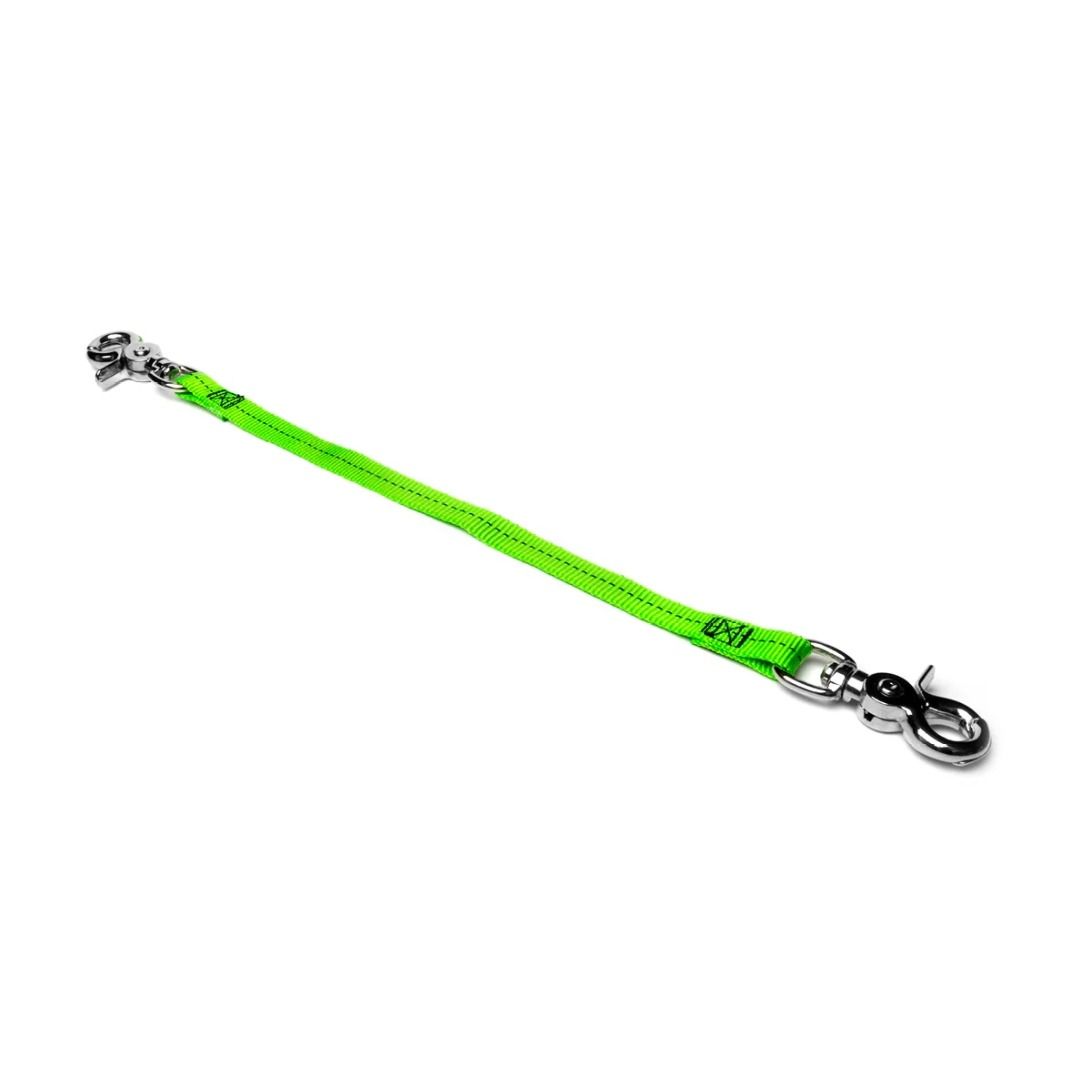
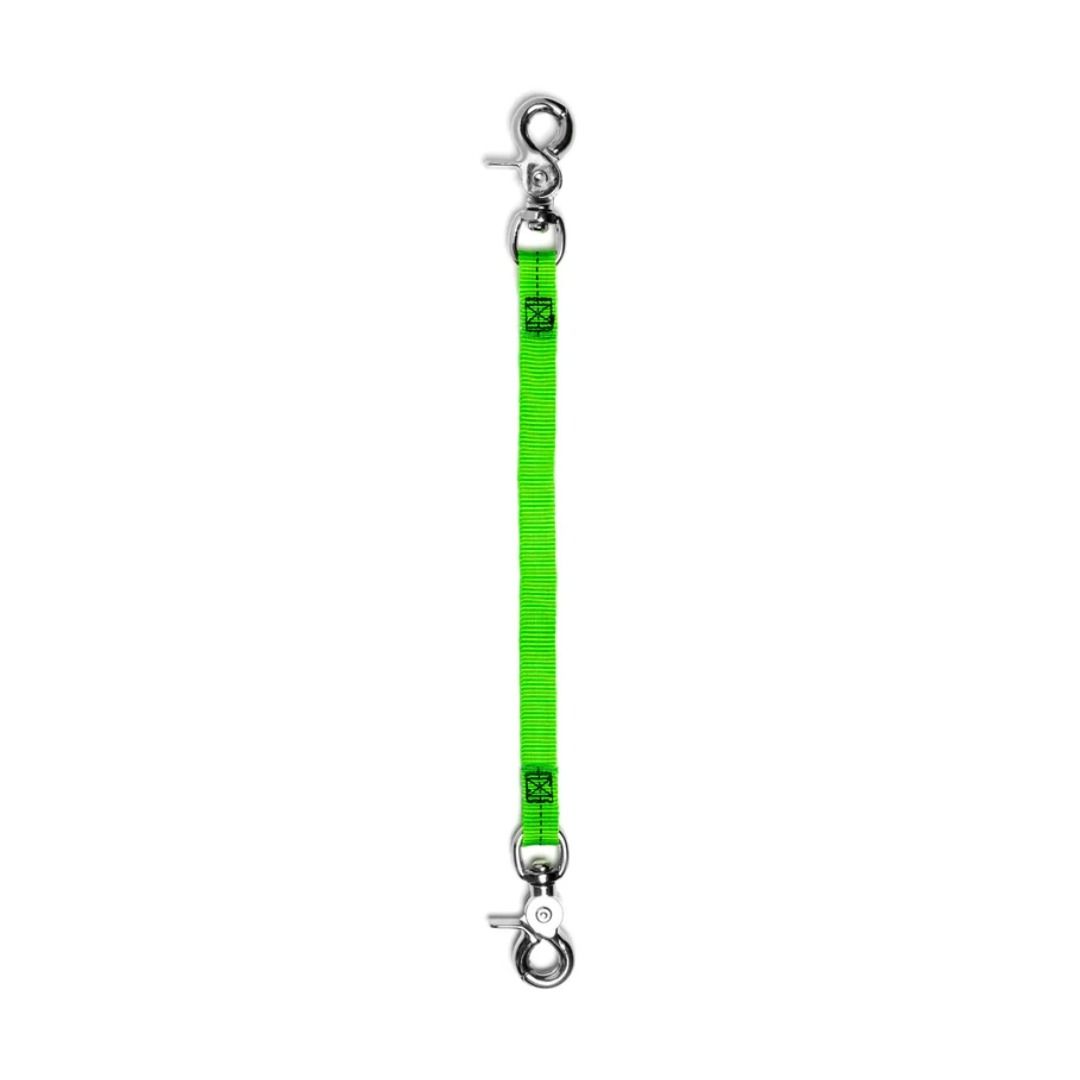
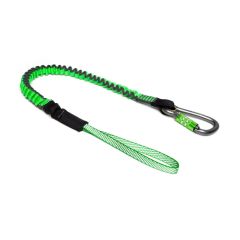
Short-reach webbing tool lanyard at 0.25m for operatives tethering tools in confined platforms, MEWP baskets, and holster-adjacent applications rated to 5kg.
- Dual Quick Clip connectors, thumb-bar pull
- single-handed glove-compatible operation
- NS 9611:2022+AC certified, CE and UKCA marked, dynamic load tested at 2:1 safety factor
- Heavy-duty narrow weave polyester webbing
- 0.25m compact fixed length
- Contrast stitching for rapid pre-use visual inspection
- Unique serial number for inspection record-keeping
- NLG ID compatible
- 5kg (11lbs) max load
- Sold individually
Short-reach webbing tool lanyard at 0.25m for operatives tethering tools in confined platforms, MEWP baskets, and holster-adjacent applications rated to 5kg.
- Dual Quick Clip connectors, thumb-bar pull
- single-handed glove-compatible operation
- NS 9611:2022+AC certified, CE and UKCA marked, dynamic load tested at 2:1 safety factor
- Heavy-duty narrow weave polyester webbing
- 0.25m compact fixed length
- Contrast stitching for rapid pre-use visual inspection
- Unique serial number for inspection record-keeping
- NLG ID compatible
- 5kg (11lbs) max load
- Sold individually
- Buy 20 for £14.10 £11.75 each and save 9%
- Buy 50 for £12.60 £10.50 each and save 19%
| BULK DISCOUNT | 20 | 50 |
|---|---|---|
| Price | £11.75 £14.10 | £10.50 £12.60 |
Order 1x to earn 12 FASTPoints
Order to earn 12 FASTPoints
Log in to access trade discountsNLG Webbing Tool Lanyard 0.25m
Webbing tool lanyards at 0.25m suit close-reach and proximity tethering where the tool's anchor point sits immediately adjacent to the tool, such as holster-to-harness attachment, wrist-to-tool tethering, or tool tethering in a confined MEWP basket. At 25cm of fixed length, slack is kept to a minimum, the swing arc in a drop event is contained, and the lanyard stays clear of harness components, scaffold fittings, and adjacent tools during active work. Certified to NS 9611:2022+AC with CE and UKCA marking, it carries the same compliance credentials as the longer variants in the NLG GO webbing range.
Why excess lanyard slack increases dropped object risk
A 1.5m lanyard used to tether a tool stored in a holster 10cm below the operative's belt leaves over a metre of free slack that loops around scaffold fittings, tangles with adjacent lanyards, and in a drop event allows the tool to swing through a wide arc extending well beyond the immediate work area. That swing arc multiplies the force at the anchor point and means a dropped tool can reach structures and personnel far from where it fell, which is precisely what a dropped object management system is designed to prevent. A 0.25m lanyard eliminates that slack, keeps the tether tight between tool and anchor, and contains the swing arc to a radius within the operative's immediate work zone.
Key Features
-
Dual Quick Clip connectors: Thumb-bar pull, one hand, automatic lock on release, 90-degree swivel. At 0.25m, the tool and anchor are immediately adjacent, so single-handed operation is especially important in confined platforms and tight MEWP baskets where two-handed connector work is rarely practical.
-
0.25m fixed length: The most compact option in the NLG GO webbing range. Keeps the tethering system tight and contained, preventing slack from fouling harness components, scaffold connections, or adjacent tools during active work.
-
Heavy-duty narrow weave polyester webbing: Dense construction resists abrasion and UV exposure. At short lengths, the webbing cycles through more frequent attachment and detachment events during a shift, making the narrow weave durability more critical than on longer variants.
-
Contrast stitching: Visible stitching across the webbing surface provides a clear inspection baseline. Fraying, pull-through, or damage is immediately visible without handling the lanyard under load.
-
NS 9611:2022+AC certification: Dynamically load tested at a 2:1 safety factor by an independent third-party laboratory. The same certification standard carried by every variant in the NLG GO webbing range.
-
NLG ID serialisation: Each lanyard carries a unique serial number, supporting inspection record-keeping and formal dropped object management documentation under CDM Regulations.
Who is this for
Trades and roles:
-
Electricians and instrumentation engineers
-
MEWP and aerial platform operators
-
Maintenance engineers in confined plant areas
-
Rope access technicians
-
Precision installation and commissioning engineers
-
Site operatives with close-in holster-to-harness tethering requirements
Industries:
-
Electrical and instrumentation contracting
-
Oil, gas, and petrochemical
-
Telecoms and broadcast infrastructure
-
Facilities management and building services
-
Manufacturing and industrial maintenance
-
Construction (confined platform and MEWP work)
Specifications
| Specification | Detail |
| Product Name | NLG Webbing Tool Lanyard 0.25m - 5kg Close-Reach Tool Tethering |
| SKU | NLG101552 |
| Lanyard Type | Fixed-length webbing tool lanyard |
| Max Load | 5kg (11lbs) |
| Lanyard Length | 0.25m (25cm) |
| Connector Type | Dual Quick Clip, thumb-bar pull operation, 90-degree swivel |
| Webbing Construction | Heavy-duty narrow weave polyester |
| Load Testing | Dynamic, 2:1 safety factor, third-party certified |
| Safety Standard | NS 9611:2022+AC |
| Compliance Marking | CE and UKCA |
| Serialisation | Unique serial number, NLG ID compatible |
| Unit Weight | 85g |
Compatibility
| Application or condition | Status |
| Hand tools up to rated maximum load | Compatible |
| Light power tools up to rated maximum load | Compatible |
| Holster-to-harness and wrist-to-tool adjacent tethering | Compatible |
| Confined platform and MEWP basket use | Compatible |
| Operation with standard site work gloves | Compatible |
| NLG-compatible holsters, pouches, and belt anchor systems | Compatible |
| Tasks requiring more than 0.25m reach between anchor points | Not recommended |
| Tools exceeding rated maximum load | Not recommended |
| Personal fall arrest, restraint, or work positioning | Not recommended |
| Attachment to unrated tool points (cables, grips, handles) | Not recommended |
| Connecting multiple lanyards in series as an improvised tether | Not recommended |
Who is this for
The NLG Webbing Tool Lanyard at 0.25m is primarily used by electricians, instrumentation engineers, rope access technicians, and maintenance operatives who tether tools at an adjacent anchor point rather than across the body. It suits MEWP basket work, confined access maintenance, and close-in panel or switchgear installation where a longer lanyard would foul adjacent equipment, tangle with harness components, or allow a dropped tool to swing into platform controls. It is also the right choice for holster-to-harness tethering where the tool sits immediately below or beside its anchor point and arm's-length reach is not required.
Typical applications
-
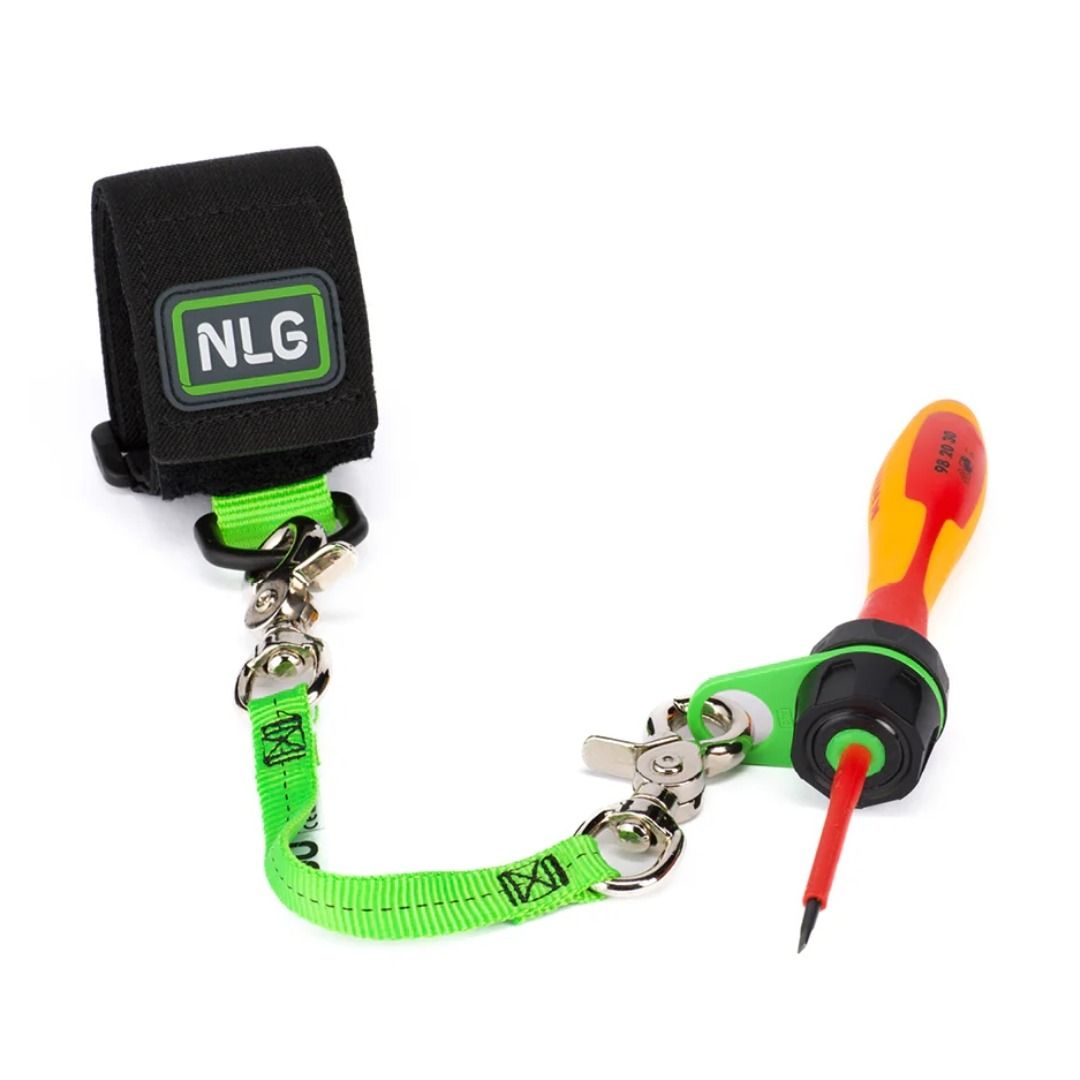
Tethering a screwdriver or precision hand tool to a wrist band anchor during panel installation or switchgear work in a confined electrical cabinet area at height.
-
Attaching test instruments and multi-meters directly to a body-worn anchor for close-reach access to equipment panels during electrical maintenance above ground level.
-
Securing small power tools to a MEWP basket anchor where a longer lanyard would foul basket controls or restrict adjacent operatives in the platform.
-
Connecting Allen key sets, torque bit drivers, and precision hand tools to a holster D-ring for adjacent storage tethering during commissioning work at height.
-
Providing close-reach tethering for rope access technicians handling small tools at confined anchor points where excess lanyard length would snag on rope systems or adjacent equipment.
-
Tethering inspection cameras, hand-held data loggers, and scopes to a wrist or belt anchor during detailed inspection work in restricted access locations above ground level.
-
Attaching cable stripper tools and termination equipment to an adjacent holster anchor during overhead cabling and tray installation tasks.
How to use
Step 1: Inspect before every use. Check the webbing for cuts, fraying, or damage to the contrast stitching. Both Quick Clip connectors must open, lock, and rotate freely. Retire the lanyard if any defect is found.
Step 2: Confirm both anchor points are within 25cm of each other and carry a load rating appropriate to the tool weight. A body-worn anchor (wrist band, belt loop, harness D-ring) and the tool's tether point (tool loop, holster D-ring) must both be purpose-designed and rated.
Step 3: Rotate the Quick Clip 90 degrees to swivel. Pull the thumb bar down to open the clip jaw.
Step 4: Attach to the anchor point and release the thumb bar. The connector locks automatically on release.
Step 5: Attach the second connector to the tool's rated tether point. Tug both ends to confirm full engagement before beginning work.
Step 6: After use, detach from both points, inspect for wear, and store away from heat, sunlight, and chemicals.
Common mistakes
-
Selecting this lanyard for tasks that need more than 25cm of reach: if the tool needs to travel further from its anchor during active use, a longer variant is the right choice. The 0.25m is for adjacent tethering only.
-
Connecting two lanyards in series to create a longer tether: this is not a rated configuration, must not be done, and has not been tested to NS 9611 or any equivalent standard. Use a single lanyard of the appropriate length.
-
Attaching where both anchor points are more than 25cm apart: the lanyard will be under constant tension during use, preventing natural tool movement and placing unnecessary load on the tether system throughout the shift.
-
Using the lanyard on a tool without a purpose-built tether point: a moulded grip, power cable, or unrated carabiner attachment is not a valid anchor. Confirm the tool has a rated tether loop or D-ring before attaching any lanyard.
-
Returning to service after a drop event: remove from service and arrange a formal inspection by a competent person before any further use, regardless of visual condition.
Safety
Certified to NS 9611:2022+AC with a 2:1 dynamic safety factor. Rated to a maximum of 5kg (11lbs). This is a tool retention lanyard only. It must not be used as a personal fall arrest system, fall restraint, or work positioning device. Do not connect two lanyards in series as an improvised longer tether. After any drop arrest event, remove from service for formal inspection before reuse.
Maintenance
Wipe down after contact with dust, oil, or salt spray and allow to air dry away from direct heat. Do not expose to solvents, acids, or bleach. Store away from sunlight and heat. Before each shift, use the contrast stitching as the primary inspection reference: fraying, breakage, or pull-through at any point means the lanyard should be retired. Both Quick Clip connectors must open, lock, and rotate freely. Formal inspections should be recorded against the lanyard's serial number at intervals appropriate to frequency of use and site conditions.
Frequently Asked Questions
Q: When would I choose the 0.25m lanyard over a 1m or 1.5m version?
A: The 0.25m is the right choice when the tool's anchor point and the body-worn or structure anchor sit within 25cm of each other, typically in holster-to-harness D-ring configurations, wrist-to-tool attachment for close-range work, and MEWP basket use where a longer lanyard would foul platform controls or adjacent equipment. If the tool needs to travel further than 25cm from its anchor point during active use, select the 1m or 1.5m variant from the NLG range instead.
Q: What does NS 9611:2022+AC certification mean for this product?
A: NS 9611 is the Norwegian Standard for equipment designed specifically to prevent objects from falling during work at height. Unlike EN 363 or EN 354, which govern personal fall arrest equipment, NS 9611 sets test methods and performance requirements specifically for tool tethering and dropped object prevention products as a separate category. This lanyard has been dynamically load tested at a 2:1 safety factor by an independent laboratory, meaning it withstands twice its rated load under a simulated drop event. CE and UKCA marking confirms UK compliance, and a Declaration of Conformity is available on request from NLG.
Q: What is this lanyard not suitable for?
A: This is a tool retention lanyard only and must not be used as a personal fall arrest system, fall restraint, or work positioning device. It is not appropriate for tasks where the tool needs to travel more than 25cm from its anchor point. The 5kg maximum load must not be exceeded, and the lanyard must not be attached to unrated anchor points such as cables, trigger guards, or moulded grips. Two lanyards must never be connected in series as an improvised longer tether.
Q: Can I connect two of these lanyards together to create a longer reach?
A: No. Connecting lanyards in series is not a rated or certified configuration under any circumstances. The dynamic safety factor and load rating apply only to a single lanyard as supplied. Joining two lanyards introduces an unrated connection point, changes the dynamic behaviour in a drop event, and creates a configuration that has not been tested to NS 9611 or any other standard. If more reach is needed, select a single lanyard of the correct length from the NLG range.
Q: What anchor points does a 0.25m lanyard typically connect to?
A: The most common configurations are holster D-ring to harness D-ring, wrist band anchor to tool tether point, and structure anchor to tool in confined access maintenance. Both connection points must be purpose-designed and carry individual load ratings appropriate to the tool weight. Belt loops, wrist bands, holsters, and harness D-rings must all be checked for their rated capacity before any tool is attached.
Q: When should this lanyard be retired from service?
A: Retire the lanyard if the contrast stitching shows fraying, breakage, or pull-through anywhere along the 25cm webbing length. Cuts, thinning, stiffness, or UV discolouration of the webbing are also grounds for retirement. Any Quick Clip that fails to open, lock, or swivel freely should be treated as a failure, not a stiffness to be worked around. After any dynamic drop arrest event, remove from service for inspection by a competent person before any further use.
Q: Does the short length affect how the Quick Clip connectors operate?
A: The connectors operate identically regardless of lanyard length: rotate 90 degrees, pull the thumb bar to open, attach, release to lock. At 0.25m, the tool and anchor point are close together, which is why single-handed operation matters particularly in confined platforms and MEWP baskets where positioning space is limited. Both connectors at each end of the lanyard are identical, so either clip attaches to either anchor point.