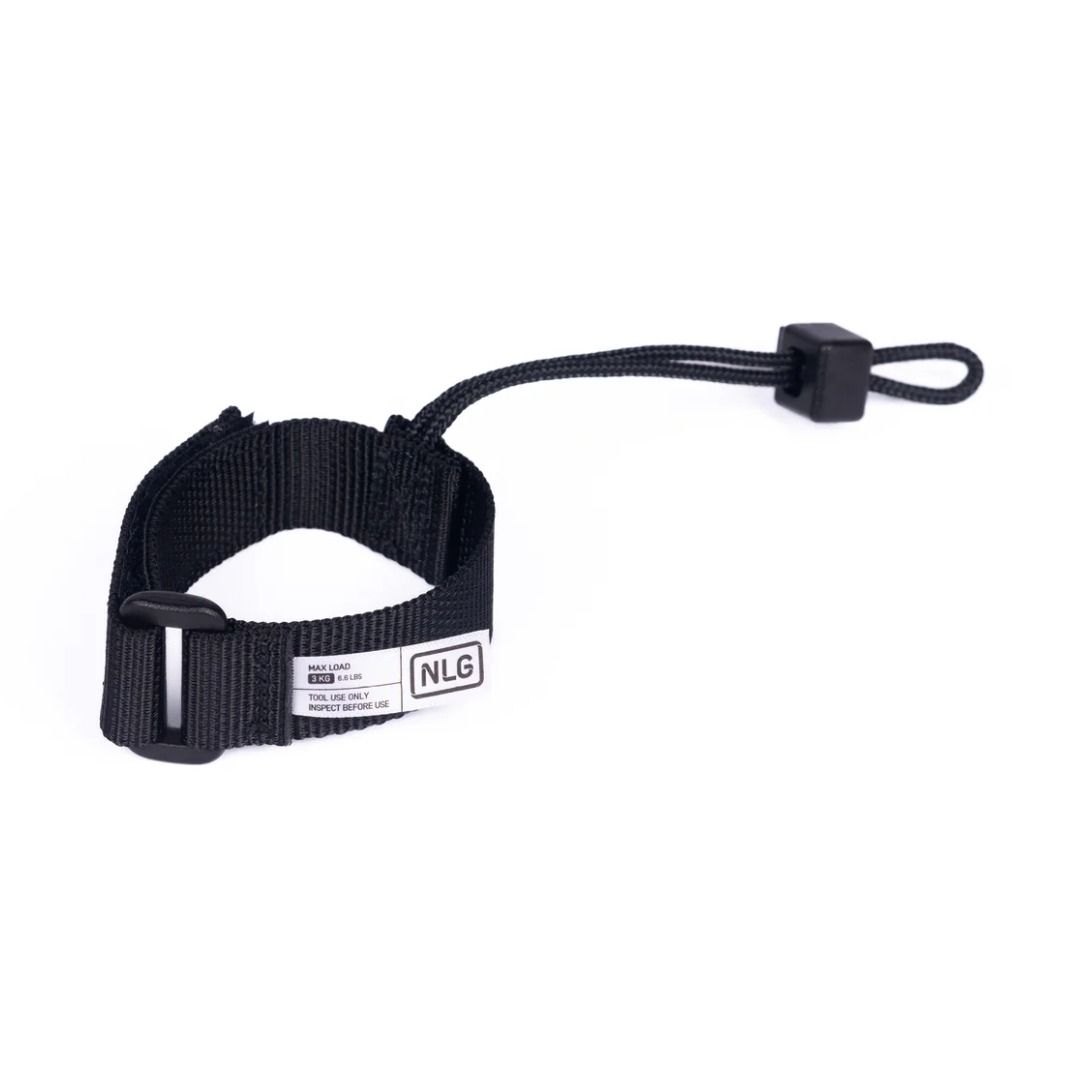
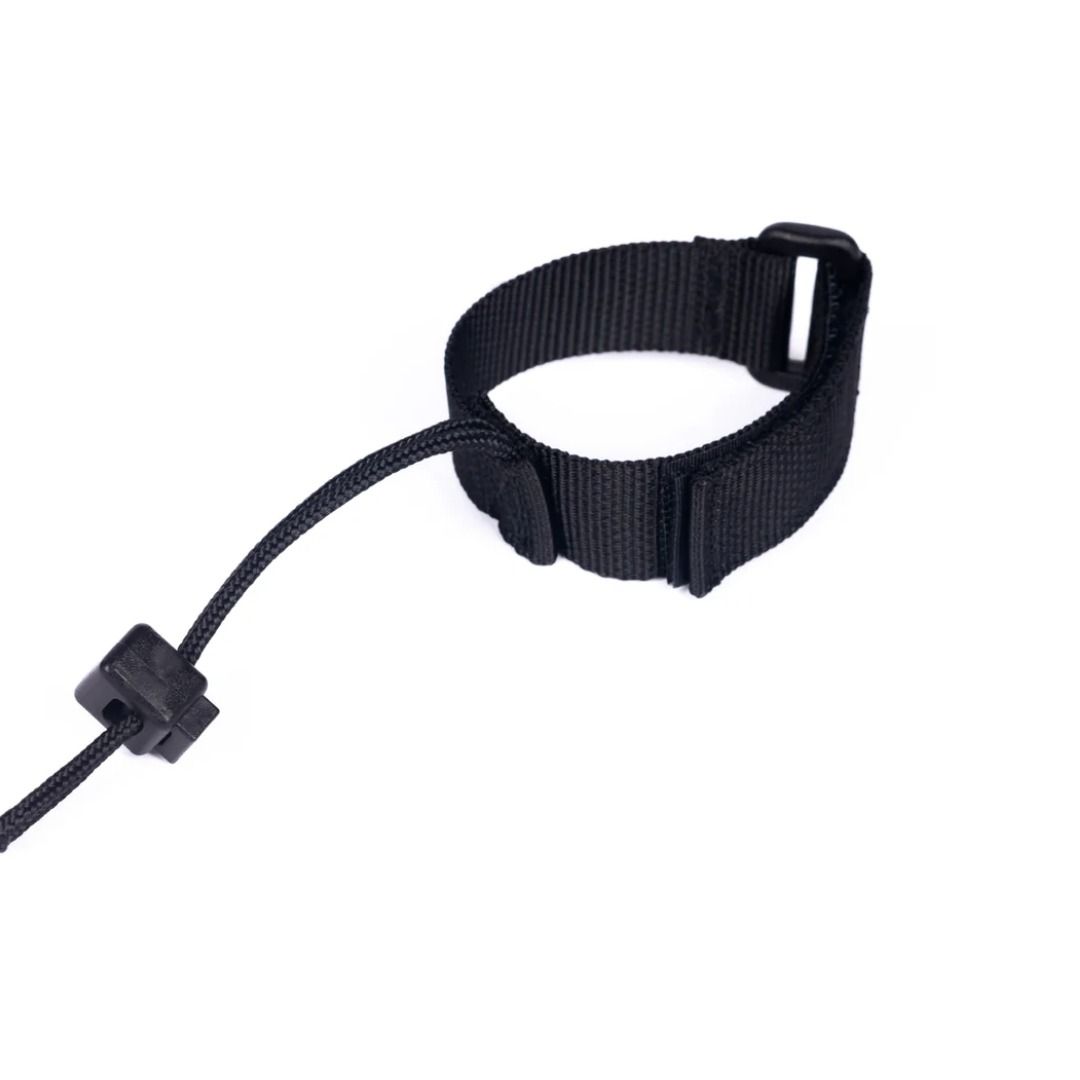
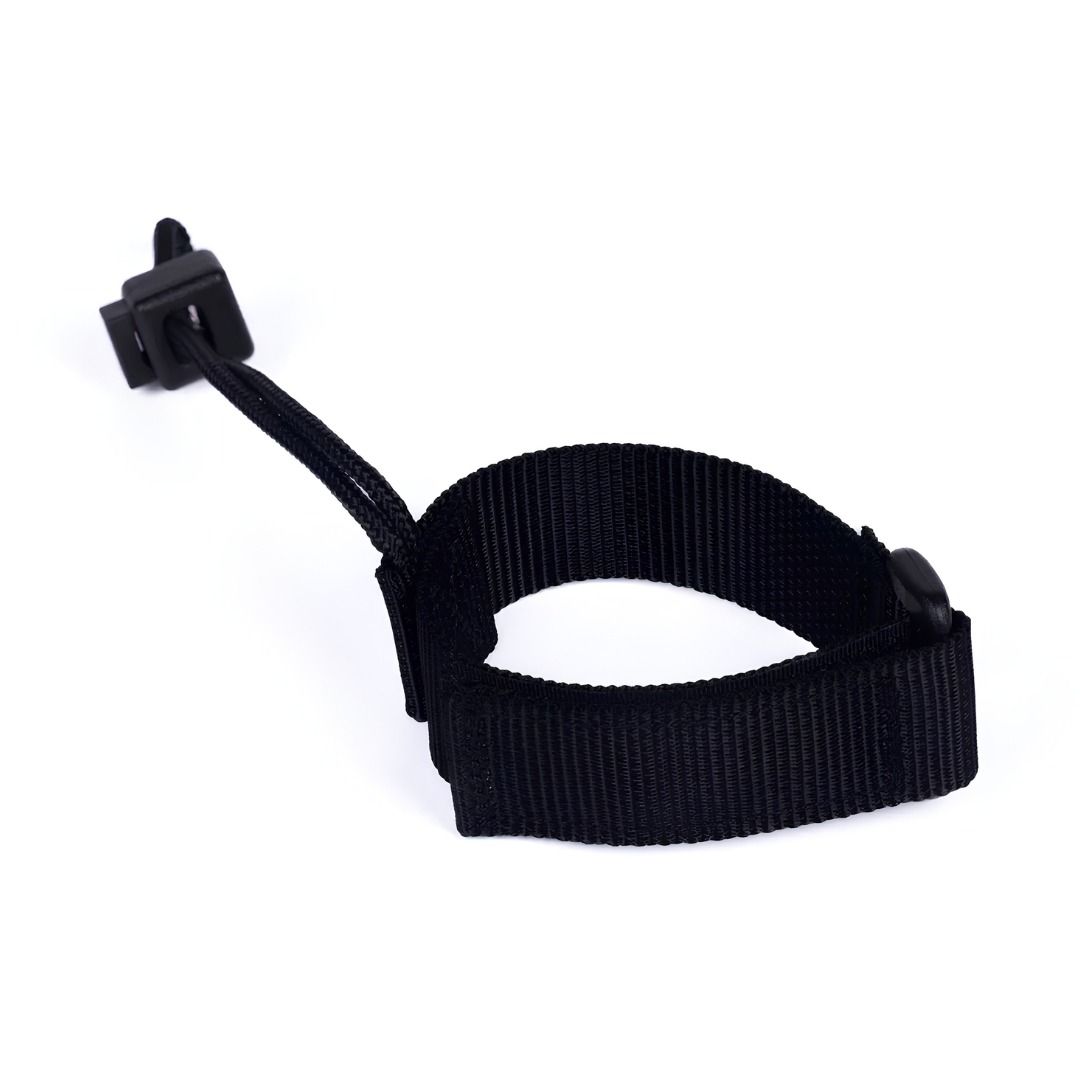
NLG GO wrist lanyard black velcro wristband angled view showing integrated cord tether and choke loop | CMT Group UK
NLG GO wrist lanyard black velcro wristband angled view showing integrated cord tether and choke loop | CMT Group UK Wrist tool tether showing NLG label with max load 3kg marking and adjustable velcro strap detail | CMT Group UK NLG GO Wrist Lanyard 1kg Wrist-Worn | CMT Group UK

Wrist-worn tool tether rated to 1kg on the body, designed for tethering small hand tools at height without a separate anchor point.

  • Max load 1kg (2.2lbs) when worn on the wrist
  • Usable as structural anchor around scaffold tube
  • 3kg max in this configuration
  • CE and UKCA marked, ANSI/ISEA 121-2023 compliant
  • serial numbered
  • Soft touch 25mm webbing
  • adjustable velcro strap, one size fits all
  • Integrated cord tether with spring-loaded choke lock
  • 20g

NLG GO Wrist Lanyard - 1kg Wrist-Worn Tool Tether

Code
NLG101599
30+ In Stock

Wrist-worn tool tether rated to 1kg on the body, designed for tethering small hand tools at height without a separate anchor point.

  • Max load 1kg (2.2lbs) when worn on the wrist
  • Usable as structural anchor around scaffold tube
  • 3kg max in this configuration
  • CE and UKCA marked, ANSI/ISEA 121-2023 compliant
  • serial numbered
  • Soft touch 25mm webbing
  • adjustable velcro strap, one size fits all
  • Integrated cord tether with spring-loaded choke lock
  • 20g
£8.70 £7.25
  • Buy 20 for £7.98 £6.65 each and save 8%
  • Buy 50 for £6.96 £5.80 each and save 20%
  • BULK DISCOUNT 20 50
    Price £6.65 £7.98 £5.80 £6.96

Order 1x to earn 7 FASTPoints

Order to earn 7 FASTPoints

Log in to access trade discounts
30+ In Stock

NLG GO Wrist Lanyard

Wrist-worn tool tether that creates an immediate anchor point on the body for small hand tools at height. The adjustable velcro wristband wraps around the wrist and the integrated short cord tether attaches directly to the tool, keeping it within reach if dropped without needing a separate harness D-ring or belt anchor. At 20g, it adds nothing noticeable and can be worn through a full shift without discomfort.

Why a Wrist Anchor Solves the No-Harness Tethering Problem

Standard tool lanyards need an anchor point: a harness D-ring, a scaffold anchor, or a rated belt loop. When an operative is working on a ladder, in a confined space, or in any position where a harness is not worn, there is no practical anchor for a conventional tool lanyard. Without a tether anchor, small tools are pocketed or hand-held with no recovery mechanism if they slip. The wristband itself is the anchor, put it on and the short cord tether connects directly from the wrist to the tool, creating a personal tethering system that works wherever the operative is working.

Key Features

  • Wrist-worn anchor: Creates a personal anchor on the body without needing a harness D-ring, scaffold anchor, or belt loop. The wristband loop can also be used around a scaffold tube or fixed structure for tools up to 3kg, giving two use configurations from one product.

  • Integrated short cord tether: Keeps the tool within arm's reach if dropped. The short tether length limits the drop distance and reduces the dynamic shock load to the wrist if the tool falls.

  • Soft touch 25mm webbing: Comfortable against skin across a full shift. The velcro strap adjusts to fit wrist sizes from 14cm to 21cm without additional hardware.

  • Spring-loaded toggle lock: The choke loop at the tool end has a spring-loaded barrel lock that holds the cinch position and prevents the loop from loosening during use.

  • CE and UKCA marked, serial numbered: Certified and dynamically load tested at a 2:1 safety factor. Each unit carries a unique serial number for inspection traceability.

Who Is This For

Trades and roles:

  • Electricians tethering pencils, markers, and small inspection tools

  • Inspection technicians and surveyors carrying instruments at height

  • Scaffold operatives using small hand tools in restricted positions

  • Operatives in confined spaces where a harness anchor is not accessible

Industries:

  • Construction and building maintenance

  • Electrical and M and E

  • Facilities management

  • Rail and utilities

 Specifications

Specification Detail
Product Name NLG GO Wrist Lanyard - 1kg Wrist-Worn Tool Tether
SKU 101599
Product Range NLG GO, certified value tool tether
Max Load (wrist-worn) 1kg (2.2lbs) — tool attached to wrist
Max Load (structural anchor) 3kg (6.6lbs) — wristband looped around scaffold tube or fixed structure
Lanyard Type Integrated short cord tether
Wristband Material Soft touch 25mm nylon webbing
Wristband Closure Adjustable velcro strap
Wrist Size Range One size fits all, 14cm to 21cm
Tool Attachment Choke cinch cord loop, spring-loaded toggle lock
Safety Standards CE, UKCA, ANSI/ISEA 121-2023
Testing Dynamic load tested, 2:1 safety factor, third-party certified
Serial Numbering Unique serial number per unit
Colour Black
Unit Weight 20g

Compatibility

Application or Condition Status
Small tools up to 1kg when wristband is worn on the body ✓ Compatible
Pencils, markers, inspection instruments, and small screwdrivers ✓ Compatible
Positions without a separate harness or anchor point ✓ Compatible
Structural anchor around scaffold tube, tools up to 3kg ✓ Compatible
Wrist sizes from 14cm to 21cm ✓ Compatible
Tools exceeding 1kg when wristband is worn on the wrist ✗ Not suitable
Power tools of any weight ✗ Not suitable
Fall arrest or personal safety applications ✗ Not suitable
Replacement for EN354 or EN355 personal safety lanyard ✗ Not suitable


Who Is This For

Electricians, inspection technicians, surveyors, and site operatives who regularly use small hand tools at height and need a simple, lightweight tethering solution that works without a harness or separate anchor point. It is equally suited to scaffold operatives using markers, pencils, and small hand tools in awkward working positions, and to confined space workers where a conventional harness lanyard arrangement is not practical. Site managers ordering a wrist lanyard alongside other tethering equipment for a full team issue will find the 20g weight and one-size-fits-all construction practical for bulk issue.

Typical Applications

  • Tethering a permanent marker or pencil to the wrist during elevated marking, measuring, and setting-out work on construction sites.

  • Keeping a voltage tester, inspection torch, or small measuring instrument attached to the wrist during elevated electrical testing and installation work.

  • Securing a small screwdriver or nut driver to the wrist when working in a confined space or on a ladder where no harness anchor is available.

  • Wrapping the wristband around a scaffold tube to create a structural anchor for small tools up to 3kg where the operative needs both hands free.

  • Use as part of a full team issue kit on sites with a mandatory dropped object prevention programme, alongside bungee tool lanyards for heavier tools.

How to Use

Tool attachment:

Step 1: Pass the choke loop around the captive handle or through the captive hole of the tool or tool tether point.

Step 2: Pass the wristband through the loop and pull tight to create a cinch. Slide the spring-loaded toggle up to the loop to hold it in place.

Wrist attachment:

Step 3: Open the wristband by peeling back the velcro strap and slackening the loop. Pass your hand through the loop.

Step 4: Pull the strap down to the required fit and press the velcro firmly closed. Check the wristband is secure with a gentle tug.

Note: The wristband can also be used as a structural anchor by looping it around a scaffold tube or fixed structure instead of the wrist. In this configuration the maximum tool weight is 3kg. When worn on the wrist the maximum tool weight is 1kg.

Common Mistakes

  • Exceeding the 1kg wrist-worn limit: The wrist-worn configuration has a 1kg maximum tool weight. A screwdriver, marker, or small inspection tool is well within this limit. A spanner or larger hand tool may not be. Weigh the tool before attaching.

  • Confusing the two load limits: The overall product max load is 3kg but this only applies when the wristband is anchored around a structure. When worn on the wrist, the safe limit is 1kg. Using this lanyard to tether a tool heavier than 1kg while wrist-worn can cause wrist injury if the tool falls.

  • Not checking the velcro closure: A velcro strap that is dirty or worn may not hold securely. Clean debris from the velcro regularly and check the closure is firm before starting work.

  • Letting the choke loop loosen: The spring-loaded toggle holds the cinch in place but should be checked before every use. If the loop has loosened at the tool end, re-cinch and slide the toggle back up before working at height.

  • Using for power tools: This lanyard is designed for small hand tools up to 1kg when wrist-worn. Power tools are not appropriate regardless of weight.

Safety

This lanyard is rated to a maximum tool weight of 1kg (2.2lbs) when the wristband is worn on the wrist. The 3kg (6.6lbs) maximum load applies only when the wristband is anchored around a fixed structure such as a scaffold tube. It is not for fall arrest and must not be used in any personal safety application. Inspect the wristband, cord tether, choke loop, toggle lock, and velcro closure before every use. Retire from service if any component shows wear, damage, or the velcro no longer holds securely. Quarantine after any drop event pending inspection.

Maintenance

Check the soft touch webbing for fraying and surface wear before every shift. Inspect the cord tether along its full length and at the attachment points. Check the choke loop and confirm the spring-loaded toggle moves freely. Check the velcro strap for debris that reduces grip strength and clean if necessary. Store away from direct sunlight and chemical contact. Retire from service when any component shows deterioration or after any drop event.

Frequently Asked Questions

Q: What is the practical difference between this and a standard tool lanyard?
A: A standard tool lanyard connects a separate anchor point (harness D-ring, belt loop, scaffold anchor) to the tool. This wrist lanyard creates the anchor on the body itself, the wristband is worn on the wrist and the short integrated cord tether connects directly to the tool. It removes the need for any separate anchor point, which makes it the right choice for working positions where a harness is not worn: ladder work, confined spaces, and positions where clipping to an external anchor is not practical.

Q: Why is the max tool weight 1kg on the wrist but 3kg on a structure?
A: When the wristband is worn on the wrist, the load in a drop event is absorbed by the wrist joint and the soft tissue around it. The 1kg limit is set at a level where the dynamic shock of a short-drop arrest is safe for the wrist. When the wristband is looped around a scaffold tube or fixed structure, the load is transferred to the structure rather than the body, so the full 3kg certified load applies. Using this lanyard to tether a tool heavier than 1kg while wrist-worn transfers an unsafe shock load to the wrist in the event of a drop.

Q: What small tools is this suitable for?
A: Any small hand tool weighing 1kg or less with a captive hole, tether point, or loop that the choke cinch can grip. Permanent markers, pencils, voltage testers, inspection torches, small screwdrivers, nut drivers, and similar inspection and marking tools are all well within the 1kg wrist-worn limit. Weigh the tool before attaching, do not estimate.

Q: Will the wristband fit my wrist?
A: The adjustable velcro strap fits wrist sizes from 14cm to 21cm, which covers the large majority of adult wrist sizes. Open the velcro, pass your hand through the loop, and pull the strap to your preferred fit before pressing the velcro closed. The strap holds in place without a buckle or clip.

Q: How does the choke loop attach to the tool?
A: Pass the loop end of the cord tether through the tool's captive hole, handle loop, or tether point. Then pass the wristband end of the lanyard through the cord loop and pull firmly to create a self-tightening cinch. Slide the spring-loaded toggle up to the loop to hold the cinch in position. Tug to confirm the cinch is firm before beginning work.

Q: Can I use the wristband around a scaffold tube instead of on my wrist?
A: Yes. Loop the wristband around the scaffold tube or fixed structure, pass the choke end through the loop, and pull to cinch around the tube. In this configuration the tether is anchored to the structure rather than your body and the maximum tool weight is 3kg rather than 1kg. This is useful when both hands are needed free and you need to park a tool at a fixed point on the scaffold.

Q: How do I inspect this lanyard before use?
A: Check the soft touch webbing wristband for fraying and surface wear. Inspect the short cord tether for cuts and check both attachment points. Check the choke loop cinch is holding position and the spring-loaded toggle moves freely. Test the velcro closure by pressing it fully closed and pulling, it should hold without peeling open. If any component fails the check or the velcro no longer grips securely, retire from service. Quarantine after any drop event.

CMT Equipment Ltd